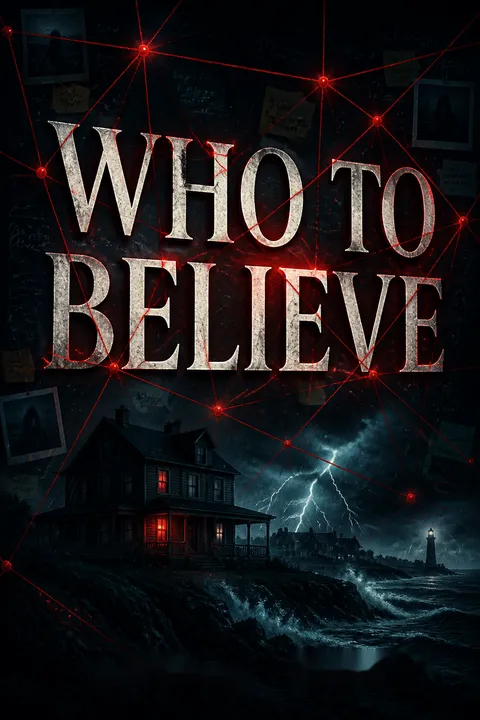


Plot Summary
Laurel's Unquiet Death
A news report announces that Laurel Thibodeau, co-owner of Monreith's Firefly Bistro, was found suffocated in her home. A week later, Dr. Farley Drake's client Alice Stone comes to therapy on her fortieth birthday and admits she knew Laurel. Simon Thibodeau, Laurel's husband, looks guilty to the town: he lied about a catering job, gambled away twenty thousand dollars, and carried a large life insurance policy on Laurel.
Yet Laurel had also been stealing from church members to help cover the couple's debts. Farley pieces together his clients' gossip, watches them outside his office, and wonders whether the killer might be among them. Alice leaves him with the question the police have not answered: if Simon did not kill Laurel, who did?
The opening makes communal knowledge feel both useful and dangerous. Farley treats therapy as a privileged vantage point from which to assemble a case, but his habit of observing clients outside the office already blurs the boundary between care and surveillance. Alice's careful disclosure invites him to investigate while withholding the fact that would matter most. Meanwhile, Simon's public guilt is assembled from real flaws, not proof. The novel begins by showing how a small town can mistake a convincing story for an established truth, and how a therapist's confidence in reading people may be another form of misjudgment.
The Shrink's Entanglements
Farley is not merely Alice's therapist. He has become her friend, though he knows the relationship should have ended when he began dating Richard Macomber, Alice's friend and the estranged husband of Reverend Georgia Fitzhugh.
Farley also once treated Georgia, whose sessions exposed her conflict between a vulnerable private self and the polished minister the town expects. At Georgia's church, Farley meets state detective Brock London and sees former clients, including Everett Irving, moving through the same network of secrets.
He then collects Georgia's suspended daughter, Chloe, after she punches Taylor Lawson, and takes her for ice cream despite her grounding. Chloe needles him about the adults' affairs, while Chief Max Barbosa warns that he does not trust Farley around her.
Farley's relationships collapse professional, romantic, and social roles into one another. His belief that he can manage these overlaps through observation and charm disguises the fact that he has made himself indispensable in other people's private lives. Georgia's split between public authority and private need mirrors Farley's own division between clinician and lover, though he sees her conflict more clearly than his own. Chloe, who notices the adults' hidden attachments, punctures their self-protective performances. Her presence makes the town's blurred boundaries more than an ethical problem: they shape the emotional world a child is trying to navigate.
The Crime Board
At Alice's birthday gathering, filmmaker Damian Stone presses Max about the Thibodeau investigation and argues that the murder may connect to other suspicious deaths. Farley later slips into Damian's office and finds photographs of Steve Alabiso and Jeanine Geller beside Laurel's.
He recognizes the first two victims because he killed them himself, staging their deaths to resemble suicide and leave suspicion on their spouses. Damian has begun linking the cases through the victims' affairs and their spouses' alibis.
Alice finds Farley studying the board and asks what he would do if a patient confessed to murder. Her warning unsettles him, especially because she knows Damian's search for truth can expose what lies close to home. Farley leaves the party planning to silence Alice before she can reveal more.
The board turns Damian's storytelling into a threat because it organizes separate private tragedies into a pattern. Farley recognizes himself in the pattern, yet his narration tries to preserve control by presenting his killings as calculated and deserved. The contrast is important: he can explain how he staged each death, but explanation is not moral insight. Alice's question about confidentiality quietly tests whether he can separate professional duty from self-preservation. His decision to target her shows that his clinical language has become a tool for managing danger, not understanding another person.
Alice's Hidden Ledger
Alice's perspective reveals that she met Damian as an undergraduate while he was her professor, and that their affair cost him his teaching job and his first marriage. She became the family's main earner while accepting Damian's recurring affairs as part of the marriage she chose.
In Monreith, his latest affair is with Laurel. Alice also has her own history: as a young teenager in Germany, she killed an older teacher who exploited her, and in Maine she killed Father Jean-Marc after learning he abused children.
When she finds a cracked burner phone hidden beneath Noah's mattress, she suspects it may connect Damian to Laurel, but cannot yet face what the police might uncover. She keeps it from Max and prepares for her birthday party with suspicion tightening around her husband.
Alice distinguishes agency from innocence. She insists that her adult choices were her own, yet her past includes violence she has justified as protection from men who harmed the vulnerable. Her marriage to Damian is similarly organized around control: she provides financial security and accepts infidelity rather than surrendering her independence. The burner phone threatens that arrangement because it could convert private knowledge into public evidence. Alice's restraint is not simply denial; it is a strategy learned through years of moving between households and keeping parts of herself concealed. That strategy has protected her, but it also leaves others exposed.
A Body on the Marsh
After the birthday party, Max Barbosa hears a scream and runs through the storm to Moulton Farm. He finds Alice soaked and bloodied beside a body near the boat launch. At first, he assumes she has killed Damian, but the dead man is Farley. Alice says she found him while searching for Harper, her dog, and Max calls in the scene before the rising tide can erase it.
Damian emerges from the house alive and admits he had been sleeping with Laurel, though he says she was alive when he left her home the night she died. Brock arrives, takes control, and warns Max that his personal connection to Alice and his unsanctioned response make him a witness, not the investigator. Max also admits Alice kissed him at the party.
The body's discovery converts Max's private longing into a conflict of duty. He wants to protect Alice, but the scene requires him to treat her as a potential suspect and himself as compromised. His first assumption, that Damian is dead, reflects how quickly the affair has become the lens through which he interprets events. The tide gives the investigation physical urgency: evidence is not merely hidden by lies, but literally at risk of being washed away. Brock's arrival restores procedure, while also exposing how easily Max's desire to rescue Alice could contaminate the truth.
The Missing Mallet
Brock interviews Damian and discovers the whiteboard connecting Laurel to Steve and Jeanine. Damian also shows him anonymous texts from someone claiming the deaths are linked, including a message about therapy sessions being confidential.
The case turns when investigators confirm that Farley's DNA was at Laurel's crime scene, and Brock notes that Farley wore dark clothing, a balaclava, and carried a hunting knife when he died. One of the six croquet mallets used at the party is missing, and the wound on Farley's head could fit such a weapon.
The clues complicate Damian's theory: Farley may have been the killer he was tracking, even as someone at the party killed him. Max recuses himself, but Brock keeps him close for his knowledge of the town.
The evidence reverses the moral direction of the investigation. The therapist who appeared to be an observer of other people's secrets may have been the most dangerous person in the room. Yet the clues do not simply solve the case: the missing mallet implicates the party's guests, while the knife and disguise suggest Farley arrived with violent intent. The anonymous texts further complicate authorship, since their accuracy does not establish who sent them or why. Brock's disciplined uncertainty contrasts with the town's appetite for a single culprit and insists that suspicion must remain provisional.
Richard's Midnight Text
Richard Macomber, who has recently left Georgia for a life with Farley, carries secrets of his own: an offshore account, cash from questionable car deals, and a deed to half of Farley's house. On the night Farley disappears, Richard sees him leave during the storm but does not follow. In the morning, detectives learn that a text from Richard's number asked Damian to meet at the dock, close to where Farley's body was found.
Richard does not remember sending it, and the burner phone that received it is now in Damian's possession. After a tense ride with Damian, Richard takes the phone to the station, but Max arrests him when the recovered message appears to link him to the murder. The town's attention turns toward the grieving boyfriend.
Richard's apparent simplicity has always been a social mask. His hidden money and carefully controlled account reveal a capacity for practical self-protection, while his new relationship with Farley exposes how long he has allowed others to define him. The suspicious text exploits both vulnerabilities: it makes a private message look like a deliberate invitation to the crime scene. Richard's arrest demonstrates how evidence can be technically real yet misleading when its context is withheld. He becomes a plausible suspect not because the investigation has proved his guilt, but because his secrets make the false story easier to believe.
Chloe Finds the Phone
Chloe's account fills in the days before the murder. Angry at Georgia's refusal to give her a phone, she breaks into the church and steals a cracked device from the Lost and Found. Noah helps her try passcodes, but Alice eventually takes the phone after finding the teenagers with it. Chloe also punches Taylor after Taylor insults Richard for being gay, earning a suspension and a month of grounding.
On the stormy night of Farley's death, Chloe sneaks out to retrieve the phone from the farmhouse and sees Georgia near the property. Later, she recognizes that the phone's code, 0531, points to her mother's past. Chloe carries what she has learned to Max, but fear for her father makes her hesitate before telling the whole truth.
Chloe's actions begin as ordinary adolescent defiance: she wants privacy, access to peers, and a way to move through town without adult supervision. But the stolen phone places her inside a chain of adult secrecy that she cannot safely interpret. Her punch is also a response to a direct attack on her father's identity, not simply a burst of teenage aggression. The book lets Chloe's moral growth emerge through selective disclosure. She has learned to keep secrets from the adults who monitor her, yet she must decide which secret will protect her family and which will perpetuate harm.
Georgia Builds a Pattern
Georgia's earlier memories reveal how the anonymous texts began. After hearing that Everett Irving's wife had been involved with Steve Alabiso, and later learning from a colleague that Jeanine Geller had also been having an affair, Georgia connects both dead lovers to Farley, who had treated the betrayed spouses.
She buys a burner phone and sends Damian clues, hoping to unsettle Farley and provoke an explanation, not believing the therapist is truly a killer. The texts give Damian the beginnings of his murder theory.
Georgia's motives are tangled with resentment over Farley sleeping with Richard while treating her, and with her need to keep her own public reputation intact. What starts as petty revenge becomes a trail she can no longer control.
Georgia's investigative impulse grows from professional observation, but its engine is personal injury. She sees a pattern because her role requires her to notice what a community conceals, then uses that insight not to seek justice but to punish Farley indirectly. The burner phone becomes an instrument of controlled exposure: she can provoke discovery while remaining outside its consequences. Her error is not simply underestimating Farley. It is assuming that she can manage the truth as she manages her public persona, releasing only enough to regain power without becoming answerable for what follows.
Laurel Names the Threat
Georgia discovers that Laurel has been selling jewelry stolen from elderly church members, and confronts her with proof from an online listing. Laurel explains that Simon's gambling debts have brought threats from a creditor, but she also reveals she knows about Georgia's relationship with Max and her own affair with Damian.
More dangerously, Laurel has seen Damian's anonymous messages and recognizes that they could point toward someone close to Farley. Georgia leaves without resolving the encounter, then watches Damian visit Laurel the following night and promise to tell Alice about their affair.
Afraid Laurel will expose the burner campaign and her betrayal of Farley, Georgia enters the house after Damian leaves and suffocates Laurel with a plastic bag, then leaves Farley's hair to implicate him.
Laurel's death grows from intersecting acts of concealment rather than one isolated motive. Her theft is a desperate response to Simon's debts, but the threat she poses to Georgia is the possibility that private betrayals will become public facts. Georgia's ministerial identity makes her skilled at hearing confession, yet she cannot tolerate being treated as a person who must confess. By planting Farley's hair, she attempts to redirect accountability toward someone she already distrusts. The act exposes the danger of moral bookkeeping: Georgia casts herself as correcting one betrayal while committing a more final one.
The Dockside Frame
At Alice's party, Georgia notices that the burner phone has resurfaced and moved from Alice to Damian. She fears he will trace its messages back to her. After the guests leave, she takes Richard's phone and sends the burner a message asking Damian to meet at the dock, hoping the text will make Richard look responsible.
She also takes a croquet mallet and hides beneath the gangway, intending to kill Damian before he can expose her. Chloe arrives unexpectedly in the storm.
Georgia sees her daughter, abandons the mallet, and follows her instead of continuing toward Damian. Farley, meanwhile, has gone to the farm on his own mission. The storm leaves both women with knowledge of one another's presence, but neither yet understands the full danger.
The dock concentrates the novel's competing forms of concealment. Georgia uses Richard's phone to manufacture an incriminating trace, while the mallet makes her plan materially real. Chloe's sudden appearance interrupts the action not through force but through attachment: Georgia's role as a mother briefly overrides her role as a self-protective killer. That interruption does not undo what she has done to Laurel or prevent the next crime. The storm's obscured sightlines mirror the characters' limited knowledge, but the scene also demonstrates that intimate relationships can disrupt a planned narrative in ways evidence cannot.
Georgia's Last Cover
The morning after Farley's death, Damian visits Georgia at the church and recognizes that she sent the burner messages. He attacks her, demanding the phone and an explanation. Georgia escapes, gets into her car, and later finds Damian cycling along Drift Road.
She deliberately drives into him, leaving him unconscious beside the guardrail, then searches his clothes and the roadside for the missing burner. She returns to the church, where Chloe tells her Max has arrested Richard and that the phone is in police hands.
With the clues converging, Georgia tells Chloe they must stand together, but Chloe has already given Max the information that links her mother to the farm. Georgia's attempt to protect herself has now produced two deaths and exposed her to investigation.
Georgia's second killing is different from Laurel's: it follows a direct confrontation, but it is still a choice to eliminate the person who can reveal her. The violence punctures the minister's practiced distinction between public service and private weakness. Her search for the burner after the crash shows that she remains focused on controlling the account of events even as her actions become harder to conceal. Chloe's cooperation with Max marks the decisive break. The daughter Georgia tried to shield and manage becomes the person who refuses to accept a family bond as a reason for silence.
Harper Remembers Farley
The dog's later memories disclose what happened in the storm before Max found Farley's body. Farley returned to the marsh wearing a disguise and carrying a knife because he intended to kill Alice after recognizing her past violence.
Alice admits she killed Father Jean-Marc and the abusive teacher from her youth, and Farley confirms that he killed Steve, Jeanine, and others. When he reaches for Alice, she strikes him repeatedly with a croquet mallet, killing him in self-defense.
She throws the weapon into the bay, then tells Max she found Farley's body after searching for Harper. Georgia did not kill Farley, despite her own plan to use a mallet that night. The dog remembers the two women's actions, while the humans construct competing accounts.
Harper's point of view changes the meaning of the investigation without making the killing morally simple. Alice's violence is defensive in the immediate confrontation, but her earlier murders complicate any clean claim of innocence. Farley, who had narrated his killings as justified, becomes a direct threat to the person he meant to silence. The dog's memory is valuable precisely because Harper does not interpret events through reputation, professional duty, or guilt. She records scent, movement, and fear. The novel uses that limited perspective to expose how human testimony can be both truthful and strategically incomplete.
Epilogue
Three months later, Harper lives between Alice's farm and Max's cottage, where the two adults share a bed while pretending their relationship is still casual. Georgia is in jail after confessing to Laurel's and Damian's murders. The prosecutor does not charge Richard, and investigators link Farley to killings in several states, leaving his death case open but low priority.
Chloe misses her mother and worries about her father, yet she has begun to make peace with Taylor and is forming a life beyond the adults' secrets. Max stays in Monreith rather than taking the Springfield job. In the marsh, Harper finds a discarded croquet mallet and recognizes it from the night Farley died.
The ending offers partial justice rather than emotional repair. Georgia's confession accounts for two deaths, while Farley's broader crimes explain why authorities are reluctant to spend resources on the murder that remains unresolved in court. Alice and Max build a life together, but their intimacy rests beside an unspoken act that Harper alone has witnessed. Chloe's future is not defined by a tidy reconciliation: she is still grieving, still wary, and increasingly able to set limits with Max. The recovered mallet makes the landscape a quiet archive. The community may move on, but the evidence of its violence has not disappeared.
Analysis
Who to Believe builds its mystery around the difference between knowing someone's secrets and understanding what those secrets mean. Farley treats his patients' disclosures as material for insight, then extends that habit into surveillance and murder. His confidence in interpretation is a form of control: he believes he can identify another person's hidden self while keeping his own beyond scrutiny. The rotating narrators steadily dismantle that confidence. Alice, Max, Richard, Chloe, and Georgia each offer credible accounts shaped by loyalties and fears, not simply deliberate lies. Readers must distinguish factual accuracy from emotional investment.
The novel also examines how institutions that promise care can conceal power. Therapy protects confidences, the church offers counsel, and policing claims impartiality, yet Farley, Georgia, and Max each carry personal desires into those roles. Their failures are not interchangeable. Farley weaponizes his clinical access; Georgia uses her pastoral authority to manage reputation; Max tries to balance public duty with attraction. The community's smallness intensifies each conflict because social knowledge circulates faster than verified evidence.
Chloe provides a crucial counterweight. Her phone dispute looks like ordinary adolescent rebellion, but her hunger for privacy and fairness exposes the adults' hypocrisy. She watches them control information, then must decide whether loyalty means protecting a parent or telling the truth. Harper's final narration completes the argument by offering an account unburdened by human reputation. The dog's sensory memory clarifies who killed Farley, but it cannot settle the larger moral questions: Alice has been both victim and killer, and Farley was both therapist and predator.
The ending resists a clean restoration of order. Georgia confesses to two murders, Richard avoids charges, Farley's other crimes come to light, and Alice and Max begin a life together. Still, Farley's death remains officially unresolved. The book's title is therefore less a puzzle about selecting the most trustworthy narrator than a warning that trust is never a substitute for evidence, and evidence itself can be arranged to tell a lie.
Review Summary
Who to Believe receives mostly positive reviews, averaging 3.90/5. Readers praise its unique multi-POV structure, where the same events unfold through seven distinct narrators, including a dog. Many appreciate the clever mystery, well-developed characters, and surprising twists. Common criticisms include repetitiveness as the same events are retold from multiple perspectives, and some readers struggled to connect with characters. The audiobook's full cast of narrators is frequently highlighted as enhancing the experience. Overall, most readers found it an entertaining, suspenseful page-turner despite its structural quirks.
Characters
Farley Drake
The charming therapistA psychiatrist who recently settled in Monreith, Farley is handsome, affluent, observant, and accustomed to getting what he wants. He sees himself as a skilled reader of people and often watches clients outside the office, believing that such scrutiny gives him insight. His attraction to rescue roles shapes both his therapy and his relationships, especially with Alice and Richard. Farley is drawn to secrets partly because they let him feel in control of a room. His confidence, however, makes him careless about professional boundaries and other people's capacity to read him in return.
Alice Stone
The guarded financial plannerA successful financial planner, Alice is married to documentary filmmaker Damian and mother to Noah. A childhood spent moving between countries taught her to adapt quickly, identify allies, and keep parts of herself private. She likes control and financial independence, but she is not emotionally detached: she wants to be understood without surrendering the choices that have made her life hers. Her therapy with Farley is as much a weekly human connection as a search for change. Alice's fierce protectiveness toward her family coexists with a sharp ability to assess danger.
Max Barbosa
The watchful police chiefMonreith's chief of police, Max grew up on Mooney Point and carries a strong sense of responsibility for its residents, especially Chloe. His loyalty to the town is bound up with family history and the loss of the old property that Farley replaced with a new house. Max is disciplined at work but less certain in his private attachments, where old feelings and present attraction pull him in different directions. His instinct is to protect, sometimes before he has established what protection requires. That tension makes his personal loyalties a challenge to his professional judgment.
Georgia Fitzhugh
The public-facing ministerGeorgia is a Unitarian minister, Chloe's mother, and Richard's estranged wife. In public she is composed, welcoming, and skilled at helping parishioners through crisis; in private she resents the expectation that she must never falter. She chose a marriage that supported her public role, while a long friendship with Max represents the life she did not choose. Georgia's instinct to manage appearances can be compassionate, but it can also keep her from naming her own needs. Her ministry gives her unusual access to the town's confidences and makes her attentive to how reputations are built.
Richard Macomber
The underestimated mechanicRichard, whom longtime friends still call Ritchie, is a mechanic and classic-car broker, Georgia's estranged husband, and Farley's new partner. For much of his life he has hidden behind the roles of dependable friend and easygoing husband. He is learning to express his queerness openly and to claim a style and identity that feel like his own. His affection for Chloe is deep, though work and avoidance sometimes keep him from responding when she needs him. Richard is more calculating than people assume, particularly about money and the risks of depending on others.
Chloe Macomber
The sharp-eyed daughterThirteen-year-old Chloe is Georgia and Richard's daughter. She is angry about her parents' separation, frustrated by her mother's rules, and determined not to be treated as a child who understands nothing. Pink hair, a secret taste for forbidden snacks, and a talent for noticing adult attractions help her assert a self that does not fit Georgia's expectations. Chloe can be funny and defiant, but she is also sensitive to rejection and to the ways adults hide information from her. Her loyalty to both parents makes her careful about what she reveals and to whom.
Damian Stone
The restless filmmakerDamian is Alice's husband, Noah's father, and a documentary filmmaker whose projects often turn on discovering hidden stories. He is charismatic, fit, and quick to perform confidence, though his career has been less secure than his public manner suggests. He relies on Alice's financial success while chafing at that dependence. Damian is drawn to difficult subjects and has a gift for turning fragments into a compelling narrative, but that gift can become obsession. His marriage is built on shared history and mobility, as well as a recurring tolerance for choices that injure trust.
Brock London
The state-case detectiveA state detective brought in to investigate Laurel's murder, Brock is methodical, direct, and alert to the ways local loyalties can distort a case. He asks for the detail people hope to omit and distinguishes what is known from what merely seems likely. His professionalism is tempered by personal experience as a husband and stepparent, which helps him read family tensions without excusing them. Brock's partnership with Max depends on useful local knowledge, but he is quick to insist that Max step aside when personal involvement compromises the investigation.
Harper
The loyal pit bullHarper is Alice's rescued pit bull mix, found neglected near the marsh and taken in after Max warned that few people would want her. She follows Alice closely and trusts the household more readily than Alice trusts most people. Thunder frightens her, and her fear repeatedly draws the adults toward the places they would rather avoid. Harper's needs are simple and bodily: safety, food, company, and the chance to run. Her presence makes her a source of comfort, but also an attentive witness to behavior the people around her misread.
Noah Stone
Chloe's thoughtful friendNoah is Alice and Damian's thirteen-year-old son and Chloe's close friend. Having moved between communities with his parents, he is accustomed to making new friends and then leaving them behind. He is gentle, technically curious, and less troubled than Chloe by being socially different. Noah sometimes experiments with adult behavior, including his father's hidden marijuana, while still retaining a child's instinct to seek closeness with his mother. His friendship with Chloe gives her a rare peer relationship in which she can be both mischievous and understood.
Laurel Thibodeau
The beloved restaurant ownerLaurel co-owns Firefly Bistro with her husband, Simon, and volunteers with Georgia's church, often helping older parishioners with errands. She is remembered as warm, efficient, and generous with regular customers. That public reputation sits beside the financial strain of her marriage and the private decisions she makes to meet it. Laurel is not merely a symbol of community virtue or victimhood: she has her own motives and makes choices that complicate the town's easy judgments.
Simon Thibodeau
The grieving restaurateurSimon is Laurel's husband and the chef behind Firefly's food. Gambling debts, financial pressure, and his wife's death make him an immediate target of town suspicion. He can be proud and difficult, but grief leaves him isolated in a home that has become the center of public scrutiny. His connection to the church and to Alice's birthday catering shows how closely his life is woven into Monreith's social fabric. Simon's story demonstrates how a real weakness can make a person look guilty even when the evidence has not established guilt.
Maggie
The church's sharp observerMaggie is Georgia's church secretary, a longtime Monreith resident, and a mother and grandmother. She spends quiet hours on solitaire and a romance manuscript, and she often sees more than the people who treat her as background. Her warmth toward Chloe gives the girl a rare adult ally who does not demand a confession before offering sympathy. Maggie knows the town's routines and remembers its people, but she does not confuse familiarity with authority.
Taylor Lawson
Chloe's volatile classmateTaylor is a classmate and former elementary-school friend of Chloe's. She uses gossip and social access to position herself among her peers, and her behavior helps make Chloe feel excluded. Taylor's home life is troubled, although Chloe initially sees mostly the cruelty directed at her. Her changing relationship with Chloe illustrates how school hierarchies can shift when the adults around a child also change.
Iris Parke
The investigating detectiveIris is a state detective working alongside Brock. Young, observant, and brisk in interviews, she notices the inconsistencies in Richard's account and pushes him to clarify relationships that the town treats as obvious. She represents the outside investigative team as it enters a community where nearly every witness knows another suspect.
Everett Irving
The church treasurerEverett is the church treasurer and a former client of Farley's. He brings private marital distress into Georgia's orbit and helps expose how affairs and suspicions connect people across Monreith and nearby towns. His precise, reserved manner makes his disclosures feel especially weighty.
Plot Devices
Rotating narrators
Reframes the same evidenceThe novel shifts among Farley, Alice, Max, Richard, Chloe, Georgia, and finally Harper. Each perspective reveals facts the prior narrator concealed or misunderstood, so the murder mystery advances through contradiction as much as through new evidence. The changing voices also alter the reader's sense of guilt: a character who appears protective in one account may be self-serving in another. The structure asks readers to revise judgments rather than settle on the first persuasive explanation.
The burner phone
Turns secrecy into evidenceA cracked prepaid phone carries anonymous messages linking deaths, a photo of Laurel's murder, and a message designed to implicate Richard. Its passcode and custody change the meaning of the same device as it moves among Chloe, Alice, Damian, and the police. The phone is not a neutral record: someone created it to direct suspicion, while its contents preserve clues that the sender could not fully control. It connects the past crimes to the present investigation and makes the question of who possesses evidence as important as what the evidence says.
Therapy confidentiality
Shelters and threatens secretsFarley's clinical duty to protect patient disclosures becomes a moral and procedural pressure point. Alice tests the limits of confidentiality by asking what happens when a patient admits to murder, while Georgia's earlier sessions establish the therapist's access to the private lives of people connected to the case. The rule can protect someone seeking help, but it can also conceal information from investigators. The novel turns a professional boundary into a source of suspense, asking whether confidentiality remains care when the therapist has become personally entangled.
The croquet mallet
A party object becomes a weaponThe guests use a set of six mallets during Alice's birthday game. After Farley's death, only five remain, making an ordinary party object a central piece of forensic evidence and a possible weapon for several suspects. The mallet's meaning changes as the investigation unfolds: it supports suspicion of the guests, becomes part of a planned attack, and is later remembered by Harper as the instrument used in Farley's death. Its everyday familiarity helps conceal violence in plain sight.
Harper's memory
Reveals what people omitThe final perspective belongs to Harper, whose attention follows scents, sounds, and physical movement rather than the social explanations offered by the human characters. Her recollection restores the missing events on the marsh and distinguishes Georgia's abandoned plan from Alice's actual confrontation with Farley. The dog does not provide a legal account or moral verdict, but her sensory memory supplies the decisive narrative fact. This shift makes the ending both clarifying and unsettling: the clearest witness is one the investigators cannot question.
Download PDF
Download EPUB
.epub digital book format is ideal for reading ebooks on phones, tablets, and e-readers.








