

Plot Summary
Prologue
A brief report in the Monreith Dispatch announces that Laurel Thibodeau, owner of the Firefly Bistro, has been found dead in her home. Her husband, Simon, discovered her after returning from an event he said he catered.
Police reveal little, but local sources say Laurel was suffocated with a plastic bag. The article closes with the town waiting for answers, while the details it withholds leave Simon exposed to suspicion before investigators have established what happened.
The newspaper clipping gives the town its first version of Laurel’s death: compact, official, and already shaped by rumor. Its restraint is important. By reporting Simon’s account and the suspected method without explaining the evidence, it shows how quickly a public narrative can harden around a convenient suspect. The novel will repeatedly unsettle such accounts, not by making every rumor false, but by showing how partial truths become weapons when people have reasons to conceal their own part in a crime.
The Therapist's Favorite Suspect
Dr. Farley Drake treats Alice Stone each week, though their relationship has blurred into friendship, and he watches her beyond the consulting room as well. In a session after Laurel’s murder, Alice admits she knew the victim and wonders who killed her if Simon Thibodeau did not.
Farley has collected the town’s gossip about Simon’s gambling and debts, as well as Laurel’s thefts from church members, and privately suspects the killer may be among his clients. Alice’s birthday party that evening will bring many of those clients together. Farley believes her fear concerns her marriage, and he records that suspicion in her file, unaware that his own curiosity and misconduct have made him part of the danger.
Farley’s professional skill is entangled with a private appetite for access. He does not merely listen to clients; he watches them socially, assembles their secrets, and treats those fragments as a puzzle he is entitled to solve. That makes his first suspicion of Alice less reliable than it appears. The clinical setting offers her a rare space to speak, but his friendship with her and his attraction to vulnerable people undermine the neutrality he performs. Her question about Laurel’s killer becomes a quiet warning, while his written note turns an ambiguous confession into evidence that may later be read against her.
A Whiteboard of Dead Lovers
At Alice’s party, filmmaker Damian Stone presses the police chief, Max Barbosa, about Laurel’s murder and hints that he has noticed a pattern in other deaths. Farley slips into Damian’s office and finds a board linking Laurel to Steve Alabiso and Jeanine Geller, two people he himself killed and staged as suicides. The board also points toward earlier victims beyond Monreith.
Alice joins him there and explains that Damian’s past documentary uncovered a real abuser, so she fears what he might find now. Farley recognizes that his hidden life is close to exposure. After the guests leave, he plans to kill Alice and Damian before the investigation reaches him, then walks through the storm toward their farm wearing black and carrying a knife.
Damian’s board makes private suspicion visible, but it also exposes the danger of treating resemblance as proof. The common thread of adultery gives him a pattern to pursue, while Farley recognizes the actual link: his own murders. His decision to attack the Stones reveals the difference between a storyteller’s appetite for a compelling explanation and a killer’s need to control what others can know. Alice’s presence beside the board complicates the threat. She understands that discovery can be morally necessary and personally catastrophic, because the truth about one monster may expose another.
Alice's Other Secrets
Earlier that day, Alice visits Simon at home to collect the food he prepared for her birthday. She finds him exhausted and grieving, and his account of Laurel’s happier past makes her doubt that he killed his wife. Alice already knows Damian was having an affair with Laurel, and she suspects he may have been at the house on the night of the murder.
While preparing for the party, she discovers a cracked burner phone hidden beneath her son Noah’s mattress. Its presence raises questions about Damian’s contact with Laurel and the evidence stored on the device. In her private reflections, Alice recalls killing an older teacher in her youth and later drowning an abusive priest in Maine. She has long decided that some men deserve to die.
Alice’s calm is not innocence but an adaptation built from movement, self-reliance, and carefully controlled disclosure. She can recognize Damian’s infidelity without surrendering the financial and emotional independence that lets her remain in the marriage. Her earlier killings complicate the easy division between victim and perpetrator: she has treated violence as a form of judgment, then protected herself from examining what that judgment costs. The burner phone threatens to turn suspicion into evidence, but it also reflects the novel’s wider concern with how people preserve control by withholding only the truth that might change their lives.
The Phone in Lost and Found
Two days before Alice’s party, thirteen-year-old Chloe Macomber sneaks into her mother Georgia’s church and steals a cracked phone from the Lost and Found. She wants a device of her own, but the phone’s lock defeats her until she and Noah Stone try likely passcodes. At school, Taylor Lawson taunts Chloe about her family, and Chloe punches her, earning a suspension and a month of grounding.
At the farm, Noah eventually helps her unlock the phone with the date Georgia uses as a passcode. Chloe does not understand its history, but she sees it pass from Alice to Damian at the party. Her small theft has placed an adult secret among the people investigating Laurel’s murder.
Chloe’s phone conflict is not simply a child’s demand for access. She experiences the adults’ restrictions as a larger pattern of being watched, managed, and denied the tools her peers use to belong. Her decision to steal the burner is both impulsive and perceptive: she recognizes that the adults around her keep secrets while demanding that she be transparent. The code she discovers links the device to Georgia, though Chloe cannot yet interpret the connection. Her punch also marks a shift from silent exclusion to visible defiance, with consequences she cannot control once the school and family systems react.
Georgia's Crime of Retaliation
Georgia Fitzhugh’s account reaches back to the spring, when she connected two suspicious deaths to people who had betrayed their spouses. Hoping to unsettle Farley, who had treated her and then begun a relationship with her husband Richard, Georgia bought a burner phone and sent Damian anonymous messages urging him to investigate.
Her scheme grew more dangerous after she learned Laurel was stealing parishioners’ jewelry to help cover Simon’s debts. When Georgia confronts Laurel, Laurel reveals she knows about Georgia’s affair with Max and recognizes the messages as an attack on Farley.
Later, after Damian visits Laurel and leaves, Georgia enters the house, suffocates Laurel with a plastic bag, leaves Farley’s hair at the scene, and sends Damian a crime-scene image.
Georgia’s violence grows from a grievance she initially frames as harmless. The burner messages let her punish Farley indirectly, preserving the public composure her ministry requires while privately seeking leverage over him. Laurel’s knowledge breaks that separation: she can expose the affair, the messages, and the minister’s hypocrisy in one stroke. Georgia responds by converting a threatened reputation into a reason for murder. The act is not a sudden departure from her carefully managed public self so much as its darkest extension. Protecting Reverend George becomes more important than listening to the vulnerable person she once tried to keep hidden.
A Body Below the Farm
During the storm after the party, Max Barbosa hears a scream and runs from his cottage toward Moulton Farm. Alice, soaked and bloodied, says she found someone near the water. Max follows her to the marsh and discovers Farley dead on the shore, his skull badly injured. He calls in the state police and secures the scene, but the rising tide threatens to wash away evidence.
The crime team finds that Farley wore a balaclava and carried a hunting knife, while a croquet mallet is missing from the party set. Because Max lives nearby, argued with Farley over property, and arrived before backup, Detective Brock London makes him a witness and possible suspect rather than letting him lead the case.
The storm turns Monreith’s familiar landscape into an unstable crime scene. Mud, rain, and tide threaten evidence, while the community’s closeness makes every personal relationship relevant to the investigation. Max’s instinct to run toward Alice is humanly understandable but professionally compromising; his desire to protect her clouds the boundary between duty and attachment. The missing mallet gives the party a concrete link to the killing, yet the mask and knife suggest Farley brought his own violent purpose to the farm. The murder therefore begins as a question of who struck him, but also why he arrived armed and concealed.
Richard Takes the Blame
Richard Macomber, Farley’s boyfriend and Georgia’s still-legal husband, discovers that the detectives are examining his relationship, his finances, and the gaps in his account of the night. He has hidden cash from classic-car deals, and Farley had placed Richard’s name on the house deed after Richard hinted that he knew about Farley’s secret night excursions.
Those facts create a plausible motive for inheritance and blackmail. Richard also learns that a text from his phone asked Damian to meet at the dock, close to where Farley’s body was found. Georgia had taken Richard’s phone and sent the message, but Richard cannot prove it. When Max finds him with the burner, he arrests him for Farley’s murder and Damian’s.
Richard’s apparent harmlessness has always been a role he uses to survive other people’s stronger personalities. His hidden money and strategic silence reveal real competence, but they also make him easy to cast as a calculating opportunist once a murder investigation begins. The text message weaponizes his most intimate connection, his shared passwords and devices, into a false trail. His arrest demonstrates how circumstantial truth can be more persuasive than a person’s actual character: he did conceal money and benefit from Farley’s generosity, but those facts do not make him the author of Georgia’s plan.
Georgia Runs Down Damian
After the party, Georgia intended to lure Damian to the dock with a message sent from Richard’s phone and kill him with a stolen croquet mallet. Chloe’s unexpected appearance makes Georgia abandon the plan.
Farley then reaches the marsh, where Alice confronts him and kills him in self-defense, though that truth remains hidden. The next day, Damian confronts Georgia at the church after understanding that the burner messages came from her. He threatens to expose what she has done.
Georgia follows him in her car and strikes him against a roadside guardrail, killing him, then searches his clothing and the roadside for the burner phone. She cannot find it. When she returns to the church, Chloe tells her that Max has arrested Richard and that the phone is already with him.
Georgia’s intended dock murder and her later attack on Damian reveal how quickly a plan built on control can collapse into improvisation. Chloe’s presence interrupts the first attempt, but it does not end Georgia’s willingness to protect herself through violence. Damian’s confrontation removes her last chance to manage the story privately, so she converts the car into a weapon and then searches for the device that could identify her. The failed search matters: the evidence has moved beyond her reach. Chloe, whom Georgia has tried to govern through rules and appearances, becomes the person who breaks that control.
Chloe Gives Max the Phone
Chloe understands that the burner belongs to Georgia after unlocking it with the date connected to Georgia’s discovery of Farley’s betrayal. She tells Max that her mother was at Moulton Farm during the storm, carrying the missing mallet, and gives him the phone rather than protect either parent with a lie.
Georgia confesses to killing Laurel and Damian, and the district attorney’s agreement prevents Richard from being charged. Max undergoes an internal investigation for his handling of Farley’s case, then returns to his job.
The state investigation identifies Farley as a serial killer responsible for murders across four states, shifting resources away from solving his death. Chloe’s decision costs her the illusion that her parents can keep her safe from the truth.
Chloe’s choice is the novel’s clearest act of moral agency. She is not asked to solve the adults’ crimes, yet she has to decide whether loyalty means silence or honesty. By handing Max the burner, she refuses the family’s inherited habit of protecting appearances at any cost. The consequences are not clean: Richard avoids prosecution, Max returns to work, and Georgia is punished, but Farley’s killing remains unresolved by the authorities. The public explanation is therefore only partly complete. Chloe gains the truth she can act on, while the adults continue to live with truths the law cannot fully settle.
Epilogue
Three months later, Harper wakes Alice and Max, who now share their lives between the farm and Max’s cottage. Chloe visits the dock and worries about her father, while Max tells her Georgia is imprisoned for killing Laurel and Damian and Richard faces no charges.
Federal investigators have connected Farley to murders in four states, so authorities have little reason to keep pursuing his death. Harper remembers what the humans do not know: Alice struck Farley with the croquet mallet after he came armed to threaten her. The dog’s memory supplies the book’s final, private answer to the question that the official investigation leaves open.
Harper’s perspective punctures the tidy legal account without making it wholly false. Georgia did kill Laurel and Damian, and Farley was indeed a serial killer, but neither fact explains who struck Farley. The dog supplies that missing knowledge through sensory memory rather than testimony, a fitting contrast to a town that has relied on interviews, records, and theories. Alice’s violence emerges as self-defense, yet the ending does not erase her earlier killings or her practiced concealment. The human characters can build a future together, but it rests on an incomplete public story and a truth only Harper can carry.
Analysis
Who to Believe makes truth a problem of access rather than simple honesty. Nearly everyone has a public role and a private account: Georgia ministers to a town while guarding her reputation, Farley treats clients while violating the boundaries that make trust possible, and Max wears the authority of chief even when desire clouds his judgment. The shifting narrators make each account persuasive in the moment, then incomplete once another perspective supplies what was withheld.
The novel’s mystery works through different kinds of evidence. The burner phone can incriminate Richard, expose Georgia, or misdirect Damian depending on who holds it. Farley’s clinical notes preserve a patient’s words but do not explain the motives behind them. Damian’s crime board makes a pattern visible, yet pattern alone cannot distinguish insight from obsession. Against these human systems of interpretation, Harper’s memory is physical and untheorized: she recalls who held the mallet and what happened in the marsh. The dog cannot testify, but her perspective corrects the story the investigation leaves unfinished.
The family relationships make concealment costly. Chloe has to decide whether loyalty means protecting her parents or giving Max the phone. Richard’s attempts to become himself are repeatedly distorted by money, secrecy, and other people’s assumptions. Alice’s history forces the reader to consider whether self-defense, revenge, and moral judgment can be cleanly separated. The book does not absolve violence merely because its targets are abusive or dangerous; it shows how easily a person who claims to punish evil can become skilled at hiding harm.
Its final irony is that the authorities uncover Farley’s serial murders but fail to solve his own. Georgia confesses to two killings, Richard is cleared, and Alice and Max build a life together, yet the decisive fact about Farley survives only in Harper’s memory. The ending offers emotional movement without perfect justice. In Monreith, people can choose honesty and begin again, but no public narrative contains the whole truth.
Review Summary
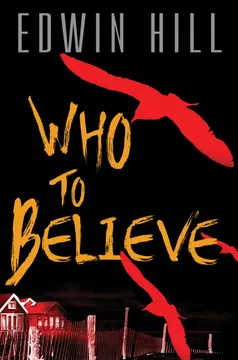
Who to Believe receives generally positive reviews, averaging 3.9 stars. Readers praise its unique multi-POV structure, where the same murder mystery unfolds through seven distinct perspectives, including a dog's viewpoint. The full cast of audio narrators receives particular acclaim. Common criticisms include repetitiveness from retelling events multiple times and occasional difficulty tracking numerous characters. Most readers find the small-town secrets, twists, and interconnected relationships compelling, with many expressing interest in reading more of the author's work.
Characters
Alice Stone
The guarded financial plannerAlice is a successful financial planner, Damian’s wife, and Noah’s mother. Years of moving between countries taught her to enter new communities quickly, read their social currents, and keep part of herself private. She values independence, especially the financial control that keeps her from feeling trapped in her marriage, yet she also wants the ordinary gestures of care that Damian often forgets. Her friendship with Georgia gives her a foothold in Monreith, while her sessions with Farley offer both companionship and a carefully bounded place to test what she might reveal. Alice’s composure is genuine but incomplete: she notices danger quickly, then decides which truths she can afford to face.
Farley Drake
The charming psychiatristFarley is a successful psychiatrist in his mid-thirties who arrives in Monreith with money, confidence, and an appetite for influence. His beauty makes people underestimate how deliberately he manages a room, while his training gives him a vocabulary for observing others and steering their disclosures. He becomes involved with Richard, a client’s husband, and with Alice as her therapist and friend, repeatedly crossing boundaries he knows he should maintain. His polished attention can feel protective, especially to people who need help, but his desire to be indispensable is also a form of control. Farley wants to understand other people’s hidden selves while keeping his own beyond their reach.
Max Barbosa
The hometown police chiefMax is Monreith’s police chief, a lifelong resident whose authority is inseparable from his place in the community. He is observant and protective, particularly toward Chloe, whom he treats like family, and he has spent years looking after Richard as well. His practical competence coexists with old hurts and a longing to leave the town that shaped him. Alice’s attention draws him toward a future he has not quite admitted he wants, while his work demands that he distrust the people he cares about. Max measures himself by the badge, but the story repeatedly tests whether loyalty, attraction, and local knowledge can coexist with impartial judgment.
Georgia Fitzhugh
The public-minded ministerGeorgia is a Unitarian minister, Chloe’s mother, and Richard’s estranged wife. She has spent fifteen years becoming a trusted public figure who can remember names, counsel parishioners, and turn uncertainty into a composed presence. That work gives her genuine compassion, but it also makes her dependent on reputation and on the role she calls Reverend George. She struggles to receive care as easily as she gives it, and her unresolved attachment to Max complicates her history with Richard. Georgia’s wish to remain useful and admired can conceal anger even from herself. She understands that people carry contradictory selves, yet she finds it difficult to allow her own contradictions into public view.
Richard Macomber
The mechanic in transitionRichard is a mechanic and classic-car broker, Chloe’s father, and Georgia’s estranged husband. For much of his life, he has allowed stronger personalities to define him, first as Max’s shadow and then as the supporting spouse beside Georgia. Coming out and beginning a relationship with Farley force him to reconsider how he dresses, eats, and presents himself, though his new confidence is still vulnerable to other people’s approval. Richard is more perceptive than his genial manner suggests and keeps financial secrets of his own. His instinct to avoid conflict protects him in some situations and leaves him exposed in others. Above all, he wants to be a dependable father without losing the self he is only beginning to claim.
Chloe Macomber
The watchful teenagerChloe is thirteen, Georgia and Richard’s daughter, and a sharp observer of adult behavior. She resents her mother’s rules, especially the refusal to give her a phone, and feels the social cost of being left out of her classmates’ online lives. Her pink hair, blunt humor, and willingness to challenge adults are attempts to claim space in a family changing around her. Chloe is more sensitive than she wants others to see, particularly about her parents’ separation and her father’s new relationship. She notices attraction, evasion, and hypocrisy with unusual precision, but her confidence does not make her immune to fear. Her private loyalty to the people she loves is constantly tested by her need to know what is true.
Damian Stone
The true-crime filmmakerDamian is Alice’s husband, Noah’s father, and a documentary filmmaker whose career depends on finding a compelling story inside ordinary life. He is charismatic and physically disciplined, but his professional confidence masks uncertainty about his work and his dependence on Alice’s income. His earlier documentary about abuse in a Maine community established his belief that hidden wrongdoing can be uncovered by patient observation. In Monreith, that instinct draws him toward unsolved deaths and puts pressure on the people around him. Damian can be self-absorbed and careless with other people’s feelings, yet he also forms strong attachments and is willing to pursue a theory when others dismiss it.
Harper
Alice's steadfast dogHarper is a brindled pit bull mix Alice rescued from the woods near the marsh. She is affectionate, food-motivated, and especially close to Alice, but she also accepts care from Max and becomes a quiet bridge between them. Thunder frightens her, a vulnerability that affects where she runs and who follows her. Harper’s dependence on people contrasts with the humans’ guardedness: she trusts through touch, scent, and repeated acts of care. Her presence draws Alice into the community and gives several characters a reason to approach one another. The dog notices more than the people around her realize, though she cannot translate memory into the explanations they need.
Brock London
The state case detectiveBrock is the state detective assigned to Laurel’s murder and later to Farley’s death. He is methodical, skeptical of local gossip, and willing to question the people who seem most helpful. His professional focus makes him a counterweight to Max’s personal entanglements and Damian’s amateur theories. Brock recognizes that small communities offer useful knowledge as well as dangerous conflicts of interest. He pushes Max to disclose his own involvement rather than allowing the chief’s local authority to shield him.
Simon Thibodeau
The grieving restaurateurSimon owns the Firefly Bistro with his wife Laurel and is a trained chef. After her murder, public suspicion isolates him inside his home, while gambling debts and financial strain make his grief look like motive to the town. He is exhausted, defensive, and painfully aware that every part of his life is being judged. His cooking remains a source of pride and practical work, even as the restaurant is closed. Simon’s relationship with Georgia’s church and Alice’s party order reveal a community connection more complicated than the simple portrait of a guilty husband.
Laurel Thibodeau
The beloved restaurant ownerLaurel co-owns the Firefly Bistro with Simon and has spent years serving both customers and the Monreith community. She volunteers to help older parishioners, remembers regulars, and appears generous to the people who depend on her. Beneath that public kindness, she faces financial pressures and keeps secrets of her own. Her relationships connect the church, the restaurant, and the town’s private lives, making her absence a rupture felt far beyond her home. Laurel is not merely the object of other people’s theories; she makes choices under pressure and understands how knowledge can be used as leverage.
Noah Stone
Alice and Damian's sonNoah is Alice and Damian’s teenage son, a friend to Chloe, and a newcomer still adjusting to Monreith after living in Maine. He is technically capable, relaxed about his identity, and more observant than his parents sometimes assume. His friendship with Chloe gives her a companion outside her family, though he also introduces her to risks she does not fully understand. Noah’s ease with change reflects the life his parents have built, but it can make his relationships feel temporary. He wants to be treated as capable while remaining close to his mother.
Maggie
The church's sharp-eyed secretaryMaggie is Georgia’s church secretary, a longtime local who sees the people passing through the parish office and hears more than she lets on. Her humor punctures Georgia’s polished public persona, and her practical warmth makes her a steady adult presence for Chloe. Maggie writes a romance novel in the margins of her workday and is careful about family matters, including her aging mother. She is not an investigator, but her knowledge of the church and its routines matters when objects and secrets move through the building.
Taylor Lawson
Chloe's school rivalTaylor is a classmate who enjoys shaping social groups and knows how to make exclusion feel casual. She has a phone, a circle of friends, and the confidence to press on Chloe’s insecurities. Her behavior is cruel, but the novel also locates her within a troubled home life. Taylor’s conflict with Chloe brings the teenager’s anger into public view and forces the adults to respond to a problem they have only partly understood.
Iris Parke
The state detectiveIris is Brock’s younger colleague, direct and observant during interviews. She questions Richard about inconsistencies in his account and does not let his grief excuse evasions. Her work helps move the investigation beyond Max’s local knowledge and into a more formal examination of evidence.
Zach Lawson
Taylor's troubled fatherZach is Taylor’s father and a Monreith resident whose past affair connects his family to another suspicious death. His choices shape the home life that Taylor carries into school, though he remains mostly offstage.
Karen Lawson
Taylor's dissatisfied motherKaren is Taylor’s mother and one of Farley’s clients. She speaks of the life she might have chosen instead of motherhood, adding another private strain to the Lawson household and another link in Farley’s network of clients.
Steve Alabiso
A suspicious death's victimSteve is a physician whose connection to an affair and prescription drugs makes his death a subject of Damian’s investigation. His case becomes one of the clues that lead the filmmaker toward a pattern.
Jeanine Geller
A second suspicious deathJeanine is a mother whose death unsettles her family and religious community. The circumstances and the affair surrounding her life become another thread in Damian’s attempt to connect apparently separate cases.
Father Jean-Marc
The disgraced Maine priestFather Jean-Marc is the priest whose abuse scandal became the focus of Damian’s documentary in Maine. His actions left a community with painful testimony and helped shape Alice’s understanding of how harm can remain hidden behind authority.
Plot Devices
The Burner Phone
A pocket-sized false trailGeorgia uses a prepaid phone to send Damian anonymous messages about suspicious deaths, first intending to unsettle Farley and later steering Damian toward a theory. Chloe finds the device in the church Lost and Found, tries to unlock it, and eventually discovers the passcode. It passes through Alice, Damian, and Richard’s orbit, while a message sent from Richard’s phone makes him look tied to the dock where Farley is found. The burner converts hidden communication into portable evidence, but its meaning depends on who controls it and who understands its history.
The Therapy File
Private words become evidenceFarley’s sessions with Alice and Georgia create a record of disclosures that seems protected by professional confidentiality. His conduct outside the office complicates that protection: he befriends clients, observes them socially, and stores suspicions in their files. After his death, investigators seek a warrant for those records, hoping to learn what he knew and whether a client confessed to violence. The file is both a clinical tool and a possible map of the town’s secrets. It raises the question of whether confidentiality protects a vulnerable person or shields a dangerous one.
Damian's Crime Board
A pattern built from cluesDamian’s office board links Laurel’s death to the earlier cases of Steve Alabiso and Jeanine Geller. Photographs, dates, and notes give his theory a visible structure, even though the shared connection he first identifies is too broad to prove a serial killer. Farley recognizes the board’s true threat because the earlier victims are his. Georgia also uses Damian’s interest in the board to channel the investigation and communicate with him anonymously. The device makes competing interpretations tangible: the same evidence can serve a filmmaker’s narrative, a killer’s fear, or a detective’s case.
The Croquet Mallet
A party game becomes a weaponThe guests play croquet at Alice’s birthday party, giving several suspects a reason to handle the mallets. After Farley is found with fatal head injuries, investigators notice that one mallet is missing. The detail makes the party’s casual competition part of the murder inquiry and gives the police a possible weapon linked to the farm. Its importance is complicated by the storm and incoming tide, which threaten physical evidence, and by the fact that more than one character has access to the set. A familiar lawn game becomes an object around which suspicion gathers.
Rotating Viewpoints
Each account revises the lastThe novel moves among Farley, Alice, Max, Richard, Chloe, Georgia, and finally Harper, while shifting between the murder investigation and earlier events. Each narrator supplies information the others cannot or will not provide. The changing viewpoints make readers reassess the meaning of an affair, a secret phone, a suspicious visit, or a body on the beach. The structure does not merely delay answers; it shows how self-protection shapes memory and explanation. Harper’s final account is especially consequential because the dog remembers a physical event that the human narrators have concealed or misunderstood.
Download PDF
Download EPUB
.epub digital book format is ideal for reading ebooks on phones, tablets, and e-readers.








