

Plot Summary
The Body in Thipps's Bath
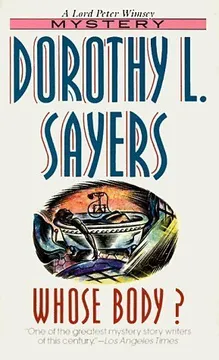
A call from his mother sends Lord Peter Wimsey to Battersea, where architect Alfred Thipps has discovered a dead stranger in his bath. The naked man wears only gold pince-nez, and his freshly arranged hair smells of violet.
Peter notices the open bathroom window, examines the body without Inspector Sugg's permission, and finds details that do not fit its polished appearance. Before leaving, he places a small matchbox in the corpse's mouth to illuminate his inspection, then hears an ambulance arrive as Sugg returns.
Thipps, a nervous man who lives with his elderly mother, is shaken by the discovery and bewildered that the police suspect him. Peter leaves with more questions than answers, especially about how the body entered the locked flat.
The grotesque placement of the body turns a domestic room into a stage, but the clues resist the obvious performance. Its elegant hair and gold glasses imply a prosperous man, while the corpse itself remains anonymous. Peter's first response is both humane and playful: he visits to comfort a frightened acquaintance, then treats the body as a puzzle. That mixture is the novel's defining tension. His amusement makes him observant, yet the presence of a dead stranger already tests whether crime can remain merely entertainment.
The Missing Financier
At Peter's flat, detective Charles Parker brings a second mystery: financier Sir Reuben Levy disappeared the same night. Levy was last seen entering his Park Lane home, where his clothes and personal effects remained, but he was gone by morning.
His bed had been slept in unusually, and neither of his essential pairs of spectacles was missing. Parker checked accidents and questioned Levy's dinner companions, who recalled him in good spirits and expecting an important business deal. Sugg, meanwhile, has arrested Thipps's maid, Gladys Horrocks, and believes the body is Levy.
Peter rejects that identification. The corpse's decayed teeth, rough hands, flea bites, and signs of recent shaving contradict the image of a careful financier, suggesting that someone deliberately altered its appearance.
The two mysteries initially seem to mirror each other: one man has vanished, another has appeared, and both are stripped of the ordinary evidence that establishes identity. Yet Peter refuses to let resemblance stand in for proof. His attention to the corpse's teeth and skin challenges the social shorthand by which wealth is inferred from grooming. Parker's account also makes absence tangible: the missing spectacles matter because Levy could scarcely function without them. The investigation begins by asking whether the body is a person, not merely a clue.
The Police Take Thipps
When Sugg arrests Thipps as well, the frightened architect is left in custody and his deaf mother alone in the flat. She struggles through the telephone directory to reach Peter, who comes with Parker and persuades Scotland Yard to let them investigate. Sugg resists, but Peter uses his connection to the Yard to enter the building and then takes Mrs. Thipps to his mother's home for safety.
The case against Thipps looks worse because he has given inconsistent accounts of his return from Manchester and cannot explain a bruise on his forehead. Gladys has also hidden that she slipped out to a dance and returned late. Their concealed embarrassments make them look guilty, though neither secret yet explains the corpse.
Sayers makes social embarrassment a practical obstacle to justice. Thipps and Gladys conceal ordinary transgressions because they fear exposure, and those omissions become material for Sugg's premature theory. Peter's intervention is not simply a display of privilege: he uses it to protect people whose awkwardness makes them easy to accuse. Mrs. Thipps's determined phone call gives the investigation a human obligation. Once Peter has accepted her trust, he can no longer treat the case as a diverting puzzle without also confronting the consequences of a false accusation.
A Roof Made of Clues
Parker searches the roofs above the flats and finds scraps of cloth caught near Thipps's bathroom window, confirming that someone crossed the rooftops in the rain. At Levy's house, Peter and Bunter examine the bedroom. The bed, boots, hat, and washstand preserve traces of two people: Levy's own marks and a second set, partly smudged as if made through wet rubber gloves.
A smaller bare footprint remains on clean linoleum, and reddish hair lies on the pillow and inside the hat Levy supposedly wore. Peter concludes that a shorter man entered in Levy's clothes, staged a night in the bed, then left in his own. The impostor had planned carefully, but his careless step and stray hairs reveal that Levy did not walk out of his home.
The investigation advances through imperfect residue rather than a witness who can narrate the night. Dirt, hair, and pressure on linen preserve actions their maker tried to erase. This is a material counterargument to Sugg's confidence: the room does not support a voluntary disappearance, but a carefully manufactured impression of one. Peter's reasoning depends on treating small discrepancies as a sequence, not as isolated curiosities. The clues also expose how identity can be staged through clothing and routine, while the body and its traces quietly refuse the disguise.
The Glasses Go to Salisbury
Peter's newspaper notice about the gold chain brings a letter from Thomas Crimplesham, a Salisbury solicitor who says the glasses are his. Their unusual prescription matches, so Peter travels south with Bunter to test the claim.
Crimplesham is nearly eighty, wears a replacement pair, and can account for his journey and evening in Balham; his younger partner, Wicks, confirms the ordinary business surrounding it. The solicitor is genuinely distressed to learn that his glasses were found on a corpse, and his anger at Peter's questions has the force of innocent alarm.
Meanwhile, Peter has questioned American financier John Milligan, who stood to benefit from Levy's absence but appears more vain and hospitable than furtive. Neither lead explains the body.
The glasses shift from a bizarre ornament into a traceable possession, but identification alone does not solve the crime. Peter is willing to test an attractive suspicion and then abandon it when the evidence contradicts him. Crimplesham's age and credible alibi expose the weakness of treating an object as a direct path to its owner. Milligan presents a different trap: financial motive can make a man look culpable even when his conduct gives no confirming evidence. The episode dramatizes disciplined suspicion as a willingness to lose a dramatic theory.
Freke's Convenient Explanation
At the inquest, medical examiners agree that the stranger died from a powerful blow to the neck, but cannot settle when he died. Sir Julian Freke, the celebrated surgeon beside the hospital, dismisses any identification with Levy as absurd and says the dead man looked like someone recently come into money.
The coroner returns an open verdict, while Sugg's case against Thipps and Gladys weakens under questioning. Parker later tells Peter that Levy did visit Freke that night, though the surgeon concealed this at first, and that Freke had secretly bought Peruvian Oil shares before selling them for a modest profit.
Peter also learns that Freke once hoped to marry Levy's wife, Christine. The respected doctor now has access, opportunity, and an old personal connection to the missing man.
Freke enters the story with the authority to define the body, and that authority initially closes questions rather than opening them. His confidence appears persuasive until the investigation compares it with withheld facts: Levy's visit, the unexplained stock purchases, and the doctor's personal history. The inquest's open verdict preserves uncertainty rather than converting medical opinion into certainty. Sayers also complicates motive. A small financial gain seems insufficient by itself, while wounded vanity may persist beneath a respectable public identity. The section turns professional prestige into something that must be examined, not accepted as evidence of character.
One Crime Beneath Two
As clues continue to lead nowhere, Peter reads Freke's book arguing that conscience is a physical process that might be removed. The idea joins the evidence in his mind: Freke could handle bodies at the hospital, knew Levy's house, had reason to resent him, and had lied about the night of the disappearance. Peter sees the missing financier and the anonymous corpse as parts of one design, not separate puzzles.
The realization horrifies him, and an old shell shock episode returns as he imagines the lives at stake. His mother takes him to the country to recover. Before leaving, Peter gives Parker instructions to circulate a description of the corpse before its disguise and to investigate anyone linked to St. Luke's Hospital.
Peter's breakthrough is a reorganization of evidence, but its emotional cost distinguishes it from an intellectual game. The solution implicates a celebrated doctor whose theory makes moral inhibition seem like a dispensable bodily function. Peter's wartime trauma returns when he accepts responsibility for what that theory might permit. His previous reluctance to expose a likable suspect gives way to a more demanding ethic: accurate judgment matters more than preserving his image as a detached amateur. The investigation becomes most serious precisely when Peter stops enjoying its elegance.
The Workhouse Names the Dead
At Denver, Peter rests while Bunter befriends John Cummings, Freke's servant, through a mutual acquaintance. Cummings recalls that Freke worked through the night, used the private hospital entrance, and took an unusual bath around three in the morning after a visitor had come and gone.
Then Parker's telegram reports that a vagrant matching the corpse's original description was injured, died at Chelsea Workhouse, and was delivered to St. Luke's on the day Levy disappeared, on Freke's order.
The evidence supplies the missing route between hospital and flat. Peter returns to London and tells Parker to secure an exhumation order and prepare an arrest warrant. Parker remains doubtful, so he finds a medical student who may remember the dissecting-room subject.
Cummings's account and the workhouse record turn a theory into a testable chain of custody. Neither clue is individually conclusive: a late bath can be eccentric habit, and a hospital delivery can be routine. Together, they place Freke's movements beside the vanished body at the exact moment the investigation needs a link. Bunter's social intelligence proves as useful as Peter's deductions; he wins information by understanding the servant's loneliness and vanity. The evidence also shifts the case from speculation toward verification, with an exhumation planned to identify the dead man.
A Needle at Harley Street
Parker brings medical student Piggott to Peter, who guides him through his notebook and memories until he recalls dissecting the arm of a middle-aged, rheumatic man from the workhouse. The description fits the unknown corpse.
Peter warns Parker that Freke may strike back; soon afterward, Freke appears to need a taxi and Parker, recognizing the danger too late, returns to Peter's flat instead of going home. Peter then visits Freke as a patient and lets the surgeon examine his nerves.
When Freke prepares an injection, Peter grips his wrist and refuses it. The encounter confirms that the doctor understands Peter's suspicion and is willing to use his medical authority as a weapon. Parker now has the student's memory, the workhouse link, and a reason to move quickly.
Piggott's recollection demonstrates that memory is not a sealed archive waiting to be opened; Peter reconstructs it through concrete prompts about drawings, classmates, and the texture of an arm. The method also gives the evidence a human source rather than relying solely on institutional paperwork. In the consultation, Freke's authority becomes intimate and dangerous: the same clinical setting that promises care gives him access to Peter's body. Peter's refusal marks a shift from inference to direct confrontation. His composure is not invulnerability, but a decision to remain alert while afraid.
The Grave Opens
With officials present, the investigators exhume the Chelsea workhouse vagrant. Lady Levy identifies her husband by a distinctive scar, a mole, and a dental feature; the two bodies had been switched. Freke killed Levy with a blow to the neck, then exchanged his body for the vagrant's at the hospital.
He wore Levy's clothes to stage a departure from Park Lane, altered the vagrant's appearance, and left him in Thipps's bath with Crimplesham's glasses, which he had picked up by chance. Police arrest Freke before he can use the hypodermic to kill himself.
His written confession explains the scheme and admits that accidents, including Peter's investigation, ruined his careful design. Thipps and Gladys are cleared, and Peter turns from the case toward a dinner for those wrongly suspected.
Identification by intimate bodily marks reverses the crime's central deception: hair, clothes, and glasses can be altered, but a spouse's knowledge of a scar can restore the person beneath the disguise. Freke's confession reveals not a flawless intellect but a planner undone by coincidence and by his own need to demonstrate mastery. His final attempt to control the story through writing echoes his attempt to control bodies through surgery. Peter's dinner plans restore ordinary social life without erasing the cost: Lady Levy has lost her husband, and the case has forced Peter to recognize that solving a murder is not morally neutral entertainment.
Analysis
Whose Body? builds its mystery around competing ways of knowing. Sugg treats resemblance and suspicious behavior as confirmation. Parker trusts procedure but tests each claim. Peter's strength is his ability to join details that others leave isolated: a repaired pair of glasses, a footprint on clean linoleum, a strand of hair, a hospital delivery. The case argues that evidence is not self-interpreting. A clue gains meaning through its relation to other clues, and a detective's theory must remain answerable to what bodies and objects actually show.
The novel also makes social identity unusually unstable. A financier's clothes can be worn by another man; a corpse can be barbered into a false social type; an innocent architect can appear guilty because he hides an embarrassing night out. Respectability is both a costume and a shield, available unevenly across class. Thipps and Gladys suffer because their small secrets make them legible to the police as suspects, while Freke's prestige initially protects his explanations from scrutiny.
Peter's emotional arc complicates the pleasures of detection. He begins with the relish of a collector finding a rare puzzle, but the investigation brings back his war trauma and forces him to face responsibility for what happens after a solution is found. Parker's insistence that a murder is not a sporting contest challenges Peter's wish to remain charmingly detached. Freke's theory turns that ethical question into the case's darkest argument: if conscience is only a mechanism, can a person treat other lives as material? The resolution answers not with an abstract sermon but through consequences. Levy is mourned, the falsely accused are released, and Peter learns that intelligence can expose wrongdoing, but cannot make its human cost entertaining.
Review Summary
Whose Body? introduces Lord Peter Wimsey, an aristocratic amateur detective. Readers appreciate Sayers' witty writing and character development, particularly enjoying Wimsey's humor and interactions with his valet Bunter. The mystery plot is generally seen as solid, though some find it predictable. Many reviewers note the book's 1920s setting and attitudes, including problematic anti-Semitic elements. While some consider it a promising start to the series, others find it less engaging than later installments or Agatha Christie's works.
People Also Read


Characters
Lord Peter Wimsey
Amateur aristocrat detectivePeter is a younger son of the Duke of Denver, a wealthy collector of rare books, and an amateur investigator who brings playful manners to grim work. He notices inconsistencies others dismiss, but he is not merely a clever machine: his years in the war have left him vulnerable to episodes of shell shock. His partnership with Charles Parker gives his intuition a practical counterweight, while his devotion to his mother and compassion for the accused make the stakes personal. Peter begins by enjoying the puzzle's theatrical strangeness. As evidence points toward real suffering and a respected figure, he must decide whether curiosity is enough to justify pursuing the truth.
Charles Parker
Patient Scotland Yard detectiveParker is a professional detective whose methodical temperament contrasts with Peter's leaps of intuition. He investigates Levy's disappearance, examines the bedroom traces, and keeps asking whether separate clues truly belong to the same story. His caution is not timidity; it reflects a working investigator's awareness that a plausible theory can destroy an innocent person's life. He values his friendship with Peter but challenges the amateur's self-dramatizing impulses, especially when the case becomes morally difficult. Parker's systematic labor and willingness to test Peter's deductions turn their partnership into a form of shared accountability.
Mervyn Bunter
Discreet investigative valetBunter serves Peter with the precision of a professional valet and the instincts of a skilled investigator. He photographs evidence, develops prints, and uses calm conversation to win information from other servants. His loyalty is affectionate but never passive: he watches Peter's health closely and has the courage to manage him during a shell shock episode. Bunter's technical skill complements Peter's deductions, while his social tact reaches people who might distrust a detective. He sees both the absurdities and dangers in Peter's work, and his steady presence keeps the household functioning around each new investigation.
The Dowager Duchess of Denver
Peter's perceptive motherPeter's mother is a cheerful, quick-minded widow whose social ease makes people underestimate her judgment. She passes information to Peter without treating his investigations as a scandal, and she acts decisively when Mrs. Thipps needs shelter. Her old acquaintance with the Levy family supplies personal history that formal inquiries miss. The Duchess's warmth is practical rather than sentimental: she can make room for a frightened stranger, manage a crisis, and still notice the emotional strain Peter tries to disguise. Her relationship with him combines maternal care with a quiet acceptance of his unconventional life.
Alfred Thipps
Nervous Battersea architectThipps is a respectable, anxious architect who lives quietly with his elderly mother. He is easily flustered by police attention and worries about maintaining appearances, which makes him a poor witness to his own innocence. His embarrassment over his movements and his reluctance to expose a disreputable night out create misunderstandings that deepen suspicion. He is neither naturally bold nor especially articulate, but he has a streak of decency that makes him reluctant to endanger an old friend. His vulnerability comes from the gap between the orderly life he wants and the messy facts he is afraid to disclose.
Georgiana Thipps
Alfred's deaf motherMrs. Thipps is an elderly, deaf woman whose misunderstandings of the crisis protect her from some of its immediate terror. She is blunt, independent, and more courageous than the people around her expect. When Alfred is taken away, she searches for Peter's number and persists until she reaches him. That action brings Peter into the case on behalf of a family with little influence or local support. Her stubborn dignity gives Thipps an anchor, even as her deafness complicates communication with police and neighbors.
Gladys Horrocks
Thipps's guarded housemaidGladys is a capable young maid whose private courtship and unauthorized night out become a liability when the body is found. She fears losing her position and being judged for behavior she considers harmless, so her first account is incomplete. That concealment makes her appear evasive to Sugg, though it does not make her involved in the crime. Gladys's predicament shows how a working woman can be judged through assumptions about respectability before her evidence is weighed. Her loyalty to Thipps and willingness to speak more openly under pressure distinguish her from the guilty story others construct around her.
Sir Reuben Levy
Missing City financierLevy is a successful financier, a self-made businessman, and a devoted husband and father. In business he is formidable enough to unsettle rivals, but the details of his diary reveal a home life shaped by small economies, generosity, and affection for his wife and daughter. He is cautious about money and proud of his family's comfort, qualities that make him feel more specific than the public image of a City magnate. His disappearance puts both his financial dealings and his private relationships under scrutiny. Through other people's memories, Levy emerges as a person with a life beyond the market forces that make him a suspect or target.
Christine Levy
Reuben's devoted wifeChristine is Sir Reuben's wife and the mother of their daughter, Rachel. The Duchess remembers her as a warm young woman who chose Reuben despite her family's objections to the match. Her absence from London during the investigation leaves her unable to explain his habits or protect his interests until she returns. Christine's bond with Reuben gives the case a private emotional center beneath its financial and forensic puzzles. She is presented as devoted and resilient, with a capacity to endure painful uncertainty without surrendering her hope.
Sir Julian Freke
Influential surgeon and theoristFreke is a celebrated surgeon, neurologist, and writer whose professional standing rests on disciplined observation and bold theories about the physical basis of mental life. He is impressive in public, intellectually ambitious, and accustomed to being treated as an authority. His hospital work gives him close access to the mechanics of the body, while his books reveal an interest in crime, conscience, and the limits of moral explanation. He is also connected to the Levy family through a long acquaintance. Freke's confidence makes him compelling, but his certainty about human nature invites scrutiny rather than easy admiration.
Inspector Sugg
Confident local inspectorSugg is a police inspector who moves quickly from suspicion to accusation and resents interference from Peter. He treats the visible clues as confirmation of the theory he already favors, especially when Thipps and Gladys fail to explain themselves cleanly. His procedural confidence contrasts with Parker's caution and Peter's attention to anomalies. Sugg is not malicious; he is limited by a habit of forcing evidence into a single expected shape. His presence shows how official authority can be both necessary and fallible.
John P. Milligan
American railroad financierMilligan is an American businessman competing with Levy over a major railway and financial deal. He is blunt, ambitious, and openly proud of his ability to make money, but he is also hospitable and eager to impress the British aristocracy. Peter tests him by inventing a charitable invitation, and Milligan responds with a substantial donation rather than suspicion. His presence broadens the case beyond private motives into the hard contests of international capital. Milligan's combination of commercial ruthlessness and personal warmth makes him difficult to judge by one simple measure.
Thomas Crimplesham
Salisbury solicitorCrimplesham is an elderly, old-fashioned solicitor whose business is respected in Salisbury. He wears a second pair of glasses after losing a treasured pair with a sentimental chain. His careful habits and genuine alarm when Peter explains where the glasses were found make him an important test of the detective's assumptions. Crimplesham represents the possibility that an incriminating object can have an innocent history.
David Wicks
Crimplesham's junior partnerWicks is the younger partner in Crimplesham's law practice. He is steady, familiar with his senior's routines, and able to help confirm the ordinary details of the solicitor's movements. His practical presence offers Peter a check against an alibi built solely on its subject's word.
Mr. Piggott
Medical student witnessPiggott is a large, unassuming medical student who believes he has a poor memory and little talent for observation. Peter's questions help him recover details from a dissection session that he did not realize he had retained. Piggott's modesty is important: he does not think of himself as a witness, yet his ordinary classroom experience may hold information that formal records cannot provide. He represents the value of careful questioning over the assumption that only naturally observant people remember evidence.
John Cummings
Freke's household servantCummings works in Freke's Battersea home and shares the household with his wife. He is lonely and resentful of the doctor's irregular hours, which makes him responsive to Bunter's friendly attention. His account of noises, visitors, and movements around the house provides an imperfect but valuable view of Freke's routine.
The Honourable Freddy Arbuthnot
Peter's City friendFreddy is Peter's easygoing friend and a participant in the City world surrounding Levy's business. He is also interested in Levy's daughter, Rachel, and speaks of the financier with affection and respect. His casual observations give Peter a glimpse of Levy's reputation among friends and business associates.
Plot Devices
The altered corpse
Identity by disguiseThe body in Thipps's bath has been washed, shaved, scented, and arranged to suggest a prosperous stranger. The grooming conflicts with physical details such as damaged teeth, calloused hands, and flea bites. Peter reads those contradictions as evidence that the body's appearance has been deliberately manufactured. The corpse's disguise becomes central to the connection between the Battersea discovery and Levy's disappearance.
The pince-nez and chain
A misplaced identity clueThe elegant glasses and their distinctive chain appear to identify the dead man, but their unusual prescription and sentimental owner lead Peter to Salisbury. Crimplesham's claim proves genuine, showing that the glasses reached the corpse by an indirect route. Their presence misleads the police while also giving the investigation a traceable object to follow.
Forensic residues
Small errors expose stagingFingerprints, muddy marks, hair, a bare footprint, and scraps of cloth preserve movements the intruder tried to conceal. Peter and Parker compare traces from the bathroom with marks in Levy's bedroom. No single detail solves the case; their force comes from how they contradict the staged account of Levy's departure and indicate a concealed route across the roofs.
Peruvian Oil shares
A financial motive in disguiseFreke's quiet purchases and sale of Peruvian Oil shares initially suggest a connection to Levy's business disappearance. The trades produce only a modest profit, making them look puzzling beside the scale of the crime. They help Peter test Milligan and Levy's other financial relationships, then become part of a larger pattern linking Freke to the events of the night.
Freke's theory of conscience
Ideas become evidenceFreke's book treats conscience as a physical process rather than an enduring moral restraint. Peter connects this theory to the doctor's interest in criminal behavior and his own claim that a sufficiently planned crime could evade detection. The book does not prove a crime by itself; it becomes meaningful only when joined to Freke's access to bodies, his connection to Levy, and the physical evidence.
Download PDF
Download EPUB
.epub digital book format is ideal for reading ebooks on phones, tablets, and e-readers.








