

Key Takeaways
Make politics solve problems, not keep old resentments electorally useful.
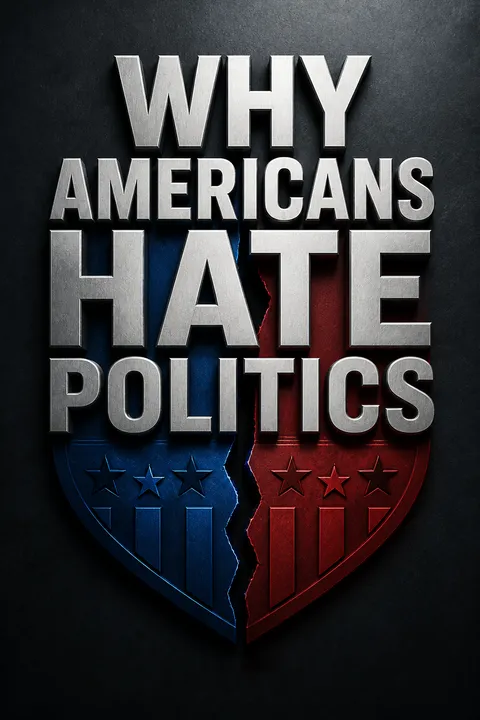
Remedies beat reruns. Dionne argues that democratic politics should resolve disputes and improve conditions, yet campaigns increasingly revive old conflicts because anger can mobilize voters. Crime ads, for example, could inflame fear without producing more effective policing or addressing violence. The result was a feedback loop: public distrust encouraged cynical campaigning, and cynical campaigns gave people more reason to distrust government. Political debate became a contest over who could exploit resentment, rather than a search for workable responses.
Ask what changes. A useful test for a political argument is whether it identifies an actual problem and proposes a plausible remedy. Repeating a symbolic fight may energize a base, but it does not itself improve schools, neighborhoods, or public safety.
What's striking is the distinction between political attention and political capacity. Campaigns can make an issue highly visible while leaving the underlying problem untouched. This resembles a broader institutional failure: organizations optimize for measurable short-term signals, such as attention or votes, rather than the outcome they claim to serve. The book's remedy test is useful because it asks what a proposal would change in practice. Its limitation is that symbolic conflict can sometimes expose neglected injustices, so the key question is whether attention leads to action or substitutes for it.
Treat ideological camps as coalitions with contradictions, not coherent doctrines.
Two camps, shared blind spots. Dionne's central argument is that liberalism and conservatism repeatedly presented public questions as either-or choices, even when many voters wanted a mixture. Conservatives joined market individualism to appeals for family and community, while often resisting limits on markets that harmed local communities. Liberals defended social provision and tolerance, but frequently hesitated to discuss work, family stability, or personal responsibility. Both sides claimed to value community, then retreated when community's demands conflicted with a favored principle.
The old fights persisted. The cultural conflicts associated with the 1960s, especially race, gender, family, and Vietnam, continued to shape campaigns long after circumstances changed. Political leaders could exploit these divisions, making it harder for broader agreements to influence policy.
This analysis anticipates a familiar problem in coalition politics: parties are not philosophical systems so much as alliances among groups with different interests. That makes contradiction politically useful, not merely embarrassing. A coalition can maintain unity by postponing the moment when its members must choose between competing priorities. Dionne's account is strongest when it shows how this postponement blocks practical settlement. Its risk is treating a moderate public as more unified than it is. Shared ambivalence does not automatically yield agreement about which trade-offs are fair.
Participation can widen democracy while quietly handing influence to the already affluent.
A democratic ideal, unevenly practiced. The New Left's idea of participatory democracy called for citizens to shape decisions affecting their lives, rather than merely choose representatives. Its organizing helped strengthen civil rights campaigns and voter registration. But when Democratic reforms transferred influence from party leaders to primaries and open caucuses, participation often favored people with more time, education, and resources. In the party, the professional middle class gained influence while working-class constituencies lost ground.
Good intentions have distributional effects. The reformers did not set out to privilege the affluent. Yet rules that look open to everyone can still advantage those best equipped to use them. The history warns that democratic reform should be judged not only by who is formally allowed to participate, but also by who can realistically do so.
The tension here is between access and effective power. A formally open process can reproduce inequality if participation requires free time, confidence, or specialist knowledge that is unevenly distributed. This is a recurring concern in institutional design: changing who selects leaders does not guarantee that less powerful groups gain influence. Dionne's example also complicates the assumption that decentralization is inherently democratic. The corrective is not to romanticize party bosses, but to assess reforms by whose voice grows stronger and whose becomes easier to ignore.
Address racial grievances without confusing every complaint with racism or innocence.
Race and class overlapped. Dionne rejects two easy accounts of racial politics. Some conservatives used racial resentment to weaken liberal coalitions, but concerns about crime, neighborhood change, and fairness were not always coded racism. Working-class whites often faced changes more directly than wealthier liberals who advocated integration. At the same time, those grievances could coexist with racial prejudice, and political strategists could exploit them. The Willie Horton campaign, which centered on a Black prisoner who committed violent crimes while on furlough, joined a genuine debate about public safety to potent racial imagery.
Neither side was blameless. Liberals often dismissed working-class concerns too quickly. Conservatives sometimes used those concerns to divide voters while resisting broader economic remedies. Dionne argues for policies that address poverty and opportunity across racial lines without denying the history of discrimination.
The section's most useful move is to separate explanation from exoneration. Economic insecurity can help explain why a racial appeal resonates without making the appeal harmless or the resulting policy fair. This distinction matters because public debate often treats motives as all-or-nothing: either prejudice explains everything, or prejudice explains nothing. Dionne also shows how proximity to change shapes political response. Still, class does not dissolve race into a secondary issue. A serious analysis must examine both material competition and the unequal treatment that gives racial categories their political force.
Support working families without forcing a choice between equality and care.
Family change had deep roots. Dionne traces feminism to changes in work and household life that began well before the 1960s. As production moved outside the home, women's education and aspirations expanded. Later, wages stopped rising in 1973, and many families needed two incomes. The growing number of women in the workforce was therefore not simply a victory for feminist ideas or a rejection of family life. It also reflected economic pressure. Meanwhile, professional women gained opportunities more readily than women in low-paid service jobs.
The political trap was false blame. Conservatives blamed feminism for family strain, while liberals sometimes treated concerns about children and family stability as cover for prejudice. Dionne argues for policies that respect women's equality while recognizing caregiving as socially important, rather than pretending the 1950s household can be restored.
This account usefully distinguishes personal choice from structural constraint. The fact that women gained workplace opportunities does not mean the economy made caregiving easy, or that every worker had comparable options. Family policy is therefore also labor-market policy: wages, schedules, and leave determine who can provide care and at what cost. Dionne's call to reconcile equality and family life remains compelling, though the historical picture can be sharpened by asking how care should be shared among parents, employers, communities, and the state, rather than treating family arrangements as a private matter alone.
Use policy criticism to improve programs, not declare reform futile.
Good intentions need evidence. Neoconservative critics challenged liberal faith that government could solve social problems through expert planning. They emphasized unintended consequences: busing could intensify school separation, and antipoverty programs could create confusion or fail to reach their goals. These criticisms mattered because programs should be judged by their effects, not their sponsors' motives. But skepticism hardened into a broader claim that government action usually makes things worse.
Failure is not the whole record. Dionne points to social security's reduction of poverty among older people, Medicare and Medicaid's expansion of health coverage, and Head Start's survival as examples of public programs with important achievements. The lesson is to investigate what works, what fails, and for whom, instead of treating isolated failures as proof that collective action is pointless.
The distinction between evaluation and rejection is central to sound public policy. Complex interventions can produce side effects, and the possibility of unintended consequences is a reason to monitor and revise programs. It is not, by itself, a reason to abandon them. Dionne's examples also challenge a common asymmetry: failures of government are often attributed to government itself, while failures of markets are treated as temporary or individual. A fair comparison must examine both alternatives and include the costs of doing nothing.
Recognize Reagan's coalition as a truce between markets and moral order.
A coalition held together by tension. Postwar conservatives joined libertarians, who wanted less government in economic and personal life, with traditionalists, who wanted public authority to defend inherited moral norms. Frank Meyer's fusionism tried to reconcile individual freedom with virtue, while anticommunism helped bind the coalition together. The Religious Right later supplied a larger constituency for traditionalism. Yet many culturally conservative voters still favored popular New Deal programs, and many market-oriented voters resisted social regulation.
Reagan made the contradictions electoral. Supply-side economics promised tax relief and growth; appeals to family, work, and faith spoke to moral concerns. These messages could attract different voters without resolving what should happen when market policy undermined community or when moral regulation constrained personal liberty. The coalition could win elections, but its internal tensions made a consistent governing program difficult.
Coalitions often succeed precisely because they leave disagreements unresolved. Reagan's skill was less a philosophical synthesis than a political ability to let different groups hear what mattered most to them. That approach can be effective in elections, but governing requires allocating money and authority, which exposes conflicts hidden by broad language. Dionne's framing explains why a coalition's victory does not prove agreement on policy. It also cautions against assuming that values and economic interests map neatly onto separate voter groups.
Don't mistake tax-cut optimism for a durable economic program.
Inflation changed the argument. In the 1970s, rising prices and unemployment weakened the New Deal belief that Democrats reliably delivered jobs. Supply-side economics offered a different explanation: lower taxes could strengthen incentives to work, save, and invest, expanding production and eventually benefiting the wider public. The Laffer curve, which illustrates that tax revenue can fall when rates become extremely high, made the argument easy to communicate. Ronald Reagan presented tax cuts as a hopeful alternative to economic stagnation.
The arithmetic did not cooperate. Conservatives struggled to reduce popular spending, including social security, while also supporting large military budgets and resisting tax increases. The resulting deficits exposed a gap between the promise of smaller government and voters' attachment to its benefits. Dionne recognizes supply-side economics' political force while questioning the claim that tax cuts alone could finance the desired government.
The deeper issue is the difference between an incentive argument and a budget plan. Tax rates can affect behavior, but the existence of that effect does not establish that a particular cut will pay for itself or distribute gains as promised. Dionne's account is persuasive because it connects economic theory to coalition demands: voters wanted both lower taxes and valued public services. The analysis also resists the false choice between markets and public action, though it leaves open how to balance growth, revenue, and fairness under specific economic conditions.
Moderation only works when it delivers benefits and governing competence.
Carter assembled an unusual coalition. In 1976, Jimmy Carter appealed to Black voters, culturally conservative working-class whites, and middle-class reformers. His outsider image and promise of ethical government helped him win, but his coalition did not agree on a clear program. Carter could draw support from groups divided by earlier fights over race, culture, and the Vietnam War.
Good intentions could not replace results. Carter's administration struggled with inflation, unemployment, the hostage crisis, and inconsistent foreign-policy signals. His fiscal caution also limited welfare reform and other initiatives that might have helped working families. Dionne sees Carter as a lost opportunity: a candidate capable of bridging cultural divides who failed to provide enough tangible economic gains or command the confidence needed to govern. His defeat was about competence as well as ideology.
Carter's story distinguishes coalition-building from coalition-maintenance. A candidate can unite voters through style, biography, or shared frustration, yet lose them if governing produces no visible improvement. This is a useful corrective to the idea that a well-positioned moderate automatically occupies a stable center. Moderation is not a destination; it is a negotiation among interests, and it requires choices about who bears costs. Dionne's account is sympathetic without treating Carter's difficulties as merely personal, though economic shocks and presidential decisions remain difficult to disentangle.
Restore civic trust by joining liberty, shared duties, and practical public action.
A center needs substance. Dionne calls for a politics that combines conservative respect for work and personal responsibility with liberal concern for fairness, tolerance, and public provision. He invokes republicanism, a tradition of self-government in which citizens pursue common goods through public life. This is not a demand that government settle every moral dispute. It is a case for using public institutions to address practical problems such as education, health care, jobs, and economic opportunity.
Make government earn confidence. The proposed direction includes support for working families, investment in children's health and education, access to job training, and policies that reward work. It also requires competent administration and accountability, so public spending serves public purposes. The goal is not a compromise for its own sake, but a civic politics capable of turning shared concerns into durable remedies.
The republican ideal gives the book a constructive endpoint: citizens are not only consumers of policy but participants in deciding what a community owes its members. That idea can broaden debate beyond the familiar fight over government size. Yet civic appeals cannot substitute for institutional performance. Trust is built when agencies deliver fairly and transparently, not simply when leaders praise citizenship. The strongest version of Dionne's proposal therefore joins moral language to measurable public results, while protecting dissent and minorities from any claim that a single vision of community should rule everyone.
Analysis
Dionne's history is organized around a productive paradox: Americans dislike politics partly because political actors keep demanding ideological consistency from voters who hold mixed, practical, and sometimes conflicting views. The New Left and the conservative revival both challenged the postwar center, but each helped create a politics that privileged cultural identity and moral signaling over the everyday concerns of work, safety, schools, and economic security. Liberalism lost credibility when it seemed uneasy with popular commitments to family and responsibility. Conservatism lost coherence when it paired market individualism with traditional community, then resisted policies that might protect communities from market disruption.
The book's account is especially strong when it shows how political coalitions change through institutional rules and incentives, not only through shifts in opinion. Primary reforms expanded participation but advantaged people with time and resources. Supply-side arguments translated economic frustration into a tax-cut agenda, while religious organizing converted cultural anxiety into durable party influence. Campaigns then found that symbolic conflicts could unite groups whose material interests diverged. Dionne thereby explains polarization as a strategic achievement built on real grievances, not simply as a public mood.
The argument has limits. Its portrait of a moderate majority risks suggesting that shared ambivalence can become consensus without hard decisions about distribution, race, or care. Voters may agree that government should help families and also oppose the taxes required to do so. Nor does respectful language alone dissolve unequal power. The proposed civic center must specify who pays, who benefits, and how officials are held accountable.
Still, the book's core claim remains valuable: democratic politics is not merely a marketplace for competing preferences. It is a way to identify common problems and make collective choices. The test of renewal is therefore not whether disagreement disappears, but whether citizens can argue about real trade-offs, revise failed policies, and recognize one another as members of the same political community. Dionne's history helps explain why that work became difficult, and why abandoning it only strengthens the politics of resentment.
Review Summary
Why Americans Hate Politics receives generally positive reviews for its insightful analysis of post-WWII American political history. Readers appreciate Dionne's exploration of ideological divides and the erosion of centrist politics. Many find it relevant despite its 1991 publication, noting its explanatory power for current political polarization. Some criticize the book for lacking concrete solutions or overlooking certain issues. Overall, reviewers recommend it as a valuable primer on U.S. political thought evolution, particularly for understanding the roots of contemporary political dysfunction.
Glossary
politics of remedy
Problem-solving democratic politicsA view of democratic politics as a process for addressing public problems, settling disputes, and improving conditions. Dionne contrasts it with campaigns that repeatedly activate anger around familiar symbolic conflicts without producing practical solutions. The concept makes the usefulness of a political argument depend on what it helps change.
false choices
Artificial either-or conflictsPolitical alternatives framed as mutually exclusive even when many citizens want elements of both. Dionne uses the term for conflicts such as government versus markets, family versus feminism, or tolerance versus traditional values. These binaries help political groups mobilize supporters but make it harder to form workable policies around overlapping public preferences.
participatory democracy
Direct citizen involvementThe New Left ideal that citizens should help shape decisions affecting their lives, rather than limit their political role to voting for representatives. Associated with the Port Huron Statement and Students for a Democratic Society, it inspired organizing and party reforms. Dionne notes that reforms meant to widen participation could still favor affluent, well-educated people.
fusionism
Freedom joined to virtueFrank Meyer's effort to unite libertarian commitments to individual freedom and limited government with traditionalist commitments to virtue, religion, and inherited norms. The alliance helped provide a common philosophy for postwar conservatism, with anticommunism serving as a central bond. The tensions between its two strands persisted beneath the movement's electoral unity.
Vital Center
Postwar pragmatic liberal consensusArthur Schlesinger Jr.'s name for the postwar political center built around a market economy, global engagement, a modest welfare state, and gradual social progress. Dionne describes it as influential but exclusionary and often complacent. Conflicts over Vietnam, race, and cultural change weakened it, leaving liberal politics without a stable governing consensus.
supply-side economics
Growth through production incentivesAn economic approach that emphasizes production, work, saving, and investment, arguing that lower tax rates can strengthen incentives and promote growth. In the book, the approach became politically powerful amid the inflation and unemployment of the 1970s. Its promise of tax cuts and prosperity proved easier to advance than matching reductions in popular government spending.
politics of the restive majority
Practical, civic-minded political centerDionne's proposed alternative to ideological polarization, aimed at citizens who value both personal responsibility and public support, both individual freedom and community. It seeks practical policies on jobs, education, families, and economic fairness while restoring a sense of common citizenship. It is a political orientation, not a fixed party platform.
About the Author
Other books by E.J. Dionne Jr.
Download PDF
Download EPUB
.epub digital book format is ideal for reading ebooks on phones, tablets, and e-readers.








