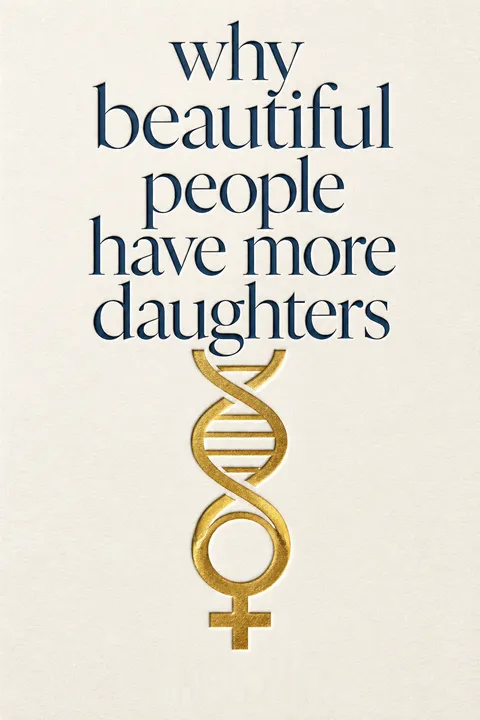


Key Takeaways
Explain behavior through evolved minds interacting with present environments
Human nature is not a blank slate. The book’s central claim is that human preferences and behavior reflect both individual experience and evolved psychological mechanisms: mental tendencies shaped over generations because they helped solve recurring problems of survival or reproduction. These mechanisms do not dictate every action. They operate in particular contexts, alongside learning, culture, and current circumstances.
Explanation is not endorsement. The authors distinguish describing what people tend to do from prescribing what they ought to do. They warn against both assuming natural behavior is morally good and denying biological tendencies because their implications feel uncomfortable. Their framework is best read as a way to generate explanations, not as proof that any behavior is inevitable.
The strongest feature of this lens is its insistence on combining biology with context rather than treating either as a complete explanation. It also offers a useful discipline: a proposed adaptation should identify a specific recurring problem and make predictions that evidence can test. The caution about moral inference matters because explanations of group differences can be misused as excuses for unequal treatment. At the same time, calling a tendency evolved does not establish that it is universal, genetically simple, or more powerful than institutions and learning. Those are empirical questions, not conclusions supplied by the evolutionary label.
Stone Age preferences can misfire in supermarkets, screens, and modern laws
Old instincts meet new conditions. The authors call this mismatch the Savanna Principle: the brain can struggle to understand situations and objects that did not exist in the ancestral environment in which human psychology developed. A preference for calorie-dense sweets could have helped when food was scarce, but becomes costly when such foods are constantly available.
Familiar images can fool us. The book also proposes that repeated television characters may feel like real social companions because the brain did not evolve around screens. Similarly, modern birth control and legal systems may not automatically switch off older responses such as sexual jealousy. The examples illustrate a general point: a tendency that once served one function can produce unwanted effects in a changed environment.
The mismatch idea connects evolutionary psychology to the broader study of technological change: a new environment can expose weaknesses in systems that once worked well. It is especially helpful when it prompts practical questions about how surroundings shape behavior, rather than blaming individuals for every impulse. But mismatch can become a catchall story. To make it scientific, researchers need to specify what the ancestral cue was, how the response works, and what evidence would disconfirm the account. The claim that screens or laws are simply beyond the brain’s comprehension is suggestive, not a demonstrated general rule.
Unequal reproductive stakes can shape sex differences, alongside culture
Different biological constraints matter. The book starts with anisogamy, the fact that eggs are larger and more costly to produce than sperm, and with pregnancy occurring inside the female body. These conditions help explain why, in the authors’ account, women historically faced higher minimum investment per child while men could have much greater variation in reproductive outcomes.
Competition may follow the stakes. The authors call the gap between reproductive outcomes fitness variance. They argue that higher variance among men can make competition for status and mates more consequential for them, contributing to average sex differences in aggression, risk-taking, and competitiveness. They use species where males carry developing young as a contrast: in those cases, females can become the more competitive sex. Their argument describes averages, not every individual.
This account draws attention to an important distinction between the costs of reproduction and the social arrangements built around them. It can help explain why the same competitive pressure may affect groups differently. The comparison with other species is a useful source of testable predictions, rather than an appeal to human uniqueness. Still, reproductive biology does not specify one fixed social outcome. Contraception, law, economic organization, and individual variation can all alter the stakes. The book’s broad claims about sex differences should therefore be treated as hypotheses about population patterns, not as a complete explanation of any person’s behavior.
Read beauty as a possible health cue, not a universal beauty formula
Some preferences may track visible signals. The book argues that attractiveness is not purely arbitrary. It points to cross-cultural agreement in judgments of faces and to studies in which infants looked longer at faces adults rated as attractive. Symmetry and features near the population average are presented as possible indicators of healthy development; youth, hair condition, and waist-to-hip proportions are discussed as cues to health or fertility.
A signal is not a guarantee. The authors use these ideas to explain why beauty standards may recur across societies, while noting that modern cosmetics and surgery can imitate some cues. Their account makes a distinction between an evolved preference and the current cultural forms through which it is expressed. It does not establish that every listed feature reliably measures health or reproductive potential.
The useful insight is that appearance can carry information, and human perception may respond to more than fashion or media exposure. Work on face perception also shows how quickly people form judgments, often before conscious reflection. Yet a quick judgment is not necessarily an accurate diagnosis of health, character, or compatibility. Beauty standards can be shaped by local ideals, status, and commercial incentives as well as shared perceptual tendencies. The book’s evolutionary explanations are most persuasive when they identify measurable cues and competing explanations, rather than treating one culturally familiar ideal as biology’s universal template.
The book’s title claim is a statistical hypothesis, not a rule
A small difference can become a bold headline. The authors apply the generalized Trivers-Willard hypothesis, which predicts that parents’ heritable traits may influence whether they have more sons or daughters when a trait benefits one sex more. They cite a study in which very attractive young Americans had a 44 percent chance of having a son as their first child, compared with 52 percent among everyone else. In that study, attractive parents were therefore more likely to have a daughter first.
The claim is about probabilities. The authors reason that attractiveness may benefit women’s reproductive success more than men’s, making daughters a favorable outcome for attractive parents. A group-level association cannot predict the sex of a particular couple’s next child, and the cited result does not by itself establish the proposed evolutionary mechanism.
This is a memorable example of how a title can compress a probabilistic research claim into a striking phrase. The proposed mechanism is coherent within the book’s framework, and the numerical comparison makes the claim testable. But a difference in observed rates can have several explanations, including sampling variation, and the mechanism requires evidence beyond the association itself. The right question is not simply whether attractive parents had more daughters in one sample, but whether the effect replicates, under what conditions, and through what biological pathway. A good headline should invite that scrutiny, not replace it.
Minds may prefer costly false alarms over dangerous missed signals
Errors have unequal consequences. Error Management Theory, developed by Martie Haselton and David Buss, proposes that natural selection can favor a bias that reduces the total cost of mistakes, even if it increases their frequency. In the book’s example, a man who mistakes friendliness for sexual interest may face rejection; a man who misses genuine interest loses an opportunity. The authors argue that this imbalance can help produce male overestimation of women’s sexual interest.
The same logic travels. The book connects this kind of bias to religious belief: when an ambiguous event could have an intentional cause, overlooking a predator or enemy could be more dangerous than wrongly suspecting one. A Safeway customer-service policy that asked cashiers to smile and make eye contact illustrates how a behavior intended as friendliness could be interpreted differently across people.
This framework offers a powerful way to understand why perception is not always neutral. In decision science, the same evidence can rationally support different thresholds when the costs of false positives and false negatives differ. The idea can illuminate social misunderstandings without assuming that either party is consciously choosing to misread a situation. Its limits matter, though: an evolutionary account of a bias does not establish that every person has it or that it excuses harmful conduct. The specific predicted bias must be measured and compared with alternatives such as norms, experience, and situational incentives.
Marriage patterns respond to resource inequality and women’s choices
One rule does not fit every society. The book distinguishes monogamy, one husband and one wife, from polygyny, one husband and multiple wives, and polyandry, one wife and multiple husbands. It reports that 83.39 percent of surveyed traditional societies practiced polygyny, while polyandry was rare. The authors argue that the distribution of resources helps shape these systems: where a wealthy man is far better off than a poor one, some women may prefer sharing his resources to marrying a poorer man.
Modern monogamy can be sequential. The authors describe divorce and remarriage as serial polygyny, meaning that a person has multiple spouses in sequence rather than at the same time. They also argue that monogamy can benefit most men by giving each a chance to find a spouse, while simultaneous polygyny can concentrate partners among a few men. These are proposed population-level incentives, not universal preferences.
The chapter’s main contribution is to treat marriage systems as institutions shaped by incentives, rather than assuming one arrangement is biologically natural and therefore inevitable. The resource-inequality argument is particularly useful because it links household choices to broader economic structure. However, marriage is also governed by law, religion, gendered power, and personal commitments. Calling divorce serial polygyny captures one demographic pattern but can obscure the distinct meanings and constraints of remarriage. The framework is most useful when it explains how economic incentives interact with institutions, not when it reduces marriage to a simple reproductive calculation.
Parenting patterns reflect investment, certainty, and family support
Care can be shaped by unequal costs. The authors use paternity uncertainty and pregnancy’s unequal demands to explain why mothers, on average, may invest more directly in children than fathers. They connect this account to patterns such as mothers more often receiving custody after divorce and women maintaining more ties with relatives, who are certain of their genetic relationship to a child.
Family decisions have multiple causes. The book also discusses findings that couples with sons have lower divorce rates and that girls whose parents separate early may reach puberty sooner. It offers evolutionary explanations for both, while acknowledging that puberty reflects genetic and environmental influences. These cases show the book’s method: start with a population pattern, propose an underlying mechanism, and seek evidence. They do not show that all mothers are more committed or that family outcomes can be inferred from a child’s sex.
The emphasis on caregiving costs helps make visible work that is often treated as a personal preference or a cultural default. It also connects family structure to kinship networks and resource allocation. Contemporary family research needs to keep that insight while resisting a one-directional story in which biology fixes caregiving roles. Legal rules, income, parental leave, and relationship quality shape who provides care and who can afford to do so. The book’s evolutionary explanations are therefore most valuable as prompts to investigate mechanisms, not as grounds for assuming that mothers or fathers must behave in a particular way.
Status competition may fuel both crime and conspicuous achievement
Competition can take lawful or violent forms. The authors use the age-crime curve, the observed rise in offending during adolescence and young adulthood followed by decline, to propose that male competition changes with the costs and benefits of pursuing mates and status. They connect a similar age pattern in some creative fields to the same broad competitive drive. Marriage and parenthood, in this account, can shift effort away from competition and toward existing family responsibilities.
Workplace gaps get the same lens. The book argues that average differences in risk tolerance, status-seeking, and willingness to sacrifice time or family life can contribute to occupational and earnings gaps. It challenges explanations based solely on discrimination. But it does not follow that discrimination is absent, or that competitive motives explain every career choice, crime, or creative achievement.
The attempt to explain apparently unrelated behaviors with a common incentive is intellectually ambitious. It encourages comparison across crime, career ambition, and creative work, and it raises an important question about when competition pays. The danger is over-unification: a shared age pattern does not prove a shared cause, and correlation between marriage and desistance does not show that marriage itself changes motivation. In labor markets, individual preferences and institutional barriers can operate at once. A sound analysis measures both, rather than treating biological and structural explanations as mutually exclusive.
Treat evolutionary accounts of religion and conflict as hypotheses, not verdicts
Religious belief may be a byproduct. The authors propose that people readily detect intention behind ambiguous events because missing a real threat could be more costly than imagining one. This tendency, sometimes called an agency-detection mechanism, could help explain beliefs in supernatural agents without religion itself being an adaptation. They also argue that group favoritism may have roots in kinship and cooperation, while the boundaries of groups can shift.
Some applications outrun their evidence. The book links women’s greater religiosity to greater risk aversion and offers a highly reductive account of suicide bombing based on polygyny and promised rewards after death. It also suggests intermarriage can weaken group boundaries. These are not equally established claims. The authors themselves list major unanswered questions, including why people choose childlessness and why some die for their country.
The distinction between a trait that evolved for a function and a byproduct of other cognitive systems is essential in evolutionary research. It prevents the assumption that every widespread belief must directly improve survival or reproduction. The account of threat detection gives a plausible route from ordinary cognition to supernatural interpretation, while flexible group boundaries point toward the importance of social experience. The proposed explanation of suicide bombing, by contrast, compresses political, historical, and personal causes into a single motive and is not established by the evidence presented. The book’s open questions are a useful reminder that a coherent story is not yet a scientific answer.
Analysis
This book is an ambitious introduction to evolutionary psychology organized as a sequence of everyday puzzles. Its recurring move is to connect a visible pattern, such as a sex difference in mating, a family arrangement, or age-related changes in crime, to an invisible mechanism shaped by ancestral pressures. The approach is memorable because it asks readers to look beneath stated motives and consider the conditions under which a preference might have been useful. Its central corrective, that biology belongs in explanations of human behavior, remains valuable.
The method also creates a recurring epistemic hazard. A plausible adaptive story can be mistaken for evidence of the adaptation itself. The strongest cases in the book are those that propose a mechanism, derive a prediction, and compare it with observations, as in the competing explanations of violence against wives. Weaker cases move quickly from a broad pattern to an ultimate reproductive motive, particularly when addressing complex political violence or workplace inequality. In such cases, historical context, institutions, and alternative causal pathways need equal attention.
The authors reject both biological determinism and environmental determinism in principle, but some applications give biology more explanatory weight than the evidence warrants. Modern readers should distinguish levels of explanation: evolutionary history may help explain why a capacity exists, while social norms and present incentives shape when and how it appears. Neither level cancels the other. A group average also cannot diagnose an individual or justify unequal treatment.
The book’s own creation carries a quieter narrative. Alan Miller conceived the project and drafted portions before dying of Hodgkin’s disease at 44; Satoshi Kanazawa completed and revised the manuscript while retaining Miller’s ideas. That history fits the book’s format: a lively set of questions, and an unfinished research program. Its best invitation is not to accept every answer, but to ask what evidence would distinguish a good evolutionary explanation from an appealing story.
Review Summary
Why Beautiful People Have More Daughters receives mixed reviews. Some readers find it thought-provoking and a good introduction to evolutionary psychology, praising its accessibility and interesting questions. However, many criticize its oversimplification, lack of scientific rigor, and controversial claims. Critics argue that the book makes sweeping generalizations, ignores cultural differences, and reduces complex human behavior to evolutionary explanations. Some readers appreciate the book's challenge to conventional thinking, while others find its arguments offensive or poorly supported. Overall, it's seen as a polarizing but engaging read that sparks debate.
People Also Read





Glossary
evolved psychological mechanisms
Adapted mental processesThe book’s term for psychological tendencies shaped by natural or sexual selection because they helped solve recurring problems of survival or reproduction. They can influence attention, emotion, and behavior without deliberate choice. The authors describe them as domain-specific: a mechanism that helps with one kind of problem does not automatically solve every problem.
Savanna Principle
Ancestral minds meet modern noveltyThe proposition that the human brain has difficulty comprehending and responding to entities or situations absent from ancestral environments. The book applies it to modern conditions such as abundant calorie-dense food, television images, contraception, and legal institutions. The authors present the principle as relatively new and not yet firmly established through rigorous testing.
environment of evolutionary adaptedness
Ancestral selection conditionsThe ancestral environments in which psychological and physical adaptations developed through evolution. The book emphasizes the long period when human ancestors lived as hunter-gatherers, before agriculture and modern institutions. The term does not refer to one fixed, identical place or moment, but to the conditions relevant to the evolution of particular adaptations.
fitness variance
Spread in reproductive outcomesThe difference between the most and least reproductively successful members of a group. The authors argue that differences in reproductive biology can produce greater fitness variance among men: some may have many children, while others have none. They use this idea to explain why competition for mates and status may have different average stakes for men and women.
Error Management Theory
Bias shaped by error costsA theory that decision-making systems can evolve biases that minimize the total costs of errors rather than the number of errors. When one mistake is much more damaging than another, a mind may become more likely to make the less costly mistake. The book applies this logic to judgments about sexual interest and to the detection of possible intentional threats.
Trivers-Willard hypothesis
Parental condition and offspring sexA hypothesis that parents in better condition, such as those with higher wealth or status, may produce more sons, while parents in poorer condition may produce more daughters. The proposed logic is that sons’ reproductive outcomes can vary more widely with inherited resources. The book also discusses a generalized version that extends the prediction to other heritable parental traits.
Standard Social Science Model
Environment-first account of behaviorThe authors’ label for a perspective that gives social environment and socialization primary responsibility for human behavior. They associate it with assumptions that humans are largely exempt from biological explanation, that evolution shaped the body but not the mind, and that the mind begins as a blank slate. The book argues against this model while still recognizing environmental influence.
generalized Trivers-Willard hypothesis
Heritable traits and offspring sexAn extension of the Trivers-Willard hypothesis proposing that any heritable parental trait that benefits sons more than daughters could be associated with a greater proportion of sons, while traits that benefit daughters more could be associated with more daughters. The book applies this proposal to physical attractiveness, body size, violence, and occupational brain types, while treating the supporting findings as empirical claims to evaluate.
FAQ
What's Why Beautiful People Have More Daughters about?
- Exploration of Human Nature: The book examines human behavior through evolutionary psychology, focusing on how ancestral survival needs shape modern actions.
- Focus on Gender Differences: It highlights inherent differences between men and women, particularly in mating strategies and social dynamics.
- Cultural Implications: The authors analyze how evolutionary principles manifest in contemporary society, affecting everything from marriage to workplace dynamics.
Why should I read Why Beautiful People Have More Daughters?
- Insightful Perspectives: The book offers a unique lens on everyday behaviors and societal norms, linking them to evolutionary principles.
- Challenges Conventional Wisdom: It questions popular beliefs about gender roles and family dynamics, encouraging critical thinking.
- Engaging Writing Style: The authors present complex ideas in an accessible manner, making it suitable for both academic and general audiences.
What are the key takeaways of Why Beautiful People Have More Daughters?
- Evolutionary Psychology Framework: Human behavior is influenced by evolved psychological mechanisms shaped by ancestral survival needs.
- Gender Differences Explained: Men and women have different reproductive strategies, with men often seeking multiple partners and women focusing on securing resources.
- Cultural Universals: Many behaviors and preferences are universal across cultures, suggesting a biological basis rather than purely social constructs.
What are the best quotes from Why Beautiful People Have More Daughters and what do they mean?
- "Mommy’s baby, Daddy’s maybe.": Highlights paternity uncertainty, emphasizing men's lack of assurance in their biological connection to children.
- "Beauty is in the adaptations of the beholder.": Suggests beauty standards are rooted in evolutionary adaptations signaling health and reproductive fitness.
- "Men have built civilizations in order to impress women.": Underscores the idea that human achievement is driven by the desire to attract mates.
How do men and women differ in their reproductive strategies according to Why Beautiful People Have More Daughters?
- Men's Strategy: Men are inclined to seek multiple partners to maximize reproductive success, driven by the potential to father many offspring.
- Women's Strategy: Women focus on securing a reliable partner who can provide resources and support for their children.
- Role of Attractiveness: Physical attractiveness plays a role, with men often seeking beauty and women seeking stability and resources.
What is evolutionary psychology as defined in Why Beautiful People Have More Daughters?
- Study of Human Nature: Evolutionary psychology studies how evolved psychological mechanisms influence behavior.
- Adaptations to Solve Problems: Adaptations are products of evolution that help solve specific adaptive problems related to survival and reproduction.
- Contrast with Social Sciences: It contrasts with the Standard Social Science Model, which often overlooks biological influences on behavior.
What is the Savanna Principle mentioned in Why Beautiful People Have More Daughters?
- Human Brain Limitations: The principle states that the human brain is adapted to the ancestral environment, affecting modern perceptions and reactions.
- Difficulty with Modern Concepts: Our brains struggle with entities and situations that did not exist in the ancestral environment, leading to maladaptive behaviors.
- Examples in Behavior: Challenges like distinguishing between real and media representations of relationships illustrate the principle's relevance.
Why are there so many deadbeat dads but so few deadbeat moms according to Why Beautiful People Have More Daughters?
- Paternity Uncertainty: Men face paternity uncertainty, making them less likely to invest in children they are unsure are theirs.
- Higher Fitness Ceiling for Men: Men can potentially father many children, prioritizing new reproductive opportunities over existing offspring.
- Maternal Commitment: Women are more certain of their maternity and thus tend to be more committed to their children.
What influences the sex of a child according to Why Beautiful People Have More Daughters?
- Trivers-Willard Hypothesis: Wealthier parents are more likely to have sons, while poorer parents tend to have daughters.
- Genetic Factors: Traits like physical attractiveness or social status can influence the likelihood of having sons or daughters.
- Cultural Evidence: Cross-cultural evidence supports these claims, showing societal factors affecting sex ratios at birth.
How does Why Beautiful People Have More Daughters explain the prevalence of prostitution and pornography?
- Men's Desire for Variety: Men's evolutionary drive for sexual variety leads to the existence of prostitution.
- Cultural Acceptance: Societal norms and male preference for variety contribute to the pornography industry.
- Female Perspective: Women are less likely to engage in casual sex due to higher associated risks, explaining gender disparity in consumption.
Why do beautiful people have more daughters according to Why Beautiful People Have More Daughters?
- Attractiveness and Reproductive Success: Attractive parents are more likely to have daughters because beauty benefits women in mating contexts.
- Evolutionary Logic: Beautiful women have greater reproductive success, passing on beauty genes to daughters.
- Statistical Evidence: Attractive individuals have a higher probability of having daughters compared to less attractive individuals.
What is the age-crime curve discussed in Why Beautiful People Have More Daughters?
- Universal Pattern: Criminal behavior peaks in late adolescence and early adulthood, then declines with age across cultures.
- Evolutionary Explanation: This pattern is linked to reproductive strategies, where young men engage in riskier behaviors to compete for mates.
- Implications for Society: Understanding this curve can inform policies on crime prevention and rehabilitation, targeting younger populations.
Download PDF
Download EPUB
.epub digital book format is ideal for reading ebooks on phones, tablets, and e-readers.








