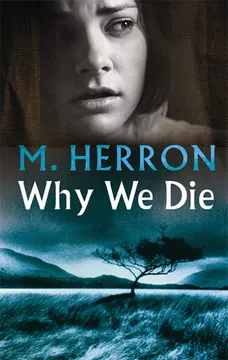


Plot Summary
Prologue
Before the story begins, an unnamed woman wakes inside a sealed container, discovers she has been buried, and realizes that the world continues without her. She struggles against the walls, forgets the instructions that might keep her alive, and screams.
Her terror is sharpened by the knowledge that she will never learn what happens next. The opening turns a coffin into the book’s first image of isolation, then leaves its identity and circumstances to be discovered in the story.
The opening makes death more than a future event: it is enforced exclusion from the stories other people continue to live. The buried woman’s fear comes from confinement, but also from losing all influence over what happens next. That distinction prepares the novel’s two central pressures: the body’s vulnerability and the mind’s need to believe it can still choose. The container’s identity remains hidden, so the image works as a promise of revelation as well as a warning.
The Hotel's Unfinished Night
Eight months after his wife Emma died, Tim Whitby checks into the Oxford hotel where they once celebrated their wedding. He plans to drink whisky and take a bottle of antidepressants, but a woman named Katrina Blake sits at his table, her bruised face partly concealed by makeup. She gives a harmless explanation for the injury and talks about her husband, while Tim, too engulfed in grief to understand what she is asking of him, lets the evening pass.
Upstairs, he drinks heavily but leaves the pills untouched. He wakes ashamed and alive, flushes the tablets, and returns to work. Later, remembering Katrina’s bruise and the strange conversation, he recognizes her as someone who may have been asking for help. He decides to find her in Totnes.
Tim’s first act of connection is accidental, and his failure to recognize Katrina’s distress parallels his conviction that he has already become irrelevant to other people. Yet the encounter interrupts his suicide without curing his grief. His later decision to find her does not arise from sudden confidence; it grows from the recognition that someone else’s danger briefly reached him through his own pain. The hotel, tied to his marriage, makes the meeting both a return to loss and an opening toward responsibility. Survival begins here as an unfinished obligation, not a restored life.
The Jeweler's Missing Inventory
Zoë Boehm, a private detective short of money, learns she owes the tax authorities more than four thousand pounds. At the same time, jeweler Harold Sweeney hires her to locate the men who robbed his shop. Their haul included valuable items he cannot report to police because some were never properly documented. One robber shot passerby Derek Hunter in the leg with a crossbow during the escape.
Sweeney offers Zoë five thousand pounds to find the thieves, asking only for their whereabouts, not their arrest. The money could solve her immediate crisis, but the weapon and the injured stranger make the job more than routine. Zoë accepts, aware that Sweeney’s hidden inventory ties him to a criminal trade he wants kept quiet.
Zoë’s financial pressure is not merely a motive for taking the case; it tests the line she draws between professional work and complicity. Sweeney wants the benefits of police protection without the scrutiny that would expose his own dealings. His request therefore turns investigation into a bargain among people who each conceal something. Derek’s wound punctures the comforting idea that stolen property is victimless. Zoë accepts for practical reasons, but her attention to the human cost signals that money will not be her only measure of success.
Win Sees the Beetle
While watching Sweeney’s shop, Zoë notices Oswald Price arrive in a brown Audi driven by Win, a powerful, leather-clad woman who works as his bodyguard and chauffeur. Win catches Zoë following them and briefly chokes her, but Zoë threatens her with nail scissors, and the two talk instead of fighting. Win identifies the robbers as Arkle, Baxter, and Trent Dunstan, adopted brothers who work for Price.
Baxter plans and manages the money; Trent drinks and follows orders; Arkle is impulsive and enjoys violence. Win proposes that she and Zoë take the brothers’ accumulated cash before Price can claim it. Zoë refuses to become her partner, but now knows where the gang operates and how badly its members trust one another.
The conversation with Win changes Zoë’s case from a search for unknown thieves into a study of a fragile criminal system. Each man has a function, but Arkle’s appetite for action threatens the arrangements that make the crew profitable. Win’s proposed theft mirrors Price’s own exploitation of the brothers, while her appeal to Zoë relies on shared suspicion rather than trust. Zoë resists the partnership, yet the information comes with a moral complication: exposing the gang may prevent further violence, but it may also provoke it.
An Apple at the Gate
Tim reaches Katrina’s childhood home in Totnes and finds her father, Kenneth Blake, staring blankly inside. Arkle catches Tim peering through a window, mistakes his interest for a threat, and leads him to the Dunstan gravel yard. There Arkle fires his crossbow close enough to terrify Tim, who escapes only when Zoë throws an apple over the gate.
She and Tim run together, leaving Arkle behind with his weapon and his fury. Soon afterward, Trent phones the yard with news that Baxter is dead and Katrina has been arrested. Arkle’s grief turns quickly toward revenge. Tim returns to Oxford with Katrina’s name and a reason to understand the bruise he had dismissed; Zoë now knows the Dunstan family has become more dangerous.
The apple offers a small, absurd interruption to Arkle’s preferred world, where other people are targets and violence feels like skill. Zoë uses improvisation rather than strength, and Tim’s escape depends on accepting help from someone he barely knows. Baxter’s death then converts Arkle’s instability into a personal vendetta. The two men leave the yard carrying different knowledge: Tim has seen the danger behind Katrina’s story, while Zoë has seen how quickly Arkle can make a private inquiry lethal.
Death Notice for Zoë
Zoë continues looking for Sweeney, but his shop and home are suddenly empty. Her former police contact, Bob Poland, has already left a condolence card and a false death notice at her flat, then cut her electricity and disabled her radio. The prank confirms he is still stalking her, though she has no time to deal with him.
In Totnes, Zoë searches the Dunstans’ yard and sees Arkle with Trent and Kenneth Blake. Arkle catches her outside the house, strikes her, and shuts her inside a disused freezer beneath the garden shelter. Zoë wakes in darkness, confined by the walls she cannot move, and believes she has been buried alive. The danger she has been observing has now taken control of her body and choices.
Poland’s false death notice turns Zoë’s fear into a joke imposed on her by someone who knows her vulnerabilities. Arkle’s attack makes that joke brutally literal: she is alive, but cut off from every ordinary means of proving it. The freezer joins the book’s opening image of burial, while the concealed garden setting makes the violence seem domestic and almost invisible. Zoë’s competence cannot prevent every threat; here, survival depends on someone else finding the sound she makes from inside the box.
The Story Behind Bruises
After Baxter’s death, Katrina is released while the police investigate and the News Chronicle hides her in a London safehouse. Reporter Helen Coe questions her about the marriage and discovers that Baxter repeatedly beat her.
Katrina says she had concealed earlier injuries with invented accidents, hoping someone would understand without forcing her to speak plainly. On the morning he died, Baxter struck her with a door as she tried to leave; dazed and frightened, she put out a hand holding a kitchen knife, and he ran into it.
Helen records Katrina’s account, but Arkle traces the newspaper’s work to the safehouse. He assaults Helen until she reveals where Katrina is hiding, then attacks Jonno, the young reporter guarding her, and enters the building.
Katrina’s account resists the neat morality that outsiders often demand from people living with abuse. Her silence was not proof that the violence was minor; it was part of how she managed danger and preserved a possible route out. Helen’s confidence that she would have fought back exposes the gap between imagining courage and living under repeated coercion. By turning the story into a newspaper exclusive, Helen offers protection but also creates a trail Arkle can follow. Public attention becomes both shield and signal.
The Wall Into Safety
Tim returns to Totnes, hears banging from the freezer, and releases Zoë. Together they use information from Vicky, a teenage computer expert, to trace the Dunstans’ van through London’s congestion-charge cameras. They reach the safehouse as Arkle climbs toward Katrina’s room. Zoë enters from outside, kicks Arkle down the stairs, and helps Katrina escape while Trent pursues them in the van.
Tim drives them clear. At Zoë’s flat, Katrina explains that Baxter managed the brothers’ stolen proceeds and that she knows where he hid the cash. Zoë admits she was originally searching for the money, not Katrina. The admission does not end their alliance: Arkle is still hunting them, and Katrina needs help before he finds her again.
The rescue depends on three forms of knowledge working together: Vicky’s technical access, Tim’s willingness to return, and Zoë’s physical nerve. Each person offers something the others lack, making survival collective rather than heroic in the solitary sense. Zoë’s confession about the money keeps the alliance from becoming sentimental. Katrina’s safety and Zoë’s financial motives coexist uneasily, but honesty gives them a more usable basis than pretending to be selfless. The safehouse’s walls cannot protect Katrina once Arkle learns its address.
Tim Becomes the Leverage
After Tim returns to his Oxford home, Arkle finds him there because Tim had given him his name and route in Totnes. Arkle and Trent demand to know where Katrina is and where Baxter’s money is hidden. Tim refuses, so Arkle kicks him and uses his pain to force a call to Zoë. Hearing Tim hurt, Zoë agrees to meet Arkle and trade information for his release.
She tells Katrina that the brothers have taken Tim, then prepares to bargain without surrendering Katrina. Her plan shifts the danger away from the safehouse, but it gives Arkle control of the meeting place and a hostage he can injure while he waits. Tim’s impulse to help has made him vulnerable again, but he does not withdraw from the risk.
Tim’s willingness to help has become costly, yet the story does not present his vulnerability as foolishness. He acts from a renewed sense that other people matter, even when he cannot control what they do to him. Arkle turns that decency into leverage, treating pain as a tool for rearranging other people’s choices. Zoë’s agreement is not surrender so much as triage: she accepts a dangerous meeting to keep Tim alive while preserving Katrina’s chance to escape.
A Bargain Among Graves
At a cemetery, Zoë tells Arkle that the stolen proceeds are stored at a facility called Big Red Box, but insists he release Tim before she gives him the access key. Arkle lets Tim go and keeps Zoë with him and Trent. Bob Poland, who has been following Zoë in hopes of finding the money, appears nearby.
Arkle shoots him in the leg with the crossbow, leaving him alive but unable to pursue them. Tim reaches Katrina, and they set off for the storage facility. Arkle takes Zoë to Kenneth Blake’s house to search for the key she says is there. Zoë has sent Tim toward the cash with one key, while Arkle believes another will lead him to the same hoard.
The cemetery makes the negotiation feel less like a triumph than a temporary arrangement with death already in view. Zoë uses information as currency, but she also understands Arkle well enough to know that a promise alone will not protect Tim. Poland’s appearance shows how Zoë’s past has converged with the present case; his pursuit of her now endangers him as well. The two routes from the graveyard create the novel’s final imbalance: Tim and Katrina can reach the money, while Arkle is still searching for the key.
Two Keys, No Money
Tim and Katrina use Baxter’s swipe key to enter Big Red Box and remove £183,000 in cash. At Kenneth’s house, Arkle discovers Katrina’s second key hidden inside a cracked stone frog, a hiding place her father remembers seeing her use. He drives to the storage site, finds the unit empty, and returns to punish Zoë.
Trent has tied her up, but she cuts at the binding with a broken vase fragment and knocks him down. Arkle threatens her with a crossbow, even placing an apple on her head to recreate the shot he once bragged about. Kenneth steps behind him and strikes his skull with the hearse’s missing hood ornament. Zoë kicks Trent down the stairs and calls for help as the police arrive.
The two keys reveal how Baxter’s planning and Katrina’s secrecy have outlasted the brothers’ assumption that the money belonged to them. Arkle can retrieve the second key, but he cannot undo the fact that someone reached the cash first. His apple game turns his earlier boast into a threat, while Kenneth’s intervention draws on a lifetime of working alongside death without making him a passive witness to it. Zoë survives through small actions under constraint: cutting twine, waiting for an opening, and refusing to accept Arkle’s framing of events.
Emma's Borrowed Name
At a rented cottage, Tim believes he and Katrina can hand the money to police and let her defend herself in court. Katrina fears arrest and years of suspicion, so when Tim pauses to hold her before calling the police, she stabs him and hides his body. She takes the cash to London, pays identity broker Dennis for papers in the name Emma Standish, and prepares to disappear.
Win intercepts her outside Dennis’s premises and takes the money, leaving Katrina alone with the new identity she bought. Katrina later tells police where Tim’s body is. Zoë, having helped bring the Dunstans into police hands, visits Helen Coe in a coma and recounts the events from Sweeney’s first call through Katrina’s failed escape.
Katrina’s final betrayal exposes the limit of her self-protective logic: she can imagine a future only by removing witnesses and evidence, even when those witnesses offer care rather than judgment. The new name Emma joins her to the dead woman whose husband first tried to help her, making the escape both an appropriation and an uneasy memorial. Win’s interception strips the money away but cannot restore Tim. Zoë’s visit to Helen answers the book’s opening fear in a modest form: someone still tells the story, even when its listeners cannot respond.
Analysis
The novel places several characters beside death, but gives them sharply different responses to its certainty. Tim initially treats his wife’s death as proof that his own life has no future; his attention turns outward only when he recognizes that Katrina’s bruises may be a request he failed to answer. Zoë, meanwhile, works in the practical territory between danger and consequence. She knows how to watch, lie, and improvise, yet her involvement repeatedly exposes the limits of professional detachment. A client’s money becomes a question of whether recovering it is worth the damage it may cause.
Katrina’s story complicates the language of choice. Her delayed escape and invented explanations are not evidence that she welcomes violence; they show how fear can narrow the imagined world until staying seems less dangerous than leaving. Helen’s initial certainty about what she herself would do is corrected by Katrina’s account, which refuses a simple division between courage and weakness. The novel therefore treats credibility as a social problem: injuries may be visible, but witnesses can still choose not to understand them.
The Dunstan brothers provide a second study of family as both shelter and trap. Their shared childhood and assigned roles hold them together, but the arrangement depends on Baxter’s planning and Arkle’s unchecked authority. When that balance fails, loyalty becomes a reason to continue violence rather than a protection from it. The paired keys make this structural split literal: possession of one key does not mean control of the whole story.
The ending refuses an easy conversion of danger into justice. The police reach the Dunstans, but Tim is dead, Katrina’s attempted escape fails, and Zoë cannot give Helen an answer in person. What she can do is tell the sequence to someone who may wake. Against the opening fear that a person can disappear from the story without learning its end, narration becomes a final act of attention.
Review Summary
Characters
Tim Whitby
The grieving shop managerTim manages an electrical-goods shop and is struggling to live after the death of his wife, Emma. His grief has narrowed his sense of the future until routine feels like punishment and suicide seems like a practical exit. The brief encounter with Katrina interrupts that inward spiral, though he initially misses what her bruises imply. Tim is conscientious, awkward, and more vulnerable than he likes to admit. His return to Totnes marks a tentative recovery of responsibility: he begins acting for someone beyond himself. He is not a natural adventurer; the courage he shows comes from deciding that another person’s danger deserves his attention.
Zoë Boehm
The debt-ridden private eyeZoë is a middle-aged private detective whose sharp observational skills are matched by dry humor and a stubborn moral instinct. Her business has stalled, a large tax bill threatens her, and the theft of her car leaves her with little room to refuse paid work. She is practical rather than idealistic, yet she is not comfortable treating violence as somebody else’s problem. Her history includes a dangerous former police contact and a marriage to fellow detective Joe, whose files remain a map to people who can help. Zoë distrusts easy loyalties, including her own motives, but repeatedly chooses to intervene when retreat would be safer.
Katrina Blake
The guarded daughter and wifeKatrina, called Kay by Baxter and Katie by her father, is a careful woman accustomed to being read differently by different people. The changing names reflect the competing roles she inhabits: daughter, wife, and independent observer. She is intelligent, controlled, and attentive to how appearances shape other people’s judgments. Her connection to Baxter draws her into the Dunstan family’s criminal world, while her loyalty to her father keeps her tied to the house where she grew up. Katrina’s composure can resemble passivity, but she is continually assessing choices and consequences. Her story asks how much of a person’s apparent calm is strength, and how much is a survival strategy.
Arkle Dunstan
The crossbow-wielding enforcerArkle is the oldest of the adopted Dunstan brothers and the most openly dangerous. He treats violence as a natural extension of his will, taking pleasure in precision and showing little interest in the people caught in his path. He is not a careful strategist, but he clings fiercely to his own ideas and mistakes force for control. The death of the man who usually manages the crew threatens both his authority and his fragile sense of family. Arkle’s relationship with Trent combines command, dependence, and casual cruelty. He is frightening not because he is unknowable, but because he sees no reason to restrain himself when others become inconvenient.
Win
Price's formidable driverWin drives and protects Oswald Price, moving through a criminal world that rarely grants her the respect her size and skill demand. Her leather-clad appearance and high voice make her memorable, but her real advantage is disciplined physical confidence. She has worked ordinary jobs and knows the difference between being overlooked and being feared. Win is perceptive about the Dunstans, especially Arkle’s volatility, and she wants more than a supporting role in Price’s business. Her dealings with Zoë blend calculation, candor, and mutual wariness. She understands that loyalty is often a practical arrangement, but she also wants the freedom to choose what that arrangement becomes.
Baxter Dunstan
The crew's calculating plannerBaxter is the handsome, organized middle brother who handles logistics and money for the Dunstan crew. Adopted alongside Arkle and Trent, he shares their history but brings more restraint and foresight to their work. He is married to Katrina and believes he can keep the crew functioning by managing Arkle’s volatility rather than confronting it directly. Baxter’s competence makes him the group’s stabilizing force, though his sense of responsibility to his brothers conflicts with his private plans for the future.
Trent Dunstan
The brothers' uneasy followerTrent is the youngest and least confident of the Dunstan brothers. He drinks heavily and often appears slow or confused, but he notices more than Arkle assumes. Years of living under Arkle’s authority have taught him to anticipate anger and follow instructions. Baxter offers a more protective form of brotherhood, so the loss of his steadying presence leaves Trent with fewer ways to resist Arkle. His fear does not erase his loyalty, which makes it difficult for him to separate affection from obedience.
Oswald Price
The polished criminal brokerPrice arranges robberies and buys their proceeds, presenting himself as a shrewd businessman rather than a violent criminal. He uses contacts and careful planning to profit from other people’s risks, including the Dunstan brothers. Price is alert to threats and accustomed to being protected, but his confidence can make him underestimate the people he employs. He values control, discretion, and the appearance of civility.
Harold Sweeney
The compromised jewelerSweeney owns the robbed jewelry shop and wants a private route to recovering goods he cannot fully report to police. He is a small businessman with questionable connections, but not a man untouched by fear or regret. His first response is to hire Zoë; later, he has to reckon with the risks his own dealings created. Sweeney’s changing attitude reveals that criminal complicity does not make someone immune to conscience.
Helen Coe
The veteran reporterHelen is an experienced journalist who has spent decades covering politics and crime. Tired, blunt, and skeptical of easy sentiment, she sees the public story as a contest over who gets believed. Her work with Katrina forces her to confront the limits of her assumptions about how a person should respond to abuse. Helen can be hard on younger colleagues, but her instincts about power and publicity are sharpened by long practice.
Kenneth Blake
Katrina's fading fatherKenneth is Katrina’s aging father, a former undertaker whose memory and attention are increasingly unreliable. He spends long stretches withdrawn from the room around him, yet familiar details and affection can sometimes draw him back. His house preserves the clutter and habits of an earlier life, including the remnants of his work. Kenneth’s relationship with his daughter is quiet and imperfect, shaped by the difficulty of caring for someone whose memories are slipping.
Bob Poland
The resentful ex-copPoland is a former police officer who once supplied Zoë with information and now blames her for the loss of his job. He carries a petty, vindictive streak beneath his professional history and uses intimidation to keep their old conflict alive. His fixation makes him dangerous less through brilliance than through persistence and his willingness to exploit private information.
Jonno
The eager junior reporterJonno is a young newspaper employee assigned to help watch over Katrina. He wants to prove that he is more than a messenger, though his inexperience makes him overconfident about danger.
Vicky
Zoë's teenage hackerVicky is a young computer expert who repairs Zoë’s software and can extract useful information from systems adults barely understand. She is practical, sharp, and paid for her skill.
Emma Whitby
Tim's absent belovedEmma is Tim’s deceased wife, whose sudden death has left him unable to imagine a future that belongs to him. His memories of their shared life are both a source of pain and evidence that he once knew how to love and be loved.
Derek Hunter
The injured passerbyHunter, nicknamed the Deer Hunter, is a supermarket security guard shot in the leg by one of the robbers. His injury turns a property crime into a violent public event and gives Zoë a firsthand witness to interview.
Jeff Harris
Zoë's blunt garage friendJeff is Zoë’s local mechanic and friend, lending her a replacement car after hers is destroyed. He is generous but frank about the limits of his patience and his willingness to be taken for granted.
Dennis
The identity brokerDennis sells false identity documents and appears in the contact files kept by Zoë’s late husband, Joe. He is guarded, businesslike, and alert to clients who might bring trouble to his door.
Plot Devices
The sealed freezer
Turns metaphor into dangerThe opening image of a woman trapped in a container anticipates Zoë’s confinement in a disused freezer. Arkle’s attack converts the novel’s reflection on death into immediate physical jeopardy: Zoë is conscious, unable to move freely, and cut off from help. The freezer also gives Tim a concrete chance to act when he hears her pounding and opens the lid. Its function is both structural and emotional, joining the book’s abstract concern with mortality to a rescue that depends on another person noticing.
The two swipe keys
Splits control of the stashThe cash is held in a storage facility that requires a magnetic access key. Baxter has one key, which Katrina takes after his death, while her own key is hidden at her father’s house. Because the brothers believe there is only one way to reach the money, their search sends them after Zoë and then to the wrong key. The dual-key arrangement creates the final race: Katrina can reach the cash before Arkle, while Arkle can still discover the second key and pursue it.
The manufactured bruises
Makes appearances evidenceKatrina has repeatedly used makeup and false explanations to conceal the injuries caused by her husband. She also understands how visible bruises can affect witnesses and a legal case. The contrast between staged and genuine injuries complicates the question of what people believe: some observers notice the signs but do not ask, while others mistake a carefully managed appearance for the full truth. The device gives the story a concrete way to examine how silence, shame, and public judgment shape a person’s options.
The press safehouse
Protection becomes a trailThe News Chronicle shelters Katrina while its reporter Helen Coe prepares her story. The arrangement gives Katrina a place to hide and a platform from which to describe her marriage, but the newspaper’s attention also creates records and people Arkle can investigate. Once he identifies Helen, coercion turns the supposed refuge into a route to Katrina. The safehouse illustrates how public visibility can protect a person while simultaneously making her easier to locate.
Names and borrowed identities
Makes escape conditionalKatrina is known by different names within her family and marriage, and she later seeks a manufactured identity from Dennis. The shifts are more than aliases: each name reflects a relationship and a version of herself shaped for other people. A false passport and related documents offer a possible route out, but they require money, trust, and continued concealment. The device connects the book’s concern with identity to the practical costs of disappearing.
The Oxford Investigations Series
About the Author

Download PDF
Download EPUB
.epub digital book format is ideal for reading ebooks on phones, tablets, and e-readers.








