

Key Takeaways
Write to enlarge what you and your readers can perceive
Writing does more than inform. Edmundson argues that serious writing interprets experience in ways that can alter how people see themselves and the world. It adds possibilities to what can be noticed, felt, and discussed. In that sense, writing extends a person’s world, not just a reader’s store of facts. The book treats this work as a human good, even a spiritual discipline, because it asks writers to look beyond immediate gain and make something that offers both pleasure and understanding.
The case begins with resistance. Edmundson sees a culture that often prizes speed, entertainment, and sales over work that challenges or deepens its audience. Writing cannot compete with video by imitating its spectacle. Its strength is the slower act of shaping an interpretation that a reader can carry into life.
The argument gives writing a public purpose without reducing it to persuasion or instruction. Its closest parallel is not simply education, but the way new language can make an experience recognizable: once a feeling has a name, it becomes easier to examine and share. That capacity matters in private life as well as public debate. Still, difficult writing is not automatically insightful, and popularity is not proof of shallowness. The useful distinction is between writing designed only to satisfy an existing appetite and writing willing to change what its audience can notice.
Start badly rather than wait for a perfect first line
A beginning can be ugly. As a young man, Edmundson wrote a short, abstract poem on his parents’ front steps. He knew it was pretentious, felt ashamed, and wrote nothing beyond school assignments for several years. Looking back, he sees the mistake as treating a flawed first attempt as evidence that he should not begin at all.
Borrow courage if needed. Later, inspired by Hunter S. Thompson’s ferocious writing persona, Edmundson turned vivid memories of rock concerts into a long piece. George Plimpton rejected it as unpublishable, but revision eventually brought it into print, decades later. The borrowed persona helped him cross the threshold; the rejection did not undo the fact that he had started. His advice is to use whatever harmless device loosens inhibition, then learn from the work it produces.
The porch episode captures a familiar trap: beginners judge an early draft against the imagined finished work, then mistake embarrassment for a verdict on their ability. A useful comparison is exposure practice, where a person approaches a feared task in manageable steps rather than waiting to feel fearless. Edmundson’s Thompson imitation shows how a temporary role can create that first step. The limit is important: borrowed swagger can unlock work, but it cannot substitute for craft or become a permanent identity. The goal is not to feel like a writer before writing; it is to accumulate evidence by doing it.
Build a ritual that quiets your ordinary, task-driven mind
Find your entry point. Edmundson calls the practical, desire-driven mode of everyday life the “habitual self.” It can manage errands and obligations, but, in his account, it tends to produce predictable prose. A writer needs some way to shift out of that mode. Some people speed themselves up with coffee and urgency; others slow down through meditation, music, repetitive preparation, or a walk.
Choose the state, not the costume. Edmundson prefers a calm, associative state, alert enough to keep shape but relaxed enough to welcome unexpected connections. He warns that excessive stimulation can yield writing that sounds authoritative but flat, while excessive drifting can dissolve into shapelessness. The right routine varies by person and changes over time. Its value is practical: it makes starting more repeatable and teaches the writer something about how attention works.
This is a useful account of creative work as state management, not merely discipline. Cognitive science distinguishes focused attention from looser associative thought; many demanding tasks require movement between the two. Edmundson’s contrast between revving up and settling down gives writers a way to notice which state their work needs. His account is personal, not a universal prescription, and his own examples of substances should not be mistaken for sound advice. The transferable lesson is to observe which routines reliably help attention, while treating sleep, health, and safety as constraints rather than obstacles to artistic authenticity.
Use fame, sex, money, and revenge as sparks, never as your compass
Ambition can start the engine. Edmundson groups four tempting motives for writing: recognition, erotic appeal, income, and retaliation. He does not claim that writers are free of them. A young writer may imagine that publication brings fame and romance; Lord Byron’s celebrity suggests that literary attention can indeed magnify existing glamour. But Byron was also wealthy and strikingly handsome, so his life is poor evidence that writing itself reliably produces romantic success.
Motives can distort the work. Fame resembles a thirst that recognition briefly satisfies before demanding more. Revenge can generate forceful work, as Philip Roth’s fictional response to personal conflict illustrates, but it can also shrink a writer’s perspective to a grievance. Writing for money is legitimate labor, Edmundson argues, though a writer who serves readers must understand what they actually want. These motives may get a person to the desk, but they cannot decide what is worth saying.
The four motives are compelling because they are recognizable without being treated as the whole story. They also resemble incentives studied in behavioral economics: rewards can initiate effort while changing what people optimize for. A writer chasing sales may become better at satisfying a market and less willing to risk unfamiliar work. Yet the sharp divide between commercial and serious writing can be overstated. Paid work can be formally ambitious, and financial security can protect the time needed for demanding art. The practical question is not whether a motive is pure, but whether it is directing the work toward a purpose the writer still endorses.
Make writing your gym for thought, memory, and deliberate revision
Writing makes thought visible. Edmundson describes the untrained mind as prone to drift, repeat old grievances, and reach for convenient slogans. Writing requires a person to put thoughts into sequence, offer reasons, and inspect what has been said. Susan Sontag’s private judgment that she thinks most clearly while writing or talking with someone she respects supports his point: thought often becomes sharper when it has to take a form.
Revision trains character. The writer Bernard Malamud treated repeated revision as an ennobling practice. Returning to a flawed passage requires persistence, distance, and a willingness to hear criticism. Edmundson connects that work to the broader habit of repairing what is imperfect rather than pretending it is finished. Reading supplies the writer’s intellectual nourishment; studying only work far below one’s ambitions, he warns, limits what the mind can attempt.
Writing externalizes thought: an idea that remains private can feel coherent simply because it has not been tested. On the page, gaps and contradictions become easier to detect, much as a diagram can reveal a flaw in an argument. Revision then adds a second skill, the ability to evaluate one’s own output without treating every correction as an injury. This does not mean writing is the only route to clear thinking. Conversation, teaching, and careful problem-solving can do similar work. The distinctive advantage of writing is that it leaves a durable object to revisit, compare, and improve.
Let writing stretch your humanity, not merely polish your technique
Craft serves a larger change. Edmundson recalls a teacher telling him that his drawing skills were weak, but that technical facility was not the main measure of an artist. The deeper question was what the person needed to express and how far commitment could carry that expression. He connects this idea to John Keats, whose early poetry developed into work capable of holding beauty alongside illness, grief, and mortality.
Writing can educate its maker. Keats’s idea of moving beyond a youthful chamber of wonder toward a fuller encounter with suffering gives Edmundson a model of artistic growth. The writer is not only learning to control language; the writer is becoming more able to face complicated experience without retreating into stock phrases. That transformation is not guaranteed by practice alone. It depends on a willingness to let the work confront realities that technique, by itself, cannot resolve.
The distinction between facility and depth helps explain why fluent writing can still feel empty. A person may master a medium while avoiding the experience that would give the work moral or emotional weight. Keats offers a vivid case of craft developing alongside a widening capacity to represent suffering. This resembles professional formation in fields such as medicine, where technical competence is necessary but not enough; judgment also depends on learning to attend to human complexity. The analogy has limits, since writing does not automatically make its author kinder or wiser. It creates an opportunity for growth, not a guarantee.
Risk present-day failure to write beyond the limits of safe approval
Ambition may be misunderstood. Herman Melville’s early travel books found an audience, but Moby-Dick was too demanding and strange for many contemporary readers. Its commercial failure did not prove it was a masterpiece, but it shows how work can exceed the tastes of its moment. Edmundson urges writers not to let anticipated approval dictate every choice. A serious work may attempt more than it can perfectly achieve, and some parts may fail while the whole remains powerful.
Awakening is not propaganda. Percy Bysshe Shelley believed literature could help free people from inherited assumptions and renew public language. Edmundson values that aspiration but sets it against W. H. Auden’s caution that poetry does not operate like a political program. Literature can invite readers to see differently, but it cannot reliably dictate policy or guarantee social change. The writer’s task is to risk an honest perception, not claim authority over everyone’s future.
The section wisely separates influence from control. Art can alter the concepts and emotional possibilities available to readers, a slower kind of effect than a law or campaign slogan. Melville’s reception illustrates that present popularity is a poor measure of lasting value, but later admiration is no dependable reward for taking risks. Most ambitious work will not be rediscovered. Nor should every writer be pressured to address society at grand scale. A more modest standard is still demanding: make work that resists easy simplification and gives readers a reason to question what had seemed settled.
Protect solitude, then stock it with serious reading and close observation
Solitude is a learned capacity. Edmundson says aspiring writers often imagine that a beautiful private room will make them productive. In practice, a person unused to being alone may flee to phone calls, errands, or company. Writing asks for a sustained, receptive attention: enough focus to stay with the page, enough openness to notice what appears in thought and in the surrounding world. The writer also becomes an observer, collecting small details and overheard ways of speaking.
Reading changes its purpose. Early reading can mean complete immersion in another person’s imagined world. A writer also reads to study how that world was made: how a scene turns, a voice holds, or a form creates surprise. Edmundson warns that envy can spoil this attention, and that writers who neglect serious books risk narrowing their own possibilities. Solitude is not withdrawal from life; it is time to notice and shape it.
The writer’s solitude is productive only when it remains porous to other people and to experience. This resembles field observation in anthropology: distance can sharpen attention, but the observer still needs contact with the world being studied. Reading as a writer adds another layer, shifting between participation and analysis. That shift can diminish the uncomplicated pleasure of reading, as Edmundson acknowledges, yet it also turns admiration into usable knowledge. The risk is romanticizing isolation. Social connection is not merely a distraction, and collaboration can improve work. The more precise claim is that certain kinds of sustained attention need protected time.
Choose a writing medium that keeps the first draft visibly unfinished
Tools change a writer’s judgment. Edmundson celebrates the computer’s speed, easy corrections, and access to information, but worries that its polished appearance can make a rough first draft feel finished. Handwritten pages look provisional, which may make it easier to start over rather than merely tidy sentences. He recommends considering the whole writing setup, including posture and clothing, because physical conditions can affect whether a writer feels relaxed, alert, or official.
Sound can lead to sense. Edmundson often works toward a voice or rhythm before he knows the full argument. For him, a sentence’s sound can open a path to ideas. This is why choosing a medium is not a trivial preference: a tool can encourage speed, looseness, or revision. No single device is best for everyone. The useful test is whether the medium helps the writer reach the kind of attention the draft requires.
Tools are not neutral when they shape the user’s perception of what has been accomplished. A clean screen can invite premature confidence, while a messy page can signal that experimentation remains welcome. The same principle appears in design: interface choices influence behavior before conscious intention enters. Still, handwriting is not inherently deeper, and a computer can support radical revision if its user deliberately starts again. The valuable advice is to treat the medium as part of the method. If polished presentation makes a writer protective of weak material, changing the tool or workflow may restore permission to rethink it.
Write to discover what your conscious mind has not yet understood
The page can surprise its author. Edmundson describes writing as a way to encounter thoughts that have not yet been organized. A country schoolmaster in Walter Benjamin’s story cannot afford the books he longs to read, so he begins writing one for himself. The image captures a writer making the work that is missing, not merely repeating what is already available.
Leave room for discovery. Edmundson contrasts tightly controlled writing with the experience of a story or argument unfolding in ways its author did not plan. Saul Bellow’s novel The Adventures of Augie March began after he abandoned a stalled project and found a new voice. Edmundson uses the “creative unconscious” for the partly hidden mental activity that gathers impressions and makes unexpected connections. That process still needs practice and judgment. Surprise is a resource, not a reason to publish every spontaneous thought unchanged.
This account gives a strong rationale for exploratory drafting: the writer can use language as a probe into knowledge that is present but not yet explicit. It accords with the experience of problem-solving in which incubation follows focused effort and a solution appears after attention loosens. The image should not be taken to mean that inspiration arrives from nowhere. Bellow’s fresh voice mattered because he had read, practiced, and struggled before it appeared. Nor does a surprising sentence certify truth. Discovery supplies material; reflection and revision determine what deserves to remain.
Use memoir and changing projects to map the mind you became
A life can acquire a shape. Edmundson sees memoir as a way to revisit experience, identify turning points, and consider how a person changed. He distinguishes it from autobiography designed to present a finished, polished public identity. A memoir can remain provisional and emotionally honest, even when memory is imperfect. Writing it may also recover details that seemed inaccessible, giving ordinary events new depth.
A career can form a constellation. One book is a point; several works can reveal a pattern across time. Edmundson initially worried that his own projects were scattered, until he recognized a recurring interest in how people educate and remake themselves. That connection gave his work a shape he had not planned in advance. Publication is not the test of whether the effort mattered. The act of writing can clarify a life for its author, while a book may carry that understanding to a reader.
Memoir makes a useful middle ground between raw memory and a definitive life story. Narrative structure helps people notice continuity and change, but it can also impose order on events that were partly accidental. Edmundson’s account is strongest when the pattern is discovered through the work rather than forced in advance. His constellation image captures that balance: separate projects remain distinct, yet a relation among them becomes visible from a distance. This practice need not produce a grand personal mission. Even a modest recurring concern can help someone understand what experiences have been teaching.
Analysis
Why Write? is part craft manual, part intellectual autobiography, and part defense of ambitious literature. Its central claim is that writing is valuable not mainly because it wins money or recognition, but because it teaches a person to think, perceive, remember, and become more fully articulate. The book’s narrative method supports that thesis: Edmundson repeatedly begins with a personal embarrassment, failure, or uncertainty, then uses writers from Keats to Melville to test what the episode might mean.
The strongest contribution is its account of writing as a discipline of attention. The writer’s solitude is not presented as simple isolation, and revision is not merely correction. Both require the ability to observe experience without immediately consuming it, then turn impressions into language that can be examined. The idea that prose can help its author discover what he thinks is especially persuasive because it links composition to self-knowledge without pretending that every draft is wise.
The book is less convincing when its hierarchy between serious literature and popular entertainment becomes too sharp. Edmundson recognizes that commercial writing is difficult, yet he sometimes treats broad readership as evidence of diminished ambition. That judgment overlooks works that entertain while also changing readers’ understanding, and risks making the literary ideal needlessly exclusive. His examples are also weighted toward a particular canon and toward writers whose experiences resemble his own. They illuminate, but do not establish universal rules.
The book is best read as an invitation rather than a lawbook. Its warnings about vanity, envy, alcohol, and revenge are most useful when they prompt self-examination, not when they become tests of artistic purity. Its memorable promise is more modest and more durable: writing can make a life more intelligible, even when the work remains unpublished, imperfect, or misunderstood. A person need not become a canonical author for that practice to matter. The act of making thought answerable to language is already a serious form of participation in the world.
Review Summary
Why Write? receives mixed reviews, with an average rating of 3.66/5. Readers appreciate Edmundson's insights on writing and life, finding inspiration in his essays. However, many criticize the book's narrow focus on white male authors and its pretentious tone. Some feel misled by the "master class" subtitle, noting it's more a collection of essays than practical writing advice. While some praise Edmundson's writing style and depth, others find it repetitive and overly academic. The book's exploration of writing motivations resonates with many, despite its limitations.
People Also Read





Glossary
habitual self
Everyday practical modeEdmundson’s term for the ordinary, goal-oriented mode used to manage daily obligations, pursue desires, and solve practical problems. He argues that this mode is useful for everyday life but often produces predictable writing. Writers may use a personal routine to quiet or redirect it and reach a more receptive, imaginative state.
Me-myself
Observing inner selfA name Edmundson draws from Walt Whitman for the inward, watchful aspect of the self that can stand partly apart from daily activity. In Edmundson’s reading, it is attentive, compassionate, and reflective. Writing can help a person encounter this aspect and notice parts of inner life that practical routines leave unexpressed.
maiden thought
Early stage of insightJohn Keats’s name for an early phase of mental and artistic development characterized by beauty, wonder, and delight in nature, books, friendship, and love. In the account Edmundson gives, growth requires moving beyond this sheltered outlook and confronting sorrow and human suffering. The term describes a stage of development, not simply young age.
vale of soul-making
Life as spiritual formationKeats’s phrase for understanding life as a process through which the self is formed. Edmundson applies it to writing: composing can help a person face experience, enlarge feeling and understanding, and become more capable of expressing complex truths. The phrase does not promise that suffering is beneficial by itself; it emphasizes the work of making meaning from experience.
creative unconscious
Hidden source of inventionEdmundson’s name for the partly unobserved mental activity that gathers impressions, forms associations, and can produce unexpected ideas during writing. Unlike a strictly pathological account of the unconscious, this concept allows for constructive invention as well as confusion or repetition. It is not a substitute for preparation, judgment, or revision.
FAQ
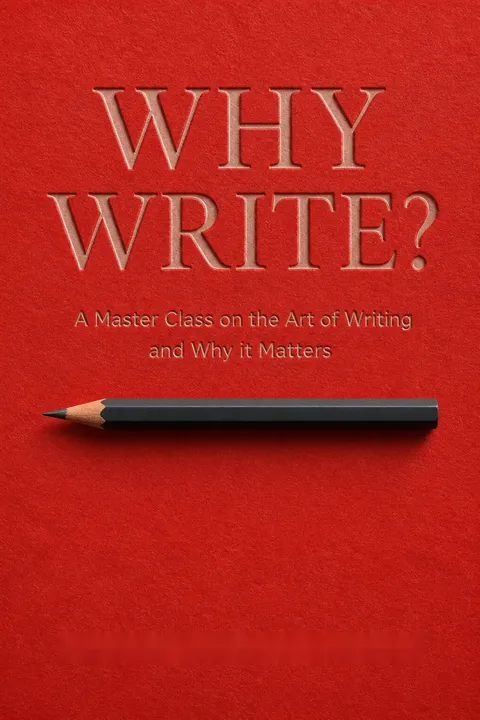
What's Why Write?: A Master Class on the Art of Writing and Why it Matters about?
- Purpose of Writing: The book explores the motivations behind writing, emphasizing that it is a profound act that enriches both the writer and the reader.
- Personal Growth: Writing is presented as a tool for personal growth, allowing individuals to explore their thoughts and emotions deeply.
- Critique of Modern Culture: Edmundson critiques contemporary writing culture, which often prioritizes entertainment over depth and enlightenment.
Why should I read Why Write?: A Master Class on the Art of Writing and Why it Matters?
- Inspiration for Writers: It serves as a motivational guide for aspiring writers, encouraging them to embrace their creative impulses.
- Understanding Challenges: The book provides insights into the struggles writers face, such as self-doubt and fear of failure.
- Philosophical Insights: Offers philosophical reflections on writing's impact on both the writer and society.
What are the key takeaways of Why Write?: A Master Class on the Art of Writing and Why it Matters?
- Self-Discovery: Writing is a powerful tool for self-discovery and personal growth.
- Authenticity: Emphasizes the importance of writing authentically and with purpose.
- Embracing Failure: Failure is an integral part of the writing process and should be seen as an opportunity for growth.
What are the best quotes from Why Write?: A Master Class on the Art of Writing and Why it Matters and what do they mean?
- “Writing is a great human good.”: Highlights writing as a vital human activity that enriches lives.
- “The world wants to be informed not enlightened.”: Critiques the modern preference for information over deeper insights.
- “To write is to think.”: Emphasizes the connection between writing and critical thinking.
How does Why Write?: A Master Class on the Art of Writing and Why it Matters address the challenges of writing?
- Loneliness: Discusses the inherent loneliness of writing, which can be both a challenge and a source of strength.
- Self-Doubt: Encourages writers to recognize self-doubt as part of the creative process.
- Criticism: Advises writers to view criticism as an opportunity for growth.
What specific methods or advice does Mark Edmundson offer for aspiring writers in Why Write?: A Master Class on the Art of Writing and Why it Matters?
- Daily Writing Practice: Advocates for a daily writing routine to develop discipline and improve skills.
- Reading as a Writer: Encourages reading widely and critically to learn about different styles and techniques.
- Embracing Solitude: Suggests that solitude is important for fostering creativity and reflection.
How does Why Write?: A Master Class on the Art of Writing and Why it Matters connect writing to personal growth?
- Reflective Practice: Writing encourages self-reflection and introspection, leading to greater self-awareness.
- Transformative Power: Writing can transform both the writer and the reader by articulating complex emotions and experiences.
- Continuous Learning: Writing is a lifelong learning process that evolves with the writer.
What role does reading play in the writing process according to Why Write?: A Master Class on the Art of Writing and Why it Matters?
- Foundation for Skills: Reading is essential for developing writing skills, offering insights into structure and style.
- Inspiration: Reading can inspire new ideas and encourage exploration of new themes.
- Critical Thinking: Reading critically enhances a writer's ability to analyze and evaluate texts.
How does Why Write?: A Master Class on the Art of Writing and Why it Matters define the relationship between writing and solitude?
- Essential for Creativity: Solitude is crucial for engaging deeply with one's thoughts and fostering creativity.
- Opportunity for Reflection: Solitude allows for reflection and introspection, leading to richer writing.
- Building Confidence: Spending time alone helps writers build confidence in their abilities.
How does Mark Edmundson encourage writers to embrace failure in Why Write?: A Master Class on the Art of Writing and Why it Matters?
- Learning Opportunity: Failure is an essential part of the writing process and should be viewed as a chance to learn.
- Redefining Success: Success should include personal satisfaction and artistic integrity, not just commercial success.
- Resilience: Encourages developing resilience to persevere despite setbacks.
What insights does Why Write?: A Master Class on the Art of Writing and Why it Matters offer about the writing process?
- Writing as a Journey: Frames writing as a journey of exploration and discovery.
- Importance of Revision: Acknowledges the value of revision but also the need to let go of work at times.
- Finding One's Voice: Emphasizes the importance of authenticity and finding a unique voice.
How does Why Write?: A Master Class on the Art of Writing and Why it Matters address the impact of modern culture on writing?
- Shift Towards Entertainment: Critiques the cultural shift towards entertainment over meaningful content.
- Pressure to Conform: Discusses the pressure to conform to market demands and encourages authenticity.
- Value of Thoughtful Writing: Advocates for thoughtful writing that engages with complex ideas.
Download PDF
Download EPUB
.epub digital book format is ideal for reading ebooks on phones, tablets, and e-readers.








