Plot Summary
Origins of the Cold Tether
Caz's life begins as a secret, the product of a violent union between a king and a free-spirited woman. His mother, haunted by the trauma, nearly aborts him, but a kind Mythic named Manx convinces her otherwise, foreseeing the boy's unique destiny. Raised in isolation, Caz's childhood is marked by his mother's paranoia and the looming threat of discovery. The tale of his birth is a mythic warning: power, love, and violence are inextricably linked. As Caz grows, he inherits not only his father's blood but also the burden of a "Cold Tether"—a mystical bond that will shape his fate and the fate of those he loves. The seeds of suffering and hope are sown in his earliest days, setting the stage for a life of conflict, longing, and sacrifice.
Decius' Deadly Return
The peace Caz and Willow find is shattered when Decius, the legendary soul-devouring villain, returns. Once thought a myth, Decius is revealed to be Manx, the very Mythic who helped Caz's mother. His betrayal is devastating, as he uses his powers to ensnare Caz's mind, seeking to consume the Cold Tether's energy. Willow, desperate to save her mate, is forced into a harrowing confrontation with Decius' magic. The family's trust is broken, and the lines between friend and foe blur. Decius' return is not just a personal vendetta—it is a threat to the entire world of Vakeeli, as he seeks to become the ultimate Regal, feeding on the suffering and love of Tethered souls.
Willow's Desperate Bargain
With Caz's life hanging by a thread, Willow is forced to make a desperate bargain. Guided by Beatrix, a Mythic healer, she endures excruciating pain to absorb the curse meant for Caz, temporarily freeing him from Decius' grasp. The ritual is a test of love and endurance, as Willow's body and mind are wracked by visions of Caz's traumatic past. The agony forges a deeper connection between them, but the reprieve is fleeting. The family must act quickly, seeking a way to escape Decius' reach. Willow's willingness to suffer for Caz cements their bond, but also marks her as a target for the darkness hunting them both.
The Mind Prison
Trapped in a mental prison crafted by Decius, Caz is forced to relive his most painful memories—his mother's death, his father's cruelty, and his own helplessness. Decius feeds on Caz's anguish, using it to strengthen his hold. Willow, linked to Caz through the Tether, experiences his suffering alongside him, blurring the boundaries between their minds. The psychological warfare is relentless, threatening to break Caz's spirit. Yet, even in the depths of despair, the memory of Willow's love becomes a lifeline. The mind prison is not just a place of torment, but a crucible that forges Caz's resolve to fight for his own soul and for Willow's.
Rituals and Escapes
With Decius closing in, the family turns to Beatrix for a last-ditch escape. A dangerous ritual is performed, requiring Willow and Caz to merge their bodies and spirits, stripping away all barriers. The magic tears them from Vakeeli and hurls them through a portal to Earth, a world where Decius' power is diminished. The transition is violent and disorienting, but it buys them precious time. On Earth, Caz is a stranger, bewildered by modern life, while Willow must navigate the dangers of her old world with a new, magical threat lurking. The escape is a temporary victory, but the cost is high—Beatrix is left gravely weakened, and Decius is not far behind.
Blackwater's Haunted Past
Safe for the moment, Caz and Willow confront the ghosts of their pasts. Caz's memories of abuse and loss in Blackwater are laid bare, revealing the roots of his rage and his struggle to trust. Willow, too, is haunted by her own family's tragedies and the pain of abandonment. Their shared vulnerability deepens their connection, but also exposes the wounds that Decius seeks to exploit. The haunted past is not just a backdrop—it is an active force, shaping their choices and their capacity for love and violence. The chapter is a meditation on trauma, resilience, and the possibility of healing through intimacy.
The Betrayer Revealed
The revelation that Manx is Decius shatters the family's sense of safety. The man who once seemed a savior is unmasked as the architect of their suffering. His manipulation runs deep, having orchestrated Caz's birth and suffering for his own ends. The betrayal is both personal and cosmic, as Manx/Decius positions himself as the ultimate predator of Tethered souls. The family must reckon with the reality that trust is a rare and dangerous commodity in Vakeeli. The web of lies is vast, and the true nature of power, love, and survival is called into question.
The Price of Power
As the threat of Decius intensifies, the family is forced to confront the price of power. Caz, haunted by his own capacity for violence, must decide how far he is willing to go to protect those he loves. Willow, too, is tested, as she faces the possibility of losing Caz and the temptation to embrace her own darkness. The lines between hero and monster blur, as survival demands hard choices and moral compromises. The price of power is not just external—it is internal, as each character must grapple with the shadows within themselves.
Earthbound Refuge
On Earth, Caz and Willow attempt to build a life together, but the past is never far behind. Caz struggles to adapt to a world without magic, while Willow is confronted by the violence and trauma of her old life. The threat of Decius lingers, as he seeks new vessels and manipulates those around them. The couple's love is tested by jealousy, fear, and the ever-present possibility of betrayal. Yet, in the mundane moments of Earthly life—shared meals, laughter, and intimacy—they find a fragile refuge. The chapter is a study in the persistence of love amid chaos.
Worlds Collide
The boundaries between worlds blur as Decius finds ways to reach Caz and Willow even on Earth. The couple must navigate the complexities of modern life—technology, social norms, and the threat of exposure—while also contending with magical dangers. Allies and enemies emerge from unexpected places, and the couple is forced to rely on their wits and their bond to survive. The collision of worlds is both literal and metaphorical, as the characters struggle to reconcile their magical destinies with the realities of everyday life.
Love in Exile
In the quiet moments of exile, Caz and Willow find solace in each other's arms. Their love becomes a sanctuary, a place where wounds can be tended and hope can be rekindled. The intimacy they share is both physical and emotional, a testament to the power of vulnerability and trust. Yet, the promise of home—of returning to Vakeeli and reclaiming their place in the world—looms large. The chapter is a celebration of love's capacity to heal, even in the face of overwhelming darkness.
The Shadow of Violence
Violence is never far from the surface, as old enemies resurface and new threats emerge. The couple is forced to confront the reality that peace is always temporary, and that the cycle of pain and retribution is difficult to break. The shadow of violence hangs over every decision, every relationship, and every hope for the future. The chapter is a meditation on the costs of survival, the allure of vengeance, and the possibility of breaking free from the past.
The Regals' Reluctance
The Regals—Korah and Hassha—emerge from hiding, but their motives are shrouded in mystery. They possess the power to change the fate of Vakeeli, but are reluctant to intervene directly. Their history with Selah, the original creator, is fraught with betrayal and regret. The Regals' reluctance is both a source of frustration and a warning: power, once unleashed, cannot be easily controlled. The cosmic games they play have consequences for mortals and immortals alike, and Caz and Willow find themselves caught in the crossfire.
The Hunt for Selah
The Council demands that Caz awaken Selah, the sleeping Regal, promising that her return will end the cycle of violence. But the quest is fraught with danger and deception. The true nature of Selah's slumber, and the reasons for the Regals' inaction, are shrouded in lies. Caz and Willow must navigate a labyrinth of competing interests, never sure who to trust or what the true cost of awakening Selah will be. The hunt for salvation becomes a journey into the heart of darkness, where every answer breeds new questions.
The Trench and the Twins
The search for Willow's twin brother, Warren, leads the family into The Trench—a place of death, madness, and lost souls. There, they discover that Warren, too, is a Cold Tethered, and that his suffering is bound to Decius' lingering influence. The rescue is harrowing, as the family must confront not only external threats but also the internal scars left by trauma and betrayal. The revelation of the twins' true origin raises new questions about fate, identity, and the nature of love. The Trench is both a literal and metaphorical descent into the underworld, from which not all may return unchanged.
The Council's Threat
The Council, threatened by the Regals' return, tightens its grip on Caz and Willow. They are pawns in a larger game, their lives and love leveraged for political gain. The threat of war looms, as alliances shift and old grievances resurface. Caz's charged blood becomes both a weapon and a curse, marking him as a target for those who would use or destroy him. The family must make impossible choices, balancing loyalty, survival, and the hope for a better future. The Council's threat is not just external—it is a test of the family's unity and resolve.
The Truth of Blood
As the dust settles, long-buried secrets come to light. The true nature of the Cold Tether, the origins of the twins, and the motives of the Regals and the Council are revealed. The family's destinies are rewritten, as they come to understand the full scope of their power and the responsibilities it entails. The truth is both liberating and terrifying, offering the possibility of redemption but also the certainty of further trials. The chapter is a reckoning, a moment of clarity before the storm.
The Looming Reckoning
With Decius defeated and the family reunited, a fragile peace settles over Blackwater. Yet, the scars of violence and betrayal remain, and the threat of the Council and the Regals' hidden agendas lingers. As Warren's mind is healed and the family begins to rebuild, a new danger emerges—Selah, the original Regal, is awakening, and her return may bring not salvation, but destruction. The story ends on a note of hope and dread, as Caz and Willow prepare to face whatever comes next, together.
Characters
Caz (Caspian Harlow)
Caz is the illegitimate son of a violent king and a traumatized woman, raised in secrecy and marked from birth by the Cold Tether. His childhood is a crucible of suffering—abuse, loss, and betrayal forge him into a man both fierce and vulnerable. As monarch of Blackwater, he is feared and respected, but his true strength lies in his capacity for love and sacrifice. Caz's relationship with Willow is the axis of his world, a bond that both redeems and endangers him. Psychologically, he is a study in trauma—his rage, guilt, and self-loathing are ever-present, but so is his longing for connection and peace. Over the course of the story, Caz evolves from a man defined by his pain to one who dares to hope for healing, even as he is forced to confront the darkness within and around him.
Willow
Willow is a woman marked by loss—her mother's suicide, her father's abandonment, and her brother's disappearance have left her wary but unbroken. Her arrival in Vakeeli is both an accident and a destiny, as she discovers her own Cold Tether and her fated bond with Caz. Willow's greatest strength is her empathy; she is willing to suffer for those she loves, enduring pain and humiliation to save Caz and others. Her journey is one of self-discovery, as she learns to wield her power, confront her trauma, and claim her place in a world that is both wondrous and cruel. Willow's psychological arc is about reclaiming agency—she moves from victim to protector, from outsider to the heart of a new family. Her love for Caz is transformative, but she never loses her own voice or will.
Decius / Manx
Decius is the original monster, a being who feeds on the suffering and love of Tethered souls. His true identity as Manx, the trusted Mythic, is a masterstroke of betrayal. Decius is both ancient and cunning, driven by a hunger that is as much existential as it is magical. He is a mirror for the story's themes of power, trauma, and the cyclical nature of violence. Psychologically, Decius is a study in narcissism and despair—he is incapable of true connection, doomed to destroy what he desires. Yet, there are moments of pathos, as he reveals the emptiness at the heart of his existence. His defeat is both a victory and a warning: the line between victim and monster is perilously thin.
Maeve
Maeve is Caz's aunt and the emotional anchor of the family. She has endured her own share of loss and violence, but remains steadfast in her love and loyalty. Maeve is both nurturing and formidable, unafraid to wield a gun or a sharp word when needed. She is the family's conscience, urging compassion but also demanding accountability. Psychologically, Maeve is a model of resilience—she has learned to live with pain without letting it define her. Her relationship with Caz is maternal, but she never coddles him, insisting that he face his demons and claim his power.
Juniper
Juniper is Caz's cousin and one of his closest allies. She is quick-witted, resourceful, and fiercely loyal, but also carries her own scars. Juniper's history of abuse and survival shapes her empathy for Willow and her skepticism of outsiders. She is a bridge between worlds, helping Willow adapt to Vakeeli while also challenging Caz's assumptions. Psychologically, Juniper is a survivor—her humor and strength are defenses against a world that has often been cruel. Her arc is one of trust and belonging, as she learns to open her heart to new possibilities.
Killian
Killian is the clan's muscle, a man whose anger masks a deep well of pain and protectiveness. He is slow to trust, especially of Willow, but his loyalty to Caz is unshakeable. Killian's psychological complexity lies in his struggle to reconcile his violent upbringing with his desire for peace. He is both a weapon and a shield, willing to do whatever it takes to protect his family. Over time, Killian's rough exterior softens, revealing a capacity for tenderness and even humor.
Rowan
Rowan is the lightest of the cousins, quick with a joke and a smile, but his levity hides his own wounds. He is fiercely loyal to Caz and the family, willing to risk his life for them. Rowan's psychological arc is about finding meaning and purpose beyond survival—he longs for connection and recognition, and his humor is both a shield and a bridge. He is the glue that holds the family together in moments of crisis.
Beatrix
Beatrix is a powerful Mythic whose healing comes at great personal cost. She is both wise and weary, having seen too much suffering in her long life. Beatrix's willingness to help Caz and Willow is both a gift and a curse, as it ultimately leads to her own decline. Psychologically, Beatrix is a martyr—her compassion is boundless, but it is also a form of self-destruction. She is a reminder that healing is never free, and that every act of magic has a price.
Hassha
Hassha is one of the ancient Regals, a being of immense power and deep ambivalence. She is both creator and destroyer, having shaped the world of Vakeeli but also withdrawn from it in the face of its violence. Hassha's reluctance to intervene is both a form of wisdom and a source of frustration—she knows the dangers of unchecked power, but her inaction has consequences. Psychologically, Hassha is a study in regret and responsibility—she is haunted by the past, but also determined to protect her own. Her relationship with Caz and Willow is complex, marked by both affection and distance.
Korah
Korah is the other surviving Regal, a figure of mystery and immense power. She is both ally and enigma, intervening at crucial moments but always keeping her true motives hidden. Korah's psychological complexity lies in her detachment—she sees the world in terms of cycles and patterns, and her compassion is tempered by a cosmic perspective. She is both a source of hope and a reminder that mortals are often pawns in larger games.
Plot Devices
The Cold Tether
The Cold Tether is the central plot device, a magical bond that links Caz and Willow (and other pairs) across worlds and lifetimes. It is both a blessing and a curse, granting immense power but also attracting the predations of Decius and the manipulations of the Regals and the Council. The Tether is a metaphor for trauma, love, and the inescapable ties of fate. It drives the narrative, shaping every choice and conflict, and serves as both a weapon and a vulnerability.
Dual Worlds / Portal Magic
The ability to travel between Vakeeli and Earth is a key plot device, allowing the characters to escape danger, seek refuge, and confront their own pasts. The portals are both literal and symbolic, representing the possibility of change but also the persistence of old wounds. The collision of worlds creates both opportunities and new threats, as magic and modernity intermingle.
Mind Invasion / Psychological Warfare
Decius' primary weapon is psychological—he invades minds, manipulates memories, and feeds on suffering. The mind prison sequences are both plot and character development, forcing Caz and Willow to confront their deepest fears and wounds. The device is used to blur the boundaries between self and other, past and present, and to explore the ways in which trauma is both personal and collective.
Betrayal and Hidden Motives
The story is driven by betrayals—Manx's true identity, the Regals' reluctance, the Council's manipulations. Trust is a rare and dangerous commodity, and every alliance is fraught with uncertainty. The plot is structured around revelations and reversals, keeping the characters (and readers) off-balance and forcing them to question their own assumptions.
Cycles of Violence and Healing
The narrative is structured around cycles—of violence, suffering, and redemption. The past is never truly past, and the characters are forced to confront the ways in which their own actions perpetuate the very pain they seek to escape. Yet, there is also the possibility of breaking the cycle, of forging new paths through love, sacrifice, and self-knowledge.
Foreshadowing and Prophecy
The story is rich in foreshadowing—visions, dreams, and prophecies hint at dangers to come and the possibility of salvation. The looming threat of Selah's awakening, the warnings of the Regals, and the cryptic messages of the Council all serve to build tension and anticipation. The narrative is always looking forward, even as it is haunted by the past.
Analysis
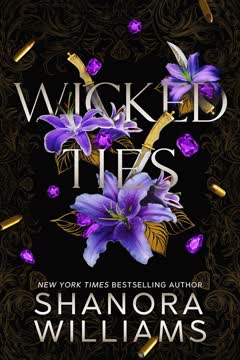
Wicked Ties is a dark, lush, and emotionally charged fantasy that explores the intersections of trauma, love, and power. At its core, the novel is about the ways in which the past shapes the present—how wounds, both personal and ancestral, echo through generations, binding people together in cycles of suffering and hope. The Cold Tether is both a literal and metaphorical device, representing the inescapable bonds of fate, the pain of intimacy, and the possibility of healing through connection. The story refuses easy answers: love is both salvation and vulnerability, power is both a weapon and a curse, and every act of violence leaves scars that cannot be easily erased. The novel's refusal to draw clear lines between hero and villain, victim and monster, is its greatest strength—every character is both wounded and wounding, seeking redemption even as they perpetuate harm. In a world where trust is dangerous and survival demands hard choices, Wicked Ties ultimately argues that healing is possible, but only through the willingness to confront the darkness within and to risk everything for those we love. The ending, with its promise of new threats and the awakening of ancient powers, is both a warning and a hope: the cycle may never truly end, but each generation has the chance to choose differently.
Last updated: