

Key Takeaways
When a parent recruits a child into an affair, intimacy becomes a burden
A midnight promotion. When Rennie is fourteen, her mother wakes her after a dinner party to report that Ben, her husband’s oldest friend, has kissed her. Malabar asks Rennie to help make the affair possible and keep it secret. Rennie feels chosen, even thrilled. Her mother is lonely, depressed, and worn down by caring for Charles after his strokes, but the confidence she shares with her daughter is not a child’s responsibility to carry.
Closeness with a cost. Rennie becomes a lookout, alibi provider, and emotional adviser. She helps arrange private walks and gives cover to her mother’s absences, while Charles and Lily remain unaware. What feels like special intimacy slowly replaces ordinary adolescence. The book’s central injury is not simply the affair, but the way a parent turns a child’s need for love into support for an adult decision.
The memoir makes a sharp distinction between being trusted and being burdened. In family-systems language, a child pulled into a parent’s emotional partnership is placed in a role that belongs among adults, while the child’s dependence makes refusal difficult. Rennie’s excitement is believable: children often experience exclusive attention as proof of love, not as a warning sign. That distinction protects the story from an easy judgment of the teenager. The adult parent remains responsible for the boundary, even when loneliness and illness help explain why that boundary collapsed.
A cover story can turn a family secret into a whole system
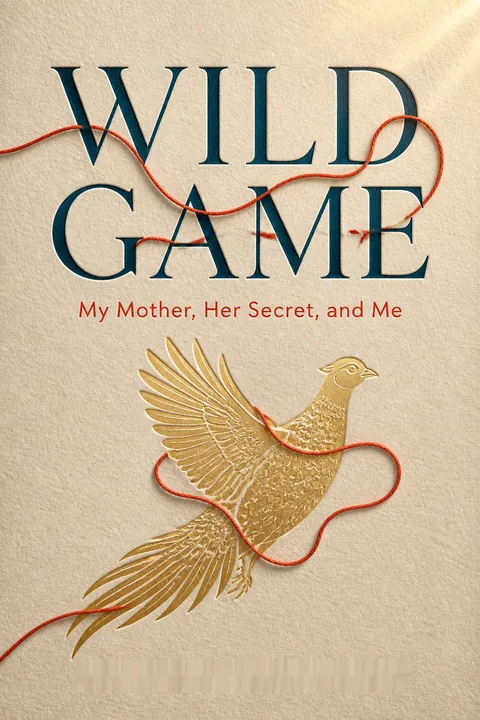
Lies become routine. Rennie has learned to lie in a family shaped by divorce, divided loyalties, and secrets shared between adults. At first, the deception around Malabar and Ben feels like another family maneuver. She invents explanations for Malabar’s trips and helps care for Charles when his wife is away. A cookbook project, Wild Game, gives the lovers a respectable reason to meet and test recipes together.
The circle widens. When caregiver Hazel discovers evidence of the affair and threatens to expose it, Rennie helps Malabar invent a counterattack: false letters accusing other husbands of affairs, designed to make Hazel seem unreliable. The lie now implicates people beyond the couple and their children. Rennie feels the rush of solving the crisis, then recognizes that each new cover story demands more vigilance and creates more collateral damage.
The episode shows deception behaving less like a single false statement and more like organizational infrastructure. Once a secret requires schedules, alibis, and coordinated explanations, every participant has incentives to protect the arrangement, even when the original choice was not theirs. This resembles the way institutions normalize misconduct through small, repeatable exceptions. The memoir also captures the reward side of complicity: Rennie receives praise and a sense of competence. That does not make her a coequal adult in the affair, but it helps explain why a harmful role can feel gratifying while it is being performed.
Understand a parent's pain without accepting responsibility for repairing it
A history of loss. Malabar’s life includes an alcoholic, self-absorbed mother, a turbulent marriage between her parents, and the death of her first child, Christopher, before Rennie and Peter were born. Rennie is born on Christopher’s birthday and grows up sensing that she may be a replacement for the lost boy. Later, Charles’s strokes transform the marriage Malabar had chosen, leaving her with years of caregiving and grief for the life they might have had.
Explanation is not absolution. Malabar presents the affair as a response to love and suffering, even describing the lovers’ decision to remain with their spouses as a kind of sacrifice. Rennie accepts that account and treats her mother’s happiness as a mission. When Charles dies, Malabar’s grief and remorse are real, but so is the harm of having involved her daughter. Compassion can recognize the forces that shaped Malabar without making Rennie responsible for managing their consequences.
A causal story can deepen empathy, but it can also become a moral solvent, dissolving responsibility into context. The memoir resists that collapse by holding two facts together: Malabar has endured genuine losses, and she places an unfair burden on her daughter. This is a useful distinction in family narratives, where understanding a parent’s history can feel like a demand to excuse present behavior. It also makes room for the child’s experience without requiring a verdict that the parent is wholly cruel or wholly innocent.
Leaving home does not free you from a role you keep performing
Distance brings a pause. At seventeen, Rennie leaves for Maui, then travels across the United States with Adam. Away from Cape Cod, she explores sex, drugs, work, and an uncertain future. For a time, she feels a life that is not organized around her mother. But Malabar’s weekly calls restore their familiar intimacy, and stories about near discoveries of the affair still give Rennie her strongest rush.
The pattern travels. Years later, Rennie moves from New York to San Diego and believes that thousands of miles separate her from Malabar. Yet she lives with Jack, Ben’s son, and continues to hide the affair from him. Physical escape changes the setting, not the loyalties and habits Rennie has learned. Her own observation is that she is still organizing her choices around the family secret, even while telling herself she has become independent.
The contrast between geographic and psychological distance is the memoir’s most practical model of escape. A move can create space for new routines, but it cannot by itself revise the meanings attached to loyalty, secrecy, and approval. In behavioral terms, old roles are reinforced by familiar rewards: a mother’s praise, the thrill of being indispensable, and relief when a crisis is contained. The account avoids suggesting that leaving is useless. Rather, it shows why distance becomes more effective when paired with changed behavior and new relationships.
A hidden family truth can quietly undermine the trust of a marriage
An opportunity declined. Rennie falls in love with Jack, Ben’s adopted son, without telling him that their parents have been lovers for years. On a beach, she tries to raise a serious secret and asks if he wants to know. Jack says no. Rennie treats his answer as permission to stay silent, though she knows the affair is central to her own life and could affect his family.
The truth arrives elsewhere. Before their wedding, Ben tells Jack about the affair and apologizes. Jack is furious at his father and Malabar, and Rennie recognizes that she has also withheld something important from the person she plans to marry. Jack sees her as a child drawn into adults’ choices, but she knows that her later silence was her own. Their marriage begins under the pressure of a truth that neither partner had a chance to address together.
This episode distinguishes childhood complicity from adult concealment without pretending they are the same. Rennie did not create the affair, and her mother recruited her when she was fourteen. As an adult, however, she lets a convenient interpretation of Jack’s refusal stand in for an honest disclosure. Trust depends not only on whether a partner asks the right question, but also on whether one shares information that changes the meaning of the relationship. The memoir’s self-critique is strongest where it acknowledges both vulnerability and agency.
When the confidante role ended, buried distress became impossible to ignore
A role finally stops. The morning after her wedding, Rennie tells Malabar that she cannot keep hearing about the affair. She is married to Jack, and Lily is now her mother-in-law. Rennie initially feels relief, but soon describes emotional numbness, difficulty concentrating, insomnia, and relentless self-condemnation. She begins cutting herself and seeks psychiatric care. The timing suggests that ending the old role exposes distress she had long kept out of view, not that one event alone explains her depression.
Treatment is not simple. Talk therapy helps Rennie examine her dependence on Malabar, while medication brings temporary lifts and then crashes. Lithium intensifies suicidal thoughts, so she stops medication under her psychiatrist’s supervision and makes a concrete plan: move to New York and pursue literary work. Her recovery is neither instant nor linear. It involves care, risk, and decisions that bring her closer to a life she recognizes as her own.
The memoir treats emotional collapse as serious experience rather than a tidy plot device. It also resists a single-cause account: family enmeshment matters, but depression is not reducible to a difficult mother or a boundary-setting moment. That nuance is important because memoir can make a life’s chronology appear more causally neat than lived illness is. Rennie’s account of medication and suicidal thinking also underscores the value of clinical supervision. The meaningful turning point is not simply insight; it is combining insight with professional care and a changed environment.
Build an identity with people who know more than your family role
Other witnesses matter. In her twenties, Rennie begins reading seriously because her stepmother, Margot, gives her novels and asks questions that Malabar rarely asks. Her friend Kyra listens to the story of the affair without treating Rennie as either a villain or a helpless child. These relationships let Rennie see herself from outside the role of her mother’s adviser and accomplice.
Words create room. Rennie keeps notes on books, writes in her journal, and learns to describe her own thoughts more precisely. She moves to New York and helps create the literary magazine Zoetrope: All-Story, work that gives her a demanding purpose beyond family drama. None of these changes erases the past. Together, friendship, reading, writing, and work provide new ways to be recognized, and new evidence about who she might become.
Identity is partly relational: people often discover capacities that family roles obscure when others respond to them in different ways. The memoir’s friendships function as mirrors, but not simply as sources of reassurance. Kyra challenges Rennie’s interpretation, while Margot opens a route into language and literature. That mix of affirmation and friction is more useful than praise alone. Still, external validation cannot substitute for self-trust. The deeper change is Rennie’s growing ability to articulate her own preferences, rather than merely borrowing a friend’s or parent’s account of her.
Set boundaries before resentment becomes the only language left
A painful separation. When Rennie moves to New York, Malabar criticizes her small apartment, questions how she will support herself, and says the family necklace should go to a museum. She also gives Peter use of the Cape guesthouse, a decision that leaves Rennie feeling shut out. During the confrontation, Malabar says she does not want Rennie near her. The relationship grows distant for years, and Rennie stops expecting a long-awaited apology to repair it.
Love with limits. The necklace, promised to Rennie since childhood, becomes a symbol of affection mixed with control. Malabar gives it to her, then asks for it back during a later drive after a cancer diagnosis. Rennie is hurt but does not surrender the larger boundary she has built. She knows she will answer her mother’s calls, yet no longer expects to be her confidante or to receive the mothering she missed.
A boundary is not necessarily a punishment or a declaration that love has ended. Here, it is a limit on the role Rennie can safely occupy. The distance costs her, especially because she still longs for maternal recognition, but it interrupts a pattern in which closeness requires self-erasure. The necklace complicates the familiar idea that material inheritance proves affection: its value lies partly in the story attached to it, and that story can bind as well as comfort. The memoir wisely offers no easy reconciliation as the price of growth.
Break inherited patterns by giving children the safety to be children
Motherhood changes the stakes. After having children, Rennie sees her family history as something that can be passed on, not merely remembered. Holding her newborn daughter, she worries about the losses and secrets embedded in the generations before her. She chooses to pay attention to how her actions affect her children, rather than assuming that love alone will protect them from adult conflicts.
The evidence is ordinary. Years later, Rennie’s fourteen-year-old daughter cannot imagine writing about a time when the adults in her life were unavailable or unsupportive. The moment reassures Rennie, though it does not prove the past has been repaired. Malabar is by then living with dementia, and some questions can no longer be answered. Rennie’s final measure of change is not a perfect reckoning with her mother, but a child who has not been recruited to carry an adult’s secret.
The ending locates intergenerational change in daily conditions, not in a dramatic confession or a final absolution. A child who cannot imagine parental unavailability is not evidence of a flawless home, but it suggests a different baseline of safety than the one Rennie knew. The memoir’s account also respects a hard limit: dementia removes the possibility of complete mutual understanding. Repair is therefore measured through present care and altered conduct, not through a parent’s full acknowledgment. That is less satisfying than a neat apology, and more credible.
Analysis
Wild Game is a memoir about adultery, but its deepest subject is the way a family assigns roles and makes those roles feel like love. The narrative begins with a fourteen-year-old being awakened to hear about her mother’s kiss, then follows the daughter’s slow recognition that confidante, lookout, and accomplice were not ordinary forms of closeness. The structure returns repeatedly to Cape Cod, where meals, tides, shipwrecks, and changing shorelines make private concealment visible without turning the book into a simple morality tale.
Its ethical center is the difference between explaining and excusing. Malabar’s grief over Christopher, dissatisfaction, and burden of caring for Charles help readers understand her hunger for Ben. They do not make her daughter responsible for sustaining the affair. Rennie, in turn, is neither portrayed as a fully autonomous adult at fourteen nor absolved of the later choice to conceal the truth from Jack. This distinction gives the memoir unusual precision about agency across time.
The book also treats memory as constructed rather than definitive. Brodeur describes using journals and family records, while acknowledging that recollection changes and that other people may remember events differently. That admission matters because the central figures cannot all testify equally: Lily’s inner life is mostly inaccessible, and Malabar’s dementia eventually closes off direct answers. The narrative partially corrects its own early viewpoint when Rennie begins to see Lily as a person rather than as her mother’s rival.
The ending refuses a conventional reconciliation. The necklace is both inheritance and leverage; the mother-daughter relationship remains loving, painful, and incomplete. The most convincing evidence of change is not that Rennie solves her mother, but that she builds friendships, work, and a family in which her children are not made custodians of adult secrets. The book’s hope is therefore behavioral, not sentimental: inherited patterns can be interrupted, even when the people who began them cannot fully explain or repair them.
Review Summary
Wild Game receives mostly positive reviews, with readers drawn into the memoir's compelling narrative of a mother-daughter relationship damaged by an affair. Many praise Brodeur's writing style and honesty, comparing it to other popular memoirs. Some readers find the story unbelievable yet captivating, while others express sympathy for the author's experiences. Critics note the privileged background of the characters and question the mother's actions. Overall, reviewers appreciate the book's exploration of family dynamics, secrets, and personal growth.
People Also Read










Glossary
power pack
family name for ManhattansMalabar and Charles’s name for their preferred dry Manhattan, served with a twist. Cocktails recur as part of the family’s daily rituals and social life, often marking the transition into evening. The nickname belongs to this household’s vocabulary rather than to a formal cocktail framework.
constitutional
after-dinner cover walkMalabar’s genteel term for an evening walk. During the affair, Rennie sometimes proposes these walks so Malabar and Ben can leave the house together under a harmless pretext. The word captures how ordinary family rituals become part of the concealment, with Rennie helping make the meetings possible.
FAQ
What's Wild Game: My Mother, Her Secret, and Me about?
- Personal Memoir: The book is a memoir by Adrienne Brodeur that explores her complex relationship with her mother, Malabar, and the secret affair she had with Ben Souther, a family friend.
- Family Dynamics: It delves into themes of family loyalty, betrayal, and the struggle for identity within a family marked by secrets and infidelity.
- Coming of Age: The narrative follows Brodeur's journey from childhood through adulthood, highlighting how her mother’s choices shaped her own life and relationships.
Why should I read Wild Game: My Mother, Her Secret, and Me?
- Engaging Storytelling: Brodeur's writing is both engaging and poignant, drawing readers into her family's intricate dynamics and the emotional weight of their secrets.
- Relatable Themes: The themes of love, betrayal, and the quest for identity resonate with many readers, making it a compelling read for anyone interested in family relationships.
- Insightful Reflections: The memoir offers insightful reflections on motherhood, the complexities of adult relationships, and the consequences of choices made in the name of love.
What are the key takeaways of Wild Game: My Mother, Her Secret, and Me?
- Complexity of Relationships: The book illustrates how relationships can be both nurturing and damaging, highlighting the duality of love and betrayal.
- Impact of Secrets: It emphasizes the emotional toll that secrets can take on individuals and families, showing how they can shape identities and relationships.
- Self-Discovery: Brodeur’s journey reflects the importance of self-discovery and the struggle to define oneself outside of familial expectations and legacies.
What are the best quotes from Wild Game: My Mother, Her Secret, and Me and what do they mean?
- Subjective Memory: “Life is not what one lived, but what one remembers and how one remembers it in order to recount it.” This underscores the subjective nature of memory and personal narratives.
- Truth and Lies: “A buried truth, that’s all a lie really is.” This highlights that lies often stem from deeper truths that are hidden, suggesting the need for confronting these truths.
- Complexity of Love: “You can’t control who you fall in love with.” This reflects the complexity of love and attraction, acknowledging that feelings can arise unexpectedly.
How does Wild Game: My Mother, Her Secret, and Me explore the theme of infidelity?
- Mother's Affair: The memoir centers around Malabar's affair with Ben, illustrating the emotional complexities and justifications that accompany infidelity.
- Impact on Family: Brodeur examines how her mother’s choices affect the family unit, creating a ripple effect of emotional turmoil and secrets that shape their lives.
- Moral Ambiguity: The narrative presents infidelity not as a black-and-white issue but as a morally ambiguous situation that raises questions about love, loyalty, and personal happiness.
What role does Adrienne Brodeur play in her mother’s story in Wild Game?
- Confidante and Accomplice: Brodeur serves as her mother’s confidante, helping to keep Malabar’s affair a secret while grappling with her own feelings of loyalty and betrayal.
- Observer and Participant: She is both an observer of her mother’s choices and a participant in the unfolding drama, which complicates her own coming-of-age journey.
- Voice of Reason: Throughout the memoir, Brodeur often acts as a voice of reason, attempting to navigate the emotional landscape created by her mother’s decisions.
How does the setting of Cape Cod influence the narrative in Wild Game: My Mother, Her Secret, and Me?
- Symbol of Freedom: Cape Cod serves as a backdrop for both the idyllic and tumultuous moments in Brodeur’s life, symbolizing freedom and the complexities of family life.
- Cultural Context: The setting reflects a certain cultural context of privilege and leisure, which contrasts sharply with the emotional struggles of the characters.
- Connection to Nature: The natural beauty of Cape Cod is intertwined with the narrative, providing a stark contrast to the emotional chaos and secrets that unfold within the family.
What is the significance of food in Wild Game: My Mother, Her Secret, and Me?
- Culinary Bonding: Food serves as a means of bonding for Brodeur and her mother, with cooking and sharing meals being central to their relationship.
- Symbol of Control: Malabar’s culinary skills symbolize her control over her environment and her ability to create beauty, even amidst chaos.
- Emotional Connection: The act of cooking and sharing meals often reflects deeper emotional connections and the complexities of love and care within the family.
How does Brodeur address the concept of memory in Wild Game: My Mother, Her Secret, and Me?
- Subjective Nature of Memory: Brodeur emphasizes that memory is subjective and can be altered by emotions and experiences, shaping how we recount our past.
- Revisiting the Past: The memoir involves revisiting past events through the lens of adulthood, allowing Brodeur to reinterpret her childhood experiences and her mother’s actions.
- Impact on Identity: The exploration of memory highlights how our recollections influence our identities and relationships, particularly in the context of family dynamics.
What challenges does Brodeur face in her relationship with her mother in Wild Game?
- Navigating Secrets: Brodeur grapples with the burden of keeping her mother’s secrets, which complicates her own sense of identity and loyalty.
- Emotional Distance: As Malabar becomes more consumed by her affair, Brodeur feels a growing emotional distance, leading to feelings of isolation and confusion.
- Struggle for Independence: Brodeur’s journey toward independence is fraught with challenges as she seeks to define herself outside of her mother’s shadow and the complexities of their shared experiences.
How does Wild Game: My Mother, Her Secret, and Me explore the theme of motherhood?
- Malabar’s Influence: The memoir examines how Malabar’s choices and emotional needs shaped Brodeur’s understanding of love and relationships, often placing her own desires above her daughter’s.
- Generational Patterns: Brodeur reflects on the patterns of behavior passed down from her mother, illustrating the struggle to break free from these inherited dynamics.
- Desire for Connection: The narrative reveals Brodeur’s longing for a nurturing relationship with her mother, which is complicated by Malabar’s self-centeredness and romantic entanglements.
What lessons about love and relationships can be learned from Wild Game: My Mother, Her Secret, and Me?
- Complex Nature of Love: The memoir reveals that love can be multifaceted, encompassing both joy and pain, and that relationships often come with hidden costs.
- Importance of Honesty: Brodeur’s experiences underscore the necessity of honesty in relationships, both with oneself and with others, to foster genuine connections.
- Navigating Betrayal: The narrative teaches that betrayal can lead to profound personal growth, as Brodeur learns to navigate her feelings and redefine her relationships.
Download PDF
Download EPUB
.epub digital book format is ideal for reading ebooks on phones, tablets, and e-readers.








