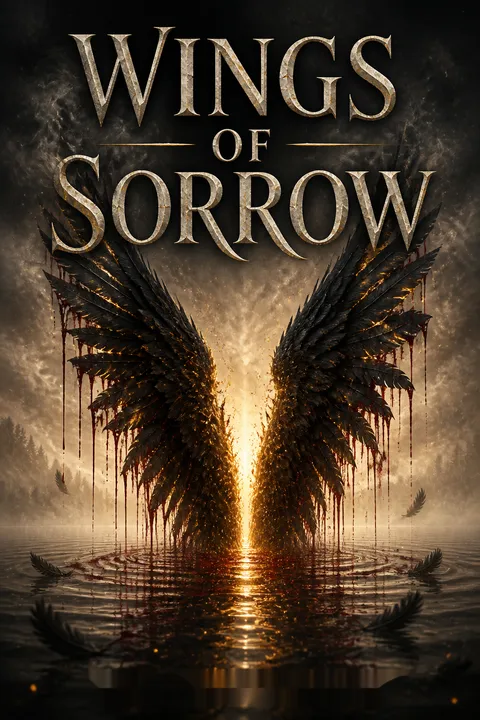


Plot Summary
Ainsley Meets the Lake
One night at Redlake, Ainsley, a recent cancer survivor, approaches a naked stranger who has emerged from the water. The stranger demands to know where the Spark is, then burns Ainsley alive when he cannot answer.
The next day, sixteen-year-old Scarlet Thomas studies an ancient volume, The Prophecies of Noy, at the antiquities shop where she works. One drawing unsettles her because its date and imagery recall September 11, the day she was born; another resembles her own freckled face.
Scarlet dismisses the book's predictions, but her ordinary life is already framed by the very force that killed Ainsley. Newly moved to Redlake, isolated from classmates and distant from her busy father, she has little reason to suspect the lake is more than scenery.
The opening pairs mundane vulnerability with cosmic violence. Ainsley's survival of cancer has briefly restored his sense that life is ordinary and deserved, making his sudden death a blunt rejection of that comfort. Scarlet's skepticism, meanwhile, is not foolishness so much as a practical defense: she has already learned that adults and institutions can fail to make life feel secure. The prophecy drawing links her private birthday to public catastrophe before she knows why. This structure makes fate feel invasive rather than majestic, entering through a shop book and a familiar landscape instead of an announced supernatural world.
The Stranger Named Sorrow
Walking home beside the lake, Scarlet finds a naked, half-drowned man choking among the reeds. He cannot remember his name or how he arrived, but he insists he has a purpose and asks her to take him somewhere quiet. Scarlet lends him her cardigan, then her father's clothes, and gives him the name Sorrow after his repeated concern for the unhappiness he senses in the world.
She means to call the police, but her father arrives before she can; Sorrow vanishes without shoes. The encounter leaves Scarlet embarrassed by her attraction and troubled by his disappearance. At breakfast, her father tries to reconnect by proposing an outing, but their old distance remains. Scarlet keeps thinking about the stranger and walks the lakeside again.
Scarlet's first response to Sorrow is practical kindness, yet the encounter answers an emotional need she rarely admits: someone notices her loneliness without asking her to make it convenient. Naming him gives her a small measure of control over an impossible event, while his acceptance of the name turns an act of teasing into the beginning of attachment. Their connection grows through care rather than shared history. The awkward exchange with her father matters for the same reason: affection exists, but neither knows how to bridge the gap. The supernatural arrives in a household already shaped by absence.
The Saint Finds Scarlet
On her next walk, Scarlet sees a tall blond stranger approach and attack her without warning. His touch sears her wrist, and he identifies her as the Spark before trying to kill her.
Sorrow intercepts him, telling Scarlet to flee while he fights; she reaches the Little Treasures Emporium and shows her injury to her boss, Miles Chester. Chester recognizes the attacker as the Saint and grows alarmed when Scarlet describes the name Spark. Sorrow arrives soon after, badly wounded, and warns that the Saint can sense her.
Chester explains that the Spark is prophesied to restore magic and bring a catastrophe, and that the Saint intends to prevent it by killing her. Scarlet cannot reconcile that claim with the ordinary world she sees, but the burn proves the danger is real.
The attack converts Scarlet's curiosity into bodily knowledge. A prophecy might be dismissed as a story; a blistered wrist cannot be argued away. Yet the Saint's certainty does not make his violence morally clean. He treats a teenager as a future disaster rather than a person whose choices have not yet been made. Chester's explanation widens the threat while leaving Scarlet with no stable authority to trust: the attacker claims necessity, her employer knows secret histories, and the wounded stranger protects her. Suspense grows from the gap between prediction and agency, not simply from uncertainty about whether magic exists.
The Prophecy Has Her Face
After the Saint ransacks Scarlet's home, she discovers that her mother's necklace is missing, though her other jewellery remains untouched. She is also struck by headaches, heat, and an unnatural hunger.
Sorrow visits her in the garden, promises to help recover the keepsake, and accepts half of a split dove pendant that Scarlet gives him as a sign of friendship. The next day she returns to Chester, who explains that her absent mother, Nesta, was an Aldorian witch and that Scarlet's birth made her the first magical being in centuries.
Her mother's ruby locket can hold Scarlet's soul if she dies, so whoever possesses it could control the Spark's release. Chester identifies Sorrow as the demon Manah. When Sorrow transforms and strikes Chester, Scarlet flees straight into the Saint's path.
The necklace changes the story's stakes from a threat to Scarlet's body into a struggle over what her body and soul signify. Its protective function also makes the missing object emotionally charged: it belonged to the mother Scarlet barely knows, and its absence suggests that her past has been arranged without her consent. The pendant she gives Sorrow offers a counter-symbol, a bond chosen freely rather than inherited. Meanwhile, Chester's revelation places Scarlet inside a maternal history she cannot verify. Sorrow's violent transformation complicates the comfort she found in him, forcing her to judge conduct rather than rely on labels.
A Bloodied Road Home
The Saint follows Scarlet into Chester's shop, but Chester uses a blood rite to force him out. As the group escapes in Chester's old car, the Saint hurls concrete into their path and wrecks the vehicle. Sorrow knocks him down long enough for Chester to give Scarlet a blood-soaked rope charm that wards her house.
At home, Scarlet's father, Mr Thomas, orders Sorrow away and argues with his daughter about her secrecy. When she asks about Nesta, he admits he found her taking Scarlet's blood as a baby and threatened to involve the police.
He also reveals that Scarlet's pregnancy lasted only six weeks, and that Nesta later appeared at Scarlet's hospital bedside during a childhood illness, after which Scarlet recovered beside a vase of lilies. Her parents' history now looks less like abandonment than occult preparation.
The journey home makes family history another contested form of evidence. Mr Thomas has spent years withholding details because he believed secrecy protected his daughter, but the silence has also left Scarlet alone with unanswered questions. His story of the blood-taking and the impossible pregnancy confirms that Nesta's choices reached into Scarlet's body before she could consent. The lilies at the hospital complicate simple condemnation: Nesta may have acted dangerously, yet she also intervened to save her child. Scarlet inherits both harm and care from a mother she cannot confront, while her father must decide whether protection means control or honest disclosure.
The Garden Becomes a Battleground
The Saint reaches Scarlet's garden, where Chester's rope charm protects her only while she stays inside. Sorrow fights him outside the threshold, but the barrier prevents him from entering and the Saint batters him away.
When the Saint threatens Scarlet's father, Mr Thomas steps between them; Scarlet leaves the protection of the house to save him. The Saint chokes her father until he goes limp, but Sorrow returns from the shadows with gardening shears and drives them into the attacker. Scarlet realizes her father has survived and helps him escape.
On the way back to Chester's shop, Mr Thomas confesses that he knew Nesta practiced witchcraft and had sent her away after finding her take Scarlet's blood. He insists that being her father depends on loving and raising her, not on how she was conceived.
This crisis gives Scarlet's father a defining choice. Faced with an explanation that his daughter may be dangerous, he refuses to reduce her to a prophecy and risks himself to protect the child he raised. His defense does not erase his earlier secrecy, but it makes his love legible through action rather than paternal authority. Sorrow's return similarly revises the demon label: his instinct is to protect, even when doing so costs him. The threshold charm divides safety from loyalty, forcing Scarlet to choose between remaining protected and reaching the people she loves. She chooses relationship, not because it is safe, but because isolation has become its own danger.
The White Order's Knife
At the shop, Chester's White Order colleagues, Grand Shaman Margaret Kindersley and her custodian James Holtby, offer to remove the magic inside Scarlet. Her father demands assurances, and Scarlet agrees because she believes the procedure will make her ordinary and end the Saint's pursuit.
Margaret instead uses a blood-painted circle to drain Scarlet's life force, intending to kill her before the Spark can awaken. Chester attacks Margaret when he realizes the betrayal; Holtby wounds him, but Scarlet's father breaks the circle and stops the spell from finishing.
Margaret says the damage is already done and Scarlet has at most a year to live. The apparent rescue has left her with a shortened life and her magic still inside her. Chester's loyalty shifts from the Order's command to the human being he has come to know.
The White Order's betrayal exposes how institutional ethics can become indistinguishable from the threat they oppose. Margaret does not act from personal hatred; she acts from a calculation that treats Scarlet's death as an acceptable cost. That makes the violence more unsettling, not less. Mr Thomas's interruption is physically small, a break in the circle, but morally decisive: he refuses to let procedural certainty erase his daughter's personhood. Chester's change of allegiance likewise depends on proximity. Knowing Scarlet as an employee makes the abstract Spark harder to sacrifice. The scene tests whether responsibility means obeying a system or recognizing the individual it has classified.
Indy's Hand at the Door
Scarlet finds Indy’s severed hand on her bed and, through contact with its blood, senses that he is suffering. She climbs from her bedroom window to reach Chester, only to meet the Saint waiting in the garden.
Sorrow and Scarlet's father hold the attacker off while she returns inside, but the Saint later forces his way into the shop after Margaret removes its ward. Indy appears at the door with a chain embedded in his back, and the Saint pulls him apart when Scarlet refuses to come outside. Margaret admits she can summon Sorrow through the half-pendant Scarlet gave him.
She cuts Scarlet's palm to mark the talisman, calls the demon, and corrects herself when the name Manah fails. Sorrow answers as himself, fights the Saint, and buys time for Scarlet, her father, and Chester to flee toward the lake.
Indy's death turns the cost of Scarlet's danger from hypothetical into intimate. His bravery has been comic and awkward, but the chain in his back makes clear that loyalty does not protect him from forces larger than himself. Scarlet's choice to refuse the Saint's demand cannot save Indy, and the resulting grief complicates any easy claim that courage guarantees a good outcome. The summoning scene then gives Sorrow's self-naming practical force: Margaret's ritual can call the demon's history, but Scarlet's bond helps distinguish the person he is trying to become. Identity here is neither freely invented nor wholly dictated by origin.
Blood Opens the Lake
At the lake, Chester performs a cleansing rite intended to sever the Saint's link to his own realm while Sorrow and Mr Thomas fight to hold him back. Scarlet joins the struggle, and her blood, smeared across Sorrow's back, restores his dormant wings and strength.
The Saint hurls Sorrow and Mr Thomas aside, but Scarlet discovers that her blood burns the attacker. After Sorrow and the Saint crash back to earth and Sorrow loses his wings, Scarlet cuts her palm on broken glass and presses the bleeding hand against the Saint's face.
Her blood weakens him; her awakened power then parts the lake and pulls him into the mud beneath it. The Saint disappears under the water. Scarlet survives, but Chester warns that her magic has only begun to awaken and the spell has left her life in danger.
The climax turns the story's central labels inside out without simply reversing them. Scarlet's blood is called dangerous because it carries magic, yet it becomes the means by which she stops a supposedly righteous executioner. Her power emerges through an act of self-direction: she does not accept the Saint's judgment or wait for a protector to finish the fight. At the same time, the power is frightening precisely because it works. The lake obeys her anger, and the victory offers no proof that the prophecy was false. Agency here means choosing what to do with inherited force, not pretending that inheritance has vanished.
A Life on Borrowed Time
After the Saint vanishes, Scarlet finds Sorrow alive beneath the broken pavement, and the injured group returns to Chester's damaged shop. Margaret confirms that she cannot restore Scarlet's lost life force, though she agrees to prepare a spell that will make Mr Thomas forget the supernatural crisis.
Scarlet asks for this not to escape responsibility, but to spare her father a year spent watching her die. She turns instead toward Sorrow, who now feels pain and sadness more like a human being and wonders how much control he has over his nature.
Scarlet offers to help him understand the world, and the two kiss. Her magic remains, her expected lifespan is short, and the people around her are battered; still, she has chosen a companion and a way to face what remains.
The resolution grants emotional connection without pretending to grant safety. Scarlet cannot restore the life force Margaret drained or return to the uncomplicated ordinariness she once wanted. Her request that her father forget is both loving and ethically uneasy: she hopes to preserve his peace by withholding the truth, repeating the very pattern of secrecy that hurt her. The story leaves that tension unresolved. Sorrow's new capacity for pain makes his moral change embodied rather than merely declared, while Scarlet's offer to guide him turns care into a reciprocal commitment. Their kiss does not solve the crisis; it gives them a chosen present inside it.
Epilogue
Across the street from Scarlet's home, her mother, Nesta, watches her return with Mr Thomas after the battle. Nesta had taken the ruby necklace before the Saint entered the house, and she now believes it can restore Scarlet's life force and return the Spark.
She sees the White Order as the force that has robbed her daughter of her intended future, and resolves to deal with it before turning to anyone else who might obstruct her. Nesta still intends to bring magic back and remake the world, with Scarlet at the center of that design. The final glimpse shifts the danger from the enemy Scarlet has just defeated to the mother whose choices began the crisis.
The closing perspective changes the meaning of the missing necklace and denies the relief a conventional victory might offer. Nesta's affection is real, but it is subordinated to a mission that treats Scarlet as the instrument of a desired future. Her rescue plan may save her daughter's life, yet it also aims to restore the power Scarlet has just learned to fear. The story therefore ends with care and coercion entangled once more. Unlike Margaret, Nesta does not want to eliminate the Spark; she wants to possess its outcome. Scarlet's next conflict is likely to be less about whether she is dangerous than about who gets to decide what her danger is for.
Analysis
Wings of Sorrow makes adolescence literal through the idea of a body carrying a future it did not choose. Scarlet is told that her blood, birth, and mother's decisions have already made her an instrument of catastrophe. The pressure resembles the way young people are often assigned identities by family history, institutions, and adult prediction before they can define themselves. The novel's supernatural conflict sharpens that problem: both the Saint and Margaret claim to protect the world, yet each treats Scarlet's death as an acceptable solution. Their opposing moral vocabularies do not make the violence equivalent to care.
The story's most humane counterforce is chosen relationship. Scarlet names Sorrow, shares her pendant, and judges him by what he does rather than by his alleged past. Sorrow's developing capacity for pain makes moral change bodily and difficult, not a simple declaration of goodness. Indy and Mr Thomas also complicate the idea that heroism belongs to the powerful. Indy offers loyalty without supernatural strength, while Scarlet's father learns that protection requires both risk and honesty. Their actions matter because they treat Scarlet as a person, not merely as a daughter, weapon, or prophecy.
The conclusion refuses a clean triumph. Scarlet defeats the Saint, but her power has awakened, her life force is damaged, and the mother who may be able to help intends to restore the very destiny Scarlet fears. Even the request that her father forget repeats the story's central dilemma: can love protect someone through concealment, or does concealment make them easier to control? The novel's answer is unresolved. Agency is not freedom from inheritance; it is the difficult act of choosing what to do with the forces one has inherited, while accepting that those choices cannot guarantee safety.
Review Summary
People Also Read

Characters
Scarlet Thomas
Lonely, reluctant SparkScarlet is a sixteen-year-old newcomer to Redlake who lives with her single father and feels overlooked at home and school. She is quick with jokes, skeptical of grand claims, and more compassionate than she lets herself admit; helping a stranger at the lake is instinctive even when the situation unsettles her. Her mother's absence and her father's long hours leave her hungry for connection, but she resists being treated as a child or as a problem to be managed. Scarlet's central tension is between a strong desire for an ordinary life and a growing need to act for herself. Her bonds with Sorrow, Indy, and her father reveal that courage for her means choosing care even when it brings risk.
Sorrow
Uncertain supernatural allySorrow appears at the lake with no memory, no clothes, and little understanding of ordinary human customs. He is formal, curious, and unusually attentive to other people's unhappiness, qualities that make Scarlet feel seen even as his intensity makes him strange. He accepts the name she gives him and treats her kindness as a serious bond. His missing past creates a conflict between what he may have been and what he chooses to do now. Sorrow's attachment to Scarlet is protective rather than possessive, and the split dove pendant becomes a visible reminder that their connection began with a freely offered gift.
Mr Thomas
Protective, overworked fatherScarlet's father is a single parent whose anxiety about work and financial security often makes him seem emotionally absent. He loves his daughter but struggles to speak with her without turning concern into rules, advice, or reprimand. His memories of Nesta are conflicted: he was drawn to her passion, frightened by her secrecy, and left to raise Scarlet after she disappeared. Beneath his practical manner is a father willing to put himself in danger for his child. His relationship with Scarlet is strained by years of silence, yet their shared history gives them a bond deeper than the supernatural claims surrounding her birth.
Miles Chester
Antiquarian secret-keeperChester owns the Little Treasures Emporium, where Scarlet works, and collects old books whose importance is not always visible to her. He is fussy, guarded, and fond of routines, but he treats Scarlet with respect and gives her work she can enjoy. His knowledge of the occult makes him a guide into Redlake's hidden history, though his loyalty to the White Order complicates his judgment. Chester believes in protecting humanity, but his experience with Scarlet forces him to confront the cost of treating a young person as a prophecy instead of as a person.
Indy
Comic, loyal shopmateIndy is Chester's full-time shop assistant and Scarlet's coworker. He is immature, talkative, and fond of awkward flirtation, but his silliness masks a dependable instinct to help. His videogame references and conspicuous umbrella tattoo make him easy to underestimate. He wants Scarlet to notice him, yet he proves capable of putting her safety before his own hopes. Their friendship gives Scarlet a peer connection in a town where she has struggled to belong.
The Saint
Implacable supernatural pursuerThe Saint is a powerful agent who believes he must prevent a coming catastrophe by eliminating Scarlet. He is disciplined and frighteningly direct, treating violence as a necessary task rather than a personal failing. His certainty about his mission leaves little room for Scarlet's fear, innocence, or ability to choose. He represents a form of protection that values an abstract future over the living people in front of it.
Margaret Kindersley
Order's hard-line shamanMargaret is a senior shaman of the White Order, precise in manner and accustomed to treating supernatural threats as problems requiring decisive procedure. She values the survival of humanity over the wishes or safety of any one person. Her coolness is not mere cruelty; she sees herself as accountable to a larger community and is willing to accept terrible costs on its behalf. That certainty makes her formidable, but also limits her ability to recognize the difference between preventing harm and committing it.
James Holtby
Restless blade-custodianHoltby serves as Margaret's custodian and protection. He moves with unnerving speed and carries concealed blades, but his manner is jittery, sardonic, and more conversational than his role suggests. His loyalty to Margaret is practical and unquestioning, though he can recognize when a situation has become more dangerous than expected. He brings a flash of uneasy humor to the White Order's otherwise severe presence.
Nesta
Absent, occult-minded motherNesta is Scarlet's estranged mother, known mostly through her father's guarded memories and the keepsakes she left behind. He remembers her as passionate, romantic, and volatile, a woman whose love could fill a room but whose secrecy frightened him. Her gardening, unexplained absences, and insistence on keeping her past private shape Scarlet's questions about where she came from. Even in absence, Nesta exerts a strong pull on both Scarlet's identity and the history of Redlake.
Ainsley
Cancer-surviving witnessAinsley is a middle-aged man recovering from cancer treatment who encounters a supernatural stranger at Redlake. He is environmentally conscious, reflective, and grateful to have escaped a death sentence, which makes his ordinary hopes sharply vulnerable to the violence that finds him.
Plot Devices
The Prophecies of Noy
Forecasts the coming crisisThis old book contains predictions and illustrations that connect Scarlet's birth and appearance to the return of magic. Chester treats it as a guide to the coming danger, while Scarlet initially sees it as dusty superstition. Its images turn a private birthday and a face in a drawing into clues about a threat that predates her. The prophecies also create a conflict between predetermined fate and personal choice: characters act on what they believe the book guarantees, while Scarlet insists that a prediction cannot decide what she will do.
The Ruby Locket
Tethers the Spark's soulNesta's ruby locket is tied to Scarlet's life and to the prophecy surrounding her. Chester explains that if Scarlet dies, her soul can pass into the gemstone, making the necklace a safeguard as well as a potential means of releasing the Spark. Its disappearance from Scarlet's room raises immediate suspicion, but the object has been removed for reasons that remain concealed until the closing chapter. The locket makes Scarlet's inheritance tangible: her mother has left behind not just a memory, but an instrument connected to Scarlet's body and future.
The Split Dove Pendant
Marks a chosen bondScarlet buys the dove pendant because she hopes one day to share it with someone close. She separates its two halves and gives one to Sorrow, creating a bond neither of them inherited or had to accept. Later, Margaret uses the pendant as a means of summoning him, and Scarlet's blood helps make the call specific to the person she knows as Sorrow rather than simply the demon named in the ritual. The pendant therefore serves both emotional and practical purposes, joining friendship, identity, and supernatural connection.
Blood Wards and Rites
Make sacrifice physically consequentialThe remaining magic in the world works through blood, sacrifice, and carefully prepared boundaries. Chester uses a bloodied candle and a blood-soaked rope charm to obstruct the Saint, while Margaret uses a painted circle to conduct a more dangerous rite. Blood can also carry Scarlet's power, harming the Saint and awakening Sorrow's dormant abilities. These practices make magic costly and concrete: a spell requires someone to bleed, a protective threshold can be broken, and the consequences persist after the ritual ends.
Redlake's Boundary
Links the town to other realmsRedlake sits on a seal between the human world and other existences, which helps explain why the town tolerates incidents that would seem impossible elsewhere. Its lake is the point where Scarlet encounters Sorrow and where the final confrontation returns. Chester's cleansing rite severs the Saint's connection to his own realm, making him vulnerable in a way he was not before. The boundary gives the town's familiar paths and water a second function: they are not only part of Scarlet's home, but a threshold where supernatural forces can enter and be challenged.
Download PDF
Download EPUB
.epub digital book format is ideal for reading ebooks on phones, tablets, and e-readers.








