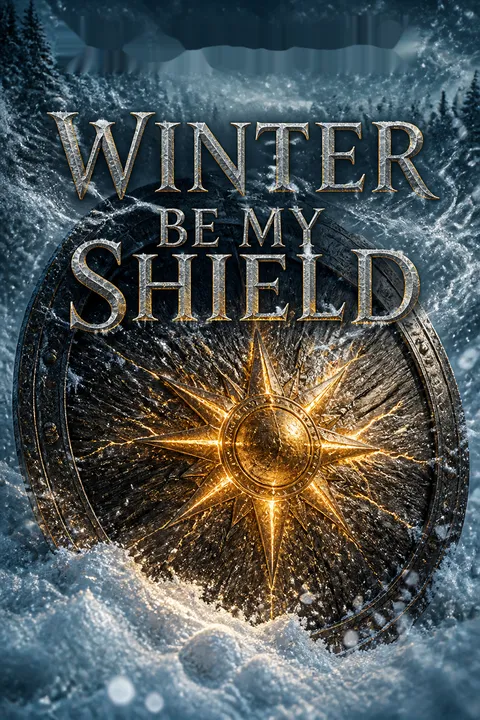


Plot Summary
Prologue
A month before Sierra’s flight, Isidro Balorica is recognized in a northern village by soldiers serving Queen Valeria. He has come to warn the ruling clan that the king’s forces have uncovered its spies, but the soldiers want him alive because they believe he can lead them to his foster-brother, Prince Cammarian.
Isidro fights his way onto horseback, killing several men before they drag him down. Duke Osebian identifies him and demands the prince’s location. Isidro lies, but the soldiers take him south for interrogation, leaving Cam and the rest of their fugitive band unaware that the hunt has reached them.
The opening establishes the story’s central pressures before Sierra enters: family loyalty, political persecution, and the vulnerability of anyone caught between armies. Isidro’s decision to fight rather than surrender makes his later physical helplessness more consequential. His captors value him not for his own identity but for the route he may reveal to Cam, foreshadowing the way powerful institutions repeatedly turn people into instruments. The prologue also gives the war a human scale. A prince may be the political prize, but it is Isidro’s body that absorbs the violence required to pursue him.
Sierra Breaks the Shackles
Two years in the hands of the Blood-Mage Kell have left Sierra chained, burned, and used to amplify the pain of his victims. She escapes during a storm, killing the guards who try to stop her and stealing winter clothing, a horse, and supplies. Her power surges dangerously whenever fear overwhelms her control, while the bands on her wrists burn when she lets it rise.
Pursued by Kell’s apprentice, Rasten, she loses her bearings in the snow and collapses in a makeshift shelter. Cam, a fugitive prince hunting for food, discovers her nearly frozen after she raids one of his snares. He carries her back to his hidden camp, where physician Rhia begins trying to save her.
Sierra’s escape is an act of agency, but not yet freedom in any stable sense. She has broken the physical restraints without escaping the habits they produced: panic still governs her power, and survival requires constant anticipation of punishment. The storm functions less as a convenient escape route than as an environment that erases distinctions between hunter and hunted. Cam’s rescue begins a relationship built on practical care rather than trust. He sees a half-frozen stranger who needs help, while Sierra wakes expecting every rescuer to become another captor.
A Stranger Heals Isidro
Cam’s companions recognize Sierra’s Mesentreian clothes and royal-household crest, but she wakes blind from snow glare and gives them the false name Kasimi. Isidro, the man Kell tortured before his rescue, is recovering from pneumonia and an arm shattered by Rasten. In the dark, Sierra accidentally touches him and drains his pain along with enough strength to make him collapse.
Terrified she has killed him, she finds the healing charms Kell left among his belongings, recharges them, and hides them against his skin. When Isidro wakes, his fever has eased. He notices that Sierra understands enchantments, while she remembers his face from Kell’s torture tent and realizes he is the prisoner whose suffering she once witnessed.
The first bond between Sierra and Isidro is formed through a power that can both relieve and endanger. Her touch gives him relief, but the near-fatal drain forces her to confront how little control she has over the effect she has on other people. Isidro’s survival shifts her self-understanding: she is not only a weapon or a threat, but someone capable of helping. Yet that comfort is inseparable from fear, since the same gift that soothes his injuries could consume his remaining strength. Their connection begins in a morally complicated exchange rather than uncomplicated romance.
A Bracelet Goes Missing
Sierra tells Cam that the Akharian invaders have taken the Bear Lands and may be moving east, though he doubts her report. With food and medicine running low, Cam rides to a village with Lakua and her husband Brekan. Soldiers search travellers for a fugitive woman, falsely accusing Sierra of killing a baby and offering a vast reward for her capture.
Back at camp, one of Sierra’s ruby bracelets disappears. Lakua discovers Brekan stole it and sold it, hoping to keep the money from the group. His theft convinces Sierra that the stones may lead her hunters straight to the camp. When Isidro sees the wanted portrait and recognizes her as Kell’s apprentice, Sierra’s false identity can no longer protect her.
The missing bracelet turns private distrust into a concrete danger. Brekan’s theft is not merely a breach of hospitality; it reconnects Sierra to the machinery pursuing her and threatens everyone sheltering her. The village’s fabricated accusation shows how authorities make a fugitive socially untouchable before they physically capture her. Cam’s skepticism about the eastern invasion and Sierra’s concealed identity are both understandable forms of caution, but together they leave the group poorly prepared. The episode tests whether a fragile community can survive scarcity without converting fear into suspicion and self-interest.
The Camp Turns Blue
A force of soldiers attacks the camp before dawn. Sierra’s uncontrolled power tears through the attackers, saving Cam and the others but leaving a field of mutilated bodies. Garzen is fatally wounded in the fighting. Sierra cannot heal him, but she draws away his pain so he can die peacefully, an act Rhia condemns even as she grieves for him.
The survivors capture one wounded soldier to learn why the attack happened. Isidro’s memories of Kell’s torture make him unable to stay for the questioning, while Sierra is sickened by the prisoner’s screams. After they learn that more soldiers may be coming, Cam orders an immediate retreat. They leave Garzen’s body on a pyre and carry their wounded and supplies east.
Sierra’s first large-scale defense reveals the difference between power and mastery. She saves the camp, yet the violence continues beyond her conscious control and takes Garzen’s life despite her attempt to comfort him. Rhia’s anger reflects a genuine ethical conflict: to Sierra, shortening a dying man’s suffering is mercy; to Rhia, it risks turning death into something too easily accepted. Isidro’s retreat from the prisoner’s interrogation exposes a different cost of violence. He may be physically present among the survivors, but trauma can still remove him from the action at the moment he most wants to be useful.
Pain Becomes a Bridge
As the fugitives travel, Sierra offers to draw the pain from Isidro’s ruined arm. The numbness lets him ride and rest, but each use costs him strength and feeds her power. They grow closer in the nights they share, and Sierra’s desire is mixed with a need to escape the loneliness and dread that have defined her captivity.
Isidro learns that her touch can remove pain without killing him, and he begins to hope that his damaged body might not be the end of his usefulness. At the same time, he experiences visions through the ritual scar Rasten left in him. Those glimpses reveal that Rasten is nearby and capable of slaughtering whole groups to fuel his magic.
The intimacy between Sierra and Isidro is real, but it develops under conditions that make consent and dependence difficult to separate. She wants tenderness after years of coercion; he wants relief from a body that has become a prison. Their ability to help one another gives each a reason to keep going, but the exchange is unequal in its consequences: his pain nourishes her, even when she intends only to ease it. The ritual link adds a third presence to their relationship. Rasten can intrude through Isidro’s suffering, so even private closeness remains shadowed by the violence that created it.
Mira’s Welcome Shatters
At a buried supply cache, Cam reunites with Mirasada, the Wolf Clan’s heir, who offers shelter to the fugitives. Brekan reveals Sierra’s secret in public, then shoves Isidro when he tries to stop him. Sierra lashes out with power, injuring Brekan and frightening Mira’s guards. Though Sierra calms herself and leaves rather than fight the clan, Mira refuses to let her go without consequence.
She secretly sends hunters after Sierra. Isidro discovers their mission and follows, with Cam close behind. Sierra kills one pursuer and then faces Rasten near a frozen river. She triggers an avalanche to bury them both, but Rasten survives, finds her trapped beneath ice, and pulls her from the water.
Brekan’s provocation makes visible the prejudice Sierra has been trying to manage. Her power protects Isidro, but its force confirms the clan’s fear and turns a potential sanctuary into a threat. Mira’s covert decision to kill Sierra is a political calculation disguised as public hospitality. Isidro’s choice to follow the hunters shows that his loyalty has not been erased by injury, even as it exposes him to Rasten again. The avalanche duel marks a grim change: Sierra can no longer rely on flight alone, and Rasten’s rescue complicates the simple division between enemy and protector.
A Temple Refuses Her
After Rasten escapes with a knife wound, the fugitives return to Mira’s camp. Isidro’s arm is badly reinjured, and he collapses from exhaustion. Mira agrees to a temporary truce and sends him to Drysprings Temple to recover, while Sierra and Cam join Ardamon’s party pursuing Rasten.
At the temple, the High Priestess recognizes Sierra’s power and calls her a demon, but Mira insists the sanctuary honor its obligations. The next morning Isidro is too ill to travel, so Sierra leaves him in Rhia’s care. The split is painful for both of them. Sierra follows the trail with Cam, while Isidro stays in a place whose priests regard the power in him as something to suppress.
The temple offers shelter only conditionally. Its religious authority can protect a guest from immediate violence, yet it also reproduces the same fear of magic that has made Sierra’s life precarious. Mira’s defense of hospitality is meaningful, but the High Priestess’s response shows how little social acceptance Sierra can expect beyond individual alliances. Isidro’s separation from Sierra is not a rejection; it is imposed by illness and the group’s urgent pursuit of Rasten. Still, the separation exposes how dependent his fragile recovery has become on the person the temple most distrusts.
The Temple Gates Fall
While Sierra’s party follows Rasten, Akharian soldiers raid the village around Drysprings. Isidro tries to organize the villagers’ defense, but he is too weak to fight effectively. The attackers break into the shrine, capture him, and carry him to their camp. There, Battle-Mages torture him for information about Kell and Rasten.
Isidro’s earlier captivity has left him terrified of being broken again, and he attempts to end his life with a shard of pottery. Rasten floods him with power just in time to stop him. Delphine, an Akharian scholar, then offers him food, care, and a role translating Ricalani records. Isidro accepts, choosing to endure captivity rather than abandon Cam and Sierra to face their enemies alone.
Isidro’s attempted suicide is the low point of a character whose identity has been built around endurance and service. Captivity removes his ability to choose where he goes, while the threat of renewed torture makes survival feel like surrender. Delphine’s offer does not make him free, but it gives him a purpose he can choose within the limits of captivity. His decision is not a sudden recovery from despair. It is an ethical calculation: if he lives, he may still help those he loves. Rasten’s intervention, despite their history, reveals how tangled dependence can become between people bound by violence.
Sierra Declines the Hunt
Sierra’s party tracks Rasten through the northern settlements and finds an isolated family he has threatened but not harmed. Sierra explains that Rasten once watched Kell destroy his own family, and that the children may have stirred a remnant of pity in him. At a later camp, the pursuers discover Rasten has tortured smugglers to replenish his power.
Sierra realizes he now has enough strength to defeat her and refuses to lead the Wolf Clan into a battle that would require sacrificing its people. Mira supports her decision, despite Ardamon’s anger. Meanwhile, Sierra’s warnings about the Akharian advance are dismissed until an attack reaches Drysprings. The invaders capture Isidro, and Sierra senses his danger through the ritual bond.
Sierra’s refusal to fight Rasten is an important limit, not a failure of courage. She knows exactly what his power is fueled by and will not ask others to become fuel for her own victory. The family at the farm also complicates her view of Rasten: his capacity for cruelty is immense, but his past still shapes the choices he makes around children. Meanwhile, the capture of Isidro makes the war’s costs immediate. Sierra’s warnings had been treated as fear, yet the attack confirms her judgment. Being right does not give her the power to reach him.
Terundel Becomes Ash
At Terundel, Sierra tries to learn control from Rasten at a distance, but the rituals he teaches feel ill-suited to her instinctive power. When Akharian forces attack the village, Cam organizes its people into defenses between the houses. Sierra initially fights beside them, but the pain and deaths around her feed her power beyond what she can contain.
After warning Cam to evacuate, she brings the houses down on the attackers and releases a storm of energy that destroys the village and much of the legion. The survivors escape to the enemy’s abandoned camp, where Cam and Mira find Sierra alive amid the blackened ruins. The victory saves many people from capture, but it leaves hundreds missing and Sierra horrified by what she has done.
Terundel’s destruction is both a military victory and a catastrophe of agency. Sierra can prevent the invaders from enslaving the village, but the scale of the response exceeds the protection she intended to provide. Her power converts each injury into further capacity, creating a feedback loop in which the attempt to defend life risks consuming it. The scorched ruins make that contradiction impossible to romanticize. Cam and Mira’s survival does not settle the moral question; it leaves Sierra to face the fact that effectiveness and goodness are not the same thing when a weapon cannot be reliably stopped.
Delphine Finds a Translator
In the Akharian camp, Delphine discovers that Isidro can read Ricalani and has survived Blood-Mage rituals. She secures him better food and basic enchantments to steady his broken arm, then asks him to help translate records collected by the Akharian expedition. Isidro learns that the empire is searching for Vasant’s lost magical knowledge, not merely taking slaves.
When he reaches the caves of Milksprings, he recognizes that the apparent remains of burned books are a decoy. A hidden network of enchanted stones projects Vasant’s books onto the spring’s surface, where they can be read but not carried away. Isidro activates the archive, making himself indispensable to the Akharians and, at least temporarily, harder for them to discard.
Isidro’s role changes from captive source of information to the person who can interpret a culture his captors do not understand. This does not erase his coercion; the same empire that needs his knowledge still treats him as property. The archive sharpens that tension. Vasant preserved knowledge not as a portable treasure but as a place-bound system, so access depends on understanding rather than possession. Isidro’s discovery gives the Akharians what they came for, yet it also creates a narrow form of protection. His learning becomes a tool for survival, though the price is deeper entanglement with the empire.
Mira Enters the Slave Camp
Mira is captured by Akharian soldiers and brought before General Boreas, who considers whether she is worth more as a ransom than as a slave. Isidro is ordered to question her. She recognizes him and calls him a traitor, but he warns her not to reveal that she speaks Mesentreian. He tells Boreas that her clan can pay in furs, gold, and political concessions, and that damaging her would reduce her value.
Boreas orders that she be kept with the women and children and left untouched. Delphine notices Isidro’s reaction and realizes he knows Mira, but chooses not to expose him. Mira remains a prisoner, while Isidro has bought her temporary protection by making her useful to her captors.
Isidro’s intervention depends on speaking the language of the people holding Mira: value, ransom, and political leverage. He cannot free her, but he can redirect the terms of her captivity away from immediate sexual violence. This is a constrained form of resistance, one that uses the captors’ own calculations against them. Delphine’s decision to conceal the connection adds another small act of protection, though it is not enough to resolve the danger. The scene also shows Isidro’s growth under pressure: he is no longer only enduring what captors do to him, but finding ways to alter what they do to others.
Dremman Sells Sierra
After the Terundel battle, War-Leader Dremman welcomes Sierra as a useful guest but keeps her under guard. Rasten warns her that Dremman intends to hand her over to Kell. Cam doubts the warning, yet Dremman’s men drug Sierra, Mira, and Cam, then send Mira toward Ruhavera and bind Sierra to a sled for delivery.
Sierra wakes during a second attempt to dose her, breaks free of the failing suppression bands, and kills most of her guards. Ardamon finds her before Rasten’s party arrives and admits what his father planned. Rasten confirms the betrayal, offers Sierra his horse, and lets her return to Cam rather than force her to accompany him. Sierra can no longer treat Rasten’s warning as manipulation alone.
Dremman’s betrayal makes the limits of political hospitality brutally clear. He protects Sierra only while he believes she can strengthen his clan; once she threatens its position, he tries to convert her into a bargaining chip. Sierra’s escape is a decisive assertion of self-defense, but it also leaves her isolated from the people who promised shelter. Ardamon’s choice to help her breaks with his father’s authority, while Rasten’s refusal to seize her complicates the enemy relationship further. Sierra now has evidence that Rasten may offer what the Wolf Clan cannot: a way to oppose Kell, though not without a terrible cost.
Sierra Chooses the Slavers
Back at camp, Sierra learns that Dremman’s men have also taken Mira and that Isidro remains in Akharian hands. She rejects the plan to rely on Rasten, because surrendering to Kell would make her slavery permanent.
Instead, she proposes entering the Akharian camp as a captive and reaching Vasant’s books, which may teach her to control her power without Rasten. Cam agrees to help her pass as a lone traveller. Before she leaves, Rasten gives Cam an enchanted stone that lets him communicate with Sierra, and helps her drain away excess power so she will not expose herself among the slaves.
Sierra parts from Cam with no guarantee she can return. She approaches the Akharians and surrenders, hoping that captivity will bring her to Isidro and the archive.
Sierra chooses a dangerous form of apparent surrender in order to regain control over the terms of her life. She is not choosing the Akharian Empire as a safe refuge; she is choosing the only route that may bring her to Isidro and to knowledge she can use against Kell. The enchanted stone preserves a fragile connection to Cam, but it also underscores how precarious their alliance has become. Rasten’s assistance is both practical and emotionally charged. He helps her go, yet his belief that she will eventually return to him remains intact. The ending leaves her agency real but unresolved.
Epilogue
The Akharians surround Sierra when she reaches their patrol and bind her without letting her fight. She keeps her power hidden while the soldiers search her sled and march her toward camp. There, Isidro has become the translator Delphine needs to study Vasant’s archive, and he has already encountered Mira, another captured prisoner whose identity he concealed to protect her.
Sierra’s surrender is therefore not a clean escape from danger. It brings her into the same camp as the people she hopes to help, while Rasten remains nearby, waiting for her to call on him.
The ending turns capture into a strategic threshold rather than a resolution. Sierra enters the enemy camp voluntarily, but the material conditions of captivity remain real: she is bound, searched, and subject to the choices of her captors. Her hope rests on knowledge and alliance, not on a sudden mastery of power. Isidro’s presence and Delphine’s growing reliance on him suggest possible routes through the camp, while Mira’s capture gives the plan additional urgency. Rasten’s distant promise of help keeps the emotional conflict open. Sierra has chosen a direction, but the book closes before she can know whether it leads to freedom or another form of control.
Analysis
Winter Be My Shield links three forms of power: political authority, magical capacity, and control over one’s own body. The armies treat people as resources, whether they are soldiers, slaves, clan heirs, or a rare mage whose suffering can generate energy. Sierra’s defining problem is therefore not simply that she possesses too much power. She has been taught that power belongs to whoever can control her, and she must discover whether she can use it without reproducing that logic. Her refusal to sacrifice captives to defeat Rasten becomes a moral choice with military consequences, while the destruction of Terundel shows the danger of a power that turns injury into fuel faster than judgment can keep pace.
Isidro’s parallel story complicates the idea that survival is heroic because it is always freely chosen. Torture makes him consider death, and captivity makes his knowledge useful to the very people who have taken him. His decision to translate is neither simple collaboration nor clean resistance. It is a wager that continued life may give him a chance to protect Cam, Mira, and Sierra. Delphine’s uneasy kindness sits inside the same contradiction: she offers humane treatment while benefiting from an invasion that has taken Isidro’s freedom.
The book’s historical argument is equally concrete. Ricalan’s purge of its mages may have ended an earlier war, but it also erased knowledge that could now help resist the Akharian invasion. Vasant’s archive refuses both destruction and easy appropriation: the books can be read, but not removed from the land that preserved them. The ending does not settle whether Sierra can master her power, whether Isidro can be freed, or whether Rasten can be trusted. It leaves the characters facing a more demanding question than who should rule: whether people shaped by violence can build alliances without making another person’s body the price of safety.
Review Summary
Winter Be My Shield receives mixed reviews, with praise for its complex world-building, nuanced characters, and unique magic system. Many readers appreciate the gritty, realistic tone and detailed winter setting. However, some find the pacing slow and struggle with the graphic violence and torture scenes. The book's strengths lie in its character development and exploration of themes like prejudice and survival. While some readers are eager for the sequel, others find the plot confusing or underwhelming. Overall, it's a polarizing but intriguing debut in the fantasy genre.
Characters
Sierra
The storm-born fugitiveA young Ricalani woman whose extraordinary power grows through the pain and pleasure she senses in others. Her gift makes her valuable to people who want to use her and frightening to people who cannot control her. Years of captivity have taught her to hide fear, expect betrayal, and measure every act of kindness for its cost. Yet she is not simply hardened: she worries about the people her power might hurt and repeatedly refuses to purchase victory with someone else’s suffering. Her central struggle is to acquire control without surrendering her identity to the people who claim only they can teach her.
Isidro Balorica
The wounded interpreterA Ricalani warrior and scholar, foster-brother to Cam, and the son of a clan chieftain. Isidro is observant, disciplined, and accustomed to protecting others, but torture and a shattered arm challenge the identity he built around physical competence. His knowledge of languages and enchantments gives him another way to serve, though he struggles to accept dependence and the possibility that he may never fight again. His connection with Sierra is shaped by both tenderness and power: she can ease his pain, but her ability to draw strength from him makes trust a demanding choice.
Cam
The fugitive princeCammarian, called Cam, is the blond, green-eyed prince raised among the Ricalani clans after his aunt chose him as heir. He fled the court with Isidro when political violence made his claim dangerous. Cam is practical, protective, and skilled at reading people, though he can mistake caution for wisdom and underestimate threats he cannot see. He cares deeply for Isidro and gradually learns to extend that loyalty to Sierra, even when her power frightens him. His life has been shaped by others’ political plans, and he resists being treated as a piece to be traded.
Rasten
Kell’s scarred apprenticeA Blood-Mage apprentice taken from his family as a child and trained through coercion and pain. Rasten is frighteningly capable, emotionally controlled, and deeply adapted to the brutal system that shaped him. His concern for Sierra is tangled with possessiveness and a belief that suffering is inevitable, so he often mistakes endurance for consent. He understands her power better than anyone else and can offer valuable instruction, but his methods and loyalties remain difficult to separate from Kell’s. His presence forces Sierra to ask whether help from someone damaged by the same master can ever be safe.
Kell
The king’s Blood-MageA powerful mage from Akhara who serves the Mesentreian court and uses pain, ritual, and political influence to control others. Kell is patient enough to groom apprentices and ruthless enough to punish resistance without killing the people he intends to exploit. He treats magic as a resource and people as instruments for gathering it. His methods have shaped both Rasten and Sierra, though in different ways. Even when absent, he governs the story through the fear of what he may do if Sierra is returned to his reach.
Mirasada
The Wolf Clan’s heirUsually called Mira, she is the politically astute heir to the largest remaining Ricalani clan. Her betrothal to Duke Osebian is meant to secure her clan’s position, but she is wary of the power such an alliance gives outsiders. Mira is quick-minded, socially skilled, and accustomed to weighing personal affection against political consequences. She cares for Cam and Isidro, yet her fear of sorcery initially leads her to treat Sierra as a threat rather than a possible ally. Her position makes every private choice carry public consequences.
Rhia
The healer in exileAn Akharian physician and former slave who has built a place for herself through knowledge and hard-earned practical skill. Rhia treats Isidro with fierce devotion, sometimes protecting him so vigorously that she underestimates his need for autonomy. Her experiences make her wary of magic and of the people who wield it, even when Sierra is trying to help. She is a careful observer of bodies and wounds, but also of the social costs of captivity.
Dremman
The Wolf Clan war-leaderMira’s uncle and Ardamon’s father, Dremman is a seasoned political strategist who places the survival and leverage of his clan above personal loyalty. He can be courteous when it serves him, but his hospitality has strict limits. The return of sorcery threatens the balance he has worked to maintain, so he views Sierra chiefly as a danger to the clan’s future. His calculations are not mere greed: he believes he is protecting his people from forces too large to defeat directly.
Ardamon
The divided clan heirDremman’s son and Mira’s cousin, Ardamon is proud, trained for command, and initially hostile to Sierra. He shares his father’s political loyalties but is also personally protective of Mira. When those obligations collide, he has to decide whether obedience is still defensible. His bluntness can make him seem unfeeling, yet he is capable of recognizing his own clan’s failures and acting against them.
Delphine
The scholar of lost magicAn Akharian Collegium scholar whose research into Ricalani history helped draw the empire’s expedition north. Delphine is intelligent, ambitious, and more compassionate than the academic hierarchy around her expects, though her education has left her accustomed to seeing slavery as an ordinary institution. She recognizes Isidro’s linguistic and magical value and offers him a more bearable place in the camp. Her desire to preserve knowledge is genuine, but she must confront the fact that her scholarship is entangled with invasion and enslavement.
Brekan
The resentful campmateLakua’s husband and a former member of the Raiders, Brekan has spent much of his life feeling overshadowed by stronger men. He can be resourceful and protective of his family, but resentment makes him justify theft and cruelty as compensation for what he believes he has been denied. His conflict with Isidro reflects not only personal jealousy but a wider struggle over who gets treated as valuable in a harsh society.
Lakua
The grieving wifeOne of two sisters married to Brekan, Lakua is generous, observant, and strongly guided by kinship obligations. She is still grieving her first husband, Markhan, and holds onto his bride-gift as a final connection to him. Her willingness to sacrifice it for Isidro shows how gratitude can coexist with sorrow. She is also capable of confronting Brekan when his choices endanger the group.
Eloba
The watchful sisterLakua’s sister and one of Brekan’s wives, Eloba helps maintain the camp through practical work and is skilled with a bow. She is fiercely loyal to her family and grieves deeply for Garzen. Her early distrust of Sierra is grounded in fear for the people around her, not simple malice, though fear makes her quick to blame the newcomer.
Garzen
The steady hunterA broad-shouldered member of the fugitive band, recognizable by the mourning tattoos on his face. Garzen is practical, experienced, and often serves as a stabilizing presence when the others argue. He understands the hard requirements of survival and tends to judge people by what they do for the group rather than by their origins.
Valeria
The queen motherCam’s mother and the political force behind the Mesentreian court’s hold on Ricalan. Valeria is feared for her ambition and her readiness to bend law and custom when they obstruct power. Cam’s estrangement from her is rooted in a childhood shaped by neglect and political use. Her influence reaches far beyond the court because she helped make Kell’s service possible.
Severian
The uneasy kingCam’s elder brother and the king of Ricalan, Severian inherited a divided realm and depends on the military power Kell provides. His political interests favor the southern settlements, leaving the northern clans exposed to invasion. He is less present than the people acting in his name, but his authority is the center around which much of the conflict turns.
Osebian
The Mesentreian dukeA cousin of Cam and Severian, Osebian is a Mesentreian duke whose marriage to Mira is meant to bind the Wolf Clan to the southern court. He is ambitious, disciplined, and accustomed to viewing Ricalan through the lens of future ownership. His resemblance to Cam makes the political division between them visible before either speaks.
Torren
The relentless interrogatorDelphine’s cousin and an Akharian Battle-Mage, Torren oversees the interrogation of Isidro. He is not as sadistic as Kell, but he believes force is justified whenever it serves the empire. His professional ambition and family authority make him a persistent threat, especially when Isidro’s knowledge becomes valuable.
Harwin
Delphine’s humane colleagueA Collegium mage and close colleague of Delphine, Harwin is gentle and conscientious. He treats his enslaved attendants with relative kindness, though he remains part of the system that owns them. His discomfort with cruelty does not automatically make him a resister, but it gives Delphine a trusted companion willing to question the empire’s assumptions.
Leandra
The architect of the purgeThe first Queen Leandra led the campaign that destroyed Ricalan’s mages a century before the story. Her victory became official history, shaping the laws and fears inherited by every clan. She is remembered as both a founder of political order and the person whose actions left Ricalan unprepared for a new generation of powerful mages.
Alameda
The gifted young mageOne of Delphine’s students, Alameda is a bright young mage with a particular aptitude for enchantments. She helps develop devices that ease Isidro’s damaged arm and represents the kind of future the Collegium can offer a child with talent. Her abilities are valued, but her own story also reveals how the empire separates talented children from their original families.
Plot Devices
Sympath power
Pain becomes powerSierra absorbs energy from the pain and pleasure she senses in other people. The power can strengthen her, fuel destructive magic, or let her draw another person’s pain away, but its growth makes control difficult. Kell exploits the gift in his torture rituals, while Sierra tries to use it without treating people as fuel. The device shapes both the action and the intimate relationships: Isidro’s injuries can nourish Sierra even as she relieves them, and battle gives her more power at the same time it threatens to overwhelm her.
Ritual scars
Captivity leaves a signalKell and Rasten’s rituals leave a magical connection between the torturer and the person subjected to them. Isidro and Sierra can sometimes glimpse events through the link, especially when Rasten raises large amounts of power. The scar brings remote events into the fugitives’ camp and later gives Sierra a way to sense Isidro’s danger. It is also a lasting reminder that magic can preserve the effects of violence long after the body has been removed from the torture chamber.
Warding and punishment bands
Restraints that burnEnchanted stones on Sierra’s wrists suppress her power, while punishment bands heat when it escapes control. Kell uses them as both a practical restraint and a means of conditioning her behavior. Their burn scars help expose the false story that she is merely a runaway servant. Later, the stones’ diminishing effectiveness shows that Sierra’s power has grown beyond the safeguards designed to contain it.
Vasant’s archive
Knowledge cannot be carried awayRather than hide a library of physical books, Vasant preserved their pages within an intricate enchantment built into the caves at Milksprings. Isidro activates the network, which projects titles and pages onto the spring’s surface. The archive frustrates the Akharians’ plan to remove the treasure from Ricalan and gives Sierra a possible source of instruction independent of Kell and Rasten. Its discovery makes Isidro valuable to the invaders and gives Sierra a reason to risk entering their camp.
The linking stone
A voice across distanceA milky-white stone from the ruins at Terundel can be activated through a ritual and used to communicate across distance. Rasten helps Sierra bind one to Cam before she enters the Akharian camp, giving them a way to remain connected without speaking aloud. The stone turns the story’s repeated separations into a practical problem with a partial solution, though its use risks exposing Sierra to the Akharian mages.
Download PDF
Download EPUB
.epub digital book format is ideal for reading ebooks on phones, tablets, and e-readers.








