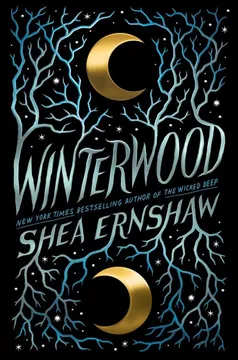


Plot Summary
Prologue
A sudden blizzard seals Jackjaw Lake behind snow, cutting off the mountain road, electricity, and every route to help. Across the lake, a boy disappears from the Jackjaw Camp for Wayward Boys.
The storm leaves Nora Walker,1 her mother,9 and the camp's stranded teenagers alone with the forest, though none of them yet understands how many lives the night will claim.
The opening makes weather an active force rather than a backdrop: the blizzard closes roads, cuts communication, and turns ordinary teenage conflicts into a sealed crisis. Its warning that not everyone will survive gives the story a foreboding frame, but the later revelations complicate the promise of death. In this book, disappearance and survival are not opposites. The prologue establishes the conditions that make secrets difficult to expose and makes the wilderness feel less like an escape than a witness that can keep its own account.
Under the Wicker Snow
Two weeks after the storm, Nora Walker,1 a teenager raised in a family of forest witches, enters the dangerous Wicker Woods under a full moon with her wolf, Fin.11 A pale bone moth draws Fin11 deeper than Nora1 has ever gone. He stops beside a snow-covered body: the missing camper,2 Oliver Huntsman.2
Nora1 touches his hand and discovers that he is alive, though barely able to breathe and unable to remember what happened. She gives him tea and helps him out of the forest. The road is still buried, the power is out, and the camp is too far to reach safely, so Nora1 takes Oliver2 to her isolated home and starts a fire.
Nora's first consequential choice is not to solve the mystery but to care for the apparent victim. Her family lore gives her access to the Wicker Woods, yet her fear remains real, and Fin's pursuit of the moth makes the discovery partly accidental. Oliver arrives as both a person needing help and an unexplained exception to the forest's danger. By choosing shelter over caution, Nora turns a solitary search into an intimate investigation. The missing boy's survival is the story's first contradiction, inviting readers to question whether the forest has merely hidden him or altered what survival means.
Returned to the Boys' Camp
Nora1 warms Oliver2 beside the stove and uses an herbal remedy from her grandmother's10 teachings, but he cannot explain how he spent two weeks in the woods. In the morning, she takes him back to camp. The crowded mess hall barely notices his return, and Nora1 sees how easily a missing boy2 can become just another face.
There she meets Suzy Torrez,3 a schoolmate stranded at camp after visiting Rhett Wilkes.5 Suzy3 asks to stay with Nora,1 and Nora1 agrees. Later, Suzy3 tells her that another boy4 died on the night Oliver2 vanished. A second bone moth appears at camp, confirming Nora's1 fear that the first was an omen, not an ordinary insect.
The camp's indifference gives Nora a social reason to keep looking after Oliver: the institution that should have noticed his absence barely registers his return. Suzy's arrival introduces a different kind of isolation, one shaped by gender and social status rather than family folklore. Nora accepts her partly from compassion and partly from a longing for companionship, which makes their tentative closeness consequential. The second moth and the report of another death turn an eerie rescue into a murder mystery. Supernatural signs do not yet explain events; instead, they sharpen Nora's sense that ordinary accounts are inadequate.
The Grave at Dawn
Oliver2 slips away from Nora's1 home before dawn, leaving her to follow his tracks around the lake. They end at the grave of Willa Walker, a relative remembered for making the lake bottomless with her tears. Oliver2 has visited the grave before, and when he later returns to Nora's1 house, he admits that he remembers being there with his cabinmates and another boy.4
He cannot yet recall what happened. Nora1 lets him stay despite her suspicion. She brings out her family's spellbook, cares for him, and listens as he explains that his parents died in a car accident and his uncle sent him to camp. Their shared loneliness draws them closer, though Oliver2 still withholds what he knows.
The grave links the mystery to Nora's ancestry without giving her the certainty she wants. Her family history is a source of belonging, but it cannot immediately function as an answer key. Oliver's fragments are similarly limited: memory returns as discomfort before it returns as narrative. Their closeness grows through mutual grief, not simple attraction. Nora recognizes in Oliver the absence left by her grandmother, while Oliver responds to a home where care is offered without a demand for explanation. That intimacy is ethically unstable, however, because his silence concerns a death, not merely a private wound.
A Fire Among the Boys
At a midnight bonfire, Nora1 confronts Rhett,5 Jasper,6 and Lin7 about the death. They insist it was an accident, but their fear gives them away: they argue over responsibility and mention Max,4 the boy who died.4 Lin7 says the boys have heard voices in their cabin and in the trees.
When Jasper6 stumbles into a branch and cuts his cheek, Nora1 sees the forest's hostility as more than rumor and douses the fire. Suzy3 leaves with Rhett,5 while Oliver,2 who had followed Nora1 to make sure she was safe, returns with her. He admits he distrusts the other boys but cannot explain why. Nora1 still lets him stay, even as the moth's warning and the boys' evasions unsettle her.
The bonfire shifts suspicion from a single missing camper toward a group bound by fear and shared knowledge. The boys' claims about an accident do not persuade because their behavior contradicts their account: they police one another's speech and fear being questioned. Their talk of voices leaves open whether guilt, the forest, or both are pursuing them. Nora's act of extinguishing the fire is practical protection, but it also asserts authority in a group that has treated her as a rumor. Oliver's quiet return complicates the contrast between outsider and campmate: he is physically near Nora, yet remains unknowable to everyone, including himself.
The Watch Names Max
Nora1 finds a silver pocket watch in Oliver's2 coat, engraved for Max.4 She takes it to Floyd Perkins,8 an elderly neighbor who warns her not to blame the Wicker Woods for every human cruelty. He also confirms that the bone moth signals approaching death. When Nora1 returns, Oliver2 is gone, and Suzy3 says she was not with the boys when Max4 disappeared.
Nora1 accuses Suzy3 of pretending to be her friend for convenience; Suzy3 leaves hurt and angry. Alone, Nora1 tries a spell from the family book to lure the moth into a jar, but it never comes. Instead, music from a party at a nearby summer house draws her out, carrying Max's4 watch and her growing suspicion with her.
The watch converts a vague suspicion into material evidence, but its meaning remains ambiguous: possession can indicate guilt, grief, or an attempt to preserve a connection. Nora seeks Floyd's judgment because her own fear is beginning to replace evidence, yet his warning does not solve the case. Her harsh accusation against Suzy exposes how quickly she protects herself from possible betrayal by rejecting someone first. The failed moth spell is another confrontation with Nora's perceived lack of magic. Her decision to leave the house for the party marks a change from private speculation to active inquiry, even though she enters it emotionally isolated.
The Party Behind the Locked Door
At the Wilkinsons' summer house, camp boys drink and vandalize the empty property. Nora1 tries to make peace with Suzy,3 then follows her upstairs and overhears Rhett,5 Jasper,6 and Lin7 arguing. They say Max4 is hidden and that the counselors may eventually find him; Jasper6 claims Max4 drowned. When the boys catch Nora1 listening, Rhett5 orders them to lock her in a bedroom.
Suzy3 is too frightened to free her. Oliver2 climbs to the second-floor window and helps Nora1 escape. Back at Nora's1 house, she confronts him about Max's4 watch and asks if he killed Max.4 Oliver2 denies it but cannot explain the watch. Nora1 still lets him stay upstairs, and they kiss before sleep.
Nora's discovery that Max is hidden appears to settle the central question, but the boys' contradictory language keeps the evidence unstable. Their choice to imprison her is more revealing than their claims: fear of exposure has become a license to control another person. Suzy's failure to intervene damages the friendship Nora had begun to imagine, while Oliver's rescue offers care without erasing her distrust. The kiss does not resolve suspicion; it intensifies the cost of uncertainty. Nora is drawn to Oliver precisely as she fears his possible guilt, making intimacy an act of risk rather than proof of innocence.
A Chain Beneath the Ice
Nora1 follows Oliver's2 footprints to the frozen lake and finds the broken chain from Max's4 watch beside a hole in the ice. She concludes that Oliver2 drowned Max,4 then loses her footing and plunges into the water. Oliver2 pulls her out and keeps her warm through three days of hypothermic delirium.
When Nora1 wakes, he tells her that the other boys knew what they were doing that night, but he still will not explain exactly what happened. He stays beside her, and she chooses closeness over another demand for a confession. Once Nora1 falls asleep, Oliver2 slips away, convinced that the truth will destroy their fragile bond.
The chain seems to complete Nora's case, but her conclusion outruns what it can prove. Her fall turns investigation into bodily danger, and Oliver's rescue reverses their earlier roles: the boy she saved now keeps her alive. Their care for one another is reciprocal, yet it does not create transparency. Oliver's partial admission confirms collective wrongdoing without naming its form, while his departure repeats the pattern of disappearance that began the story. The sequence asks whether tenderness can coexist with uncertainty. Nora's willingness to accept comfort is emotionally understandable, but it leaves the central evidence unresolved.
The Woods Collect Their Price
After Oliver2 disappears, Rhett,5 Jasper,6 Lin,7 and Suzy3 break into Nora's1 house and force her to lead them into the Wicker Woods, hoping to find him. The forest is awake because the moon is not full. Jasper6 lights a fire, and the trees shift around the group, erasing their route. The campers gather old coins and trinkets from the ground despite Nora's1 warnings.
As flames spread, a root catches Jasper6 and drags him underground; Nora1 cannot pull him free. He drops the objects he stole, including Nora's1 grandmother's10 moonstone ring, which has returned from the lake. Nora1 leaves the ring untouched and escapes with Suzy,3 Lin,7 and Rhett5 as the burning forest spills toward the lake.
The Wicker Woods enforce a moral order that is frightening but not simply benevolent: they punish intrusion without distinguishing youthful foolishness from deliberate harm. Jasper's death follows a clear chain of choices. The boys force Nora into the forest, Jasper ignites it, then steals what the awakened woods have returned. Nora's refusal to reclaim her ring shows how far she has moved from treating inheritance as possession. The forest's violence also exposes the limits of Nora's family knowledge. She understands the rules well enough to warn the others, but not well enough to command the woods or prevent their consequences.
The Dead Boy in the Cabin
With the fire racing toward the homes, Nora1 warns Floyd Perkins,8 then checks a cabin where someone has been hiding. She finds Max4 alive, wearing borrowed clothes and asking whether authorities have found a body. Max4 says he watched Oliver2 sink beneath the ice. Oliver2 appears in the doorway, but Max4 cannot see him.
Nora1 understands that the boy2 she rescued was not alive in the ordinary sense. The bone moth has been following Oliver,2 not her, and his presence at Nora's1 house was the death omen's true warning. She faces Oliver2 as the forest burns, and he confirms that he drowned, though he did not understand what had happened when Nora1 first found him.
This revelation rearranges every earlier clue without making Nora's emotional response less valid. The watch belonged to Max, but its presence with Oliver did not mean Oliver killed him; the unseen boy's inability to be perceived by Max reveals the category error at the heart of Nora's investigation. The moth's omen likewise changes direction, exposing how fear made Nora interpret the sign as a prediction about herself. Max's survival turns the apparent victim into a dangerous witness and reverses the story's moral map. Nora's grief is complicated by affection for someone who was never physically alive during their intimacy.
The Ice Takes Oliver
Oliver2 remembers the night he arrived at camp and his cabinmates took him to the cemetery for an initiation. Rhett,5 Jasper,6 Lin,7 and Max4 made him drink and repeat Willa Walker's name, then demanded he walk out onto dangerously thin ice. Max4 shoved him farther toward the lake's center. When the ice cracked, Oliver2 pushed Max4 away from the opening and fell through himself.
Oliver2 clawed at the ice while Max4 watched instead of pulling him out. Max4 grabbed for his silver watch, snapping its chain, and left Oliver2 to sink. The others had helped create the danger and stood by as it happened. The Wicker Woods returned Oliver's2 body to the surface of the story, but not to life.
Oliver's memory replaces the mystery's false murder narrative with a more precise account of coercion and abandonment. Max initiates the danger and refuses rescue; the other boys' participation makes the death collective without making every action identical. Oliver's final attempt to push Max away complicates the idea that he was simply a passive victim, while the watch chain gives Nora's earlier clue its correct meaning. The camp's initiation ritual disguises cruelty as tradition, allowing boys to distribute responsibility until no one feels wholly accountable. Oliver's death is therefore both an individual act of cowardice and a group failure.
The Lake Rewinds Nora
As the fire traps Nora1 and Oliver2 by the lake, Nora1 realizes that objects lost in Jackjaw Lake reappear in the Wicker Woods. Oliver2 himself was returned through that same strange passage. She steps onto the ice to escape the flames, but it breaks beneath her again. Clutching Max's4 watch, Nora1 sinks while the spellbook slips from her grasp.
The watch's hands move backward, and Nora1 understands that her strange episodes of déjà vu have been more than fear or exhaustion. Her hidden Walker gift lets her bend time. She wakes in the snow near her home with her moonstone ring back on her finger, the fire undone, and the storm night restored.
The lake's geography becomes a mechanism for transformation: it has returned lost things, but Nora's second fall turns that pattern into a route through time. Her power emerges only after the inherited explanations fail her, suggesting that self-knowledge requires more than recovering old lore. The watch, previously an evidentiary object, becomes a tactile anchor for the reversal. Nora's return is not a simple escape from death; it offers another chance while preserving the emotional cost of what she learned. Her restored ring signals continuity with her family, whereas the missing spellbook implies that the future she left behind cannot be carried back intact.
The Storm Starts Again
Nora1 recognizes the cemetery scene as the night Oliver2 first went out with the boys. She reaches him before the initiation continues and warns him not to go onto the lake, but he does not know her and the others dismiss her as a strange Walker girl. Nora1 retreats through the storm, then sees Oliver2 approach her again along the shore.
He has a living heartbeat and no memory of their future together, yet something in him responds to her. When he notices a leaf in her hair, Nora1 recognizes the same small gesture from their earlier meeting. They walk away together as the storm closes over Jackjaw Lake. This time, Oliver2 is alive, and Nora1 has changed the choice that led to his death.
Nora cannot preserve the relationship as she remembers it: the Oliver before her has not shared their home, kiss, or grief. Her intervention instead changes the conditions under which a new relationship can begin. This is a more demanding form of hope than restoration, because she must accept that memory and reciprocity are not guaranteed. Oliver's instinctive recognition through a repeated gesture suggests that emotional traces can outlast conscious experience without becoming supernatural proof of destiny. Nora also acts rather than waiting for inherited magic to solve the crisis. Her new power matters because she uses it to create a choice, not to erase the past's moral weight.
Epilogue
The epilogue describes forests as places shaped by old harms and hidden histories, not neutral stretches of trees. The Walker women belong to the Black River, Jackjaw Lake, and the ancient woods around them.
Locals turn that connection into folklore, imagining the family as something grown from the ground itself. The Walkers accept the legends as part of their inheritance and prefer to remain strange and storied rather than become ordinary in other people's eyes.
The epilogue returns the story from individual danger to inherited identity. Its forest is neither a mere setting nor a simple antagonist; it holds the history that human communities misremember, fear, and convert into legend. The Walkers' folklore offers protection and belonging, but it also marks them as outsiders. By ending with the family's chosen relationship to its reputation, the book resists a tidy separation between truth and myth. A legend can distort a life, yet it can also preserve a history that the dominant community would otherwise dismiss or forget.
Analysis
Winterwood makes a mystery out of the gap between what can be seen and what can be known. Nora1 trusts physical clues, family stories, and instinct, but each offers only a partial account. The pocket watch appears to implicate Oliver;2 the chain seems to confirm Nora's1 conclusion; the moth appears to predict Nora's1 death. Each clue is real, yet her interpretation is shaped by fear and by the human desire for a single guilty person. The novel treats supernatural perception not as automatic wisdom but as a responsibility to revise one's conclusions.
The boys' camp supplies a social counterpoint to Walker folklore. Its initiations turn cruelty into tradition, and its hierarchy encourages each boy to hide behind the group's version of events. Max's4 refusal to rescue Oliver2 is the final act in a chain of collective violence, but the group has already made the fatal risk possible. The forest punishes trespass and theft with mythic force, while human beings harm one another through ordinary choices. Neither danger cancels the other.
Nora1 and Oliver's2 romance grows in the space between recognition and evidence. Nora1 gives Oliver2 care before she knows what he is, and Oliver2 offers her companionship while withholding the truth. Their affection is emotionally genuine, but it cannot make their circumstances safe or restore the dead. Nora's1 power over time offers a different kind of response: she cannot keep the first version of their relationship, but she can interrupt the event that destroyed Oliver's2 life. The ending makes hope an act of intervention rather than denial. Nora1 returns to a world where Oliver2 does not remember her, then chooses to meet him without demanding that he reproduce their lost intimacy. In that choice, the book joins its central motifs: inherited identity, the ethics of memory, and love as a willingness to begin again without guarantees.
Review Summary
Winterwood receives mixed reviews, averaging 3.83/5. Many praise Shea Ernshaw's atmospheric, lyrical writing and richly immersive winter setting, drawing comparisons to Alice Hoffman's magical style. Readers appreciate the dark, witchy premise featuring Nora Walker, a witch's descendant, and her mysterious connection to a lost boy. However, common criticisms include predictable plot twists, repetitive dialogue, underdeveloped characters, instalove between protagonists, and a slow-moving story. The ending divides readers, with some finding it emotionally satisfying and others feeling the time-travel resolution undermined the narrative's tension.
Characters
Nora Walker
The forest's wary daughterNora is a seventeen-year-old Walker who lives with the woods and lake as closely as other teenagers live with a neighborhood. Her grandmother10 taught her family lore and practical remedies; her mother9, Tala9, avoids discussing their heritage. Nora wants the knowledge and identity her mother9 rejects, but she also fears being dismissed as strange or powerless. She is observant, compassionate, and stubborn enough to enter the Wicker Woods when others would turn back. Her habit of treating found objects as vessels for remembered lives reflects her own fear of being forgotten. Nora's deepest conflict is whether to trust her instincts and attachments when certainty is unavailable.
Oliver Huntsman
The grieving camp outsiderOliver is a reserved newcomer at the Jackjaw Camp, sent there by an uncle after losing his parents. He carries grief as withdrawal and has little confidence that anyone will offer him a lasting home. His memory becomes unreliable after the storm, leaving him with fear and fragments rather than a clear explanation for his absence. Oliver is thoughtful and tender in private, but his instinct is to hide what might make others reject him. His connection with Nora1 develops because she treats his confusion seriously instead of turning it into a camp rumor. He longs for belonging while fearing that honesty will cost him the first place he has felt wanted.
Suzy Torrez
The stranded schoolmateSuzy is a popular Fir Haven High student who becomes stranded at the boys' camp after visiting Rhett5. Used to moving easily through social life, she finds herself confined among boys and dependent on Nora1, whom she has barely known. Her wish to leave town reflects a real hunger for a larger life, but her bravado often shields fear and uncertainty. Suzy's tentative friendship with Nora1 is imperfect: she wants closeness but remains vulnerable to the group's pressure and to her own attachment to Rhett5. She brings a different kind of loneliness into Nora's1 home, one shaped by exclusion from the future she has imagined.
Max Caulfield
The watch-carrying camperMax is a volatile camper whose resentment toward Oliver2 grows from being displaced from his bunk. He is quick to challenge others and uses provocation to claim control in a place where all the boys have limited freedom. His silver pocket watch connects him to a life beyond camp, while his conduct suggests that he is wary of vulnerability and eager to avoid appearing weak. Max's role in the group is not simply that of a bully: his choices reveal how peer pressure and private grievance can become dangerous when no adult intervenes.
Rhett Wilkes
The camp's hard-edged leaderRhett is a confident camper who expects others to follow his lead. His relationship with Suzy3 gives him an additional reason to care about how the other boys see him, but he tends to use authority rather than honest explanation. When the group becomes anxious, Rhett tries to control the story and keep outsiders from asking questions. His swagger is partly a defense against the possibility that the camp's rules and his own choices have left him powerless.
Jasper
The reckless instigatorJasper is one of Oliver's2 cabinmates, recognizable by his reindeer sweater and his readiness to turn an idea into a dare. He uses jokes and bravado to mask anxiety, especially when the boys discuss consequences. Jasper's impulsiveness makes him dangerous in a group already willing to excuse risk as entertainment. His fear of losing his last chance with his family helps explain his defensiveness, but does not erase the harm his choices can cause.
Lin
The uneasy cabinmateLin shares a cabin with Oliver2, Jasper6, and Rhett5. He is less forceful than the others and more willing to acknowledge that their actions have gone wrong, yet he hesitates to oppose the boys who dominate the group. His oversized coat and guarded manner suggest a teenager still trying to find his place. Lin's uneasy conscience makes him a measure of the difference between recognizing wrongdoing and having the courage to stop it.
Floyd Perkins
The lake's old witnessFloyd Perkins is an elderly Jackjaw Lake resident who runs the boathouse store in summer and keeps up his daily rounds in winter. He knew Nora's1 grandmother10 and offers Nora1 a steadier perspective than the teenagers around her. His knowledge comes from years of living beside the lake, not from claiming mastery over its mysteries. Floyd is protective of Nora1, patient with her questions, and alert to the distinction between wilderness danger and the cruelty people inflict on one another.
Tala Walker
The mother avoiding magicTala is Nora's1 mother, a Walker who can soothe wild honeybees and makes a living selling honey gathered from the woods. She has tried to distance herself from the family's reputation and its old practices, in part because she wants Nora1 to have an easier life. Her absences and silences leave Nora1 feeling both independent and abandoned. Tala's conflict is not a lack of love but a fear that inherited difference will narrow her daughter's1 choices as it once narrowed her own.
Ida Walker
Nora's remembered teacherIda is Nora's1 late grandmother and the family member who most openly shares Walker lore. She taught Nora1 to read the forest, use herbs, and regard the moon and its cycles as sources of knowledge. Her gift for entering dreams made her a listener to other people's private fears, and her stories remain a living influence on Nora1. Ida represents an inheritance Nora1 longs to claim, though her lessons cannot answer every question Nora1 faces.
Fin
Nora's wolfish companionFin is Nora's1 large, wolf-like dog, who appeared at her home and chose to stay. He accompanies her into the woods, follows scents, and reacts to danger before Nora1 can identify it. His loyalty offers a form of companionship that requires no explanation or social performance. Fin is also a practical guide, though the ancient Wicker Woods can overwhelm even his instincts.
Plot Devices
The Wicker Woods
The forest's dangerous borderThe Wicker Woods are an ancient tract cut off from the younger trees around Jackjaw Lake. Nora1 can enter safely under a full moon, when the forest is believed to sleep, but the campers do not understand or respect that rule. The woods return objects lost in the lake, making them a place where the past resurfaces in physical form. They also distort direction, move roots and branches, and punish people who take things while the forest is awake. The setting tests whether characters treat old warnings as knowledge or as superstition, and it makes the landscape an active force in the mystery.
The Bone Moth
A death warning with wingsThe bone moth is a rare, pale insect associated in Walker lore with approaching death. Nora1 sees one in the Wicker Woods just before she finds Oliver2, then sees it again at camp and near her home. Because she assumes the omen concerns her, she tries to lure the moth into a jar and make it leave. Its true significance becomes clear only after she learns more about Oliver's2 condition. The moth turns the story's supernatural signs into a problem of interpretation: a warning can be accurate even when the person reading it misunderstands who is in danger.
The Walker Spellbook
A family archive of magicThe Spellbook of Moonlight and Forest Medicine collects remedies, rituals, and histories passed down through Walker women. Nora's mother9 has put it away, while Nora's grandmother10 once read from it and taught her how to use its knowledge. The book gives Nora1 a practical connection to her ancestors, but it is not a complete instruction manual and cannot simply resolve every supernatural problem. Its entries preserve individual Walker gifts and the costs of living with them. The spellbook therefore functions as both a tool and an archive, asking Nora1 to decide how to carry inherited knowledge forward.
The Jackjaw Storm
A mountain community sealed offThe blizzard blocks the single road out, knocks out electricity and landlines, and traps the residents around Jackjaw Lake. The isolation prevents the camp from calling for outside help and gives the boys time to conceal what happened. It also forces Nora1, Oliver2, and Suzy3 into close quarters, where their choices cannot be deferred to parents, police, or counselors. The storm is not merely an obstacle but a pressure chamber: it compresses secrets, danger, and adolescent conflict into a community with no easy exit.
The Bottomless Lake
A passage for lost thingsJackjaw Lake is believed to have no bottom, and old settlers once dropped precious objects into it as offerings to calm the surrounding wilderness. The lake's connection to the Wicker Woods explains why items lost in its water can appear among the trees. A pocket watch, a moonstone ring, and Oliver's2 impossible return make that connection central to Nora's1 investigation. The lake also becomes the medium through which Nora's1 own unexplained relationship with time develops. Its apparent depth holds not only danger, but a route between loss, return, and another chance.

Download PDF
Download EPUB
.epub digital book format is ideal for reading ebooks on phones, tablets, and e-readers.








