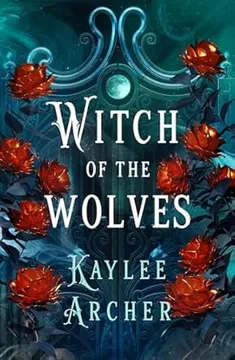


Plot Summary
A Wolf in London
Cordelia Levine,1 a twenty-three-year-old witch living under the name Carter, delivers dangerous magic for her aunt Lenora’s4 supernatural apothecary. On a London outing with her human friends Audrey7 and Henrietta,8 she notices a well-dressed stranger2 following her. His scent of musk, vanilla, and anise unsettles her even as it draws her closer.
He later approaches, calls her by the family name she hides, and insists she come with him without explaining why. Cordelia1 knocks his hand away with a spell and refuses to be ordered about. When she tells Lenora4 what happened, her aunt4 recognizes the danger in the man’s2 description and orders an immediate escape. Lenora4 names him Bishop Daniels,2 a werewolf working for Cordelia’s father.3
Cordelia’s first response to danger is neither passive fear nor reckless bravado. She asks for information, protects her friends from the encounter, and uses magic only when Bishop crosses a physical boundary. That insistence on informed choice becomes the story’s ethical measure: protection without explanation can resemble control. Her attraction to Bishop’s scent complicates the moment before she knows why it matters, making bodily recognition feel less like destiny than an unwelcome clue. Lenora’s fear reveals that Cordelia’s sheltered life has never meant the danger was imaginary. It means someone older has been managing it without her consent.
The Friend With a Knife
While Lenora4 goes to investigate a suspicious summons from Lord Wilkes, Cordelia1 tries to seal their London home with protective spells. Audrey7 and Henrietta8 arrive to warn her that the stranger2 has followed her before, but Henrietta8 soon reveals the warning was a way into the house.
She has posed as Audrey’s cousin8 to reach Lenora4 through Cordelia.1 Henrietta8 holds a knife to Audrey’s7 throat while other intruders enter, and Cordelia1 fights her with spells and a punch.
A forceful blast sends Henrietta8 tumbling down the stairs, where she dies. A huge half-demon corners Cordelia,1 then a black wolf2 attacks him. Cordelia1 mistakes the wolf2 for Bishop2 and stabs it before he changes back. Bishop2 and his cousin Julius5 then drug her unconscious and take her away.
The attack collapses Cordelia’s two social worlds into one dangerous room. Henrietta’s betrayal shows how ordinary hospitality can be weaponized, while Audrey’s loyalty survives the revelation that Cordelia has hidden her witchcraft. Cordelia’s accidental killing changes her self-image: training and confidence have not prepared her for the permanence of a misjudged spell. Bishop’s arrival saves her from the half-demon, but his rescue ends with abduction. The scene refuses an easy division between safety and threat. Cordelia can defend herself and still need help, while a person who helps her can still deny her the right to choose.
Silas Names His Daughter
Cordelia1 wakes in the care of Silas Stockwell,3 the Albion pack’s Alpha3 and the father3 she was told had been a French perfumer. Silas3 explains that werewolves pass their nature through the male line, but Cordelia1 inherited subtler traits: heightened senses, night vision, restlessness, and an enormous appetite.
He calls her a rare lycan, part witch and part wolf. He claims foreign packs want her for children who could inherit both her magical lineage and werewolf strength. Lenora4 knew his identity and kept it from Cordelia,1 deepening the young witch’s anger and uncertainty about whom to trust.
Silas3 says the danger requires her to stay at his country estate, Trevelyan, and promises training with Bishop.2 Cordelia1 accepts the temporary arrangement to learn what she is and avoid being captured by outsiders.
The revelation gives Cordelia an explanation for lifelong bodily differences, but it also turns those differences into a market value assigned by men. Silas frames his control as protection, asking her to trade immediate freedom for safety and knowledge. Cordelia’s consent is constrained, yet not empty: she understands that refusing blindly could expose her to worse danger. Her anger at Lenora matters because love cannot erase the injury of being excluded from decisions about her own body. The new identity is empowering only insofar as Cordelia can define it herself, rather than accept either a family secret or a pack’s reproductive claim.
Trevelyan Wants an Heir
Bishop2 and Cordelia1 travel through the night to Trevelyan, the secluded estate of Silas’s3 pack. The carriage passes Lenora4 in London, alive and searching for her niece,1 which reassures Cordelia1 but cannot bring her home.
At the estate, the men stare openly at the Alpha’s daughter,1 and several make sexual remarks. Bishop2 silences one by throwing him against a wall and orders another to the stables. During the formal welcome dinner, Silas3 praises Bishop’s2 service and announces him as his chosen successor.
He then revives an old pack custom, giving Cordelia1 to Bishop2 as his mate. Bishop2 accepts the arrangement in public. Cordelia1 leaves the table with her dignity intact, but now understands that her father’s3 protection comes attached to a marriage she never chose.
Trevelyan turns abstract danger into a social system. The wolves’ comments expose the vulnerability of a woman in a male household, while Bishop’s intervention offers real protection without yet proving he is free of the system’s assumptions. Silas’s announcement is more than a romantic complication: he converts Cordelia’s body into a tool for securing succession. Bishop’s public acceptance makes him appear complicit, but his later behavior will show that ambition and obedience do not mean the same thing. Cordelia’s refusal to collapse or perform gratitude preserves an inner boundary, even as the room treats her consent as a detail already settled.
A Pack Behind Closed Doors
In her guarded rooms, Cordelia1 meets Marjorie,11 a half-demon servant, and learns that the quiet Tabitha9 is a twelve-year-old witch who cannot speak. Ann,10 a necromancer, treats her with open suspicion.
Cordelia1 initially mistakes Tabitha’s9 silence for an inability to communicate, then discovers she uses signs and offers to teach her a simple spell. At meals, Bishop2 introduces Cordelia1 to his doctor cousin Julius,5 his uncle Oliver,6 bookkeeper Claude,12 and young Felix,13 who has been assigned stable work despite his aptitude with numbers.
Cordelia1 notices the pack’s rough humor and its rigid hierarchy, but also sees affection between its members. These encounters give her a foothold at Trevelyan and show that its inhabitants are not a single, obedient block.
The estate’s social map is built through small acts of access: a shared meal, a lesson offered, a servant’s guarded response. Cordelia’s instinct is to treat people as individuals, but she learns that kindness can still miss its mark when she assumes what Tabitha needs. Her correction is important because it replaces benevolent projection with attention. Felix’s assignment reveals the cost of rank even for pack members, while Ann’s hostility points toward histories Cordelia has not yet earned the right to know. Trevelyan is neither a simple refuge nor a uniform enemy. Its relationships contain the resources for change and the habits that resist it.
Learning the Scent Trail
Cordelia1 asks Bishop2 to teach her how to use her inherited senses, and he takes her into the woods to practice tracking by scent. She struggles to follow a bone dragged through the grass, but recognizes that her wolf nature is real even without the ability to transform.
They share brandy on the ground and speak more honestly than either intended. Cordelia1 learns that Bishop2 and Julius5 grew up outside the pack, and that Bishop2 is being trained to lead despite his youth.
Their teasing turns into mutual attraction, though both know Silas’s3 planned marriage has distorted the terms between them. Back at the house, Cordelia1 makes herself appear open to the match so her father3 will not suspect resistance. She hopes Bishop2 can find a way to free them both from Silas’s3 plan.
The scent lesson gives Cordelia practical agency rather than merely a new label. She does not master the skill immediately, and Bishop’s instruction makes their connection collaborative rather than mystical. Their attraction develops alongside political suspicion, which keeps desire from functioning as a substitute for trust. Cordelia’s performance of willingness is a strategy shaped by her understanding of how authority reads women: open defiance may provoke confinement, while apparent cooperation can buy time. Bishop’s ambition complicates her view of him, but his upbringing outside the pack suggests he may not reproduce its customs unchanged.
The Danger Was Invented
While waiting outside Silas’s3 office, Cordelia1 overhears him reject his adviser Reginald’s15 warning and arrange a special license for a wedding that day. Henry Cain14 argues that Bishop2 should simply take her by force.
Nearby, Henry’s son18 and another wolf discuss how the supposed London threat was fabricated, confirming that no foreign pack is pursuing Cordelia.1 Henry14 catches her listening and drags her before Silas.3 Silas3 strikes and kicks her, then explains that he wants sons from Cordelia1 and Bishop2 to secure his own bloodline.
He orders her confined and strips her room of its bed linens, books, clothes, lamps, and water. The comforts Cordelia1 had read as paternal care now look like preparation for a controlled life, and her remaining faith in Silas3 breaks.
The false threat reveals that Silas has not merely made a bad protective decision. He has manufactured the emergency that made Cordelia’s compliance seem rational. His violence then exposes the coercion beneath his paternal performance. The carefully chosen clothes and books, once evidence of attention, become part of a staged welcome designed to make captivity feel like care. Cordelia’s initial choice to trust selectively was not foolish; Silas has controlled the information available to her. That distinction matters psychologically. Betrayal often produces self-blame, but the scene locates responsibility in the person who engineered the conditions of consent.
Lenora Pays the Price
Silas3 brings Cordelia,1 bound and gagged, before the pack and displays Lenora,4 beaten and injured, as leverage. He demands that Cordelia1 accept Bishop2 as her husband. Cordelia1 nods because she believes compliance is the only chance to keep Lenora4 alive. Silas3 then breaks Lenora’s4 neck in front of her.
Grief and rage tear through Cordelia’s1 magical reserves: she breaks her restraints, hurls Henry14 across the room with a spell, and attacks Silas3 before Bishop2 restrains her. Silas3 orders Bishop2 to punish her in the cellar. Bishop2 carries her away and admits he did not expect Silas3 to carry out the threat, though he accepts responsibility for bringing her into the situation. Cordelia1 no longer mistakes his divided loyalty for innocence.
Silas weaponizes the very relationship he concealed, forcing Cordelia to act as though her aunt’s life can be bargained for. Her nod is not consent to marriage; it is an attempt to stop an immediate murder. When the murder happens anyway, Cordelia’s power erupts before her grief can become language. The scene marks a shift from self-protection to action against the authority that has defined her as property. Bishop’s restraint may prevent her death, but his admission does not erase his complicity. The story insists that a protector can be culpable even when his motives include concern.
A Kiss as Cover
In the cellar, Cordelia1 challenges Bishop2 to leave visible marks so Silas3 will believe he punished her. Bishop2 refuses to injure her, and their argument reveals how strongly he resists becoming the monster Silas3 expects.
When Cordelia1 presses him about his feelings, he admits he misjudged what she means to him. They kiss and share an intimate encounter, both choosing it as comfort and as a way to support their cover story. Cordelia1 suggests they let Silas3 believe their attraction has overcome their objections to marriage.
Julius5 later examines her and helps make the injuries from Henry14 look like Bishop’s2 work. Meanwhile, he confirms that Silas’s3 rule is contested and that Bishop2 has been building support to challenge him. Their private bond now serves a public strategy.
The intimacy matters because Cordelia explicitly distinguishes chosen desire from coerced marriage. She can want Bishop and still reject Silas’s right to decide for her. Their physical connection offers comfort after violence, but it also becomes political theater, a way to manipulate the Alpha’s assumptions. That strategy carries risk: the more convincingly they perform submission, the easier it is for others to mistake it for consent. Bishop’s refusal to hurt her is not proof that he is blameless, but it shows a limit he will not cross for Silas. Cordelia’s agency lies in naming both the desire and the conditions around it.
The Open Cell Door
Reginald15 unlocks Cordelia’s1 cell and claims he will take her to her dead grandmother,17 a story that convinces her he is guiding her into another trap. She knocks him back with a spell and escapes into the house. Rather than flee the grounds, she looks for Bishop,2 but Henry14 intercepts her in the woods and begins dragging her away.
Bishop2 sees her from an upstairs window, jumps from the second floor, and attacks Henry14 before the older wolf can hurt her further. Bishop2 and his allies defeat Henry’s14 attempt to seize her, and Cordelia1 returns to the estate instead of disappearing. Silas3 accepts her account that Reginald15 engineered the escape, but the adviser15 is arrested. Bishop2 remains assigned to guard Cordelia,1 closer than before.
Cordelia’s escape is not a clean break from captivity but a test of competing dangers. She refuses Reginald’s implausible rescue, then refuses the simpler route away from the estate because she knows Bishop and the pack remain vulnerable. Her return is a strategic choice, not surrender. Bishop’s leap from the window makes his commitment visible through action, though it cannot undo his earlier deception. Reginald’s role remains morally mixed: he sought to remove Cordelia from Silas’s control, but his method depended on manipulating her. The scene shows how, under coercive rule, even a genuine offer of help can be indistinguishable from a trap.
Wedding Under Guard
Silas3 accelerates the wedding after Felix13 is tortured and gives him just enough information to make Bishop2 appear devoted to Cordelia.1 Bishop2 tells Silas3 that their intimacy is real, though he withholds his plan against the Alpha.3 The ceremony goes ahead with the pack watching, while Cordelia1 and Bishop2 know neither has freely chosen the legal bond.
Just after they are married, Silas3 announces that Henry14 is dead and accuses Julius5 of killing him. Julius5 is bound and gagged, and Silas3 refuses the pack’s demand for a proper hearing. Bishop2 sees that Silas3 intends to execute his cousin5 and recognizes the accusation as a way to test and corner him. He challenges Silas for the Alpha position, accepting a fight to the death.
The wedding converts Silas’s private coercion into a public fact, but the ceremony does not create emotional agreement. Cordelia and Bishop must perform affection while preserving their separate judgment. Felix’s torture demonstrates how Silas uses pain to force partial truths and how loyalty can be extracted rather than earned. Julius’s gagged accusation is also an attack on procedure: Silas seeks to replace a communal law with his own immediate will. Bishop’s challenge is a point of no return because it makes his ambition explicit and places his life, not only his influence, at stake.
The Alpha Falls
Silas3 chooses wolf form and attacks Bishop2 before the formal signal, tearing open his shoulder. Bishop2 recovers and uses speed to exhaust the larger Alpha,3 but Silas3 repeatedly ignores the rules of the marked fighting circle. When Bishop2 appears knocked unconscious against a wall, Silas3 moves in to finish him. Bishop2 springs up, bites through Silas’s3 throat, and kills him.
The pack’s doctor Ann10 briefly raises Silas’s3 body as a zombie, allowing Tabitha9 to strike back at the man who crippled her magic and killed her mother. Cordelia1 then breaks the corpse’s neck, and Ann10 releases the spirit. Bishop2 is recognized as the new Alpha,2 while the pack’s open grief and confusion give way to scattered fighting and the first signs of a new order.
Bishop wins through patience and adaptation, not by matching Silas’s brute force. His apparent defeat is a calculated risk that exposes how confidently Silas trusts violence. The succession is therefore both personal victory and institutional rupture. Ann and Tabitha’s brief use of necromancy gives silenced women a moment of direct retaliation, while Cordelia’s final act makes the family violence impossible to disguise as a clean transfer of power. Yet the pack’s new leadership is not a simple cure. Silas’s death creates an opening, but the wounds and loyalties he left behind remain active.
The Grandmother Arrives
As the pack absorbs Silas’s3 death, a woman resembling Lenora4 enters with several witches and identifies herself as Beryl Levine,16 Cordelia’s maternal grandmother.16 She claims her cabal arranged the staged attack on Lenora’s4 house with Silas,3 who promised to deliver Cordelia1 to her.
Beryl16 also reveals that Henrietta8 was Cordelia’s cousin8 and that Bishop2 was not supposed to kill anyone during the operation. She demands that Bishop2 die to repay the family blood debt, then kills Claude12 with a lethal spell when he tries to negotiate.
Cordelia1 attacks Beryl16 with a burst of power that leaves her magical reserves empty. When Beryl’s forces begin invading Trevelyan, Bishop,2 Julius,5 and Cordelia1 understand that the confrontation has become a fight for the pack’s survival.
Beryl’s arrival overturns the comforting idea that Cordelia’s danger came only from Silas. The family that might seem to offer belonging also treats her as a debt to be claimed and uses violence to enforce its account. Her revelation about Henrietta complicates Cordelia’s guilt without removing it: Cordelia still caused the death, but the attack was part of a larger manipulation she could not see. Beryl’s killing of Claude proves that kinship rhetoric can conceal the same instrumental logic as Silas’s. Cordelia’s sudden magic signals potential, but its cost leaves her unable to solve the crisis alone.
Trevelyan Burns
Beryl’s people attack from inside and outside the house, and Cordelia1 chooses to fight beside Bishop2 rather than escape alone. She uses the scraps of magic she has recovered and her trained strength to protect Ann10 and the remaining wolves.
Ann10 raises fallen attackers as zombies, turning their assault against them, while a cabal wizard kills Charlie20 with a single spell. Marjorie,11 revealed as Beryl’s16 spy, warns the survivors that a larger force waits beyond the doors and that the house is being set on fire.
She stays behind after killing the wizard who blocks their route. Augustus19 leads the pack through an old underground passage. In the cellar, they discover Reginald’s15 tortured body, proof of Silas’s3 brutality, then climb out into the woods as Trevelyan burns.
The siege strips away any fantasy that a new Alpha can restore order by winning a single duel. Cordelia’s decision to stay and fight makes belonging an action rather than an inheritance: she risks herself for people who have become her community. The attackers’ magic and the deaths of Charlie and Claude prevent victory from being mistaken for triumph. Marjorie’s betrayal is especially painful because her warning is still useful; loyalty and harm coexist, and the survivors must accept help without pretending trust is whole. The hidden passage preserves life, but the sight of Reginald’s body carries Silas’s violence into the escape.
A Pack Without Walls
At the edge of the estate, the survivors discover that Felix13 freed the horses before the stables burned. He returns from the woods, smoke-stained but alive, and joins the others as they ride away from Trevelyan. The pack is reduced to a handful of survivors, and Felix13 must face his father Claude’s12 death. Bishop2 promises to rebuild, seek help from other packs, and secure freedom for the women who had been kept at Trevelyan.
He also tells Cordelia1 she is free to leave and that their forced legal marriage need not bind her. Cordelia1 chooses to stay for now, believing they can rebuild the pack together. As she falls asleep beside him, Bishop2 imagines a future in which she is not merely his mate but the pack’s first female Alpha.1
The ending refuses to equate home with a building. Trevelyan is lost, but the people who formed the pack escape together, and Felix’s rescue of the horses adds an act of care amid devastation. Cordelia’s decision to stay is meaningful because Bishop explicitly leaves the choice with her; it is not the same as the marriage Silas imposed. Still, she says for now, not forever. The distinction preserves uncertainty and keeps her independence intact. Bishop’s imagined female Alpha points toward structural change, but the novel ends before that promise is tested. Their future remains an undertaking, not a reward already secured.
Analysis
Witch of the Wolves makes consent its central political problem. Cordelia1 is repeatedly told that others are protecting her: Lenora4 hides her parentage, Silas3 invents a threat to bring her under his authority, and Bishop2 initially treats her as a piece in a plan for the pack. These actions differ in motive and degree, but the story tests them by the same question: does care leave Cordelia1 room to know, refuse, and choose? Her anger at secrecy is not immaturity, and her willingness to accept temporary help is not submission. She learns to distinguish a constrained choice from no choice at all.
The novel also links gendered power to institutions rather than to individual cruelty alone. Silas’s3 fixation on heirs, the women held at Trevelyan, and the pack’s treatment of daughters all turn female bodies into resources. Beryl16 appears to offer a different source of female authority, yet her claim of family entitlement reproduces the same coercive logic. Cordelia’s1 hybrid identity unsettles the categories that both systems rely on: she is a witch who inherits wolf traits, a woman who can fight, and a potential Alpha2 who need not become a man to lead.
Bishop’s2 arc is not a simple redemption through romance. He must acknowledge that strategic loyalty made Cordelia1 expendable before he knew her. His affection matters because he increasingly gives her information and room to act, but it cannot erase the cost of his earlier choices. Their attraction becomes most meaningful when it is separated from the forced marriage and when Cordelia1 is explicitly free to leave. The ending offers a future, not a cure: Trevelyan is destroyed, the cabal remains powerful, and the surviving pack is small. Cordelia1 chooses to stay for now, while Bishop2 imagines a shared leadership that would alter the rules that once made her a prize.
Review Summary
Witch of the Wolves receives mixed reviews, averaging 3.72/5. Readers praise its fast-paced Victorian-era setting, enemies-to-lovers dynamic, and the chemistry between Cordelia and Bishop. Many enjoyed the paranormal romance premise of a half-witch, half-werewolf protagonist navigating pack politics and forced marriage. Common criticisms include underdeveloped world-building, insufficient emphasis on Cordelia's magical abilities, rushed emotional beats, and telling rather than showing character development. The audiobook narration by Polly Edsell received consistent praise. Most readers expressed interest in the sequel despite reservations.
Characters
Cordelia Levine
Witch with wolf-bloodCordelia is a young witch raised by her mother and aunt4, accustomed to working in supernatural London while keeping her identity from human friends. Curious, quick-witted, and physically capable, she resists being treated as a fragile girl or a piece of family property. Her sharp senses and restless energy are traits she has spent years explaining away, and she approaches new knowledge with both skepticism and appetite. Cordelia’s deepest strength is not fearlessness but her insistence on making choices with the information available to her. She can be impulsive under pressure, yet she reflects on mistakes and adjusts. Her warmth toward people below her social rank contrasts with a growing ability to confront powerful figures directly.
Bishop
Ambitious wolf commanderBishop is the young werewolf trusted with essential work for the Albion pack. Controlled, strategic, and difficult to read, he has built his standing through persistence rather than inherited acceptance. He values competence and loyalty, but his instinct to treat people as pieces in a larger plan can blind him to the personal cost of his choices. Cordelia1 challenges both his authority and his emotional reserve, forcing him to distinguish protection from control. His attraction to her is strong, but he tries to keep it subordinate to his duties and ambitions. Beneath his composure lies a man who wants to lead differently from those who taught him what leadership costs.
Silas Stockwell
Authoritarian pack AlphaSilas is the Alpha3 of the Albion pack and Cordelia’s1 estranged father. He is socially forceful, politically shrewd, and accustomed to turning family relationships into instruments of succession. He can present attention and generosity in ways that look affectionate, but his understanding of care is inseparable from authority and control. Silas expects loyalty to flow upward and regards dissent as a threat to the pack’s stability. His plans reveal a fear of losing power and a fixation on bloodline and heirs. He is most dangerous when he believes his actions are reasonable, because paternal language allows him to disguise coercion as protection.
Lenora
Protective witch auntLenora is Cordelia’s aunt1, guardian, and partner in a London apothecary serving supernatural clients. Elegant and formidable, she has survived by controlling what she reveals and preparing for danger before it arrives. Her secrecy about Cordelia’s father3 comes from fear and old wounds, but it also deprives Cordelia1 of knowledge she needs to understand herself. Lenora values strength, discretion, and the ability to wait until a fight can be won. Her relationship with Cordelia1 blends affectionate mentorship with the friction of a guardian who still struggles to treat her as an adult. Her past with Silas3 shapes her fierce distrust of werewolves.
Julius
Doctor and trusted cousinJulius is Bishop’s cousin2, close friend, and physician to the pack. His humor is easy where Bishop’s2 manner is guarded, and he often makes tense situations more human without dismissing their danger. Raised outside the Albion pack, he shares Bishop’s2 complicated longing for belonging while retaining a strong moral resistance to needless cruelty. His medical skill makes him useful, but his willingness to challenge authority makes him more than a healer. Julius is observant, loyal, and capable of strategic deception when protecting someone matters more than appearing obedient.
Oliver
Steady wolf uncleOliver is Silas’s younger half-brother3 and a calm, capable member of the pack. His measured manner hides a dry wit and a careful understanding of the rivalries around him. He offers Cordelia1 a gentler view of Trevelyan than its roughest inhabitants do, while avoiding the mistake of pretending the pack is harmless. Oliver values steadiness, competence, and practical loyalty. He is one of the people who can make a crowded, masculine household feel less hostile without claiming that its inequalities are acceptable.
Audrey Thomas
Loyal human friendAudrey is Cordelia’s1 human friend, perceptive enough to notice when danger follows her even without knowing the supernatural world exists. She uses humor to ease tension, but she is neither frivolous nor gullible. Her trust in Cordelia1 rests on affection rather than complete knowledge, and she responds to the truth with patience instead of demanding immediate explanation. Audrey represents the ordinary friendship Cordelia1 fears betraying by keeping secrets, as well as the courage of someone who chooses loyalty before she understands the risks.
Henrietta
Impostor in the householdHenrietta appears to be Audrey’s visiting cousin7 and a new acquaintance of Cordelia’s1. Observant and patient, she uses the conventions of family hospitality to gain access to people who would otherwise be difficult to approach. Her polished cover makes her betrayal effective because nothing about her arrival initially seems extraordinary. Henrietta’s role exposes how easily trust can be exploited when young women are expected to welcome distant relatives without question.
Tabitha
Young witch without speechTabitha is a twelve-year-old witch who communicates through gestures and signs. Initially shy with Cordelia1, she is attentive, playful, and eager for the chance to learn magic. Her love of dogs and wolves reveals a child’s curiosity in a household where adults have imposed strict limits on her. Tabitha’s quietness should not be confused with passivity: she notices people closely and expresses strong feelings through movement. Her presence gives Cordelia1 a chance to share knowledge rather than merely seek it.
Ann
Necromancer servantAnn is a necromancer employed at Trevelyan. Blunt, wary, and fiercely private, she resists Cordelia’s1 attempts to win her over because she distrusts the privilege Cordelia1 seems to represent. Her sharpness is grounded in a history of loss and unequal treatment, though she rarely makes herself vulnerable enough to explain it. Ann has little patience for sentimental gestures, but she respects competence and directness. Her magic gives her a relationship to death that is practical as well as frightening to those who underestimate her.
Marjorie
Warm half-demon attendantMarjorie is a half-demon servant who helps Cordelia1 settle into Trevelyan. Sociable, funny, and experienced in the supernatural world, she speaks frankly about women’s work, sex, and the limits imposed on the household staff. Her instinct is to soften conflict, which can make her seem more open than she is. Marjorie understands how people survive inside systems they did not choose, and her loyalty is divided by obligations that Cordelia1 cannot initially see. She remains an important bridge between Cordelia1 and the women at the estate.
Claude
Pack steward and fatherClaude is the Albion pack’s gifted steward and Felix’s father13. Skilled with money and administration, he has helped stabilize Trevelyan after leaving the pack and later returning. His measured speech reflects caution earned through experience, while his care for Felix13 reveals a more personal, vulnerable side. Claude is respected because he makes the pack function, though that practical value does not guarantee that its leaders treat him or his family fairly. He sees the costs of Silas’s3 rule more clearly than many of the wolves around him.
Felix
Young wolf with promiseFelix is Claude’s son12, a young werewolf with a talent for mathematics who is assigned to stable work. Quiet and courteous, he is still learning how to speak up in a hierarchy that expects young wolves to prove their worth through obedience. His bond with Tabitha9 shows his gentler side, while his pride makes him reluctant to appear weak. Felix’s loyalty to his friends is often expressed through action rather than long explanations.
Henry Cain
Pack enforcerHenry is the pack’s powerful enforcer and a vocal defender of male authority. He treats strength as the only meaningful measure of worth and resents the younger, more thoughtful wolves who gain influence around Silas3. His crude manner is not merely comic roughness; it masks an appetite for control and a readiness to use force against people with less power. Henry’s loyalty to Silas3 is also bound up with his own position in the pack.
Reginald
Alpha’s veteran adviserReginald is the older adviser to Silas3, respected for his knowledge of pack history and political judgment. He understands that authority can become dangerous when an Alpha3 mistakes obedience for stability. His caution makes him wary of Silas’s3 plans for Cordelia1, though the limits of his influence are clear. Reginald represents an older form of loyalty that can include dissent, even when challenging a leader carries serious personal risk.
Beryl Levine
Powerful elder witchBeryl is a formidable elder witch connected to the Levine family’s hidden history. Her sense of lineage and inheritance is intense, and she treats power as both a responsibility and a claim that others must respect. Beryl is politically resourceful, accustomed to organizing supernatural allies, and quick to read hesitation as weakness. Her family language sounds affectionate, but her standards for loyalty are severe. She represents a form of witch power that Cordelia1 has never been taught to imagine.
Flora Levine
Cordelia’s remembered grandmotherFlora is Cordelia’s grandmother1, remembered as a loving presence in the coastal home where Cordelia1 spent her childhood. She helped raise Cordelia1 alongside her mother and passed on the family’s practical knowledge of healing and care. Flora’s influence remains part of Cordelia’s1 sense of what a Levine woman can be, even when family history becomes uncertain.
Harry Cain
Enforcer’s volatile sonHarry is Henry Cain’s son14 and shares his father’s14 contempt for women who resist male authority. He is eager to show that he belongs among the pack’s powerful men, but his aggression often outpaces his judgment. His relationship with Henry14 reinforces the household’s culture of dominance.
Augustus
Young wolf and law studentAugustus is one of Bishop’s2 younger allies. He studies pack law despite being teased for his seriousness, and his steady manner becomes useful when older wolves try to bend the rules. His loyalty is thoughtful rather than unquestioning, making him a promising voice in the pack’s next generation.
Charlie
Young pack companionCharlie is a young wolf associated with Bishop’s2 circle. He is sociable and quick to joke, helping Cordelia1 feel less like an object on display at Trevelyan. His ease with others makes him part of the pack’s lighter, more communal side.
Plot Devices
Lycan inheritance
A body becomes a clueCordelia’s1 heightened smell, night vision, appetite, and restlessness are inherited werewolf traits that her family has explained away. Because she cannot transform, she has never had the obvious sign that would identify her as part wolf. The discovery gives her a new vocabulary for her own body and a practical skill to develop through scent tracking. At the same time, her hybrid inheritance makes her valuable to people who imagine her children as a way to strengthen a bloodline. The device therefore joins self-knowledge to political danger: the same traits that help Cordelia1 understand herself become the reason others try to claim her.
Scent and tracking
Instinct becomes evidenceCordelia’s1 unusually sharp sense of smell identifies Bishop2 before she knows who he is, helps her recognize familiar people, and gives her a means of following Audrey7 through the house. Bishop2 later teaches her to distinguish scent trails and use them deliberately. Smell also signals emotional and supernatural recognition, especially between Cordelia1 and Bishop2, but it does not dictate what she should choose. In the final crisis, her scent helps corroborate that she returned to Bishop2 rather than fleeing the estate. This recurring device turns an intimate bodily sense into both investigative evidence and a measure of connection.
Protective magic
Safety has a costCordelia1 uses protective spells to secure Lenora’s4 home, conceal herself, repel attackers, bind opponents, and illuminate the underground passage. Each demanding spell drains her limited magical reserve, so power never functions as an effortless solution. The protective web around the house can be broken, and a strong spell can have consequences Cordelia1 did not intend, as when Henrietta8 falls to her death. Her learning to manage both magical energy and physical combat makes her growth concrete. The device repeatedly asks whether defense can remain controlled when fear and grief push Cordelia1 toward greater force.
Pack law and challenge
A contest tests authorityThe Albion pack’s rules give wolves a formal way to challenge an Alpha3, define the terms of a duel, and limit punishment after a failed challenge. Silas3 tries to bend those laws to preserve his control, while Bishop2 invokes them to prevent Julius’s5 immediate execution. During the fight, Silas3 ignores the circle’s rules, and Bishop2 must survive both his strength and his cheating. The challenge turns succession into public action rather than private appointment. It also exposes the difference between power backed by fear and authority recognized by a community.
The Levine cabal
Kinship carries a debtThe hidden Levine cabal gives Cordelia’s1 maternal family a political and magical history beyond the isolated witches who raised her. Its allies and obligations shape the staged attack on Lenora’s4 home and the later demand for repayment after the deaths of Levine family members. Beryl’s16 language of blood debt treats the pack as collectively responsible, even when individual members did not choose Silas’s3 actions. The cabal expands the conflict from a family’s private secrets into a wider struggle among supernatural factions. It also leaves Cordelia1 facing a question the book does not resolve: whether belonging to a powerful family must mean submitting to its claims.
Download PDF
Download EPUB
.epub digital book format is ideal for reading ebooks on phones, tablets, and e-readers.








