


Plot Summary
A Mansion and a Missing Wolf
Cooper Dayton and Oliver Park are trying to choose a home together, but Cooper keeps rejecting the extravagant houses Park can afford. Their uneasy compromise is interrupted by Elena Santiago, Cooper’s former BSI supervisor, who asks them to investigate Thomas Kreuger, a wolf who vanished from a North Carolina retreat.
Kreuger had been working there as groundskeeper before abruptly quitting, and no agency wants to pursue his disappearance officially. With no family or friends likely to report him missing, he could easily be overlooked.
Santiago suspects he may have witnessed a crime and says the retreat will admit Park because of his notorious family name. Cooper and Park must pose as a couple seeking counseling, bringing their real relationship into an investigation neither institution wants to own.
The case begins in the seam between two kinds of neglect. Kreuger is institutionally easy to ignore because his social ties have been severed, while Cooper nearly ignores Park’s needs by treating the house search as a financial problem instead of a shared decision. Both situations turn on who is considered worth accommodating. Santiago’s request also makes the couple’s intimacy operational: their relationship is not merely private comfort but the cover that grants them access. The novel’s central tension is therefore established early. Care can protect people, but it can also become a duty imposed by hierarchy, guilt, or fear.
Muñoz Remembers the Shepherd
At Santiago’s home, Sofia Muñoz recognizes Park from a confrontation fourteen years earlier. Park had defeated her alpha, Thomas Kreuger, and left him unable to lead; Muñoz remembers the fear that spread through her pack afterward, including her own involuntary obedience when she attacked Park.
She now wants help finding Kreuger, not because she has forgiven Park, but because his disappearance may conceal danger. Her appeal to his responsibility persuades him to accept the undercover assignment.
Back at their apartment, Cooper struggles to comfort Park when old memories leave him pacing in wolf form. His first attempt to calm Park with a hand on his fur frightens him, but Park later explains that gentle touch in fur is unfamiliar, not unwelcome. They settle on their cover identities, Kyle Davis and Andrew Preston.
Muñoz refuses the clean moral transaction of an apology that erases its consequences. Park’s power once made him effective, but it also made his intentions irrelevant to the people who had to live under its force. Her request gives him a way to use that power differently without pretending the past is repaired. Cooper’s failed attempt to soothe him offers a smaller, intimate version of the same problem: loving someone does not guarantee that one knows how a gesture will land. Their later honesty matters more than instinctive performance. Both men begin this case learning to ask what care means to the person receiving it.
A Lodge Full of Missing Men
In the mountains, Cooper and Park first find the retreat’s cook, Jack Nielsen, filling in for the missing groundskeeper. Nielsen identifies Cooper as human and invites him to seek company away from the wolves, a remark that makes the welcome feel less welcoming.
At the main lodge, director Vanessa Claymont is arguing with Monty Montclaire, who runs a nearby lumber mill. Ranger Beck is also asking about Lee Llcaj, a mill worker who has disappeared after fighting with Kreuger. Vanessa dismisses the conflict as a misunderstanding, while Monty warns the guests to stay out of the woods.
Paul Claymont, Vanessa’s partner and co-director, arrives late and reacts with striking deference when he recognizes Park. The couple checks in as Kyle and Andrew, surrounded by staff, guests, and competing stories about who has gone missing.
The retreat presents itself as a refuge, but its first scenes are structured by evasion. Vanessa’s smooth hospitality follows a public argument; Paul’s submission to Park contradicts the ordinary welcome expected from a host; Nielsen’s friendly offer marks Cooper as an outsider before anyone else does. The missing men are not interchangeable clues. Kreuger has vanished from a life built around exile, while Llcaj’s disappearance has already become a dispute between competing businesses. Each version of the retreat depends on controlling who may enter, who may leave, and whose account is believed. The setting’s promise of privacy therefore feels double-edged: it can shelter the vulnerable, or conceal what has happened to them.
Cooper Goes Under
During a punishing hike and raft trip, Cooper helps pull Lisa, a guest, back from the river after she loses her balance. A hard blow sends him overboard. Vanessa shifts into a white wolf and drags him to shore by the leg, leaving bite marks as he struggles in the current. Cooper goes emotionally numb, then relives the earlier attack that scarred his stomach.
Once his feelings return, Park blames himself for failing to hold on, while Cooper admits he fears Park may feel bound to him by the wolf hierarchy. Park insists their relationship makes him feel freer, not trapped. That night, Cooper’s chills worsen. Park shifts into fur to warm him, and Cooper gently explores his face, turning a frightening form into a place of trust.
The river makes bodily danger inseparable from memory. Cooper’s rescue is real, but his nervous system experiences teeth and restraint through the template of a previous assault. His numbness is not indifference; it is a temporary defense that postpones feeling until he reaches safety. The episode also exposes the limits of Park’s instinctive protectiveness. He interprets danger as evidence that he failed, while Cooper worries that Park’s devotion may be compulsory. Their conversation pushes against both assumptions: Park can be powerful without being a captor, and Cooper can accept care without surrendering his right to question its terms. The night’s careful touch gives that claim physical proof.
The Number in the Desk
At counseling, Cooper’s Alpha Quotient test produces no usable result, so Dr. Bradley Joyce asks him to take another version later. The questions unsettle Cooper because he suspects Park expects him to be naturally dominant.
In their private session, he admits that he has resisted the house search because moving would mean risking the familiar life he has built. Afterward, he and Park break into Kreuger’s cramped utility office. They find Vanessa’s repeated payments to Iaso Supply and a map of the retreat, hidden inside a desk leg with the lumber mill marked in the same ink as Kreuger’s notes.
Park reveals that his recent AQ score rose from ninety-one to ninety-three, despite his hope that leaving his family role would change him. When someone approaches through a concealed door, the couple pretends to be making out, then discovers the passage connects to the lodge.
The AQ system appears scientific, but the characters experience it as a social verdict. Cooper fears that a low score would invalidate Park’s image of him; Park is unsettled that his own score rose even after he rejected the values attached to it. Their private anxieties show how a measurement can acquire authority beyond what it actually measures. The hidden map echoes that problem in material form: the retreat’s official route is not the only route through the property. Meanwhile, Cooper’s admission about resisting a move reframes his behavior from mere pickiness as fear of losing control. Their investigation advances when he can name that fear rather than disguise it as taste.
Fangs, Scars, and Secrets
In the spa, Park studies the marks on Cooper’s calf and recognizes that Vanessa’s bite lacks the canines used by wolves to grip and hold. He suspects she once belonged to a brutal rebel pack. During a massage lesson, Reggie, the retreat’s relaxation specialist, dislocates and resets Park’s shoulder with practiced ease; Cooper cannot bring himself to repeat the maneuver.
At lunch, guest Mutya explains that the retreat is financially strained and has been losing staff. Daniel De Luca, a powerful local pack leader, arrives with his mate Victor and probes Cooper about his human life with Park.
Cooper later finds Vanessa’s office, where a photograph of her as a girl bears a chilling handwritten reminder. Vanessa recognizes Cooper’s distress after the river and helps him consider trauma he has never named. A power outage lets Nielsen emerge through a hidden bookshelf passage, and he points Cooper toward a file of guest AQ records.
This section links private injury to institutional history. Vanessa’s missing fangs suggest the cost of leaving a pack, while Reggie’s clinical handling of Park’s body hints that she has learned to survive by mastering practical forms of care. Cooper’s inability to imitate her exposes the difference between understanding a technique and being ready to use it. Vanessa, meanwhile, recognizes his trauma without demanding that he perform recovery on command. The photograph and hidden passage complicate the retreat’s serene surface: its rooms have private histories and secret routes. De Luca’s questions add another pressure, since even a sanctuary can become an asset coveted by those powerful enough to claim it.
A Bloody Shirt in the Storm
Ranger Beck discovers a bloodied Montclaire Mill shirt stuffed into the retreat’s generator, and its appearance gives him grounds to search for Kreuger. Reggie trembles and begins to shift, while Paul insists Monty planted the evidence to ruin the retreat.
The storm is worsening, and the staff fear that the lodge’s secrets will reach human authorities. During a trust exercise, Cooper realizes he wants to marry Park, a future he had never expected to claim for himself. He also hears Vanessa arguing with someone about Llcaj before she discovers him nearby.
Rather than stay inside, Cooper and Park take the hidden map toward the mill to question its workers. On the way, Park describes his childhood dream of owning a home no one could force him to leave, helping Cooper understand what the house means to him.
The physical storm presses together the novel’s separate conflicts: property, secrecy, and intimacy all become harder to keep contained. The planted shirt makes the retreat’s internal mistrust visible, but it does not settle who benefits from the evidence. Cooper’s private recognition of marriage is not a sudden cure for his fear of change. It is a choice he can make because he has begun to imagine a future as something more than the continuation of what already feels safe. Park’s childhood account sharpens that choice: home means permanence to him, while to Cooper it initially means financial exposure. Their different histories become legible enough to negotiate.
The Mill's Deadly Detour
At the deserted mill, Monty catches Cooper and Park in her office with a shotgun, then offers them a ride back through the storm. She reveals that she already bought part of the retreat from Nielsen and has a signed agreement that could force a sale.
She also has security footage of a wolf entering the mill, which Llcaj claimed was prowling around the retreat. Monty says Kreuger had been spying on Llcaj, but refuses to explain everything she knows about their fight. On the road, Park notices Beck’s abandoned vehicle, with its keys inside and the bloody evidence missing.
He follows a damaged slope into the woods, where they find Beck dead in a flooded creek. Park retrieves a used autoinjector from the body. Back at the lodge, their cabin has been searched and Cooper’s locked weapon case is missing.
Monty is neither the straightforward saboteur the Claymonts describe nor a neutral witness. Her signed agreement with Nielsen gives her a legitimate route to the property, while the footage suggests someone has used the mill’s isolation to move unseen. Beck’s body turns the case from a missing-person inquiry into a murder investigation, and the missing shirt implies that the killer is managing evidence as carefully as the retreat manages its public image. The autoinjector is a small, practical object, but it widens the field of suspicion: a death that looks like an accident may have been engineered. The cabin break-in confirms that the investigators themselves are now targets.
The Shepherd Revealed
The next morning, Cooper and Park find Nielsen dead inside the steam room, with a head wound that may have occurred after his heart stopped. Jimmy accuses Park, claiming he saw him fighting and heard Paul warn Nielsen away from Cooper.
As Jimmy loses control of his shift, Park changes into a wolf and pins him before anyone else is hurt. He then identifies himself as Oliver Park, the feared Shepherd, and uses his family name to place the retreat under his protection. De Luca backs away from his attempt to gain control.
Mutya examines Nielsen and finds signs that he may have been injected; she also discovers old surgical scars on his fingers, suggesting a painful attempt to imitate wolf claws. Reggie then tells Cooper she killed Llcaj, Kreuger, Beck, and Nielsen, though Cooper doubts her confession.
Park’s reveal changes the social geometry of the lodge. Until now, his reputation has been a hidden credential that opens doors; once spoken aloud, it becomes a claim of authority that can protect the retreat but also intimidate everyone in it. His restraint matters as much as his strength: he stops Jimmy without killing him, then uses status to deter a territorial takeover. Nielsen’s altered fingers supply a different kind of evidence, one that points toward human desire to become wolf rather than wolf hierarchy alone. Reggie’s confession sounds decisive, but Cooper’s skepticism keeps the investigation from confusing a person’s willingness to accept blame with proof that she caused the deaths.
Joyce's Impossible Experiment
Cooper questions Reggie and learns that Vanessa has helped former rebel-pack members escape and find shelter at the retreat. Reggie admits she had reason to hate the missing men, but cannot explain how she injected Nielsen and Beck.
She says Dr. Joyce has been studying the research of Vanessa’s father, a scientist obsessed with changing wolf traits. In the files hidden in Joyce’s office, Cooper finds Kreuger’s record of experimental treatments and both of his own AQ tests, each marked one hundred. Joyce had lied about the first test being invalid.
Before Cooper can confront him, Mutya reports that Park has vanished, and finds an autoinjector cap in their cabin. Cooper realizes Joyce took Park and refuses De Luca’s order to stay behind. The storm blocks ordinary help, so Cooper sets out alone for the old watermill where Vanessa’s father once worked.
Reggie’s confession is emotionally persuasive because it organizes the case around recognizable injuries: exploitation, rejection, and fear. But the physical evidence refuses that simple account. Cooper’s method is to distinguish motive from mechanism, an important correction in a world where people routinely mistake social rank for moral truth. The AQ files reveal that Joyce’s research has crossed from observation into intervention, while Cooper’s score exposes how thoroughly the system has shaped what others expect of him. Park’s disappearance turns abstract discovery into immediate risk. Cooper’s refusal to obey De Luca is not a bid for dominance; it is a decision grounded in loyalty and the knowledge that waiting would leave Park alone with the person who took him.
The Wolf in the Mill
At the old watermill, Cooper finds Joyce with an injector and learns that he killed Llcaj after Kreuger’s drug-induced rage, then killed Kreuger, Beck, and Nielsen to hide his experiments.
Joyce had secretly given Cooper an oral dose of the treatment, using the river rescue to make him drink it, and has injected Park with an earlier formula that forces a violent, disoriented shift. Joyce wants to test Cooper’s impossible AQ against Park’s altered state. In the lumber warehouse, Park charges Cooper, but Cooper stops fighting, lets Park feel his fear, and slowly calms him.
Monty wakes and shoots Park in the neck. Cooper strikes her gun aside with a shovel, while Mutya and the others arrive to treat Park. Joyce is taken into custody, and the retreat’s guests reject De Luca’s attempt to control the situation.
Joyce’s crime grows from a recognizable moral distortion: he frames coercion as care because he believes he knows what vulnerable wolves need. His experiments convert a social problem into a body to be corrected, then make every consequence seem like evidence that the treatment was necessary. Cooper’s response to Park rejects that logic. He does not overpower him or search for a dominance trick; he becomes nonthreatening and lets Park regulate against another person’s calm. The rescue is not proof that Cooper’s AQ grants magical command. It is proof that trust, accumulated through specific acts of care, can survive a frightening alteration better than force can. Monty’s shot makes that trust costly but not futile.
A Home They Choose
Park spends more than a day unconscious while the Trust gathers evidence and removes the bodies Joyce hid in the lake. When he wakes, Cooper explains the treatment and admits he plans to seek therapy for trauma that the river episode brought into focus.
Park proposes protecting and investing in the retreat so Vanessa can keep it as a haven for runaways. Cooper agrees, then finally asks Park to marry him. Park accepts the possibility with teasing affection, leaving Cooper to ask again another day.
Their plans are interrupted when Margaret Cola reports that Emily Freeman, a scientist who vanished with evidence of werewolves, has been found waiting in Cooper’s apartment and will speak only to him. Cooper and Park prepare to face the new problem together, their decision to build a home now grounded in an explicit promise rather than assumption.
The resolution does not erase the novel’s instability. Park is recovering, the retreat’s future remains threatened by De Luca, and Freeman’s arrival opens a new case at the very moment Cooper and Park imagine marriage. What changes is their way of meeting uncertainty. Cooper accepts help for his trauma instead of reducing it to a passing weakness; Park offers resources without treating money as the measure of his contribution. Their proposal is deliberately unceremonious, shaped by their shared humor and the intimacy of survival. The final interruption tests whether commitment can coexist with unfinished danger. They do not choose a settled life over their work. They choose to make decisions together within it.
Analysis
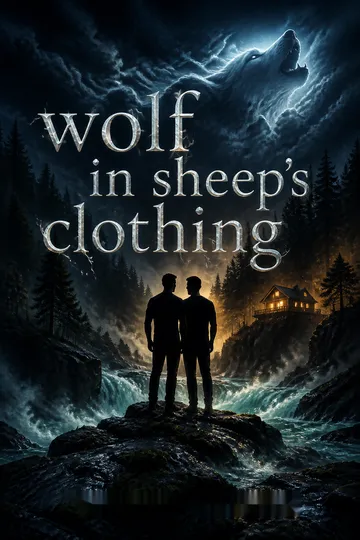
Wolf in Sheep’s Clothing uses a missing-person investigation to examine what happens when care is confused with authority. Park’s reputation can secure a retreat, stop a takeover, and frighten people into obedience. The same power that makes him useful also creates distance: Muñoz remembers the fear his actions left behind, while Park carries shame for a role he once treated as necessary. His effort to make amends is meaningful only when it changes how he uses influence, not when it earns him absolution.
The Alpha Quotient sharpens this question by turning personality into a social measure. The score is presented as descriptive, but families and institutions use it to organize status and expectation. Joyce’s experiment takes that logic to its coercive extreme. He imagines that changing wolves’ bodies can free them from oppressive bonds, yet he repeats the very violation he claims to oppose by dosing people without consent. His science is not dangerous simply because it is imperfect. It is dangerous because he treats other people as material for a solution he has already chosen.
Cooper’s emotional arc counters that impulse. The river episode reveals that his humor and vigilance coexist with trauma he has not recognized. Naming it does not make him less capable; it gives him a clearer account of what his body is doing. He also learns to ask what Park wants instead of assuming Park’s devotion is either proof of his safety or evidence of entrapment. Their intimacy depends on negotiated trust, including the ability to disagree about money, home, and power.
The retreat offers a fragile alternative to both pack hierarchy and isolated self-reliance. Vanessa tries to make a place where vulnerable wolves can recover without immediately pledging themselves to another authority. Its future remains contested, as does the couple’s. The ending does not promise a quiet life: Freeman’s arrival brings another mystery to Cooper’s door. Instead, it resolves the deeper question raised by the house search. Cooper and Park choose a future together, not because danger has ended, but because neither must surrender choice to belong.
Review Summary
Wolf in Sheep's Clothing receives high praise from readers, who love the evolving relationship between Cooper and Park. The murder mystery plot and unique take on werewolf lore are appreciated. Readers enjoy the balance of humor, romance, and suspense. Many consider it the best book in the series so far, highlighting the character development and witty banter. The undercover couples' retreat setting is praised for allowing deeper exploration of the main characters' relationship. Overall, fans are eagerly anticipating the next installment in the series.
People Also Read
Characters
Cooper Dayton
The human investigatorA former FBI agent and BSI investigator, Cooper now works with the Trust, an agency investigating crimes involving wolves. He is observant, sardonic, and more comfortable reading other people than naming his own fears. Earlier violence has left him with lasting physical scars and a reflexive distrust of sudden change, though he often masks vulnerability with jokes or irritation. His relationship with Park makes him confront questions about money, power, and the possibility of building a future with someone whose world he cannot fully share. Cooper’s courage is practical rather than grand: he notices inconsistencies, asks uncomfortable questions, and keeps moving even when he doubts his own judgment.
Oliver Park
The feared wolf partnerA powerful werewolf and Trust agent, Park is Cooper’s partner at work and in their private life. He is controlled, attentive, and often expresses affection by anticipating what others need. His formidable reputation has made people defer to him, but it has also isolated him and complicated his understanding of gentleness. Park is proud of his strength while questioning the family and pack expectations that shaped it. He wants to give Cooper security and a home, sometimes moving faster than Cooper can comfortably follow. Their partnership asks him to distinguish protection from control and to let affection include being known in his uncertainty.
Elena Santiago
The BSI case brokerSantiago is Cooper’s former BSI supervisor and a respected agent who knows how easily wolf-related cases can disappear inside institutional politics. She brings Cooper and Park into Kreuger’s disappearance despite the lack of an official investigation, partly because she recognizes that the agencies are unlikely to act impartially. Her guarded manner suggests someone accustomed to balancing professional authority against private loyalties. Santiago provides the assignment and the undercover opportunity, but leaves the investigators to make their own judgments in the field.
Sofia Muñoz
The witness who remembersMuñoz once belonged to Thomas Kreuger’s pack and was present when Park defeated him years earlier. She remembers the fear and upheaval that followed, rather than accepting Park’s account of the event as the only meaningful one. Her request that he investigate Kreuger’s disappearance is both practical and personal: she wants the missing wolf found, and she wants Park to use his influence more constructively. She is cautious with him, but capable of recognizing when he is listening.
Vanessa Claymont
The retreat's careful directorVanessa co-directs Maudit Falls Retreat and is a trained therapist with experience helping people recover from trauma. She is composed under pressure and skilled at making guests feel safe, though the property and its history clearly carry personal weight. Her work is shaped by a strong belief that vulnerable wolves need places where they can recover without immediately owing allegiance to a powerful pack. Vanessa’s connection to the mountains, the staff, and the retreat makes her both a capable host and a complicated figure in the investigation.
Paul Claymont
The retreat's anxious co-directorPaul runs Maudit Falls with Vanessa and is eager to preserve the retreat’s standing among local wolves. He can be accommodating to a fault, especially around people whose influence he fears, but he also shows flashes of anger when the property comes under threat. His instincts pull him between loyalty to Vanessa, fear of human authorities, and the appeal of protection from a powerful pack. Paul’s nervous politeness makes it difficult for Cooper to tell whether he is hiding guilt or simply struggling to manage several dangers at once.
Dr. Bradley Joyce
The retreat's patient counselorJoyce is one of Maudit Falls’ counselors and has worked with Vanessa for years. He is warm, measured, and attentive to the emotional patterns couples bring into therapy. His clinical manner makes him easy to trust, especially when he helps guests discuss topics they would rather avoid. Joyce is also deeply interested in wolf psychology and the ways people understand their own pack roles. His investment in research gives him a professional connection to the retreat’s history and its unusual approach to counseling.
Jack Nielsen
The unsettling human cookNielsen works as the retreat’s cook and temporarily takes on groundskeeping after Kreuger disappears. He is charming when he chooses to be, but his friendliness carries an edge that makes Cooper wary. As a human among wolves, he has learned to read their social habits and to exploit the assumptions they make about him. Nielsen is connected to the property’s older history and seems to know more about its workers than he initially admits.
Reggie
The guarded relaxation expertReggie leads massage and relaxation activities at Maudit Falls. Small, heavily tattooed, and observant, she can be both tentative and startlingly capable, especially when demonstrating techniques for wolf bodies. She avoids discussing her past and becomes tense when others question her relationships with the retreat’s staff. Her guardedness reflects a life in which dependence and safety have not always been easy to distinguish. Reggie’s place among the retreat’s workers gives her a close view of its private conflicts.
Thomas Kreuger
The vanished groundskeeperKreuger is the former groundskeeper at Maudit Falls and a wolf with a history as an alpha. Park once confronted him over the way he led his pack, leaving Kreuger isolated from the community afterward. At the retreat, he kept largely to himself, but his work and relationships connected him to the staff and the nearby mill. His disappearance matters because it exposes how easily a person without allies can vanish without attracting official concern.
Lee Llcaj
The missing mill workerLlcaj works for Monty Montclaire’s lumber mill and disappears after a conflict with Kreuger. His ties to the mill, the retreat, and Reggie make his absence a point of tension between people who already distrust one another. The few accounts of him disagree about whether he was careless, aggressive, or simply caught in a larger dispute.
Monty Montclaire
The determined mill ownerMonty runs the lumber mill beside the retreat and is used to making decisions in a noisy, dangerous workplace. She is blunt, suspicious of the Claymonts, and protective of her business and employees. Monty has pursued ownership of the surrounding land and believes the retreat has interfered with the mill. Her willingness to carry a firearm and investigate threats herself makes her formidable, though her confidence can outrun what she actually knows.
Ranger Beck
The persistent local officerBeck investigates the disappearance of mill worker Llcaj and repeatedly questions the retreat’s staff about Kreuger. He is forceful and suspicious, sometimes treating resistance as evidence of guilt. His presence brings human law enforcement into a community accustomed to managing wolf affairs privately, raising the stakes for everyone who wants the retreat’s business and history kept quiet.
Mutya
The wolf medicMutya is a wolf and a medical professional who attends the retreat with her human partner, Christopher. She responds quickly when Cooper is injured and later helps assess the bodies when the investigation turns deadly. Mutya is direct, observant, and willing to challenge the retreat’s lack of medical support. Her concern for Cooper is practical rather than sentimental, and she does not let deference to powerful wolves prevent her from asking necessary questions.
Christopher
Mutya's human partnerChristopher is Mutya’s human partner and one of the retreat’s guests. Quiet and bespectacled, he offers a point of comparison for Cooper, another human navigating a social world built around wolves. His relationship with Mutya appears affectionate and settled, even when others make assumptions about human partners.
Daniel De Luca
The ambitious pack lieutenantDaniel is second-in-command to his sister, Celia De Luca, whose pack controls substantial territory in the Carolinas. He is polished, socially adept, and accustomed to gauging people while making conversation. His interest in Maudit Falls mixes personal curiosity with the strategic value of the property. Daniel understands that protection can be offered as generosity while also creating an obligation, and he tests how Cooper and Park respond to that kind of influence.
Victor Terradas
Daniel's watchful mateVictor is Daniel De Luca’s mate. He is quieter and more observant than Daniel, but his attention rarely strays from the social meaning of a conversation. Victor helps steady Daniel when their probing becomes too blunt and provides a reminder that power in the pack world is often exercised by couples, not individuals alone.
Jimmy
The volatile retreat guestJimmy attends the retreat with his partner, Lisa, and insists that he is there for recreation rather than counseling. He is proud of his outdoor skills and quick to resent attention given to other people. His confidence becomes brittle when challenged, particularly around wolves whose status he envies. Jimmy’s difficulty managing his temper and his shifting makes him a volatile presence among the guests.
Lisa
Jimmy's talkative partnerLisa is Jimmy’s partner and a repeat visitor to Maudit Falls. She tries to smooth over conflict with chatter and cheerful reassurance, even when Jimmy’s behavior leaves her uncomfortable. Her instinct to keep the peace makes her easy to overlook, but she notices the tensions surrounding the retreat and is grateful when someone treats her safety as important.
Yvette
The longtime partnerYvette is one of two older guests who have been together for decades. She is warm and sociable, and her familiarity with wolf customs lets her welcome newcomers without making them feel examined. She and her partner attend the retreat partly for time together away from family obligations.
Angela
The folklore historianAngela is Yvette’s longtime partner and a historian with a keen interest in wolf folklore. She enjoys debating what old stories reveal about identity and social expectations. Her teasing confidence gives the group conversation a note of intellectual play, while her relationship with Yvette suggests a form of commitment that has endured outside conventional expectations.
Margaret Cola
The Trust's directorCola directs the Trust and is an old friend of Park’s family. She lends Cooper and Park to Santiago’s unofficial investigation, then takes charge when the case produces multiple deaths. Decisive and politically alert, Cola understands that the Trust must protect both its agents and the fragile community they have entered. Her ability to mobilize investigators gives the couple a route back to formal support once the storm has passed.
Boogie
Cooper's demanding catBoogie is Cooper’s cat, devoted to him and fascinated by Park in wolf form. She is stubborn, expressive, and resistant to disruption, giving Cooper a small domestic responsibility that represents the life he has built before Park moved in. Her presence also brings out Park’s reluctant tenderness.
Ava
The dependable neighborAva lives in Cooper’s apartment building and regularly cat-sits for Boogie. She is straightforward, kind, and quick to reassure Cooper that the cat is safe. Their arrangement shows how much Cooper’s ordinary life depends on a community of small, reliable connections.
Eli
Park's connected former partnerEli is Park’s former partner and a source of information across the wolf community. Park calls on his contacts when Daniel De Luca’s unexpected arrival raises concern. Eli’s willingness to stay connected to Park gives him a role beyond their past relationship, even when he remains offstage.
Plot Devices
The Alpha Quotient
A contested measure of authorityThe Alpha Quotient is a test used by wolves to describe patterns of interpersonal behavior and leadership. Although it does not measure moral worth, packs and individuals treat its score as a guide to status, expectation, and compatibility. Cooper worries that Park’s assumptions about him depend on an imagined high score, while Park discovers that his own number has risen despite his rejection of the role attached to it. The test becomes a tool Joyce can manipulate through experimental treatment, making the distinction between measurement and intervention central to the mystery. It exposes how a descriptive system can become coercive once people organize their lives around its categories.
The Alpha Treatment
A dangerous attempt to alter wolvesJoyce develops experimental drugs from the research of Vanessa’s father, hoping to change how wolves experience dominance and submission. The treatment affects people differently, producing physical and emotional consequences that make consent, safety, and reliable evidence difficult to separate. Cooper is given an oral version without his knowledge, while Park receives a stronger formula that forces him into a disoriented state. The treatment provides the mystery’s mechanism for several deaths and for the final threat, but it also expresses Joyce’s belief that he can solve social oppression by changing individual bodies.
Undercover Couple
Truths disguise the investigatorsCooper and Park pose as Kyle Davis and Andrew Preston, a human college administrator and wolf professor seeking couples counseling. Their cover grants access to the retreat because a famous wolf and his human mate are an irresistible exception to its screening process. Cooper advises that the safest undercover approach is to rely on many true details rather than build a fragile web of lies. The performance is complicated by the fact that their real relationship already contains the tensions their cover story claims to address, including conflict over control, a shared home, and how to support one another.
Pack Bonds and Protection
Care entangled with hierarchyWolf society organizes belonging through packs, alpha roles, and alliances that can offer protection while limiting individual freedom. Leaving a pack may be difficult, and powerful families can influence what happens to wolves who lack connections. Park’s reputation grants access at the retreat, then becomes a source of protection when the De Luca pack presses for control. The story repeatedly distinguishes voluntary loyalty from obedience produced by fear or dependence. This device shapes both the crime investigation and Cooper’s relationship with Park, as Cooper insists that love should never make either partner feel unable to leave.
The Mountain Storm
Isolation raises the stakesMaudit Falls sits deep in the mountains, near a waterfall, an old mill, and a lumber operation. As a hurricane approaches, roads flood, power fails, communications break down, and outside help becomes difficult to reach. The storm turns the retreat’s private spaces into a closed system where a killer can move between hidden passages, utility rooms, and the nearby mill. It also forces Cooper and Park to rely on immediate judgment rather than agency backup. The landscape is not merely atmospheric: it determines who can escape, what evidence survives, and how quickly the couple must act.
Big Bad Wolf Series
Download PDF
Download EPUB
.epub digital book format is ideal for reading ebooks on phones, tablets, and e-readers.








