

Key Takeaways
Use biology to enlarge women's choices, not imprison them in a type.
A body is a resource. Natalie Angier celebrates female anatomy while resisting two tempting extremes: claiming biology dictates women's personalities, and pretending the body has no influence on life. Eggs, hormones, breasts, strength, and desire all matter, but none can define every woman or dictate what she should want. Biological understanding becomes what the book calls liberation biology: using knowledge of the body to understand fears, heal psychic wounds, and make more of the resources available to each person.
Agency needs context. The book's argument is not that women can choose anything without constraint. It is that physiology is part of the explanation, not a verdict. A woman can learn from the body without accepting old stories about passivity, modesty, or motherhood as her destiny.
What's valuable here is the refusal to treat biology as either a prison or an embarrassment. That approach resembles a useful distinction in medicine: knowing a risk factor can guide a decision without determining an individual's future. The same principle applies to sex and behavior. A biological tendency may be real and still leave room for culture, learning, and personal variation. The caution is that celebratory accounts can also overstate biology when they replace one tidy story with another. The strongest use of bodily knowledge is to widen the options people can see.
Chromosomes begin sex development, but bodies develop through many interacting signals.
Sex is a process. Early fetuses share a set of structures that can develop along different paths. In the case of Jane Carden, an XY chromosome pattern and testes were present, but a mutation meant her body could not respond to androgens. Her external anatomy developed along a typically female path, while she had no uterus or ovaries. Her story shows why chromosomes alone cannot describe a person's anatomy or identity.
Cells also vary. In most women, each cell switches off one of its two X chromosomes, either the maternal or paternal copy. This X inactivation creates a biological mosaic. Angier describes sisters with an inherited hair-growth condition whose faces differed dramatically, apparently because different patterns of X activity shaped their tissues.
The examples replace a single binary switch with a developmental sequence: genes, hormones, receptors, and tissues interact. That is a more accurate way to think about many biological traits, which emerge through networks rather than one master cause. The mosaic idea also makes individual variation easier to understand without treating it as an exception to a supposedly uniform female template. A necessary limit is that rare conditions such as androgen insensitivity illuminate the complexity of development, but cannot by themselves settle wider social questions about sex or gender.
See the egg's early losses as part of how development makes room for possibility.
The body begins in abundance. A female fetus has an estimated 6 to 7 million egg cells around the midpoint of pregnancy. Many die before birth; by puberty, roughly 400,000 remain, and at most about 450 will be ovulated. This programmed cell death is called apoptosis. Rather than being a simple accident, it is one way organisms shape themselves by producing far more cells than they retain.
The egg does more than carry DNA. Angier describes the egg as a cell whose contents can help reset an adult cell's genes, citing the creation of Dolly the sheep. In that cloning experiment, an egg with its own nucleus removed helped an adult cell's nucleus direct the development of a whole animal. The egg is not merely a passive vessel for reproduction.
The striking lesson is that biological development often depends on pruning as much as construction. The same pattern appears in the book's account of brain and limb development: excess is generated, then some of it is removed. This challenges the intuitive equation of waste with failure. It also calls for care with the language of design. Cell death can serve a developmental function without implying that nature plans ahead or that every loss is beneficial. Abundance and selection explain a process, not a guarantee of perfection.
Treat the clitoris as central sexual anatomy, not a minor counterpart to the penis.
Pleasure has anatomy. The clitoris develops from the same early tissue as the penis, but it has a different role. It has no urinary or reproductive passage; its recognized function is sexual sensation. Angier reports about 8,000 nerve fibers in the clitoris, roughly twice the number in the penis, and explains that much of its structure extends beneath the visible vulva.
Appearance is not a medical emergency. The book describes clitoral reduction surgeries performed on infants whose anatomy looked atypical. Two women with similar operations later reported very different sexual sensation, illustrating how uncertain the long-term effects could be. Angier argues that cosmetic conformity is not enough reason to operate on a child who cannot consent.
This section joins anatomy to medical ethics. When a body part is poorly studied but carries substantial sensory function, cosmetic intervention deserves a higher burden of justification than routine practice may suggest. The same principle applies beyond genital surgery: irreversible decisions made for social comfort can transfer the cost from anxious adults to children. The book's emphasis on pleasure also corrects a research bias toward illness and reproduction. A fuller account still needs to recognize that sexual experience varies widely and cannot be reduced to nerve counts or a single anatomical pathway.
Read hormones as context-sensitive signals, not commands for behavior.
Chemistry shapes possibility. Estrogen is produced and used in many tissues, including bone, blood vessels, breast, and brain. It can support some functions while stimulating growth in tissues where that may be harmful. Testosterone is also present in women, but neither hormone provides a simple explanation for a person's desire, aggression, or temperament.
Behavior feeds back. Angier describes how a male cichlid fish that loses social dominance undergoes changes in its brain and gonads, followed by a fall in testosterone. The hormone shifts are part of a response to circumstances, not a one-way command that caused the defeat. The book makes the broader point that bodies, behavior, and social settings continually influence one another.
This is a useful correction to hormone shorthand. A chemical signal can change the probability or intensity of a response without mechanically producing a behavior. That distinction matters in public arguments about sex differences, where correlation is often presented as destiny. The cichlid example also foregrounds feedback: social status can alter physiology, just as physiology can shape social behavior. The argument should not be stretched into the opposite simplification, though. Context does not make hormones irrelevant; it makes their effects conditional and harder to summarize with slogans.
Treat menstruation as active physiology, not evidence of a defective body.
Bleeding is a process. Menstruation is not simply a uterine lining passively falling away. Spiral arteries constrict, tissue loses its blood supply, and the lining is shed. The book examines two explanations for why this system evolved. Margie Profet proposed that bleeding helps remove pathogens introduced by sperm. Beverly Strassmann argued that shedding and rebuilding the lining may save energy, while the blood is largely a consequence of the uterus's dense blood supply.
One function may not explain all. Angier proposes that menstruation could have more than one effect, a possibility she calls pleoaptation: an organ or process serving multiple functions. The book does not settle the debate. It shows instead how little a familiar bodily event reveals about its evolutionary purpose, and how medical certainty can outrun evidence.
The debate is a strong example of how evolutionary explanations should work: competing accounts make different predictions, and evidence can challenge both. It also guards against turning a bodily process into a moral metaphor, as when menstrual blood is labeled dirty or women are treated as ruled by cycles. Pleoaptation is a useful reminder that biological systems can acquire multiple consequences. Yet the possibility of several functions should not become an escape hatch that makes every hypothesis impossible to test. Uncertainty is most useful when it sharpens the next question.
Demand informed alternatives before deciding whether to remove a uterus.
A symptom is not a single solution. Hope Phillips developed severe bleeding from a fibroid, a benign uterine growth. After discussing her options with her physician, she chose a hysterectomy, while keeping her ovaries. Her decision reflected her worsening symptoms, work, age, and tolerance for further surgery, not a universal rule about what women should do.
Choices require information. The book reports that about 560,000 hysterectomies were performed annually in the United States at the time. It describes alternatives for some patients, including watchful waiting, medication, and removal of fibroids without removing the uterus. The right option depends on the diagnosis and the person's priorities. Angier's point is not to condemn hysterectomy, but to question decisions made without a fair account of risks and alternatives.
This case makes shared decision-making concrete: the patient is not a passive site for a procedure, and preserving an organ is not automatically more important than relief from pain or bleeding. The same standard should apply in both directions. A physician should neither rush toward surgery nor shame someone who chooses it after understanding the tradeoffs. The historical surgery rate signals a need to examine medical habits, but a population statistic cannot determine what is right for an individual. Good care makes uncertainty and patient priorities discussable.
Separate breast size and symbolism from the work of feeding an infant.
Two kinds of breast. Angier distinguishes the visible, fatty breast from the glandular tissue that produces milk. Breast size varies widely, but small-breasted and large-breasted women can have similar capacity to lactate. The breast's visual appeal therefore says little about a woman's fertility or ability to feed a child. The book calls this visual preference a form of sensory exploitation: a feature can attract attention by activating an existing preference, without reliably signaling practical value.
Milk is remarkable, not magic. Human milk contains nutrients and immune components that formula does not fully reproduce, but that does not make breastfeeding effortless or morally mandatory. Some women find it pleasurable; others find it painful, difficult, or incompatible with work and circumstance. Angier challenges both the dismissal of breast milk and the guilt imposed on women who cannot or do not breastfeed.
The distinction between an organ's function and its cultural meaning helps explain why public attitudes toward breasts can be contradictory: sexual display is welcomed while feeding a baby can be treated as indecorous. The section also resists ranking mothers by one feeding choice. That is especially important because a biological advantage at the population level does not erase differences in health, access, or lived experience. The argument is strongest when it supports better conditions for nursing without turning a useful biological process into a test of maternal virtue.
Treat menopause as a life stage, not automatically as hormone failure.
Aging has an evolutionary story. The grandmother hypothesis proposes that women who stop reproducing can improve the survival of relatives by helping feed and care for the young. Angier describes Hadza women who forage well after menopause and help nursing mothers support older children. Their work suggests a practical contribution, not merely the passing down of memories.
The case remains debated. Research on the Ache people of Paraguay suggested that older women's assistance did not outweigh the reproductive benefits of having more children. Angier presents the disagreement rather than a final verdict. She also questions the claim that every postmenopausal woman has a disease requiring estrogen treatment. Hormone therapy may help some people, but its benefits and risks vary, and menopause itself is not proof that the body has failed.
The grandmother hypothesis gives older women economic and evolutionary significance, countering the assumption that value ends with fertility. Its strongest version treats caregiving as productive labor rather than sentimental help. But an adaptive story can become restrictive if it implies that women exist to serve descendants. The disagreement between Hadza and Ache research is a reminder that outcomes depend on social organization and ecology. Menopause may be a normal transition and still bring symptoms worth treating; neither fact cancels the other.
Stop mistaking women's restraint for an absence of force.
Aggression has many forms. Young girls and boys are physically aggressive at similar rates before age three, according to the research Angier discusses. As children grow, girls are more strongly discouraged from fighting directly. Anger does not disappear; it may surface through insults, exclusion, or indirect attacks. Those patterns can hurt, but they are not proof that women are naturally gentle or socially effortless.
Strength can be trained. Angier describes a program in which women in their seventies, eighties, and nineties lifted weights twice weekly. After four months, participants had gained muscle and in some cases doubled or trebled their strength. The example challenges the fear that women will become bulky simply by training. It presents strength as useful for independence, mobility, and resilience, not as a demand to meet an appearance ideal.
Naming female aggression makes it possible to distinguish assertiveness, competition, and cruelty instead of hiding them beneath an ideal of feminine niceness. That can improve both self-understanding and conflict resolution. The strength-training story adds a physical counterpart: capacity is not fixed by a stereotype about women's bodies. Still, indirect aggression deserves neither romanticizing nor treating as uniquely female. Social rules shape which behaviors are acceptable, and people of every sex learn to express conflict in the forms their environment rewards.
Build attachment through care and contact, not a single supposed love hormone.
Love has bodily pathways. The book links attachment to stress, touch, smell, memory, and hormones such as oxytocin and vasopressin. Oxytocin helps trigger uterine contractions and milk letdown; animal studies also connect it with maternal and pair-bonding behavior. In humans, research on nursing mothers found associations between oxytocin patterns, calm, and time spent breastfeeding.
Chemistry is not the whole bond. Angier describes how birth can be stressful and how repeated holding, stroking, and feeding give parent and infant many routes to familiarity. She is careful to note that evidence about oxytocin's role in human love is limited. The hormone may participate in attachment, but it does not explain every relationship or make love inevitable.
This account connects affection to embodied routines without reducing it to chemistry. Repeated care gives a relationship sensory history, while memory lets humans sustain attachment across distance. That perspective can broaden ideas of caregiving: intimacy grows through attention and practice, not solely through pregnancy or breastfeeding. The caution about oxytocin is essential. Popular labels can turn a complex social process into a molecule with a job title. Biological participation is not the same as biological ownership, and fathers or other caregivers can form deep bonds through contact and care.
Test sex-role stories against variation, history, and actual social conditions.
Evolutionary claims need evidence. Angier challenges popular evolutionary psychology accounts that men naturally seek many partners while women seek providers and commitment. Such accounts often treat modern preferences as ancient, universal adaptations, despite variation across individuals and societies. In some South American communities described in the book, people recognize multiple possible fathers for a child, and those men may share responsibility. That practice complicates the assumption that male care always depends on certainty of paternity.
History changes the incentives. Women's choices are shaped by access to food, money, safety, and social power. When these conditions change, strategies can change too. The book's closing argument is that biology and feminism need not be enemies: understanding evolutionary pressures can expose constraints and help people question them, rather than presenting existing inequalities as natural or inevitable.
The book's most durable challenge is methodological: a plausible evolutionary explanation is not proof, particularly when social arrangements already shape the behavior being explained. Cross-cultural variation and changing economic conditions can test claims of universality. The argument also invites a distinction between explaining a pattern and justifying it. Yet criticism of simplistic evolutionary psychology should not become a blanket rejection of biological inquiry. Better accounts can include competition, cooperation, learning, ecology, and individual variation without pretending that one sex-role script fits everyone.
Analysis
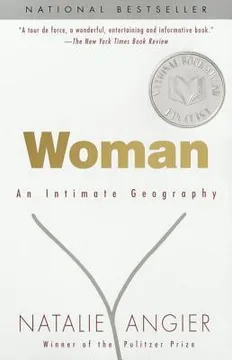
Woman: An Intimate Geography is a science book with the energy of a reported essay collection. Its organizing journey moves from cells and organs toward behavior, attachment, and social life. Angier repeatedly links intimate biological detail to a larger dispute: whether women's bodies are evidence for fixed feminine traits, or resources women can understand and use without surrendering self-definition. The book's narrative method matters. Patient stories, surgical scenes, animal observations, and scientific controversies keep abstract claims tied to lived consequences.
Its strongest intellectual contribution is a two-sided refusal. Social construction alone cannot explain the force of hormones, reproduction, sensation, or aging. Biology alone cannot explain why a woman with a particular body is expected to behave in a particular way. Angier's account of feedback between physiology and environment offers a richer alternative to either extreme. Her attention to neglected topics, including the clitoris, female aggression, and older women's labor, also corrects gaps in what counts as serious science.
The book's weakness is partly the price of its ambition. It moves rapidly among established anatomy, early research, competing hypotheses, and the author's own speculation. Some claims are explicitly tentative, but their vivid presentation can make them feel more settled than the evidence warrants. That is especially relevant to evolutionary explanations of menstruation, orgasm, hormones, and grandmothering. A modern reader should distinguish the book's robust descriptive insights from hypotheses that require further testing. The publication date also matters: the scientific and medical snapshot is from 2000, so its historical figures and treatment debates should not be mistaken for current guidance.
The lasting value is not a definitive biological portrait of women. It is a method of reading such portraits skeptically. Ask what evidence supports a claim, which alternatives were considered, whose experience was omitted, and whether an explanation is being used to justify a social arrangement. The book's central wager is that scientific knowledge can expand freedom when uncertainty is acknowledged and individual variation remains visible.
Review Summary
Woman: An Intimate Geography receives generally high praise for its informative, witty exploration of female physiology, biology, psychology, and sociology. Readers appreciate Angier's accessible, celebratory approach to complex science and her feminist challenge to androcentrism in research. However, criticism frequently targets her overly playful prose, excessive wordplay, and puns, which many find distracting. Several reviewers also note the book's failure to adequately address queer, transgender, and non-binary identities, as well as its lack of racial diversity in its cultural assumptions.
Glossary
liberation biology
Biology used to expand agencyA phrase used in the book for applying biological knowledge to understand fears, address psychological wounds, and make better use of one's bodily resources. It rejects both biological determinism and the idea that the body is irrelevant. Biology informs a person's choices, but does not prescribe a single identity or destiny.
androgen insensitivity syndrome
Reduced response to androgensA condition in which body tissues cannot respond normally to androgens, hormones that include testosterone. In the case Angier describes, a person with a Y chromosome developed testes but had a nonfunctioning androgen receptor. Her external anatomy developed along a typically female path, while her internal reproductive anatomy differed from that of most women.
apoptosis
Programmed cell deathA regulated process in which cells break down and are absorbed by neighboring cells. Angier describes it as a normal part of development, including the large reduction in the number of egg cells before birth and puberty. It is distinct from accidental cell damage and helps shape tissues by removing cells that are no longer needed.
X inactivation
Silencing one X chromosomeIn most female cells, one of the two X chromosomes is chemically silenced during embryonic development. The maternal or paternal X is generally selected cell by cell, creating a mosaic of active X chromosomes across tissues. Some genes on the silenced chromosome remain active, so the process is not complete for every gene.
pleoaptation
One system, multiple functionsAngier's term for an organ or biological process that has multiple uses or effects. She applies it to menstruation as a way to hold open the possibility that the process may involve both energy economy and defense, rather than having one exclusive evolutionary purpose. The term describes multiple functions without deciding which came first.
grandmother hypothesis
Older women support descendantsAn evolutionary explanation proposing that women who live beyond their reproductive years can increase the survival of relatives by helping care for and provision the young. The book discusses evidence from Hadza women who forage and assist nursing mothers, alongside findings from other communities that complicate the hypothesis.
sensory exploitation theory
A trait activates existing preferencesAn explanation for how a feature can attract attention by stimulating a sensory or neural preference that already exists for another reason. Angier applies the idea to zebra finch ornaments and human breasts: a conspicuous feature may be appealing without reliably indicating health, fertility, or practical value.
sexual dialectics
Ongoing conflict over reproductionPatricia Gowaty's term, discussed by Angier, for the continuing conflict and negotiation between male and female interests in mating and reproduction. The idea emphasizes that strategies change in response to the other sex, social conditions, and personal circumstances. It challenges a fixed model of universally coy women and uniformly pursuing men.
Download PDF
Download EPUB
.epub digital book format is ideal for reading ebooks on phones, tablets, and e-readers.








