

Plot Summary
The Photograph Finds Stacey
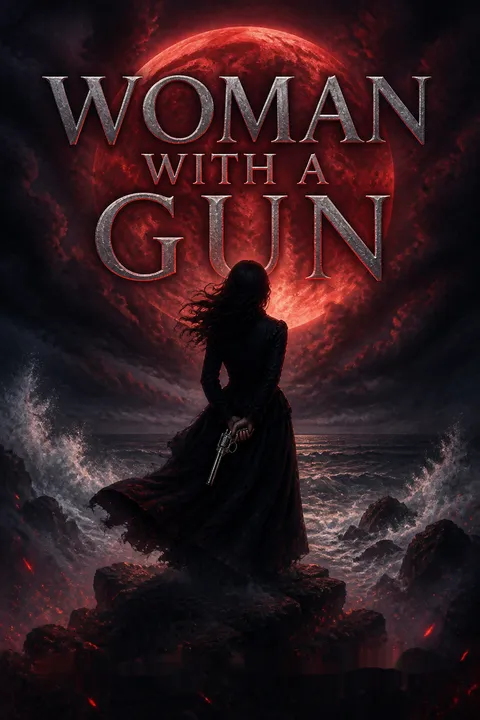
In Manhattan, MFA graduate Stacey Kim is stuck at a dull reception job, unable to expand her promising short story into a novel. On a lunch break at the Museum of Modern Art, she discovers Kathy Moran’s celebrated black-and-white photograph: a barefoot bride on a moonlit beach, a revolver hidden behind her back.
The image gives Stacey a question she cannot set aside. She learns that the woman is Megan Cahill, photographed on the night her wealthy new husband was murdered, and decides to build a novel around the case. To make her invented world convincing, Stacey plans to travel to Oregon, interview the people involved, and see the beach for herself.
The photograph functions as both an image and an invitation to interpret. Stacey’s stalled writing life changes not because she finds a ready-made plot, but because the picture refuses to explain itself. Her imaginative questions about the bride’s motives echo the reader’s impulse to turn an ambiguous image into a story. Yet the image’s power also warns that appearances can be made to carry meanings they do not actually disclose. Stacey begins as an artist seeking material; her curiosity will draw her beyond fiction and into the consequences of treating real people as characters.
A Bride on the Shore
Ten years earlier, Oregon prosecutor Jack Booth is sent to Palisades Heights after multimillionaire Raymond Cahill is found shot in his home, hours after marrying Megan. The vault containing Cahill’s antiques has been ransacked, and the collection’s prized pieces are missing. Megan is discovered on the beach in her wedding dress, holding an antique Schofield revolver later confirmed as the murder weapon.
Kathy Moran, a local bartender and photographer, found her there and brought her back inside. Megan is injured, disoriented, and unable to explain what happened. Jack sees a possible robbery, but the gun, Megan’s potential inheritance, and her silence make her an immediate person of interest as well as a possible victim.
The scene establishes the novel’s central problem of interpretation: one woman can appear at once as survivor, witness, and suspect. The material facts do not settle her role. The stolen collection suggests a burglary, while the murder weapon in Megan’s hand suggests intimate access or complicity. Jack’s professional caution is therefore understandable, but his attention to motive risks turning uncertainty into suspicion before evidence can support it. The image’s future fame grows out of this unresolved moment, where the visible facts are vivid and the causes remain hidden.
The Witness Knows Jack
At the courthouse, Jack recognizes Kathy as the defense lawyer he faced years earlier in Portland. She has left the bar, completed rehabilitation, and rebuilt her life on the coast through bartending and photography. Kathy explains how she found Megan and took the photograph, then admits she had photographed Cahill’s house for a newspaper story before the wedding.
Meanwhile, Megan hires local attorney Henry Baker, whose young associate, Glen Kraft, sees a frightened client struggling with concussion-related memory loss. Baker warns that he lacks the experience and resources for a capital case, but promises to protect her while they seek a more suitable defense. Jack questions Megan and learns of an angry man at the wedding reception.
These first encounters establish competing forms of expertise. Jack reads evidence through prosecutorial experience, Kathy through the photographer’s eye, and Glen through a young lawyer’s desire to believe his client. Megan’s memory gap leaves each observer room to project a different story onto her. Kathy’s recovery gives her a quiet authority that contrasts with Jack’s professional confidence, while her shared past with him introduces emotional history into a case that demands distance. The novel makes clear that neither expertise nor sympathy guarantees accurate judgment.
Jack’s Capital Case Collapses
The earlier case that bound Jack and Kathy began in 2000, when Jack prosecuted violent drug dealer Gary Kilbride for murdering Joey Kneeland during a motel robbery. A frightened accomplice, Bernie Chartres, identified Kilbride, and a witness’s fingerprints placed Chartres at the scene.
Jack believed the testimony made his case decisive. Kathy, a relatively inexperienced defense lawyer, spotted the missing legal link: Oregon law required evidence beyond an accomplice’s testimony connecting Kilbride to the crime.
She moved for acquittal before the jury heard the evidence, and Jack had no answer. Kilbride walked free. Jack’s arrogance and distraction had helped him overlook a basic weakness, ending his rise as a star prosecutor and leaving Chartres vulnerable.
Jack’s defeat is more than a courtroom reversal. It exposes how professional certainty can narrow attention until a case looks stronger than it is. Kathy wins not through theatrical brilliance but by reading the legal structure Jack neglected. The episode also plants a dangerous consequence: Kilbride’s freedom leaves a violent man outside custody, while the prosecution’s reliance on Chartres makes the witness a target. Jack’s humiliation becomes personal, but the case teaches him a lesson only after the cost has fallen on others.
Kathy Wears the Wire
Months after the acquittal, Kathy’s partners discover that she is using cocaine and stealing from the law firm to pay for it. She has also drawn her partner Ron Ireland into the habit and an affair. Rather than prosecute her, Jack offers a bargain: Kathy can avoid criminal charges and leave the bar if she helps police catch Kilbride.
She arranges to buy cocaine from him while a concealed transmitter records their meeting. Kilbride checks her body for a wire, humiliates her, and eventually accepts the deal. Police raid his house and seize the drugs. Kathy’s cooperation helps send him to prison, but the humiliation and danger remain with her, and she enters rehabilitation with her legal career over.
Kathy’s fall complicates the easy division between competent professional and compromised addict. Her intelligence does not protect her from dependency; it becomes one of the tools she uses to survive it. The state gains evidence by asking her to submit to the same domination Kilbride has already imposed, turning rescue into an ethically uneasy exchange. Jack recognizes her terror but proceeds because the operation can stop a dangerous offender. His decision succeeds legally, yet it leaves the emotional debt between them unresolved.
The Ex-Husband Returns
Back in Palisades Heights, Jack and Kathy begin to reconnect over dinner, while Jack discovers that Kilbride has been paroled and may be watching her. Police warn Kathy and lend her a revolver for protection. Megan later recovers part of her memory: she identifies her ex-husband, former football player Parnell Crouse, as the masked intruder who attacked the newlyweds and forced them to open the house and vault.
She says Crouse had abused her during their marriage and blames steroids and rage for their separation. The investigators learn that Crouse has disappeared. Megan’s account gives the case a concrete suspect, but Jack remains wary because the accusation also diverts attention from the bride who held the murder weapon.
The recovered memory appears to resolve the case by supplying a motive, an attacker, and a history of violence. Yet the timing of the revelation makes it difficult to distinguish truth from convenience. Megan’s account is plausible, but it also directs investigators toward an absent man who cannot immediately confirm or dispute it. Meanwhile, Kathy’s fear of Kilbride changes the emotional temperature of Jack’s return: his interest in her is genuine, but it is entangled with guilt about having used her years earlier. Protection and intimacy begin to blur.
The Coin in Crouse’s Car
Police find Crouse shot in his car on a logging road, killed around the time Cahill was murdered. A gold coin from Cahill’s collection remains in the trunk, supporting the theory that Crouse took part in the robbery. But Crouse is dead before investigators can question him, and the evidence cannot establish who killed him or whether Megan had an accomplice.
Jack suspects her but cannot justify an indictment. At the same time, Kilbride breaks into Kathy’s cottage and she shoots him, claiming he entered her home armed. Authorities treat the shooting as self-defense. Kathy’s photograph of Megan becomes an international sensation, while Jack returns to Salem with the Cahill case unresolved and his feelings for Kathy unsettled.
The coin is a trace of a crime, not a complete account of it. It links Crouse to the stolen collection but cannot establish who planned the robbery, who killed him, or whether the evidence was planted. Each apparent resolution creates another gap. The parallel Kilbride shooting repeats this pattern: a dangerous man is dead, and the immediate facts support self-defense, yet the event’s timing invites suspicion. The photograph brings Kathy public recognition just as the case that produced it remains legally unfinished.
Stacey Reopens the Case
In 2015, Stacey follows the photograph from New York to Portland, quits her reception job, and asks Jack about the unsolved case. Jack recounts his suspicion that Megan may have plotted with Crouse, while explaining that the stolen collection never surfaced and that Megan later married Cahill’s business partner, Kevin Mercer.
On the coast, Glen Kraft gives Stacey access to the old case files and takes her to the beach below the Cahill house. Stacey learns that Kathy and Megan will attend a local exhibition of Kathy’s work. The opening offers Stacey a chance to meet both women, but it also reunites people whose old suspicions have never been settled.
Stacey’s research begins as artistic apprenticeship, but the archive steadily turns her into an investigator. She does not possess Jack’s legal authority or Glen’s local knowledge; her advantage is sustained attention to details others have filed away. The return to the beach makes the past physically present rather than merely reported. Her ambition is sincere, but it carries a risk: she wants access to people who have spent a decade trying to live beyond the case. The novel asks whether curiosity can remain innocent once it begins altering the lives it studies.
Megan Runs from the Gallery
At Ellen Devereaux’s crowded gallery, Kathy and Megan are introduced as honored guests. Stacey secures a meeting with Megan for the next morning, while Kevin Mercer arrives and confronts his estranged wife during their bitter divorce. Megan argues with him, but her most visible alarm comes when Henry Baker, now weakened by a stroke, approaches. She abruptly flees the gallery.
Kathy accuses Kevin of upsetting her, though he insists that Baker’s appearance caused the reaction. Stacey notices the confusion but has no explanation. The guests resume looking at the photographs, including several images that will later matter, while the private fracture between Megan and the people from her first marriage remains unexplained.
Megan’s flight is a behavioral clue before it is a solved clue. Its ambiguity matters: the gallery contains several people and histories capable of provoking her, so no single witness can confidently identify the cause. Henry’s frailty makes him seem an unlikely threat, yet his arrival produces a response stronger than the argument with Kevin. The scene also uses a public exhibition to stage private histories. Visitors see art; the people in the room see reminders of the violence that created it.
A Second Cahill Murder
The next morning, Stacey finds Megan’s front door open and discovers her body below the living-room balcony, stabbed and fatally injured in the fall. Glen reaches the police station to support Stacey, who is shaken by the sight. Investigators find no forced entry and believe Megan may have answered the door before being attacked.
Soon afterward, Jack joins Chief George Melendez at Devereaux’s gallery, where someone has broken in, overturned furniture, and stolen several of Kathy’s photographs. The theft appears selective enough to trouble the investigators, especially because it follows Megan’s death so closely. Stacey’s planned interview has become impossible, and her research now concerns a live threat rather than a historical puzzle.
Megan’s death converts Stacey from observer into witness, making the costs of her project immediate and bodily. The gallery burglary adds a second disturbance that may be connected or may be coincidence, forcing investigators to resist the same premature certainty that shaped the original case. The stolen photographs are not merely property: they are records of people and places, and their removal suggests that someone fears what an image can preserve. Stacey’s desire to understand the past now exposes her to danger in the present.
The Girl Named Cromwell
While Glen is away, Stacey asks questions about Kathy and is warned off by Grady Cox, who refuses to betray his friend. After an intruder tries to enter Glen’s house, Stacey drives to Arlington, California, where Kathy grew up.
Newspaper archives reveal that twelve-year-old Katherine Cromwell found her parents, Theodore and Marjorie, murdered during a burglary. Their collection included a Schofield revolver believed to have belonged to Wyatt Earp. Retired detective Lynn Merritt confirms that Raymond Cahill and Theodore Cromwell had competed over collectibles before the murders.
Stacey now sees a possible motive for the old crime: Cahill may have acquired the gun stolen from Kathy’s family. Before she can take the discovery further, an attacker stabs her at her motel.
The Cromwell connection transforms the antique revolver from atmospheric prop into a possible object of inheritance, theft, and revenge. Stacey’s research supplies a motive that the original investigation never considered, but the evidence remains circumstantial: Cahill owned the same kind of gun, and he knew the murdered collector. The childhood trauma also reframes Kathy’s adult history without excusing any action she may have taken. Stacey’s attack marks the danger of inference becoming pursuit; a theory can be compelling and still require proof.
The Photograph’s Hidden Angle
Recovering in hospital, Stacey tells Glen and an Arlington detective about the Cromwell murders and the stolen Schofield. She cannot identify her attacker, but the pattern points suspicion toward Kathy. Jack returns to the case after hearing that Stacey was attacked. He remembers Megan fleeing the gallery when Henry appeared and realizes she may have recognized something in one of Kathy’s photographs.
The image of a bearded man, stolen from the gallery, resembles Parnell Crouse. Jack then studies Woman with a Gun more closely: Kathy’s viewpoint places her behind Megan, contradicting her claim that she approached from the Seafarer side. The iconic image has preserved evidence of Kathy’s presence that her account concealed.
The photograph changes from an object of fascination into an evidentiary record. Its meaning depends not on what it depicts alone but on where the photographer must have stood to make it. Jack’s insight joins two kinds of perception: Stacey’s archival reconstruction and his own memory of the gallery. Megan’s flight also becomes intelligible as recognition, not merely distress. The same image that made Kathy famous has kept a trace of the scene she tried to disguise, demonstrating how artistic framing can conceal context while inadvertently preserving it.
Kathy’s Story Breaks Open
When Jack shows Kathy the photograph of Crouse and points out the angle of Woman with a Gun, she drops her denials. She says Cahill had taken the Schofield from her murdered father’s collection, and she recruited Crouse to help rob Cahill and frame Megan. Kathy loaded the antique revolver, killed Cahill, and staged the scene before photographing Megan.
She later killed Crouse, Megan, and Kilbride, and arranged the confrontation that let her present Kilbride’s death as self-defense. Jack, now her lawyer and lover, refuses to help conceal the crimes. Kathy raises a gun, but his appeal to their relationship makes her hesitate; she fires into the wall as he leaves.
Kathy’s confession reveals revenge not as a sudden impulse but as a story she has built to make violence feel like justice. The photograph is the hinge of that self-narrative: she turns a murder scene into art, then lets public admiration protect the hidden act. Jack’s intimacy with her does not erase his moral obligation, though it makes the choice painful. Her missed shot is not redemption; it is a moment of hesitation in which affection briefly interrupts the logic of control that has governed her life.
The Case Becomes a Book
Jack alerts Melendez that Kathy has threatened him, but cannot disclose the confession protected by attorney-client privilege. Police enter her home and find that she has died from a heroin overdose. Her crimes are confirmed through the evidence Jack provides and the investigation Stacey helped revive.
Stacey, recovering from her wounds, is left with no simple triumph: Kathy’s revenge began in the murder of her parents, but it produced more victims and nearly killed her. Glen stays beside Stacey, and their relationship deepens. Two years later, Stacey stands before a packed bookstore on a national tour for her bestselling true-crime account. The novel she meant to write remains unwritten; the real case has taken its place.
The resolution refuses the comfort of a clean moral victory. Kathy’s death ends the immediate threat, but it does not make the revenge proportionate or repair the lives it consumed. Stacey’s success also comes at a cost to her original ambition: the fictional work that drew her west gives way to a book shaped by real suffering. Her public account transforms private trauma into narrative, repeating the photograph’s movement from event to representation. The difference is that Stacey now knows the ethical weight of what she tells.
Analysis
Woman with a Gun is a mystery about the gap between an image and the story people build around it. The bride holding an antique revolver appears to offer a complete scene, yet every observer assigns a different meaning: Stacey sees a novel, police see a suspect, the public sees an award-winning photograph, and Kathy sees an opportunity to control what others believe. The photograph’s eventual evidentiary force comes from its angle, a technical detail that preserves what its maker intended to hide.
The novel also examines how professional confidence can distort perception. Jack overlooks a basic legal flaw in the Kilbride prosecution because he trusts his own momentum. Later, he suspects Megan but cannot prove his theory; his caution is a hard-earned correction. Stacey, meanwhile, has no official authority, but her willingness to follow a detail across archives and locations allows her to connect the Cromwell murders to Cahill’s collection. The contrast suggests that useful knowledge is not simply expertise. It also requires patience, humility, and attention to what does not fit.
Kathy’s revenge complicates the moral clarity of the investigation without excusing her violence. The murder of her parents offers a comprehensible source of rage, but she converts grief into a private theory of justice that permits her to recruit, deceive, and kill. Art then becomes both concealment and exposure: her celebrated photograph protects her for years, yet its composition ultimately betrays her. Stacey’s success carries a parallel ethical tension. She finds the truth by entering the lives of people who did not invite her scrutiny, and the work she publishes replaces the novel she hoped to write. The ending leaves achievement and harm bound together, asking whether telling a true story can ever be separated from the lives its telling reshapes.
People Also Read

Characters
Stacey Kim
The restless novelistAn MFA graduate from the Midwest, Stacey has come to New York expecting that proximity to literary life will ignite her career. Instead, routine work and a stalled manuscript leave her discouraged until Kathy Moran’s photograph gives her a story to pursue. Stacey is imaginative and observant, but her curiosity can outrun her caution. She leaves her job and follows the case to Oregon, where archival research turns her from aspiring novelist into an active investigator. Her creative drive is inseparable from a desire to understand how people become trapped inside the stories others tell about them.
Jack Booth
The driven prosecutorA talented Oregon prosecutor, Jack is ambitious, competitive, and accustomed to measuring himself by courtroom success. His defeat in the Kilbride case exposes the cost of overconfidence, though professional pride remains one of his strongest instincts. He later approaches the Cahill investigation with experience and skepticism, while his old connection to Kathy complicates his judgment. Jack wants to protect people and win cases, but those desires can conflict when personal loyalty enters the work. His emotional reserve leaves him unsure how to distinguish love from the thrill of pursuit.
Kathy Moran
The celebrated photographerA gifted photographer who supports herself by tending bar on the Oregon coast, Kathy once practiced law in Portland. She is perceptive, self-possessed, and fiercely protective of the fragile life she has built after addiction and professional disgrace. Her photographs show an instinct for charged, human moments, while her guardedness reflects a deep wish to control how much of herself others can see. Kathy’s relationships with Jack, Grady, and the people who know her past reveal both her need for connection and her fear that public attention will strip away her privacy.
Megan Cahill
The enigmatic new brideMegan enters the story as Raymond Cahill’s beautiful new wife, found injured and unable to remember the hours surrounding his murder. She has survived a difficult marriage to football player Parnell Crouse and is wary of being judged through her beauty, money, and history. Her intelligence and resolve are visible even when concussion and grief leave her vulnerable. As a wealthy widow under suspicion, she must depend on a lawyer while trying to recover her memory and preserve her account of the past.
Glen Kraft
The steady small-town lawyerGlen is a Palisades Heights attorney who once felt that returning to his hometown meant abandoning larger ambitions. Working beside Henry Baker teaches him to value direct service to clients over prestige. He is earnest, practical, and more emotionally open than Jack, though he can be protective when danger threatens Stacey. His local knowledge gives Stacey access to the old case, and his growing relationship with her gives the investigation a personal center beyond the crimes.
Raymond Cahill
The murdered collectorA wealthy California businessman with a cherished home in Palisades Heights, Raymond is an enthusiastic collector of coins, stamps, and historic firearms. His fortune gives investigators a broad field of possible motives, while his private collection becomes the center of the robbery investigation. He keeps his business life largely separate from his personal relationships, leaving others to reconstruct his dealings after his death. His attachment to rare objects shapes the mystery around the Schofield revolver.
Parnell Crouse
The injured football playerMegan’s former husband, Parnell is an ex-Raiders running back whose career ended after serious injuries and repeated concussions. His physical strength and history of steroid use shadow the account of his marriage. The divorce left him with grievances and financial trouble, making him a plausible suspect in the Cahill case. His past with Megan remains a source of pain and suspicion long after their marriage ends.
Gary Kilbride
The violent drug dealerKilbride is a calculating Portland drug dealer whose violence and appetite for domination make him dangerous to associates and rivals alike. His prosecution draws Jack and Kathy into a destructive exchange that changes both their careers. He is patient, manipulative, and skilled at hiding criminal power behind an ordinary public presence. Even after prison, his history leaves Kathy fearful that his anger will outlast his sentence.
Henry Baker
Megan’s loyal local lawyerHenry is a general-practice attorney whose small-town work includes the unglamorous cases that keep a local firm alive. His personal life has left him grieving and diminished when the Cahill murder gives him a demanding purpose. He knows Megan through the country club and agrees to help her despite recognizing the limits of his experience in a capital case. His loyalty can be admirable, but it also blurs professional judgment.
Teddy Winston
The cautious county prosecutorThe Siletz County district attorney, Teddy is honest about the limits of his experience and asks the state for help when Cahill’s murder exceeds the scale of his usual cases. He worries about facing a wealthy defendant with a formidable defense team. His decisions reflect a conscientious local prosecutor balancing caution, political realities, and the demand to solve a violent crime.
Archie Denning
The state police detectiveA seasoned state police detective, Archie supervises the Cahill crime-scene investigation and works alongside Jack and Teddy. He is methodical and guarded about what the evidence can prove. Rather than commit too early to the theory that Megan or Crouse is guilty, he keeps the investigation open to new facts.
George Melendez
The protective police chiefA disciplined former Marine who leads Palisades Heights’ small police force, George takes Kathy’s warnings about Kilbride seriously and tries to protect her with limited resources. He is direct, practical, and alert to the difference between suspicion and evidence. Years later, Stacey’s discoveries give him reason to reopen a case his department once could not solve.
Kevin Mercer
Cahill’s business partnerKevin is Raymond Cahill’s investment partner, a polished businessman whose company is destabilized by Cahill’s death and subsequent financial revelations. He knew Cahill professionally and married Megan after the original investigation, but their relationship later breaks down. His guarded answers and tense interactions with Megan make him a persistent presence in the inquiry.
Frank Janowitz
Cahill’s collection curatorFrank is an antiques expert who maintained Cahill’s collections and assesses which objects were stolen. His knowledge explains why the rare items would be difficult to sell openly and why a private buyer might matter. He is professional and discreet about the limits of what he knows.
Grady Cox
Kathy’s protective employerGrady owns the Seafarer, where Kathy works after leaving law. A broad, tough-looking bartender with a generous streak, he gives her work and watches out for her recovery. His loyalty is practical rather than sentimental: he will not share information that might hurt Kathy, even when an investigator asks.
Lynn Merritt
The retired cold-case detectiveA retired Arlington detective who investigated the Cromwell murders, Lynn remembers the family and confirms Katherine’s identity. His recollections connect Cahill to Theodore Cromwell’s collection and give Stacey’s archival discovery an investigative foundation.
Plot Devices
Woman with a Gun
A picture that withholdsKathy’s photograph of Megan on the beach gives the story its central image and its first unanswered question. Stacey treats it as a prompt for fiction, while police treat it as a record of the murder night. Its composition eventually matters as evidence: Kathy’s position behind Megan contradicts her account of how she reached the beach. The image also turns a private crime into a celebrated work, allowing the photographer to control public interpretation while the truth remains concealed.
The Schofield Revolver
A weapon across generationsThe antique .44 revolver is taken from Cahill’s collection and used to kill him. Because it is believed to have belonged to Wyatt Earp, investigators initially see it as a strange choice for a burglar. Stacey later learns that a similar gun was stolen from Kathy’s parents during their murder in California. The weapon links the two crimes and makes the past a possible motive for the present, although the narrative initially leaves the gun’s provenance uncertain.
Megan’s Memory Gap
An unreliable witnessAfter being struck on the head, Megan cannot recall the hours between the wedding reception and her discovery on the beach. Her missing memories delay the investigation and leave her vulnerable to suspicion. When she later identifies Parnell Crouse, the recovered account appears to give police a suspect, but it cannot be independently tested because Crouse disappears and is found dead. The memory gap keeps the reader inside the same uncertainty as the investigators.
The Missing Photographs
Evidence removed from viewA burglar steals several works from Kathy’s exhibition, including a photograph of a bearded man in a bar. The theft initially looks like vandalism or opportunistic robbery, but the missing image later proves central because the man resembles Parnell Crouse. Megan’s sudden departure from the gallery suggests that she recognized something in the exhibit before the photograph vanished. The absent pictures turn the exhibition itself into a crime scene and make memory, catalogues, and position essential to reconstruction.
The Split Timeline
Past crimes shadow new onesThe novel moves among the 2000 Kilbride prosecution, the 2005 Cahill investigation, and Stacey’s 2015 research. The earlier sequences reveal why Jack and Kathy know one another and how the original case was mishandled; the later frame shows how a photograph revives a mystery thought dormant. Each time period supplies information that changes the meaning of another, so chronology becomes part of the investigation rather than a neutral container for it.
Download PDF
Download EPUB
.epub digital book format is ideal for reading ebooks on phones, tablets, and e-readers.








