

Key Takeaways
Stop carrying guilt for a family rupture you did not cause
A child takes the blame. Danny grows up in wealthy Beverly Hills, restless and hard to manage. When his parents separate, he decides his mischief must have driven his father away. His father’s repeated promises to return keep the boy waiting and hoping, though the divorce is not his responsibility.
Home becomes a battleground. His mother marries Clarence, a controlling stepfather who mocks Danny, piles on chores, and sometimes uses physical force. Danny responds by withdrawing into defiance and imagining himself separate from the family. The memoir shows how a child can mistake adult conflict for a verdict on his own worth, then carry that mistaken guilt into the search for belonging.
What's striking is how convincingly childhood guilt can feel like fact. Children often interpret family upheaval through the limited power they possess: if their behavior caused the rupture, perhaps better behavior could reverse it. That belief offers a painful kind of control. The memoir makes clear that understanding this pattern is not the same as excusing every later choice. It does, however, complicate the idea that rebellion springs from simple selfishness. A careful reader can hold both truths: adults remain responsible for their decisions, and a child’s coping strategies can shape the adult they become.
A hero can give a lonely teenager direction and dangerous permission
The concert changes everything. At twelve, Danny sees the Doors perform after being drawn to their music and to its singer, Jim Morrison. The show feels like entry into a world where intensity and difference are allowed. He soon finds work around the band, answering phones and sorting fan mail, and Morrison gives him books, attention, and encouragement to keep learning.
Admiration blurs into imitation. Danny reads Morrison’s defiance as proof that rejecting authority means becoming free. Yet Morrison also helps him with school and treats his energy as something to direct, not merely celebrate. The distinction matters: a young fan can receive real care from a hero while absorbing a risky public persona as a life plan.
A role model is rarely a single lesson. Morrison offers Danny recognition, intellectual curiosity, and a route into meaningful work, while his fame makes excess look like proof of authenticity. Developmental research on adolescence emphasizes how identity forms through both affiliation and experimentation. The danger is not admiration itself, but treating a performer’s stage persona as a practical guide to living. The memoir’s strongest tension is that Morrison is neither a simple villain nor a safe template. His attention helps Danny grow; his example also makes self-endangerment look culturally meaningful.
Build a life around your calling, not merely against authority
A real direction emerges. Danny struggles at school, clashes with adults, and initially treats rules as obstacles to the life he wants. Yet his connection to music becomes more than escape: he works for the Doors, learns publicity tasks, writes for rock magazines, and eventually manages Ray Manzarek’s solo career. He also takes on Iggy Pop, despite the warnings that the singer is a poor commercial prospect.
Choice is more than defiance. Danny’s path is messy, but he does identify work that engages him and accepts responsibilities that come with it. He leaves school and later drops out of college, decisions that bring conflict and consequences. His story suggests that rejecting someone else’s plan is not enough; a person needs a direction worth building, with work and commitments attached.
The useful distinction here is between autonomy and opposition. Autonomy means acting from considered commitments; opposition means letting someone else’s demands define the agenda, even in reverse. Danny’s music work gives him concrete responsibilities, from press materials to artist management, rather than just a symbol of rebellion. That is a meaningful difference. Still, vocation is not automatically protection: a job can provide structure and purpose while also placing someone inside a high-risk social world. The narrative invites readers to ask not only what feels like their own path, but what habits and obligations that path actually supports.
Do not mistake intoxication for wisdom or artistic courage
Ideas become permission. Danny reads writers and thinkers who connect art with madness, intense experience, and the breaking of ordinary limits. He interprets these ideas as a map: if experience produces knowledge, then intoxication and excess may be ways to reach truth. The music scene reinforces the appeal, treating risk as part of creative identity.
Experience does not guarantee insight. Danny’s first LSD trip frightens him, but he tries it again partly because he feels ashamed that he did not enjoy what others praised. He later searches for other drugs, hoping to find a better experience. His reading gives his experiments a grand explanation, but it cannot protect him from their consequences. The book eventually distinguishes learning from imitating the self-destruction of artists he admires.
The memoir captures a familiar intellectual trap: using a compelling idea to turn desire into a principle. Art can involve uncertainty, altered perspectives, and emotional risk, but those qualities do not make every dangerous act a route to knowledge. The distinction between an experience and an interpretation of that experience matters. Danny’s fear during his first LSD trip was information, yet social embarrassment pushed him to discount it. The broader lesson is not to distrust art or experimentation. It is to question the story that makes a risky choice feel inevitable, noble, or necessary.
When relief becomes routine, pleasure can harden into dependence
The first high feels like an answer. At a club, Danny takes a substance he believes is cocaine; it is heroin. He collapses, then wakes with a powerful sense of ease that he has never experienced before. He starts seeking it deliberately. At first, heroin seems to quiet anxiety and make life feel manageable.
The bargain changes. As Danny’s tolerance rises, he uses more often and gets less relief. He sells much of his record collection for drug money, combines heroin and cocaine, and eventually injects. The house on Wonderland Avenue, which begins as a dream home and work base, fills with drugs and people whose lives revolve around them. The drug that once seemed to remove discomfort becomes the condition he must satisfy to feel normal.
This shift is well explained by the distinction between positive and negative reinforcement. A substance may first be sought for pleasure, then used mainly to avoid the distress created by its absence. That change can make the behavior feel less like a choice even as the person continues making choices around it. Danny’s story conveys this through concrete losses: records sold, money redirected, and a home organized around obtaining and using drugs. The account is not a universal timeline for addiction, but it vividly shows why judging the habit only by its original appeal misses how its function changes.
Addiction defeats promises by turning every reason into an excuse
The reasons keep multiplying. Danny repeatedly plans to quit, then postpones it because he is busy, tired, cold, or waiting for a better day. He tries to stop several times but returns to heroin within hours. An acupuncturist temporarily eases his withdrawal symptoms, but the relief fades. Later, Danny tries Dilaudid as a substitute, not realizing it is also an opioid and will not end his dependence.
Willpower is not a treatment plan. As his health deteriorates, Danny continues to use despite mounting consequences. He hides the habit, lies about how much he has, and struggles to stop even when he wants to. His experience shows why a sincere promise can fail when the substance, withdrawal, and daily environment keep reinforcing use. The memoir’s crisis ultimately requires other people and medical care, not another private vow.
What's striking is how addiction can recruit reasoning itself. Each excuse sounds locally sensible, while the pattern they form is destructive. This is consistent with behavioral models in which immediate relief outweighs distant costs, especially when withdrawal or distress is present. The account also needs careful boundaries: Danny’s brief relief from acupuncture is his personal experience, not evidence that it safely treats opioid withdrawal. In practice, severe withdrawal and infection risk call for qualified medical care. The central insight remains powerful: self-knowledge matters, but it cannot substitute for support, treatment, and a changed environment.
A private habit becomes public harm, especially to people you love
Other people absorb the cost. Danny’s addiction reshapes his relationships with Tiffany, his friends, and the musicians he manages. He and Tiffany fight, hide their use, and make choices that leave little room for care. He turns away Suzette when she asks for a place to stay; she is later found dead after an overdose and rape. While Danny is hospitalized, Tiffany dies of an overdose, pregnant. The memoir does not establish that he caused either death, but it makes the losses impossible to treat as distant.
Love is not protection by itself. Danny cares for people and still acts selfishly, sometimes cruelly, while using. The distance between his intentions and his behavior becomes part of the damage. Addiction is not only an inward struggle; it changes what others must endure and what they may lose.
The memoir resists the comforting idea that addiction harms only the person using. Its most painful scenes show how compromised attention and judgment can leave others without support when they need it. At the same time, care is needed in assigning blame: a loved one’s death is not reducible to one missed decision, and the account does not prove that Danny caused these deaths. The broader relational point is sharper than a simple accusation. Intentions do not erase impact, and loving someone does not automatically make a person capable of protecting them.
Tell the truth and accept help before the body sets the deadline
The crisis makes denial impossible. At twenty-one, Danny is severely malnourished, has advanced hepatitis, and has an infection involving a heart valve. A doctor warns that he may die within days unless he gets immediate hospital care. Danny has been avoiding telling his family that he has been injecting drugs. With no workable alternative, he calls his brother, a doctor, who brings him for treatment.
Care becomes a collective effort. Danny is hospitalized in a facility able to address both his physical and mental health. Tests show he has both hepatitis A and B. His father, brother, and sister visit, and his family remains involved. The moment is not a sudden cure. It is the point at which Danny stops concealing the emergency and allows other people to act with him.
The turning point is practical as much as emotional: Danny tells someone who can help, and that disclosure connects him to care. Shame often encourages secrecy, but secrecy can make a medical crisis harder to recognize and respond to. The memoir also complicates the stigma attached to psychiatric hospitals by showing one used to address intertwined physical and mental needs. Its warning should not be mistaken for a substitute for clinical guidance. The scene is strongest as a reminder that asking for help is not a confession of moral failure; it is a way to make a dangerous situation visible.
Choose life over the romantic myths your heroes could not survive
The old story loses its shine. In treatment, Danny confronts the belief that artists must burn out young to live intensely. He thinks about Morrison, Pamela, Tiffany, and other people he has lost, and rejects the idea that death proves freedom or courage. The point is not that grief disappears. Danny finally cries for the people he loved and for the damage he has done.
A different choice becomes possible. Danny decides he wants to live, return to his family, and resume music without drugs. In the afterword, he describes learning to feel good without chemicals and acknowledges that many people around him did not survive. His recovery begins with a changed understanding of freedom: it is not permission to destroy himself, but the chance to choose what happens next.
The book’s final reversal is potent because it does not dismiss the music or the people who gave Danny a sense of belonging. It challenges the mythology that turns their deaths into endorsements of excess. That challenge is emotionally persuasive, though the narrator’s imagined account of what dead artists would say remains speculation, not evidence. Its real force lies elsewhere: Danny decides what he wants for his own life. A recovery story can contain insight without implying that insight alone prevents relapse. Here, choosing life matters because it opens the possibility of continued support, work, and relationship.
Analysis
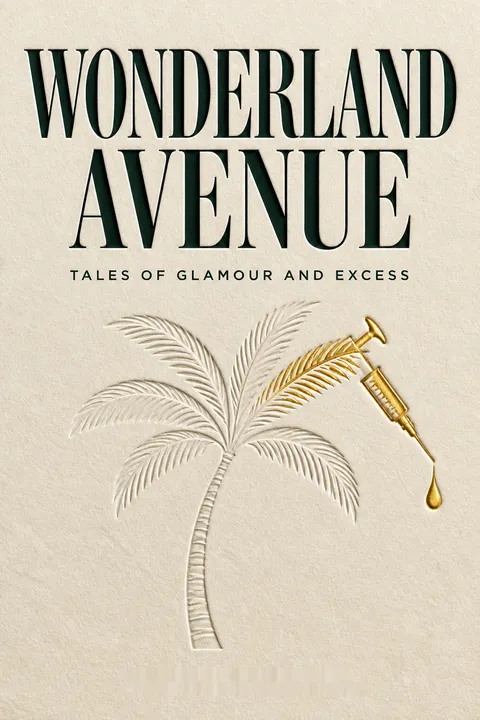
Wonderland Avenue is a memoir of rock culture and addiction, but its deeper subject is the cost of mistaking intensity for freedom. Danny Sugerman builds a compelling chain of events: childhood guilt and conflict leave him hungry for belonging; Jim Morrison and the Doors give that hunger a thrilling home; the music business turns proximity to a hero into a vocation; and heroin first feels like relief before becoming the force organizing his days. The narrative’s momentum is part of its argument. Early episodes are funny, reckless, and vivid. Later, the same appetite for spectacle makes danger seem like another entertaining scene, until the body and the deaths around him make that interpretation untenable.
The memoir is unusually candid about self-deception. Danny records the excuses, compromises, lies, and humiliations that let him continue, while admitting that love did not prevent him from hurting people. That honesty gives the book value beyond its celebrity setting. Yet its first-person perspective also has limits. It is not a clinical account of addiction, and its dramatic descriptions of drug use can reproduce some of the glamour it ultimately rejects. The reader must distinguish the narrator’s youthful theories about drugs, art, and freedom from the conclusions he reaches after nearly dying.
The central movement is not from rebellion to obedience. Danny does not conclude that his father, school, or conventional success had been right all along. He learns that choosing a life requires more than rejecting other people’s rules, and that agency includes accepting care, responsibility, and grief. The hospital scenes turn the memoir from an intoxicated chronicle into a reckoning. Its hard-won lesson is neither that suffering is noble nor that one dramatic realization guarantees recovery. It is that self-destruction can masquerade as identity for a long time, and that living begins when the performance no longer matters more than the person underneath it.
Review Summary
Wonderland Avenue is a memoir by Danny Sugerman that polarizes readers. Many praise its candid portrayal of rock 'n' roll excess and drug addiction, finding it both hilarious and horrifying. Fans appreciate Sugerman's insider perspective on The Doors and Iggy Pop. Critics note the author's narcissism and questionable behavior. The book is often described as a cautionary tale about drug use, particularly heroin. Some readers find it difficult to sympathize with Sugerman due to his privileged background. Overall, it's considered an important rock memoir, albeit a controversial one.
People Also Read


Glossary
Big Blue
Euphoric near-nod stateDanny’s name for a sought-after state during heroin use, described as a calm, expansive, blue-feeling interval between the drug’s rush and unconsciousness. He tries to remain in this state rather than pass into a deeper nod. The term is personal to his account, not a medical category.
the monkey
Addiction's insistent voiceDanny’s metaphor for addiction as a persistent force that returns when he tries to stop. It nags, threatens, and offers immediate relief until he gives in, then demands continued care. The image captures both craving and the reversal of control: the person who once feeds the habit becomes governed by it.
me pressure
Internal pressure to belongDanny’s term for his view that drug use was driven less by friends forcing him and more by his own desire to belong, feel accepted, and appear cool. The phrase reframes peer pressure as an internal need. It does not establish that social influence is irrelevant; it describes how Danny understood his own motivation.
speedballing
Combining heroin and cocaineThe practice of using heroin and cocaine together. In Danny’s account, cocaine keeps him alert while heroin softens the stimulant’s edge, producing a combined state he finds intensely appealing. The drugs do not cancel each other’s risks, and the book depicts the combination as part of his escalating, dangerous use.
Download PDF
Download EPUB
.epub digital book format is ideal for reading ebooks on phones, tablets, and e-readers.








