Plot Summary
Spiral Descent of Grief
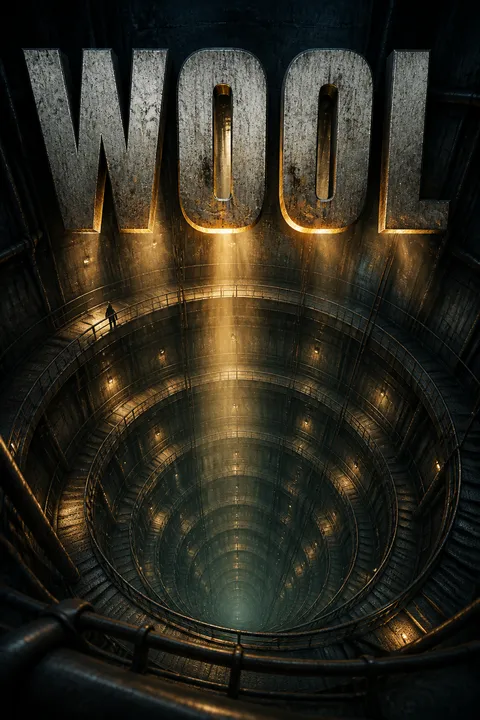
As Holston climbs the spiraling staircase, childhood echoes mingle with the weight of accumulated loss. The silo's worn steps mirror his own exhaustion—layer upon layer of joy, duty, and heartbreak eroded over years. Children's laughter, symbolizing hope and ignorance, cascades down as he methodically approaches his last moments. Holston feels alien in the place meant for survival, burdened by memories of what life could have been with his late wife, Allison. Despite the communal bustle above, isolation pervades his soul. He chooses death as an embrace of the unresolved grief and mounting doubts about the world's true nature, representative of the ever-shrinking individual space inside the relentless machinery of the silo.
Desire for the Outside
Entrapped and resolute, Holston asks to be sent outside—a society's ultimate sentence. His lodging in the holding cell amplifies the tension, as he gazes at the barren, perpetually gray world through a filtered display. This request is not rebellion but fulfillment of an inward resignation. Conversations with Mayor Jahns highlight the bureaucratic, weary cruelty of tradition. Holston doesn't protest, only seeks to understand why every condemned cleaner, his wife included, ultimately cleans the cameras for those inside. The silent contract between prisoner and warden—law and empathy—settles into an uneasy peace, as the silo's unyielding rules set the stage for his final journey.
Secrets Beneath Forgotten Stone
Years earlier, Holston and Allison's domestic routine is interrupted by her clandestine digital discoveries. She unveils evidence of cyclical uprisings and hints that the silo's history was deliberately erased—possibly to suppress truths too volatile to bear. Her deduction that erasures followed each revolt suggests a calculated effort by ancestors to break a self-destructive cycle. The couple's relationship is strained by Allison's mounting obsession; her prying into forbidden data awakens suspicion and fear. Holston, torn between love for his wife and his role as sheriff, sees that knowledge itself is what endangers their fragile equilibrium—even more than any external threat.
Allison's Forbidden Knowledge
Allison's theories grow bleak and insistent: the outside deceptions, the possibility that everything visible is digitally manipulated, the horror that collective amnesia is self-inflicted. She shares with Holston the radical idea that not rebels but the "good guys" wiped the servers, that the silo's very peace depends on ignorance. There's terror and awe—an existential crisis—realizing that revelation is both a blessing and a curse. Allison's search for truth spirals into paranoia, making her vulnerable to punishment. As her discoveries threaten the silo's consensus reality, the consequences become inevitable: to know is to be condemned.
Collapse of Familiar Order
The safe monotony of daily silo life is shattered as Allison's desire for the outside bursts into public view. Her wild declaration—"I want to go out"—breaks the cardinal taboo, marking her for immediate expulsion. The commotion serves as both spectacle and warning to others, exposing the unspoken tension simmering within the society. Holston, forced into the role of jailer over his own wife, is consumed by agony and helplessness. The personal finally collides with the political: the silo's survival strategies erode all personal freedoms and forcibly sacrifice anyone who violates its psychological boundaries.
The Ritual of Cleaning
Process and procedure surround Holston as he is suited up for his walk outside, a fate he once administered to others. The elaborate care taken in fitting the suit—doubling linings, strict instructions—paradoxically underscores the futility and routine of the ritual. The apprehension felt by the technicians reveals communal anxiety: will Holston rebel by refusing to clean the cameras, or fulfill the tradition? This ritual dramatizes the silo's dependence on its own myth—everyone awaits whether he will conform or defy in his final act. The slow-marching ritual is fertile ground for dread and hope.
Unveiling the Landscape Lie
Emerging into the open, Holston's senses are overwhelmed not by death but by vibrant beauty. Green hills and blue skies match the forgotten imagery from children's books—contradicting the bleak projections seen from within. As he cleans the camera lenses, he recognizes that the inside view was manufactured, the despair a programmed distortion. The act of cleaning—once interpreted as compliance—now reads as a desperate, joyful effort to reveal truth, a final act of defiance or compassion. The world is not as cruel as taught; hope and loss surge inside him, bittersweet and blinding.
The Sorrowful Banishing
For both Allison and Holston, punishment is escape from oppressive containment, but it is also loss: of love, of future, of place in the silo's narrative. Watching his wife go out, Holston once felt a surge of grief compounded by community shame; now, he retraces her steps, echoing those lost before him. Exile is transformative—once considered ultimate terror, it becomes a chance, however fatal, for self-determination and closure. The outside, so feared inside, is the only space for authentic experience, even if it means certain death.
Rules, Rebellion, and Regret
The silo's inflexible laws provide security but also produce torment. Doubts about the outside are the greatest heresy, as they threaten collective stability. Each uprising, each forbidden question, each "cleaning" is a response to the intolerability of enforced ignorance. Characters are haunted by their complicity—Jahns' regret, Holston's remorse, Allison's fateful courage. The rules provide clarity, but demand sacrifices that hollow out the meaning of survival. Every act of rebellion is both necessity and heresy, and regret is an omnipresent undertow.
The Silo's Paradoxical Safety
The silo functions as both sanctuary and tomb. Its order guarantees continuation, but represses essential human drives: curiosity, exploration, the need for self-understanding. The illusion of inviolable safety becomes intolerable because it is built on the perpetual threat of banishment. The community's reluctance to challenge their confinement masks a deeper alienation. The silo's psychological structure is revealed as a trap: the rules that protect also suffocate; the collective memory is engineered to deter any experiment in freedom.
The Cycle of Uprisings
Historical evidence uncovered by Allison reveals a pattern—periodic uprisings whenever doubts accumulate. The authorities' response is not reform, but amnesia: the deliberate erasure of memory to restore stability, punctuated by lottery births to control population. Personal traumas and societal crises are thus recurrent, not exceptional. Uprisings are not aberrations but the silo's unspoken mechanism for self-correction. As generations forget, the system endures—not through truth, but through loss.
The Weight of Legacy
Holston and Allison's investigation brings them face to face with ghosts—previous rebels, erased histories, all those lost to forbidden curiosity. Each generation lives under the shadow of past (and future) uprisings. The forced amnesia and repressive order are legacies, both inherited and imposed. For Holston, carrying Allison's memory is both a blessing and a curse, a burden that propels him toward the same fate, the same unanswered questions, and—through his death—the same quiet rebellion.
Pity and Penance
Cleaning the lenses, Holston's actions are motivated not by bitterness or vengeance, but by pity for those he leaves behind and self-reproach for his own failings. The ritual is reinterpreted as an act of mercy—he gifts the living a moment of clarity, although he knows this clarity is temporary, inevitably to blur again. Every outcast who cleans is offering a penance for themselves and the society that condemned them.
Haunting Silences
Between echoes of children's laughter and unspeakable truths, silence pervades the silo. These silences—between Holston and Allison, or Holston and Jahns—hold grief, fear, and desperately repressed hope. The collective avoidance of difficult questions sustains the status quo, but the price is isolation and unaddressed trauma. The sounds that do break the silence—sobbed confessions, klaxons, footsteps—are charged with unbearable weight.
Hope on the Horizon
The promise, however false, of a better world keeps the condemned moving forward. Both Holston and Allison cling to underlying hope: of reunion, of understanding, of freedom. This hope, paradoxically, is what brings them to their deaths. It is destructive within the system but also the only force to pierce its gloom. In the end, hope is revealed as both a lie and a kind of truth—a necessary delusion and a sacred human inheritance.
The Final Climb
Holston's trek up the hill—his final, excruciating climb—mirrors the arc of his search for truth. Each step marks a passage from ignorance to revelation, from bitterness to acceptance. As the poison consumes him and his illusions shatter, his last thoughts are not of vengeance but of love and the persistent ache for connection. There is tragedy but also release, a break in the cycle, however brief.
The Truth Behind the Veil
When Holston's visor fails, he is struck by the truth: the beautiful landscape was a digital mirage; the real world is toxic, blighted, dead. The lie provided comfort and the strength to hope; the truth is final and irreversible. Even as he cradles the remains of Allison, the cost of knowledge—separation, extinction, despair—undercuts any redemptive fantasy. Yet there is nobility in facing the truth, however terrible.
Love's Last Memory
In his dying moment, Holston's thoughts return to Allison and the love that drove every decision, sacrifice, and sorrow. The system may erase memory, but love inscribes itself in the doomed journey outward. Their tragedy becomes a testament: no society can ultimately suppress the human craving for meaning, risk, and connection. In the end, memory persists—in longing, in loss, in the imprinted pattern of love.
Analysis
Wool offers a haunting, tightly-wound meditation on the intersection of survival, knowledge, and individual agency within systems of enclosure. The silo, as both literal space and existential metaphor, dramatizes how fear of outside annihilation prompts communities to valorize security above all, sacrificing truth, love, and autonomy in return. Through characters like Holston and Allison, the narrative explores how institutional routines—be they memory wipes, cleaning rituals, or reproductive lotteries—enforce safety at crushing psychological expense. Yet, in every cycle of repression, there is a drive toward rupture: curiosity cannot be erased, and grief always demands reckoning. Howey's vision remains chillingly relevant: the mechanisms by which societies police dissent, control information, and rewrite memory are as subtle and suffocating as any technological artifact. Ultimately, Wool asks its readers to confront their own complicity in systems that trade the discomfort of uncertainty for the deadening comfort of approved illusions. Its lesson is both a warning and a plea to value questions, grief, and hope—even, or especially, when the price is unbearable.
Review Summary
Wool receives mixed reviews, averaging 4.13/5 across over 100,000 ratings. Many praise its gripping dystopian premise, suspenseful atmosphere, and clever twist ending, with fans highlighting strong world-building and emotional depth despite its short length. Critics, however, point to flat character development, slow pacing, and unanswered world-building questions. Some find the central twist predictable or logically flawed. Most agree Howey writes well and that the story effectively hooks readers into the broader series, even if the standalone experience leaves some wanting more substance.
Characters
Holston
Holston is the conduit between order and doubt, initially the enforcer of the silo's laws, later a victim of their inhumanity. His marriage to Allison is his anchor and undoing; her loss opens a chasm of grief and suspicion that the silo's rules cannot heal. Holston's psychological trajectory is one of repression—first of personal grief, then of forbidden questions—culminating in surrender to the same destiny he once administered to others. His sense of duty wars with growing empathy; ultimately, love and the hunger for truth overpower his allegiance to order, making his final journey both an act of penance and restoration.
Allison
Allison embodies the silo's forbidden impulse toward curiosity and revelation. Gifted in technology, she uncovers patterns of erasure and suppressed uprising, refusing to let collective amnesia erase her need to understand. Love for Holston grounds her, but her sense of unease and injustice outpaces her self-preservation. Her madness is ambiguous: part existential crisis, part acute lucidity. By voicing her doubts, she becomes sacrificial—her willful pursuit of knowledge simultaneously dooms her and bequeaths Holston the courage to follow. In dying, she both fractures and redeems the world for those left behind.
Mayor Jahns
Jahns administers the silo's grim justice with ritual resignation. Her relationship with Holston is layered with mutual respect, guilt, and enforced distance. Psychoanalytically, she embodies the compromise and moral exhaustion of governance under extreme constraint: she both regrets and rationalizes each "cleaning", haunted by the toll of necessary cruelty. Jahns wishes the system could be gentler but is bound by tradition and fear. Her sorrowful compliance highlights the moral doubts rippling through the silo.
Deputy Marnes
Marnes is the steady hand beside Holston, supporting him both administratively and emotionally. He is attuned to the psychological undercurrents of every crisis, aware of the burdens others carry but unwilling to challenge norms directly. Marnes's promotion following Holston's banishment illuminates the relentless continuity of institutional roles: individuals are replaceable, but suffering and doubt are not.
Nelson (Head of Cleaning Techs)
Nelson personifies those who maintain the silo's machinery—both literal and cultural. Superstitious dread and procedural precision coexist in his brief interactions with Holston. He is fearful both of technological failure and social chaos should the condemned ever refuse to clean or disrupt the cycle, reflecting the deep-seated anxieties beneath routine.
Clarke and Donna (Cafeteria Workers)
Their presence and concern symbolize the innocence, complicity, and banality of silo life. They try to preserve order and dignity, unaware of how easily normalcy can collapse under psychological strain. Their ability to adapt to every banishing reflects the pervasive normalization of tragedy.
The Silo Community
The unnamed multitude embodies the vast inertia of communal survival. Their fears—transmitted through custom, silence, and rumor—suffocate individual difference. Yet within the masses lie reservoirs of secret longing and suppressed memory. The psychological contract of complicity and avoidance shapes all.
The Unknown Ancestors
Their decisions shape the present, creating a web of erased memory, cyclical violence, and safety through ignorance. They are at once protectors and damners, their intentions inscrutable but their legacy unavoidable.
The Banished/Previous Cleaners
Each exile—from Allison to Holston's predecessors—traverses the same path: from innocence through despair to comprehension and death. Their pattern, repeated and misunderstood, is the essential myth that undergirds the silo's reality.
The Children
Their laughter and play signal the silo's superficial vitality, but also the cycle of naiveté, loss, and eventual disillusionment. They are both reason for rules and eventual inheritors of their burdens.
Plot Devices
The Silo as Microcosmic Prison
The silo is more than a setting: it is a circular cage, a generator of tradition, amnesia, paranoia, and revolt. Stairwells, screens, and sensors construct both physical and psychological boundaries. Every feature is saturated with meaning—a protection from the world's dangers, but also a device for hiding the greater truths beyond. The silo turns societal rules into inescapable ritual; every rebellion, every heartbreak, every "cleaning" becomes part of its self-perpetuating cycle.
The Cleaning Ritual
Cleaning is at once public execution, sacrament, and the only breach of the silo's "truth." The act is loaded with paradox—ostensibly for communal good (restoring blurred vision), it is the mechanism by which forbidden knowledge may be glimpsed. The ritual's outcome is always fatal, yet it provides, for a few moments, the possibility of clarity and hope. The consistency with which cleaners ultimately clean, even when they vow not to, suggests a profound, perhaps irresistible, compulsion for compassion and communication beyond the system's control.
Programmed Illusion
The screens and their controlled images are the instruments through which perception and disposition are manufactured. Allison's discovery of the programs that alter the world's appearance to those inside reveals how technology upholds myth and represses desire for escape. This manipulation is as much psychological as visual, cementing the silo's authority and the futility of rebellion.
Cyclical Narrative Structure
The narrative structure—moving between past and present, revelation and repression—mirrors the silo's own cycles: of birth, repression, uprising, and erasure. The structure enhances the sense of inevitability—that no lesson is ever truly learned, only forgotten, until someone is compelled to rediscover it at the cost of their freedom or life.
Foreshadowing and Symbolism
Recurring images—the spiral stair, the blurred screens, the hills, the laughter of children—signal deeper meanings. The gradual erosion of physical and institutional features foreshadows individual breakdowns. The worn railing, faded paint, dead pixels—all accumulate as metaphorical warnings.
The Lottery
The lottery for reproductive privilege both maintains order and causes private heartbreak. It is a pressure valve, meant to release tension but also reinforces the sense of constriction, incentivizing compliance and engendering longing.
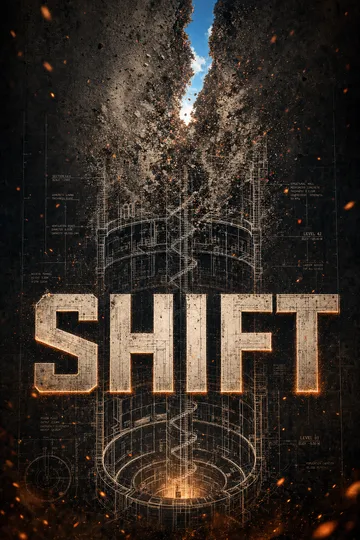
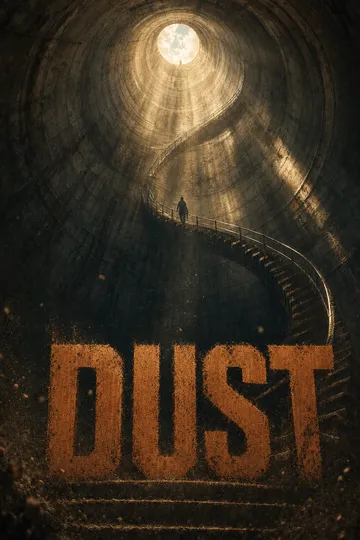
Silo Series
About the Author
Other books by Hugh Howey





Download PDF
Download EPUB
.epub digital book format is ideal for reading ebooks on phones, tablets, and e-readers.








