

Key Takeaways
Read Jesus as a model of spiritual capacity, not a divine exception
The central challenge. Holmes asks readers to see Jesus not as the sole person granted access to God, but as someone who fully realized a spiritual capacity available to everyone. He points to Jesus welcoming other people who healed in his name, rather than claiming an exclusive right to spiritual power. In Holmes’s interpretation, Christ is the divine life awakened within a person, not simply a title belonging to Jesus alone.
Practice, not admiration. The point is to follow Jesus’s combination of compassion, humility, faith, and practical service. Holmes presents him as a guide whose example asks to be tested in ordinary life, rather than a figure to praise from a distance. The claim that his miracles demonstrate universal powers is Holmes’s religious belief, not an independently established fact.
What's distinctive is the shift from worship as distance to emulation as responsibility. That move resembles virtue ethics, where an exemplary life helps people develop capacities through practice rather than mere assent. It also gives Holmes’s reading an unusually inclusive edge: spiritual authority is not reserved for clergy or a chosen few. The limit is important, though. Treating extraordinary acts as proof that anyone can reproduce them turns a theological interpretation into an empirical claim. The example can still guide conduct without requiring certainty about miracles: compassion, courage, and service are observable forms of the ideal.
Find the Kingdom in present awareness, then carry it into ordinary life
Heaven is not elsewhere. Holmes reads the Kingdom of God as a spiritual reality already present within and around people, not merely a future destination. A divine prototype, meaning an ideal spiritual pattern that Holmes believes underlies visible life, is already available to awareness. The task is to recognize it now, rather than postponing goodness until circumstances become perfect or life ends.
Bring insight back down. Jesus, in Holmes’s account, did not withdraw from daily needs. He healed, fed people, participated in ordinary fellowship, and accepted that civic responsibilities existed. This makes spiritual practice practical: seek inner peace, then express it through the way work, relationships, and responsibilities are handled. The Kingdom is not an excuse to ignore the world; it is a way of meeting the world without treating matter as separate from spirit.
This view makes spiritual life less an escape from ordinary reality than a reorientation within it. In psychological terms, attention changes what becomes salient: a person who notices possibilities for cooperation may act differently from one who sees only threat. That does not mean perception alone changes external facts, but it can change choices and relationships. Holmes’s emphasis on action helps prevent inward practice from becoming private consolation alone. His stronger claim, that a perfect spiritual pattern exists behind every condition, remains metaphysical; it can inspire hope, but it should not erase the real constraints people face.
Use prayer to steady attention, not bargain with a distant God
Prayer as inward communion. Holmes interprets Jesus’s instruction to pray privately as a call to quiet outward distraction and turn toward an indwelling divine presence. Prayer is not made powerful by elaborate wording. It depends on the meaning, trust, and emotional conviction behind it. Holmes describes faith as an accepting orientation toward the good one seeks, rather than a demand that God be persuaded to act.
A practical sequence. Become still, name the need honestly, imagine the desired good as possible, and release anxious insistence about exactly how it must arrive. Holmes compares prayer to drawing on a law that already exists: faith does not create the power, but opens a channel to it. This practice can support reflection and resolve, while its promised results remain a matter of religious belief.
The closet becomes a useful model for reducing noise before making a decision. Quiet attention can help distinguish a genuine need from a reflexive reaction, and imagining a workable outcome can make action feel more possible. The book’s language of receiving a response also addresses a real human need for relationship, not just technique. Still, prayer is not a reliable substitute for planning, evidence, or help from other people. The most grounded reading treats it as a practice that may change the person praying, while remaining open about whether it changes events through supernatural means.
Let love govern the laws your choices set in motion
Presence and principle. Holmes frames God in two connected ways: as a personal, responsive presence, and as an impersonal principle expressed through cause and effect. He uses this distinction to explain why divine love does not mean exemption from consequences. Choices create effects, while love determines whether the power behind action is used to build or harm.
Law needs direction. Jesus’s teachings about judgment, generosity, and treating others as one would wish to be treated become practical tests of this idea. Holmes argues that hostility and selfishness return as forms of inner or relational disorder, while loving conduct aligns a person with the good. The point is not to bargain with God for a reward. It is to recognize that the quality of one’s actions helps shape the life one inhabits.
The pairing of care with consequence avoids a purely sentimental account of morality. A law without values can be applied efficiently to destructive ends; compassion supplies a direction for judgment and action. This resembles the distinction between rules and the ethical purposes rules are meant to serve. However, cause and effect are not always personally legible. Harm can result from institutions, accidents, or other people’s choices, not simply from the sufferer’s inner state. Holmes’s model is most constructive when it supports responsibility for one’s conduct, not when it is used to explain away injustice.
Forgive repeatedly, because resentment keeps the injury active inside you
Forgiveness is not permission. Holmes uses the story of a servant forgiven a large debt who then imprisons someone owing him a much smaller amount. The contrast exposes a refusal to extend the mercy one has received. In another story, Jesus stops a crowd from condemning a woman and sends her away without endorsing her wrongdoing. For Holmes, forgiveness releases condemnation but does not excuse repeating harm.
A practice, not a transaction. Forgiving others and oneself loosens the bitterness that keeps an injury present in thought and relationship. Holmes argues that refusing to forgive blocks the very openness a person hopes to receive. This is not a demand to remain in an unsafe relationship, abandon accountability, or suppress grief. It is an invitation to stop making resentment the permanent center of one’s inner life.
Holmes’s strongest insight is that forgiveness concerns the forgiver’s freedom as well as the offender’s standing. In contemporary conflict resolution, repair often requires both accountability for harm and a path out of endless retaliation. Those are compatible: forgiveness need not mean restored trust, access, or reconciliation. The book’s language can sound absolute, but real injuries vary in severity, and pressure to forgive can silence people who need protection or time. Its most humane application is voluntary release of corrosive hatred, alongside clear boundaries and truthful acknowledgment of what happened.
Seek wholeness without pretending illness or hardship is imaginary
Holmes’s healing account. Holmes presents Jesus’s healings as expressions of spiritual power and interprets some suffering through the relationship between mind and body. For example, he reads the story of a paralyzed man whose guilt is forgiven before he is told to rise as a case where self-condemnation obstructs life. He also describes prayer as a way of turning attention from apparent limitation toward an inner pattern of wholeness.
Keep compassion central. The practical lesson is to offer hope and support rather than treating illness as a person’s fault. Holmes’s claims that spiritual conviction can cure disease are not established medical conclusions. Prayer or reflection may offer comfort alongside appropriate care, but neither should replace medical assessment. A person’s condition is not evidence that they lacked faith, failed morally, or chose to suffer.
The mind-body connection is real in limited, ordinary ways: stress, expectation, and emotional support can influence how people experience symptoms and cope with treatment. That makes spiritual care potentially valuable as care, not as a universal cure. The necessary distinction is between helping someone find meaning or steadiness and asserting that belief controls disease. The latter can produce guilt when treatment fails and can delay effective help. Holmes’s compassion offers a better emphasis than his causal certainty: meet distress with hope, but do not make patients responsible for outcomes beyond their control.
Use and share your gifts before they stagnate
Capacity grows in use. Holmes draws on Jesus’s parables of the talents and the lamps. Servants who put their entrusted resources to work increase them; the one who buries his talent leaves it unproductive. In another image, lamps need oil to remain lit. Holmes reads these stories as reminders that ability, faith, and love are not meant to be hoarded.
Keep the exchange alive. Giving without receiving can exhaust a person, while taking without giving can make life stagnant. The goal is a healthy circulation: use what is available, let others benefit, and remain open to receiving help or learning. This applies to spiritual conviction as much as practical skill. Rather than waiting for a grand opportunity, begin with the modest capacity already at hand and let action develop it.
This principle sits comfortably beside skill development: abilities tend to improve through practice, feedback, and contribution. It also resembles the logic of shared resources, where knowledge becomes more useful when circulated rather than guarded. Holmes gives that ordinary observation a spiritual interpretation, seeing generosity as part of a larger flow of life. The caution is that not every person has equal time, energy, or opportunity to give. A healthy ethic of circulation includes receiving, rest, and fair conditions, rather than turning service into a moral test for people already stretched thin.
Test spiritual unity by how you treat people with least power
Unity must include others. Holmes reads Jesus’s command to love God and neighbor as one moral principle: spiritual unity is hollow if it excludes people. In Jesus’s image of the final reckoning, feeding the hungry, welcoming the stranger, and visiting the imprisoned count as service to the divine itself. Holmes also insists that unity does not require sameness; individuals remain distinct while belonging to one life.
Make belief public through conduct. The book criticizes religious status and outward ritual when they are disconnected from compassion. Its test is practical: does a person’s spiritual conviction produce generosity, humility, and mutual help? Holmes extends this idea from individuals to communities, arguing that people can join their efforts around shared purposes without agreeing on every doctrine.
This is the book’s strongest safeguard against spirituality becoming self-absorption. It makes inclusion observable through care, not merely through claims of inner illumination. Social psychology also suggests that shared goals can help people cooperate across differences, especially when each person’s contribution is recognized. But collective conviction is not automatically benevolent; groups can intensify conformity or exclude outsiders while believing themselves righteous. Holmes’s insistence on the stranger and the least powerful supplies a moral check: unity should widen concern, not simply deepen loyalty to one’s own group.
Treat death as continuity, and make today your field of practice
Life continues in Holmes’s view. In the story of Lazarus, Jesus calls a dead friend from the tomb; Holmes reads the event as a sign that life is not ultimately defeated by physical death. He also takes Jesus’s promise of many dwellings in the Father’s house as support for the continuing, individual existence of the soul. Death is understood as a transition, not the erasure of personhood.
The present still matters. Holmes does not use eternal life to dismiss earthly responsibilities. He repeatedly directs attention to the present, where fear can be released, love practiced, and relationships repaired. His assurance of personal survival is a metaphysical and religious conviction, not an empirically settled fact. Whether or not a reader shares it, the practical question remains: what kind of life is being made in the time available now?
Belief in continuity can soften fear of death and help people situate loss within a larger story. Across cultures, accounts of an afterlife also shape how communities mourn and care for the dying. Yet confidence about what follows death is not the same as evidence about it, and the book’s certainty will not persuade every reader. Its more widely available insight is that thoughts about mortality can clarify priorities: attention turns toward relationships, generosity, and meaningful work. That value does not depend on resolving the metaphysical question.
Analysis
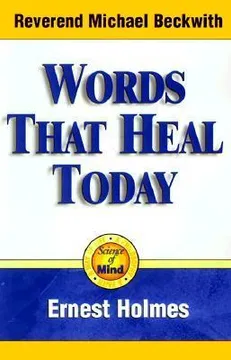
Words That Heal Today is a New Thought interpretation of Jesus, not a historical study of the Gospels. Its governing idea is that Jesus embodied a universal spiritual capacity and that his teachings describe usable principles rather than privileges unique to him. Holmes organizes those principles around a paired metaphysics: God is both intimate presence and impersonal law. The first offers relationship and reassurance; the second explains why conduct has consequences. Love is meant to guide the use of law, while faith is the means by which people become receptive to divine possibility.
That structure gives the book its coherence. Familiar stories become lessons about inward transformation, forgiveness, generosity, healing, community, and life after death. Its strongest practical contributions are psychological and ethical: attention can be redirected, resentment can be relinquished without excusing harm, and spiritual claims should show themselves in service. The repeated insistence that the Kingdom is present also counters the habit of postponing meaningful life until circumstances become ideal.
The central tension is between agency and overclaim. Holmes presents thought and faith as deeply consequential, which can encourage hope and purposeful action. But he sometimes extends this into claims that belief can alter disease, material circumstances, or natural events. Those claims are not established by the stories offered, and they risk assigning personal blame for suffering or underestimating social and biological causes. A careful reading separates practices that may shape attention and conduct from promises of supernatural control.
The book is most persuasive when read as spiritual counsel rather than an experimental manual. Its vision of Jesus as example, its rejection of religious exclusivity, and its demand that inner conviction become outward compassion form a memorable ethical core. Its metaphysical assurances remain matters of faith, but its challenge is concrete: practice the qualities attributed to the divine in the life already being lived.
Review Summary
Glossary
Science of Mind
Holmes’s spiritual philosophyThe spiritual philosophy founded by Ernest Holmes. It treats mind, spiritual reality, and the laws governing experience as connected, and presents faith, prayer, and constructive thought as ways of aligning life with divine good. In this book, Holmes uses it to interpret Jesus’s teachings as practical principles available to everyone.
Divine Person and Divine Principle
Presence joined with lawHolmes’s paired description of reality. Divine Person means God as an intimate, responsive presence; Divine Principle means the impersonal order expressed through natural and mental laws, including cause and effect. The pair allows Holmes to describe God as both loving relationship and consistent law, rather than as a distant ruler who selectively suspends consequences.
law of mind in action
Thought shaping experienceHolmes’s term for the way a universal mental or spiritual principle responds to a person’s prevailing beliefs and attitudes. He compares the response to reflection: experience corresponds to the mental pattern presented to the law. The concept is central to his account of faith and prayer, though the book’s stronger claims about controlling external events are metaphysical assertions.
divine prototype
Underlying spiritual patternAn ideal pattern that Holmes believes exists in the Divine Mind behind visible forms and experiences. He argues that physical life is not separate from this spiritual reality, but expresses it imperfectly or without full awareness. Turning attention toward the prototype is, in his framework, a way of orienting thought toward wholeness and allowing that ideal to shape conduct.
Kingdom of God
Present spiritual wholenessHolmes interprets the Kingdom of God not primarily as a place after death or a future political order, but as an already existing spiritual reality within and around people. It becomes meaningful through awareness of unity with God and through actions that express love, peace, and inclusion. The Kingdom is both inward realization and a way of living with others.
Christ
Universal divine lifeIn Holmes’s interpretation, Christ is the divine life or spiritual nature present in humanity, fully awakened and expressed in Jesus but not exclusive to him. This differs from using Christ only as a personal title for Jesus. Holmes’s language of Christ within describes a person’s conscious recognition of unity with God while retaining individual identity.
About the Author
Other books by Ernest Shurtleff Holmes




Download PDF
Download EPUB
.epub digital book format is ideal for reading ebooks on phones, tablets, and e-readers.








