

Key Takeaways
Treat speech as an action: it can injure, define, and create.
Words have consequences. Telushkin argues that speech does more than describe people: it shapes how others see them, and can help make cruelty seem acceptable. He recalls the rabbinic story of a slanderer told to scatter a pillow's feathers, then gather them again. The task is impossible, like fully restoring a reputation after damaging stories have spread. Public labels can also strip groups of their humanity, making discrimination and violence easier to justify.
The harm reaches the speaker, too. Repeatedly speaking unfairly about people can deepen estrangement, weaken relationships, and leave the speaker surrounded by suspicion. By contrast, fair speech makes room for more direct, trusting relationships. The book's basic discipline is to speak accurately about others, honestly about oneself, and carefully to everyone.
The central insight is that language is not merely a mirror of social reality; it helps organize that reality. A label can influence who is trusted, included, or treated as dangerous, long before anyone acts violently. This is why civility is more than good manners: it can function as an early safeguard against dehumanization. Still, restraint should not become euphemism. Naming abuse, discrimination, or misconduct accurately can protect people. The ethical task is not to avoid forceful speech, but to distinguish truthful accountability from language designed to degrade.
Before sharing a negative truth, ask whether anyone needs it.
Truth can still harm. Jewish ethical vocabulary distinguishes three kinds of speech: lashon ha-ra is true information that lowers someone's standing; rechilut carries one person's negative remarks to the person targeted; motzi shem ra spreads harmful falsehoods. Even hints, gestures, or selective details can damage a reputation. Telushkin calls these indirect forms the “dust” of lashon ha-ra, or avak lashon ha-ra.
A story can change moral character according to its context. Saying that a person with little money gave generously may earn admiration; saying that a wealthy person gave the same amount may imply stinginess. Before repeating something negative, ask whether it is true, necessary, and fair. If it is simply interesting, that is not enough.
This framework usefully separates factual accuracy from ethical permission. Modern communication often treats “true” as the end of the inquiry, but the social effect of a fact depends on relevance, audience, and framing. A selectively accurate story can mislead as effectively as a false one. At the same time, a broad ban on negative information would protect reputations at the cost of accountability. The practical question is whether the information serves a legitimate purpose, and whether that purpose can be served with less exposure.
Notice the status, intimacy, and revenge gossip secretly offers.
Gossip pays the teller. Telushkin identifies several rewards beneath the claim that gossip is merely fascinating. It can make the speaker feel superior by lowering a rival, important by displaying access to secrets, or vindicated by recruiting listeners to a grievance. Those rewards explain why gossip so often targets peers and prominent people rather than those with less social standing.
A campus experiment by sociologists Jack Levin and Arnold Arluke illustrates the hunger to seem informed. Students received a flyer announcing a wedding involving two fictitious people. A week later, 52 percent said they had heard about it, and 12 percent claimed they had attended. When hurt is the motive, gossip can also exaggerate an offense until reconciliation feels embarrassing. Telushuskin recommends limiting such talk and choosing listeners who calm rather than inflame.
The account treats gossip as a social transaction, not simply a character defect. Sharing secrets can signal belonging, expertise, or closeness, which helps explain why moral exhortation alone rarely stops it. This also points toward an alternative: groups can build status around discretion, sound judgment, or useful candor instead of access to private details. Yet not every conversation about another person is malicious. Friends often need to process conflict. The distinction lies in whether discussion clarifies a problem or turns an absent person into entertainment.
Share private negative facts only when someone faces a meaningful, preventable risk.
Disclosure needs a reason. The book permits harmful information to be shared when it protects someone from a significant risk. A prospective business partner may need to know about proven dishonesty; someone in a serious relationship may need information that could affect an informed choice. Share only what is relevant, with only the person who needs it. Separate firsthand knowledge from rumor, and make uncertainty explicit rather than presenting hearsay as fact.
Confidentiality also matters, but it is not absolute when an innocent person faces grave danger. Telushuskin discusses the Tarasoff case, in which a therapist learned of a patient's plan to kill a woman but failed to warn her. The case shows the conflict between protecting a confidential relationship and preventing harm. Disclosure should be limited, deliberate, and proportionate to the danger.
This is a consequentialist judgment with a strong restraint built into it: disclosure is justified by protection, not curiosity or punishment. The need-to-know rule resembles data minimization in privacy practice, where limiting access reduces collateral harm. The difficult part is assessing risk under uncertainty. Over-disclosure can stigmatize someone; silence can leave a foreseeable victim exposed. A careful decision therefore asks both what harm disclosure may cause and what harm nondisclosure permits, rather than treating either secrecy or transparency as an automatic virtue.
Judge public-interest stories by relevance to office, not appetite for scandal.
Public service is not total exposure. Telushuskin argues that public figures retain a legitimate private life. Information deserves public attention when it bears on the responsibilities of office, not simply because it is intimate or compelling. A leader's misuse of public funds is relevant; an unrelated affair may not be. The book contrasts Franklin Roosevelt's private infidelity with Richard Nixon's public disgrace, arguing that sexual conduct alone did not predict their performance or integrity in office.
A private connection can become relevant when it creates a conflict of interest. Telushuskin uses John F. Kennedy's reported relationship with a woman connected to a Mafia leader as an example: the public concern is the possible political connection, not the affair itself. The proposed test is job relevance, not moral voyeurism.
This distinction offers a better standard than either unrestricted exposure or blanket privacy. Public trust requires scrutiny, but intimate detail is not automatically evidence of governing competence. The relevant question is whether private conduct creates coercion, conflicts, deception, or neglect of duty. The standard is harder to apply than a scandal-driven headline because relevance must be demonstrated rather than assumed. It also protects the public sphere itself: when candidates expect every private fact to become ammunition, capable people may avoid public service or retreat into polished evasiveness.
Keep anger tied to the offense, not the other person's wounds.
Anger needs boundaries. In the biblical story Telushuskin tells about David and Michal, a sharp exchange turns a joyful day into a lasting marital rupture. Michal mocks David's public dancing; David answers by invoking her father's rejection and death. His response abandons the original dispute and strikes at a private vulnerability. The lesson is not to suppress every grievance, but to keep anger proportionate and focused on the act that caused it.
The book recommends delaying an angry response when possible, then addressing the person directly. Complaining to an audience can harden one's own version of events and make reconciliation harder. If the first response goes badly, each later response still offers a chance to regain control, apologize, or return to the actual issue.
The distinction between feeling anger and choosing its expression is a useful form of emotional agency. It does not require pretending that an offense is harmless; it asks that the response remain connected to what happened. In conflict research, this resembles the difference between criticizing a behavior and attacking a person's character, a distinction that helps keep disagreement specific. Direct confrontation is not always safe or wise, especially where power or abuse is involved. In those cases, trusted support may be necessary, but it should help assess the problem rather than amplify retaliation.
Make criticism private, precise, useful, and possible to hear.
Correction should help. The prophet Nathan needs King David to face serious wrongdoing, so he first tells a story about a rich man who takes a poor man's beloved lamb. David condemns the fictional man's conduct, and Nathan reveals that the story describes the king himself. The example shows how a carefully chosen approach can help someone see wrongdoing without immediately retreating into excuses.
For ordinary criticism, Telushuskin draws on Maimonides: speak privately, gently, and with the other person's good in mind. Offer specific guidance rather than a sweeping verdict. Isaac Asimov remembered a teacher who correctly disliked his writing but criticized him with public contempt; the humiliation stayed with him for decades. When receiving criticism, ask what part is true before attacking the critic in return.
Good criticism combines epistemic humility with care. Specific feedback gives the recipient something to test and change; global judgments invite defensiveness because they threaten identity rather than describe conduct. Nathan's story also shows the value of perspective-taking, though indirect approaches can sometimes feel manipulative if the listener is not eventually told the point plainly. The strongest correction preserves dignity without diluting responsibility. And the reciprocal discipline matters: being imperfect does not make a critic automatically wrong, just as being right does not excuse cruelty.
Correct a child's behavior without turning a mistake into identity.
Children hear definitions. Telushuskin warns that parents can wound children by criticizing their character, comparing siblings, or correcting constantly while rarely noticing good behavior. A parent can say a child lied without defining the child as a liar. The first identifies a changeable act; the second risks making misconduct sound like destiny. In one family example, parents stopped trying to correct every irritation and focused on teaching politeness and gratitude as their main priority.
The same care applies to humiliation more broadly. A teacher's ridicule left an adult woman afraid to speak publicly decades later; a mother's repeated mockery of her daughter's weight damaged the daughter's self-image. Praise matters too. Children need to know not only when they have failed, but when their effort, kindness, or restraint has been seen.
The distinction between identity and behavior aligns with a growth-oriented view of learning: mistakes become information rather than permanent labels. It is especially important in childhood, when a powerful adult's judgment can become part of a child's self-description. This does not imply that praise should be indiscriminate or that difficult behavior should go uncorrected. Praise is most useful when it notices something concrete, such as effort or consideration, while correction names a specific action and a better option. The goal is accountability without making belonging feel conditional.
Tell the truth with moral purpose, not as a license to wound.
Honesty has competing duties. Telushuskin rejects the idea that truth must always override every other value. Jewish sources in the book allow deception to protect life, preserve peace, or spare someone pointless pain. If a friend asks about an outfit before leaving home, honest advice may prevent embarrassment; after the event, the same blunt judgment may serve no useful purpose. Truth should not be bent to gain an advantage or manipulate someone into gratitude.
The book draws a sharper line around large public claims. False propaganda may rally people to a cause while leaving lasting damage. Telushuskin describes fabricated atrocity stories circulated during World War I and argues that they helped make later, true accounts of Nazi crimes easier to dismiss. A noble aim does not make false evidence harmless.
The ethical question is not simply whether a statement is accurate, but what duty the speaker owes the listener and others affected. This resembles the distinction between truth as a rule and truth as a public good: deception may protect a person in immediate danger, while large-scale misinformation corrodes shared standards for evidence. The allowance for tactful lies is necessarily context-sensitive, so it can be abused by people who claim to know what others need to hear. A sound test asks whether the deception protects someone or mainly protects the speaker from discomfort or consequence.
Say the healing words while the person can still hear them.
Kindness must be spoken. Telushuskin recounts a grieving man who regretted that he had almost told his wife he loved her. The story captures a common failure: people may feel gratitude or affection but assume the other person already knows. The book recommends making care audible through thanks, expressions of love, questions about how someone is doing, and offers to meet a real need. The right words depend on what the other person can receive.
A small compliment to a taxi driver, in another story, is presented as a gesture that may pass kindness onward. More dramatically, a boy returning to school after cancer treatment found his classmates and teacher had shaved their heads too. Apologies matter as well: remorse can begin repairing a relationship, though it cannot erase what was said.
This section turns speech ethics from damage control into active care. The idea is close to responsive communication: affection is not only an internal state but information another person may need in order to feel secure, valued, or understood. Asking what someone needs is often more useful than offering a rehearsed comfort. The ripple-effect story is hopeful, though kindness cannot be guaranteed to spread in a neat chain. Its value does not depend on that prediction. A considerate word can matter directly to the person who hears it.
Practice ethical speech in small daily windows, then widen them.
Build a repeatable practice. Telushuskin compares changing speech to recovery from addiction: a single declaration is unlikely to change a deeply familiar habit. Rather than demand immediate perfection, he suggests choosing a manageable period each day, such as a meal or a two-hour window, in which to avoid cruel or unfair talk. Regularly revisiting the principles helps keep them present when irritation or an enticing rumor appears.
The book's proposed “Speak No Evil Day” applies the same discipline collectively for twenty-four hours. Participants would avoid malicious gossip, unfair anger, name-calling, humiliation, and bigoted speech, while still sharing information when protection truly requires it. The point is not that one day cures anyone. It makes habitual speech visible and gives people a concrete chance to practice a better alternative.
The incremental design is persuasive because speech habits are embedded in social routines, not just private intentions. A time-limited commitment makes observation possible: people can notice which settings, topics, or relationships draw them into unfair talk. Repetition may also make a pause feel less unnatural. The addiction analogy should be used carefully, since ordinary gossip is not equivalent to substance dependence, and people differ in their capacity for self-control. Its practical strength is narrower: serious change benefits from structure, reminders, and supportive company rather than resolve alone.
Analysis
Telushuskin's book is best understood as an ethics of everyday speech, built from Jewish legal distinctions, biblical narratives, public cases, and domestic scenes. Its organizing insight is unusually concrete: speech is action. A rumor changes a reputation; a humiliating remark changes what a child believes about herself; a carefully chosen apology can reopen a relationship. This emphasis helps explain why the book treats not only lies, but also true gossip, insinuation, anger, privacy, and praise as moral questions.
The most useful part of the approach is its refusal to reduce ethics to a slogan. Truth matters, but so do safety, privacy, dignity, and the listener's legitimate need to know. The book's repeated tests, such as asking whether a disclosure is necessary and fair, offer practical friction before harm occurs. Its attention to motive is also sharp: gossip can reward the speaker with status or a feeling of vindication even when it injures someone absent.
The method has limits. Rules built around individual restraint cannot by themselves repair institutions that reward outrage, sensationalism, or public shaming. Nor does kindness always resolve a conflict; a person facing abuse or exploitation may need documentation, external support, and direct disclosure. Ethical speech therefore requires more than softness. It must be truthful enough to name harm, restrained enough not to manufacture it, and brave enough to protect those at risk.
The book's strongest practical contribution is to make these judgments repeatable. Pause before transmitting a damaging fact. Keep criticism specific. Speak to the person involved when it is safe. Make gratitude and affection explicit rather than assuming they are understood. Such practices will not eliminate conflict, but they can prevent ordinary irritation, curiosity, and wit from becoming lasting injury. The larger cultural ambition follows from the same small acts: public discourse becomes less dehumanizing when ordinary speakers stop treating words as weightless.
Review Summary
Words That Hurt, Words That Heal receives high praise for its insights on the power of speech. Readers appreciate Telushkin's accessible writing style, practical advice, and use of anecdotes to illustrate concepts. Many found the book eye-opening and transformative, prompting reflection on their own speech habits. Some readers note its basis in Jewish teachings but emphasize its universal applicability. A few criticize repetitive content or dense passages. Overall, reviewers recommend it as a valuable guide for improving communication and relationships through mindful speech.
Glossary
lashon ha-ra
harmful true speechA Jewish ethical category for sharing accurate information that lowers the regard in which another person is held. The term is not limited to outright insults: a true fact can qualify when it damages reputation without a sufficient reason to disclose it. Telushuskin distinguishes it from false slander and allows relevant disclosure when it protects someone from harm.
rechilut
relaying negative remarksThe transmission of one person's negative comments to the person those comments concern. Although the report may be accurate, passing it on can create hurt and conflict without helping anyone. Telushuskin advises against relaying such remarks unless a specific, constructive reason makes disclosure necessary.
motzi shem ra
harmful falsehoodA serious violation of ethical speech involving false statements that give someone a bad name. Unlike lashon ha-ra, which concerns damaging truths, motzi shem ra involves misinformation or fabricated accusations. The term emphasizes that false claims can destroy reputations and provoke consequences that an apology cannot fully undo.
avak lashon ha-ra
indirect reputational harmLiterally, the “dust” of lashon ha-ra: indirect ways of lowering someone's standing without stating a direct accusation. Examples include suggestive hints, sarcastic praise, meaningful eye-rolling, or displaying someone's mistakes to make a listener think less of them. The category draws attention to the effects of implication and gesture, not just literal wording.
ha-karat ha-tov
recognizing received goodA Hebrew ethical idea meaning recognition of the good another person has done for you. Telushuskin presents gratitude as more than polite thanks: it is a habit of noticing the labor, help, and care on which one's life depends. That awareness can be expressed through words, practical assistance, or lasting loyalty.
emotional constipation
difficulty expressing tender feelingsTelushuskin's phrase for an inability to express love, gratitude, and concern even when those feelings are present. A person may be comfortable voicing annoyance but remain silent about affection. The concept names the gap between feeling care and making that care known to the people who need to hear it.
Speak No Evil Day
a day of speech restraintTelushuskin's proposed public observance: a twenty-four-hour effort to avoid vicious or unfair talk, malicious rumors, humiliating remarks, and disproportionate anger. It is intended as both a shared exercise and a prompt for longer-term awareness, not as a claim that one day can permanently change speech habits.
FAQ
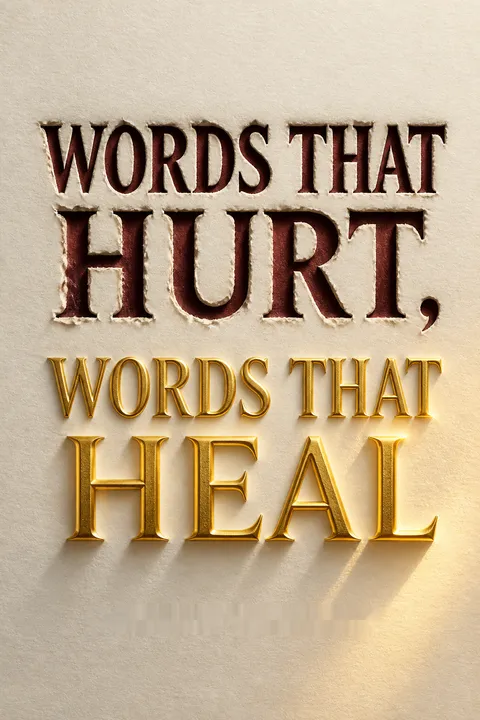
What's "Words That Hurt, Words That Heal" about?
- Overview: "Words That Hurt, Words That Heal" by Joseph Telushkin explores the profound impact words have on our lives, both positively and negatively. It delves into the ethical use of language and how words can be used to harm or heal.
- Structure: The book is divided into sections that discuss the power of words, how we speak about and to others, and how words can heal. It also provides practical advice on incorporating ethical speech into daily life.
- Purpose: Telushkin aims to raise awareness about the consequences of our speech and encourages readers to adopt more mindful and compassionate communication practices.
Why should I read "Words That Hurt, Words That Heal"?
- Awareness: The book raises awareness about the often-overlooked impact of words, helping readers understand the potential harm and healing they can cause.
- Practical Advice: It offers practical strategies for improving communication, making it a valuable resource for personal development and relationship building.
- Ethical Insight: Telushkin provides ethical insights grounded in Jewish teachings, offering a unique perspective on the moral responsibilities of speech.
What are the key takeaways of "Words That Hurt, Words That Heal"?
- Power of Words: Words have the power to define reputations, influence relationships, and even incite violence or promote peace.
- Ethical Speech: Practicing ethical speech involves avoiding gossip, slander, and unnecessary criticism while promoting kindness and understanding.
- Healing Words: Words can be used to heal and inspire, and the book emphasizes the importance of expressing gratitude, love, and concern.
How does Joseph Telushkin define "ethical speech"?
- Avoiding Harm: Ethical speech involves refraining from gossip, slander, and spreading negative truths that can harm others.
- Promoting Good: It encourages using words to uplift, support, and heal, focusing on positive communication.
- Moral Responsibility: Telushkin emphasizes the moral responsibility to speak truthfully and kindly, considering the impact of words on others.
What are some practical tips from "Words That Hurt, Words That Heal" for improving communication?
- Monitor Speech: Be mindful of the words you use, especially in moments of anger or frustration, to avoid causing harm.
- Express Gratitude: Regularly express appreciation and love to those around you, reinforcing positive relationships.
- Constructive Criticism: Offer criticism in a way that is specific, non-threatening, and aimed at helping the other person improve.
What is the significance of "Speak No Evil Day" in the book?
- Concept: "Speak No Evil Day" is a proposed day for refraining from negative speech, promoting a culture of kindness and ethical communication.
- Purpose: It aims to raise awareness about the impact of words and encourage people to practice ethical speech for at least one day.
- Long-term Goal: The initiative seeks to inspire lasting change in how people communicate, fostering a more compassionate society.
How does Joseph Telushkin address the issue of gossip in "Words That Hurt, Words That Heal"?
- Definition: Gossip is defined as spreading information about others, often negative, that can damage reputations and relationships.
- Consequences: Telushkin highlights the irrevocable harm gossip can cause, likening it to character assassination.
- Guidelines: The book provides guidelines for avoiding gossip, such as questioning the necessity and fairness of sharing certain information.
What are the best quotes from "Words That Hurt, Words That Heal" and what do they mean?
- "Words said about us define our place in the world." This quote emphasizes the lasting impact words can have on a person's reputation and self-perception.
- "Only God can give us credit for the angry words we did not speak." It highlights the virtue of restraint and the moral strength required to hold back harmful words.
- "If you will it, it is no fantasy." This Jewish proverb, used in the context of "Speak No Evil Day," suggests that positive change is possible if we truly desire it.
How does "Words That Hurt, Words That Heal" address the topic of public humiliation?
- Serious Offense: Public humiliation is considered a grave ethical violation, equated with shedding blood due to its potential to cause lasting harm.
- Examples: The book provides examples of public figures and ordinary individuals who have suffered from public shaming, illustrating its devastating effects.
- Prevention: Telushkin advises against using personal attacks in arguments and emphasizes the importance of maintaining dignity and respect in all interactions.
What role does forgiveness play in "Words That Hurt, Words That Heal"?
- Apologies: The book stresses the importance of apologizing sincerely when one's words have caused harm, as a step toward healing and reconciliation.
- Forgiveness: While forgiveness is encouraged, Telushkin acknowledges that some verbal wounds may be too deep to fully heal, highlighting the need for careful speech.
- Restoration: Forgiveness is seen as a way to restore relationships and move forward, but it requires genuine remorse and a commitment to change.
How does Joseph Telushkin suggest we handle criticism, according to "Words That Hurt, Words That Heal"?
- Constructive Approach: Criticism should be offered in a way that is specific, gentle, and aimed at helping the other person improve.
- Self-Reflection: Before criticizing, consider your own motives and ensure that your intention is to help, not to harm or belittle.
- Acceptance: When receiving criticism, focus on the validity of the feedback rather than the flaws of the person offering it, using it as an opportunity for growth.
What is the impact of "Words That Hurt, Words That Heal" on readers?
- Increased Awareness: Readers gain a deeper understanding of the power of words and the ethical considerations involved in communication.
- Behavioral Change: The book encourages readers to adopt more mindful and compassionate communication practices, leading to improved relationships.
- Cultural Shift: By promoting ethical speech, the book aims to inspire a broader cultural shift toward kindness and respect in society.
About the Author
Other books by Joseph Telushkin

Download PDF
Download EPUB
.epub digital book format is ideal for reading ebooks on phones, tablets, and e-readers.








