

Plot Summary
The Letter Behind the Shelf
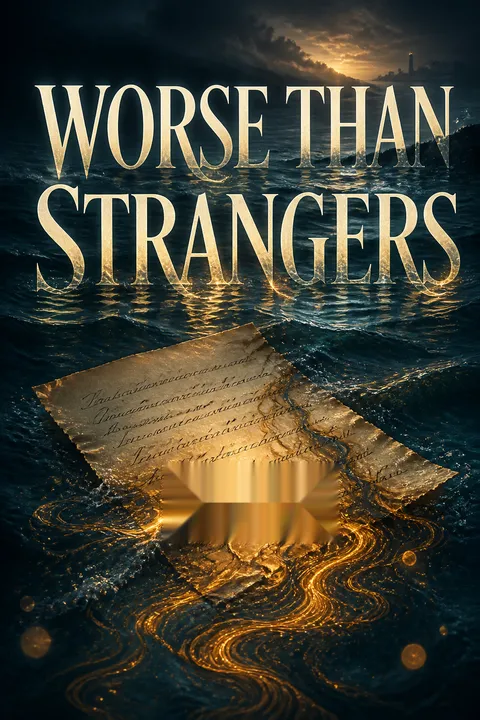
In 1998, Lottie receives a letter from California answering a message she sent to Rose's first love, Thomas. Its careful wording makes the answer plain: Thomas regrets disappointing her, but the chance to repair the past has passed. Lottie reads it again, then hides it in a compartment behind the bookcase her husband built.
Rose has a one-year-old daughter, Lily, and Lottie decides that telling her would only ease her own guilt. When Charlie comes into the room, Lottie conceals what she has done and lets him believe she is choosing a book. The secret gives her temporary shelter, but it leaves Rose and Thomas unable to act on information that might have changed their lives.
The opening makes concealment an action with a cost, not merely a private feeling. Lottie frames silence as protection, yet her choice also preserves her authority over Rose's life by deciding what Rose can bear to know. The hidden compartment gives the secret a physical life inside the family home. Its domestic setting matters: the harm is not caused by a distant villain, but by a loving person who confuses care with the right to manage another person's choices.
A Ring in the Detergent Aisle
Nearly twenty-four years later, Lily Gardner returns to Nantucket after losing her assistant job at a fashion magazine and abandoning her New York apartment. At Stop & Shop, she tries to avoid familiar faces, then climbs a shelf to reach her mother's preferred detergent.
Henry Wright, the boyfriend she has loved for years and not truly stopped hoping for, calls her name. He is holding hands with Mary, whose engagement ring catches the fluorescent light.
Lily slips, falls among the bottles, and has to shake both Henry's and Mary's hands while Rose tries to keep the encounter civil. On the drive afterward, Lily admits how deeply the engagement hurts. Rose invites her out with Josie, and the awkward evening briefly gives mother and daughter room to laugh together.
Lily's fall turns emotional exposure into slapstick, matching her habit of making humiliation entertaining before it can become unbearable. But the ring defeats that strategy: Henry's new commitment makes the unfinished nature of their breakup impossible to maintain. Rose's humor and invitation offer genuine care, while Lily's dependence on her mother also hints at a fear of standing alone. The scene begins the novel's central contrast between preserving an old attachment and building a life beyond it.
The Tenant from Rose's Past
The next morning, Rose and Lily welcome the summer renter, only for him to drop his bags when he recognizes Rose. He is Thomas Wentworth, the young man she once loved and briefly agreed to marry. Rose retreats into brisk property-manager instructions, while Lily watches her usually composed mother lose her words.
Later, Rose explains that her father opposed the match because Thomas was a Coast Guard cadet from the wrong sort of family. She says she ended the engagement rather than face years apart, then married James, Lily's unreliable father.
Lily realizes Rose has kept a life-changing part of her history private. Meanwhile, Lily meets Theo, a warm, teasing bartender who offers her a receptionist job at the yacht club, giving her a practical way to begin again.
Thomas's arrival makes the past spatially unavoidable: he is not a memory Rose can control, but a tenant across a shared breezeway. Her polished hospitality becomes a defense against emotional recognition. Lily's shock at the withheld engagement exposes how she has mistaken closeness for complete access to her mother's inner life. Theo's job offer provides a counterweight to romantic upheaval. While Rose faces a relationship interrupted decades earlier, Lily receives a small, concrete opening into work and community.
Lottie's List, Lily's Restart
While Rose is out, Lily finds a handwritten list in a desk drawer on Thomas's side of the cottage. Her great-aunt Lottie had written ten wishes, from watching sunrise to naming the cottage, crashing a wedding, and doing something brave. Rose wants to complete it as a tribute, so Lily agrees, even as she privately hopes the list can bring Rose and Thomas closer.
At the same time, Lily begins drawing again, posts flyers offering photography and painting, and accepts Theo's help getting hired at Great Harbor Yacht Club. The new job introduces her to tennis pro Emily and gives her a reason to leave the cottage each morning. Her creative work, dormant under years of pressure from Clive, begins to return.
The list converts grief from a condition to endure into a sequence of actions, but Lily immediately gives it another purpose: she treats it as a matchmaking tool. That impulse reveals how readily she assumes responsibility for other people's happiness. Her renewed art and new job offer a healthier form of agency. Rather than waiting for professional approval or a romantic rescue, she starts making things and showing up, though she has not yet learned to separate support from control.
Firelight and Old Attachments
At a beach bonfire, Lily runs into Henry, who questions her new job and acts as though their old intimacy still belongs to him. Theo steps between them, then takes Lily away to meet his coworkers. Later, Henry asks to speak alone.
Lily reminds him that he is engaged, but she follows him to the dunes, where they reminisce about Lottie and their shared past. Henry's familiar attention loosens Lily's resolve, and he offers to use his father's connections to find her work.
She refuses the offer and goes home wearing his old sweatshirt, ashamed that the private conversation crossed a boundary. Theo turns distant afterward. Lily decides not to contact Henry again, but the episode leaves her friendship with Theo bruised and her grief tangled with longing.
Lily's pull toward Henry is less about believing their relationship can resume than about wanting the sensation of being known. Their shared memories temporarily relieve grief, but the engagement makes that relief ethically costly. Theo's intervention initially looks protective, yet Lily's choice to follow Henry shows that she has not reclaimed her own boundaries. His withdrawal makes the cost visible: nostalgia is not private when it affects a new friendship. The scene asks whether familiarity is the same thing as a future.
A Wedding Interrupted
Lily and Rose sneak onto a lavish beach wedding to fulfill Lottie's wish to crash one. The plan goes smoothly until they discover William, the silver-haired man Rose has been dating, is a guest. He welcomes them, introduces himself to Lily, and claims Rose as his girlfriend.
Across the dance floor, Thomas catches Rose when she slips, then asks why she has begun seeing someone else. She admits their relationship with William is still casual, and the two old lovers dance together.
Thomas acknowledges he hoped to encounter her when he rented the cottage, but the fireworks and William's intervention separate them before he can finish. Outside, Thomas tells Lily and his sister Rachel that Rose has rejected him repeatedly and he cannot keep risking another refusal.
The wedding gives Rose and Thomas a romantic setting but cannot supply the honesty they have avoided. Their dance shows that feeling has survived; it does not resolve what either person wants now. Thomas's withdrawal is not a plot obstacle to be overcome through greater pressure. It is a boundary shaped by grief for his late wife and by Rose's earlier refusals. Lily and Rachel's matchmaking has treated vulnerability as a spectacle, and Thomas's protest forces Lily to recognize the difference between creating an opportunity and deciding its outcome.
The Letter's True Author
Rose's father and sister arrive for their annual visit, and James, Lily's estranged father, unexpectedly joins them. At lunch, Rose names Thomas as the renter. Her father suggests she should have married him, prompting Lily to confront him about the letter that ended the engagement.
He reveals that Lottie, not he, had asked him to discourage Rose. Rose is shaken: the aunt she trusted had quietly shaped the decision and then comforted her through its consequences.
The following morning, Rose and Lily watch the sunrise, but Rose abandons the bucket list because she no longer wants to organize her life around Lottie's wisdom. James tries to approach Lily, but she refuses to talk. When he grabs her wrist, Thomas intervenes, forcing the family history into the open.
The revelation unsettles the family's moral map. Lottie was neither a flawless guide nor a cold manipulator; she acted from fear that Rose would build her identity around a love and lose herself when it ended. James's disclosure also shows how easily responsibility can be displaced: he delivered the message, while Lottie authored its logic. Rose's anger at her aunt is therefore also anger at her own trust. Abandoning the list is an attempt to recover judgment, not a rejection of love or memory.
The Wrong Date, The Right Kiss
At the Chicken Box, Lily spots Thomas talking closely with Josie, Rose's best friend, and assumes they are dating. She says nothing to Rose. Theo then takes the karaoke stage and sings directly to Lily, replacing the song's name with hers before kissing her in front of their coworkers.
The next morning, Rose admits she accidentally encountered Thomas in the outdoor shower and invites him in for coffee, but James's presence sends Thomas away again. Lily has mistaken practical help for romance: Thomas has been asking Josie about property and Rose's planned practice, not courting her.
Rose, meanwhile, has started seeing William more seriously. Mother and daughter each conceal what they know, so misunderstandings continue to interfere with the honest conversations they need.
The kiss briefly gives Lily the romantic certainty she has been missing, but the scene's deeper action is the misreading of intimacy. Thomas and Josie share a private conversation, which Lily interprets through her fear of losing Rose's second chance. Rose, meanwhile, hides her own dating life and treats privacy as protection. The novel's recurring pattern is not simply that people keep secrets; it is that they use imagined motives to fill the silence, then act on those inventions as if they were facts.
Goodbye Without a Promise
At dinner on the beach, William criticizes Theo's plans to become a teacher and dismisses Rose's work, suggesting she should sell the cottage and stop practicing therapy. Lily sees how little he understands the woman he is courting.
At the observatory, Rose learns that Lily saw Thomas with Josie and feels the sting of a possible rival. Meanwhile, James visits Lily's room, admires her portraits, and admits he relapsed after reaching out to her, then disappeared because he was ashamed. He helps Lily challenge Clive's refusal to recommend her.
At a brewery gathering, Henry arrives drunk before his bachelor party and admits he is happier with Mary. Lily accepts that they were wrong for each other. Theo reveals he is leaving for a year abroad, and their unresolved feelings become a fresh loss.
This section replaces romantic fantasy with difficult, partial knowledge. Henry's confession releases Lily from the story that their breakup merely paused a destined reunion. James's admission offers no instant repair, but it makes his absence intelligible and gives Lily a chance to choose whether to listen. Her art becomes an independent source of self-recognition, while William's contempt for Rose's vocation exposes the cost of choosing comfort over compatibility. Theo's departure reminds Lily that honesty cannot guarantee permanence.
The Gala Comes Undone
Before Rose's mental-health fundraiser, Thomas tells Lily that Josie has helped him buy a home, not start a romance. He gives her carved signs for the cottage and Rose's future practice, along with two sealed letters from Lottie, and agrees to attend the gala.
Lily leaves a farewell letter for Henry, then Clive calls and agrees to provide a reference. On the foggy drive back, Lily scrapes Lottie's Jeep while avoiding a deer. At the gala, Mary arrives with Lily's letter and accuses her of pursuing Henry, then slaps her.
Thomas restrains Mary; William shoves Thomas and reveals that Mary is his niece. Theo mistakes the scene for a fight over Lily and punches Henry. Outside, Theo exposes William's alleged history of taking wealthy women's assets. Rose rejects William, but her speech and fundraiser have been derailed.
The gala gathers the novel's private mistakes into a public crisis. Lily's letter is meant as closure, but Mary reads it as a threat; Thomas's arrival is meant as support, but the fight makes his role look romantic and possessive. Theo acts on incomplete evidence, repeating the summer's habit of interpreting before asking. William's financial predation finally clarifies why he wanted Rose to sell her home. Rose's rejection is a moment of agency, though it cannot undo the harm done to her evening.
Letters, Roses, Second Chances
After the gala, Rose tells Lily she needs silence, then admits how much the interrupted fundraiser mattered to her work with vulnerable families. Lily apologizes to her and calls Jade, ending their estrangement.
In Lottie's letter, Rose learns her aunt had persuaded James to break up the engagement because she feared Rose would lose her freedom in love; Lottie later tried to undo the damage, but Thomas had already married. Lottie also leaves Rose the manuscript she never dared publish.
The next day, Lily and Rose complete much of the bucket list, including a failed pickleball tournament and an astonishing sighting of orcas. Back at the cottage, Lily brings Thomas to Rose, who kisses him. That night, the family takes the Chicken Box stage together.
Lottie's confession does not erase the harm she caused; it gives Rose a fuller account of the fear beneath it. Forgiveness here is not a return to unquestioned reverence. Rose can grieve the betrayal, read the manuscript, and still decide what her aunt's memory means. The list also changes function: no longer proof of what Lottie wanted, it becomes a set of experiences Rose and Lily choose for themselves. Their reconciliation depends on accepting imperfect love without surrendering judgment.
A Wedding of Their Own
A year later, Rose marries Thomas in the same island church where Lottie once married Charlie. Rose has opened her psychotherapy practice, Growing Season, and Lily designed its branding.
Lily has returned to New York, continued therapy for her panic attacks, and held a successful exhibition of portraits celebrating women in her life. She donates the proceeds to the mental-health cause disrupted at the gala. James and Jade are back in Lily's orbit, and Thomas's daughters have begun welcoming her.
Theo attends the wedding after gaining a place in a New York teaching program, giving him and Lily time in the same city without forcing a label onto their relationship. As Rose pulls Lily onto the dance floor, the two later race to the beach with their friends and family.
The ending offers repair without pretending that one summer can restore every lost year. Rose's practice transforms care from unpaid self-sacrifice into a structure she controls; Lily's exhibition gives her art a public life without requiring it to cure the world. Theo's return creates possibility rather than a romantic guarantee. The final beach run matters because the family moves together without needing to resolve every difference first. Their future is not a perfect plan, but a shared willingness to keep choosing one another.
Analysis
Worse Than Strangers treats love as a problem of knowledge as much as feeling. Characters repeatedly possess partial information and mistake their interpretations for truth: Lottie hides a letter to protect Rose, Lily reads Thomas and Josie's conversation as a romance, and Theo interprets the gala's chaos before he understands it. These errors are not random misunderstandings laid over an otherwise simple plot. They arise from protective habits. Each person wants to spare someone pain, avoid rejection, or secure a future, and each becomes more controlling when uncertainty grows.
The novel links that pattern to grief. Lottie's death leaves Rose and Lily with an inherited voice that once gave them confidence, but the revelation of her interference forces them to separate wisdom from authority. Rose does not have to condemn Lottie entirely in order to acknowledge the damage. She can value the aunt who raised her while refusing to let Lottie's fear decide her future. The bucket list completes this movement: first it is treated as an obligation to the dead, then as a means of arranging the living, and finally as something Rose and Lily freely choose to do together.
Lily's artistic recovery follows the same shift from permission to agency. Clive's refusal to recommend her threatens to make one employer the gatekeeper of her identity. Painting gives her a practice of attention and a modest path into public life, not a miraculous cure for panic or grief. Rose's private practice similarly turns care into work she can shape herself. Their professional choices matter because both women have spent years prioritizing other people's needs.
The ending resists the idea that a second chance restores the past intact. Rose and Thomas meet as older people carrying marriages, grief, and changed ambitions. Lily's future with Theo remains open, while her ties to James and Jade improve through imperfect attempts rather than grand gestures. The novel's hope is therefore practical: people can repair some damage by telling the truth, making room for another person's choice, and continuing to create a life after the plan they once trusted has failed.
Review Summary
Worse Than Strangers receives strong praise as an atmospheric Nantucket summer read with Gilmore Girls energy and loose Persuasion retelling elements. Readers consistently highlight the warm mother-daughter dynamic between Rose and Lily as the emotional core, often noting it outshines the romantic subplots. The coastal setting is frequently described as vivid and immersive. Some reviewers wished for deeper romance development and stronger chemistry between couples, while others appreciated the focus on self-discovery, healing, and female relationships over conventional romance.
Characters
Lily Gardner
The restless artistLily is Rose's twenty-five-year-old daughter, an aspiring artist whose creativity has been crowded out by demanding work and fear of failure. She uses humor to make embarrassment survivable, but her quick wit can also disguise how badly she wants reassurance. Losing her job, returning home, and seeing Henry engaged expose how much she has postponed her own ambitions while waiting for life to confirm her worth. She is loving and perceptive, especially toward Rose, yet she often turns concern into interference, trying to arrange other people's happiness before asking what they want. Her growing capacity to make art, set boundaries, and admit uncertainty forms the emotional center of the story.
Rose Gardner
The devoted motherRose is Lily's mother, an island therapist whose calm competence supports clients and family alike. She is thoughtful, self-sacrificing, and skilled at holding space for other people, but her instinct to protect can become concealment. As a young woman, she loved Thomas; as an adult, she has built a life around Lily, Lottie, and service to the community. Her reluctance to discuss her past is not indifference but fear of reopening choices she cannot change. Rose's story asks whether care can coexist with desire, independence, and the right to make imperfect decisions for oneself.
Thomas Wentworth
Rose's interrupted first loveThomas is Rose's former fiancé, a retired Coast Guard officer and successful engineer who returns to Nantucket as a summer renter. He is reserved, courteous, and more emotionally vulnerable than his disciplined manner first suggests. His marriage and family life matter deeply to him, as does the memory of his late wife; he does not treat a return to Rose as a simple undoing of the past. Thomas wants connection but is wary of pressuring someone who has already rejected him. His patience and restraint make him a counterpoint to Lily's more impulsive efforts to arrange a reunion.
Lottie
The wise, flawed auntLottie is Rose's aunt and Lily's great-aunt, a teacher, gardener, and artist whose home gives the family a lasting sense of belonging. Her affection and practical wisdom shape both women, and her example helps Lily take her artistic ambitions seriously. Lottie is remembered as lively, curious, and generous with her attention, but also as someone whose convictions can harden into decisions made on another person's behalf. Her letters, garden, and unfinished manuscript embody the difference between loving advice and controlling influence.
Theo Cohen
The generous tennis coachTheo is a tennis instructor and bartender who helps Lily find work at the yacht club. His humor, easy charm, and enthusiasm make him a natural teacher, though he sometimes hides discomfort behind performance. He has experienced early loss and is still working out what kind of life he wants, balancing teaching, travel, and an earlier dream of professional tennis. His connection with Lily grows through practical kindness, shared creative curiosity, and their uncertain timing. He is appealing not because he solves her problems, but because he takes her art and questions seriously.
Henry Wright
Lily's unfinished first loveHenry is Lily's former boyfriend and first serious love. They met as teenagers on Nantucket and shared years of friendship and intimacy, including a long, ambiguous connection after their breakup. Henry is accustomed to confidence and support from a large, affluent family, which gives him a different understanding of risk and security from Lily's. He can be affectionate and familiar, but his closeness does not necessarily mean he is offering the future Lily imagines. His presence forces her to distinguish nostalgia from mutual commitment.
James Gardner
The absent fatherJames is Lily's father and Rose's former partner. His infidelity and struggles with addiction have made him an unreliable presence in their lives, though he retains a disarming charm that often softens other people's boundaries. He wants to repair his relationship with Lily, but shame and relapse have repeatedly interrupted his attempts. James is neither a dependable parent nor a simple villain; he is a flawed adult whose belated efforts test whether Lily can accept limited change without pretending the past did not happen.
William
Rose's polished suitorWilliam is a wealthy, silver-haired summer visitor who meets Rose at the Gazebo and courts her with formal manners and elaborate dates. He is attentive at first, asks about Lily, and presents himself as a man ready for romance. His taste for status and his assumptions about money sit uneasily beside Rose's community-centered life. He serves as a reminder that charm and apparent generosity do not necessarily indicate genuine regard.
Jade
Lily's distant best friendJade is Lily's best friend and former roommate in New York. Their friendship strains after Lily leaves the city and disrupts their lease, while both women wait for the other to reach out. Jade is independent, funny, and direct, and her life is moving forward with her boyfriend and work. Her place in Lily's paintings reflects how deeply the friendship matters even during silence.
Josie
Rose's loyal confidanteJosie is Rose's close friend, a jewelry designer and real-estate broker with strong ties to Nantucket. She is warm, lively, and quick to help, from finding housing for Rose's relatives to assisting Thomas with his plans. Her loyalty sometimes means she participates in other people's efforts without knowing the full history behind them. Josie gives Rose a friendship outside the mother-daughter bond and helps make the island feel like a community rather than an isolated setting.
Elizabeth
Rose's guarded sisterElizabeth is Rose's older sister, a polished and anxious woman who shares their father's vanity and tendency to worry. As a child, she remained closer to their father after their mother's death, while Rose found refuge with Lottie. Their distance is partly habit and partly an old misunderstanding about who had been chosen and who had been left behind. Elizabeth's guardedness masks a need for family connection that she rarely knows how to ask for.
Rachel Wentworth
Thomas's matchmaking sisterRachel is Thomas's younger sister, a warm, capable woman who remains close to him after their shared family life. She helps arrange his summer stay and privately hopes he might find companionship again. Rachel is sociable and affectionate, but her matchmaking instincts can place her brother in situations he has not chosen for himself.
Mary
Henry's fiancéeMary is Henry's fiancée, first seen by Lily as an elegant stranger wearing a diamond ring. She appears in photographs and wedding plans before Lily has a chance to know her as a person. Mary is protective of her relationship and unwilling to accept Lily's farewell letter at face value. Her presence makes Henry's new life concrete rather than hypothetical.
Emily
The confident tennis proEmily is a tennis instructor at Great Harbor Yacht Club and one of Lily's first new acquaintances there. She is athletic, self-assured, and capable of keeping her composure with entitled young members. Her easy rapport with Theo triggers Lily's insecurity, while her friendship offers a glimpse of a community Lily can join without relying on old relationships.
Charlie
Lottie's beloved husbandCharlie is Lottie's late husband, remembered through the cottage he built, the stars he showed Lily, and the steadiness of their marriage. His presence forms part of the family home's emotional foundation.
Clive Bozeman
Lily's former bossClive is the demanding art director who employed Lily in New York. He relied on her work while belittling her and letting personal requests crowd into her job. His unwillingness to recommend her threatens her next career step, forcing Lily to confront a power imbalance she had once endured quietly.
Marie Chen
The gallery ownerMarie owns a respected Nantucket gallery where Lily hopes to find work. She evaluates Lily's application and professional reference, representing the gatekeeping pressures of the art world.
Plot Devices
Lottie's bucket list
Grief made actionableLottie's ten-item list gives Rose and Lily a series of shared activities after her death, including visiting the lighthouse, watching sunrise, crashing a wedding, and naming the cottage. Lily also turns the list into a way to bring Rose and Thomas together, revealing how easily care can become interference. As Rose's anger at Lottie grows, the list loses its authority as a set of instructions. The family eventually chooses to complete it for their own reasons, transforming an inheritance into a living practice of connection.
The hidden letters
A secret revises historyLottie hides Thomas's refusal in a bookcase in 1998, then leaves a fuller confession and manuscript for Rose to find years later. The letters show that Lottie's role in Rose's broken engagement was more active than Rose knew. They also reveal the limits of belated repair: Lottie tried to contact Thomas after Rose's relationship with James ended, but Thomas had already married. The device makes secrecy tangible and asks whether good intentions can excuse withholding another person's choices.
Nantucket in summer
A small world of collisionsThe island's seasonal rhythms and compact geography repeatedly bring characters into contact: the grocery store, harbor bars, beach paths, family homes, and fundraisers all become shared stages. Summer visitors arrive with money and assumptions, while year-round residents carry a longer memory of the place. Nantucket's beauty can make life feel preserved, but its roads, weather, and seasonal crowds keep interrupting that illusion. The setting therefore causes plot as much as it reflects mood, making avoidance difficult and old attachments physically present.
Lily's portraits
Art as chosen attentionLily's return to drawing and painting gives her a way to notice people without trying to fix them. Her portraits of Lottie, Rose, Jade, and other women preserve ordinary gestures as worthy of attention. Art also becomes a practical step toward a life she wants, rather than a dream dependent on an employer's approval. The paintings connect Lily's creative ambition to grief, friendship, and self-definition, while their eventual exhibition makes private devotion visible to a wider audience.
The psychic's prediction
Fate as tempting shortcutAt a fundraiser, a red-shawled psychic tells Lily that she will have two great loves whose names begin with H. Lily attaches the prediction to Henry and later becomes more vulnerable to interpreting coincidence as destiny. The claim encourages her to imagine that painful uncertainty can be solved by an outside authority. The story leaves the prediction's truth ambiguous until Theo's full name becomes known, making the device less a reliable prophecy than a mirror for Lily's wish to be told whom to choose.
Download PDF
Download EPUB
.epub digital book format is ideal for reading ebooks on phones, tablets, and e-readers.








