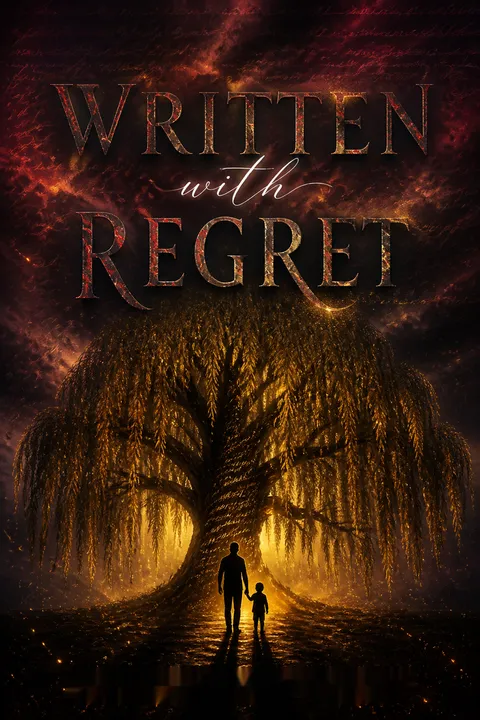


Plot Summary
Prologue
At eight, a red-haired girl watches her father and mother fall during a mass shooting at a mall. With her family lost and the gunman still hunting survivors, she lies beside her mother until a teenage boy crawls close and offers her a way out.
He watches the gunman’s patrol and shares a small, steadying touch before leading her toward a restaurant exit. The girl trusts him because there is no one else. Their escape will bind them through fear, guilt, and a past neither can leave behind.
The opening makes terror physical through a child’s view: the dead mother’s hand, the gunman’s footsteps, the boy’s fingertip against hers. That tiny contact does not undo the violence; it interrupts her isolation long enough for her to move. The scene establishes the novel’s central tension between being rescued and being responsible for what follows. Its incomplete escape also plants a memory that both survivors will carry differently, so later recollection becomes an active force rather than mere backstory.
A Daughter on the Doorstep
Caven Hunt and Ian Villa celebrate selling Kaleidoscope, their facial-recognition company, after its success finding criminals also sparks a national privacy fight and a damaging false match. The sale has made them wealthy, and Caven expects to spend the night with Veronica, his former casual pursuit.
Instead, a newborn is left outside his apartment. A note names the baby Keira, identifies her as Caven’s daughter, and is signed by Hadley, the red-haired woman who stole his electronics and wallet after their one-night encounter.
Caven remembers using protection except for one moment and cannot dismiss the possibility that the child is his. He orders the police called, then turns to his own security footage, determined to find the woman who has appeared in his life again.
The baby arrives at the exact moment Caven believes money has made him free, exposing how little control wealth can buy over intimate life. Kaleidoscope’s moral controversy also echoes his private problem: identification can be powerful, but a match is not the same as understanding. Caven reads Hadley first as a thief and the infant as a threat to his independence. His immediate retreat into surveillance shows how he handles fear, by trying to convert uncertainty into evidence. The child’s vulnerability will soon force him to act before he feels prepared.
The Test He Fears
Police identify Marina Chapen, a local sex worker paid by a red-haired woman to deliver the baby. Marina admits she panicked at the noise inside Caven’s apartment and left the infant outside instead of handing her over. At the hospital, doctors estimate the girl was born that day, and Caven realizes how easily she could have been harmed.
He pushes the police to find Hadley, while his friend Ian tries to steady him. Caven’s terror has roots in his own childhood: after his mother became ill, his father’s drinking and drug use turned into abuse. He fears passing that violence on. A rapid DNA test is ordered, leaving him to face the possibility that the child will be discharged into his care.
The investigation narrows the mystery but cannot answer the question Caven most needs answered: whether he can be trusted with a child. His fear is not simple reluctance; he treats inherited violence as a substance that might pass through blood. Ian challenges that assumption, but reassurance cannot substitute for proof or practice. Meanwhile, Marina’s failed delivery makes the baby’s danger concrete. The plot places responsibility ahead of consent: Caven has no time to become confident before he must decide what safety means for someone else.
A Name Chosen
The DNA result confirms the infant is Caven’s. He goes to the hospital, takes her into his arms, and chooses the name Rosalee for his dead mother rather than accepting Hadley’s proposed name, Keira. At first he feels more dread than affection, but he decides that the child deserves a father who stays.
Ian helps with the paperwork and the exhausting first months; after Caven’s fear of leaving Rosalee with anyone drives away an initial nanny, experienced caregiver Alejandra becomes a trusted presence.
Over four years, Caven learns the ordinary work of parenting, from bottles and colic to boundaries and birthday rituals. He gives Rosalee a replica of his mother’s heart necklace, making family memory something he can pass forward rather than only mourn.
Caven’s naming decision is an early act of care, but it also reveals how he understands family: through the people whose goodness survived his childhood. He cannot recover his mother, so he builds a daily practice around what he remembers of her. Parenting does not erase his fear of resembling his father; it gives him repeated evidence that behavior is chosen, not merely inherited. Ian and Alejandra matter because they make care communal, correcting Caven’s instinct to equate protection with doing everything alone.
The Birthday Intrusion
On Rosalee’s fourth birthday, Hadley enters Caven’s celebration and sees the child she left behind. Rosalee accepts her as the nice woman from her earlier visit, but Caven arrives, removes his daughter from Hadley’s reach, and calls the police. He believes Hadley has returned to exploit his money or take Rosalee. Hadley insists she wants only to know her daughter, not remove her from Caven’s care.
After her release, she tells her lawyer and friend Beth that years of PTSD and depression once made motherhood feel impossible, while therapy has helped her regain a life. She has come back after a recent family loss and wants to repair what she can. Caven, however, sees her return as a danger he cannot yet distinguish from her intentions.
The birthday party turns an abstract custody conflict into a child’s immediate experience: Rosalee sees fear on her father’s face and watches the adults separate. Hadley’s recovery complicates the moral picture without canceling the harm of her absence. Caven’s suspicion is grounded in real risk, but his protective certainty also keeps him from hearing what she is asking. Both adults frame their choices as care for Rosalee, yet each has learned to protect through withdrawal or control. The conflict begins not because either lacks love, but because their definitions of safety differ.
The Mall Between Them
Caven agrees to meet Hadley at a diner and records the conversation, expecting another scheme. Hadley explains that she sought access to Kaleidoscope because she hoped it could find images of her dead parents.
She deliberately found Caven, stole his devices, and used their night together to escape her misery, not to become pregnant. She discovered the pregnancy months later and, after giving birth alone in a PTSD crisis, arranged for Marina to take the baby to him.
Then she reveals that she was at the mall shooting and that her parents, Robert and Keira Banks, were killed there by Caven’s father, Malcom. Her account of hiding alone clashes with Caven’s memory of escaping beside a girl and being shot with her. Caven’s anger gives way to guilt and confusion.
The revelation collapses the distance Caven has maintained between his family history and Hadley’s. Their daughter is not simply the result of a regrettable encounter; she links two families shaped by the same violence. Yet the competing accounts of the shooting prevent shared trauma from becoming instant intimacy. Caven’s guilt is both empathic and self-punishing: he starts to feel responsible for the harm his father caused. Hadley, meanwhile, offers explanation without demanding absolution. The diner becomes a space where truth arrives in pieces, and where neither person can yet know which memories are complete.
Six Months of Art
Caven checks Hadley’s story against the victims’ list and confirms that Robert and Keira Banks died in the shooting. He asks his lawyer to drop the abandonment case, then takes time before deciding how to proceed.
Hadley has moved from Puerto Rico to a house near him and earns money through photography and paintings made with her sister, Willow, under the name R.K. Banks. She explains that Willow died recently and that returning has also meant restarting her work alone.
Caven initially questions her finances, but he learns she can support herself and has prepared her home for a child. He rejects Hadley’s proposal to wait a year before meeting Rosalee and agrees instead to six months of supervised visits, twice a week, with Hadley teaching art in his house.
The agreement is neither forgiveness nor a clean legal settlement. It is Caven’s attempt to make uncertainty manageable by controlling the setting, schedule, and duration of contact. Hadley accepts those limits because access to Rosalee matters more than winning an argument about rights. Her art gives the visits a credible structure, but it also carries family memory into the room through shared making. The arrangement lets Caven observe Hadley while Rosalee gets to know her, revealing how protection can become a negotiated practice rather than a locked door.
Blood on the Craft Table
During the supervised art sessions, Rosalee grows attached to Hadley, while Caven gradually stops hovering over every brush and paper flower. Then Rosalee stands on a chair, slips, and cuts her lip on the table. Hadley catches her before she hits the floor, but the blood sends her into a trauma response; she freezes and cannot move until Caven takes Rosalee to the kitchen.
Caven checks his daughter, then finds Hadley shaking in the bathroom. He does not treat her reaction as proof she is unfit. Instead, he holds her and describes how he once froze when infant Rosalee bled, then passed her to Ian. Hadley recognizes that both of them can love their daughter and still be overwhelmed by old fear.
The injury tests the practical question beneath Caven’s agreement: can Hadley remain present when parenting becomes frightening rather than sentimental? Her freeze initially appears to confirm his worst fear, but Caven recognizes the difference between incapacity and a trauma response. By sharing his own failure to act, he replaces evaluation with mutual recognition. The scene also shifts his role from gatekeeper to someone who can help Hadley return to the present. Their intimacy deepens through reciprocal vulnerability, though neither has yet named what that closeness might cost.
A Family in Public
Caven invites Hadley to Rosalee’s preschool awards ceremony after she admits she wants to see her daughter receive an art prize. When Marilyn, a nosy parent, publicly asks whether Hadley is Rosalee’s mother, Caven warns her to stop spreading rumors and takes Hadley away from the confrontation.
Rosalee receives an award for her unicorn drawing, and Caven lets Hadley photograph the moment. The three go to a nearby pizza place, where Rosalee reveals it is Hadley’s birthday.
Caven orders dessert and tells Hadley she is part of the family Rosalee remembers. Their hands meet across the table, and Hadley shares the idea that a life is built from individual moments rather than endured all at once. The evening gives them a fragile sense of belonging.
The public setting forces Caven to choose whether Hadley is merely a private risk or a person he will defend in front of others. His response to Marilyn is not a legal commitment, but it signals that he no longer wants Rosalee’s mother reduced to playground gossip. The birthday meal makes belonging reciprocal: Hadley witnesses Rosalee’s achievement, while Caven acknowledges Hadley’s own life and loss. Her focus on small moments is both a coping strategy and a challenge to his habit of postponing happiness until every danger has passed.
The Wrong Recipient
After Caven texts to check that Hadley got home safely and tells her about Rosalee’s plan for a birthday celebration, Hadley sends him a string of messages meant for Beth. They reveal that she is deeply attracted to him and wants a future beyond their carefully managed visits.
She tries to dismiss the confession as a mistake, but Caven comes to her house that night. He acknowledges that he should not have kissed her during the earlier bathroom embrace, then admits he should have kissed her anyway.
They sleep together and discuss the risk afterward. Caven promises he will never use Rosalee to punish Hadley, while both agree to keep their parenting routine steady and approach their private relationship cautiously. Their desire offers comfort, but it does not resolve trust.
The mistaken messages strip away the careful language that has let Hadley ask for access without naming her deeper attachment. Caven’s response is a choice, not simply a surrender to attraction: he comes to her after learning what she wants and states that their daughter will not become leverage. Still, separating romance from parenting is easier to promise than to practice. Their shared trauma offers an unusually strong sense of being understood, but it can also make intensity feel like certainty. The scene opens a relationship without granting either of them a guarantee.
A Name in the Wreckage
The next day, Caven and Rosalee surprise Hadley with a birthday party, joined by Caven’s brother Trent and Trent’s wife, Jennifer. Hadley sees Trent’s resemblance to Malcom and briefly loses her sense of the present, but Caven steadies her and Rosalee’s excitement brings her back.
Later, Trent privately tells Hadley he investigated her past. He knows she and her sister were twins, notes that twins share DNA but not fingerprints, and questions whether the sister said to have died was truly the person buried.
Hadley rejects his accusation, but he suspects she may actually be Willow. The final memory returns to the mall: when the teenage boy asked the rescued girl her name, she gave him Willow. The book ends before the identity question is answered.
The family party seems to confirm Hadley’s return to ordinary life, but Trent’s inquiry turns resemblance and memory into evidence. His suspicion exposes a weakness in the apparent certainty of DNA testing: genetic sameness cannot establish which twin is present. The final recollection does not settle the case; it destabilizes the names on which every relationship has depended. Caven’s rescue, Hadley’s account, and the sister’s reported death now point in conflicting directions. The cliffhanger reframes the romance as a question of recognition, asking whether love can be trusted when identity itself may have been misread.
Analysis
Written with Regret treats trauma as a force that distorts time, evidence, and responsibility. Caven and Hadley share the same catastrophe, but their memories do not align neatly: one survivor recalls escape beside a boy, while the other describes hiding alone. The discrepancy matters because the novel refuses to equate emotional sincerity with factual certainty. Both characters can be wounded and loving while still misunderstanding what happened.
Parenthood gives that uncertainty immediate stakes. Caven fears that his father’s violence is hereditary, then learns through years of care that a parent is made through repeated choices: showing up, asking for help, and protecting without turning fear into a prison. Hadley’s path is different. She first believes absence is the least harmful choice, then returns only after she has begun rebuilding a life capable of holding another person. Neither history nor biological connection automatically grants trust. Trust grows through bounded, observable acts, including art lessons, school attendance, and Caven’s willingness to let Hadley share a public milestone.
The novel’s repeated attention to cameras and names sharpens its emotional argument. A photograph preserves a second but cannot explain everything outside its frame. Kaleidoscope can locate an image but cannot tell its makers what that image means. A DNA test can confirm parentage but may not distinguish two people with the same genetic code. By ending with Willow’s name and Trent’s suspicion, the book makes recognition its final unresolved problem. The romance offers these characters a chance to be understood, but understanding cannot rest on attraction or shared pain alone. It must survive scrutiny, memory, and the possibility that the person before them is not who they believe.
Review Summary
Characters
Caven Hunt
The guarded founderA successful technology entrepreneur, Caven is a devoted father whose confidence at work masks fear shaped by an abusive childhood. He believes the violence he survived may live inside him, so fatherhood initially feels less like a gift than a moral risk. His friendship with Ian and his memories of his mother give him models of care that differ from his father’s cruelty. Caven protects Rosalee fiercely, sometimes confusing control with safety, but he can revise his judgments when evidence and empathy challenge them. His dry humor and practical attentiveness reveal a tenderness he does not easily trust.
Hadley Banks
The returning artistA photographer and painter with a history of severe trauma, Hadley uses images and creative work to hold memory at a survivable distance. She is witty, self-aware, and willing to admit that her past choices caused harm, though shame makes her expect rejection before it arrives. Her desire to know her daughter is inseparable from her effort to rebuild a life after depression and loss. Hadley respects Caven’s role as Rosalee’s father even while asking him to make room for her. Her mixture of courage and vulnerability makes her return an act of hope, not certainty.
Rosalee Hunt
Caven’s bright centerCaven’s four-year-old daughter is imaginative, affectionate, stubborn, and fascinated by animals she often describes inaccurately. She loves art, sweets, elaborate birthday traditions, and being close to her father. Her direct questions reveal how closely she watches the adults around her, even when they believe they are hiding their feelings. Rosalee’s warmth draws Hadley into her world without understanding the history between them. She is not a symbol of simple healing; she is a child with her own wishes, humor, and growing independence.
Ian Villa
Caven’s steady partnerCaven’s longtime friend and cofounder, Ian is a calm counterweight to Caven’s impulsiveness. He helps with the newborn, supports Caven through the first years of parenting, and remains fiercely protective of Rosalee. His distrust of Hadley comes from loyalty and fear of what Caven could lose, not from indifference to her recovery.
Trent Hunt
The watchful older brotherCaven’s older brother is a police chief who helped him escape their father’s household. Blunt and protective, Trent distrusts people whose choices might reopen Caven’s trauma. His instincts make him a formidable investigator, though his certainty can become accusation before he has the whole story.
Beth Watts
Hadley’s lawyer and friendHadley’s childhood friend and attorney, Beth is an effective legal strategist with a sharp tongue and a protective streak. She urges Hadley to avoid moves that could weaken her position, while also supporting her recovery and return to New Jersey. Her humor lets her challenge Hadley without pretending the stakes are small.
Alejandra
Rosalee’s trusted caregiverAn experienced caregiver who helps Caven survive the bewildering first months of fatherhood, Alejandra gives Rosalee steadiness and routine. She is kind but firm, willing to correct Caven when his vigilance becomes counterproductive. Her presence makes the family’s care network larger than one frightened parent.
Jennifer Hunt
Trent’s warm-hearted wifeTrent’s wife is welcoming toward Hadley and affectionate with Rosalee. Her easy warmth contrasts with Trent’s suspicion, though she understands her husband’s protectiveness and remains close to him.
Malcom Lowe
Caven’s abusive fatherCaven’s father begins as a grieving parent but becomes abusive as addiction and anger take hold. His violence leaves Caven with a lasting fear that cruelty can be inherited, and his actions form the hidden history connecting the two families.
Rosalee Lowe
Caven’s remembered motherCaven’s mother is remembered as a source of gentleness and safety. Her illness and death shaped his childhood, but his memories of her also give him an image of the parent he hopes to become. Her heart necklace remains a powerful family keepsake.
Keira Banks
Hadley’s beloved motherHadley’s mother is remembered for her beauty, her love of photography, and the warmth she brought to family life. Hadley returns to memories of her when trying to make sense of grief and decide how to live.
Robert Banks
Hadley’s protective fatherHadley’s father encouraged family closeness and left her with vivid memories of humor and affection. His presence in her childhood photographs gives her a way to revisit a time before trauma reshaped her life.
Willow Banks
Hadley’s artistic sisterHadley’s sister shares her interest in art and photography, and the two work together under a joint artistic identity. Their close creative bond gives Hadley both companionship and a way to honor their family.
Doug Snell
Caven’s longtime lawyerCaven’s attorney handles the paternity process and advises him about the legal risks surrounding Hadley’s return. He is experienced and loyal, but family law is not his specialty.
Marina Chapen
The paid intermediaryA local sex worker paid to deliver the newborn, Marina panics when she finds Caven’s apartment in turmoil and leaves the child outside. Her decision creates the immediate danger that brings police and Caven into the case.
Marilyn
The school gossipA parent at Rosalee’s preschool, Marilyn treats private family history as playground entertainment. Her public question about Hadley forces Caven to defend his family’s boundaries in front of the school community.
Plot Devices
Kaleidoscope
Powerful facial searchCaven and Ian’s facial-recognition system can identify people from sparse image data across connected online records. It helps authorities find victims and criminals, but a false match and later public scrutiny force the founders to sell. Hadley’s hope that the system might recover images of her parents brings her to Caven. The technology therefore links a public debate about surveillance to an intensely private search for memory and family.
The paternity test
Uncertainty made officialA rushed DNA test turns Caven’s suspicion about the abandoned newborn into a concrete parental responsibility. The result does not tell him how to be a father or explain Hadley’s choices, but it determines who can take Rosalee home from the hospital. Later, the limits of genetic evidence become important when Trent investigates Hadley’s identity and considers the possibility of twins.
Supervised art lessons
A cautious path to contactCaven uses a six-month agreement to control how Hadley enters Rosalee’s life. Hadley teaches art at Caven’s home twice a week while he remains present, giving him a chance to assess her and allowing Rosalee to build familiarity without an abrupt change in custody. The lessons also create a natural setting for the adults to observe one another, share memories, and gradually revise their first judgments.
Photography and memory
A frame for survivalPhotography gives Hadley a way to approach grief one image at a time rather than face the whole weight of her life at once. Her mother’s photographs and the final family picture before the shooting preserve moments untouched by later violence. Hadley’s camera also lets her participate in Rosalee’s milestones, turning the act of looking into a form of care and connection.
The twin identity clue
Names under suspicionTrent points out that identical twins can share DNA while retaining different fingerprints. He uses that fact, the reported death of Hadley’s sister, and the woman’s uncertain history to question whether she is truly Hadley. The final memory that the girl Caven rescued gave the name Willow intensifies the suspicion, but the story ends before anyone verifies it.
About the Author
Other books by Aly Martinez


Download PDF
Download EPUB
.epub digital book format is ideal for reading ebooks on phones, tablets, and e-readers.








