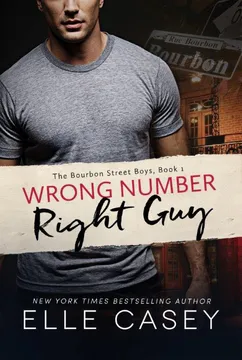


Plot Summary
Autocorrect Opens the Door
Twenty-nine-year-old New Orleans photographer May Wexler1 has built her independence partly as a defense against betrayal. Her father’s14 infidelity damaged her family, and her sister Jenny’s3 divorce has reinforced May’s1 suspicion of men who shade the truth. May1 would rather spend her time working, drinking wine, and caring for her little dog, Felix8 than risk another relationship.
When Jenny3 buys a new phone, May1 mistakes a message from an unknown number for her sister’s3 latest autocorrect disaster. The sender’s2 strange, threatening texts seem to confirm that Jenny3 is spiraling and needs help. May1 grabs Felix,8 her purse, and her Taser, then heads for Frankie’s Pub, believing she is rescuing Jenny3 and her children.13
May’s first decision grows from care, but her confidence in her interpretation is built on a family history that makes danger feel familiar. Jenny’s life gives May a warning she treats as a rule: intimacy leads to deception and abandonment. The comic misunderstandings do not make May foolish so much as expose how quickly she fills uncertainty with a story she already knows. By walking into Frankie’s, she acts on loyalty before checking the facts, turning a private fear of betrayal into the literal risk that will change her life.
Frankie's Back Room
May1 finds no sister3 or children13 inside Frankie’s, only wary patrons and a dark back room. Before she can investigate, a blast sounds and a huge bearded man2 shoves her toward an exit. May1 resists, still convinced Jenny3 is inside, until a gunman10 fires at them and splinters the furniture beside her.
The bearded man2 hauls her behind tables and through the alley while Felix8 barks and bites his rescuer’s2 hand. May1 is cut by flying wood, but the man2 keeps her moving instead of abandoning her. When she tries to head toward her car, he warns that the shooter10 may be waiting there and leads her away through the alleys. The night’s supposed rescue has become a real escape.
The emergency strips away May’s preferred role as the competent rescuer. She arrives believing she knows who needs help, then becomes dependent on a stranger whose appearance seems to confirm every suspicion she has about dangerous men. Yet his actions contradict the stereotype: he risks himself to get her out and keeps guiding her toward safety. Felix’s bite adds a comic note without softening the danger. May’s survival begins not with trust, but with the difficult recognition that practical evidence can matter more than first impressions.
The Wrong Number
After hiding near a dumpster, May1 accepts a ride in the bearded man’s2 truck only after he shows her a security-company card and she sends its details to herself and Jenny.3 Her supposed sister3 finally texts again, but the messages contradict each other. Driving away with her car, May1 realizes she has spent the evening texting the stranger,2 not Jenny.3
She then spots a dark car following her and tests the driver by turning into a cul-de-sac. The man10 follows and raises a gun. May1 floors her small Chevy, escapes the shots, and calls the bearded stranger2 for directions. He tracks her phone and guides her to a secured warehouse at the port, where she chooses shelter over home or the police.
The mistaken number turns coincidence into a plot engine, but the more consequential shift is May’s response to uncertainty. At first she trusts her explanation more than the evidence; after discovering the texting error, she adapts, tests the tail, and calls the only person who has already helped her. Her decision to enter the warehouse remains risky, yet it is no longer blind. The book lets courage look untidy: May is frightened, improvisational, and sometimes mistaken, but she keeps making the next choice that might preserve her life.
The Beard Comes Off
Inside the warehouse, May1 meets the rest of the Bourbon Street Boys,2 a private security team that works with police. She discovers that her rescuer’s2 beard was a disguise and that beneath it is Ozzie,2 the firm’s disciplined, striking owner. His teammates include calm, practical Thibault,5 irreverent Lucky,7 towering trainer Dev,6 and sharp-edged Toni,4 who is Thibault’s sister.4
Their enormous dog, Sahara,9 calmly lets Felix8 use her as a bed. The crew2 feeds May1 and votes to keep her under protection, despite Ozzie’s2 objection that her arrival has ruined his undercover work among a violent gang. When the team sees that May1 has taken covert photographs before, they consider hiring her for surveillance.
The reveal makes appearance a working tool rather than a reliable measure of character. Ozzie’s beard let him disappear into a dangerous environment, while the clean-cut man underneath seems almost too polished to be the same rescuer. The team’s warmth is expressed through concrete acts: sharing food, finding May a place to sleep, and debating her safety together. Their vote also contrasts with Ozzie’s command presence. He can lead the group, but its shared rules limit his authority, making belonging something negotiated rather than simply granted.
Lobster and a Job
After telling Jenny3 what happened, May1 tries to return to her freelance life, but Thibault5 offers her paid surveillance work and installs a monitored home-security system at no cost. Ozzie2 later brings lobster to May’s1 townhouse and explains that the firm can provide training, equipment, benefits, and a steady paycheck.
May1 accepts, partly because her photography business is faltering and partly because the work promises a life less predictable than wedding portraits. Over dinner, Ozzie2 kisses her, then leaves before she can decide what the moment means. On her first workday, the team tests her instincts by having Dev6 approach her with a stick. May1 fires her Taser, dropping him, and earns a place on the team despite the chaotic welcome.
The job offer addresses more than May’s dwindling income. It gives her a credible way to leave work she has drifted into and enter a world where her eye for detail has immediate value. At the same time, Ozzie’s attention blurs the boundary between professional opportunity and romantic hope. The Taser test is an awkward initiation, but it reframes May’s vulnerability: she may not have formal training, yet she is willing to act when threatened. Her entry into the team begins through competence, not through Ozzie’s attraction alone.
A Camera in the Fence
The team assigns May1 and Toni4 to observe a house connected to the Sixth Ward gang, the operation Ozzie2 had infiltrated as Harley. In a surveillance van, May1 photographs a man leaving the property while Toni4 studies the surrounding streets for useful positions. They enter a vacant neighboring lot disguised as utility workers and install a concealed camera through the fence, giving the team a view of the target’s backyard.
Toni’s4 first attempt to fly a small drone goes badly, and it clips May’s1 leg. May1 takes the controls, practices in a rubbish-strewn lot, and successfully secures the drone on a streetlight for a bird’s-eye view. Their successful setup gives the team new footage and begins to earn May1 Toni’s4 respect.
The surveillance work translates May’s artistic attention into a form of practical intelligence. Framing, focus, and noticing what others overlook become tools for protecting people and gathering evidence. The scene also starts to unsettle the hierarchy between the two women. Toni has experience and toughness, but May contributes a skill Toni lacks; their partnership works when neither can do the whole task alone. May’s success does not erase her fear. Instead, it shows that fear can coexist with useful action, and that competence can be learned under pressure.
The Alarm Changes Everything
As May1 and Ozzie2 grow closer, he checks her townhouse for signs that the shooter10 may have found it and arranges the alarm system. Later, its perimeter alert signals that someone has entered the property.
Ozzie2 sends May1 into the bathroom with Felix8 while he checks the house, then concludes that the intruder has retreated. Because the warning system may now be compromised, he insists she relocate to his secured warehouse. May1 agrees, asking him to cook and teach her the singlestick, then admitting she fears disappointing him in bed.
Ozzie2 reassures her through a kiss rather than a promise about the future. In the privacy of his home, their flirtation becomes sex, and May1 discovers that her assumptions about her own sexual inadequacy are wrong.
The alarm’s warning converts a romantic possibility into an immediate question of safety, forcing May and Ozzie into close proximity without making intimacy a simple reward. May’s fear of being physically unsafe sits beside a more private fear of being judged and found lacking. Ozzie responds with patience, but the power imbalance remains: he is both her employer and the person controlling the safest available space. The scene matters because May begins to risk honesty about what she wants and fears, not because the danger disappears or the relationship is suddenly secure.
Toni's Headphones
The morning after moving into Ozzie’s2 warehouse, May1 joins the team’s work while trying to keep their private relationship discreet. Toni’s4 guarded manner sharpens during a data-review session, where she treats May1 as an outsider and resents her growing usefulness. May1 challenges her instead of retreating, and the disagreement becomes a physical scuffle: Toni4 puts her in a headlock, while May1 uses the headphone cord and a chair to pin Toni4 long enough to make her stop.
May1 asks for a chance to earn respect, not instant friendship, and Toni4 agrees to judge her by her work. Meanwhile, the team gives May1 a company minivan and Dev6 trains her in the singlestick. When he attacks too quickly, May1 switches hands and cracks one of his ribs.
May’s desire to belong is not passive; she refuses to purchase acceptance by staying quiet when Toni dismisses her. Their fight is comic in its improvised weapons, but it exposes a real contest over identity and status. Toni has been the only woman on a tight-knit team, while May’s arrival changes the group’s habits and attention. May’s request for respect rather than affection recognizes that trust cannot be demanded. Her success against Dev similarly complicates the team’s assumptions: the newcomer is not polished, but she is observant, adaptable, and harder to intimidate than she first appeared.
Doucet on the Footage
As May1 and Toni4 review the recordings, their observations help the team identify a bald man in the footage as David Doucet,10 the gunman10 from Frankie’s and brother of local gang leader Guy Doucet.11
The recordings also capture talk about a coded problem called Petit Rouge, though the team cannot yet determine whether it refers to a person, shipment, or rival operation. Lucky7 reports a separate concern from his Blue Marine inquiry: expenses for waste disposal and cleaning are far above normal despite poor service, suggesting possible embezzlement.
Ozzie2 treats both leads as unfinished investigations. May’s1 ability to identify the shooter10 makes her a witness the gang may want silenced, while the team’s surveillance operation becomes more urgent.
The footage turns May’s memory into evidence and makes her presence at Frankie’s consequential beyond the original undercover failure. Her photographer’s eye gives the team a recognizable face, but recognition also makes her vulnerable. The unresolved code and Blue Marine’s suspicious accounts broaden the team’s work beyond one criminal threat, showing how violence and financial wrongdoing both hide behind incomplete information. The book resists easy certainty: the surveillance yields a name and a pattern, not a full explanation. Its suspense comes from the gap between what the team can see and what it can prove.
Words Through the Pantry
While hidden in Ozzie’s2 pantry, May1 overhears him and Toni4 arguing about May’s1 special treatment. Toni4 says Ozzie2 once shared everything with her and that their relationship had been good; Ozzie2 insists she has moved on from their past. May1 interprets the exchange as proof that Ozzie2 lied when he denied having a history with Toni.4
Her father’s14 infidelity and Jenny’s3 failed marriage rush back into her thoughts, turning an ambiguous conversation into a familiar pattern of deceit. Rather than confront Ozzie2 or ask what he meant, May1 slips out of the warehouse with Felix,8 her work folders, and the singlestick. She drives home, determined to end the romance while trying to preserve the job she has only just begun.
The pantry scene is a betrayal in May’s experience before it is a betrayal in fact. Her inference is emotionally coherent: Ozzie withheld context, and her family history has trained her to treat omissions as warnings. Yet she acts on overheard fragments rather than asking him to explain, repeating the very defensive pattern she hopes to escape. Her departure protects her from immediate embarrassment but costs her the security and companionship she had begun to trust. The scene makes the novel’s central tension concrete: May wants intimacy, but the possibility of being deceived often feels more dangerous than being alone.
Little Red Fights Back
At home, May1 realizes the alarm has not sounded. Felix8 barks, then yelps, and May1 finds David Doucet10 inside her townhouse with a gun. He recognizes her from Frankie’s and demands to know why she was there with Harley. May1 lies to protect Ozzie’s2 cover, claiming she came to meet her sister and escaped the bearded man2 with her Taser.
David10 puts away his gun and tries to control her, but May1 edges toward the singlestick she brought home. When he grabs her, she strikes his leg, then his head and shoulders, using the defensive training Dev6 taught her. David10 falls, and May1 gets outside with Felix8 before Ozzie2 arrives. The attacker10 is alive, and May1 has survived by acting for herself.
The climax pays off the story’s practical preparations: the alarm, the Taser, the singlestick, the surveillance identification, and May’s lessons in blocking and striking. None makes her invulnerable. She is exhausted, frightened, and forced to improvise when the alarm fails. Her most important act is not simply defeating David, but lying to preserve Ozzie’s cover even while she believes he betrayed her. That choice separates her capacity for loyalty from her ability to trust. May is no longer only the woman rescued from danger; she can defend herself and protect others under the same pressure.
The Truth After Gunfire
After police question May1 and Felix8 undergoes surgery for a broken leg, Ozzie2 explains that he and Toni4 were never lovers. He had sponsored her while she was on parole after she killed an abusive partner in self-defense, and their closeness came from that history, not a secret affair. May1 recognizes how fear and old family wounds turned overheard words into certainty.
Ozzie2 tells her he wants a relationship founded on honesty, and May1 accepts him as her boyfriend while asking that their romance remain private at work. Felix8 is expected to recover, David10 has been taken into the police process, and the team’s other investigations remain active. May1 has not solved every threat, but she no longer has to mistake independence for refusing help.
The resolution does not erase the costs of May’s assumptions. Felix is injured, David’s attack has exposed the limits of the alarm, and the security team still has unfinished work. What changes is the meaning May assigns to vulnerability. Ozzie supplies the missing context about Toni, while May acknowledges how readily she converts incomplete evidence into a verdict. Their relationship becomes possible because both can name what has been misunderstood and choose honesty over performance. The ending answers the opening’s fear of deception not by promising perfect safety, but by showing May accept care without surrendering her judgment or agency.
Analysis
Wrong Number, Right Guy builds its romance out of the same problem that drives its suspense: May1 must decide what to believe when the evidence is incomplete. A misdirected text sends her into a gunfight; later, a fragment overheard in a pantry convinces her that Ozzie2 has lied. These misunderstandings are not equivalent. The first is comic coincidence that opens a door, while the second is filtered through May’s1 learned expectation that men conceal betrayal. Her instinct to flee protects her from emotional exposure but puts her back in the physical danger she thought she had escaped.
May’s1 work offers a counterweight to that fear. Photography teaches her to notice, frame, and preserve evidence, and the security team2 turns those skills into a form of agency. She does not become fearless or instantly expert. She mishandles equipment, gets hurt in training, and sometimes leaps to conclusions. What changes is her willingness to act and revise. The singlestick, introduced as part of Dev’s6 demanding instruction, becomes useful not because May1 masters violence, but because she remembers enough to defend herself when David10 corners her.
The team’s2 family structure complicates May’s1 idea of belonging. Ozzie2 leads, but decisions are shared; Toni4 guards the place she has earned, and May1 must establish her value without assuming that warmth will arrive first. Their conflict makes workplace respect distinct from romantic approval. Meanwhile, Jenny’s3 overburdened household gives the story a second model of love: messy, demanding, and sustained by showing up rather than grand declarations.
The novel’s resolution does not claim that trust makes danger disappear. David’s10 attack, Felix’s8 injury, and the unfinished gang and embezzlement investigations leave real consequences in view. Instead, May1 and Ozzie2 move toward honesty after a misunderstanding nearly drives her away. The story’s answer to May’s1 fear is not that no one will ever lie or hurt her. It is that uncertainty can be met through evidence, direct questions, boundaries, and the courage to accept help without giving up the right to defend herself.
Review Summary
Wrong Number, Right Guy receives mixed reviews, averaging 3.8/5. Many readers praise its humor, finding May's inner dialogue and misadventures genuinely funny, while appreciating the charming dog interactions and slow-burn romance with Ozzie. However, critics frequently cite May's immaturity as frustrating, noting she behaves more like a teenager than a 29-year-old. Ozzie is often described as underdeveloped. Several readers DNF'd due to May's annoying personality, while fans of lighthearted romantic comedy found it delightful and highly entertaining.
Characters
May Wexler
The observant newcomerMay is a freelance photographer whose sharp eye is more developed than her confidence. She is funny, impulsive, and deeply loyal to her sister Jenny3, but her father’s14 infidelity has left her quick to interpret uncertainty as proof that a man will lie. Her photography work has become financially precarious and emotionally stale, even as she insists she values independence above commitment. May’s instinct to joke helps her manage fear, but it can also hide how much she wants to be taken seriously. She enters the Bourbon Street Boys’2 world without training, bringing visual intelligence, stubbornness, and a willingness to adapt. Her central struggle is learning to distinguish self-protection from closing herself off before anyone can hurt her.
Ozzie
The guarded protectorOzzie leads the Bourbon Street Boys2, a private security firm that works with police. A former military man, he is disciplined, physically imposing, and more comfortable making plans than explaining his feelings. His undercover work requires him to alter his appearance and suppress his natural instincts, while his role as boss asks him to protect the people who work for him. Beneath his stern manner, he cooks for the team, takes responsibility for their safety, and notices more than he says. Ozzie’s reserve can make his motives difficult to read, especially for someone as wary as May1. He is drawn to competence and candor, but must navigate the boundary between being May’s1 employer and being personally involved with her.
Jenny Wexler
May's steadfast sisterJenny is May’s1 older sister, a working mother raising Sophie, Melody, and Sammy13 after her marriage to Miles12 ended. She is funny, overwhelmed, and persistent about taking responsibility for her own happiness, even when her ex-husband’s12 unreliable support makes daily life harder. Jenny provides May1 with affection and blunt advice, while May1 gives her practical help and a dependable escape from parenting pressures. Their bond is close enough to survive teasing and disagreement, but their different approaches to independence create friction. Jenny’s experience of infidelity deepens May’s1 distrust, even as Jenny tries to encourage her sister1 to make choices based on her own desires.
Toni
The guarded team operativeToni is a capable member of the Bourbon Street Boys2 and Thibault’s sister5. She is compact, direct, and more at home among her brothers and male cousins than in easy friendships with women. Her work demands toughness, technical skill, and a willingness to confront danger without hesitation. Toni initially treats May’s1 arrival as a disruption to the team’s established balance, especially when May’s1 unfamiliar strengths attract attention. Beneath her bluntness is fierce loyalty to the people she considers family. She values earned respect over easy warmth, and May1 must understand that distinction before the two women can work together.
Thibault
The practical mediatorThibault is a Bourbon Street Boys2 co-founder, security specialist, and Toni’s brother4. He helps assess May’s1 home, arranges her monitored alarm system, and encourages the team to judge her capabilities rather than dismiss her as an outsider. His humor and calm manner soften the group’s rough edges, but he also respects its rules and takes its work seriously. Thibault is a father, and his responsibilities outside the firm sometimes compete with its demands. He often acts as a bridge between Ozzie’s2 authority and the team’s shared decision-making.
Dev
The towering trainerDev is the team’s exceptionally tall martial-arts trainer. He is enthusiastic, competitive, and more playful than his size and training role might suggest, though his methods can be startlingly intense. He pushes May1 to develop defensive instincts rather than rely on her Taser, and his lessons give her tools she later needs. Dev is also a devoted father to a young son, a responsibility that sometimes clashes with his work schedule. He takes physical readiness seriously and respects people who keep trying after they are frightened or exhausted.
Lucky
The numbers specialistLucky handles financial research for the Bourbon Street Boys2 and can trace irregularities that others might miss. He is sociable, competitive, and fond of teasing his colleagues, but he takes evidence and the team’s work seriously. His investigation into Blue Marine shows his ability to turn suspicious accounting patterns into practical questions. Lucky’s technical focus complements the team’s physical and surveillance skills, while his easy manner helps May1 feel less like a stranger.
Felix
May's purse-sized companionFelix is May’s1 tiny Chihuahua-Pomeranian mix, affectionate, inquisitive, and much more confident than his size suggests. He rides in May’s1 purse, barks at danger, and makes himself at home wherever he goes. His loyalty gives May1 comfort, while his enthusiasm for Sahara9 creates an unexpected connection between her private life and the team’s2. Felix’s vulnerability repeatedly sharpens the stakes for May1, who is more willing to risk herself when he is in danger.
Sahara
The gentle giantSahara is Ozzie’s2 enormous dog, imposing in appearance but patient and calm around Felix8. She allows the little dog8 to climb onto her and treats him with surprising gentleness. Her affection gives May1 an early, wordless reason to reconsider Ozzie’s2 world. Sahara also serves as a protective presence, though she is more likely to lounge beside the group2 than behave like the fearsome guard dog May1 expects.
David Doucet
The gang's gunmanDavid Doucet is a violent figure connected to the Sixth Ward gang and the brother of its local leader, Guy11. May1 sees him during the shooting at Frankie’s and later recognizes him through surveillance evidence. His presence turns her accidental arrival at the bar into a continuing threat. David is suspicious and willing to use force, making him a direct danger to the security team’s2 undercover work.
Guy Doucet
The local gang leaderGuy Doucet is identified as the leader of the Sixth Ward gang in the area where Ozzie2 had been working undercover. He is connected to David Doucet10 and represents the larger organization behind the team’s2 surveillance operation. Though he does not appear directly in the events summarized, his position gives the gunman’s10 actions a wider criminal context.
Miles
Jenny's unreliable exMiles is Jenny’s3 ex-husband and the father of Sophie, Melody, and Sammy13. His infidelity ended the marriage, and his unreliable financial and parenting support leaves Jenny3 carrying most of the family’s daily burden. His choices shape May’s1 expectations of romantic commitment, even though he remains mostly offstage.
Sophie, Melody, and Sammy
Jenny's lively childrenJenny’s3 children are a lively household presence who adore their aunt May1 and test their mother’s3 patience. Sophie is the eldest, Melody is the middle child, and Sammy is the youngest. Their ordinary needs, jokes, and squabbles make May’s1 family life tangible and give her a strong reason to keep showing up for Jenny3.
May and Jenny's father
The family woundMay1 and Jenny’s3 father is remembered chiefly through his lies and unfaithfulness to their mother. Though absent from the present action, his betrayal shapes May’s1 fear of romantic deception and contributes to her reluctance to forgive.
Plot Devices
The wrong-number texts
A mistaken connectionMay1 confuses messages from Ozzie2 with texts from Jenny3, who has just bought a new phone. The mistaken identity sends May1 to Frankie’s Pub, where she crosses paths with Ozzie2 and becomes caught in the consequences of his undercover operation. The device also gives the two strangers an ongoing line of contact before either understands who the other is. Its comic origin contrasts with the real violence that follows, making coincidence feel both absurd and consequential. The title’s promise is fulfilled through a communication error that draws May1 into danger, work, and an unexpected relationship.
Harley's disguise
Cover inside the gangOzzie2 uses a large beard and biker appearance to pass as Harley while gathering intelligence inside the Sixth Ward gang. May’s1 arrival at Frankie’s, followed by Ozzie’s2 attempt to rescue her, raises suspicion and costs him the cover he has spent months building. The disguise makes the team’s2 undercover work legible to May1 and explains Ozzie’s2 initial anger when she disrupts the operation. It also turns the reveal of his clean-shaven appearance into more than a romantic surprise: May1 has to reconcile the intimidating stranger2 who saved her with the security professional leading the team2.
Surveillance network
Eyes and ears on targetsThe Bourbon Street Boys2 combine May’s1 photography with hidden cameras, audio recording, a drone, and a tiny listening device to monitor the gang’s movements. A camera concealed in a fence gives the team a view of a target house, while the drone supplies a wider angle and captured footage later helps May1 identify David Doucet10. The equipment turns observation into both a profession for May1 and a source of plot revelations. It cannot provide complete certainty: the team still has to interpret coded references, distinguish useful details from background activity, and decide whether a person has noticed them.
The home alarm
A fragile boundary of safetyThibault5 installs a monitored alarm system at May’s1 townhouse, including a perimeter alert designed to detect someone crossing onto the property before an entry point is breached. The first alert prompts Ozzie2 to investigate and move May1 to the warehouse. Later, David10 enters the house without the system sounding, revealing that even sophisticated security can fail when an intruder knows how to bypass it. The alarm therefore changes the characters’ movements without delivering complete protection. It also makes safety a practical question in the story: May1 must rely on equipment, training, and other people, while understanding that none can guarantee control.

Download PDF
Download EPUB
.epub digital book format is ideal for reading ebooks on phones, tablets, and e-readers.








