

Plot Summary
A Tenant Meets Heathcliff
In 1801, Thrushcross Grange’s new tenant, Mr. Lockwood,5 visits his landlord1 at Wuthering Heights and mistakes Heathcliff’s1 hard reserve for a kindred dislike of society. The visit brings snarling dogs, a hostile young widow,6 and Hareton Earnshaw,7 a rough laborer who insists on his family name.
Snow traps Lockwood5 overnight, and housekeeper Zillah14 gives him a bed in a room Heathcliff1 keeps shut to others. There, Lockwood5 finds Catherine’s2 name written repeatedly in old books and dreams of a child at the window. Heathcliff’s1 terror when Lockwood5 wakes him, followed by his grief at the open window, convinces the tenant5 that Catherine’s2 history lies beneath the household’s cruelty.
The novel begins with a misreading. Lockwood projects his own self-conscious isolation onto Heathcliff, then discovers that the household’s silence is not genteel reserve but the residue of violence and grief. His dream cannot establish whether Catherine’s ghost exists, yet Heathcliff’s response makes the haunting psychologically real: the past governs the present whether or not it can cross a window. Lockwood’s accidental intrusion also creates the need for Nelly Dean’s account. The frame turns the reader into a listener piecing together a history from partial testimony, where every confident interpretation may be compromised by the teller’s limited knowledge.
The Liverpool Foundling
At Lockwood’s5 request, Nelly Dean4 begins with her childhood at Wuthering Heights. The old master11 returns from Liverpool carrying Heathcliff,1 a homeless boy he found alone, and raises him alongside his children, Catherine2 and Hindley.10
The welcome is uneven: Catherine2 initially rejects the stranger, while Hindley10 resents the attention their father11 gives him. Catherine2 and Heathcliff1 soon become inseparable, sharing games and escapes onto the moors, but Hindley’s10 resentment hardens into abuse.
After Mrs. Earnshaw dies, Mr. Earnshaw’s11 favoritism deepens the brothers’ rivalry. Heathcliff1 silently endures Hindley’s10 blows and learns to use the old master’s11 protection to secure small advantages, while Nelly4 slowly recognizes that his stillness conceals a capacity for retaliation.
Heathcliff’s arrival creates a family bond without a stable place in the family. Mr. Earnshaw’s shelter is genuine, but it does not erase the social uncertainty surrounding the boy, and his favoritism makes affection feel like a scarce inheritance. Hindley experiences that care as dispossession; Heathcliff experiences it as protection that can vanish with its giver. His quiet endurance is therefore not simple meekness. He learns that openly displaying pain may offer his rival satisfaction, while calculated patience can preserve leverage. Nelly’s changing sympathy matters because she is both participant and later witness, a reminder that the household’s moral judgments are shaped by proximity and hindsight.
The Grange Changes Cathy
After Hindley10 takes control of the Heights, he strips Heathcliff1 of schooling and makes him work in the fields. Catherine2 remains his close companion until a nighttime excursion to Thrushcross Grange ends with a bulldog biting her ankle. The Lintons take her in for five weeks, nursing her and dressing her as a young lady, while Heathcliff1 is turned away as an unfit intruder.
When Catherine2 returns in fine clothes, she is delighted to see Heathcliff1 but laughs at his dirt and neglected appearance. He flees in humiliation. The Grange has given Catherine2 a taste for polish and acceptance; at the Heights, Heathcliff’s1 exclusion now has a visible measure, and their childhood equality begins to fracture.
The dog bite is a small accident with a large social consequence: it carries Catherine across a boundary that Heathcliff cannot cross with her. The Lintons’ care offers comfort, but it also teaches her that appearance governs access and respect. Her laughter at Heathcliff is not a deliberate renunciation of him, yet its effect is real because it echoes the hierarchy already imposed by Hindley. Heathcliff’s shame exposes how deeply he has begun to measure himself against a world that denies him status. Their intimacy survives, but it no longer protects them from class distinction; the first fracture comes through an everyday gesture rather than a formal decision.
Catherine Chooses Edgar
Hindley’s10 wife,12 Frances,12 dies after giving birth to Hareton,7 and Hindley10 sinks into drink and cruelty. Catherine2 grows close to Edgar Linton,3 whose gentleness and social standing promise escape from the Heights.
One night she tells Nelly4 that she has accepted Edgar’s3 marriage proposal, but that Heathcliff1 is bound to her more deeply than any husband could be. She imagines marrying Edgar3 will let her help Heathcliff1 rise. Hidden nearby, Heathcliff1 hears only that marrying him would lower Catherine’s2 position and leaves before hearing her explanation.
He disappears from the moors. Catherine2 searches in a storm, falls gravely ill, and eventually marries Edgar3 after recovering, while Heathcliff’s1 absence turns her choice into a permanent wound.
Catherine’s decision is not reducible to choosing money over love. She treats marriage to Edgar as a social instrument that might give her power to assist Heathcliff, while imagining their bond as too fundamental to require marriage. That reasoning mistakes emotional certainty for practical security. Heathcliff hears the shame embedded in her assessment of his status, not the rescue she hopes to arrange, and his departure converts an incomplete overhearing into a life-shaping injury. Catherine, in turn, has to live inside the contradiction between a socially advantageous marriage and an attachment she regards as part of herself. Their private meanings diverge before either can correct the other.
Heathcliff Comes Back
Three years later, Heathcliff1 returns as a composed, prosperous-looking man and visits Catherine2 at Thrushcross Grange. Her delight is immediate, while Edgar3 sees the old rivalry revived in his own home. Heathcliff1 rents space at Wuthering Heights from Hindley,10 whose gambling and debts make him easy to approach.
Isabella Linton,9 Edgar’s3 sheltered sister, becomes infatuated with the returned stranger. Catherine2 warns her that Heathcliff1 is neither secretly tender nor a romantic hero, but Isabella9 takes the warning as jealousy.
Heathcliff1 shows no reciprocal affection, yet her inheritance catches his attention. When Edgar3 finally orders him out of the Grange after a confrontation, Heathcliff1 escapes, and Catherine’s2 attempt to keep both men in her life has made their hostility impossible to ignore.
Heathcliff’s return alters the household before he commits any overt violence: his new polish makes the old insult of his exclusion harder to sustain, while his physical presence revives feelings Catherine and Edgar had tried to manage. Isabella’s attraction reveals the danger of confusing a compelling exterior with evidence of benevolence. Catherine knows Heathcliff’s capacity for cruelty, but her confidence that intimacy can contain it is itself a form of denial. Edgar’s banishment is an attempt to protect the Grange, yet it also sharpens the contest over access and belonging. Heathcliff’s interest in Isabella’s inheritance shows that he can turn other people’s longing into a practical instrument.
Two Women Are Abandoned
During Catherine’s2 bitter dispute with Edgar,3 Heathcliff1 keeps pressing his way into her life and pursues Isabella9 despite Catherine’s2 warning. Edgar3 rejects Heathcliff’s1 presence; Catherine’s2 rage and self-starvation drive her into a dangerous fever.
While Nelly4 and Edgar3 struggle to care for her, Isabella9 disappears with Heathcliff,1 leaving only her dog behind. The household learns of the elopement from a report that the pair were seen riding away together. Edgar3 refuses to pursue his sister,9 declaring that she has severed their family tie by choosing Heathcliff.1
Catherine2 survives, but the illness leaves her physically weakened and more remote from her former self. Isabella’s9 departure also places her alone inside a marriage whose dangers Catherine2 had clearly foreseen.
The two departures expose different costs of treating desire as proof of safety. Isabella follows an imagined version of Heathcliff, while Catherine’s collapse follows her belief that she can force Edgar and Heathcliff into a tolerable arrangement through sheer emotional intensity. Nelly’s account places the elopement beside the fever, not because the women’s choices are equivalent, but because both are made within a household where men’s power and women’s limited options shape private life. Edgar’s refusal to pursue Isabella protects his dignity at the expense of reconciliation. The scene’s emotional violence is therefore domestic and consequential: sickness, estrangement, and marriage replace any simple resolution of the quarrel.
Catherine’s Last Reunion
As Catherine’s2 health deteriorates, Nelly4 carries Heathcliff’s1 letter to her, and he enters the Grange to see her. Their reunion is passionate but not peaceful: Catherine2 blames him and Edgar3 for her suffering, while Heathcliff1 grieves that she chose a life apart from him.
They embrace as Edgar3 approaches, and Nelly4 eventually forces Heathcliff1 to leave. Catherine2 gives birth to a premature daughter, also named Catherine,6 and dies two hours later without regaining full awareness.
Edgar3 mourns his wife2 and raises their fragile child.6 Heathcliff,1 waiting outside, learns of the death and demands that Catherine’s2 spirit remain with him rather than find rest. Their bond has survived separation, but it has not saved either of them from its consequences.
The reunion offers no reconciliation that could undo the years between Catherine and Heathcliff. Their intimacy is genuine, but it arrives inside a crisis neither can control, and each makes the other responsible for pain that has accumulated through separate choices and constraints. Catherine’s death gives Heathcliff no release; instead, he turns grief into a demand that her spirit continue to answer him. The daughter’s arrival beside her mother’s death carries the story into a new generation, but inheritance here is emotional as well as biological. A child receives Catherine’s name and family ties, while the adults leave behind a pattern of attachment joined to blame.
Heathcliff Takes the Heights
Isabella9 escapes Wuthering Heights after Heathcliff’s1 cruelty becomes unbearable and finds shelter at the Grange, then leaves the district. Her son,8 Linton Heathcliff,8 is born away from his father.1 At Wuthering Heights, Hindley’s10 drinking and debts bring him to an early death.
Heathcliff1 holds the mortgages on the Earnshaw property and takes control of the Heights, leaving Hindley’s10 son,7 Hareton,7 dependent in the home that should have been his inheritance.
Heathcliff1 deliberately denies Hareton7 education and status, turning the boy into a laborer while keeping him attached through the few scraps of affection he offers. At the Grange, Edgar3 raises his daughter Catherine6 in relative safety, unaware how completely Heathcliff1 has remade the neighboring household.
Heathcliff’s revenge becomes structural: rather than merely confronting Hindley, he uses debt and property to reproduce the dispossession he suffered as a child. Hareton’s position is especially cruel because he is not expelled from his inheritance; he is kept inside it, made to inhabit the house as a dependent who cannot understand what has been taken. Heathcliff’s occasional affection complicates the domination, binding Hareton to the very person who restricts him. Meanwhile, Edgar’s protection of Catherine creates a contrasting childhood, but it cannot undo the neighboring history. The two houses are now systems for transmitting unequal opportunity, not simply contrasting buildings.
Catherine Finds Her Cousins
Edgar3 keeps young Catherine Linton6 within the Grange grounds, but at thirteen she rides beyond them and reaches Wuthering Heights. There she meets Hareton,7 whom she mistakes for a servant, and learns that he is her cousin only after her careless insults have wounded him. Soon afterward, Edgar3 returns from visiting the dying Isabella9 with Linton,8 Catherine’s6 other cousin.
Heathcliff1 sends for his son8 the next morning, despite the boy’s fear and Edgar’s3 wish to keep him. Linton8 has never been told who his father1 is, and Heathcliff1 greets him with open disappointment at his frailty. Catherine6 loses the playmate she had hoped to gain, while Heathcliff1 keeps Linton8 at the Heights and separates the cousins again.
Catherine’s first visit to the Heights makes kinship visible before she understands its history. She reads Hareton through class markers, mistaking rough clothes and speech for a servant’s identity, and her embarrassment at being related to him exposes the limits of her sheltered kindness. Linton’s arrival offers a more socially legible cousin, but Heathcliff’s claim over him immediately turns family relation into a matter of control. The children do not choose the terms of their connection; adults decide where they live and what they are told. The episode sets Catherine’s curiosity against Edgar’s caution and Heathcliff’s possessive plans, preparing the next generation to repeat old divisions.
Letters Cross the Moor
Catherine6 and Linton8 reconnect when she encounters him during another forbidden excursion. After Edgar3 forbids further contact, she secretly exchanges letters with Linton,8 and Nelly4 discovers the correspondence hidden in Catherine’s6 drawer.
Nelly4 burns the letters and warns Linton8 to stop writing, believing she is protecting the girl. Months later, Heathcliff1 intercepts Catherine6 outside the Grange and claims Linton8 is dying of heartbreak. Though Nelly4 doubts him, Catherine6 is distressed enough to visit.
At Wuthering Heights she finds Linton8 weak and irritable, then returns repeatedly in secret. Their visits mix tenderness with quarrels, while Hareton’s7 roughness and lack of schooling become a source of Linton’s8 mockery. Nelly4 eventually tells Edgar,3 who ends the visits.
The letters turn distance into a private space where Catherine and Linton can build an attachment beyond the supervision of their households. But secrecy does not make their relationship independent: Heathcliff can manipulate it, and Nelly can destroy it while believing she acts responsibly. Catherine’s pity is both a genuine response to Linton’s vulnerability and a channel through which others can direct her. The visits also reveal how humiliation circulates between cousins. Linton uses the education denied to Hareton as a weapon, while Catherine’s confidence in her own kindness fails to protect her from complicity. Nelly’s disclosure to Edgar closes the correspondence but cannot erase what the children have begun.
A Marriage Becomes a Trap
As Edgar3 grows gravely ill, Heathcliff1 persuades Catherine6 to meet Linton8 near the Heights, then confines both her and Nelly4 inside. He reveals that he intends Catherine6 to marry Linton,8 whose failing health makes delay dangerous to his plans.
Linton8 admits he has been ordered to help draw Catherine6 there and is too afraid of his father1 to resist. Heathcliff1 strikes Catherine6 when she fights for the key, then locks Nelly4 away for several days.
Under pressure, Catherine6 agrees to marry Linton,8 hoping Heathcliff1 will let her return to her dying father.3 She and Linton8 are married while Edgar3 remains at the Grange, unaware of the full coercion. Heathcliff1 has converted a cousin’s affection into legal leverage over Catherine6 and her inheritance.
The forced marriage is the point where Heathcliff’s private vendetta becomes an explicit system of coercion. He exploits Linton’s illness, Catherine’s compassion, and Edgar’s failing health at once, reducing each person’s freedom to a resource in his property strategy. Linton is not an equal partner in the scheme: his fear makes him an accomplice who is also controlled. Catherine’s consent under confinement is a survival bargain, not free choice. The episode also exposes the limits of legal respectability. Marriage can appear to formalize a family bond while concealing the violence used to produce it. Heathcliff’s power operates through law as much as through physical force.
Catherine Escapes Home
When Heathcliff1 leaves the Heights, the dying Linton8 helps Catherine6 unlock the door, and she escapes before dawn. She reaches Thrushcross Grange in time to see Edgar,3 who dies peacefully after learning she is safe. Linton8 dies soon afterward at Wuthering Heights. Heathcliff1 takes control of his son’s8 movable property and claims Catherine’s6 fortune through the marriage, while she has little money or support to resist him.
Heathcliff1 then comes to the Grange and removes Catherine,6 insisting she belongs at the Heights and must work for her keep. Nelly4 is left behind. Catherine’s6 return to her father3 lasts only long enough for a final reunion; the loss of both father3 and husband8 leaves her under Heathcliff’s1 authority.
Catherine’s escape briefly restores the choice Heathcliff tried to remove: she returns to the father whose welfare had driven her to submit. Edgar’s death turns that reunion into a farewell, and Linton’s death removes the fragile possibility that Catherine might remain tied to the Grange through marriage. Heathcliff’s seizure of property shows the material payoff of the coercion, while his removal of Catherine makes clear that legal control does not satisfy his need to dominate her circumstances. The narrative’s emotional center shifts from the first Catherine’s impossible attachment to her daughter’s constrained survival. The inheritance plot has now become the mechanism by which the next generation is trapped.
Catherine and Hareton Clash
At Wuthering Heights, Catherine6 initially resents the household and treats Hareton7 as an ignorant laborer. He tries to help her, but her contempt for his speech and lack of education renews his shame. After Linton’s8 death, she withdraws, while Hareton7 avoids her despite wanting her regard.
Their relationship shifts when Catherine6 apologizes for mocking his attempt to learn and offers him a book. Hareton7 accepts, and they begin studying together.
Catherine’s6 education gives him a way out of the ignorance Heathcliff1 imposed; Hareton’s7 loyalty gives her companionship inside a hostile home. Heathcliff1 watches their growing closeness and recognizes Catherine Earnshaw2 in their shared features, yet he no longer finds the young pair’s suffering satisfying.
The alliance between Catherine and Hareton begins not with instant affection but with a correction of injury. Catherine must recognize that education, which she treats as a natural possession, was deliberately withheld from Hareton; Hareton must risk accepting help from someone who has already used his ignorance to shame him. Their book becomes a practical instrument of repair. It does not erase the hierarchy between them, but it lets them negotiate a different relationship through shared work. Their bond contrasts with the older generation’s fused love and resentment: it can survive apology because neither needs to make the other an extension of the self.
Heathcliff Loses His Purpose
As Catherine6 and Hareton7 grow closer, Heathcliff1 sees Catherine Earnshaw2 in their faces and confesses to Nelly4 that revenge has lost its hold. He has spent years imagining that the dead woman is near, and his fixation intensifies until he stops eating and sleeping.
He refuses help, speaks of being close to the fulfillment of his one desire, and is found dead in the room with the open window. Nelly4 hides how long he has gone without food. Hareton7 grieves openly, mourning the man who wronged him as the only close companion he knew. Catherine6 comforts Hareton,7 and the two plan to marry and leave Wuthering Heights for the Grange.
Heathcliff’s collapse is not a moral conversion. He does not renounce the harm he caused or repair the estates he took; instead, revenge becomes meaningless once his living targets begin to resemble the person he lost. Catherine and Hareton’s faces unsettle his distinction between past and present, enemy and beloved. His death follows a retreat from ordinary needs, as though attention to the world has become intolerable beside his inward fixation. Hareton’s mourning complicates any clean judgment of Heathcliff: the victim grieves the person who shaped his life, because domination and attachment were intertwined. The younger couple’s planned marriage offers a future not built on that confusion.
The Heights Opens Again
Months after leaving the district, Lockwood5 returns to the Grange and discovers that Nelly4 now lives at Wuthering Heights. Heathcliff1 has been dead for three months. Before Lockwood5 enters, he sees Catherine6 teaching Hareton7 to read, then watches them exchange affection as they prepare to walk across the moors.
Nelly4 explains that the pair intend to marry on New Year’s Day and move to the Grange. Joseph13 remains in the kitchen, still scolding them, but his protests cannot undo their companionship.
Lockwood5 leaves without meeting the couple, then visits the churchyard, where Catherine Earnshaw,2 Edgar,3 and Heathcliff1 lie buried on the slope. The open moor and quiet graves close the story without settling whether the lovers’ ghosts still wander.
The final frame reverses Lockwood’s first visit. Where he initially encountered a locked gate, hostile dogs, and a household organized around suspicion, he now glimpses a lesson shared and affection freely returned. The lovers’ planned move to the Grange carries them out of the house where property and revenge governed generations, though it cannot erase the graves that remain nearby. Lockwood’s choice to leave before meeting them preserves his role as an observer, not a participant in their future. His last walk among the stones neither confirms nor dismisses the ghost stories. The ending gives the living a practical change of home while leaving the dead in the landscape.
Analysis
Wuthering Heights treats love less as a private feeling than as a force that becomes dangerous when fused with status, possession, and inherited grievance. Heathcliff1 and Catherine Earnshaw2 experience their bond as part of identity, but neither can convert that intensity into a livable relationship. Catherine2 seeks social security without understanding how her choice will be heard; Heathcliff1 turns that wound into a program of domination. Their emotional absolutism does not remain theirs. It passes into the next generation through property seizures, neglected education, and marriages shaped by coercion.
The two households make social power visible. At Thrushcross Grange, comfort and learning prepare Catherine Linton6 to move through the world with confidence. At Wuthering Heights, Hareton7 is denied those same tools, while Linton8 receives education but little emotional steadiness. Their differing forms of deprivation prevent an easy division between strong and weak, civilized and savage. Catherine’s6 later kindness matters most when it includes accountability: she must recognize that her mockery helped wound Hareton7 before their shared study can become a genuine relationship.
The novel also distrusts simple moral accounting. Nelly4 condemns cruelty yet sometimes withholds information or mistakes what another person needs. Lockwood’s5 initial judgments are similarly unreliable. Their narratives invite readers to distinguish what happened from what a witness believes it means. Even Heathcliff’s1 death does not erase the harm he caused or transform him into a redeemed figure. The clearest change comes instead through Catherine6 and Hareton,7 whose affection grows through apology, teaching, and mutual effort. Their future does not repair the dead, but it interrupts the pattern by which one generation’s injury becomes the next generation’s inheritance.
Review Summary
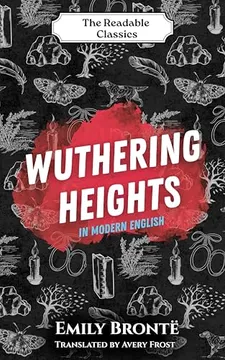
Most reviewers appreciated the modern English translation by Avery Frost, finding it made Wuthering Heights far more accessible than the original. However, opinions on the story itself were divided. Many were surprised to find it a dark, gothic tale of obsession and revenge rather than a traditional romance, with numerous readers disliking the unlikable, dramatic characters. Those who enjoyed it praised its psychological complexity, generational trauma themes, and intense emotions. The translation was consistently praised for preserving the story's essence while modernizing the language.
Characters
Heathcliff
The wounded outsiderA foundling taken into the Earnshaw11 household, Heathcliff grows up with deep attachments and no secure social place. He is observant, fiercely proud, and skilled at concealing vulnerability, but humiliation can harden into a need to control others. His bond with Catherine Earnshaw2 shapes his sense of identity, while his rivalry with Hindley10 teaches him to treat power as protection against dependence. Heathcliff’s intelligence is practical and patient; he can wait for an advantage rather than seek immediate comfort. He is difficult to understand because tenderness and cruelty coexist in him, often directed toward the same people. His presence links the two households and turns private injury into a force that affects generations.
Catherine Earnshaw
The moor-born forceCatherine Earnshaw is vivid, impulsive, and accustomed to making her feelings the weather of a room. She shares a fierce childhood bond with Heathcliff1, yet she is also drawn to the refinement and security offered by Edgar Linton3. Her difficulty is not a lack of feeling but an inability to reconcile incompatible forms of belonging: the wild intimacy of the Heights and the status of the Grange. She can be generous and affectionate, then cruel when pride or frustration takes over. Her sense of self is unusually porous, shaped by the people she loves, which makes separation feel like a threat to identity rather than a temporary loss.
Edgar Linton
The sheltered husbandEdgar is a cultivated, gentle landowner whose manners and home contrast with the rough life at Wuthering Heights. He loves Catherine2 with patience, but his preference for peace makes him cautious around conflict and sometimes unable to understand the force of her attachment to Heathcliff1. His tenderness is real, not merely social performance, yet it can become overprotective: he seeks to manage danger by limiting Catherine’s2 choices. Edgar’s emotional strength appears in caregiving and steadiness rather than confrontation. He represents a form of care that offers security, while exposing how good intentions can still narrow another person’s world.
Nelly Dean
The household witnessNelly Dean serves both Earnshaw11 and Linton households and becomes the principal storyteller of their history. Practical, observant, and often protective, she repeatedly intervenes in the lives of the younger people, sometimes wisely and sometimes with damaging confidence. Her account blends compassion with strong judgments; she can see cruelty clearly yet misread motives or keep information back. This makes her a compelling witness rather than a neutral recorder. Nelly values order, duty, and emotional restraint, but her closeness to the families draws her into their secrets. Through her, domestic labor becomes a vantage point from which private choices and their consequences are remembered.
Mr. Lockwood
The curious tenantLockwood is the new tenant at Thrushcross Grange, a socially awkward man who imagines himself more reserved than the people around him. His visits to Wuthering Heights expose him to a household he cannot interpret, prompting him to ask Nelly4 for its history. He is curious but not especially perceptive, and his assumptions about other people often reveal more about his own vanity than theirs. As the outer narrator, he frames the story without controlling its central events. His distance gives readers a way into the setting, while his misunderstandings remind us that the past reaches him through another person’s memory.
Catherine Linton
The sheltered heiressThe daughter6 of Catherine Earnshaw2 and Edgar Linton3, Catherine grows up protected at Thrushcross Grange, with books, affection, and freedom within carefully drawn limits. She is lively, curious, generous, and confident in her ability to charm others, but her sheltered upbringing leaves her unprepared for the harsh history beyond the park. She wants connection and readily pities people who seem lonely, qualities that can make her vulnerable to manipulation. Her ease with learning contrasts sharply with the deprivation imposed on Hareton7. Catherine’s temperament carries echoes of both parents: her mother’s2 intensity and her father’s3 capacity for tenderness, though she expresses both in a less destructive form.
Hareton Earnshaw
The dispossessed heirHareton is Hindley’s10 son7 and the last male Earnshaw, raised at Wuthering Heights under conditions that deny him education and social standing. He is physically capable, loyal, and more sensitive than his rough speech suggests. Because he has been taught to expect contempt, he often answers embarrassment with anger or silence. His attachment to the household that has diminished him makes his loyalties complicated: he can defend people who have treated him unjustly because dependence has become familiar. Hareton’s desire to improve himself is real, even when he lacks the tools to do so. He shows how deprivation can obscure ability without extinguishing it.
Linton Heathcliff
The fragile inheritorLinton is Heathcliff1 and Isabella’s9 son8, delicate in health and accustomed to being served. He is fearful of his father1 and resentful of discomfort, often using complaints and self-pity to draw attention or avoid blame. His vulnerability is genuine, but it does not make him consistently kind: he can manipulate Catherine’s6 concern and join in humiliating Hareton7. Linton has little independence, and his behavior reflects both his temperament and the emotional neglect surrounding him. He is a foil to Hareton7: one receives education without resilience, while the other has resilience without education. Their different deprivations shape how each seeks power.
Isabella Linton
The romantic idealistIsabella is Edgar’s3 younger sister, raised amid the comfort and polish of Thrushcross Grange. Her imagination makes her receptive to romantic ideals, and she mistakes Heathcliff’s1 intensity for evidence of a hidden tenderness. She is spirited and capable of sharp judgment, but her inexperience blinds her to the danger Catherine2 sees. Isabella’s story shows how longing can make a person interpret warning as rivalry. Beneath her early frivolity is a strong instinct for survival: once she understands her situation, she acts to escape it. Her relationship with Edgar3 is affectionate, though pride and hurt can make reconciliation difficult.
Hindley Earnshaw
The embittered heirHindley is the elder Earnshaw child and heir to Wuthering Heights. He experiences his father’s11 favoritism toward Heathcliff1 as a theft of status and affection, and he turns that resentment into sustained cruelty. His pride is easily injured, while his capacity for self-control weakens under grief and drink. Hindley’s treatment of Heathcliff1 helps create the hostility that later returns to his own family. He is not only an antagonist but a portrait of someone who mistakes inherited authority for a stable self. When he loses love and direction, he cannot rebuild either through responsibility or care for his son7.
Mr. Earnshaw
The erratic patriarchThe old master of Wuthering Heights brings Heathcliff1 home from Liverpool and gives the boy protection, but his strong preference for him deepens Hindley’s10 resentment. Mr. Earnshaw is capable of kindness and generosity, yet his favoritism is poorly managed and becomes a source of conflict in the household. His authority is personal rather than systematic: he responds to the children according to affection and irritation, leaving little stable structure behind. His death removes the one adult who could have restrained the rivalry, exposing the children to the consequences of his uneven care.
Frances Earnshaw
The fragile brideFrances is Hindley’s10 young wife, whose arrival briefly brings warmth and novelty to Wuthering Heights. She is physically delicate and eager for affection, but her dislike of Heathcliff1 helps revive Hindley’s10 hostility toward him. Her marriage gives Hindley10 a new focus after his father’s11 death, and her illness leaves him facing grief he cannot manage. Frances is a small but pivotal presence: her brief place in the household changes its emotional balance and introduces Hareton7.
Joseph
The punitive servantJoseph is the long-serving, religiously severe servant at Wuthering Heights. He interprets household life through rigid moral condemnation and uses scripture to justify scolding those he dislikes. His loyalty to the Earnshaw name does not translate into protection for Hareton7; instead, he accepts and reinforces the boy’s neglect. Joseph’s narrowness provides a constant counterpoint to the family’s more volatile passions. He is not powerful in formal terms, but his daily judgments help make cruelty feel ordinary and inevitable within the house.
Zillah
The wary housekeeperZillah serves as housekeeper at Wuthering Heights during Catherine Linton’s6 later years there. She is practical and capable, but cautious about challenging Heathcliff1, whose authority governs the household. Zillah sometimes helps Catherine6, yet she also protects her own position and can become dismissive when faced with the young woman’s pride. Her perspective gives Nelly4 information about life at the Heights, though it is shaped by self-preservation and personal irritation. Like Nelly4, she sees domestic details closely without having the power to change the larger arrangement.
Mr. Linton
The polished patriarchEdgar3 and Isabella’s9 father represents the wealth, manners, and social authority of Thrushcross Grange. He welcomes Catherine Earnshaw2 after her injury but regards Heathcliff1 as unsuitable company, reinforcing the class boundary between the neighboring households. His judgment is protective from his perspective, yet it teaches his children to associate refinement with worth. Mr. Linton’s influence is brief in the narrative, but his household establishes the contrasting social world that draws Catherine2.
Mrs. Linton
The status-minded matronMrs. Linton helps nurse Catherine Earnshaw2 after the dog bite and introduces her to the cultivated habits of the Grange. She values decorum and refinement, and she sees Catherine’s2 wildness as something to be corrected. Her attention is not unkind, but it comes with standards that distinguish a young lady from the rough life of Wuthering Heights. Through her, Catherine2 encounters the rewards and limits of social polish.
Kenneth
The country physicianKenneth is the local doctor called to treat illness and injury in both households. He is blunt, practical, and alert to the risks posed by Catherine Earnshaw’s2 fever and Edgar’s3 declining health. His medical judgments often arrive when family members are already in denial or crisis. Kenneth cannot resolve the emotional causes of their suffering, but his warnings establish the bodily consequences that the characters would rather ignore.
Mr. Green
The compromised lawyerMr. Green is the lawyer involved in Edgar Linton’s3 affairs. His obligations should protect his client’s interests, but his dealings with Heathcliff1 undermine that trust. He represents the legal machinery that can preserve property while failing to protect the people whose lives depend on it. His role is brief, yet his choices make clear how private power can exploit the forms of respectable authority.
Plot Devices
Lockwood’s Frame Narrative
A witness opens the historyLockwood’s5 visits to Wuthering Heights create the reason Nelly4 tells the families’ history. The action moves between his 1801 and 1802 visits and Nelly’s4 account of earlier decades. This structure gives readers two kinds of distance: Lockwood5 misunderstands the people he meets, while Nelly4 remembers events she witnessed but interprets them through her own loyalties. The frame also allows the ending to return to the present and show what has changed in the household. It is not a neutral window onto the past. Each narrator selects, judges, and sometimes withholds, so the reader must weigh testimony as well as events.
The Two Houses
Setting enforces social divisionWuthering Heights and Thrushcross Grange are neighboring homes with opposing ways of life. The Heights is exposed to weather, agricultural labor, and an unruly household; the Grange offers comfort, education, and social polish. Characters cross between them, but the distinction follows them: Catherine’s2 stay at the Grange changes how she is treated, while Hareton’s7 life at the Heights restricts what he can learn. Property links the houses as tightly as family does, since inheritance and debt give Heathcliff1 power over both. Their geography makes social difference visible and repeatedly turns a short journey across the moor into a consequential crossing.
Debt and Inheritance
Property becomes revengeThe novel’s estates are not passive background. Hindley’s10 debts give Heathcliff1 a way to take control of Wuthering Heights, while the arrangements around Edgar’s3 property and Linton’s8 inheritance help determine Catherine’s6 future. Heathcliff1 treats money and legal claims as tools for reversing the helplessness he experienced as a child. This strategy makes revenge durable: it can outlast an argument because it changes who owns a home, who receives education, and who can leave. Inheritance passes more than land between generations; it carries the consequences of earlier cruelty into the choices available to the young.
Secret Letters
Distance feeds attachmentCatherine Linton6 and Linton Heathcliff8 use letters to maintain a relationship that Edgar3 and Nelly4 have forbidden. The correspondence offers privacy and encourages both young people to imagine a closeness that their brief meetings have not yet tested. Nelly’s4 discovery and destruction of the letters ends one phase of their contact, but Heathcliff1 later exploits Catherine’s6 concern for Linton8 to draw her back to the Heights. The letters therefore work first as a private refuge, then as evidence of an attachment that others can manipulate. They show how communication can preserve feeling while leaving the people involved vulnerable to unequal power.
Ghosts and Repeated Names
The past refuses burialCatherine’s2 name appears in the old bedroom before Lockwood5 knows her story, and his nightmare gives the household’s buried grief a physical form. Later, Heathcliff’s1 longing for Catherine Earnshaw2 makes him treat her presence as something he can still pursue. The repeated name also links mother and daughter, marking both inheritance and difference. The novel never supplies a simple proof that the ghosts are real, but it shows that the characters’ lives are governed by the possibility of return. Haunting becomes a way to represent memory that cannot be mastered by distance, marriage, property, or death.
Download PDF
Download EPUB
.epub digital book format is ideal for reading ebooks on phones, tablets, and e-readers.








