

Key Takeaways
Read Earp as a peacekeeper who became an outlaw, not a born gunfighter.
An unsettled beginning. Wyatt Earp was not a spotless young lawman. After his first wife died, he faced allegations of mishandling a court payment and stealing horses in Indian Territory. The records are incomplete, and neither accusation ended in a trial, but they complicate the idea that his life followed a straight path toward justice. He was also ambitious, a gambler, and a saloonkeeper, drawn to the chance of making money as much as to wearing a badge.
A different kind of toughness. In Kansas, Earp developed a reputation for controlling dangerous situations without killing. He preferred fists and intimidation, and the book finds no evidence that he killed anyone while serving in Wichita or Dodge City. Tombstone changed the stakes: the same officer who had restrained violence eventually pursued private revenge.
The biography's strongest opening move is to replace the ready-made Western hero with a man whose character changes under pressure. That approach resembles modern biography's distinction between a person's self-image and the choices made in specific settings. It also resists a simple moral verdict: early allegations are suggestive, not proof, while his later restraint is documented but not saintly. The reader is invited to judge Earp through patterns of conduct, not through the legend's polished ending.
In Kansas, Earp usually stopped gunfights before they started.
A peacekeeper's method. In Wichita, Earp confronted a group of armed cattlemen gathering on a bridge. Rather than charge them, he called on their leader to put his guns away. The men turned back, and a potential street battle ended without bloodshed. Earp also tracked a horse thief and fired a warning shot when the suspect ran, then took him to jail instead of shooting him.
Force without killing. Dodge City officers often used a practice called buffaloing, striking offenders with a pistol rather than firing it. Earp could be rough, and the book describes him beating people who challenged his authority. Still, the practical aim was to stop disorder while keeping the town open for cattle business. His career in Kansas is less a sequence of duels than a record of forceful intervention and restraint.
Earp's Kansas record complicates the familiar image of the lawman whose main tool is a gun. His approach looks closer to situational de-escalation: he used reputation, proximity, and the threat of force to shape what others did. That can be effective, but it carries a risk often hidden in heroic retellings. A town may call an officer's violence practical when it serves commerce, while the people subjected to it experience it as abuse. Both facts belong in the account.
Tombstone's lawmen depended on the same saloons that financed its disorder.
A boomtown built to leave. Tombstone grew around silver mines, attracting miners, gamblers, merchants, and people hoping to make a quick fortune before moving somewhere more comfortable. Saloons, gambling rooms, and brothels served residents and visiting cattlemen, while business owners depended on their spending. The town's growth also brought more settled professionals who wanted safer streets and a lasting community.
Conflicting interests. Wyatt Earp invested in mining claims and later partnered in the Oriental Saloon's gambling operation. That made him both a lawman and a participant in the town's vice economy. The arrangement was not unusual in frontier towns, where gambling could be treated as respectable commerce. But it made the boundary between public service and private interest difficult to see, especially when policing threatened the customers who kept businesses profitable.
Tombstone's economy helps explain why crime control was never a purely moral project. The town needed order to attract investment, yet its businesses earned money from the same transient crowds whose behavior created disorder. This resembles a recurring problem in political economy: institutions may depend on activities they are tasked with regulating. The book does not show that Earp's saloon interest caused his actions, but it makes clear why a clean separation between public duty and private gain is hard to claim.
Separate Arizona's rustling cowboys from the ranchers they resembled.
A misleading label. In southern Arizona, cowboy often referred not to an ordinary cattle herder but to a drifting criminal involved in rustling, robbery, or violence. Many wore the same clothes and moved through the same territory as legitimate ranchers, making the distinction difficult for newcomers. The Clantons and McLaurys were seen by many townspeople as ranchers, while evidence linked them to selling stolen cattle and sheltering rustlers.
A useful alliance. The backcountry outlaws were not simply a unified gang. They moved among ranches and small settlements, sometimes worked with local businesspeople, and could be valued as fighters against Apache raids. Their stolen cattle also helped supply cheap beef. Those practical benefits softened resistance to their crimes until robberies, attacks on Mexican traders, and stage holdups made the danger harder to ignore.
The book's distinction between cattle raisers and criminal cowboys matters because labels shape enforcement. Calling every cowboy an outlaw turns a varied population into a target; treating every rustler as a harmless ranch hand protects genuine crime. The uncertainty is not a flaw in the history but part of the problem the residents faced. Modern policing confronts a similar challenge when broad group labels substitute for evidence about individual conduct. The narrative is strongest when it preserves that ambiguity rather than letting either faction define the whole region.
Overlapping badges and partisan papers made Tombstone's law a political contest.
Too many authorities. Tombstone's police system divided power among a city marshal, county sheriff, and federal marshal. Their jurisdictions overlapped, and officers did not always cooperate. Wyatt Earp's relationship with Sheriff Johnny Behan worsened after Behan failed to appoint him undersheriff as promised, then failed to support a posse pursuing stage robbers. Personal rivalry and competition for lucrative county offices deepened the conflict.
News with an agenda. The Republican-leaning Epitaph condemned outlaw activity and backed the Earps. The Democratic Nugget defended Behan and often minimized the danger. Both papers had political and financial interests at stake, including government advertising. Readers therefore received competing accounts of the same incidents, while the sheriff's office faced public suspicion that it tolerated the criminals it was supposed to pursue.
This is not merely a story about bad actors. It is a case study in institutional fragmentation, where divided authority allows each office to blame another and makes public accountability difficult. The newspapers add a second layer: they do not just report a crisis, they help organize the public into camps. Yet partisan reporting does not make every claim false. It makes corroboration essential, especially when a witness's reputation or a paper's political allegiance is doing the work that evidence should do.
A rushed disarming became a gunfight whose opening seconds remain disputed.
A tense approach. On October 26, 1881, Virgil Earp led Wyatt, Morgan, and Doc Holliday toward the Clantons and McLaurys, intending to disarm them under a city ordinance. Ike Clanton had spent the morning threatening a fight, and the Earps believed Sheriff Behan had already disarmed the other men. He had not. The confrontation took place in a vacant lot beside Fly's boardinghouse, not inside the O.K. Corral.
Seconds, not certainty. The exchange lasted roughly half a minute. Witnesses disagreed about who fired first, whether anyone raised their hands, and whether Tom McLaury carried a weapon. Wyatt said he fired when Frank McLaury and Billy Clanton reached for their guns. Other accounts blamed the Earp party. Three men died, and the surviving testimony never produced a perfectly consistent sequence.
The brief duration of the shooting explains why memory and testimony diverged so sharply. Under threat, people notice different movements, interpret them through prior fear, and reconstruct order after the fact. That does not make every account equally credible, but it cautions against cinematic certainty. A scene remembered as a clean duel may have felt to participants like a chaotic arrest attempt in which the cost of firing too late seemed as immediate as the cost of firing too soon.
A legal ruling freed the Earps without settling whether Tombstone trusted them.
A preliminary decision. Justice Wells Spicer heard evidence on whether the Earps and Holliday should face a murder trial. The prosecution portrayed the dead men as unarmed and surrendering. The defense described armed men resisting a lawful attempt to disarm them, and presented testimony supporting the threat against the Earps. Spicer found that the evidence did not justify sending the defendants to trial, while criticizing Virgil's decision to bring Wyatt and Holliday along.
A divided aftermath. The hearing was not a full criminal trial, and Spicer's decision did not erase public suspicion. Ike Clanton's claim that Wyatt had admitted involvement in stage robbery was dramatic, but riddled with contradictions; the stage's money had not gone missing. Some residents accepted the defense, while others saw the deaths of three men as unjustified. Legal release and public legitimacy proved to be different outcomes.
Spicer's ruling illustrates a distinction central to legal systems: a judge may find the evidence insufficient for prosecution without resolving every historical or moral question. That restraint is a strength of procedure, not proof that the defendants were innocent in every respect. At the same time, a decision that citizens regard as partisan can fail to restore confidence, even when legally sound. Legitimacy depends not only on outcomes but on whether people believe the process treated evidence fairly.
Morgan's murder pushed Earp from enforcing law into private retaliation.
The shift to vengeance. After Morgan was killed by concealed gunmen and Virgil had already been crippled in an ambush, Wyatt believed the courts could not protect his family or supporters. He led an armed party in pursuit of suspects. In Tucson, he killed Frank Stilwell, whom he believed had been waiting to attack Virgil on the train. The group also killed Florentino Cruz, whom they suspected of helping murder Morgan, and Wyatt later killed Curley Bill in a gunfight.
A changed lawman. Earp had once stopped vigilantes from hanging prisoners. Now he used violence outside a court's judgment, even while claiming federal authority. The distinction between a lawful posse and a private revenge party grew hard to maintain. The book presents his motive as both personal grief and fear of further attacks, but neither motive turns killing suspects into due process.
The Vendetta is the book's moral hinge. Earp's fear was credible, and the failures of local enforcement were real, but private violence weakens the very rule of law it claims to defend. This is a classic emergency dilemma: when institutions cannot protect people, self-help may seem necessary, yet every exception creates power that can be abused. The narrative respects Earp's loss without treating grief as a blank check. Sympathy and justification are not the same judgment.
Earp spent more of adulthood gambling than wearing a badge.
A life beyond Tombstone. After leaving Arizona, Earp moved among mining camps and boomtowns, running saloons, dealing faro, managing racehorses, and investing in claims. He spent time in Colorado, Idaho, California, and Nome, Alaska. He sometimes returned to law enforcement or helped private interests, but gambling and business occupied much more of his working life than police service.
One last disputed call. In 1896, Earp refereed the Fitzsimmons-Sharkey boxing match and awarded Sharkey the decision after judging that Fitzsimmons had fouled him. Accusations of a fix followed. The evidence never established whether Earp was fooled, correct, or compromised; a judge ended the dispute on the technical ground that prizefighting was illegal. The controversy again made Earp a public figure and damaged his reputation.
The longer view punctures the assumption that a famous lawman spent his life doing lawman's work. Earp was primarily a gambler and entrepreneur who moved with the frontier's opportunities, carrying his reputation into new settings. The boxing controversy is a useful reminder that competence is domain-specific: a respected peace officer could still be poorly suited to judge a modern prizefight. Public confidence often travels farther than expertise, and that mismatch can turn one decision into a verdict on an entire life.
Treat the famous Earp story as a construction, not a clean transcript.
A legend with authors. In 1931, Stuart Lake's best-selling biography recast Earp as a near-flawless frontier marshal. Lake turned uncertain episodes into dramatic scenes, placed the gunfight inside the corral, and presented invented or reconstructed dialogue as Earp's own words. Hollywood and television amplified the heroic version, often reducing Tombstone's political conflict to a simple battle between good and evil.
Evidence still matters. Earlier newspapers were partisan, witnesses contradicted one another, and later memoirs sometimes invented scenes or claimed impossible firsthand knowledge. Casey Tefertiller compares these sources rather than accepting either Lake's hero or the debunkers' villain. The result is less tidy but more credible: Earp was often an effective officer, sometimes a brutal one, and eventually an outlaw pursuing revenge.
The book's method is itself a lesson in historical reasoning. A compelling story can preserve real events while distorting their causes, chronology, and moral meaning. Source criticism asks who produced an account, when, for which audience, and with what interests. But debunking is not automatically more accurate than praise: a hostile memoir can be as self-serving as a hero's biography. The strongest conclusion is therefore calibrated, distinguishing documented events from disputed memories and outright fabrication.
Analysis
Tefertiller's central achievement is to make uncertainty part of Wyatt Earp's story rather than an inconvenience to be edited away. The surviving record is uneven: court proceedings, local newspapers, diaries, recollections, and later biographies each preserve different pieces, while political rivalry shaped what witnesses were willing to say. That evidence supports a strong account of Earp's career, but not a final verdict on every disputed act. The book is most persuasive when it distinguishes what can be established from what remains plausible or merely alleged.
Tombstone also exposes a structural problem. The county's officials competed for authority and income, merchants profited from outlaw spending, and the press translated these interests into rival narratives. When the legal system failed to convict dangerous suspects, citizens faced a genuine security crisis. Earp's response helped protect some people and violated the procedural limits meant to protect everyone. The moral difficulty is not solved by calling him either hero or murderer. His actions reveal how quickly emergency force can blur into personal sovereignty, especially when an officer believes that law has become ineffective.
The book's final subject is not only Earp but the production of public memory. Lake's biography, popular entertainment, and later debunking each reshaped the same contested past. The heroic version made a complicated lawman legible to audiences seeking a defender; the counter-legend emphasized his self-interest and violence. Both simplify. The durable value of this biography lies in keeping character, evidence, and myth separate enough to examine their interaction. Earp's fame survives because his story asks a question that remains uncomfortable: when institutions fail, can order be restored without granting individuals the power to decide who deserves punishment?
Review Summary
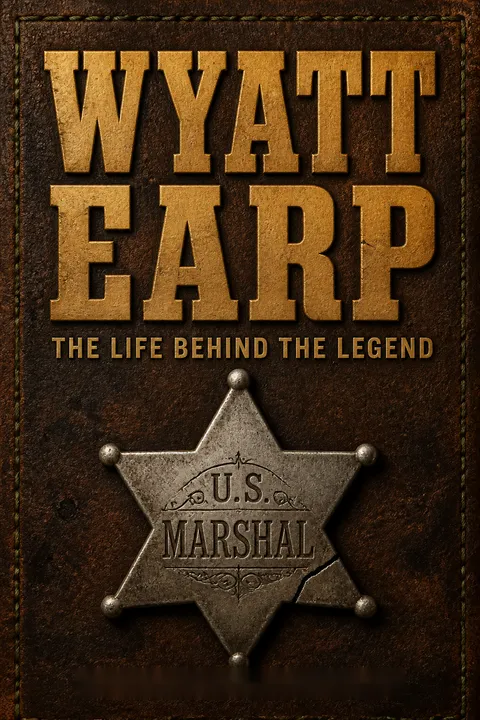
Wyatt Earp: The Life Behind the Legend is praised for its thorough research and balanced portrayal of the legendary lawman. Readers appreciate the book's efforts to separate fact from fiction, though some find the writing dry and dense. Many commend Tefertiller's comprehensive approach, detailing Earp's life beyond Tombstone. While some struggle with the book's length and depth of historical context, others find it engaging and informative. Critics note issues with organization and clarity, but overall, the book is considered a valuable contribution to understanding Earp's complex life and legacy.
Glossary
cowboys
Arizona outlaw labelIn southern Arizona, the term often referred to backcountry rustlers, robbers, and other lawbreakers, not simply cattle herders. Many criminals dressed and traveled like legitimate ranchers, while some ranchers bought stolen stock or sheltered outlaws. The label reflected a real criminal problem but also blurred distinctions among people whose activities and loyalties differed.
buffaloing
Pistol-whipping offendersA frontier policing practice used in Dodge City in which officers struck offenders with a pistol rather than firing it. It could stop a disturbance without killing the person or driving away the cattle trade. The practice was still violent, and its routine use shows that Earp's preference for avoiding gunfire did not mean he avoided physical brutality.
Citizens Safety Committee
Tombstone vigilante groupA covert group of Tombstone residents who organized to protect the town amid fears that local authorities could not control outlaw activity. Members prepared to use force outside ordinary legal process. The committee was widely rumored before its existence became public, and its presence reflected both genuine insecurity and the danger of citizens taking punishment into their own hands.
Spicer hearing
Preliminary gunfight inquiryThe 1881 preliminary hearing before Justice Wells Spicer examined whether Wyatt Earp, his brothers, and Doc Holliday should face trial for the deaths of Billy Clanton and the McLaury brothers. Spicer found the evidence insufficient to bind them over for trial, while criticizing Virgil Earp's judgment. It was not a full criminal trial and did not settle public opinion.
Arizona War
Conflict over outlaw controlA name used for the escalating 1881 to 1882 conflict involving southern Arizona's outlaw cowboys, local law officers, and the Earps. It included cattle rustling, stage robberies, political disputes, the O.K. Corral gunfight, and the attacks on Virgil and Morgan Earp. The label can suggest a unified war, although the outlaw groups were loosely connected rather than one disciplined organization.
Vendetta
Earp's revenge campaignNewspapers used this term for Wyatt Earp's 1882 armed pursuit of men he believed responsible for Morgan's murder and Virgil's shooting. The group killed several suspects, including Frank Stilwell and Florentino Cruz, and fought Curley Bill. Earp presented the actions as protection and law enforcement, but the campaign bypassed courts and included unmistakable personal retaliation.
shotgun messenger
Armed stage guardA guard employed by an express company, such as Wells, Fargo, to protect a stagecoach's passengers and valuable shipments. The messenger typically rode beside the driver with a shotgun, ready to resist robbers. Wyatt Earp briefly worked in this role in Tombstone, a job that connected his stagecoach experience with the region's frequent robberies.
Buntline Special
Alleged long-barreled ColtA long-barreled Colt revolver that Stuart Lake claimed writer Ned Buntline gave to Wyatt Earp. The weapon became part of the popular image of Earp as a uniquely equipped gunfighter. Tefertiller notes that there is no tangible proof the pistol existed, making it an example of a detail that grew powerful through biography and legend.
Download PDF
Download EPUB
.epub digital book format is ideal for reading ebooks on phones, tablets, and e-readers.








