

Key Takeaways
Practice a guided descent into rest while keeping awareness awake.
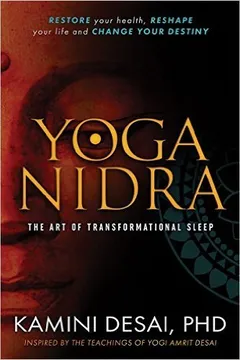
Sleep becomes a doorway. Yoga Nidra is a guided meditation that uses body awareness, breathing, and attention to lead the practitioner toward sleep-like states while remaining aware. Unlike ordinary sleep, the practice aims to let thoughts quiet without losing the capacity to notice. It is designed to make deep rest accessible without requiring the effort of sitting still and trying to empty the mind.
Less effort, more receptivity. The method uses deliberate techniques, then asks the practitioner to release effort and notice their effects. Desai presents this transition from doing to non-doing as the practice's central paradox: the technique is a support, not a task to perform perfectly. The book also presents spiritual realization as a possible destination, while treating rest and stress relief as worthwhile aims in themselves.
The practical appeal is clear: attention is given something gentle to follow, which can be easier than trying to suppress thought. This resembles guided imagery and body-based relaxation, where structured attention may reduce rumination by shifting focus away from verbal analysis. The distinction between deep relaxation and sleep matters, however. A listener may fall asleep, and that does not make the practice a failure, but ordinary sleep should not be confused with a reliably controllable meditative state. The book's spiritual aim can enrich the practice without being a prerequisite for its calming effects.
Learn to witness thoughts as passing events, not your whole identity.
Contents are not the container. Desai uses a container metaphor to explain identification: thoughts, emotions, and bodily sensations are experiences that appear and fade, while awareness is the space in which they are noticed. When someone says, “I am anxious,” the feeling can seem to define the whole self. A different perspective is to notice anxiety as something occurring, rather than as the totality of who one is.
A spiritual interpretation. The book calls this underlying awareness the Self and links it to the Yogic concept of turiya, the silent awareness said to underlie waking, dreaming, and deep sleep. Yoga Nidra is presented as a way to experience this perspective, not merely understand it as an idea. Thoughts and life circumstances may remain, but the practitioner may relate to them with more distance.
This distinction has a useful parallel in contemporary psychology: decentering means noticing thoughts as mental events rather than treating them as facts or commands. That shift can reduce reactivity without requiring a person to deny emotion. The book goes further by describing awareness as eternal and universal. That is a spiritual claim, not a conclusion established by the psychological mechanism. Readers can test the practical value of observing thoughts while holding the metaphysical interpretation lightly, allowing experience rather than doctrine to determine what they find credible.
Trace repeated reactions to the old impressions shaping them.
The past can become a filter. Desai calls samskaras the impressions left by experience, learning, and interpretation. They can guide useful automatic behavior, but some become limiting when they narrow what seems possible. A person who expects rejection may interpret an ambiguous look as proof of disapproval, then respond defensively and help recreate the strained interaction they feared.
Patterns span mind and body. In the book's model, these impressions affect perception, thought, sensation, and behavior. A tense stomach, for instance, may follow an old fear before a person has consciously identified what triggered it. The point is not to label every reaction as damage or to excavate every memory. It is to notice recurring patterns and ask whether they still help in the present situation.
The idea of learned expectations shaping attention is consistent with cognitive models of schemas and predictive processing. People do not encounter events as blank slates; past learning influences what they notice and how they interpret ambiguity. That is a useful lens for relationships and habits. Still, an uncomfortable physical sensation does not by itself reveal a hidden memory or prove that an old impression is its cause. The model works best as an invitation to investigate patterns, not as a diagnostic shortcut that replaces medical or psychological assessment.
Interrupt one familiar response, and give a new behavior room to grow.
A pause creates options. The book describes karma not simply as what happens to a person, but also as the actions and reactions they bring to circumstances. Past impressions can make a response feel automatic, yet noticing the pattern creates a chance to choose differently. Desai illustrates this with Sally, who habitually tried to please a friend even when it hurt her. During a trip, she paused instead of agreeing to an uncomfortable dinner plan, then chose to spend the evening as she wanted.
Practice the new response. The change did not depend on controlling her friend. Sally made a small choice that aligned with her needs. Repeating such choices, the book argues, helps make a different response more available. Self-observation, rather than self-condemnation, helps reveal which actions produce the outcomes a person actually wants.
Sally's story makes agency concrete: a boundary is not merely an idea, it is a behavior practiced under social pressure. This connects with behavioral learning, where repeated actions can make alternatives easier to access. The account also needs a careful boundary. Personal responses influence experience, but they do not determine every outcome, and this framing should not be used to blame people for abuse, illness, discrimination, or other conditions outside their control. Agency is most useful when paired with an honest assessment of circumstance.
Use intention to choose a direction, not demand a perfect result.
Choose a guiding direction. Sankalpa is the book's term for an intention used in Yoga Nidra to direct attention toward a desired way of being. Desai distinguishes this from a goal tied to a specific outcome: a direction can remain meaningful even after a detour, while a rigid target can turn a setback into a verdict of failure.
Make it usable. The book recommends an intention that feels personally relevant, is stated in the present, is concise, and concerns the practitioner's own responses rather than controlling someone else. For example, a person who tends to avoid difficult conversations might choose an intention about speaking honestly and calmly. It is introduced during practice and reinforced through waking choices. Repetition gives the new direction a chance to become familiar.
This framing resembles implementation intentions and values-based action: a broad direction can guide choices across changing circumstances, while a single outcome may be outside a person's control. The emphasis on personally meaningful language is also sensible, since a phrase that feels implausible can provoke resistance rather than motivation. Yet the book's claim that intention can reshape deep unconscious patterns should be held as a practice model, not a guaranteed mechanism. A useful intention still needs to be translated into observable action and adjusted when context changes.
Train your body's downshift before stress becomes your normal setting.
Recovery is part of functioning. The book describes the sympathetic nervous system as mobilizing the body for action and the parasympathetic system as supporting recovery. Stress is not inherently harmful, but persistent activation without enough recovery can leave a person tense, restless, or depleted. Yoga Nidra aims to give the body a structured opportunity to slow down through stillness, breath, and attention.
Relaxation is more than escape. Desai argues that practice can help people notice the mental habits that keep stress active, such as resisting a delay or repeatedly rehearsing an uncertain conversation. A red light, for example, may be tolerable on one day and infuriating on another, depending partly on the person's expectations and state. The practice is to return attention to the present, not to pretend that every external problem is harmless.
This section's strength is its two-part account of stress: bodily arousal and the thoughts that can prolong it. Slow breathing and attentional practices can support short-term relaxation, while noticing rumination may reduce the extra strain added by imagined scenarios. The important nuance is that external demands are not always solved by acceptance. Unsafe working conditions, caregiving overload, and financial hardship may require practical change. Relaxation can support clearer action, but it should not be sold as a substitute for reducing preventable stressors.
Let difficult sensations move gradually, without forcing a story or a cure.
Trauma needs safety and pacing. Desai describes trauma as an overwhelming experience whose effects remain active when the body and mind have not fully processed it. Her approach emphasizes noticing sensations and allowing them to shift without requiring the practitioner to retell or analyze the event. The proposed process is gradual: a person remains oriented to the present and allows only what feels manageable to arise.
Do not force exposure. The book suggests that tension may ease when resistance softens, but it also advises practitioners to adjust their position, open their eyes, or return attention to grounding sensations if they feel overwhelmed. Yoga Nidra is presented as a possible companion to trauma care, not as a reason to ignore distress or stop professional support.
The emphasis on choice, pacing, and present-moment grounding is important for trauma-sensitive practice. A person should retain the ability to stop, move, or seek help, rather than treating distress as proof that a method is working. The book's energetic account can offer a meaningful metaphor for lingering activation, but descriptions of stored energy being released should not be mistaken for a medical explanation. Trauma responses vary widely; qualified clinical support is especially important when symptoms are severe, persistent, or destabilizing.
Treat cravings as signals to observe, not commands to obey.
A habit can medicate a feeling. The book suggests that some habits begin as ways to gain comfort or relief from stress. Repeating the behavior can make it automatic, then increasingly difficult to resist. Its examples range from food and television to substances. The important question is not only what someone does, but what feeling or tension the behavior helps them manage.
Create distance from the urge. Yoga Nidra may help a practitioner notice a craving without immediately acting on it, while intention can orient attention toward a healthier response. The book also recognizes that serious addiction can involve physical dependence and that abstinence may be necessary for some substances. In those cases, the practice is framed as an adjunct to treatment, not a stand-alone solution.
Separating an urge from an action is a valuable skill in behavioral treatment, and mindfulness-based relapse prevention uses a related practice of noticing cravings without automatically responding. It can create a moment in which support, coping strategies, or a safer choice become possible. Addiction, however, is not simply a failure to witness thoughts. Withdrawal can be dangerous, and recovery may require medical care, therapy, peer support, or medication. Meditation can complement those supports, but should not replace them.
Treat the health evidence as promising support, not proof of a cure.
Some findings are encouraging. The book cites an eight-week Yoga Nidra program involving 66 college students, with reported reductions in stress, worry, and depression and increased mindfulness. It also describes a survey in which 85% of 164 veterans attending classes reported improvement across several symptoms. Other examples include small studies and case reports concerning sleep, blood pressure, and wellbeing.
Evidence has limits. These results do not show that Yoga Nidra cures depression, PTSD, or physical disease. Some findings concern meditation generally rather than Yoga Nidra specifically, and self-reports, small samples, or limited comparison groups cannot establish that the practice caused the changes. The book presents Yoga Nidra as a useful complement to mainstream care. That is the safest interpretation of the evidence it summarizes.
The distinction between a promising intervention and a proven treatment is essential here. The book brings together studies of different methods, populations, and outcome measures, which can make the evidence appear more unified than it is. Stronger conclusions require larger controlled trials that compare Yoga Nidra with credible alternatives and track outcomes over time. At the same time, a low-cost, accessible practice may be worthwhile when it helps people rest or cope, provided its benefits are assessed honestly and it does not delay effective care.
Make practice easy, comfortable, and guided enough to actually repeat.
Start with a manageable session. Desai suggests that beginners try about 20 minutes, with many guided practices lasting 20 to 45 minutes. A recording or facilitator can reduce the effort of remembering what to do. Morning practice may help establish a steadier start; evening practice may help quiet the day's thoughts; an afternoon session can offer rest when energy dips.
Comfort supports attention. Lying down is common, but sitting or changing position is appropriate when pain, pregnancy, or other needs make it preferable. Use blankets or supports, stay warm, and remove avoidable points of contact or discomfort. Falling asleep is common, especially when tired; the book advises allowing needed rest rather than turning wakefulness into another performance test. Consistency matters more than chasing a particular experience.
This advice reflects a useful principle of adherence: a practice is more likely to continue when its setup fits the person's real life and body. Guided audio can lower the starting effort, while flexible positioning makes the method more accessible to people who cannot lie comfortably. The expectation of a standard 20 to 45 minute session may still be a barrier for some. Shorter practices can be a reasonable entry point, and discomfort should be treated as information, not as a challenge to endure.
Analysis
The book's central proposition is that change does not always require more effort. A guided, sleep-like meditation can reduce the grip of ordinary thought, support relaxation, and give practitioners a different relationship to habitual reactions. Its strongest practical ideas are not confined to its spiritual vocabulary: notice a recurring response, pause before acting, allow an emotion to be felt without immediately feeding its story, and use a personally meaningful intention to guide the next choice. Together, these form a coherent bridge between contemplative practice and behavioral self-regulation.
The book also makes a larger metaphysical claim: awareness is the timeless ground of experience, and Yoga Nidra can reveal this underlying Self. This claim gives the practice a purpose beyond symptom relief, but it is not equivalent to a measurable neuroscience finding. Brainwave patterns, relaxation, and reported wellbeing can be studied; the existence of an eternal Self cannot be established by those measures. Keeping these kinds of claims distinct helps preserve the book's spiritual richness without asking science to certify its worldview.
The medical discussion requires similar care. The text draws on studies of Yoga Nidra, meditation, guided imagery, and relaxation, sometimes moving between them as if they were interchangeable. The reported findings are encouraging, including changes in stress and self-reported symptoms, but small samples and varied methods limit what can be concluded. Claims about healing disease, hormonal effects, or releasing trauma should not be treated as established outcomes of the practice. The most defensible position is that Yoga Nidra may support rest and coping for some people, while remaining an adjunct to appropriate medical and psychological care.
That balance is especially important for trauma and addiction. The book's invitation to go slowly, retain choice, and avoid forcing disclosure is valuable. Its account is most helpful when read as a contemplative framework, not as a replacement for trauma-informed treatment or addiction services. The practical promise is narrower, and still meaningful: a structured way to rest, notice, and make a little more room between an impulse and an action.
Review Summary
Glossary
Yoga Nidra
guided sleep-like meditationA guided meditation practice that uses body awareness, breathing, and attention to move toward deep relaxation and sleep-like mental states while maintaining some awareness. In this book, the method also serves spiritual aims, including loosening identification with thoughts and experiencing awareness beyond ordinary waking, dreaming, and sleep.
Sankalpa
directed personal intentionAn intention used during Yoga Nidra to orient attention and behavior toward a chosen direction. The book distinguishes it from a goal tied to a specific result: an intention can guide choices even when the path includes setbacks. It recommends wording that is personally meaningful, concise, present-focused, and centered on the practitioner's own way of being.
samskaras
impressions shaping reactionsPast impressions formed by experiences, interpretations, and repeated behaviors. In the book's Yogic model, samskaras influence perception and can make reactions automatic. Many are useful, such as learned skills, while others become limiting when they narrow present choices or cause a person to repeat patterns that no longer serve them.
koshas
layers of embodimentThe five sheaths described in Yogic philosophy as a map from subtle experience to the physical body: bliss, wisdom, mental activity, energy, and physical form. The book presents them as interconnected layers rather than separate entities, with subtler patterns influencing thought, sensation, and bodily behavior.
turiya
awareness beyond three statesA Yogic term for the fourth state of consciousness, understood in the book as awareness underlying waking, dreaming, and deep sleep. Yoga Nidra is presented as a way to experience this quiet background directly. This is a spiritual concept and should not be confused with a brainwave category or a clinically defined state.
pratyahara
withdrawing attention from urgesA Yogic practice of withdrawing attention from sensory input or habitual impulses. In this book's discussion of habits, it means neither indulging an urge nor fighting it, but declining to keep feeding it with attention and action. The intention is to weaken an automatic pattern and make deliberate choice more available.
kleshas
afflictions clouding perceptionThe Yoga Sutras' term for mental afflictions or obstacles that contribute to suffering. The book uses them to describe a progression from forgetting one's deeper nature to identifying with a limited self, pursuing desired experiences, avoiding unwanted ones, and clinging to life. Yoga Nidra is presented as a practice that can loosen these patterns.
ida and pingala
complementary energy currentsYogic concepts for complementary currents associated in the book with relaxation and activity. Desai relates them respectively to parasympathetic and sympathetic functions, using their balance as a model for steadiness. These traditional energy terms are not exact anatomical structures or direct synonyms for the nervous system.
swadyaya
observing one's own patternsA Yogic practice of self-study and observation. In the book, swadyaya means looking closely at what a repeated behavior actually produces, rather than assuming it will deliver the result a person wants. This kind of honest observation can help someone recognize when a familiar response is no longer useful and consider another choice.
Download PDF
Download EPUB
.epub digital book format is ideal for reading ebooks on phones, tablets, and e-readers.








