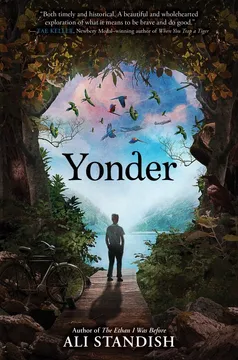


Plot Summary
Prologue
In 1940, a flood sweeps two young twins down the Watauga River. While the adults hesitate, Jack Bailey dives in and carries them to safety. Foggy Gap makes him a hero, praising his courage without asking what it costs him.
Danny Timmons, then ten, watches Jack close his eyes to the rain after the rescue, a private moment the crowd misses. Years later, Danny will understand that the town’s story about Jack was not the same as Jack’s own. When Jack vanishes, Danny searches for clues, but the deeper mystery is whether he has learned to listen to his friend.
The flood establishes the book’s central tension between public legend and private experience. The crowd turns Jack’s rescue into a story that confirms its own admiration, while overlooking his exhaustion and the pain beneath his composure. Danny’s retrospective voice recognizes that a celebrated act can conceal a person rather than reveal him. The opening also complicates heroism from the start: many witnesses see danger, but Jack alone enters the water. The question is not simply who is brave, but what a community does after praising bravery. The town’s applause will matter less than whether anyone notices when Jack needs help.
Jack Misses the Route
In June 1943, twelve-year-old Danny Timmons arrives at the Hilltop Herald expecting Jack to be waiting with their newspaper bundles. Jack has never missed their route without warning, but his bicycle is gone and the papers remain. Danny delivers both loads, then searches for him at school and around town.
His worry grows beside the ordinary signs of wartime life: rationing, scrap-metal drives, and a gold service star in Dylan Price’s window for a father killed overseas. Danny’s own father is serving abroad, and his pregnant mother, Pearl, is working at the paper despite her fatigue. Jack’s father says he has not seen him since the previous morning. That answer leaves Danny afraid that his friend is in danger.
The missing route turns a dependable friendship into an urgent absence. Danny’s daily work gives him a practical measure of Jack’s character, so the broken routine feels more persuasive than the town’s comforting assumptions. At the same time, the gold star and the censored letters from Danny’s father show how war makes absence familiar without making it bearable. Danny has learned to treat sacrifice as ordinary and even virtuous. His instinct to search for Jack begins as loyalty, but it also exposes how little he understands about what his friend has endured.
A Friend Steps In
Danny first becomes Jack’s friend in 1941, after Bruce Pittman and Logan Abbot knock him down and torment him over an old camping trip. Jack pulls Bruce away and protects Danny, though Danny notices that Jack himself is shaking. Months later, Jack turns up at the Herald with a broken nose, cracked ribs, and a black eye. His father, John Bailey, has beaten him during one of his violent spells.
Danny’s parents take Jack home, where he recovers among warm meals, baseball cards, and Christmas preparations. The arrangement ends when John demands his son back. Jack chooses to leave with him, even as Danny’s family offers him safety. Danny keeps the memory of that departure, but not the questions it should have raised.
Jack’s first rescue of Danny reverses their apparent roles: the boy the town calls fearless is frightened, while the boy he saves wants to imitate force rather than understand it. Jack explicitly rejects bullying as a model of courage through his actions, yet Danny is still attracted to the certainty Jack seems to embody. The refuge at the Timmons home offers care without demanding confession, a kindness that is also a missed opportunity. When Jack returns to his father, the adults accept his choice too readily. Their restraint may respect his agency, but it leaves a child to bear a danger no child should manage alone.
Foggy Gap Turns Away
Danny and Lou Maguire begin as close friends, trading Nancy Drew books and imagining themselves as detectives. Their world narrows after Lou’s brother George is court-martialed for desertion. Bruce corners Danny in the churchyard, and Danny betrays Lou’s secret to protect himself from further bullying.
The news spreads, and the Maguires withdraw from church and town. Earlier, Danny has learned that librarian Mrs. Ballentine bars the Black Musgraves from borrowing books.
When Nick Pittman uses his influence to block the Musgraves’ farm loan, they must leave the land their family has worked for generations. Pearl tries to help, but the town lets Pittman’s power stand. By the time Danny recognizes these cruelties as connected, he has already helped one of them along.
These linked betrayals show how exclusion is sustained by more than a single aggressor. Pittman uses economic power, Ballentine uses respectable authority, and neighbors make injustice seem normal by declining to intervene. Danny’s betrayal is smaller in scale, but its mechanism is recognizable: fear narrows his choices until he harms someone more vulnerable. The novel refuses to treat him as simply cruel or innocent. His shame comes from knowing that he understood enough to act differently. That knowledge becomes the basis of moral growth, not an excuse that erases the damage.
The Police Close Ranks
After John Bailey claims ignorance, Pearl accompanies Danny to the police station to report Jack missing. Danny tells Sergeant Womack that John has hurt Jack and keeps a rifle, but Womack dismisses the warning and refuses to search the cabin. Danny recognizes that the sergeant’s friendship with John matters more than his own evidence.
At home, Danny remembers the rifle beside the cabin door and rules out the idea that Jack went hunting without it. He returns to the river dock, where he last saw Jack, and finds Jack’s bicycle leaning against a tree. Above it, someone has carved the word Yonder. Danny remembers Jack’s story of a hidden, peaceful town, but the single word cannot tell him whether Jack is safe or asking to be followed.
The authorities do not simply lack information. Womack’s personal loyalty shapes what counts as a credible concern, making the police station an extension of the town’s hierarchy. Danny’s suspicion is justified by what he knows of John’s violence, yet the carved clue complicates his certainty and tempts him toward a comforting explanation. Yonder can preserve hope while also postponing the painful possibility that Jack made a deliberate choice. The scene marks a shift from asking adults to act to gathering evidence himself. Danny’s detective work begins in care, but it is already colored by the wish to find the answer he can bear.
A Feather on Lou’s Desk
Lou joins Danny’s search, but their first attempt at working together is strained by their months of silence. On their Sunday route, they find the Widow Wagner’s blue house marked with a German slur.
Danny treats the graffiti as evidence of wartime sides; Lou objects that German birth does not make the widow an enemy. The next school day, Bruce and Logan scatter feathers over Lou’s desk and coax classmates into clucking at her because George was branded a coward. Lou attacks Bruce, while Danny watches without helping.
After school, he and Lou overhear Sergeant Womack and Officer Sawyer discussing John Bailey, then Sawyer warns them to stop searching. Danny spots red paint on Bruce’s shoes and begins to suspect the Pittmans also targeted the widow.
The insults in this section turn distant wartime rhetoric into local permission to humiliate people. The widow is treated as suspect because she is German, while Lou is mocked because her brother failed to meet an ideal of masculine courage. Danny’s own response to the class’s cruelty repeats his earlier failure with Lou: he knows what is wrong, but fear keeps him seated. The feather prank therefore becomes more than another incident. It makes his silence visible to himself. The police warning deepens his distrust, while the paint on Bruce’s shoes offers a concrete clue that can be tested rather than merely resented.
The Birth Certificate
With Lou, Danny enters the Baileys’ cabin while John is away. Jack’s side is orderly, but the rest of the house is neglected. Under the bed they find a military medal, evidence that John once served in war, and among Jack’s papers a birth certificate dated 1925. John returns during a thunderstorm, so Danny and Lou flee with Winnie, Jack’s frightened hound.
Danny turns back to free her, and Lou strikes John with a rock to help him escape. At home, Danny understands the birth certificate’s consequence: Jack is eighteen, not nearly sixteen as Danny assumed. Jack could be drafted without his father’s consent. The detail changes the search. Jack may not have been taken or drowned; he may have left because the war had reached him.
The cabin provides evidence without offering a simple verdict. John’s medal complicates Danny’s image of him, but it does not cancel the violence Jack has suffered. The juxtaposition asks whether past service can excuse present harm, and the novel’s answer is no. The birth certificate is a mundane document with life-altering force: it corrects Danny’s mistaken sense of Jack’s age and reveals how much he inferred rather than asked. Danny’s return for Winnie is also a small but decisive break from his old habit of retreat. He risks being caught because the animal is trapped, not because anyone is watching.
The Widow’s Birdcages
At the grave, Danny finds a turquoise feather beside Jack’s mother’s headstone. The clue sends him back to the Widow Wagner, whose scarf Jack wears and whose house smells of butterscotch. Inside, cages crowd the rooms, holding injured birds the widow has nursed.
One brilliant Carolina parakeet matches the jewelbirds from Jack’s story. Jack is there, alive, and explains that the widow has sheltered him. Danny shows him the birth certificate and asks why he disappeared.
Jack admits he wanted the town to think he had drowned, while Yonder was a private signal meant to reassure Danny. The discovery offers relief, then gives way to anger: Jack arranged his disappearance so Danny would not search, but left him to imagine every possible disaster.
The birdcages make the widow’s supposed strangeness legible as care. Danny had accepted neighborhood stories about her more readily than Jack’s judgment, and the room forces him to revise both. The parakeet joins fantasy to natural history: the bird is real, but it cannot prove that Yonder is a real refuge. Jack’s survival does not resolve Danny’s fear; it sharpens the hurt of being excluded from the truth. His private clue was intended as protection, yet it denied Danny the chance to respond as a friend. Good intentions here do not prevent emotional harm.
Jack Refuses the Draft
Jack gives Danny a draft-board notice signed by Nick Pittman. He has not enlisted; he has been called up. Jack says he cannot go to war because he fears carrying his father’s violence into another life. John was gentle before the First World War, Jack explains, but returned changed, and his beatings have made Jack fear a rage inside himself.
He refuses to risk becoming the same kind of man. Pittman, who controls much of the local farm work and sits on the draft board, has left Jack few alternatives. Jack hopes to find exempt coal work in Tennessee. He has stayed with the dying widow because she has no one else. Danny wants him to stay, but Jack asks him to keep the secret and care for Winnie.
Jack’s refusal challenges the community’s easy equation of military service with courage and avoidance with cowardice. His fear is not simply of being hurt; he fears what violence might make him do to others. That fear grows from watching his father, but Jack does not treat inheritance as destiny. His decision remains morally complicated: he is evading a duty others accept, while trying to find useful work and escape a life that has already harmed him. Danny’s desire to keep Jack close cannot erase the fact that Jack’s survival requires distance. The scene asks whether loyalty means holding on or honoring another person’s limits.
A Sister Named Daphne
The next morning, Jack has left the widow’s house. His note says she died in her sleep and asks Danny to tell the doctor, care for Winnie, and remember him without resentment. Before Danny can absorb the departure, Lou finds him and explains that Pearl is in labor. Lou has fetched Dr. Penny and her mother, and Danny arrives in time to meet his baby sister.
The following day, a package from Mrs. Musgrave reaches the house with a small dress and a letter describing her family’s new life in Pittsburgh. Her husband has joined the army despite racial barriers, inspired by the fight for equality abroad and at home. Danny names his sister Daphne, honoring the woman Foggy Gap forced away.
The events place departure beside arrival without pretending that one repairs the other. Jack leaves before Danny can answer his request face to face, but the note gives Danny a way to choose care rather than exposure. The newborn makes protection feel intimate, while Mrs. Musgrave’s letter expands that obligation beyond Danny’s household. Naming the baby Daphne cannot return the family to its farm, yet it prevents their erasure from the town’s memory. Danny’s moral attention is becoming more active: he is beginning to see that love is not only private feeling, but a commitment to remember people whom a community would rather forget.
The Camera Turns
Danny sees Bruce and Logan carrying paint toward the Maguires’ property and understands they plan to repeat the attack on the widow’s house. Before acting, he tells Lou that he exposed George’s desertion to Bruce months earlier, causing the shame that drove her family from public life. Lou is hurt, but agrees to help stop the new vandalism.
That night they hide with Winnie and Danny’s camera. When Nick Pittman and Bruce begin painting an insult on the barn, Lou draws their attention and Danny photographs them. In the struggle, he captures Nick grabbing Lou by the collar. Winnie bites Bruce’s ankle, giving Danny and Lou time to escape. The photographs turn a private accusation into proof the town can no longer dismiss.
Danny’s confession makes the investigation inseparable from accountability. He cannot oppose Pittman’s abuse honestly while hiding his own role in Lou’s isolation. Lou’s decision to help is not instant forgiveness; it is a risk taken despite unresolved hurt. The camera changes the balance of power because the Pittmans depend on intimidation and plausible denial. Their own conduct becomes visible, and the photograph records what their status usually conceals. The scene also reframes bravery as coordinated action: Danny plans, Lou confronts, and Winnie intervenes. None acts without fear, but together they make the evidence difficult to erase.
Foggy Gap Sees the Picture
Danny and Lou give the photographs to the Maguires, and Pearl supports printing them in the Hilltop Herald. When the images appear, townspeople see Nick Pittman’s grip on Lou and the vandalism he tried to hide. Pittman leaves the draft board and takes his family away for the summer. The Maguires return to church, no longer required to carry the town’s shame alone.
At the school assembly, Dylan Price receives the scrap-metal award, and Danny has quietly given him his own collection. Mrs. Ballentine asks the name of Danny’s new sister; Pearl says Daphne, after Mrs. Musgrave. Danny and Lou restore their friendship cautiously. He leaves a flower at Jack’s mother’s grave, then runs toward his family rather than away from his guilt.
The public photograph produces consequences that private knowledge could not. It does not undo what Pittman did to the Musgraves or the Maguires, but it disrupts his control of the town’s account of events. The community’s sudden sympathy is both meaningful and inadequate: outrage arrives when the evidence is undeniable, after earlier injustices were tolerated. Danny’s gift to Dylan and the name Daphne extend the story beyond punishment toward repair and remembrance. His reconciliation with Lou remains conditional, which makes it credible. Moral growth is not a clean slate; it is the willingness to keep acting after recognizing the harm one has caused.
Epilogue
Later that summer, John Bailey dies, and Danny wonders whether war made the father who hurt Jack. Danny’s own father returns in autumn with a shrapnel wound, while Mr. Musgrave comes home after witnessing the liberation of Dachau. When photographs of the camps reach the public, people ask why no one stopped the killings.
Danny knows that question begins with the smaller wrongs people ignored. He grows up wanting to become a photojournalist, using images to make the unseen harder to deny. Yonder remains an unreachable ideal, but Danny understands it as a direction: toward a world where people resist cruelty before it becomes ordinary.
The epilogue refuses a simple ending in which exposure or reconciliation repairs every loss. John Bailey’s death closes no moral account, and the return of the two fathers shows that war leaves different marks on different men. Danny’s later work as a photojournalist grows directly from the camera’s local impact: a picture can interrupt a community’s preferred version of itself. The Holocaust images make that lesson larger and more painful, not by equating every injustice, but by showing how denial and silence help cruelty advance. Yonder survives as an ethical horizon, valuable precisely because it cannot be reached once and for all.
Analysis
Yonder examines heroism as a public label that can obscure private need. Jack’s rescue of the twins is real courage, but the town’s celebration becomes a substitute for knowing him. Danny makes a similar mistake in miniature: he admires Jack as a figure who can teach him bravery, while avoiding the questions that might expose Jack’s suffering. The disappearance forces Danny to learn that loyalty is not the same as pursuit, and that a friend’s choices may remain painful even when they are understandable.
The book’s moral structure connects several forms of injustice without treating them as identical. Nazi persecution, racial discrimination, wartime stigma, and abuse within a family differ enormously in scale and consequence. Yet the story examines recurring habits that allow harm to grow: dehumanizing labels, institutional complicity, selective attention, and the excuse that someone else should intervene. Foggy Gap condemns distant cruelty more readily than local prejudice, especially when Nick Pittman’s wealth and influence benefit its residents. Pearl’s reporting and Danny’s eventual photographs challenge that comfortable separation between foreign evil and homegrown injustice.
Danny’s development is measured through action rather than a sudden claim to courage. He fails Lou, recognizes his part in her family’s isolation, admits the truth, and joins her in gathering evidence. The camera does not make him innocent, and the newspaper cannot restore what the Musgraves lost. But public proof changes what the town can plausibly deny. The novel’s hopeful ending therefore stays deliberately incomplete. Yonder is not a perfect town waiting to be discovered; it is an ethical horizon. People move toward it by confronting small wrongs before silence gives them room to become larger ones.
Review Summary
Yonder is a critically acclaimed middle-grade historical fiction novel set in 1940s Appalachia during World War II. Readers consistently praise its lyrical writing, rich character development, and thoughtful exploration of complex themes including racism, bullying, child abuse, and wartime homefront life. The story follows Danny as he searches for his missing friend Jack, growing morally and emotionally along the way. Reviewers highlight the book's balance of mystery, heart, and historical authenticity, with many noting it resonates deeply with both young readers and adults. The overall rating of 4.25 reflects widespread admiration.
Characters
Danny Timmons
The reluctant witnessDanny is a thoughtful twelve-year-old who notices details, enjoys codes, and wants to be brave enough to matter. His friendship with Jack gives him a model of courage, but he initially mistakes fearlessness for strength and detective work for loyalty. His instinct to avoid conflict has real consequences for Lou and her family, so his development depends on more than solving a disappearance. Danny must learn to admit when he has hurt someone, to see prejudice in familiar places, and to act before certainty or adult approval arrives. His care for his pregnant mother, his baby sister, Winnie, and his friends gradually shifts from anxious protectiveness into responsibility.
Jack Bailey
The complicated heroJack is an observant, capable boy whose knowledge of rivers, forests, fishing, and survival sits beside difficulty in school. Foggy Gap praises his public courage, but Danny gradually sees a more private person shaped by an unstable home and grief for his mother. Jack protects people who are vulnerable, including Danny, yet he does not see himself as invulnerable. His imagination gives him Yonder, a place of shared food, safety, and freedom from war. He is loyal and gentle, but also guarded, especially when he fears that telling the truth will burden someone else.
Lou Maguire
The stubborn detectiveLou is Danny’s quick-witted childhood friend, a reader of mystery stories who prefers action to caution. She is outspoken, physically fearless, and fiercely protective of her family, though her confidence can sharpen into anger when she feels abandoned. Lou’s love of investigation is not just play: it gives her a way to impose order on a town that treats her family unfairly. She expects loyalty and notices when Danny withholds it. Her resilience does not make her immune to hurt, and her friendship with Danny depends on him learning that an apology must be followed by changed behavior.
Pearl Timmons
The clear-eyed motherPearl edits the Hilltop Herald while raising Danny and preparing for another child. An outsider in Foggy Gap because of her background and independence, she has learned to recognize prejudice even when it hides behind respectable manners. Her friendship with Daphne Musgrave is grounded in practical care as well as shared experience of exclusion. Pearl believes people need accurate information to make moral choices, which puts her at odds with those who would rather avoid distressing news. She is tender with Danny but does not simply endorse his assumptions; she presses him to think through what he knows and what he is willing to do.
Alan Timmons
The absent fatherDanny’s father is the Herald’s former editor, a thoughtful man who believes the paper should report what matters even when powerful people object. His enlistment leaves Danny and Pearl facing both household responsibilities and daily uncertainty. Alan’s affection for Jack helps make the Timmons home a temporary refuge, and his advice to Danny emphasizes that a life should be used well. His presence in the story is often mediated by letters, memories, and the space he leaves behind.
John Bailey
The wounded fatherJohn is Jack’s father, a poor and volatile man whose behavior has made the Bailey cabin a place of fear. Jack remembers that his father was gentler before the First World War, and a military medal hints at a history the town does not fully understand. John’s friendship with Sergeant Womack protects him from scrutiny, while his anger toward those who admire Jack reveals a painful mixture of resentment and attachment. His character raises the difficult question of how trauma can help explain harm without excusing it.
Daphne Musgrave
The steadfast neighborDaphne Musgrave is a Black farmer, mother, former teacher, and friend to Pearl. She is warm with Danny and devoted to teaching her son Jordan, but she is neither passive nor unaware of the injustice surrounding her. Her attachment to the family farm makes its loss profound, while her decision-making reflects a clear-eyed effort to give Jordan a better future. Daphne’s dignity is evident in ordinary acts of hospitality and in the care she takes not to let others define her family.
Nick Pittman
The town power brokerNick Pittman owns farms, commands local influence, and sits on Foggy Gap’s draft board. He presents himself as a respectable businessman, but his authority rests on other people’s dependence and on a community reluctant to challenge him. His son Bruce echoes his contempt for those with less power. Nick’s control of land, credit, and public reputation makes him more dangerous than an ordinary bully, because he can turn private prejudice into institutional pressure.
Bruce Pittman
The practiced bullyBruce uses wealth, social standing, and an audience of classmates to intimidate Danny and Lou. He is especially skilled at making cruelty look like a joke, then relying on others to stay silent. His father’s influence protects him, and his treatment of Lou and Danny reflects a household where power is rarely challenged. Bruce is not merely a schoolyard obstacle: he shows how learned contempt can reproduce itself among children.
George Maguire
Lou’s absent brotherGeorge is Lou’s beloved older brother, a hardworking young man who enlisted in the army. His military experience becomes a source of public judgment for the Maguires, even though most townspeople know little about what he faced. For Lou, George is family first, not a symbol of courage or disgrace. His absence shapes the family’s social isolation and the way others treat them.
The Widow Wagner
The misunderstood recluseA German immigrant who lives alone in a distinctive blue house, the widow is made into a witch and enemy by Foggy Gap’s rumors. She is frail, private, and devoted to caring for birds found injured in the forest. Her quiet kindness is easy to miss because the town prefers a frightening story to the work of knowing her. She offers Jack a rare form of companionship without demanding that he explain himself.
Winnie
Jack’s loyal houndWinnie is the hound given to Jack after he rescues the Coombs twins. She is affectionate, excitable, and frightened by thunderstorms, making her a source of comfort as well as responsibility. Her dependence on Jack gives Danny a practical reason to worry about what is happening at the Bailey cabin. Winnie’s loyalty is uncomplicated, which makes the adults’ failures to protect Jack feel sharper.
Dylan Price
The grieving classmateDylan is a quiet boy whose father’s death is marked by a gold star in the family window. He rarely joins in the schoolyard cruelty, but grief leaves him withdrawn and difficult for others to reach. Danny recognizes Dylan’s loss partly because he fears the same news about his own father. Dylan’s presence gives the wartime setting a personal cost beyond headlines and ration books.
Mrs. Ballentine
The respected exclusionistFoggy Gap’s librarian is generous to many white children but bars the Musgraves from borrowing books. Her polite reputation helps conceal the discrimination she enforces, showing Danny how prejudice can coexist with everyday kindness.
Sergeant Womack
The loyal local officerWomack is a senior police officer and old friend of John Bailey. He dismisses Danny’s concerns about Jack, allowing personal loyalty to blunt his professional judgment.
Officer Sawyer
The constrained investigatorA young officer, Sawyer recognizes that Danny and Lou are asking questions the police will not answer openly. He tries to discourage them, yet his warnings suggest that the official account is incomplete.
Dr. Penny
The town physicianDr. Penny treats the people of Foggy Gap and serves on its draft board. His medical skill makes him a trusted local figure, though his institutional role places him among those with power over the town’s young men.
Mr. Bunch
The school principalMr. Bunch is Jack’s teacher and the school principal. He tries to keep Jack in school through an agreement about his final exam, but his authority is limited by local politics and the draft board.
Mrs. Maguire
Lou’s protective motherMrs. Maguire manages a crowded household under the strain of wartime grief and public judgment. She protects her husband and children as best she can, even when that means concealing pain. Her anger at the treatment of George and Lou is matched by a fierce refusal to let others dictate what her family should feel ashamed of.
Plot Devices
Yonder
A refuge and a directionJack’s mother describes Yonder as an imagined town of shared meals, safe nights, and jewel-colored birds. Jack tells Danny about it during their friendship, and the word he leaves carved near his bicycle becomes a private clue when he disappears. Yonder first encourages Danny to believe that Jack has found a magical refuge. Its deeper function is emotional: it gives Jack a language for safety that his actual home cannot provide, and later gives Danny a way to think about justice as a direction people can follow even if no perfect place exists.
The Carolina parakeet
Fantasy made visibleJack’s jewelbirds sound like creatures from a story, until Danny sees a vividly colored bird in the forest and later finds one in the Widow Wagner’s crowded home. The bird is a Carolina parakeet, a species thought extinct, and the widow cares for it alongside other injured birds. Its presence links Jack’s imagined refuge to the real world without proving that Yonder exists. The bird also helps Danny understand that the widow is a caretaker rather than the menace of local rumor, and leads him to the truth about where Jack has been hiding.
The birth certificate
A hidden age changes everythingFound among Jack’s papers in the Bailey cabin, the birth certificate gives his actual birth year. Danny has assumed Jack is nearly sixteen because of his school grade, but the document shows he is eighteen. That fact makes him eligible for the draft without his father’s permission and changes the meaning of his disappearance. The certificate is an ordinary record that exposes how little Danny knows about Jack’s choices. It turns a mystery about possible violence or drowning into a question about war, fear, and the right to refuse a future that seems unbearable.
Danny’s camera
Evidence defeats denialDanny borrows a Contax camera from the Herald office after he and Lou suspect the Pittmans will vandalize the Maguires’ property. They wait in hiding, then use the flash to photograph Nick Pittman and Bruce painting the barn. A second image catches Nick grabbing Lou by the collar. The photographs make the Pittmans’ power visible to the town and supply evidence that cannot be dismissed as gossip. The camera also anticipates Danny’s later desire to become a photojournalist, using images to reveal what people have trained themselves not to see.
The local newspaper
A community’s chosen attentionThe Hilltop Herald carries wartime reports, local gossip, and the arguments over what deserves public attention. Pearl uses her editorial position to publish information about Nazi persecution, despite resistance from the paper’s owner. The newspaper also spreads the story of George Maguire’s desertion, worsening the Maguires’ isolation, and later prints Danny’s photographs of the Pittmans. It is not a neutral instrument: what the paper prints, buries, or frames shapes what Foggy Gap believes. Its power depends on whether readers are willing to look beyond familiar headlines.
Download PDF
Download EPUB
.epub digital book format is ideal for reading ebooks on phones, tablets, and e-readers.








