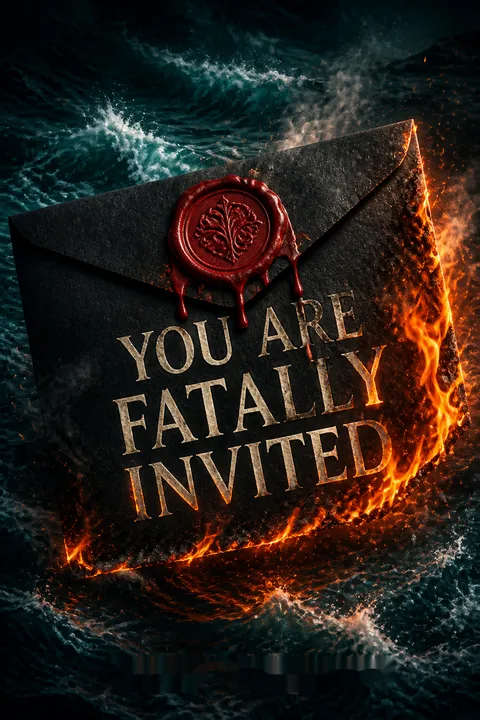


Plot Summary
Writers Arrive at Wolf Harbor
Rodrigo Sandoval, a former lawyer now writing thrillers with his wife, Olivia, reaches a remote Maine island for an invitation-only retreat hosted by the anonymous J. R. Alastor.
Their companions are prickly British novelist Thomas Fletcher, rising horror writer Ashton Carter, celebrated mystery author Cassandra Hutchinson, and withdrawn young novelist Violet Blake. Rodrigo recognizes Violet from a case he has kept from Olivia, and the sight unsettles him. The event coordinator, Mila del Angél, welcomes the group but says their host is delayed.
She has arranged the luxurious mansion, its horror memorabilia, and a strict schedule of themed dinners. To the guests, she is discreet staff. In private, she is waiting for one of them to answer for a stolen book.
The opening makes hospitality feel double-edged. The guests have come to work, but their invitations also draw people with overlapping professional histories into a place controlled by someone who knows more than they do. Rodrigo’s concealed recognition gives the retreat a personal charge before the games begin, while Mila’s smooth competence masks a grievance that turns service into performance. Her position is psychologically precise: she can orchestrate the room, yet cannot claim the status of the writers inside it. The mansion’s abundance therefore sharpens, rather than softens, the unease. Everyone is displayed, categorized, and watched.
Justice Served Cold
The first dinner takes place on a windblown beach, where the guests find a dead fish beneath a silver cover and must solve the evening’s riddle. They settle on justice, prompted by the missing eyes and scales, while Fletcher suggests revenge as the colder answer.
Rodrigo hears the exchange as a private accusation: years earlier, he mishandled a case involving Violet, and he fears Alastor knows. He tells Olivia only that a former legal opponent is present, leaving out the worst of his involvement.
Meanwhile, Mila has secretly drugged Rodrigo with stimulants and given Olivia a sedative as part of the retreat’s planned games. After returning to their room, Rodrigo slips out alone before dawn, leaving Olivia asleep and his whereabouts unknown.
The riddle works because it is both a puzzle and a psychological trigger. Its clues invite the whole table to play, but Rodrigo experiences the answer as a verdict directed at him. His partial disclosure to Olivia demonstrates how concealment protects a marriage from immediate conflict while quietly making trust more fragile. Mila’s drugs show that the retreat’s games are not merely theatrical, even before anyone understands their danger. The scene also establishes a contrast between justice as an abstract symbol and justice as personal retaliation. Once the guests accept the riddle’s answer, Rodrigo cannot easily dismiss the possibility that someone has arranged the evening around his guilt.
The Map Leads to Rodrigo
By morning, Rodrigo is missing. Olivia searches the island while the others discover a marked passage from her and Rodrigo’s novel, a missing butcher knife from the Museum Room, and small boxes containing unsettling personal artifacts. Rodrigo’s box holds a map with an X near the island’s old cemetery.
Olivia, Cassandra, Ashton, and Mila follow it into the woods and find Rodrigo tied to a tree beside a grave bearing his name. A knife is fixed to his hand, scales to the other, and blood stains the bandage over his eyes. The tableau echoes the justice riddle and the couple’s fiction, but Ashton insists the body is real. The house’s phone and internet are unusable, so the group cannot summon help.
The first body collapses the boundary between fiction and evidence. The guests have been trained to treat strange objects as entertainment, so the staged corpse forces them to decide whether genre conventions still offer protection. Rodrigo’s arrangement makes guilt visible as spectacle: his legal past is translated into props anyone can read, even if no one yet knows the whole case. For Olivia, the mystery is no longer an intellectual exercise but a search for her husband. Mila’s presence at the scene also changes her role. The organizer who controlled the games must now respond to consequences she neither expected nor can safely explain.
The Island Closes In
After the group returns to the mansion, Fletcher dismisses the killing as an elaborate stunt, while Olivia refuses to accept that explanation. The next morning, the cemetery is disturbed and Rodrigo’s body has disappeared. Cassandra then vanishes from her room, which is found wrecked, with its window open and signs of a struggle.
Mila and Ashton discover that the only speedboat is already taking on water and sinking beneath the boathouse. The guests cannot leave, and the storm makes any attempt to reach the mainland dangerous. Mila knows a supply boat is due the following day, so she persuades the group to wait. The host’s games have now become an apparent pattern of staged deaths, missing evidence, and blocked escape routes.
The disappearance of evidence does not restore uncertainty; it makes uncertainty more coercive. Without Rodrigo’s body, Fletcher can preserve his preferred interpretation, while Olivia is left with grief that no physical proof can settle. Cassandra’s empty, damaged room repeats the same instability at a more intimate scale. The sinking boat converts a mysterious retreat into a locked environment, but the group’s dependence on Mila also makes her suspicious by default. Her promise of a supply boat offers a practical horizon, not safety. Every apparent exit depends on a person or system the guests cannot verify, which is exactly how Alastor’s control works.
Clue Names the Sins
Alastor’s next challenge is a custom version of Clue, with the guests, Mila, and the staff pictured as its characters and a row of sins to match them. The cards identify occupations as well as wrongdoing, and the group realizes the host has been monitoring them closely.
Olivia admits that her first novel drew on someone else’s idea, though she resists explaining further. Ashton reveals that he once pursued police work, and Fletcher confirms he had professional ties to both Rodrigo and Cassandra.
The proposed matches suggest a thief, a perjurer, an accomplice, a poisoner, and a serial killer among them. No one can agree on who Alastor is. With suspicion spreading, they decide to cooperate long enough to search for evidence and leave together.
The game turns confession into a structural demand: each person is reduced to a role, a profession, and a moral label. Its neat grid promises that every life can be solved by matching categories, but the players keep resisting the assignments that threaten their identities. Olivia’s admission is partial, while Ashton’s disclosure changes how the group reads his calmness and investigative instincts. Fletcher’s connections suggest that the retreat is not an arbitrary gathering, yet he continues to control what he reveals. The board’s apparent order is therefore unstable. It offers the guests a method for understanding one another while also making them easier to manipulate.
The Study Holds Two Bodies
The supply boat never arrives, and the guests discover that housekeeper Taryn Cooper and chef Curtis Shelton are missing. Searching the mansion, they finally enter Alastor’s forbidden study and find both workers dead, their throats cut. A note announces a new challenge: each guest must remain locked in a bedroom through the night.
Mila is devastated; she had trusted the two young employees and had tried to keep them out of the retreat’s secrets. Alastor later tells her that Curt caused a customer’s death through negligence and a cover-up, while Taryn stole a passenger’s heart medication, causing another death. He claims they deserved punishment. Mila rejects that judgment, but has no way to prove who killed them or stop the next game.
The murdered staff expose the cost of treating moral judgment as a private authorial privilege. Alastor recasts workplace negligence and theft as capital crimes, reducing complex responsibility to a sentence imposed by the person with power. Mila’s grief is sharpened by her own managerial role: she hired Taryn and Curt, kept them uninformed, and believed that ignorance would protect them. The bodies also destroy the guests’ last convenient fiction that the retreat is harmless theater. Yet the host’s explanations do not resolve the crime. They reveal a worldview in which remorse, context, and the possibility of repair matter less than the certainty of punishment.
Bedrooms Become Traps
Mila urges the guests to confess, hoping they can satisfy Alastor’s rules and survive. Instead, Fletcher uses a prescription he received to drug her, making the group believe they have jointly neutralized a possible accomplice. Ashton gets Mila to her room and guards the door, but she secretly makes herself vomit and warns him that survival depends on changing, not merely obeying.
At night, water pours through Ashton’s ceiling, strange sounds move through the halls, and alarms and smoke drive the guests toward panic. Mila triggers a recording of her own distress from the library. Violet and Olivia leave their rooms to help, while Ashton and Fletcher remain behind. At dawn, Ashton appears stabbed and Fletcher appears dead in his bed.
The bedroom challenge tests more than obedience. Alastor arranges the house so that safety appears to require self-preservation, then makes compassion look like rule-breaking. Mila’s warning to Ashton reframes the games as tests of character rather than puzzles with mechanical answers. Fletcher’s decision to drug her shows how fear can make collective cruelty feel prudent, especially when it is disguised as a group choice. Violet and Olivia’s response to the recorded distress marks a meaningful shift: they risk themselves for someone else. The apparent deaths of Ashton and Fletcher then complicate that success, suggesting that ethical action may matter even when it cannot guarantee survival.
Olivia Turns on Violet
With Ashton and Fletcher presumed dead, the remaining women receive a final challenge titled Final Girls. Mila leaves Violet and Olivia together with a numbered clue, and Violet recognizes it as a Dewey Decimal reference to a botany book.
The book distinguishes a harmless plant from poisonous oleander and notes that only someone who has used oleander as poison would reliably identify the difference. Olivia’s untouched garnish gives her away. She attacks Violet, who has already suspected her and answers with a lamp strike and a gun.
Olivia spills gasoline and Violet fires, igniting an explosion that wounds them both. Dying, Olivia admits she helped Alastor, then urges Violet to make him pay. Violet shoots the retreat’s hidden serial killer, but the mansion catches fire.
The clue is a test of knowledge acquired through wrongdoing. Olivia’s expertise does not simply expose her; it shows how violence can become a practiced competence that the perpetrator experiences as ordinary. Violet’s response is morally compromised but not abstract: she acts under immediate threat, with gasoline spreading through the room. Her choice prevents Olivia from killing them, yet it leaves Violet holding the weapon and the aftermath. Olivia’s final admission complicates the apparent division between murderer and victim, since she has participated in Alastor’s plan while also pursuing her own killings. The fire removes the possibility of a clean victory.
The Confessional Burns
In the Museum Room, Violet confesses that she stole her debut novel from an online critique partner, not knowing that the partner was Mila under another name. Mila admits she helped Alastor arrange the retreat partly to punish Violet, and apologizes for the deaths her complicity enabled.
Smoke reaches the room before they can escape. The masked host reveals herself as Cassandra, who has been living as J. R. Alastor. She explains that her daughter died after Ashton’s childhood prank sent her canoe into the water, and that she built the retreat to punish those connected to old wrongs.
Elsewhere, Violet finds Ashton alive and learns he has recovered the memory of causing Jack’s drowning. Cassandra returns through the fire and frees Mila, then stays behind while Violet escapes.
The confessional makes the novel’s central metaphor physically dangerous: disclosure may release a person, but it cannot undo the harm that preceded it. Mila and Violet’s recognition joins two distinct betrayals, the theft of a book and the abandonment of a friendship, without making either woman innocent. Cassandra’s reveal explains the retreat’s design but does not validate her authority to decide who deserves death. Her final act of freeing Mila marks a crack in that self-appointed role. Ashton’s recovered memory likewise replaces a comforting accident with culpability. The survivors are left not with absolution, but with a chance to choose what they do next.
A Better Ending
Violet reaches the shore through a hidden passage and finds Ashton trapped beneath the dock, bound to a wheelchair as the tide rises. He has recovered the memory of causing Jack’s canoe to capsize, then diving in too late to save her.
Mila escapes the burning mansion with Cassandra’s help, and the three survivors reunite as boats approach the island. A week later, Ashton connects Cassandra to Michael Rothchild, the lawyer who helped suppress evidence in Violet’s case and whose death she had disguised as an allergy.
He also identifies how the retreat’s guests were linked through the old case. The survivors choose not to expose one another’s crimes publicly, but Mila and Violet agree to seek information about Olivia’s victims. Their pact begins a difficult collaboration rather than erasing what happened.
The resolution refuses the clean moral arithmetic that drove the retreat. Ashton’s recovered memory gives him responsibility without making his later life meaningless; Mila and Violet likewise have to carry guilt without letting it dictate another act of revenge. Their agreement is not a declaration that the past no longer matters. They preserve the possibility of legal and personal consequences while choosing not to turn disclosure into another weapon against one another. The promise to investigate Olivia’s victims keeps the dead from disappearing into the survivors’ private bargain. Repair, here, means accepting unfinished obligations rather than pretending that forgiveness has made everyone harmless.
Epilogue
Two years later, Violet Blake and Mila Aracely-Ortega are touring as coauthors of a bestselling novel. In an interview, they explain that their first collaboration, An Ecology of Scars, began with Mila’s writing, though Violet’s name appeared on its cover.
They now share credit and describe their partnership as work in progress, built on learning what to hold and what to release. Ashton has written the book’s foreword, and the two women are restoring Wolf Harbor Estate as a retreat for writers. Cassandra’s inheritance has become a place for new work, though Violet jokes that there are always more secrets.
The interview offers a public form of repair without claiming that the past has been settled. Violet’s willingness to name Mila’s authorship corrects the original theft at the level where it occurred, on the book itself and in the public record. Their shared byline makes collaboration a practice of redistributed credit, not a sentimental promise that conflict has vanished. The rebuilt retreat also changes the meaning of the island: a place designed to force guilt into performance is repurposed for writers who may choose what to reveal. The final joke about secrets preserves the novel’s suspicion of tidy endings, even as the characters build a more honest one.
Analysis
You Are Fatally Invited treats authorship as a form of power with a dangerous temptation: the person who controls the story can decide what counts as evidence, whose pain matters, and whether a punishment looks like justice. Cassandra’s games borrow the language of fiction, but their real force comes from making people behave as if they were already characters with fixed roles. The guests are assigned sins, and their fear pushes them toward those identities. Fletcher turns suspicion into coercion; Olivia acts from motives she can rationalize; Mila mistakes the ability to stage a reckoning for the ability to repair a stolen life.
The novel’s strongest counterargument to this worldview is not innocence. Its survivors are implicated in wrongdoing, and none can restore what was lost. Instead, the possibility of change appears when a person acts against self-interest: Violet and Olivia leave their rooms to help, Mila frees Violet when she could escape alone, and Cassandra finally risks herself to save Mila. These actions do not cancel earlier harms. They show that a person’s moral identity is not exhausted by the worst thing they have done.
The book also makes literary theft more than a publishing scandal. Violet’s appropriation of Mila’s novel takes away credit, companionship, and a future Mila imagined for herself. Mila’s revenge plan grows from that genuine injury, but her attempt to answer theft with death would repeat the same logic of possession: because something was taken from her, she believes she can decide what must be taken from Violet. Their eventual coauthorship matters because it makes recognition material. Mila’s name is placed beside Violet’s, and the creative work becomes shared rather than seized.
The ending refuses complete absolution. The survivors choose what to disclose, pursue information for Olivia’s victims, and continue living with consequences. The novel suggests that confession is only useful when it changes what someone does next. A story can name a wound, but it cannot make the wound harmless; repair requires relinquishing the fantasy that suffering grants the right to control another person’s ending.
Review Summary
You Are Fatally Invited is a debut locked-room mystery novel that has received mixed reviews. Many readers enjoyed its twisty plot, atmospheric setting, and homage to classic mysteries. However, some found the characters underdeveloped and the narrative confusing. The book's premise of thriller authors gathered for a writing retreat on a remote island intrigued many, but opinions varied on its execution. While some praised its clever plotting and surprises, others felt it relied too heavily on tropes and lacked originality. Overall, it's seen as an ambitious debut with both strengths and weaknesses.
People Also Read






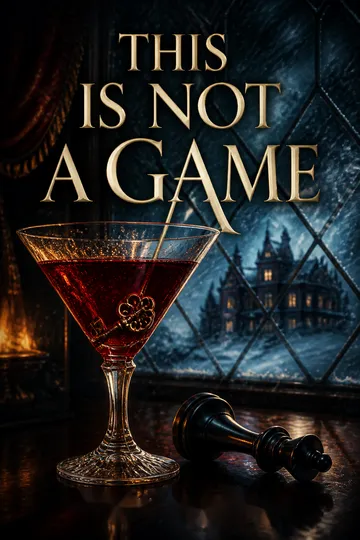
Characters
Mila del Angél
The hidden event architectMila is a capable event coordinator who studies people as carefully as schedules, yet privately longs to be recognized as a writer. Years of financial pressure and a painful history with Violet have taught her to hide vulnerability beneath efficiency and a hunger for control. She is drawn to stories because they give shape to feelings she struggles to voice directly. Her alliance with the anonymous host lets her turn planning into a form of authorship, but it also tests whether she can distinguish accountability from revenge. Mila’s defining tension is between wanting her stolen voice restored and fearing that her own ambitions may make her harm someone else.
Violet Blake
The guarded young novelistViolet is a young literary thriller writer whose reserve can look like indifference until a crisis forces her to act. She is blunt, observant, and wary of intimacy, with a mind that notices details others overlook. Her writing gives form to fear and grief, while her difficult relationship with her own past makes trust feel like a risk rather than a comfort. Violet wants to be taken seriously as an artist, but the pressure to succeed has made her vulnerable to choices she cannot easily justify. Her sharpness is both a defense and a tool for seeing through performances.
Ashton Carter
The haunted horror writerAshton is a young horror novelist whose warmth and self-deprecating humor soften a serious, investigative temperament. He cares about how stories affect readers and treats Mila’s work with an attention she has rarely received. A longstanding fear of water shapes his relationship to danger, while writing offers him a way to approach memories that ordinary speech cannot reach. He is drawn toward helping others even when his own past remains unresolved. Ashton’s strength lies less in fearlessness than in his willingness to keep asking what happened, including when the answer may implicate him.
Olivia Sandoval
The ambitious coauthorOlivia is Rodrigo’s wife and writing partner, a lively reader who brings curiosity and social ease to a tense group. She is devoted to her marriage and takes pride in the collaborative crime novels they produce together. Beneath her buoyant manner is a competitive drive and a strong investment in the stories she tells about herself and her career. Olivia is quick to engage with a puzzle and equally quick to defend the people she loves. Her relationship with authorship is complicated by the difference between inspiration, shared labor, and ownership.
Rodrigo Sandoval
The lawyer turned novelistRodrigo is a Spanish-born former attorney who now writes thrillers with Olivia. His legal training has left him suspicious of motives and alert to the ways people can misuse power. He is protective of his wife, affectionate in private, and troubled by a professional past he has not fully disclosed to her. Rodrigo’s careful reasoning can become a defense against emotional honesty: he would rather anticipate the next threat than admit what he fears. His history gives him an uneasy connection to several people at the retreat, even as he tries to treat the invitation as a chance to work.
Cassandra Hutchinson
The theatrical mystery novelistCassandra is a celebrated older writer of domestic mysteries, known for a lively manner, sharp observations, and a talent for turning personal history into comic anecdote. She can make a room feel warmer while noticing exactly where its tensions lie. Her age and experience give her an almost maternal presence among the younger authors, though she resists being treated as frail or irrelevant. Cassandra is fascinated by the hidden motives people conceal behind respectable appearances. Her public ease sits alongside a deep attachment to family and to the stories through which she understands loss.
Thomas Fletcher
The combative literary novelistFletcher is a British novelist who prizes literary prestige and makes disagreement a habitual form of self-presentation. His polished clothes and cutting wit help him control conversations, especially when he feels challenged. He has longstanding professional ties to several guests and is careful about what those relationships reveal. Fletcher’s intelligence is real, but so is his reflex to turn vulnerability into argument. He often treats other people’s emotional claims as material to be corrected rather than understood.
J. R. Alastor
The anonymous bestselling authorJ. R. Alastor is a famously private writer of horror and suspense whose work has attracted readers for decades without a public face. The author’s essays treat fiction as a way to examine guilt, fear, and the possibility of change. Alastor communicates through invitations, messages, and carefully staged experiences, preferring to control the setting rather than appear in it. The persona has become larger than any single book, inviting speculation about who created it and why. Its influence on the retreat comes from the belief that a person’s life can be structured like a story.
Curtis Shelton
The island chefCurt is the retreat’s talented young chef, relaxed and playful in the kitchen but attentive to the people around him. He treats food as both craft and comfort, and his easy rapport with Taryn helps make their isolated workplace feel companionable. Mila values his skill and gradually becomes fond of his warmth. He is practical when problems arise, though his light manner can obscure how much responsibility he feels for the people he works beside.
Taryn Cooper
The observant housekeeperTaryn is a young housekeeper who combines competence with an inquisitive, energetic nature. She asks questions others avoid and is not easily satisfied by a polished explanation. Her friendship with Curt gives her a playful streak, while her own difficult relationship history has left her rebuilding confidence. Mila regards her as a responsibility and, increasingly, as someone she wants to protect. Taryn’s curiosity makes her perceptive, though it can draw her toward information she has been told to leave alone.
Jack Malkovich
Ashton’s childhood friendJack is a girl Ashton meets at a behavioral camp, where the two share an interest in books. Her presence becomes part of the memory that shapes Ashton’s relationship with water, fear, and responsibility. She represents a formative connection he has never been able to understand fully.
Michael Rothchild
Violet’s defense lawyerMichael is a prominent attorney who represents Violet during a publishing-related legal dispute. His influence reaches beyond the courtroom, and his professional decisions affect several people connected to the retreat. He is remembered as a capable, well-connected lawyer whose private loyalties are difficult to assess.
Plot Devices
Themed Mystery Dinners
Turn tropes into trialsEach evening is organized around a familiar thriller or horror convention, from the secluded dinner party to cursed artifacts, a deadly game, and the final-girl scenario. The format gives the guests an apparently playful task while drawing attention to their fears and hidden histories. As the retreat grows more dangerous, the conventions cease to be decorative: the guests find scenes that echo their own books and must decide whether they are seeing staged fiction or real violence. The dinners also let Alastor control the pace of revelation, keeping the group focused on the next challenge rather than the full design of the week.
The Cursed Artifacts
Make private guilt tangibleSmall objects are placed in labeled boxes for the guests, including a dead spider, a bird, a fountain pen, a book, and a map. Each item points toward a personal history or a role in the retreat’s moral puzzle. The artifacts are effective because they make the guests interpret one another before anyone has admitted anything. A box can be read as accusation, evidence, or bait, and the characters’ reactions become clues in their own right. When the contents do not match the intended game, the objects also signal that someone is interfering with Alastor’s plan.
The Custom Clue Board
Sort people into sinsAlastor’s personalized Clue game turns the estate and its occupants into a system of character cards, occupations, and alleged sins. Its three matching categories encourage the guests to believe that a correct arrangement will identify the hidden host. The game is both an investigative tool and a pressure mechanism: the more accurately the characters place one another, the more they risk revealing themselves. Its apparent logic is deliberately incomplete, so progress depends on questioning the categories rather than simply filling them in. The board makes the novel’s central tension visible: people want a solvable explanation, even when human culpability does not fit tidy boxes.
Books as Blueprints
Let fiction foreshadow murderThe guests’ own novels become templates for the scenes staged around them. Rodrigo’s body resembles a murder from his and Olivia’s work, while the clues left in Cassandra’s room echo a death in her latest book. The device forces authors to confront the gap between inventing violence and recognizing its physical consequences. It also creates uncertainty: if a death resembles a fictional scene, the guests may assume it is part of the retreat’s performance, or may not notice that a real person is in danger until too late. Ashton uses the books as investigative evidence, while Alastor uses them as instruments of psychological pressure.
The Hidden Passageways
Make the house a mazeRenovations conceal sliding bookcases, narrow stairways, and concealed rooms throughout Wolf Harbor Estate. Mila uses the passages to move unseen and control the retreat, while the guests gradually realize that the mansion has routes they cannot monitor. The secret architecture supports Alastor’s surveillance and lets characters appear or disappear without using the visible corridors. It also becomes physically important during the fire, when a concealed route offers Violet a way out. The passages embody the novel’s broader problem of access: the characters can see the rooms they are allowed to enter, but not the hidden systems determining what happens to them.
FAQ
```markdown
Synopsis & Basic Details
What is You Are Fatally Invited about?
- A Deadly Writers' Retreat: You Are Fatally Invited gathers a group of thriller authors—Rodrigo, Olivia, Fletcher, Cassandra, Ashton, and Violet—on a secluded Maine island for an exclusive retreat hosted by the anonymous J. R. Alastor. What begins as a mysterious literary event quickly devolves into a deadly game, as the authors discover their host knows their darkest secrets and is using their own fictional murder plots as blueprints for real-life killings.
- Games of Guilt and Revenge: Guided by Alastor's enigmatic event coordinator, Mila, the guests are subjected to psychological "mystery dinners" and receive "cursed artifacts" that expose their past sins, from literary theft and exploitation to perjury and accidental death. The line between game and reality blurs as bodies begin to appear, mirroring deaths from the authors' books, forcing them to confront their complicity and the true nature of justice.
- Survival and Self-Discovery: Trapped on the island with no escape, the remaining survivors—Mila, Violet, and Ashton—must navigate Alastor's escalating games, uncover the host's true identity, and confront their own moral failings. The narrative explores themes of vengeance, forgiveness, and the power of storytelling, culminating in a desperate fight for survival and a chance at redemption.
Why should I read You Are Fatally Invited?
- Meta-Thriller Brilliance: Readers should dive into You Are Fatally Invited for its ingenious meta-narrative, where the characters' own fictional works become instruments of their demise. This self-aware approach to the thriller genre offers a fresh, intellectual twist on classic locked-room mysteries, constantly challenging reader expectations and blurring the lines between author, character, and victim.
- Deep Psychological Exploration: The novel excels in its psychological depth, delving into the unspoken motivations and complex emotional landscapes of its characters. It's a masterclass in exploring guilt, paranoia, and the corrosive nature of vengeance, forcing both characters and readers to question what truly constitutes justice and how far one would go to achieve it.
- Unpredictable Twists and Turns: If you crave a story that keeps you guessing until the very end, this book delivers. With its unreliable narrators, shifting allegiances, and shocking revelations—including the true identity of J. R. Alastor and the unexpected survival of key characters—You Are Fatally Invited is a rollercoaster of suspense that will leave you breathless.
What is the background of You Are Fatally Invited?
- A Modern Gothic Setting: The story is set on Wolf Harbor Island, a newly renovated, opulent estate in Maine, which serves as a classic isolated, atmospheric backdrop for the unfolding horrors. The remote, fog-shrouded island, with its dramatic cliffs and dense forests, enhances the sense of entrapment and psychological unease, reminiscent of classic gothic literature.
- Literary World Commentary: The novel is deeply embedded in the contemporary publishing world, featuring bestselling authors and literary tropes. It subtly critiques the industry's obsession with fame, the pressures of deadlines, and the ethical dilemmas of drawing inspiration from real-life experiences, particularly in the thriller and horror genres. The inclusion of Alastor's fictional writing manual, The Ink in Your Veins: On Writing Fear, provides a meta-commentary on the very act of crafting suspense.
- Cultural and Psychological Underpinnings: The narrative draws on universal themes of justice, revenge, and the human psyche's capacity for both good and evil. It explores how past traumas and unresolved guilt can fester, driving individuals to extreme actions. The "cursed artifacts" and personalized games tap into deep-seated fears and moral quandaries, reflecting a broader cultural fascination with true crime and the darker aspects of human nature.
What are the most memorable quotes in You Are Fatally Invited?
- "If you were to take Story, strap it down onto your dining room table, and slide a scalpel through its chest, you would find the lifeblood is theme.": This opening line from J. R. Alastor's The Ink in Your Veins immediately establishes the novel's meta-fictional core, highlighting how deeply intertwined the narrative's themes are with its very structure and the characters' fates. It foreshadows the brutal dissection of lives and stories that will occur on the island, emphasizing that theme is the driving force behind all the horror.
- "Writing is a kind of beautiful madness. It is slitting yourself open, bleeding your soul onto the page in that paradoxical mask of vulnerability perhaps only a writer can achieve.": Another profound insight from Alastor's manual, this quote speaks to the intense, often painful, process of creation that many of the characters embody. It underscores the idea that true writing demands a willingness to confront one's inner demons, a vulnerability that Alastor exploits to devastating effect throughout the retreat, turning their creative process into a weapon against them.
- "Vengeance is a poison you consume alongside your victim; the only antidote is reconciliation.": This powerful line from the epilogue, attributed to A Deadly Invitation (the book co-authored by Mila and Violet), encapsulates the ultimate thematic resolution of the novel. It serves as a poignant reflection on the destructive nature of revenge, a lesson learned through immense suffering on Wolf Harbor Island, and offers a path towards healing and forgiveness that transcends the cycle of violence.
What writing style, narrative choices, and literary techniques does Ande Pliego use?
- Alternating First-Person Perspective: Pliego employs a dynamic, alternating first-person point of view, primarily switching between Mila, Ashton, and Violet, but also occasionally dipping into Rodrigo, Cassandra, and Fletcher's perspectives. This narrative choice immerses the reader directly into each character's thoughts, fears, and biases, creating a sense of intimacy while simultaneously fostering unreliable narration and heightening suspense as the reader tries to discern the truth.
- Metafiction and Intertextuality: A defining characteristic is the novel's metafictional framework, where the story constantly references its own construction and the tropes of the thriller genre. The inclusion of excerpts from J. R. Alastor's fictional writing manual, The Ink in Your Veins, and the killer's use of the characters' own books as murder blueprints, creates a layered commentary on storytelling itself, blurring the lines between author, reader, and character.
- Symbolism and Foreshadowing: Pliego masterfully uses symbolism and subtle foreshadowing to build tension and reveal deeper meanings. Recurring motifs like snakes (Mila's ring, snakeskin artifact, water dragon tattoo), mirrors (reflections, twisted self-perception), and specific objects from horror films (Psycho knife, Shining axe) are woven throughout, hinting at future events and character connections. The meticulous staging of each murder, mirroring a character's book, is a prime example of intricate foreshadowing.
Hidden Details & Subtle Connections
What are some minor details that add significant meaning?
- Mila's Snake Motif: Mila's recurring association with snakes—her snakeskin-sculpted watch, the snakeskin artifact in her box, and her "cold-blooded" self-description—subtly foreshadows her dual nature and her role in Alastor's scheme. It symbolizes both her cunning and her capacity for vengeance, but also her eventual transformation, as snakes shed their skin. This detail, often missed, highlights her journey from a vengeful accomplice to a figure seeking redemption, shedding her past self.
- Fletcher's Caesar Bust: The marble bust of Julius Caesar in Fletcher's room, a prop from his own book, initially seems like a cheeky nod to his literary work. However, its presence, and his casual disposal of it, subtly underscores his arrogance and dismissiveness of the real-world consequences of his actions. The later revelation that his book's death involved a "skull bashed in with a marble bust of Julius Caesar" (Chapter 28) makes his earlier action a darkly ironic foreshadowing of his own fate, emphasizing his blindness to his impending doom.
- Ashton's "Here, read this" Phrase: The recurring phrase "Here, read this," which Ashton associates with his deceased friend Jack and his own book, It Swallows Us Whole, is a poignant detail. It not only connects directly to his deepest trauma but also serves as a meta-commentary on the power of stories to both haunt and heal. This phrase, often a simple invitation to share a story, becomes a loaded symbol of the narrative's central conflict: the dangerous allure of stories and their real-world impact.
What are some subtle foreshadowing and callbacks?
- The "Confessional" Artifact: The covered confessional in the Museum Room, initially dismissed as needing restoration, is a powerful piece of foreshadowing. Mila notes its "pointed spires and dark wood" (Chapter 3), evoking a sense of unease. This seemingly minor detail later becomes the literal setting for the climax of Alastor's game, "Confession", where characters are forced to reveal their deepest secrets, highlighting the story's structural symmetry and thematic focus on truth and judgment.
- Olivia's "Partner in Crime" Line: When Rodrigo confesses part of his past to Olivia, she reassures him, "I prefer the term 'partner in crime.' We've buried a lot of bodies together, at this point" (Chapter 7). This seemingly affectionate, playful line is a chilling piece of foreshadowing, subtly hinting at Olivia's true nature as a serial killer and her active involvement in actual crimes, not just fictional ones. It's a callback to their shared writing career and a dark twist on marital intimacy.
- Alastor's "Writing Ex Nihilo" Excerpt: The excerpt from Alastor's writing manual, "Writing Ex Nihilo," discusses creating worlds "from nothing" and questions, "what if the page wasn't the only place we could control fate?" (Chapter 2). This philosophical musing subtly foreshadows Alastor's god-like manipulation of the retreat, turning the island into a real-life story where he controls the characters' fates, blurring the line between authorial intent and actual murder.
What are some unexpected character connections?
- Cassandra and Michael Rothchild: The revelation that J. R. Alastor (Cassandra Hutchinson) was married to Michael Rothchild, Violet's lawyer, is a crucial and unexpected connection. This detail, uncovered by Ashton through an obituary link (Chapter 77), explains how Cassandra gained intimate knowledge of Violet's literary theft and Rodrigo's perjury. It transforms Cassandra's motive from general vengeance to a deeply personal vendetta, as Michael "convinced Rodrigo to throw my case" (Chapter 77), linking her directly to the legal and ethical failings of multiple guests.
- Fletcher and Cassandra's Shared Past: Violet overhears Fletcher and Cassandra arguing, with Fletcher accusing her of knowing "something" and asking "Who she told about you" (Chapter 26). This hints at a deeper, more contentious history than their initial "old friends" claim. The later reveal that Fletcher wrote a memoir about a patient with psychosis whose daughter died (Chapter 45), and Ashton's deduction that this patient was Cassandra, creates a profound and disturbing link. Fletcher exploited Cassandra's grief, providing Alastor with a powerful motive for his inclusion in the deadly games.
- Mila and Violet's Unacknowledged Bond: Before the retreat, Mila and Violet were critique partners, with Mila using the pen name Ana M. (Chapter 65). This deep, formative connection is initially obscured by Mila's anger and Violet's guilt. Their shared history as aspiring writers, and the betrayal that fractured their bond, is the emotional core of Alastor's plan. The eventual reconciliation and co-authorship in the epilogue highlight this unexpected connection as the ultimate path to healing and redemption, transforming their rivalry into a powerful partnership.
Who are the most significant supporting characters?
- Taryn Cooper and Curtis Shelton (The Staff): Though initially appearing as mere background figures, the housekeeper and chef, Taryn and Curt, become profoundly significant as collateral damage in Alastor's game. Their murders, orchestrated by Olivia but framed by Alastor as punishment for their past misdeeds (negligence and theft, respectively), underscore the brutal reality of the retreat. Their deaths serve as a turning point for Mila, forcing her to question her complicity and shift her allegiance from Alastor to protecting the remaining innocent guests, highlighting the human cost of unchecked vengeance.
- Jack Malkovich (Ashton's Deceased Friend): Jack, Ashton's childhood friend who drowned in an accident Ashton blames himself for, is a pivotal unseen character. His death is the root of Ashton's deep-seated guilt and trauma, making him a target for Alastor's "Child Murderer" accusation. Jack's memory drives Ashton's character arc, influencing his empathy and his eventual decision to become a detective. The revelation that Jack's death "was not an accident" (Chapter 40) by Alastor, and Ashton's later realization that he "drowned just like Jack" (Chapter 72), elevates Jack's role from a tragic memory to a central mystery in the narrative.
- Ana Aracely-Ortega (Mila's Former Self): Ana is Mila's original name and identity, representing the aspiring writer whose career was stolen by Violet. Though not a physical character, Ana's presence is deeply felt through Mila's internal monologue and her past messages to Violet. Ana symbolizes Mila's lost potential, her unfulfilled dreams, and the pain of betrayal. Mila's journey to reclaim her name and identity, eventually co-authoring a book under "Mila Aracely-Ortega," signifies her redemption and the healing of her fractured self.
Psychological, Emotional, & Relational Analysis
What are some unspoken motivations of the characters?
- Rodrigo's Desire for Absolution: While Rodrigo's fear of exposure for perjury is evident, his deeper, unspoken motivation is a desperate yearning for absolution and a clean conscience. He tells Olivia, "I'd done my best to forget what I did to become partner at the firm... I resigned, exiling myself into my writing career, my marriage" (Chapter 3). His internal struggle suggests he sought the retreat as a potential escape or a forced confrontation, hoping to finally shed the "sliver of guilt" that lived "in the corner of my eye, every time I glanced in the mirror."
- Fletcher's Craving for Validation: Beyond his overt arrogance, Fletcher's unspoken motivation is a profound craving for validation and recognition, particularly from literary figures like Alastor. His constant need to assert his intellectual superiority and his pride in "assisting in crafting his writing manual" (Chapter 25) reveal a deep insecurity. He dismisses commercial fiction and clings to the "literary" label, suggesting a fear of being irrelevant or forgotten, which Alastor expertly exploits by inviting him to a retreat with more commercially successful authors.
- Olivia's Need for Control: Olivia's initial charm and supportive demeanor mask a deep-seated need for control, which becomes her primary motivation as the serial killer. Her actions, from exploiting others' ideas to murdering those she deems guilty, stem from a desire to dictate outcomes and impose her own version of justice. Her statement, "I'm not leaving until we know which one of you is Alastor" (Chapter 28), while seemingly about revenge for Rodrigo, is also about regaining control over a narrative that has spiraled beyond her influence.
What psychological complexities do the characters exhibit?
- Mila's Vengeful Idealism vs. Empathy: Mila exhibits a complex psychological duality, initially driven by a potent mix of vengeful idealism and deep-seated hurt. She believes in Alastor's "vigilante justice" (Chapter 15) as a means to right the wrongs done to her, yet her empathy for the innocent staff and her growing connection with Ashton force her to confront the moral compromises of her actions. This internal conflict, where her desire for retribution clashes with her innate compassion, highlights the psychological toll of her complicity and her eventual path to redemption.
- Ashton's Survivor's Guilt and Self-Punishment: Ashton's character is deeply marked by survivor's guilt from his childhood accident, leading to a subconscious pattern of self-punishment. His "hate water" but "made myself do everything I could around it" (Chapter 34) reveals a psychological need to confront his trauma, even if it means reliving it. His willingness to put himself in danger to protect others, and his initial reluctance to involve the police due to his own past, showcases a complex interplay of heroism and self-blame, making him a reluctant hero burdened by his past.
- Violet's Dissociation and Defensive Cynicism: Violet copes with her guilt and trauma through dissociation and a cynical, deadpan humor. Her statement, "Dissociating led to being paralyzed. And panicking led to dying" (Chapter 51), reveals a learned psychological defense mechanism. Her initial emotional detachment and sharp wit are a shield against vulnerability, a way to distance herself from the escalating horrors. Her journey involves breaking through this dissociation, allowing herself to feel fear and empathy, which is crucial for her survival and eventual reconciliation with Mila.
What are the major emotional turning points?
- Rodrigo's Confession to Olivia: A significant emotional turning point occurs when Rodrigo, under the influence of Alastor's drugs and the riddle's pressure, attempts to confess his past to Olivia (Chapter 7). His inability to fully articulate the truth, offering only a "fact oversharpened often functioned like a lie," marks the point of no return for his character. This moment of failed honesty underscores the corrosive power of unconfessed guilt and sets the stage for his violent demise, highlighting the emotional cost of his secrets.
- Mila's Realization of Alastor's Betrayal: Mila's emotional arc pivots dramatically when she realizes Alastor has been manipulating her, making her an "accomplice to murders I didn't even know were happening" (Chapter 24). The discovery of Curt and Taryn's bodies, and Alastor's cold justification, shatters her vengeful idealism. This moment transforms her from a willing conspirator to a desperate protector, driven by guilt and a fierce desire to save the remaining innocent lives, marking her shift towards selflessness.
- Violet's Choice in the Confessional: The climax in the burning confessional, where Violet chooses to turn the lock to save Mila, is the ultimate emotional turning point for both characters. Despite her deep-seated fear of small spaces and her past betrayal by Mila, Violet's act of selflessness breaks the cycle of vengeance. Her whispered "Me too" (Chapter 68) in response to Mila's apology signifies a profound emotional reconciliation and forgiveness, paving the way for their future partnership and embodying the novel's theme of redemption.
How do relationship dynamics evolve?
- Mila and Ashton: From Suspicion to Trust and Affection: Their relationship evolves from initial professional distance and Mila's suspicion (due to Alastor's manipulation) to a deep, vulnerable trust and burgeoning affection. Ashton's consistent empathy and his willingness to listen to Mila's story, culminating in their almost-kiss in the boathouse (Chapter 34), break down her emotional walls. This dynamic shifts from a professional interaction to a genuine human connection, highlighting the power of shared trauma to forge unexpected bonds and offering a counterpoint to the pervasive betrayal on the island.
- Olivia and Fletcher: From Rivalry to Mutual Disdain: The relationship between Olivia and Fletcher, initially marked by professional rivalry and Fletcher's condescending attitude, devolves into open hostility and mutual disdain. Olivia's fury at Fletcher's callousness regarding Rodrigo's death ("You're just sitting here like a cow," Chapter 22) and his attempts to drug Mila expose the deep cracks in their superficial literary camaraderie. Their interactions highlight the destructive nature of ego and the fragility of alliances under extreme pressure, ultimately leading to Olivia's murderous rampage.
- Mila and Violet: From Betrayal to Forgiveness and Partnership: The most significant relational evolution is between Mila and Violet, moving from a history of profound betrayal ([Violet](#violet-
Download PDF
Download EPUB
.epub digital book format is ideal for reading ebooks on phones, tablets, and e-readers.








