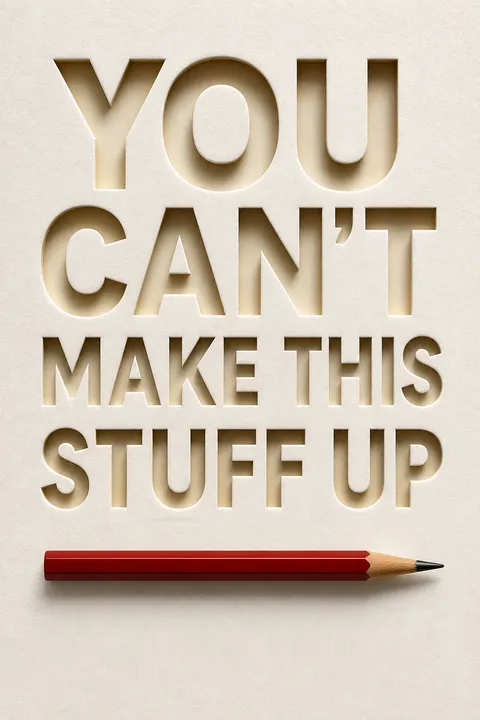


Key Takeaways
Use fiction’s craft to make reality vivid, never to make reality up.
The genre’s promise. Gutkind introduces creative nonfiction through an awkward celebrity moment: after a magazine mocked him as its “godfather,” a colleague theatrically kissed his hand. The story shows how a label can help readers recognize a form. Creative nonfiction means true accounts shaped with the tools of literary storytelling, including scenes, dialogue, and vivid description. “Creative” describes the presentation, not permission to invent; “nonfiction” is the promise that the people and events are real.
Trust is the boundary. James Frey’s fabricated prison ordeal and Stephen Glass’s invented reporting show the cost of breaking that promise. Even smaller inventions can corrode credibility. A writer may reconstruct events or compress a timeline, but should not invent a person, conversation, or fact and present it as real. When a technique could mislead, explain it to readers.
The distinction is not between imaginative and dull writing. It is between imagination applied to form and invention applied to evidence. That boundary makes the genre’s freedom possible: readers can be moved by crafted scenes because they believe the underlying account. The challenge is that readers cannot independently verify every remembered exchange, so trust rests partly on the writer’s conduct. Clear disclosure of reconstruction is therefore not a bureaucratic footnote. It is part of the relationship that allows narrative art and factual responsibility to coexist.
Verify what can be checked, and label memory as a perspective.
Facts and memory differ. Two former spouses may describe the same failed marriage honestly and still tell sharply different stories. Memory is filtered through personal perspective; it is not the same as deliberate deception. Yet dates, locations, measurements, and published quotations can often be checked. A writer’s recollection that a colleague kissed his hand is uncertain in a different way from the verifiable floor number of a university building.
Accuracy earns belief. Gutkind points to a magazine essay that misstated Lake Tahoe’s rank among American lakes. The error did not overturn the essay’s argument, but it signaled careless research to a reader who noticed. Such errors matter because readers use checkable details to judge claims they cannot check for themselves. Fact-check every available detail, and present subjective interpretation honestly as interpretation.
This distinction is a useful form of intellectual humility. It avoids two bad extremes: treating memory as a camera, or treating every account as equally unknowable. A narrator can be sincere and mistaken; evidence can still narrow the room for error. The practical implication is that fact-checking is not merely defensive. It gives readers a reason to extend trust to the parts of a story that depend on perspective. At the same time, a correct fact does not prove a narrator’s interpretation is complete or fair.
Build scenes from action and precise detail, then weave the facts through.
Scenes make information felt. A scene is a bounded event in which something happens. It often uses action, dialogue, description, and specific details to let readers experience a moment rather than receive a summary. In Gay Talese’s profile of Frank Sinatra, a tense exchange in a billiard room reveals the singer’s temper more economically than a paragraph of explanation could. Rebecca Skloot’s account of Henrietta Lacks begins with her seeking medical help, drawing readers into the story before supplying its wider context.
Try the highlighting test. Mark the scenes in a draft and see how much of the piece is active storytelling. Gutkind says strong nonfiction often contains many such passages, sometimes roughly half to two-thirds of the text. That proportion is a diagnostic, not a quota. Scenes must be accurate, relevant, and connected to the piece’s purpose; vividness alone is not enough.
A scene does more than decorate information. It gives the reader a sequence to follow, a person to observe, and a reason to care about the explanation that follows. This is especially valuable when the subject is technical or unfamiliar. But scene-heavy writing can also create a false sense of certainty: reconstructed dialogue may sound exact even when memory is not. Specificity should sharpen what the writer knows, not disguise what remains uncertain. The best scenes make both the human stakes and the limits of knowledge visible.
Give scenes a frame that points toward a question with real stakes.
Order creates a larger story. A frame is the overall narrative that gives scenes a sequence and shape. Focus is the central meaning or question the scenes serve. In Skloot’s “Fixing Nemo,” a goldfish’s surgery provides both: the procedure supplies a chronological path, while the possibility of the fish’s survival gives the reader something at stake. In Gutkind’s veterinary essay, the day’s visits form a frame, while the veterinarian’s difficult choices about animal life and death provide the focus.
Structure can move. Writers need not tell events in chronological order. John McPhee opens an essay about Georgia wetlands with a moment that makes environmental loss concrete, then returns to the beginning of his journey. A strong opening makes a promise or raises a question. The ending should answer it, rather than leave the opening’s suspense abandoned.
Frame and focus solve different problems. A frame helps readers understand where they are going; focus helps them understand why the journey matters. When they reinforce each other, even research and reflection feel like part of one story. This is a stronger organizing principle than chronology alone, though chronology remains useful when change over time is the point. The key editorial question is not simply whether a scene is compelling. It is whether the scene advances the reader’s understanding of the central stakes.
Pair private experience with public knowledge to make a personal story travel.
The subject can swing. Gutkind describes creative nonfiction as moving between personal writing, such as memoir, and public writing about a broader issue. A memoir concentrates on a particular period or experience; an autobiography attempts a wider account of a life. A public piece may follow a subject anyone could investigate. The strongest work can combine the two: an intimate story gives a broad subject human shape, while research gives a personal account context beyond the self.
Connect the particular. Eve Joseph’s writing about hospice draws on her own work and losses, but also on the history of hospice care, cultural rituals, and the language people use near death. Susan Sheehan’s reporting on a psychiatric patient makes an institutional system legible through one person’s experience. Gutkind calls this connection a “universal chord”: the point where personal detail and public significance meet.
The movement between private and public can correct a common weakness in both directions. Personal narrative without context may ask readers to care about an experience without showing why it matters beyond its owner. Broad analysis without intimate particulars can leave the stakes abstract. The combination does not guarantee universal appeal, and “universal” should not erase differences in culture or power. Its value lies in invitation: a reader enters through a particular life, then encounters a question that reaches beyond it.
Go where the story happens, and let people complicate your subject.
Immersion means sustained presence. Rather than relying only on interviews, an immersion writer spends time in a place or community, observing routines, conversations, and unexpected events. Gutkind’s examples include Susan Sheehan living alongside a psychiatric patient and Buzz Bissinger moving with his family to Odessa to follow a high school football season. That closeness revealed Friday Night Lights was about more than football: it also showed the town’s priorities, education, and racism.
Choose access with purpose. Gutkind advises thinking broadly but finding a subject close enough to revisit when important events occur. Observe and take notes, then record fuller recollections promptly and verify details where possible. A public subject needs a larger question, not just novelty. A writer covering robotics, for instance, should show what researchers do and what their work means, not merely report that robots are interesting.
Immersion helps a writer notice the gap between what people say about a world and what its daily practices reveal. It also guards against treating a community as a collection of colorful anecdotes. Sustained presence can build access, but access is not neutrality: the writer’s role, relationships, and choices shape what becomes visible. The method works best when curiosity is paired with accountability to the people represented. Being present deepens reporting; it does not make the writer’s interpretation automatically complete.
Read once for the reader’s experience, then again for the writer’s architecture.
Two kinds of reading. Gutkind asks writers to read first as an audience member: Is the story clear, engaging, and emotionally legible? Then read as a craftsperson: How are scenes arranged? Where does background appear? What holds the piece together? These questions should come before polishing individual sentences. A beautifully written passage cannot rescue a structure that loses the reader or obscures the point.
Revise in layers. Read a draft aloud or record it to hear where attention wanders. Then examine its structure, test whether scenes support the focus, and only afterward refine diction and clarity. Gutkind’s “drawer phase” adds distance: set a draft aside for a while before submitting it. That pause can loosen the writer’s attachment and reveal problems that felt invisible at the moment of completion.
This method separates two kinds of judgment that writers often blur. The reader asks whether the experience works; the writer asks how it was built. Moving between those positions makes revision more diagnostic than simply polishing what already sounds good. The advice also recognizes that attention is a limited resource: a reader who is confused cannot fully appreciate elegant prose. Still, reader response is not a mechanical verdict. The writer must weigh feedback against the piece’s aims rather than treating every moment of difficulty as a flaw.
Make writing a repeatable practice, not a test of daily inspiration.
Routine protects the work. Gutkind cites writers with sharply different habits, from John McPhee’s regular office days to William Styron’s repeated effort to perfect a single page. The point is not to imitate their schedules, but to find a workable time and place and return consistently. Gutkind’s own Coast Guard rope test supplies a personal image of persistence: after initially failing to climb, he built strength through private practice and eventually passed. He connects that experience to the patience required to write.
Practice includes failure. A first draft is not the finished piece, and a difficult day does not settle whether someone can write. Regular work builds skill through repeated attempts, while revision improves the work already begun. The schedule should fit the writer’s life, not become an imitation of boot camp. Passion helps sustain the effort, but a routine gives it somewhere to go.
The comparison between writing and practice shifts attention from talent as a fixed identity to craft as accumulated work. That framing can reduce the drama of a bad writing day: the task is to return, not to prove genius on command. Yet discipline should not be confused with a single ideal routine. The examples in the book themselves resist that conclusion. A useful schedule is one that survives the writer’s actual obligations and energy patterns, rather than one that looks impressive when described.
Keep a futures file, deepen what you know, and submit only your strongest work.
Save tomorrow’s subjects. Gutkind’s “futures book” is a running store of possible projects: notes, articles, questions, and angles that may become essays or books. His transplant book began with a magazine article, then grew through reporting and immersion at a hospital. Keeping a file prevents the next project from depending on inspiration arriving at the exact moment the current one ends. It also encourages writers to connect a subject with the larger issue it might illuminate.
Treat publication as part of the craft. Gutkind recommends learning the market, researching programs and mentors carefully, and approaching literary magazines or smaller presses when appropriate. An MFA can offer instruction and community, but it does not guarantee publication or a teaching job. The practical sequence is to build knowledge, produce strong work, revise it, and seek a fitting outlet without rushing a manuscript out merely to claim publication.
The futures file is a modest but powerful antidote to the myth that writers either have ideas or do not. It treats subject selection as ongoing attention: an article, conversation, or unfamiliar workplace can become material when the writer records the question it raises. The publishing advice also distinguishes craft from credential collecting. Formal study can help, but the relevant test is whether a program, editor, or mentor advances the actual project. That emphasis is useful in a field where ambition can make expensive credentials look like guarantees.
Analysis
Gutkind’s central argument is that creative nonfiction is a contract with readers, not a halfway house between fact and fiction. Literary technique can intensify reality, but the writer’s obligation to factual accuracy remains. This position gives the genre both its power and its difficulty: scenes, dialogue, and interior perspective create immediacy, while memory and reconstruction make certainty uneven. The solution is not to abandon narrative craft, but to distinguish verifiable fact from remembered interpretation and to disclose choices that could alter a reader’s understanding.
The book’s practical model joins scene, information, and structure. Scenes invite attention; research supplies context; a frame orders events; focus gives them meaning. The strongest examples make an abstract subject tangible without reducing it to anecdote. A goldfish operation can introduce veterinary medicine, and one patient’s life can expose the workings of a psychiatric institution. The movement between personal and public experience broadens a story’s reach, although broader relevance must not be mistaken for universal sameness.
A notable tension sits inside the method. Gutkind champions subjective perspective while asking writers to be fair, accurate, and attentive to the people they portray. These goals do not always align neatly. A subject may dispute an account that is well documented, while a narrator’s sincere memory may still be wrong. The book’s emphasis on conscience and verification is therefore more persuasive than any imagined rulebook: judgment remains necessary, especially where power, privacy, and harm are involved.
The craft advice also links composition to habits of attention. Immersion, note-taking, reading like a writer, and repeated revision are ways to notice more and claim less prematurely. The resulting ideal is not a writer who disappears or a writer who dominates, but one who makes a clear, situated argument through real lives. The book’s deepest lesson is that style does not excuse a breach of trust. Its purpose is to make truthful knowledge harder to forget.
Review Summary
You Can't Make This Stuff Up provides a comprehensive guide to writing creative nonfiction, offering practical advice, examples, and exercises. Many readers found it helpful and engaging, praising Gutkind's expertise and the book's clear explanations. Some appreciated the historical context and sample essays included. However, a few critics felt the author's tone was occasionally pretentious or self-aggrandizing. Overall, most readers considered it a valuable resource for aspiring nonfiction writers, though some found parts of the content obvious or repetitive.
People Also Read


Glossary
Creative nonfiction
Literary craft for true accountsNonfiction writing that uses techniques associated with fiction, poetry, and drama, such as scene, dialogue, description, and carefully shaped structure, to present real people and events compellingly. Its creative freedom concerns how facts are organized and communicated, not permission to invent events or evidence.
Immersion
Sustained reporting from withinA reporting approach in which a writer spends extended time in a subject’s environment, observing daily life and interactions rather than relying only on interviews or documents. Immersion can reveal spontaneous behavior and context that prepared answers may miss. It requires a clear subject, careful documentation, and awareness of the writer’s influence.
Universal chord
Personal story meeting public meaningThe connection created when a writer joins an intimate, specific experience to a broader subject or question. A personal narrative offers readers a human point of entry, while research and public context show why the experience matters beyond the individual. The connection can widen a work’s relevance without making every reader’s experience identical.
Frame
The narrative’s overall shapeThe larger story structure that orders scenes and guides the reader from beginning to end. A frame may follow chronology, a journey, a workday, or another organizing pattern. It is distinct from the individual scenes it contains and can create suspense by raising a question or establishing something at stake.
Focus
The work’s central meaningThe theme, argument, or central question a reader should carry away from a piece. Focus helps determine which scenes and details belong. A scene may be vivid yet unnecessary if it does not support the work’s meaning. Strong structure aligns the frame, the scenes, and the focus as closely as possible.
Creative nonfiction dance
Alternating story and informationGutkind’s description of how narrative and explanation can alternate through a piece. A scene draws readers into action; information adds context; another scene renews attention. The most effective passages may embed factual explanation within the scene itself. The aim is to inform without overwhelming the story or letting style replace substance.
Intimate detail
Specific detail that reveals characterA sharply observed detail that readers might not readily imagine and that conveys more than surface appearance. A person’s gesture, clothing, object, or manner of speaking can reveal personality or symbolize a larger situation. Such details become persuasive when grounded in observation or reliable reporting rather than invented for effect.
Highlighting test
A check for scene-based writingA revision exercise in which a writer marks the scenes in a draft to see how much of the piece unfolds through action. Gutkind reports that strong examples often contain substantial scene-based writing, roughly 50 to 70 percent. The proportion is not a required formula; it is a prompt to inspect whether a draft relies too heavily on summary.
Reconstruction
Evidence-based recreation of eventsThe process of rebuilding an event the writer did not witness, or cannot fully recall, using interviews, documents, records, photographs, and other evidence. Reconstruction can create vivid narrative, but it does not justify inventing details. Writers should distinguish well-supported information from inference and consider telling readers when events have been compressed or reconstructed.
Futures book
A file of future story ideasA writer’s ongoing collection of possible subjects, questions, articles, observations, and project angles. It preserves ideas that arise while the writer is occupied with other work and can help prevent the blankness that follows finishing a project. The file is most useful when it records not only a topic, but the larger question it might illuminate.
Download PDF
Download EPUB
.epub digital book format is ideal for reading ebooks on phones, tablets, and e-readers.








