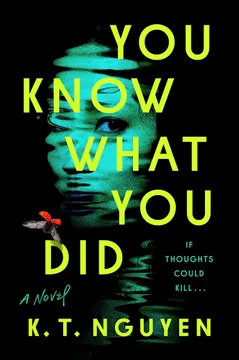


Plot Summary
Prologue
Annie crouches beside her dead mother in the cluttered carriage house, her bloody hand wrapped around the old woman’s fist and the knife still in it. She cannot tell whether she is sobbing or laughing, or how long she has been there.
As she struggles to stand, she remembers their last argument and fears she has caused the death she is witnessing. A rat darts past her face. Annie jolts into motion and runs.
The opening makes Annie’s memory feel less like a record than a crime scene she cannot trust. Her mother’s knife, Annie’s blood, and her bewilderment invite the reader to suspect violence, but the immediate threat is uncertainty: she cannot tell what happened or what she herself did. The rat breaks her paralysis and sends her fleeing, turning the cluttered home into both a physical trap and a container for inherited fear. This withheld explanation establishes the novel’s central tension between real danger and the mind’s terror of its own possible actions.
The Headband Looks Bloody
Three weeks after her mother’s death, Annie Shaw is still refusing a funeral and insisting she can manage without grieving. During a family drive, her husband, Duncan, speeds while lost in memories of war. He brakes hard to avoid a woman and a child, and everyone survives.
Annie, however, sees the child’s red satin headband as blood and snatches it away, believing she is rescuing an injured girl. Her daughter, Tabby, watches in horror as Annie panics over an accident that never happened. At home, Duncan urges Annie to pause her work and seek help. She agrees to clean out her mother’s carriage house, though she has avoided entering it since the death.
The close call does not create Annie’s fear so much as expose how little distance she has from it. She mistakes a headband for blood and an avoided collision for catastrophe, while Duncan’s actual speeding is treated as ordinary family risk. The contrast matters: Annie’s compulsions make her feel dangerous, yet her distress is also sharpened by the people around her minimizing warning signs. Her promise to clean the carriage house appears practical, but it is also an attempt to make an unmanageable past behave like a finite task.
Inside the Hoard
Annie’s mother, Hien, had lived in the carriage house for years, collecting objects until spoiled food, mice, and stacked newspapers crowded her rooms. After finding her body, Annie called Duncan in a panic and asked him to move it so the authorities would not see the conditions. He complied, arranged the cremation, and returned with her ashes. Annie’s reaction brought relief as well as guilt.
Now she tries to empty the outbuilding, remembering that Duncan once persuaded her to house Hien when Annie was struggling after Tabby’s premature birth. She also recalls being seventeen: when Hien tore up her RISD acceptance letter, Annie seized the steering wheel and crashed their car. Hien survived, but the rupture helped Annie leave for college.
The hoard is not simply a collection of refuse. It is Hien’s attempt to restore power after losing home, money, and family in war, yet the strategy consumes the space and the daughter living beside it. Annie’s shame grows from a double bind: she could not force treatment on her mother, but she also cannot forgive herself for failing to make the home safe. The earlier car crash shows that separation has always required an act of force. Leaving Hien did not end their bond; it made guilt one of its strongest remaining forms.
The Spring Festival
At Tabby’s school festival, Annie sees a boy touch her daughter intimately and retreats rather than ask what is happening. When she nearly drops a water bucket, Gabriel Correa, an accountant helping with his young niece, catches it and charms her. Annie enjoys being seen as an artist and a woman, not only as a wife and mother.
At the same event, she catches Ray Park, her friend Danielle’s husband, with festival chair Nina. Ray notices Annie has seen them and later watches her flirt with Gabe. Meanwhile Tabby resents her mother’s scrutiny and hides the details of her social life. Annie leaves the festival carrying three secrets: her daughter may be sexually active, Ray is unfaithful, and she is drawn to a stranger.
The festival puts Annie’s private anxieties in a crowded, ordinary setting. She is alert to danger in her daughter’s sexuality but reluctant to speak openly, repeating the silence she inherited from Hien. Her attraction to Gabe is not yet a love story; it offers an alternate identity, one not organized around care and self-correction. Ray’s affair creates a parallel domestic secret, but Annie chooses not to expose it. The scene establishes how looking, knowing, and speaking are different acts for her, and how secrecy becomes a way to postpone consequences.
Ashes Beneath the Roses
Without telling Duncan or Tabby, Annie scatters Hien’s ashes among the pasture roses. The next day, the family cannot find Deja, Annie’s elderly dachshund. They discover him dead near the roses, his mouth crowded with toxic lady beetles. Annie tries to scrape the insects away even after Duncan tells her the dog is gone.
She then fixates on the open back door and the possibility that Tabby let Deja out. Tabby denies it, but Annie’s revulsion shows on her face, driving the teenager away in tears. Duncan names Annie’s returning OCD and asks her to contact psychiatrist Lily Patel. Annie resists, though the washing, avoidance, nightmares, and fear of contamination are already taking over her days.
The dog’s death converts Annie’s abstract fear of contamination into a sight she cannot escape. Her frantic effort to remove the beetles is an attempt to undo death through cleaning, and it damages the body she is trying to protect. The suspicion she directs at Tabby repeats Hien’s habit of treating loved ones as possible threats. Annie does not believe her daughter has harmed Deja, but her expression communicates accusation before she can correct it. Grief becomes dangerous when compulsive certainty replaces the harder work of mourning and asking for help.
Byrdie's Empty Manor
Annie’s longtime patron, Byrdie Fenton, commissions a mural of the lake where she and her late companion Claire first met. Annie welcomes the demanding project as a chance to move beyond pet portraits. But when she brings Byrdie her detailed sketches, the elderly woman seems not to remember ordering them and speaks of Claire as if she were alive.
Soon afterward, Annie’s artist friend Ike Oteh arrives with a split lip and bruised face. He had entered Pinewood Manor to check on Byrdie, but the housekeeper, Lydia, mistook him for an intruder and struck him with a crystal decanter. Byrdie is nowhere to be found. Annie reports what she knows, but the police initially treat the disappearance as a likely case of an elderly woman wandering off.
Byrdie’s commission briefly gives Annie a professional future that is not defined by domestic obligation. Its sudden instability makes that hope feel as precarious as the patron herself. The disappearance also introduces a practical danger that Annie’s anxieties cannot explain away: Ike is injured, and Byrdie is missing. Yet official indifference leaves Annie unsure whether to trust her instincts or stop interfering. The episode echoes the novel’s broader pattern of vulnerable women being left to manage crises in isolation, while the people around them mistake distress, age, or race for evidence that can be dismissed.
Syria Leaves the House Empty
Duncan, frustrated by Annie’s refusal to address her worsening OCD and by their strained marriage, accepts an assignment in Syria. Tabby leaves for equestrian camp soon afterward, leaving Annie alone in the house.
After a frightening episode at the police station, Duncan insists that Lily Patel see Annie. The psychiatrist identifies the return of Annie’s contamination rituals and adjusts her sertraline prescription. Annie begins to sleep better, but grief, loneliness, and the unresolved disappearance keep pressing in.
Gabe calls again, and Annie, still married but hungry for a life beyond caregiving, agrees to meet him. At the same time, she wonders whether Duncan and SouthernHer intern Millie Rae have been speaking for reasons they have not shared with her.
Duncan’s departure removes the person who has long organized Annie’s sense of safety, but his care has also become part of her dependence. Annie is left with choices she has postponed, including therapy, work, and the truth about her marriage. The medication adjustment offers real relief, yet it cannot resolve the social and emotional pressures surrounding her. Her attraction to Gabe and suspicion of Duncan’s calls both arise in that open space. The section asks whether freedom can be chosen when a person has learned to experience independence as exposure.
Lake Gaither's Answer
Police summon Annie again after a fisherman finds Byrdie’s body in Lake Gaither. The coroner rules the death a homicide, and investigators conclude that methanol in the Fenton family moonshine poisoned her. They ask why Annie’s fingerprints may be on the bottle and discover that she owns a key to Pinewood Manor’s old gate.
Annie also admits, uncertainly, that she retrieved her mural portfolio from Byrdie’s home on the night she disappeared. A neighbor remembers her blue Corolla outside the gate. The evidence is circumstantial, but Annie cannot confidently reconstruct the evening because she had taken sleeping pills after returning home. She becomes a suspect while continuing to fear that gaps in her memory conceal something she did.
The investigation gives Annie’s private uncertainty a public form. A key, a car, and a missing portfolio are tangible, but they do not establish guilt; still, their precision makes her own memory feel less trustworthy. Her OCD already treats possibility as proof, and the detective’s questions exploit that tendency without needing to establish what happened. The case also complicates the idea that an anxious person’s fears are always imaginary. Byrdie was murdered, but Annie’s inability to distinguish evidence from dread makes it harder for her to recognize who is actually dangerous.
The Harrison Hotel Trap
After a drink with Gabe, Annie admits she is married, and he initially backs away. When he calls again, she agrees to meet him. They share dinner and a hotel suite at the Harrison, where Annie feels desired and briefly escapes her anxious, domestic life.
She wakes beside Gabe’s motionless body, covered in bites from juvenile Brazilian wandering spiders. Annie flees after calling emergency services, unable to explain what happened or why she was unharmed beneath the sheet. Gabe survives in a medically induced coma.
Police learn that Annie had searched online for stories about dangerous spiders in bananas, the same fear that had once made her wary of supermarket produce. The images turn her private obsession into apparent evidence against her.
Annie’s affair is a conscious breach of the safe identity she has maintained, but the hotel attack makes that choice inseparable from terror and shame. Someone has arranged a crime using the precise images that frighten her, so her compulsions become a script another person can weaponize. The spiders are both a real threat and a false explanation waiting to be attached to Annie. Her flight from the room may look incriminating, yet it also reflects the body’s practiced response to disgust. The plot refuses to equate mental illness with violence; it shows how an actual perpetrator can exploit it.
Tabby's Door Opens
While Duncan remains overseas, Annie finds intimate photographs Tabby took and sent to her boyfriend, Austin. Horrified, she tears up the printouts and raises a hand as if to strike her daughter, then stops herself. Tabby leaves for Danielle’s house. When she returns, Annie apologizes and explains that Hien sometimes hit her, admitting the family history she had kept hidden.
Annie also tells Tabby about Gabe and the night at the hotel. Tabby responds with more maturity than Annie expects, though she remains angry about being shut out. Their conversation opens a path back toward trust. Annie’s other friendships also hold: Danielle forgives her earlier outburst, and Ike continues to support her despite the police questioning him.
The near-strike is the moment Annie sees inheritance as behavior, not fate. She has learned shame and control from Hien, but recognizing the raised hand gives her a chance to choose differently before the gesture becomes harm. Telling Tabby about her own affair does not restore authority; it replaces the pretense of perfect motherhood with a more honest relationship. Tabby’s independence is not rejection, though Annie has often read it that way. The scene makes repair concrete: Annie names what she did, accepts her daughter’s anger, and offers information rather than another rule.
A Solvent, Three Crimes
As the police widen their inquiry, they connect Byrdie’s poisoning to a Hong Kong bartender who died years earlier from methanol exposure. Annie remembers seeing Duncan in a motel with a sex worker during their trip, then meeting bartender Winston and losing time after leaving the hotel.
Investigators discover that Annie’s number was among Winston’s contacts and note that she uses windshield-washer fluid as an inexpensive painting medium. They also find evidence linking her online searches to the spiders that attacked Gabe.
Annie is detained, then released without charges, but the overlapping clues make her doubt herself. Duncan returns from Syria and the family briefly reunites. At dinner with Danielle and Ray, Annie learns Duncan and Lily once dated, then confronts Duncan about Hong Kong and Millie Rae.
The investigation turns coincidence into a pattern, and the pattern appears persuasive because it gathers details from several different periods of Annie’s life. But the connection between methanol, art supplies, and her internet searches is not yet proof that she committed anything. It is a map of her vulnerabilities. The Hong Kong memory also reopens a foundational wound in her marriage, one Annie had accepted without fully examining. Duncan’s return offers the appearance of restored family order just as the evidence and secrets make that order impossible to trust.
The Husband's Confession
Duncan reveals that he has secretly monitored Annie and replaced her sertraline with placebo pills to intensify her symptoms and keep her dependent. He admits poisoning Byrdie with washer fluid, then putting her body in the lake; he also killed Winston in Hong Kong and arranged the spiders that nearly killed Gabe.
He had Deja killed and kept the dog’s paw to frighten Annie. When Annie refuses to remain under his control, Duncan assaults her in the kitchen and explains that his career, marriage, and family failures are her fault.
He binds her in the carriage house and prepares to stage her suicide. Tabby arrives, hears his confession, and confronts him. As Duncan moves to kill them both, Annie frees herself, cuts his throat with Hien’s knife, and sets the outbuilding alight.
Duncan’s crimes expose care as a language that can conceal domination. He has used money, professional authority, and the appearance of patience to define Annie as incapable, then engineered the symptoms that seemed to confirm his judgment. His plan depends on making her fear of harming others more powerful than her will to resist. The knife changes meaning across the story: first a relic of Hien’s danger and survival, it becomes the tool Annie uses to protect Tabby. Her violence is not a symptom or a supernatural act. It is a deliberate response to an immediate attack.
Life After the Fire
Annie and Tabby survive the fire, though the girl is traumatized by learning that her father was a murderer and by witnessing her mother’s violence. Annie tells the authorities that Duncan attacked them and had planned to kill them, while leaving out that she cut his throat and could have sought help afterward.
Duncan’s car records place him at Pinewood Manor and Lake Gaither, and the evidence clears Annie of Byrdie’s murder. Months later, Tabby is living with Danielle’s family and attending therapy, while Annie works on a new art series about maternal bonds and inherited trauma. She keeps her maiden name and accepts support from Ike. Her relationship with Tabby remains strained but is beginning to mend.
The resolution refuses the clean emotional accounting Annie once sought through rituals. She is cleared of Byrdie’s murder, but she does not tell the full truth about Duncan’s death, and Tabby’s grief cannot be settled by a single apology. Their future depends on continued honesty, not on returning to the old family picture. Annie’s art turns inherited trauma into material she can shape without claiming to erase it. The novel’s idea of recovery is therefore modest and demanding: accepting help, tolerating uncertainty, and allowing a relationship to change without forcing it back into a perfect form.
Epilogue
At the next spring festival, Annie drives Tabby to meet Danielle. A ginger cat darts from the road, and Tabby laughs instead of panicking. She admits that remembering Duncan’s gentler moments makes her feel guilty, so Annie tells her that love and harm can coexist in one person.
Tabby has moved home and is considering Brown for college. Annie is exhibiting a new, abstract series under her birth name, while Danielle’s beadwork will appear in the gallery lobby. As Tabby parks, mother and daughter part with ease, and Annie hurries toward her friend.
The returning festival gives the story a measured answer to its opening drive. A cat crosses the road, but Annie does not seize the wheel or turn the sight into a catastrophe. Tabby can laugh, and Annie can let her daughter drive. Their conversation about Duncan allows affection and accountability to occupy the same memory without requiring either to cancel the other. Annie’s new art and Danielle’s work in the gallery extend that movement outward: recovery means making room for other people’s choices, not merely restoring Annie’s control.
Analysis
The novel’s central conflict is not simply whether Annie can trust her memory. It is whether she can distinguish care from control after a lifetime in which they have been braided together. Hien’s hoarding and vigilance begin as survival responses to displacement and deprivation, then make Annie responsible for managing a parent who rejects help. Duncan later occupies the opposite social position, with money, status, and the language of caregiving. His apparent patience lets him define Annie as fragile, and his concealed manipulation turns that definition into a weapon. The contrast makes the domestic thriller’s danger intimate: the person most able to describe Annie’s needs is also the person able to exploit them.
Annie’s OCD is portrayed as a disorder of responsibility and doubt. She fears that a missed detail may make her guilty, so she washes, checks, researches, and mentally reviews events. The narrative honors how real those sensations feel without treating intrusive thoughts as proof of violent intent. The crimes are real, but Duncan deliberately shapes them to resemble the images Annie already fears. This distinction resists a familiar thriller shortcut in which mental illness itself becomes the source of evil. Instead, the danger comes from a calculating person who understands how easily symptoms can be mistaken for character.
The mother-daughter line gives the story its emotional measure. Hien’s control leaves Annie afraid that independence means betrayal; Annie’s vigilance then threatens to become the same inheritance for Tabby. When Annie stops herself from striking her daughter, the break is not a clean escape from the past but a conscious interruption of it. Her later honesty gives Tabby room to be angry without surrendering their bond.
The ending preserves moral complexity. Annie survives and helps expose Duncan, yet she withholds part of what happened when she killed him. Her art and her renewed connection with Tabby do not erase that choice. They suggest a harder form of recovery: accepting that people can hold love and harm at once, and that no ritual can make life perfectly safe.
Review Summary
Reviews for You Know What You Did are generally positive, averaging 3.36 stars. Many readers praise the novel's exploration of OCD, generational trauma, and the immigrant experience, along with its compelling unreliable narrator. The first half is frequently described as slow-burning but necessary for building atmosphere, while the final hundred pages are widely considered gripping and intense. Common criticisms include pacing issues, repetitive depictions of OCD, an unlikeable supporting cast, and a somewhat predictable twist. Trigger warnings for OCD, emotional abuse, and animal death are consistently noted.
Characters
Annie Shaw
Painter, daughter, and motherAnnie is an artist, a Vietnamese American woman, and the mother of a teenage daughter. She grew up poor and isolated with Hien, whose trauma and hoarding shaped Annie’s understanding of safety, loyalty, and shame. Her contamination-based OCD gives ordinary uncertainty a punishing intensity, and she responds by building routines and separate spaces she can control. She is observant and creatively skilled, but often hesitant to claim either her ambitions or her needs. Her relationships with Duncan, Tabby, and her mother reveal how easily gratitude can become obligation. Annie’s development centers on learning to speak plainly, seek support, and make choices without treating every consequence as proof that she has failed.
Duncan Shaw
Journalist husband and fatherDuncan is Annie’s husband and Tabby’s father, a former war correspondent whose reporting earned him a Pulitzer. He is intelligent, physically imposing, and used to converting difficult experience into controlled public narratives. At home, he often takes responsibility for practical decisions and presents himself as the family’s steady caretaker. His history in combat has left him guarded, and his ambition remains tied to a career that once gave him a clear sense of purpose. His relationship with Annie is shaped by real tenderness as well as an uneven balance of dependence and authority. He values loyalty and family stability, sometimes more than frank conversation.
Tabby Shaw
Teenage daughter and riderTabby is Annie and Duncan’s nearly fifteen-year-old daughter, a capable rider attending an elite private school. Witty and emotionally quick, she uses sarcasm and privacy to protect herself as she grows beyond the version of childhood her parents remember. She is close to Duncan and increasingly frustrated by Annie’s anxious monitoring, though she still wants her mother’s attention and understanding. Tabby is navigating makeup, social media, romance, and the desire to be treated as mature without yet having adult judgment. Her character brings the novel’s questions about safety and independence into the next generation.
Hien
Refugee mother and hoarderHien, whom Annie calls Mẹ, is a Vietnamese refugee and single mother whose life before and during the war differs sharply from the poverty she experiences after resettlement in Ohio. She is resourceful, proud, and skilled at cooking, but trauma and fear distort her sense of threat. Collecting possessions becomes a substitute for the home and status she lost, while her intense attachment to Annie slides into control. Hien’s criticisms are often framed as protection, yet they leave her daughter ashamed and isolated. Her story gives the novel a portrait of how survival strategies can become burdens passed from parent to child.
Ike Oteh
Artist friend and survivorIke is Annie’s longtime friend from RISD, a gifted Nigerian American architecture graduate who returned to help run his family’s convenience store after his father was killed. Their shared experience as scholarship students and children of immigrants gives them an ease neither has with most of their affluent peers. Ike is perceptive, funny, and loyal, but has deferred his own ambitions to meet family responsibilities. He supports Annie while remaining alert to the way police and strangers read his race before they hear his account.
Byrdie Fenton
Southern art patronByrdie is an elderly Virginia heiress who has supported Annie’s art for years. Boisterous, eccentric, and socially powerful, she treats Annie partly as a companion and partly as a figure who fascinates her. Her wealth gives her access to influence, but it does not spare her from loneliness or the losses that shape her life with Claire. Byrdie’s humor and impulsive generosity can make her seem careless, while her attachment to old places and old stories reveals a more tender, grieving side.
Dr. Lily Patel
Psychiatrist and former friendLily Patel is a psychiatrist and longtime acquaintance of Duncan who previously treated Annie for postpartum depression and OCD. She now focuses on clinical research but agrees to help Annie again. Curious and warm, she prefers attentive conversation to formal note-taking and understands how anxiety can make uncertainty feel intolerable. Her familiarity with Annie’s family gives her access to sensitive histories, while also complicating the boundaries of her professional role. She encourages Annie to examine both her rituals and the family relationships that shape her sense of responsibility.
Gabriel Correa
Accountant and new attractionGabe is a personable accountant Annie meets while volunteering at Tabby’s school festival. He arrives with his young niece, Annabelle, and helps Annie after she nearly drops a water bucket. His easy manner and interest in her art make her feel noticed outside her roles at home. He is close to his family and brings an uncomplicated warmth to their first conversations. Gabe represents possibility to Annie, but he is also a near-stranger she has not yet learned to know beyond the flattering first impression.
Danielle Park
Blunt, loyal confidanteDanielle is Annie’s close friend and the mother of Aimee, Tabby’s schoolmate. Outspoken, energetic, and socially fearless, she moves easily through the wealthy parent world that often makes Annie feel out of place. Her humor can soften an awkward moment, but beneath it is a complicated history with addiction, marriage, and forgiveness. Danielle values friendship and is quick to offer practical help without demanding that Annie perform recovery neatly. Her acceptance gives Annie a model of intimacy that can survive anger and embarrassment.
Ray Park
Investor and reckless spouseRay is Danielle’s wealthy investment-banker husband and Aimee’s father. Confident, crude, and accustomed to influence, he moves through the school community as though its rules were made for other people. His marriage to Danielle is marked by secrecy and recurring conflict, even as the couple maintain a public life of money and social ease. Ray’s behavior tests Annie’s instinct to stay out of other people’s affairs and highlights how wealth can make consequences seem negotiable.
Millie Rae
Ambitious magazine internMillie Rae is a cheerful college intern at SouthernHer who interviews Annie for a rising-artist profile. She is socially confident and eager to make a successful piece, but her inexperience shows in the assumptions she makes about Annie’s work and public image. Her family connection to Byrdie brings the magazine assignment into Annie’s patronage network.
Detective Eric Harper
Detective on a cold trailHarper leads the investigation into Byrdie’s death and questions Annie as evidence accumulates around her. He is controlled and methodical, using detailed questions and disturbing images to test whether a witness’s account holds together. His commitment to the case can become intimidating, particularly when he treats uncertain recollection as a meaningful inconsistency. He embodies the pressure of an investigation in which circumstantial details may look stronger than they are.
Ed Perez
Measured family lawyerEd is the attorney Duncan’s family trusts with legal and estate matters. Efficient and reserved, he accompanies Annie to police interviews and insists that she receive proper representation. His careful manner can feel distant, but he offers a practical counterweight to her panic and the detective’s pressure. He is also part of the Shaws’ affluent social world, where personal connections can open doors unavailable to everyone.
Deja
Dappled dachshund companionDeja is Annie’s elderly, long-haired dachshund and her most dependable source of uncomplicated affection. He follows her through the house, accepts her care, and often interrupts the spirals of thought that isolate her. Tabby loves horses, and Duncan is less attached to animals, so Deja becomes especially associated with Annie’s daily routines and private sanctuary.
Lydia Ivanova
Fenton household caretakerLydia is Byrdie’s longtime housekeeper, a Bulgarian immigrant who manages the practical routines of Pinewood Manor. She knows Byrdie’s habits and protects her privacy, but age, fatigue, and limited English can complicate moments of crisis. Her work gives her a close view of the household without making her part of Byrdie’s family.
Aimee Park
Tabby's close friendAimee is Danielle and Ray’s daughter and one of Tabby’s closest friends. She shares school events and social outings with Tabby and offers her a place to stay when tensions at home become overwhelming. Her friendship gives Tabby support beyond her parents.
Winston
Hong Kong hotel bartenderWinston works at the hotel bar where Annie goes during a turbulent trip to Hong Kong. Sociable and attentive, he offers her an easy conversation when she feels stranded and betrayed. Their brief connection becomes part of a memory Annie cannot fully reconstruct.
Bảo
Older brother in memoryBảo is Annie’s older brother, whom she never knows directly. Hien preserves his image and speaks of him with unusual tenderness. His place in the family’s history connects Annie to losses that occurred before her own birth.
Plot Devices
Contamination-based OCD
Doubt becomes a daily ritualAnnie’s OCD centers on disgust and contamination, not neatness. Images of blood, bodily fluids, insects, skin conditions, or unclean surfaces provoke intrusive fears and elaborate washing routines. Deja once helped interrupt these spirals, while grief and stress make them return. The symptoms shape how Annie interprets events, how she moves through her house, and how investigators read her behavior. They also make her vulnerable to someone who can turn her specific fears into apparent evidence.
The dao bào knife
A family relic changes meaningHien’s old Vietnamese cooking knife survives the family’s flight and remains tied to food, memory, and protection. Annie keeps it in her studio and uses it as a practical tool, even as its presence recalls her mother’s fear and the violence of Annie’s childhood. Its meaning shifts with Annie’s understanding of her family history. The knife ultimately becomes central to her effort to protect Tabby, linking inherited survival to a choice Annie makes for herself.
Windshield-washer fluid
Art supply conceals a poisonAnnie adopts inexpensive windshield-washer fluid as a painting medium while studying mural technique. Because it is ordinary, accessible, and associated with her work, the liquid later becomes a crucial source of suspicion. Its methanol content connects several crimes and allows a perpetrator to exploit Annie’s artistic habits. The recurring solvent also makes the studio a place where creative independence and danger occupy the same shelves.
Banana spiders and search history
Private fears become evidenceAnnie reads alarming stories about venomous spiders arriving in imported bananas, then fixates on the possibility that they might be present in food. Later, juvenile Brazilian wandering spiders appear in Gabe’s hotel bed. Investigators find Annie’s online searches and treat them as a clue pointing toward her. The sequence turns a familiar OCD pattern, compulsively researching the thing that frightens her, into a trail that can be interpreted as planning.
Keys and home security
Access becomes a hidden threatThe old key to Byrdie’s iron gate places Annie near the missing heiress’s home, while the Shaw home’s biometric security system promises protection from intruders. Annie’s trust in that system weakens after Deja escapes and later becomes part of the struggle over who controls the house. A secondary code and remote monitoring feature deepen the irony: the family’s technology can protect the people inside, but it can also give someone access to watch them.
Download PDF
Download EPUB
.epub digital book format is ideal for reading ebooks on phones, tablets, and e-readers.








