

Key Takeaways
After Lehman failed, a Wall Street offer stopped looking like a promise
A career path collapsed. Arjun Khan had earned a job at Lehman Brothers after working hard to break into finance from Fordham, a school outside the usual recruiting circuit. Then Lehman went bankrupt in 2008, and his offer disappeared. Months later, Citigroup hired him for an unexpected opening. His experience captures the book's central setting: young recruits entered finance just as the crisis was reshaping banks, hiring, and public opinion. They had not caused the crash, but inherited its consequences, including a less dependable career ladder and an industry that had become a public villain.
Eight lives reveal the change. The book follows young bankers, traders, and risk workers from 2010 to 2013. Their stories show more than financial turmoil: they trace how institutions shape ambition, work, identity, and the choices people make when the prestigious path no longer feels secure.
What's striking is how the crisis changes the meaning of an offer before it changes the recruit's ambitions. Arjun still wants the job, but the institution can no longer credibly promise stability in return for his effort. That gap resembles a broader labor-market problem: individual performance cannot protect workers from decisions made at the level of firms, markets, or regulation. The stories are especially useful because they show this uncertainty through daily life, not just earnings reports. Their scope is still selective, however. Eight young employees illuminate one elite corner of finance, not the experiences of every worker affected by the crash.
Track who controls your time, not just how many hours you work
Unpredictability is its own burden. First-year investment banking analysts could work about one hundred hours a week, but the deeper strain came from not knowing when work would arrive or end. Senior bankers could send a new task late in the evening, disrupting plans and making weekends conditional. Banks offered dinners, gyms, and rides home, yet those perks could make it easier to stay at the office even longer.
Relationships absorb the cost. Derrick promised his girlfriend a Sunday dinner, then a work emergency kept him at the office until late night. She eventually told him to choose between the job and their relationship. The book's point is not that demanding work is always unreasonable. It is that constant availability leaves young employees with little authority over their own lives.
The distinction between workload and control is central to occupational health research. High demands are often more tolerable when workers have predictability, discretion, and a sense that effort matters. In this account, analysts face the inverse: heavy demands paired with little control over timing. That helps explain why a comfortable salary or a free meal cannot reliably compensate for the strain. A fair qualification is that client work can involve genuine deadlines and unpredictable events. The sharper question is whether urgency is exceptional and necessary, or simply built into a hierarchy where junior employees are expected to absorb every disruption.
A finance job changes your identity by reorganizing daily life
The culture reaches beyond work. New analysts learn the vocabulary, dress, and social codes of finance, from insider acronyms to the expected suit and tie. They often live near coworkers, eat through work-provided services, and gather at the same bars. Ricardo Hernandez, who once hoped to become a doctor, gained weight and began talking about bonuses with the intensity of a longtime banker. His colleagues, friendships, and routines increasingly centered on the firm.
A boundary takes shape. Sociologist Karen Ho calls one aspect of this separation the "cultural geography of segregation ": a workplace culture that distinguishes finance employees from people with ordinary schedules and outside commitments. The result can be a tight peer community, but it can also shrink contact with other ways of living and working.
Occupational identity is not merely a label on a business card. Social identity research shows how shared language, rituals, and status markers build belonging, especially among people entering a demanding institution together. The finance bubble gives new analysts companions who understand the hours and the jargon. It also makes the firm's priorities feel normal because the surrounding social world reinforces them. That process is not unique to banking, and some workers retain strong ties outside their industry. The distinctive feature here is how the job's schedule and perks make the boundary practical as well as symbolic.
A spreadsheet can be meticulous and still be meaningless
Effort does not guarantee impact. Junior bankers gather company data, build financial models, and polish pitch books used to advise clients on deals. The work requires precision: a faulty formula can distort an entire model. Yet many projects never lead to a transaction, and some lengthy presentations receive little attention. Ricardo spent brutal nights building analyses for deals that might not happen. The work could be consequential to the bank while feeling repetitive or pointless to the analyst doing it.
Some work offered a clearer line of sight. Chelsea liked that municipal bonds could help schools, museums, and local governments finance buildings and other projects. Her interest faded when chaotic management and error-finding displaced that larger purpose. The contrast shows why workers care about more than compensation: they also want to understand what their labor changes.
Meaningful-work research often highlights three ingredients: understanding the task's purpose, having some autonomy, and receiving useful feedback. The analysts in these stories frequently have responsibility for accuracy without much authority over the work's direction or knowledge of its eventual use. Chelsea's municipal finance role briefly connects technical tasks to public projects, while the unused pitch books sever that connection. Still, a task's value is not always visible to the person completing it. Financial analysis can inform decisions even when a deal falls through. The stronger criticism is not that spreadsheets are worthless, but that organizations often fail to explain where their work matters.
Revenue incentives can make risk oversight and client fairness easy to compartmentalize
The control function lacked clout. Soo-jin Park worked in risk management, assessing how much a bank might lose if a trade or investment went wrong. Yet dealmakers often treated risk staff as obstacles to revenue, not as essential safeguards. On trading desks, employees were rewarded for executing priority trades, known as "axes," and strong results could affect bonuses.
Ethics rarely arrived as a single dramatic choice. Goldman analyst Samson defended his mortgage desk after the Abacus controversy, while Jeremy found his own commodities work useful because clients could hedge against price swings. Both could focus on their immediate tasks without resolving broader questions about the institution. This compartmentalization matters: a transaction can be legal and still raise questions about whether a client understands the risk or whether incentives reward transferring it.
This is a problem of organizational design as much as individual character. Principal-agent theory describes how employees may be rewarded for outcomes that do not match the interests of clients or the public. When risk teams have less status than revenue teams, a warning can be technically heard but practically ignored. The book's cases also resist an easy verdict that every transaction is exploitative: derivatives can help companies manage real exposure, and clients can be sophisticated. The useful test is whether incentives, information, and accountability align, not whether finance as a whole is either virtuous or corrupt.
A diverse analyst class does not mean an equal path to power
Representation thinned higher up. A study cited in the book found women made up 33 percent of first-year analysts in 2006, but only 14 percent of managing directors. At Deutsche Bank, women were 44 percent of staff but 16 percent of senior managers. Soo-jin attended a women-in-finance conference where prominent speakers described few barriers, while her own experience included isolation and a lack of visible mentors.
Race and class shaped belonging too. J. P. Murray, a Black analyst from a modest background, counted only eight Black employees in a room of roughly two hundred new hires. He learned to navigate a culture where he was an outsider by race and socioeconomic background. The book shows how recruiting diversity can coexist with unequal access to influence, sponsorship, and advancement.
The distinction between entry-level representation and power is crucial. Organizational diversity can improve at the hiring stage while informal networks, promotion criteria, and assumptions about leadership continue to favor established groups. Soo-jin's discomfort with a conference that treated inequality as solved also illustrates why headline percentages cannot substitute for listening to workers' experiences. These snapshots are historical, and the figures do not establish the cause of every disparity. They do, however, make a strong case for measuring who advances, who leaves, and whose concerns shape policy, rather than celebrating a diverse intake alone.
Judge private equity by who bears the downside, not its turnaround story
Buying a company is only the beginning. A leveraged buyout uses borrowed money, alongside investor capital, to acquire a company. The private equity firm then seeks to improve or restructure the business and sell it for a gain. Derrick liked the hands-on diligence, but worried when plans focused on cutting jobs and selling assets rather than improving products or operations.
The financial structure can shift the risk. A dividend recap loads a company with additional debt so cash can be paid to its owners. Derrick believed his firm could remain protected even if a company later failed, while employees and the business carried more of the damage. His account does not prove every buyout destroys value. It does show why claims of efficiency should be tested against what happens to debt, jobs, investment, and the company after the deal.
Private equity's most important question is often distributive: who receives gains, and who absorbs losses when the plan fails? A transaction can create value by improving operations, but financial engineering can also transfer value without making the underlying business more productive. Derrick's unease is useful precisely because he works inside the system and recognizes its appeal as well as its asymmetries. The medical-surgery analogy used by his firm offers a defense of painful restructuring, but surgery should be judged by whether it improves the patient's prospects, not only by whether the surgeon gets paid.
Do not let a firm's prestige decide whether leaving counts as failure
Status can outlast satisfaction. Samson White disliked his job at Goldman Sachs but worried that quitting before two years would look like failure to his peers. He eventually left to build a mobile ticketing start-up with a colleague. His hesitation reveals how deeply he had absorbed the firm's status, even while rejecting its culture.
The alternatives had real trade-offs. Chelsea left banking for a job paying substantially less, then started her own company. Ricardo found a better fit in a less punishing banking group and chose to stay. Derrick valued the money and confidence he gained in private equity, even as he questioned the industry. Their different decisions resist a single prescription: the key is to judge a job by the life and work it actually provides, not by its title alone.
Prestige functions like a form of social currency: it can bring opportunity and recognition, but it can also make a poor fit feel like a personal defeat. Samson's story shows that internalized status remains powerful even after someone sees its limits. Career decisions also involve material constraints, including rent, health insurance, and family obligations, so leaving is not equally available to everyone. The most helpful reframing is not that ambitious workers should always quit. It is that staying, leaving, and changing roles should be evaluated as practical choices, not as verdicts on personal worth.
After 2008, Wall Street's old career ladder stopped guaranteeing a destination
The industry contracted and changed. Dodd-Frank and Basel III increased oversight and capital requirements, while major banks reported sharp profit declines in 2011. From 2008 to 2011, the number of New York securities-industry workers aged 20 to 34 fell 25 percent, compared with a 17 percent decline across all ages. By 2013, only about 30 percent of the more than 28,000 financial-sector jobs lost in New York during the crisis had returned.
Young talent found other routes. Technology companies recruited analysts tired of repetitive work and rigid hierarchies. Some graduates considered teaching, nonprofits, or entrepreneurship. Wall Street still attracted applicants: Goldman received 17,000 applications for 350 summer internships in 2013. But high competition did not restore the old promise that a prestigious bank job led predictably to the next rung.
The figures distinguish two ideas that are often confused: a job can remain highly selective while the industry becomes smaller and less dependable. That is a structural change, not simply a temporary dip in bonuses. The competing appeal of technology and public-service work also suggests that talent responds to perceived meaning, autonomy, and growth, not only salary. Yet the book's evidence reflects a specific period and an elite graduate pipeline. It should not be treated as a current forecast or as proof that finance stopped being attractive. Its lasting insight is that prestige alone cannot stabilize a career path.
Analysis
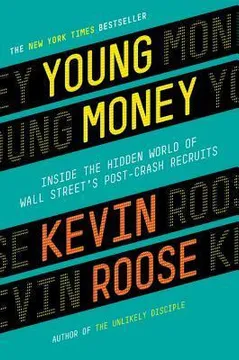
Young Money is best read as workplace ethnography told through character-driven reporting, not as a handbook for becoming rich or a general indictment of finance. Its central achievement is to make an abstract institutional shift legible in ordinary scenes: a missed dinner, an unused pitch book, a risk manager ignored, a recruit deciding whether to leave a famous firm. The financial crisis supplies the historical rupture, while the recruits reveal its human consequences.
The book's most revealing tension is between high stakes and low agency. Financial institutions can influence companies, markets, and public resources, yet their youngest workers often spend their days correcting spreadsheets without seeing whether the underlying deal helps anyone. That mismatch helps explain both burnout and ethical distance. Workers may be close enough to execute transactions but too junior to shape their purpose, while institutional incentives define success in revenue, ranking, and advancement.
The reporting also complicates the idea that Wall Street is a single culture. Arjun's upward mobility, J. P.'s effort to negotiate race and class, Soo-jin's experience of gendered isolation, and Ricardo's eventual fit in a different banking group show varied routes through the same hierarchy. Jeremy and Samson leave for entrepreneurship, while Derrick remains ambivalent. Their contrasting outcomes prevent a tidy moral: finance can provide skills, income, and mobility, while also demanding time, identity, and compromises.
There are limits to the portrait. The subjects are a small, unusually reflective group, and the reporting centers on elite firms and ambitious graduates. Their experience cannot stand for the whole financial workforce or establish that every analyst's labor lacks social value. The book is also a snapshot from the post-2008 years, when regulation and technology were changing the sector rapidly. Its enduring contribution is less prediction than diagnosis: careers are shaped not only by personal ambition, but by institutions that distribute risk, recognition, time, and opportunity unevenly.
Review Summary
Reviews for Young Money are mixed, averaging 3.69 out of 5. Many readers found it an honest, accessible look at entry-level Wall Street life, praising Roose's readable writing style and personal storytelling. However, critics felt the book lacked a central thesis, offered little depth, and presented nothing particularly surprising about finance culture. Several noted it would be most valuable for college students considering finance careers. The highlight for many was Roose's infiltration of the secretive Kappa Beta Phi dinner, though some felt the book read more like a light profile piece than a serious exposé.
Glossary
front office
Revenue-generating client workAt an investment bank, the front office includes roles that directly generate revenue or serve clients, such as investment banking, sales, and trading. The book contrasts these roles with middle-office functions such as risk and compliance, and back-office operations such as trade processing and technical support. The distinction is both functional and hierarchical: front-office positions usually carry more prestige.
desk scramble
Competitive desk placementGoldman Sachs' summer sales-and-trading internship placement process. Interns rotated across desks, then competed for full-time roles as desk managers assessed and ranked them. Popular, high-revenue desks were especially sought after, making the process feel less like general training and more like a contest for scarce positions.
cultural geography of segregation
Work culture separates insidersA term the book attributes to anthropologist Karen Ho. It describes how finance workers are taught to see themselves as distinct from employees with conventional schedules and boundaries between work and private life. The separation is reinforced through demanding hours, workplace perks, shared language, and social routines that keep employees inside the finance world.
misery poker
Competitive hardship complaintsA workplace ritual in which junior bankers compare how overworked they are, often presenting long hours and all-nighters as evidence of endurance. The complaints can be exaggerated, but the game also turns hardship into a source of status and belonging, making extreme work conditions seem like a normal rite of passage.
block leave
Mandatory continuous vacationA policy requiring employees to take a continuous period away from work, used at Credit Suisse and described in the book as a way to help detect suspicious trading activity. If an employee cannot step away from the desk without disrupting the books or concealing irregularities, the absence may expose a problem. The policy also gives workers a rare fully disconnected break.
dividend recap
Debt-funded owner payoutA recapitalization in which a company takes on additional debt so that cash can be distributed to its owners, including a private equity firm and its investors. The payout can return money before the investment is sold, but the company is left with a heavier debt burden. The book presents it as a tool that may benefit owners while worsening the acquired company's ability to survive.
About the Author


Download PDF
Download EPUB
.epub digital book format is ideal for reading ebooks on phones, tablets, and e-readers.








