

Key Takeaways
Treat the symptom as a clue, not the whole problem
Look beneath the behavior. Zimmerman opens with her own binge eating. Diets, exercise, and food rules failed because eating was doing a job: soothing feelings she could not yet recognize. Therapy helped her connect the urge to a childhood moment when food comforted her after she was frightened and upset. As those feelings became easier to notice, the eating began to loosen its grip. The behavior was not proof that she was broken; it was an imperfect attempt to cope.
The book applies this idea broadly. Low mood, anxious thoughts, compulsive work, and relationship patterns can all point toward distress beneath the surface. The pattern may be the problem, but it may also be a signal worth investigating.
This approach replaces moral judgment with a useful question: what need does this behavior meet, at least briefly? That can make change less adversarial and help people identify what a habit is protecting them from. But a symptom is not always a hidden message waiting to be decoded. Eating problems, depression, anxiety, and compulsions can have biological, social, and practical causes that need direct care. Looking for meaning should widen the options for help, not delay treatment or imply that a person must uncover a childhood explanation before improvement is possible.
Pair self-understanding with feeling, action, and repeated practice
Use a flexible route. Zimmerman offers five recurring movements: notice the problem, investigate where it may have come from, make room for the feelings involved, try a different response, and return to the process when the pattern reappears. This is a guide, not a tidy ladder. Someone may feel ready to act, then retreat from a difficult memory, or discover a new layer months later.
The distinction between knowing and feeling matters. A person might understand that childhood criticism made conflict frightening, yet still freeze in an argument. Change calls for noticing the present reaction and gradually experiencing the old fear in conditions that feel safe enough. Journaling, body awareness, and free association can support reflection, while serious or overwhelming distress may call for professional help.
The approach resembles iterative learning more than a one-time breakthrough: observe, test a new response, and learn from what happens. That framing makes setbacks informative rather than proof of failure. Its emphasis on emotion also usefully corrects the fantasy that insight alone rewires behavior. Still, introspection is not the only route to change. Skills practice, medication when appropriate, changes in material circumstances, and structured therapies can matter too. Emotional exploration works best as one tool among several, paced to the person's stability and needs.
Treat childhood patterns as learned protection, not proof your parents were villains
Early lessons travel. Children depend on caregivers, so they adapt to what appears to preserve safety and closeness. A child who is mocked for crying may hide sadness; one who must keep a parent calm may become a people-pleaser. Later, these adaptations can persist even when the original danger has passed. The book stresses that difficult experiences need not be dramatic to matter, and that love for a parent can coexist with hurt or anger.
Zimmerman cites the Adverse Childhood Experiences study, which found that adults reporting four or more categories of adversity had higher rates of several health problems. Such findings describe increased risk across groups, not a diagnosis or destiny for any one person. The useful question is how past conditions may shape present expectations, not whom to blame.
This framing can make childhood reflection more humane: a coping style may have been sensible for a child, even if it now restricts an adult. It also leaves room for mixed feelings about family, which simple stories of either perfect parents or harmful parents cannot hold. Research on childhood adversity supports concern about cumulative risk, but it does not establish one universal cause for a person's symptoms. Temperament, culture, resources, and later relationships also shape outcomes. The strongest use of the history is explanatory, not deterministic.
Notice when anxiety or numbness is hiding a feeling that needs attention
Distress can take different forms. Anxiety may look like racing thoughts, health fears, or repeated attempts to control an uncertain situation. Zimmerman suggests it can sometimes crowd out grief, anger, or fear that feels harder to face. Depression, in her account, can involve numbness and exhaustion when a person has become shut down under stress. George, who loses his usual energy before becoming a father, gradually connects his low mood to childhood jealousy and fear of losing his parents' attention when his sister was ill.
The book also describes the window of tolerance: the range of emotional arousal in which a person can function and manage feelings. Stress can push someone into heightened alarm or a withdrawn, numb state. These patterns are clues, not proof of a specific cause.
The signal model gives readers something practical to do: pause before treating every anxious thought as a forecast, and ask what is happening in the body and situation. It also makes room for numbness as a response rather than a personal failing. Yet anxiety and depression can arise for many reasons, and sometimes the immediate task is symptom relief, medical assessment, or safety planning, not emotional excavation. A body-based explanation can be valuable without being total. The question is whether it helps someone respond more wisely, not whether it explains every case.
Ask what an addiction is soothing before relying on willpower alone
Compulsion serves a purpose. Zimmerman defines addiction broadly as repeated reliance on a substance or behavior to manage difficult thoughts or feelings. Lana's relentless work and Nathan's drinking look very different, but both help them avoid pain. Nathan first used alcohol to gain acceptance after being bullied at school; as an adult, the habit continues even though it damages his work and relationships. Removing the behavior without addressing its function can leave the need for relief untouched.
The book describes addiction transference, when one compulsive coping behavior is replaced by another. It recounts patients who could no longer use food in the same way after weight-loss surgery, but found other behaviors to fill that role. The author presents connection and emotional support as part of recovery, alongside direct steps to reduce harm.
Asking what a behavior accomplishes can reveal why simple prohibition often feels inadequate: the person may lose a coping tool before gaining another. Nathan's story also shows how social belonging can become entangled with a substance, not just private distress. This does not mean every addiction has the same psychological origin, or that insight alone is treatment. Dependence can require medical supervision, structured programs, and practical safeguards. The book's strongest point is additive: explore the function of the behavior while also addressing its concrete risks.
Question the inner critic instead of treating its verdict as truth
Harshness can be inherited. Zimmerman argues that self-criticism often echoes judgments from caregivers, peers, or culture. Fiona calls herself a failure and attacks her appearance, while her history includes a sick mother, a judgmental grandmother, and later relationships in which she was belittled. The moral defence is the child's tendency to blame themselves when caregivers let them down, because seeing a parent as bad can feel too threatening to a dependent child. As adults, that old self-blame can persist.
The book's response is not to force positive affirmations. Fiona imagines herself as a child and asks what that frightened girl deserves to hear. This reparenting practice means offering one's younger self the care and protection that were missing. It helps separate a mistake or painful experience from a judgment of personal worth.
The shift from self-condemnation to self-protection is powerful because it changes the question from how to become flawless to how to respond to vulnerability. Imagining a child can make compassion easier to access than abstract self-esteem exercises. The historical account should be held gently, however. A critical voice can draw on many sources, including current discrimination and harsh work environments, not only family history. Compassion also need not erase accountability. A person can reject global self-hatred while still acknowledging harm, repairing it, and changing a behavior.
Build real connection instead of hiding behind a polished version of yourself
Being surrounded is not the same as being known. Zimmerman uses Donald Winnicott's idea of the false self for the social mask built to win acceptance: agreeing when one disagrees, hiding hurt, or acting cheerful to stay palatable. A person can have a full calendar and still feel lonely if relationships only meet the mask. Showing more of one's genuine feelings to safe people can create deeper connection, though it may feel unfamiliar at first.
The book also challenges the idea that a romantic partner should meet every need. Single people can build a village through friendships, family, shared interests, and communities where vulnerability is welcome. This makes romance a choice rather than the sole remedy for isolation, and it gives people more places to be cared for and understood.
The distinction between solitude and loneliness is useful: the central issue is often not the number of contacts, but whether a person can be recognized within them. A wider support network also reduces pressure on a partner to function as best friend, family, and entire community at once. Vulnerability, though, needs discernment. Not every setting is safe, and selective self-disclosure can be wiser than blanket openness. The goal is not to abandon social adaptation, which everyone uses, but to avoid making acceptance depend on concealing one's whole inner life.
Slow down when attraction feels like an urgent campaign to be chosen
Intensity can replay old uncertainty. Meera becomes consumed by Jay, whose attention alternates with distance. The uncertainty reminds her of her father's reduced presence after her parents separated, and she begins working harder to win Jay's attention. Zimmerman suggests that unpredictable attention can amplify desire because rejection activates a pursuit for reward and reassurance. Repetition compulsion is the attempt to revisit an old relational pattern, often with the hope of finally getting a different ending.
This does not make strong chemistry automatically unhealthy. The book's practical distinction is whether attraction comes with urgency, confusion, and repeated inconsistency, or grows alongside knowledge, reliability, and mutual interest. Slowing the pace gives someone time to notice whether they like the actual person, rather than the challenge of securing their approval.
The account helps explain why uncertainty can feel more gripping than calm reciprocity: attention becomes a scarce reward, and the chase itself occupies the mind. That is a valuable warning against mistaking arousal for compatibility. But early attraction is not a diagnostic instrument, and a steady partner will not necessarily feel exciting to everyone for the same reason. The useful test is behavioral and relational: does interest become more mutual and grounded as the two people learn about each other? Chemistry deserves curiosity, not automatic obedience or automatic suspicion.
Let rejection become grief instead of feeding an endless search for control
Obsession can postpone loss. After Jay disappears from Meera's life, she rereads messages, imagines conversations, and keeps the possibility of reunion alive. Zimmerman sees this as a way to avoid accepting both the end of the relationship and the older rejection it has stirred. A brain-imaging study of fifteen recently rejected people found activity in reward and motivation areas when they viewed former partners, a finding the book uses to help explain why pursuit can feel compelling.
The practical response is to stop reinforcing the loop where possible, create distance from the person, and allow grief to happen. For Meera, acknowledging the loss also opens grief about her father's earlier absence. The intensity eases as she no longer needs Jay's return to prove she is worthy of love.
The study offers a vivid account of why rejection can motivate pursuit, while the story makes clear that heartbreak may carry older meanings. Treating obsessive thoughts as a behavior loop can support practical boundaries, such as limiting contact or checking social media. Still, grief does not follow a fixed timetable, and reduced contact is not feasible or appropriate in every situation, especially when people share responsibilities. The core aim is not to suppress longing on command. It is to stop letting imagined reunion displace the work of adapting to reality.
Track your part in the relationship cycle before diagnosing your partner
Two defenses can reinforce each other. Attachment theory describes how early caregiving shapes expectations about closeness. Abby seeks reassurance when Connor withdraws; Connor retreats when Abby presses for contact. Each interprets the other's protection as evidence of rejection or control. The attachment alarm is the sense of threat that rises when closeness or distance feels unsafe. Projection occurs when a person assigns a disowned quality in themselves to someone else; Connor, for example, treats Abby as needy while disavowing his own desire for care.
Zimmerman recommends noticing the urge to pursue or withdraw, settling enough to communicate the fear underneath, and listening for the other person's experience. Similar unspoken needs can also surface as recurring fights or infidelity. Understanding a motive may explain behavior, but it does not excuse betrayal or remove responsibility for repair.
The cycle model is more useful than turning attachment labels into character diagnoses: each person's strategy can intensify the other's fear, even when neither intends harm. It encourages curiosity about interaction rather than a hunt for the defective partner. Yet attachment categories are broad maps, not fixed identities, and people can behave differently across relationships and circumstances. The insistence on mutual accountability must also be bounded by safety. In abusive dynamics, treating harm as a jointly created cycle can obscure coercion; explanation should never require a victim to share blame.
Set boundaries so closeness does not require abandoning yourself
Care needs an edge. Co-dependency describes a relationship in which one person repeatedly sacrifices their own needs to manage the other, while the other relies on that sacrifice. Kelley takes responsibility for Trish's drinking and distress, gradually losing time for friends, art, and her own sexual needs. Enmeshment is a merging of boundaries that makes it hard to experience two people as separate. When Kelley begins saying no and making space for her own life, Trish has room to take more responsibility too.
A boundary is not just a request. First decide what is acceptable, communicate the limit and what action follows, then follow through if it is ignored. The goal is inter-dependence: mutual support between two distinct people, rather than self-erasure or total self-sufficiency. Boundaries should be adapted to the relationship's safety and context.
This distinction between support and taking over is especially useful in caregiving relationships, where help can unintentionally reduce another adult's agency. Boundaries protect both difference and mutual choice; they are not punishment for having needs. But a changed boundary cannot guarantee that a partner will respond constructively, and one person's growth cannot repair a relationship alone. The book's emphasis on safety matters here: direct confrontation may be dangerous in coercive relationships. A boundary can involve seeking support or creating distance, not simply finding better words.
Grieve what ended before building your next life around its absence
Loss asks for an honest response. After her marriage ends, Maeve keeps studying messages and searching for signs that Finn might return. The analysis gives her a feeling of activity, but delays accepting the relationship's end. The book distinguishes ordinary mourning, which changes over time, from grief that stays stuck when painful feelings remain too difficult to face. Loss can also unsettle identity: someone may miss not only a partner, but the life, routines, and sense of self built around them.
Zimmerman's advice is to let grief have space, rely on trusted people, reduce contact or reminders when possible, and rebuild parts of life that disappeared into the relationship. Progress is uneven. Healing means practicing new responses repeatedly, not reaching a state where no old fear or sadness ever returns.
The account respects grief as both emotional pain and a practical reorganization of daily life. It is not enough to declare a relationship over if routines, friendships, and identity remain arranged around its return. Rebuilding those areas can restore agency without pretending the loss was trivial. The distinction between ordinary and stuck grief should not become a timetable for judging mourners. People differ in how they grieve, and bereavement, divorce, and ambiguous endings have different demands. Patience and support matter more than performing recovery on schedule.
Analysis
The book's strongest organizing idea is functional: a behavior that causes trouble may once have helped someone manage a situation they could not change. That premise lets the author move between seemingly unrelated experiences, from binge eating and overwork to anxious pursuit and people-pleasing, without treating them as isolated defects. The recurring case stories make the theory legible by showing how present-day reactions can acquire meaning through earlier relationships.
Its most practical contribution is not a diagnostic system, but a disciplined sequence of attention: notice what happens, ask what it protects, connect the response to a history without assuming the answer, and test a different action. The emphasis on repetition is essential. Insight is not equivalent to emotional learning, and new behavior is rarely stable after one successful attempt. The book also insists that healing occurs in relationships, where vulnerability can meet a response different from the one a person expects.
The main limitation is the weight placed on unconscious childhood explanations. This can be illuminating, but a reader may begin interpreting every symptom as evidence of repressed pain or every attraction as a replay of family history. That risks confirmation bias and can understate biology, present-day stress, economics, discrimination, and chance. The book's own best safeguards are its reminders that each person's root may differ, that stories are hypotheses to explore, and that professional care matters when distress is severe. Its ideas work best as invitations to inquiry, not as a universal key. Used that way, they help readers replace shame with responsibility: not blame for what happened, but greater choice in what happens next.
Review Summary
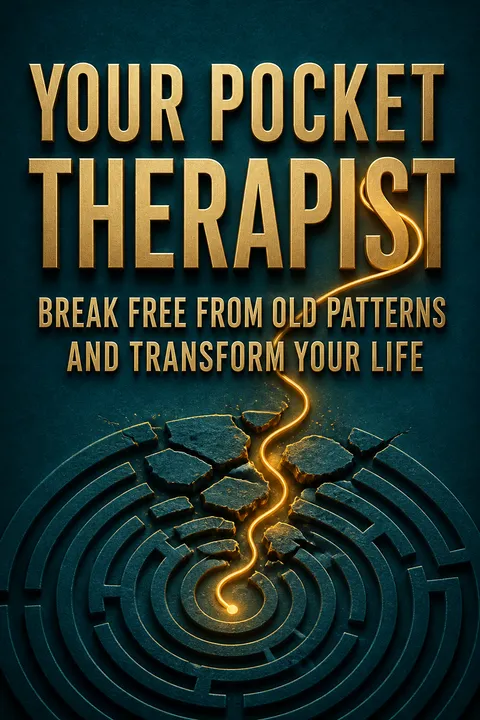
Your Pocket Therapist receives overwhelmingly positive reviews, praised for its accessibility, practical advice, and compassionate approach to mental health. Readers appreciate the book's clear explanations of complex psychological concepts, relatable patient stories, and actionable exercises. Many find it helpful for self-discovery and personal growth, covering topics like depression, anxiety, trauma, and relationships. Reviewers often describe it as a valuable resource for those starting therapy or seeking self-help, with some noting its potential to change lives. The book's format allows for easy reference and repeated use.
People Also Read






Glossary
Therapiphany
A therapy insightZimmerman's playful name for a moment of realization in therapy, when a person makes sense of a feeling, behavior, or relationship pattern in a new way. The insight may bring relief, sadness, or both. It is not presented as a cure by itself, but as a useful opening for deeper emotional understanding and different choices.
Internal saboteur
A protective inner criticA term associated with psychoanalyst Ronald Fairbairn and used by Zimmerman for an internal voice that criticizes, catastrophizes, or blocks opportunities. It is understood as a defense formed to protect someone from shame or rejection. Though intended to prevent familiar hurt, it can keep an adult from pursuing relationships, work, or other changes.
Moral defence
Self-blame that preserves attachmentFairbairn's concept for a child's tendency to blame themselves when a caregiver behaves hurtfully. Because a dependent child needs to experience caregivers as safe, it may feel less frightening to believe that the child is bad and can improve than to believe the caregiver is unreliable. The resulting self-blame can continue into adult self-criticism.
Window of tolerance
Manageable emotional arousalA term associated with psychiatrist Daniel Siegel for the range of emotional activation in which a person can remain present, think, and manage feelings. Under stress, someone may move above this range into intense alarm or below it into numbness and disconnection. Past trauma can make these shifts easier to trigger.
False self
A protective social maskDonald Winnicott's term for a way of adapting to others that conceals a person's more genuine feelings and needs. It can develop when a child learns that showing their real responses risks disapproval or loss of care. In adulthood, the mask may help someone fit in while also making close relationships feel lonely or inauthentic.
Repetition compulsion
Repeating an old relational patternA psychoanalytic idea, associated with Freud, that people may return to familiar painful dynamics in an effort to master or change an earlier experience. In relationships, someone might repeatedly pursue unavailable partners while hoping for a different outcome. Familiarity can feel compelling even when the pattern causes distress.
Attachment alarm
Threat signal around closenessZimmerman's term for the sense of danger that can arise when a close relationship feels too distant, inconsistent, or intensely close. It reflects the human need for reliable connection. In adulthood, the alarm may prompt someone to pursue reassurance, withdraw, or alternate between the two.
Projection
Assigning disowned feelings to othersA psychological defense in which a person experiences a quality or feeling they do not accept in themselves as belonging to someone else. For example, someone who disowns their own need for reassurance may describe a partner as excessively needy. Projection can make conflict feel entirely caused by the other person.
Enmeshment
Merged relational boundariesA relationship pattern in which boundaries between people are blurred, making it difficult to recognize separate needs, feelings, or identities. A person may feel responsible for a parent's or partner's emotional state, or believe disagreement threatens the bond. Enmeshment can interfere with independence while creating a powerful sense of closeness.
Inter-dependence
Mutual care with distinct selvesZimmerman's term for a balanced relationship between separate people who can rely on each other while retaining their own needs and identities. Unlike co-dependency, support is reciprocal rather than built on one person continually abandoning themselves. Unlike rigid independence, it allows vulnerability, care, negotiation, and healthy distance.
Free association
Unfiltered thoughts and memoriesA psychoanalytic technique in which someone expresses thoughts, feelings, images, and memories without deliberately censoring or organizing them. Zimmerman suggests that noticing spontaneous associations can help people explore emotions they have not yet recognized. It is a reflective tool, not a guarantee that every passing thought reveals a hidden truth.
FAQ
1. What is Your Pocket Therapist by Annie Zimmerman about?
- Comprehensive self-help and relationship guide: The book distills complex psychological and relational concepts into accessible lessons, focusing on understanding yourself and your relationships.
- Therapy outside the therapy room: Annie Zimmerman aims to bring the insights and tools of psychotherapy to a wider audience, empowering readers to manage emotional pain and foster self-awareness.
- Focus on unconscious patterns: A central theme is that many adult psychological and relationship issues stem from unconscious wounds rooted in childhood experiences and emotional repression.
- Practical exercises and stories: The book uses relatable case studies and actionable exercises to help readers break free from old patterns and transform their lives.
2. Why should I read Your Pocket Therapist by Annie Zimmerman?
- Accessible psychological insights: The book breaks down complex mental health and relationship topics into manageable, relatable stories and exercises, making therapy concepts accessible to everyone.
- Practical tools for self-awareness: Readers gain actionable steps to identify emotional patterns, understand their origins, and develop healthier coping mechanisms.
- Empowerment and emotional courage: Zimmerman encourages readers to process difficult emotions, take responsibility for their healing, and build emotional resilience.
- Relatable case studies: Through characters like Meera, Maeve, Connor, and Kelley, the book illustrates common struggles, making the material engaging and applicable.
3. What are the key takeaways from Your Pocket Therapist by Annie Zimmerman?
- Healing is a process: Emotional healing is non-linear and ongoing, requiring curiosity, understanding, feeling, action, and repetition.
- Childhood shapes adulthood: Early experiences, especially those involving attachment and emotional safety, profoundly influence adult mental health and relationships.
- Self-awareness is transformative: Recognizing and addressing unconscious patterns is essential for personal growth and healthier relationships.
- Connection is crucial: Healing often happens through authentic connections with others and oneself, not in isolation.
4. What are the five key steps in Annie Zimmerman’s emotional healing process in Your Pocket Therapist?
- Get curious: Notice your problems as signposts of deeper issues and begin exploring their origins and roles in your life.
- Understand: Delve into past experiences to uncover the root causes of emotional pain and unconscious patterns.
- Feel: Allow yourself to experience suppressed emotions, even if uncomfortable, as emotional connection is crucial for healing.
- Act: Use new awareness to make conscious choices and change unhelpful behaviors.
- Repeat: Recognize recurring patterns and continue the process, understanding that healing is ongoing and non-linear.
5. How does Your Pocket Therapist by Annie Zimmerman explain the role of childhood and trauma in adult mental health?
- Early experiences shape the brain: Most brain development occurs by age five, making early relationships and events critical in forming emotional patterns and beliefs.
- Adverse Childhood Experiences (ACEs): The book highlights research showing that multiple ACEs increase risks for mental and physical health problems in adulthood.
- Emotional repression as survival: Children often suppress feelings to maintain parental love or safety, leading to unconscious pain that manifests as adult psychological issues.
- Unprocessed trauma lingers: Even non-traumatic but difficult childhood events can impact adult well-being and relationship patterns.
6. What are the key concepts of attachment styles in Your Pocket Therapist by Annie Zimmerman?
- Four main attachment styles: Secure, anxious, avoidant, and disorganised/fearful attachment styles develop from early caregiver relationships and shape adult relational patterns.
- Attachment alarm system: Our attachment needs trigger responses like clinging or withdrawal, often repeating childhood dynamics unconsciously.
- Changing attachment patterns: Awareness, self-soothing, vulnerability, and communication can help transform insecure attachment into more secure relational experiences.
- Case studies for illustration: Stories like Connor and Abby’s journey demonstrate how attachment styles play out and can be changed.
7. How does Annie Zimmerman define and address co-dependency and boundaries in Your Pocket Therapist?
- Co-dependency defined: It’s an imbalanced relationship where one person sacrifices their needs to care for the other, leading to enmeshment and loss of self.
- Origins in childhood: Co-dependency often stems from early experiences of control, neglect, or enmeshment, teaching people to people-please and abandon their boundaries.
- Healing steps: The book recommends processing core wounds, trusting intuition, setting and enforcing boundaries, and moving towards inter-dependence.
- Practical exercises: Zimmerman provides reflective exercises to help readers identify and change co-dependent patterns.
8. How does Your Pocket Therapist by Annie Zimmerman explain depression and the importance of "feeling your feelings"?
- Depression as emotional numbness: Depression often results from repressing painful feelings, which also numbs positive emotions and motivation.
- Feelings as energy in motion: Emotions manifest physically; repressing them requires energy, leading to exhaustion and depressive symptoms.
- Practical connection methods: Zimmerman suggests body awareness, journaling, free association, and breathwork to access and process buried emotions.
- Healing through emotional connection: Allowing oneself to feel and process emotions is essential for lasting healing and improved mental well-being.
9. What does Your Pocket Therapist by Annie Zimmerman say about anxiety and its underlying causes?
- Anxiety as a survival signal: Anxiety warns of perceived threats, often rooted in past trauma, insecure attachments, or unmet emotional needs.
- Anxiety masks deeper feelings: It can act as a defense mechanism, blocking more vulnerable emotions like sadness or fear.
- Boundaries and control: Poor boundaries and attempts to control others can exacerbate anxiety; learning to set healthy boundaries and accept uncertainty helps reduce it.
- Practical strategies: The book offers tools for self-soothing and boundary-setting to manage anxiety.
10. How does Your Pocket Therapist by Annie Zimmerman connect trauma, the nervous system, and physical health?
- Trauma dysregulates the nervous system: Unprocessed trauma keeps the body in chronic fear states (fight, flight, freeze, flop, fawn), leading to physical symptoms like insomnia and immune issues.
- Body stores trauma: Even if the mind forgets, the body remembers trauma, which can manifest as chronic illness or emotional numbness.
- Healing requires safety: Recovery involves acknowledging trauma, connecting to bodily sensations, and using techniques like co-regulation, breathwork, and movement.
- Completing the stress cycle: The book emphasizes the importance of processing trauma to calm the nervous system and restore well-being.
11. What insights does Your Pocket Therapist by Annie Zimmerman offer about self-criticism and the inner critic?
- Inner critic origins: The inner critic is an internalized voice from critical or neglectful caregivers, societal messages, and early experiences of rejection or shame.
- Moral defense and self-blame: Children often blame themselves to preserve attachment, leading to lifelong patterns of harsh self-judgment.
- Healing through compassion: Zimmerman encourages connecting with the vulnerable child within, understanding the critic’s protective role, and cultivating a kinder inner voice.
- Practical exercises: The book provides tools to help readers challenge and reframe self-critical thoughts.
12. What are the best quotes from Your Pocket Therapist by Annie Zimmerman and what do they mean?
- “We chase from our wounds, we choose from our worth.” This highlights how early pain drives us to seek familiar but unhealthy relationships, and healing involves making choices from self-worth.
- “Therapy is a safe place where you can practise being your authentic self without the negative consequences you expect.” This underscores therapy’s role in fostering authenticity and vulnerability.
- “Choose peace. When you’re suffering, you might feel that you have no power at all... But your thoughts are not necessarily true.” This encourages reclaiming personal power by changing one’s relationship to suffering and choosing healing over pain.
- Quotes as guidance: These quotes encapsulate the book’s core messages about self-awareness, healing, and the transformative power of therapy and self-compassion.
Download PDF
Download EPUB
.epub digital book format is ideal for reading ebooks on phones, tablets, and e-readers.








