

Key Takeaways
Read the calendar as a counterarchive, not a neutral record
Dates carry arguments. Galeano arranges human history as a year of brief scenes, but the calendar itself is not universal: January 1 marks the Roman choice adopted by many countries, not the new year for every culture. That opening signals the book’s method. Each date becomes a meeting point between the familiar and the ignored, from a famous ruler’s death to an unnamed worker’s struggle.
Small scenes revise history. A revolutionary loses a shoe, a woman refuses to leave a courtroom, a child writes his name for the first time. Together, these short accounts shift attention from official milestones toward the people and experiences that conventional histories leave at the edges. The calendar is less a timeline of settled facts than a way of asking who gets remembered.
What's striking is how the calendar turns chronology into an argument about attention. A date can make distant events feel adjacent, while the repeated daily format refuses to treat history as something finished and safely behind the reader. This form also has a limit: brief scenes can illuminate neglected lives, but they cannot supply the depth or evidence of a full historical account. The strongest use of Galeano's calendar is as an invitation to look again, then pursue the stories beyond the page.
Ask who profits when conquest calls itself civilization
Power polishes its language. Galeano repeatedly shows conquest presented as benevolence. At the 1885 Berlin conference, European governments divided Africa and described their project as promoting trade and the well-being of local populations. No African representatives were present. The language of improvement concealed a contest over land and wealth.
The pattern travels. In the book, Churchill's defenses of empire, a government campaign to remake Kuna life, and the colonial adventures of Tintin all expose the gap between noble claims and coercive acts. The question is not whether a powerful institution uses admirable words, but what those words authorize and whose choices they erase. When a policy is called civilizing, protective, or necessary, look for the people who are being governed without consent.
The recurring contrast between benevolent language and coercive practice makes rhetoric part of the machinery of power, not merely its decoration. It encourages readers to test official descriptions against material consequences: who loses land, language, or the right to govern themselves? The approach is especially sharp when the people described as recipients of civilization are excluded from the decision. Its caution is that exposing hypocrisy does not by itself explain every motive or local difference. The questions it raises are a beginning for scrutiny, not a substitute for it.
Keep memory alive by carrying it, naming it, and retelling it
Memory needs carriers. After the Library of Alexandria burned, a Persian vizier devised a traveling library: 117,000 books carried by 400 camels, sorted so the animals themselves helped organize the collection. Galeano presents the story as an answer to a recurring danger: war and power can destroy libraries, but knowledge also survives in people who carry and share it.
A language is a living archive. The book recalls Angela Loij, one of the last speakers of the Ona language, and the oral storyteller Rafuema, whose account renewed his people’s sense of their origins each time he told it. These examples make memory more than storage. It is a practice: preserve words, teach them, and pass them on before a community’s knowledge becomes impossible to recover.
This view of memory extends preservation beyond buildings and documents. A language, a song, or a story can hold knowledge that a library catalogue cannot capture, and its survival depends on people continuing to use it. The image of a portable library makes resilience vivid, while the account of a last speaker shows how fragile that resilience can be. Still, oral transmission should not be romanticized as an effortless safeguard. It requires time, teachers, and communities with room to speak.
Make the disappeared visible through names, testimony, and collective action
Erasure is organized. During Argentina’s dictatorship, security forces disappeared thousands of people and stole more than 500 children, concealing their identities and histories. Galeano follows Macarena Gelman, who learned that the nightmare haunting her childhood reflected the terror her mother had endured before her birth. A missing person is not only a statistic; disappearance reaches across generations.
Public memory can resist. In 1977, fourteen mothers of disappeared children began meeting in Buenos Aires’s Plaza de Mayo. Their repeated gatherings, and the names they kept speaking, turned private grief into a visible public demand. Testimony matters too: a friend who had been forced under torture to reveal a hiding place told the truth in court, even though guilt had not left her. Naming does not undo violence, but it contests the silence built around it.
The stories show that disappearance attacks identity as well as life: records are falsified, families are separated, and survivors are left to interpret an absence. Collective rituals counter that design by making absence publicly legible. The mothers' recurring presence demonstrates how persistence can become evidence when institutions deny or minimize the crime. There is also a necessary distinction between remembrance and repair. Testimony can restore a person to public memory, but it cannot replace the justice, information, or care that survivors and families need.
Interrogate the news before trusting its version of reality
Narratives can be manufactured. Edward Bernays helped build public support for US entry into World War I with doctored photographs and invented anecdotes, despite the president's earlier campaign for peace. Galeano pairs that account with Napoleon’s return from exile: a French newspaper first denounced him, then celebrated him when events made the reversal convenient.
Silence shapes the record too. After the atomic bombing of Hiroshima and Nagasaki, a prominent newspaper reassured readers that reports of radioactivity were false. The journalist writing the story was also paid by the War Department. These episodes suggest a practical test for public claims: ask who produced the message, what evidence it rests on, what has been omitted, and who benefits if the audience accepts it.
The examples widen the idea of propaganda beyond explicit lies. A newspaper can change its account to suit power, while an apparently technical reassurance can obscure a conflict of interest. The reader is invited to inspect both the message and the conditions under which it appears. That skepticism is valuable, but total distrust can become another trap: contradictory claims are not equally credible simply because each comes from an interested institution. Scrutiny works best when it asks for evidence rather than settling for suspicion.
Treat land, labor, and debt as questions of power
Resources shape freedom. In 1815, José Artigas proposed distributing land in Uruguay, giving the greatest share to those with the least. After his defeat, that land was reclaimed from them. Much later, residents of Tambogrande in Peru rejected a mining project that threatened their town and agricultural livelihoods, choosing fruit-growing over a promised mining bonanza.
Debt can shift blame downward. Galeano also points to Icelandic voters rejecting demands that ordinary residents assume responsibility for failed banks. These stories connect control of land, work, and money to a basic political question: who receives the gains, and who is left with the costs? Economic arrangements are not simply technical systems. They distribute power, risk, and the ability to decide how a community lives.
The book makes economic power concrete by locating it in a field, a town, a workplace, or a household bill. That scale counters the illusion that questions of ownership and debt are too abstract for ordinary people to influence. The examples also complicate the promise that more extraction or more growth automatically improves life. The tradeoff deserves careful examination, since communities may disagree about benefits and costs, and refusing one project does not resolve every need. The key is whose judgment counts.
See ecosystems as relationships, not inventories of resources
Interference travels through systems. In Borneo, mosquitoes were targeted with DDT, but the chemical damaged other parts of the food chain. Rats later multiplied after cats were poisoned, and officials resorted to parachuting cats onto the island. The episode turns an apparently simple intervention into a lesson about consequences that cross species and habitats.
Extraction changes daily life. In Ecuador’s Amazon, oil development polluted rivers and damaged the conditions on which Indigenous communities depended. Galeano links such events to a wider habit of treating land as a storehouse for profit rather than a living system. The book also notes Ecuador’s constitutional recognition of nature as a subject with rights. That legal change makes a different question imaginable: what obligations do people have to the systems that sustain them?
The Borneo story is memorable because the unintended chain is almost comic, even as it reveals a serious failure of systems thinking. An intervention aimed at one species can reshape the conditions for many others, so the immediate target is not the whole problem. The broader argument asks readers to include ecological damage in economic and political decisions. A declaration of rights for nature can change the terms of debate, but it still needs institutions capable of protecting those rights in practice.
Let cultural survival change form without surrendering its roots
Traditions adapt under pressure. The Kuna resisted laws intended to erase their clothing, ceremonies, and self-government. Their survival did not depend on being untouched by history; it depended on continuing practices that outsiders had tried to prohibit. Galeano offers another example in the Andes, where Indigenous gods were driven from public worship yet reappeared within the bodies and dances of their people.
Knowledge speaks through forms. The Miao people, whose language was not written down, preserved stories of origin and displacement through patterns stitched into clothing. A garment could carry a history that official records ignored. These accounts challenge the idea that culture survives only when it remains unchanged or is written in a recognized script. A practice can transform, move, or take on new symbols while still carrying a community's memory.
Cultural persistence here is active rather than frozen. People retain meaning through ritual, clothing, language, and adaptation, even when formal institutions deny their beliefs or history. That insight prevents a common mistake: treating a culture as either pristine or lost. Yet adaptation should not be used to excuse coercion. A tradition changing by choice is different from a practice being suppressed and replaced. The crucial questions are who controls the change and whether the community can continue to define itself.
Protect time for beauty, curiosity, and unscripted human attention
Attention is a choice. In a Washington subway station, violinist Joshua Bell played classical music while more than a thousand commuters hurried past; only a handful stopped. Most did not recognize a virtuoso performing in their path. The episode asks whether people can notice beauty when a place and its routines tell them to keep moving.
Curiosity has its own value. Galeano also celebrates people who look closely: the scientist who studies a drop of water, the child greeting grass, and the artist who keeps creating in old age. These are not presented as escapes from political history. They are ways of staying receptive to the world rather than accepting only what commands attention. Make room to notice what routine, speed, or status might cause you to overlook.
The subway performance turns attention into a public resource: the music is available, but the setting encourages people to treat it as irrelevant. That tension reaches beyond art to the ordinary details that shape perception and care. Curiosity, in this book, is not passive wonder; it is the willingness to look again. Still, noticing beauty cannot substitute for confronting injustice. Its value is different: attention can keep the human world from shrinking to whatever is urgent, profitable, or officially important.
Analysis
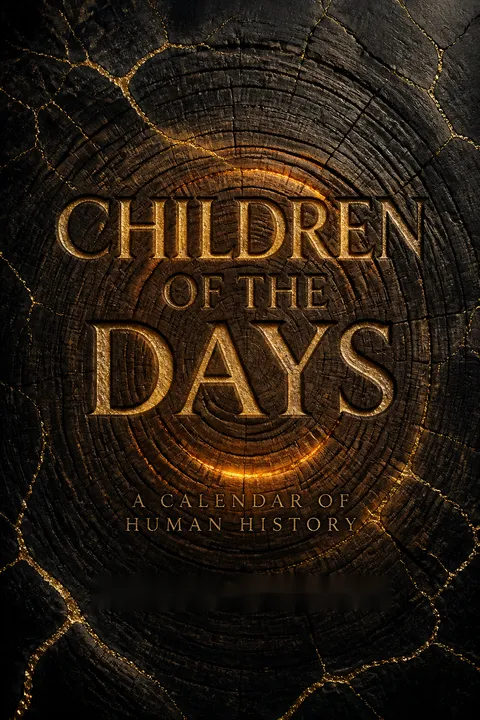
Children of the Days is a literary history organized as a calendar, not a continuous argument supported by a single research method. Its entries move rapidly between revolutionaries, artists, anonymous workers, Indigenous communities, institutions, and animals. The form creates an effect that a conventional chronology often cannot: unrelated lives share the same page, and events presented as remote become part of a common human present. The book’s central political gesture is to challenge the distribution of visibility. It asks readers to notice who appears as a historical actor, who is reduced to a statistic, and whose actions are redescribed by the powerful.
Galeano’s method is strongest when a compact anecdote makes an abstraction tangible. A library carried by camels renders cultural survival physical; the mothers who repeatedly gather in a public square make collective memory visible; the poisoned ecosystem in Borneo turns unintended consequences into a story that is hard to forget. These vignettes operate as moral prompts. They give readers handles for thinking about colonialism, propaganda, gender, labor, and ecological damage without requiring a single technical vocabulary.
The same compression creates risks. A miniature history can sharpen a moral pattern while leaving out competing explanations, local context, or uncertainty. The book often writes with the force of testimony and satire rather than the measured qualifications of a scholarly survey. Readers should therefore distinguish its ethical clarity from exhaustive historical proof. Its selection and framing are themselves arguments, not neutral windows onto the past. That distinction does not diminish the book's purpose. It clarifies how to use it. Read the calendar as a counterarchive: a provocation to question official memory, recover overlooked people, and seek fuller accounts of the events that catch the reader's attention. Its most lasting lesson is methodological. History changes when the questions change, especially when attention shifts from celebrated power to the lives that power has obscured.
Review Summary
أبناء الأيام by Eduardo Galeano presents 365 historical vignettes, one for each day of the year, focusing on marginalized voices, indigenous peoples, and forgotten events. Readers praise Galeano's concise, poetic style that delivers powerful messages about injustice, colonialism, and human dignity. The book celebrates overlooked heroes and exposes historical hypocrisy with sharp humor and emotional depth. While some find it repetitive or overly focused on Latin America, most appreciate Galeano's humanitarian perspective and ability to condense complex histories into brief, impactful passages that challenge official narratives and commemorate the oppressed.
People Also Read

Glossary
Children of the days
People shaped by timeThe book's organizing metaphor for human beings as products of the days they live through and participants in the history they inherit. Each calendar entry connects a date to people, events, and cultural memories, presenting history not as a distant sequence but as something that continues to shape ordinary lives.
Operation Condor
South American state terror networkThe name used in the book for coordination among South American dictatorships in the persecution of political opponents. Galeano illustrates its reach through Macarena Gelman, whose pregnant mother was transferred from Argentina to Uruguay, killed after giving birth, and whose child was taken and raised under another identity.
Pachamama
Andean Mother EarthAn Andean name for Mother Earth, treated in the book as a living source of nourishment and a participant in human life, rather than as inert property. The account describes people sharing food and drink with her during a festival, asking forgiveness for environmental harm, and seeking protection from disasters.
ñaupa
Past and future togetherA Quechua word that Galeano presents as meaning both was and will be. In the book's account of Indigenous gods returning through dance, the word conveys a conception of time in which the past is not simply over: it remains connected to what may come.
walking library
Knowledge carried by peopleGaleano's image for a library protected from destruction by being carried rather than housed in one vulnerable building. The example is a Persian vizier who traveled with 117,000 books on 400 camels, arranged so the animals helped organize the collection. The image also suggests that memory can survive through people who preserve and transmit knowledge.
Download PDF
Download EPUB
.epub digital book format is ideal for reading ebooks on phones, tablets, and e-readers.








