

Key Takeaways
Use grammar as a tool kit, not a courtroom verdict.
A guide under pressure. Emmy Favilla began building BuzzFeed’s first substantial style guide during Hurricane Sandy, working from home before the company had a copy editor. One of her earliest decisions was how to spell the shortened name of macaroni and cheese. Even that small choice involved tone: the guide needed to sound like BuzzFeed without undermining its reporting. Favilla used established references, including the AP Stylebook, the Chicago Manual of Style, and Merriam-Webster, but did not treat them as infallible.
Know before departing. Her approach is to learn conventions, then decide whether they serve the reader and the situation. That can mean choosing a conversational who over the formal whom, or allowing a sentence to sound like speech. Rules matter most when they prevent confusion, not merely because a manual lists them.
A house style is a kind of local constitution: it lets a group make recurring decisions without restarting every argument from zero. The Sandy origin story also shows that editorial standards are built amid practical constraints, not handed down from an abstract authority. That flexibility helps a publication sound coherent across very different formats. Its risk is that personal taste can masquerade as reader benefit. A useful check is whether a departure improves clarity, voice, or inclusion, rather than merely pleasing the editor who prefers it.
Protect trust by getting facts, meaning, and human dignity right.
Errors have different stakes. A disputed spelling such as doughnut or donut rarely changes what a reader understands. Confusing whose with who’s, or using the wrong word in a report, can make a writer seem careless about facts as well as language. The book treats spelling, agreement, and clear sentence structure as foundations of credibility, not opportunities to show off grammatical expertise.
Editing has measurable value. A study discussed in the book found that readers rated copyedited stories as more professional, organized, and well written than unedited versions. They also reported greater willingness to pay for edited journalism. The finding supports a practical priority: correct errors that distort facts, interrupt understanding, or make a publication appear unreliable before spending precious time on harmless stylistic variation.
Editing is a form of quality control, but the most useful standard is not perfection. It is whether a reader can understand what happened, judge the evidence, and trust that the publication has taken care. The study’s reported willingness to pay suggests that editing can affect perceived value, not just polish. Still, credibility is not reducible to grammar. A perfectly punctuated article can mislead through weak reporting, while a small typo need not invalidate solid work. The hierarchy of error matters.
Let usage evolve, but make every change earn its clarity.
Language records its users. Descriptivism means observing how people actually speak and write; prescriptivism means emphasizing rules about how they should. Favilla argues for using both approaches rather than treating them as enemies. The internet speeds up exposure to new wording, but a familiar pattern does not automatically become clearer or more useful just because it is popular.
Usage can overturn old advice. The book points to miniscule, a variant often criticized as incorrect, which Oxford Dictionaries reported accounted for 52 percent of usage. Merriam-Webster also recognizes it. Lowercasing internet, once resisted by major style references, became standard as the word changed in ordinary use. Such examples show that dictionaries document language in motion. They do not settle every editorial choice, especially when two forms remain understandable.
This approach avoids two easy mistakes: pretending language can be frozen, and assuming that every popular form deserves immediate approval. Usage is evidence, not a verdict. A term may be widespread yet confusing to a particular audience, or socially meaningful in one community and alienating in another. The productive question is not simply whether a form appears in a dictionary, but what communicative work it does in context. That makes editorial judgment more demanding than rule-following, but also more responsive.
Spend editing effort where mistakes can actually hurt.
Not every mark matters equally. Favilla calls excessive anxiety about flexible punctuation comma panic: the belief that a single comma choice always has a right answer, even when both versions are clear. Her examples distinguish that low-stakes debate from errors that change meaning. In one sentence, a missing comma turned a request to companies into an apparent command to stop manufacturing boxes.
Use consequence as your guide. A misplaced apostrophe can blur whether one family or several families own something. A hyphen can prevent a modifier from being read in an unintended way. But a comma added only to satisfy a rigid formula may make a closely linked thought sound stiff. Consistency helps readers, especially within a story, yet should not become a reason to preserve a confusing or unnatural choice.
This is a practical model of risk-based editing. Attention is limited, so corrections should be ranked by their likely effects on meaning, accuracy, and respect. The method resembles triage more than proofreading for uniformity: address the wound that changes the outcome first. The complication is that readers do not all perceive ambiguity in the same way. A phrase that seems obvious to an editor may not be obvious to someone outside the subject area. Testing clarity with an unfamiliar reader can expose those blind spots.
Ask people how they identify, then name them precisely.
Language can exclude. Inclusive wording is not a cosmetic layer added after reporting; it affects whether people are represented accurately. The book recommends asking subjects how they identify and using their chosen pronouns. If asking is impossible, singular they can avoid guessing. It also favors people-first phrasing, such as people with disabilities, when describing disability, rather than defining people by a condition.
Choose terms with care. The guide prefers undocumented immigrant to illegal immigrant, and same-sex male partners when a story cannot establish whether two men identify as gay. It distinguishes migrants seeking economic opportunity from refugees forced to flee danger. These choices are not universal formulas: terminology varies by community and country. Context, subject preference, and the reason a label is relevant should shape the wording.
The strongest part of this guidance is its insistence that precision and respect reinforce one another. Asking a person’s preferred term replaces editorial guesswork with direct knowledge, and avoiding unnecessary labels keeps a story focused on what matters. Yet no style list can anticipate every person’s preference or every community’s internal debate. Editorial standards should therefore function as a starting point for inquiry, not a substitute for it. The central discipline is to notice when a label adds factual value and when it merely marks someone as different.
Online, punctuation and emojis carry tone as well as syntax.
Marks have social lives. In a brief text, a period can read as abrupt or displeased, especially when the sender usually leaves it out. A line break may already signal that a thought is complete, making terminal punctuation feel more deliberate than it would in a long article. Repeated question marks or exclamation points can communicate confusion, excitement, or disbelief beyond their conventional grammatical roles.
Images add emotional cues. Emojis often clarify feelings that plain text leaves ambiguous. The book gives four versions of a message about regretting an action, each paired with a different emoji to signal sadness, embarrassment, pride, or anger. That does not make emojis a replacement for prose. It shows that digital messages combine words, punctuation, spacing, and images to communicate tone, and readers interpret the combination.
Digital writing behaves less like a printed page and more like conversation with visible gestures. A punctuation mark can act as a pause, facial expression, or change in interpersonal temperature. That makes the sender’s habitual style important: the same period can mean little from one person and signal tension from another. Emojis help supply context, but they are not a universal code. Their meanings vary by relationship and setting, so relying on one symbol to carry a sensitive message can create the very ambiguity it was meant to solve.
Treat slang as evidence of adaptation, not proof of decline.
New forms solve social problems. Online language includes playful constructions such as using because before a noun, as in a short explanation meaning that the reason is obvious or deliberately left unstated. Memes such as Doge use broken-looking grammar to signal an overwhelmed, childlike voice. These forms are not simply failed attempts at formal English; their effect depends on a shared understanding of the style.
People shift registers. Code-switching means changing language patterns to suit different audiences or situations. Someone may use loose punctuation and slang in a chat, then write a formal application in standard edited prose. The book argues that this ability is evidence of flexibility, not an inability to use conventional grammar. But a slang term’s popularity can be temporary, and using it without understanding its community or history can flatten its meaning.
Slang does more than name things. It can mark affiliation, irony, intimacy, or distance, which explains why a phrase may feel natural to insiders and awkward when adopted by outsiders. Code-switching also complicates claims that informal digital writing is simply bad writing: speakers often move between styles with purpose. That flexibility should not be romanticized, however. A playful form may be obscure to a general audience, and a term that travels widely can lose the context that gave it force. Readers still need to be considered.
Write for global readers without erasing local English.
The web crosses borders. A story written in one country may reach readers who do not share its abbreviations, measurements, or naming conventions. The book recommends spelling out US state names in running copy rather than relying on abbreviated forms that international readers may not recognize. It also encourages explaining unfamiliar local references when they matter to the story.
Do not flatten difference. British and American English vary in spelling, vocabulary, punctuation, and even the meaning of a word such as tabled. Naming conventions also differ: in some cultures, the first element of a full name is the family name, while in others people may not use family names in the familiar Western way. The practical rule is to follow the writer’s region where appropriate, preserve a person’s naming preference, and add enough context for outsiders.
International editing is a balancing act between access and authenticity. Replacing every local phrase with a supposedly neutral equivalent can make a story easier to decode but less faithful to its speaker. Leaving every unfamiliar term unexplained can shut readers out. The best solution is usually selective context: clarify what a reader needs to understand the event, while preserving the language that reveals where and how it happened. This is especially important with personal names, where an editorial shortcut can quietly misidentify the person being covered.
Make headlines plainspoken, compelling, and honest about the story.
Describe before teasing. Online headlines compete for attention, but the book argues that a reader should learn what a story contains rather than be tricked into clicking. A BuzzFeed headline about a Black man testing how clothing affected people’s treatment of him performed better after it was rewritten to state the experiment directly. The clearer wording also avoided an unintended reading of the original.
Test without surrendering judgment. Editors can compare headline versions and observe which attracts readers, but a successful headline still needs to represent the story accurately. Curiosity-gap formulas that promise an astonishing reveal may work briefly, then lose readers’ trust when the payoff is ordinary. Direct language, a specific subject, and the central action often make a stronger promise than inflated claims or deliberate vagueness.
A headline is both a summary and a contract. Testing can reveal what readers notice, but click-through performance measures attention, not whether the headline delivered on its promise. That distinction matters because short-term incentives can reward exaggeration. The book’s preference for plainspoken headlines offers a durable alternative: make the story easy to recognize, then earn the click with substance. A useful editorial test is whether someone who reads only the headline would feel accurately informed after opening the article.
Keep email concise because readers hear tone between the lines.
A greeting is not a guarantee. Email lacks the voice and facial cues that soften or sharpen spoken words, so routine phrases can be misread. A period may sound cold, an ellipsis can seem threatening or suggestive, and an overly elaborate greeting may bury the actual request. The book’s advice is to begin simply, state what is needed, organize substantial information with bullets, and close without inventing warmth the sender does not feel.
Respect the reader’s time. Long preambles such as weather talk or generic well-wishes are often unnecessary in a work message. Brevity helps, but not at the cost of sounding hostile or obscure. A concise email can still include enough context to explain why the recipient is being contacted and what response is expected. The aim is not to discover a universally perfect signoff; it is to reduce ambiguity and make the exchange easier to answer.
Email makes small choices unusually visible because recipients infer intention from a narrow band of cues. That can turn punctuation into a proxy for emotion, even when the sender meant no such thing. Clear requests and restrained phrasing reduce the number of meanings a reader has to consider. But efficiency should not become an excuse for brusqueness: a sentence of context can prevent several rounds of clarification. The best message is not the shortest possible one, but the shortest one that leaves the relationship and the task intact.
Analysis
This book is best understood as a working editor’s guide to judgment, not a comprehensive theory of English. Its organizing idea is a hierarchy of consequences. First come accuracy, clarity, and respectful representation. Below those sit conventions that support consistency, such as capitalization, hyphenation, and punctuation. At the bottom are choices that are often matters of taste. That hierarchy is more useful than a universal list of rules because it tells writers where to spend attention.
The narrative of creating BuzzFeed’s style guide gives the argument institutional weight. A digital publication needs shared decisions, but the decisions must adapt to a conversational voice, changing formats, and readers outside a single national community. The guide is therefore neither pure rulebook nor permission slip. It is a negotiated practice: consult references, make a defensible choice, and revise when a choice stops helping.
The book’s strongest insight is that flexibility does not oppose standards. It depends on knowing what a convention accomplishes. A comma that prevents a misreading matters; one that merely satisfies a rigid preference may not. A slang term can convey a precise social tone, but its use can also obscure meaning or borrow from a community without understanding the term’s roots. Likewise, inclusive language requires more than replacing one label with another. It requires asking what information is relevant and whose preference is known.
One limitation is that the book’s lively, deliberately informal voice sometimes treats the author’s own intuitions as if they were broadly shared. That is part of its charm, but it can blur the line between house style and general advice. The reader should take its method more seriously than every individual ruling: identify the audience, assess the stakes, check reliable references, and choose wording that communicates without needless harm or friction. That is the durable lesson of a guide built for language that refuses to stand still.
Review Summary
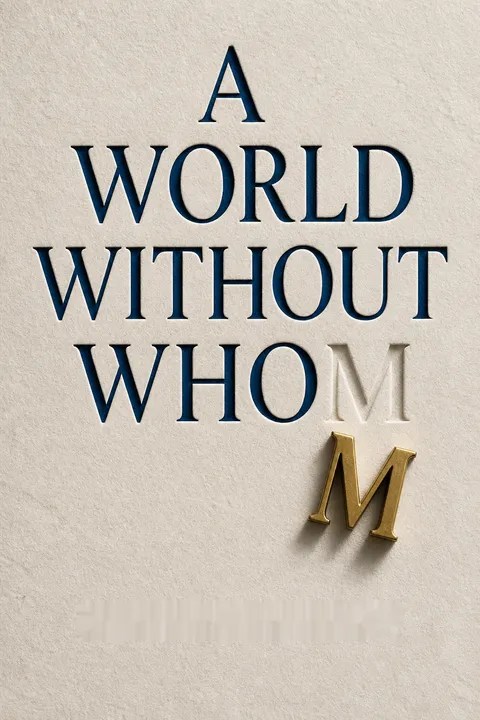
A World Without "Whom" by Emmy J. Favilla, BuzzFeed's global copy chief, explores how language evolves in the digital age. The book offers a humorous and insightful look at modern grammar, punctuation, and style, particularly for online writing. Reviews are mixed, with some praising its casual tone and practical advice, while others criticize its inconsistent approach and occasional dismissiveness towards traditional rules. Many readers appreciate Favilla's flexible attitude towards language evolution, though some disagree with specific recommendations. Overall, it's seen as an entertaining and thought-provoking read for those interested in contemporary language use.
People Also Read


Glossary
descriptivism
Usage as people practice itAn approach to language that observes and records how people actually speak and write. Under descriptivism, usage changes over time, and judgments about what is standard depend partly on how a form is used by a speech community. It contrasts with approaches that treat established rules as binding regardless of common usage.
prescriptivism
Rules for proper usageAn approach to language that emphasizes standards for how people should speak or write. Prescriptivists may defend conventions as useful for clarity, consistency, or formal communication. The book does not treat prescriptivism as inherently wrong, but argues that rules should be considered alongside actual usage, context, and the needs of readers.
comma panic
Anxiety over optional commasFavilla’s term for the belief that a comma question must always have one correct answer, even in cases where punctuation is partly a matter of rhythm or emphasis. The idea encourages writers to distinguish optional stylistic choices from commas that prevent ambiguity or clarify a sentence’s structure.
code-switching
Shifting style by audienceChanging language patterns, vocabulary, or tone to fit a situation or audience. In the book, a person may use informal slang and relaxed punctuation in a message, then use conventional edited language in a job application or professional setting. This ability shows that informal digital writing does not necessarily replace formal language.
person-first language
Person before conditionA writing practice that refers to a person before naming a disability or diagnosis, as in people with disabilities rather than disabled people. The book presents it as a way to avoid defining someone solely by a condition. It also notes that preferred usage varies across communities and regions, so individual preference and local guidance matter.
pragmatic particle
A marker of conversational stanceA word or expression that helps signal a speaker’s attitude, relationship to a listener, or the function of an utterance, rather than contributing its original literal meaning. The book uses lol as an example: although it began as an abbreviation for laughing out loud, it can now indicate acknowledgment, empathy, or conversational ease.
The Power of Language and Labels
Study of disability terminologyA study discussed in the book that compared reactions to people described as mentally ill with reactions to people described as people with mental illness. Its authors found greater tolerance toward the person-first phrasing, including among counselors. The book uses the finding to illustrate how labels can influence judgments about people.
Audience Perceptions of Editing Quality
Study of edited journalismA study cited in the book that compared audience responses to edited and unedited stories. Readers judged copyedited stories as more professional, organized, and well written, and reported greater willingness to pay for edited journalism. It supports the argument that copyediting affects how readers perceive a publication’s quality.
Download PDF
Download EPUB
.epub digital book format is ideal for reading ebooks on phones, tablets, and e-readers.








