

Key Takeaways
Use dismissal to find a new arena, as Jobs did with NeXT and Pixar.
The comeback was indirect. In 1985, after a bitter power struggle, Jobs lost his role at Apple, the company he had helped create. He wanted to build products with small, talented teams, so he founded NeXT and bought the computer graphics group that became Pixar. Neither venture followed a smooth path: NeXT’s costly computers struggled to sell, while Pixar’s first business plan, selling specialized graphics computers, also faltered.
Failure changed the assignment. NeXT’s software eventually brought Jobs back to Apple, and Pixar found a stronger future in animation. His second act was not a simple return to the old throne. It came through years of work in new arenas, where he developed different assets and found problems he could solve.
What's striking is that rejection does not appear here as a magical source of wisdom. Jobs remained ambitious and often difficult; what changed was the setting in which his ambition operated. The story is useful because it separates professional identity from a particular title or company. A setback can expose which work energizes someone, but it does not guarantee that a new venture will succeed. NeXT and Pixar both consumed money and time before their most valuable contributions became clear.
Make advanced technology useful before asking customers to admire it.
Woz built the machine. Steve Wozniak supplied the engineering brilliance behind the early Apple computers. Jobs brought a different strength: finding parts cheaply, persuading suppliers to extend credit, and recognizing that a computer could be sold as a finished product rather than a circuit board for hobbyists. The Apple II added a case, keyboard, and color display, making it approachable beyond the Homebrew Computer Club.
Usefulness completed the pitch. Expansion slots let owners add capabilities, while built-in BASIC and a disk drive made it easier to start programming and store work. Then VisiCalc, an early spreadsheet that recalculated results when a user changed a number, gave businesses a practical reason to buy. The breakthrough was not one invention alone. It was engineering, usability, software, and a market arriving together.
The early Apple story is a reminder that commercial innovation often depends on connecting pieces that already exist. Wozniak’s elegant circuit design mattered, but so did Jobs’s insistence on packaging, distribution, and a reason to use the machine. This is a stronger account than the myth of the lone inventor. It also complicates the usual founder narrative: Jobs’s commercial instincts were powerful, but the computer’s technical foundation came from collaborators whose contributions could be overshadowed by his public role.
Turn team identity into momentum without making exhaustion the price.
A crew became a cause. On the Macintosh project, Jobs gathered engineers and designers into a small, isolated group and gave them a shared identity as pirates working against the company’s bureaucracy. The team tackled a difficult goal: a compact computer using a graphical interface, windows, icons, and a mouse. Jobs’s forceful vision helped people attempt more than they thought possible.
The costs were real. He celebrated workweeks approaching ninety hours and expected intense personal commitment, while Macintosh employees were paid less than some colleagues elsewhere at Apple. The group’s perks and camaraderie did not erase the strain, nor did they prevent resentment. The book shows both sides of Jobs’s leadership: he could create unusual focus, but he could also treat sacrifice as proof of loyalty.
Shared identity can coordinate a team faster than a formal chart. The pirate story gave the Macintosh group a memorable sense of purpose and separation from the rest of Apple. But identity can also become a tool for normalizing excessive demands: if commitment is measured by hours and personal obedience, dissent starts to look like betrayal. The productive question is not whether a team feels like a mission. It is whether that mission gives people agency, fair recognition, and a sustainable way to contribute.
When customers hesitate, test the product before blaming their imagination.
A beautiful interface was not enough. The Macintosh made computers easier to navigate through onscreen windows, icons, and a mouse, ideas Apple’s team had seen working at Xerox PARC. The machine helped popularize a new way of interacting with computers, and its launch drew extraordinary attention. But Jobs and his team expected it to become a major office computer before enough business software was available.
The market exposed constraints. The original Mac had limited memory, a small screen, no color, and no expansion slots. Users also faced a thin software library and repeated disk swapping. Sales surged at first, then fell well short of Jobs’s forecasts. The problem was not that buyers failed to appreciate design. Many needed a machine that could handle their work, fit existing practices, and run the applications they depended on.
The Macintosh episode makes a useful distinction between a product’s conceptual brilliance and its operational fit. A new interface can expand what people imagine, yet adoption still depends on the unglamorous details of compatibility, applications, and workflow. Jobs’s intuition helped identify a compelling direction, but intuition did not reliably predict purchase behavior. The lesson is not to surrender ambitious design to focus groups. It is to expose assumptions to real users early enough that practical obstacles can still be fixed.
When hardware fails, look for the valuable capability underneath.
NeXT’s computer disappointed buyers. Jobs made the black NeXT Cube a design statement, but it was expensive, delayed, and burdened by a magneto-optical storage system that did not catch on. The company’s underlying software proved more durable. NeXTSTEP, its operating system, grew from work on Mach, a system developed at Carnegie Mellon, and offered tools that appealed to software developers.
Pixar’s first product also missed. Its Image Computer was powerful but costly and difficult for hospitals and other customers to use. Pixar’s rendering software, which helped turn digital models, surfaces, and lighting into finished images, found a more viable market. Jobs had initially focused on selling the machines. The software and the creative work enabled by it became more important. Apple’s purchase of NeXT later brought its software and engineering team back into the company.
A company’s visible product is not always its most durable asset. NeXT’s hardware failed to win a broad market, but its software remained useful; Pixar’s computer struggled, while its rendering tools gained a foothold. This is a valuable strategic distinction between a product and a capability. It also calls for discipline: pivoting toward an overlooked strength is not the same as endlessly defending a losing product. The difficult task is identifying what customers demonstrably value before financial pressure removes the option to adapt.
Make the audience feel something technology alone cannot deliver.
Pixar needed more than computing power. Jobs bought the graphics group from George Lucas’s company, expecting a hardware business. The group’s animators, led by John Lasseter, had a different ambition: use computer graphics to tell stories. Short films such as Luxo Jr. showed that even desk lamps could convey character. Tin Toy, which featured a toy and a toddler, won an Academy Award and helped demonstrate that computer animation could carry emotion as well as technical novelty.
Toy Story proved the larger point. Released in 1995, it became a major box-office success, earning more than $350 million worldwide according to the book. The film combined new visual techniques with recognizable character conflicts and humor. Pixar’s lasting value was not simply that it could make images on computers. It could use those images to make audiences care about toys.
Pixar’s rise clarifies the difference between a medium and a reason to care. Technical novelty attracts attention, but a story gives that novelty emotional direction. The same principle applies beyond film: tools matter when they help people express, understand, or experience something. The book also credits the creative team, especially Lasseter, rather than treating Jobs as the animation genius. That distinction matters because investment and leadership can enable a breakthrough without being its primary artistic source.
Sell a complete experience, not a disconnected collection of devices.
The iPod joined hardware and software. Apple’s 2001 music player could hold about a thousand songs, and its iTunes software made it simple to organize music and transfer it to the device. Jobs’s team focused on reducing friction: connecting the iPod to a computer could automatically sync new music. The appeal came from the whole process, not just the small white player.
The store completed the system. In 2003, Apple opened the iTunes Music Store with agreements from major record companies, offering individual songs for 99 cents. Unlike unauthorized file-sharing services or subscription plans with restrictive rules, it gave customers a straightforward legal way to buy downloads. The book reports that the store sold 85 million songs in its first year. Apple had connected device, software, distribution, and payment into one experience.
The iPod story is less about a single clever gadget than about reducing the distance between wanting music and enjoying it. Hardware, interface, and distribution reinforce one another when they are designed as a coherent journey. The arrangement also required negotiation with record companies, whose cooperation was essential to a legal store. There is a tradeoff: a tightly integrated experience can be unusually convenient while making users dependent on one company’s rules. Convenience and openness are separate design choices, not automatic partners.
Use leverage to renegotiate, while recognizing partners can walk away.
Success changed Pixar’s bargaining position. Before Toy Story, Disney funded and distributed Pixar’s films, while Pixar accepted limited participation in profits and little control over the wider franchise. After several hits, Jobs pressed for greater creative independence, a stronger role for the Pixar brand, and a larger share of revenue. The new agreement improved Pixar’s terms and reflected its growing value to Disney.
Leverage did not guarantee agreement. By 2004, Jobs wanted Pixar to own its films and hire Disney only for distribution. Negotiations collapsed after ten months. The split gave Pixar freedom, but it also meant losing a powerful marketing and distribution partner. Disney retained rights to make sequels under the existing arrangement. The dispute shows how a successful partnership can become unstable when each side’s contribution, control, and rewards are interpreted differently.
Jobs understood that bargaining power changes when a partner becomes difficult to replace. Pixar’s run of hits made its contribution visible, allowing it to demand better terms. Yet leverage is not the same as a durable relationship. A contract can allocate money and rights, but it cannot ensure mutual respect or shared confidence. The conflict also cautions against treating a negotiation as a pure contest: even a party that wins better terms may sacrifice distribution, continuity, and the practical advantages of cooperation.
Jobs’s second act softened his leadership, but never erased its costs.
Life changed the public figure. Jobs had rejected responsibility for his first daughter, Lisa, for years before eventually welcoming her into his family. He later married Laurene Powell and became a father to three more children. The book connects family life and business failure with a more reflective Jobs, though his behavior remained demanding and sometimes cruel. His 2004 cancer surgery also brought a public acknowledgment of vulnerability.
The team became visible. At a 2000 Apple presentation, Jobs dropped the interim label from his CEO title and thanked employees for the work behind the company’s progress. He credited the effort to a team rather than claiming every achievement for himself. Yet the biography also describes him denying colleagues recognition and rewriting parts of Pixar’s history. His second act was real, but incomplete: greater gratitude coexisted with old habits of control.
The book’s most persuasive portrait is not a conversion story but a change in degree. Jobs becomes more capable of gratitude and family attachment without losing the impatience and possessiveness that made him hard to work with. That tension resists the easy lesson that adversity automatically produces wisdom. Personal growth can coexist with persistent harm, and public gestures of humility do not settle questions of credit or fairness. A credible account of leadership must hold achievement and its human costs in view at the same time.
Analysis
This biography’s central argument is that Steve Jobs’s most consequential achievement was not a single product or company, but the ability to return to creation after losing authority at Apple. Its narrative gains force from contrast: Wozniak’s engineering against Jobs’s commercial instinct, the Macintosh’s elegant interface against its weak early software library, and NeXT’s failed hardware against the continuing value of its operating system. Pixar supplies the most important revision to the founder myth. Jobs bought a graphics business, but the company’s major achievement depended on artists and storytellers whose work he did not originate.
The book also presents charisma as both productive force and organizational risk. Jobs could make impossible deadlines feel meaningful, draw talented people into ambitious projects, and persuade powerful partners to reconsider their assumptions. The same force could produce underpayment, exhaustion, personal humiliation, and distorted credit. The narrative is strongest when it lets both outcomes stand together. It is less convincing when its theatrical language turns complex business events into contests between heroic vision and foolish resistance.
As a 2005 account, the book closes while several future outcomes remain unresolved. Its descriptions of Apple’s music strategy and Pixar’s possible next steps capture contemporary hopes, not settled history. This matters because the story’s momentum can make forecasts feel like facts. The reader should distinguish documented events, such as the iPod’s growth and Apple’s return to profitability, from the authors’ forward-looking claims about industries and rivals.
The deepest lesson is therefore not to imitate Jobs’s temperament. It is to separate the value of a clear product vision from the damage caused by unchecked authority. His career suggests that technical leadership works best when it joins design, software, distribution, and compelling content. It also shows that a leader’s ability to inspire extraordinary effort does not absolve the leader of responsibility for how that effort is obtained, shared, and remembered.
Review Summary
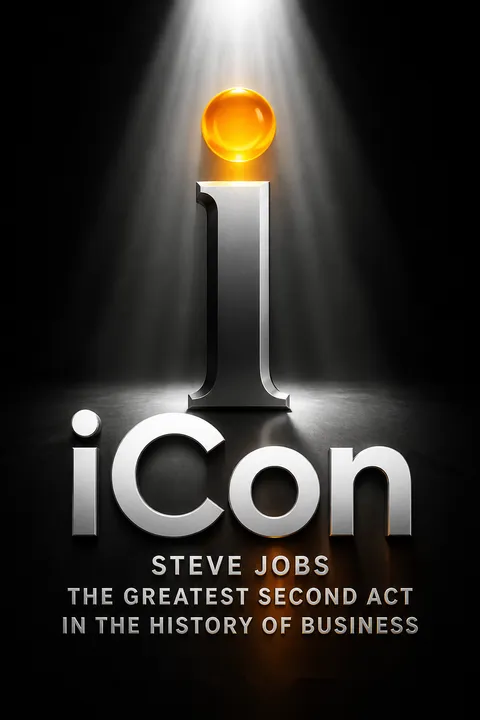
iCon: Steve Jobs is a comprehensive biography that offers insights into Jobs' life, from his early days to his return to Apple. While praised for its detailed account of Jobs' career and impact on technology, some readers found the writing style lacking. The book portrays Jobs as a complex figure - innovative and visionary, but also difficult and ruthless. It covers his work at Apple, NeXT, and Pixar, though some felt the later chapters were less detailed. Overall, readers appreciated the balanced view of Jobs' strengths and flaws.
People Also Read








Glossary
Reality distortion field
Persuasive force of beliefA phrase used by people around Jobs to describe his ability to make a difficult or unlikely goal seem attainable. His confidence, rapid arguments, and occasional sharp insight could persuade colleagues to commit to ambitious work. The term also captures a risk: strong conviction could obscure practical limits, including costs, schedules, and customer needs.
Digital Hub
Computer-centered digital ecosystemApple’s strategic idea that the computer could serve as the center for managing other digital activities and devices, including music and photography. In the book, this direction connects Macintosh computers with applications and services such as iTunes, and later with the iPod. It positioned Apple to sell an integrated consumer experience rather than computers alone.
Computer Animation Production System (CAPS)
Digital animation production toolsA software system developed through collaboration between Pixar and Disney to digitize parts of traditional animation production. Drawings could be scanned, digitally inked and colored, and combined in layers on a computer. CAPS was used in Disney animated features and helped establish Pixar’s technical credibility with the studio before their feature-film partnership.
RenderMan
Pixar rendering softwarePixar’s software for converting digital descriptions of scenes into finished images. A scene includes objects, surfaces, colors, textures, and information about how light behaves. RenderMan automated and supported the rendering process, turning Pixar’s years of graphics research into a commercial product used in animation and visual effects.
NeXTSTEP
NeXT operating systemThe operating system developed by NeXT for its computers. Built using the Mach approach and associated with object-oriented programming tools, it remained valuable even though NeXT’s hardware struggled commercially. Apple acquired NeXT in 1996, bringing the software and its engineering team into Apple as part of the company’s effort to establish a new operating system.
FAQ
What's iCon: Steve Jobs, the Greatest Second Act in the History of Business about?
- Focus on Steve Jobs' journey: The book chronicles Steve Jobs' life, highlighting his rise, fall, and resurgence in the tech industry. It covers his early days at Apple, his departure, the founding of NeXT, and the success of Pixar.
- Exploration of key themes: It delves into themes of innovation, creativity, and leadership challenges, emphasizing Jobs' unique approach to business and design.
- Impact on multiple industries: The narrative illustrates how Jobs transformed Apple, Pixar, and the music industry through the iTunes Music Store, showcasing his influence on technology and consumer culture.
Why should I read iCon: Steve Jobs, the Greatest Second Act in the History of Business?
- Insight into a visionary: The book provides a deep understanding of Steve Jobs as a person and leader, revealing his complexities, brilliance, and flaws.
- Lessons in resilience: It emphasizes perseverance and adaptability in the face of failure, using Jobs' journey as an inspiring example of overcoming obstacles.
- Understanding innovation: Readers gain insights into the creative processes behind groundbreaking products like the Macintosh and iPod, highlighting Jobs' vision and leadership.
What are the key takeaways of iCon: Steve Jobs, the Greatest Second Act in the History of Business?
- Embrace failure as a teacher: Jobs' experiences show that failure can lead to growth and innovation, with lessons learned during his time away from Apple.
- Importance of design and user experience: Jobs believed design was about both aesthetics and functionality, revolutionizing the tech industry with intuitive products.
- Value of collaboration and talent: Recognizing the importance of talented teams, Jobs' success at Pixar and Apple was due to collaborative creative efforts.
What are the best quotes from iCon: Steve Jobs, the Greatest Second Act in the History of Business and what do they mean?
- "Design is the fundamental soul of a man-made creation.": This quote reflects Jobs' belief that design encompasses the essence of a product, emphasizing thoughtful design for meaningful user experiences.
- "I think Pixar has the opportunity to be the next Disney.": It highlights Jobs' vision for Pixar's potential in animation, signifying his ambition to elevate Pixar to Disney's iconic status.
- "The great thing is that Apple's DNA hasn't changed.": Jobs emphasizes that despite changes, Apple's core values of innovation and creativity remain intact, speaking to its enduring legacy.
How did Steve Jobs' early life influence his career?
- Adopted upbringing: Being adopted shaped Jobs' identity and perspective, instilling determination and a desire to prove himself.
- Interest in electronics: Growing up in California, Jobs developed a fascination with electronics, laying the foundation for his future innovations.
- Education and influences: At Reed College, Jobs explored interests like Eastern philosophy and design, shaping his holistic approach to business and creativity.
What challenges did Jobs face at Apple and NeXT?
- Conflict with John Sculley: Jobs' deteriorating relationship with Apple CEO John Sculley led to his ousting, highlighting his intense personality and vision-collaboration struggles.
- Struggles with NeXT: After leaving Apple, Jobs founded NeXT, facing financial challenges and market traction issues, yet learning valuable lessons for future success.
- Rebuilding after failure: Jobs' return to Apple involved skepticism and challenges in revitalizing the company, navigating a complex corporate landscape to reestablish Apple's identity.
How did Pixar's success impact Steve Jobs' career?
- Financial turnaround: Pixar's success with films like Toy Story boosted Jobs' financial standing, making him a billionaire and solidifying his entertainment industry status.
- Creative collaboration: Jobs' partnership with Pixar allowed exploration of new creative avenues, enriching his understanding of storytelling and animation.
- Influence on Apple: Pixar's success provided leverage in negotiations and inspired Jobs to integrate creativity and innovation into Apple's product development.
What role did the iPod play in Apple's resurgence?
- Market transformation: The iPod revolutionized music consumption, establishing Apple as a leader in the digital music space and attracting new customers.
- Integration with iTunes: The iPod's success was tied to the iTunes Music Store, creating a seamless ecosystem that enhanced user experience.
- Financial impact: The iPod became a significant revenue driver, shifting Apple's focus from computers to consumer electronics.
How did Jobs negotiate with Disney for Pixar's future?
- Demand for creative control: Jobs insisted on Pixar retaining sole creative control over its films, reflecting confidence in Pixar's talent and vision.
- Merchandising rights: He ensured Pixar's brand was equally represented alongside Disney's in merchandising, elevating Pixar's status and profitability.
- Profit-sharing agreement: Jobs secured a 50-50 profit-sharing deal for Pixar's films, underscoring his determination to secure Pixar's financial future.
What was the significance of the iTunes Music Store?
- Revolutionizing music distribution: The iTunes Music Store changed music sales and consumption, offering a legal alternative to piracy and connecting artists with consumers.
- Integration with iPod: The store's launch coincided with the iPod's success, creating synergy between hardware and software, solidifying Apple's music industry position.
- Impact on the music industry: It forced traditional music companies to adapt to the digital age, reshaping business models and highlighting technology's importance in music consumption.
How did Steve Jobs' leadership style influence Apple's culture?
- Focus on excellence: Jobs' relentless pursuit of excellence set high standards for Apple's products and culture, driving innovation and quality.
- Emphasis on design: His belief in design as a core value influenced Apple's approach to product development, prioritizing user experience and aesthetics.
- Encouragement of creativity: Jobs fostered a culture of creativity and risk-taking, encouraging employees to think differently and push boundaries.
What lessons can entrepreneurs learn from iCon: Steve Jobs, the Greatest Second Act in the History of Business?
- Perseverance in adversity: Jobs' journey illustrates the importance of resilience and adaptability in overcoming challenges and achieving success.
- Value of vision: His ability to envision the future and pursue it relentlessly serves as a model for entrepreneurs aiming to innovate and lead.
- Importance of team: Recognizing the value of surrounding oneself with talented individuals, Jobs' success underscores the power of collaboration and teamwork.
Download PDF
Download EPUB
.epub digital book format is ideal for reading ebooks on phones, tablets, and e-readers.








