

Key Takeaways
Treat identity as a craft, not a fate assigned by birth.
A life deliberately shaped. Franklin arrived in Philadelphia at seventeen as a penniless runaway. In the scene he later wrote about, he presents himself as awkward and hungry, but the older narrator also guides readers toward the unlikely rise that followed. His public image changed with his circumstances: the industrious printer wheeling paper through town became, in France, the plain-dressed sage in a fur cap. The performances were not wholly inventions. He remained proud to identify as a printer and believed people should earn standing through useful work, not inherited rank.
A public model. Franklin’s autobiography was also a portrait offered for imitation, especially to aspiring tradespeople. He made self-fashioning part of a larger argument: ordinary citizens could build a country whose character reflected their diligence, independence, and civic contribution.
What's striking is that Franklin treats identity as both personal discipline and public communication. The persona gives people a usable example of social mobility, while the autobiography makes one individual’s path feel repeatable. Yet a story of self-making can understate the help that makes advancement possible. Franklin benefited from mentors, colleagues, readers, and his wife Deborah’s labor. His example is strongest when read not as proof that anyone succeeds alone, but as a case study in how ambition gains traction through relationships and institutions.
Practice virtue in small, trackable acts instead of moral grandstanding.
Virtue as a routine. In his twenties, Franklin designed a personal program to improve his character. He listed twelve virtues, including temperance, industry, sincerity, and justice, then added humility after a friend pointed out his pride. Rather than trying to perfect everything at once, he concentrated on one virtue at a time and marked failures in a weekly chart. The record revealed how easily good intentions slipped, especially when he tried to impose strict order on his busy life.
A revealing limit. Franklin approached morality as something to practice in daily conduct, not merely profess as doctrine. His project was earnest, but also comic: he admitted that even the appearance of humility could feed pride. He never claimed to eliminate every fault. The value was in making conduct visible enough to examine and improve.
The chart turns an abstract ideal into feedback, a useful move whenever a goal is too broad to guide action. It also exposes a familiar weakness of self-monitoring: people can become preoccupied with keeping a clean score rather than becoming more generous or just. Franklin’s own difficulty with pride makes the project more credible, not less. His model works best as a prompt for reflection and repair, rather than as a claim that morality can be reduced to a private checklist.
Turn private initiative into institutions that let neighbors help themselves.
Cooperation with local roots. Franklin’s Junto was a club of working tradesmen who met to discuss ideas, careers, and problems in their city. From its shared books came the Library Company of Philadelphia, a subscription library launched in 1731. Franklin also organized a volunteer fire company, proposed a better-funded night watch, and helped establish a hospital and an academy. These projects joined individual initiative with shared benefit: members contributed money, time, or expertise, while the wider community gained services.
Public and private interests. Franklin rarely treated civic virtue and personal advantage as opposites. His hospital fundraising plan persuaded the Pennsylvania Assembly to match private donations, doubling each gift if the public target was met. His civic work strengthened his reputation and connections, too. The model was not charity from above, but citizens organizing practical improvements together.
Franklin’s associations show how social cooperation can be built around tangible tasks rather than abstract appeals to unity. A library, fire brigade, or hospital gives people a reason to contribute and a visible return on their effort. The arrangement can also distribute responsibility more flexibly than a distant authority. Still, voluntary institutions do not automatically serve everyone equally. Their reach depends on who can join, pay, and influence decisions, so community initiative works best when access and public accountability are considered alongside enthusiasm.
Follow curiosity into experiments, then ask what discovery can serve.
Curiosity made testable. Franklin’s electrical work began with fascination, not a commercial plan. He argued that positive and negative charges were linked aspects of one electrical substance, and his language helped establish terms such as battery, conductor, and charged. He connected electrical sparks with lightning, proposed a test, and helped make the lightning rod a practical safeguard. His famous kite experiment became part of the story, but French experimenters had already verified the proposed connection before Franklin published his own account.
Usefulness without ownership. Franklin also designed a stove intended to heat rooms with less smoke and declined a patent on it. The design proved less reliable than he hoped and was often modified. That failure illustrates his method: move from observation to experiment, then toward application, while allowing results to revise the idea. He considered scientific knowledge valuable even before its use was clear.
Franklin’s scientific style joins hands-on testing with a public-minded interest in application. His terminology and clear reports helped other people build on his experiments, a reminder that scientific influence often comes from making results communicable, not merely having a clever idea. The stove also complicates the image of the flawless inventor: practical purpose does not guarantee a working design. That distinction matters today, when an appealing technology can be praised for its promise before its performance is properly tested.
Make disagreement safer by asking questions before asserting certainty.
Questions lower the temperature. Franklin learned that blunt contradiction often created resentment rather than persuasion. In his Junto, members were encouraged to explore disagreements through questions and suggestions instead of declaring opponents wrong. Franklin later used the same habit with political colleagues. When a wealthy legislator had opposed him, Franklin asked to borrow a rare book from the man’s library, returned it with thanks, and found that the gesture opened a friendship.
Diplomacy has a shadow. This indirect approach helped Franklin hear people out and preserve working relationships. It also made his arguments harder to confront directly. In a dispute over a proposed magazine, a former ally accused him of making insinuations rather than clear charges. Franklin’s conversational tact could therefore appear either considerate or calculating, depending on whether the other person felt respected or maneuvered.
The method resembles a useful principle in negotiation: protect the other person’s dignity while creating room to reconsider a position. Questions can reveal assumptions that a direct challenge would make someone defend. But indirectness is not automatically ethical. When the real purpose of a question is concealed, tact can become manipulation. Franklin’s approach is most constructive when curiosity is genuine and the speaker is willing to state plainly what is at stake.
Build national unity by sharing power without erasing local differences.
Union was not inevitable. In 1754, Franklin proposed the Albany Plan of Union, a scheme for the colonies to cooperate on defense and shared concerns while retaining local governments. The plan failed: colonial assemblies feared losing authority, while British officials worried that a united America would become too powerful. Franklin kept returning to the problem of cooperation, later proposing a stronger national congress in his draft Articles of Confederation.
A workable joint. At the Constitutional Convention in 1787, he backed a compromise that gave states population-based representation in the House and equal representation in the Senate. The idea had other advocates, and Franklin was not its sole author. His contribution was to use his standing and conciliatory style to help delegates accept a structure that joined national and state interests. The settlement helped hold the convention together, but it did not resolve slavery.
Federalism, the division of authority between national and state governments, is presented here as a design for managing real differences, not as a tidy theory. Its durability depends on giving distinct communities a stake in common decisions. Franklin’s role shows that institutional design also requires social trust: delegates must believe that a compromise will not simply disguise one side’s domination. The convention’s failure to confront slavery marks a hard limit. Agreement can stabilize a political system while leaving grave injustice inside it.
Pair America's ideals with leverage when negotiating with stronger powers.
Principle needed power. Franklin wanted France to see the American cause as more than a chance to weaken Britain. He presented the struggle as a defense of liberty, while also arguing that French interests would be served by American independence. After the American victory at Saratoga in 1777 improved the bargaining position, France agreed to recognize the United States and form an alliance. Franklin’s fame helped, too. In Paris he cultivated an image of plain New World wisdom, complete with a fur cap and simple dress.
Diplomacy required maneuver. In negotiating peace with Britain, Franklin pursued private discussions even though America had promised to coordinate with France. He sought independence, secure borders, fishing rights, and access to the Mississippi. He then worked to reassure the French that the agreement did not betray their interests. His diplomacy mixed moral language, strategic calculation, and carefully managed appearances.
Franklin understood that a nation’s appeal can supplement its material power. Ideals give an alliance legitimacy, while concrete interests give another government a reason to act. His image in France made the American cause easier to imagine, but it was not a substitute for battlefield success or strategic timing. The separate peace talks also reveal a tension: a diplomat may serve a country by bending commitments to allies, but doing so risks trust. Effective statecraft is not the same as transparent statecraft.
Let evidence challenge inherited prejudice, while naming your own complicity.
Beliefs changed unevenly. Franklin’s record on slavery was contradictory. He owned enslaved people and published advertisements that facilitated slave sales. In 1751, he criticized slavery largely for its harm to the economy and made racist claims about Black people. His views shifted after he became involved in education for Black children and recognized their intellectual abilities. In 1787, he became president of Pennsylvania’s abolition society and, near the end of his life, presented Congress with a petition calling for emancipation.
The final argument. When a Georgia congressman defended slavery by invoking the labor it supplied, Franklin published a satirical speech supposedly by an Algerian official defending the enslavement of Christians. The reversal exposed the self-serving logic behind the defense. Congress did not act on his petition. Franklin’s late advocacy mattered, but it did not erase his earlier participation in slavery.
This history is valuable precisely because it resists a clean story of moral heroism. Franklin’s direct contact with Black students helped unsettle assumptions he had once accepted, yet personal observation alone did not immediately undo the benefits and habits of slaveholding society. His satire reveals how easily people universalize their own interests as necessity. Moral development deserves recognition, but accountability requires keeping the earlier harm in view rather than treating later conviction as a refund.
Count public achievements beside the family ties Franklin neglected.
The private ledger was costly. Franklin spent much of his life serving public causes and living abroad. He was absent for fifteen of the final seventeen years of his marriage, and Deborah died in 1774 before he returned. He missed his daughter Sally’s wedding and had little of the intellectual intimacy with her that he shared with younger women in France and England. His relationship with his son William broke over the Revolution: William remained loyal to Britain, while Benjamin supported independence.
Affection found substitutes. Franklin built close, lively households with Margaret and Polly Stevenson in London and with friends in Passy. He loved his grandchildren, especially Temple, though he sometimes controlled their lives and separated them from parents. Public service and sociability were real strengths, but they did not guarantee attentive family care. His biography leaves both the civic achievements and the intimate absences visible.
The contrast matters because public virtue can become a flattering substitute for private responsibility. Franklin’s networks and civic projects created durable benefits, while some of his closest relationships carried the cost of his ambition, distance, and reluctance to make emotional commitments. That does not make his public work false, nor does it cancel the family’s experience. It asks for a fuller measure of a life: not only what a person builds for strangers, but also what those nearest to them must bear.
Analysis
Isaacson’s central interpretive move is to treat Franklin’s self-presentation not as decorative biography but as one of his historical instruments. The runaway printer, self-improving tradesman, electrical experimenter, fur-capped philosopher, and elder conciliator each offered a picture of what an American could become. Those identities were partly strategic, yet grounded in real habits of work, curiosity, and association. Franklin’s public persona helped make social mobility imaginable as a civic ideal.
The narrative also complicates the myth of the solitary self-made man. Franklin’s ascent depended on patrons, collaborators, readers, postal workers, family labor, and political allies. His civic projects reveal a more accurate unit of achievement: the organized network. The Junto, library, post office, and scientific societies turned personal initiative into shared capacity. This makes the biography less a manual for individual success than a history of how an ambitious person built institutions around himself.
Its strongest tension is between practical virtue and private cost. Franklin’s habit of judging ideas by usefulness produced brilliant experiments and flexible politics, but it could also make moral commitments appear contingent. His record on slavery shows how empirical observation and moral argument can unsettle prejudice without instantly overcoming social advantage. His family history similarly resists the uncomplicated image of benevolent civic virtue. Service to the public did not guarantee care for those closest to him.
The book’s account of compromise is persuasive when it shows compromise as a democratic craft: opponents must share authority, not simply endorse a winner. Yet the Constitution’s accommodation of slavery demonstrates that agreement can preserve political union by postponing justice. Franklin’s life therefore offers no single formula. It presents a powerful model of curiosity, institution-building, and persuasion, alongside a warning that usefulness, reputation, and national success are incomplete measures of moral achievement.
Review Summary
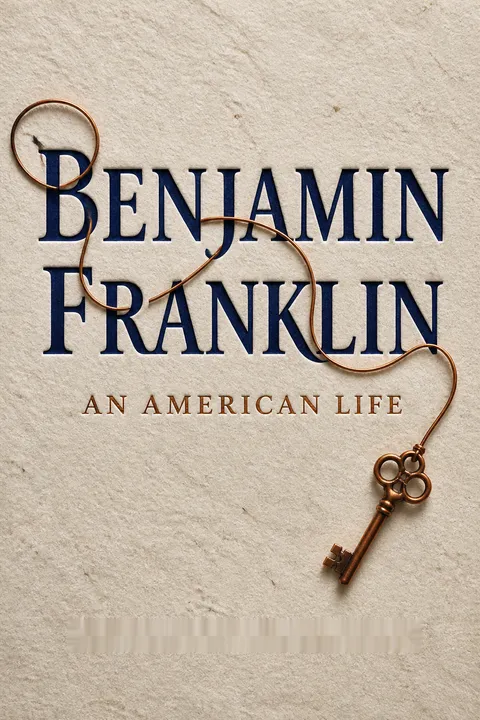
Benjamin Franklin: An American Life receives mostly positive reviews, with readers praising Isaacson's engaging writing style and thorough research. Many appreciate the balanced portrayal of Franklin's achievements and flaws, including his complicated family relationships. Reviewers highlight the book's insights into Franklin's role in American history, his scientific contributions, and his diplomatic skills. Some critique the book's length and occasional repetitiveness. Overall, readers find it an enlightening and comprehensive biography that brings Franklin to life as a complex, multifaceted historical figure.
People Also Read




Glossary
Junto
Tradesmen's mutual-improvement clubFranklin’s Junto was a club of Philadelphia tradesmen and artisans, founded in 1727. Members met to discuss practical, political, and philosophical questions, share useful information, and assist one another’s work. Its pooled books became the foundation of the Library Company of Philadelphia, while discussions helped generate civic projects including fire protection and public education.
Moral Perfection Project
A measured virtue practiceFranklin’s personal program for improving his conduct began with twelve virtues and later added humility. He tracked lapses in a weekly chart and concentrated on one virtue at a time, rather than attempting to master every quality simultaneously. The project was practical and self-observing, though Franklin acknowledged that pride and disorder resisted easy correction.
Albany Plan of Union
Colonial cooperation proposalFranklin’s 1754 proposal called for the British colonies to cooperate through a general council and a crown-appointed president general. The central authority would address shared matters such as defense, while the colonies retained local governments. The plan was rejected by colonial assemblies and British officials, but it anticipated later debates about federal union.
single-fluid theory of electricity
One conserved electrical substanceFranklin’s theory treated electricity as a single substance that could be present in excess or deficiency, rather than as two independently created electrical fluids. In his account, a positive charge in one body corresponded to a negative charge in another. The theory helped organize experiments and introduced terminology that became central to electrical science.
Poor Richard’s Almanack
Humorous advice almanacFranklin’s annual almanac, published from 1732 to 1758 under the fictional author Richard Saunders, combined calendars and practical information with jokes, short essays, and maxims. Its persona let Franklin advise ordinary readers while maintaining comic distance from his own opinions. Many sayings were adapted from earlier sources and sharpened into memorable forms.
Federalism
Shared national and state powerIn Franklin’s political proposals, federalism meant assigning some responsibilities to a shared central government while preserving authority for local governments. His Albany Plan applied the idea to colonies within the British Empire; his later proposals addressed union among independent states. The Constitution’s structure developed through wider debate and compromise, not Franklin’s ideas alone.
FAQ
What's Benjamin Franklin: An American Life about?
- Comprehensive Biography: The book is a detailed biography of Benjamin Franklin, covering his journey from a humble beginning in Boston to becoming a key figure in American history.
- Themes of Reinvention: It highlights Franklin's ability to reinvent himself, transitioning from a printer to a scientist, diplomat, and statesman.
- Civic Engagement: The narrative emphasizes Franklin's commitment to civic improvement, including founding institutions like the first public library and the University of Pennsylvania.
- Enlightenment Ideals: Franklin's life is framed within the context of the Enlightenment, showcasing his belief in reason, science, and civic virtue.
Why should I read Benjamin Franklin: An American Life?
- Rich Historical Context: The book provides a detailed look at the social, political, and scientific landscape of 18th-century America, enriching the reader's understanding of the era.
- Inspiring Character Study: Franklin's life is portrayed as a testament to self-improvement, industriousness, and civic virtue, offering readers a model for personal and public engagement.
- Engaging Writing Style: Walter Isaacson's narrative is both informative and entertaining, filled with anecdotes that bring Franklin's character and achievements to life.
- Lessons on Leadership: Readers can learn from Franklin's pragmatic approach to problem-solving and his ability to navigate complex political landscapes.
What are the key takeaways of Benjamin Franklin: An American Life?
- Self-Improvement: Franklin's life exemplifies the value of continuous self-improvement and the pursuit of knowledge, as seen in his "Plan for Future Conduct."
- Civic Responsibility: The book highlights Franklin's belief in the power of collective action and community involvement for achieving common goals.
- Pragmatic Philosophy: Franklin's approach blends practicality with idealism, advocating for a life of virtue grounded in real-world applications.
- Legacy of Innovation: His numerous inventions and scientific contributions highlight the importance of curiosity and innovation in driving progress.
What are the best quotes from Benjamin Franklin: An American Life and what do they mean?
- “To pour forth benefits for the common good is divine.”: Reflects Franklin's belief in the moral imperative of civic engagement and philanthropy.
- “He that lies down with dogs shall rise up with fleas.”: Warns about the consequences of associating with bad company, emphasizing wise choices in friendships.
- “Diligence is the mother of good luck.”: Suggests that hard work and perseverance are key to achieving success, rather than relying on chance.
- “There never was a good war or a bad peace.”: Emphasizes Franklin's belief in the futility of war and the importance of seeking peaceful resolutions.
How did Franklin's scientific pursuits influence his political and social views?
- Empirical Approach: Franklin's scientific method emphasized observation and experimentation, which translated into his political philosophy valuing reason and evidence.
- Civic Improvement: His inventions and discoveries often aimed at improving everyday life, reflecting his belief in civic responsibility and community welfare.
- Public Engagement: Franklin's scientific fame allowed him to engage with the public on governance and societal issues, advocating for rational discourse and social progress.
What role did Franklin play in the American Revolution?
- Diplomatic Efforts: Franklin was a key diplomat, negotiating with France for support during the Revolution, crucial for the American victory.
- Political Leadership: He was a member of the Continental Congress and contributed to drafting important documents, including the Declaration of Independence.
- Public Advocate: Franklin used his writing and public speaking to rally support for the revolutionary cause, emphasizing the need for unity among the colonies.
How did Franklin's views on slavery evolve in Benjamin Franklin: An American Life?
- Initial Economic Critique: Franklin initially critiqued slavery on economic grounds, arguing it was detrimental to both the economy and moral fabric of society.
- Evolving Perspectives: Over time, he shifted from a more prejudiced view to becoming an active abolitionist, advocating for African American rights.
- Philanthropic Efforts: His later involvement in establishing schools for black children and writings against slavery reflect his commitment to social justice and equality.
What was Franklin's approach to self-improvement as described in Benjamin Franklin: An American Life?
- Moral Perfection Project: Franklin devised a systematic plan to achieve moral perfection by focusing on thirteen virtues, such as temperance and order.
- Tracking Progress: He created a chart to track adherence to these virtues, marking infractions with black spots to visualize progress and areas needing improvement.
- Pragmatic Philosophy: Franklin believed that “the most acceptable service to God is doing good to man,” indicating his self-improvement efforts aimed at benefiting society.
How did Franklin's time in France influence his legacy?
- Cultural Ambassador: Franklin became a celebrated figure in France, embodying Enlightenment ideals and fostering goodwill, which helped secure vital support for the American cause.
- Diplomatic Success: His successful negotiations for French aid and treaties established him as one of America's first great diplomats, setting a precedent for future foreign relations.
- Intellectual Exchange: Franklin's interactions with French philosophers and scientists enriched his ideas and contributed to the transatlantic exchange of knowledge.
What insights does Benjamin Franklin: An American Life provide about Franklin's relationships with other Founding Fathers?
- Collaborative Spirit: Franklin's interactions with figures like John Adams and Thomas Jefferson reveal his collaborative approach to politics, building alliances despite differences.
- Conflict and Resolution: The book details tensions between Franklin and Adams, particularly during peace negotiations, with eventual reconciliation underscoring dialogue's importance.
- Mentorship Role: Franklin often took on a mentorship role, guiding younger leaders like Jefferson, encouraging their ideas and ambitions.
How does Benjamin Franklin: An American Life depict Franklin's legacy?
- Civic Contributions: The book emphasizes Franklin's lasting impact on American society through civic initiatives like founding libraries and fire departments.
- Philosophical Influence: Franklin's ideas on democracy, education, and civic virtue have shaped American political thought, serving as a model for future leaders.
- Cultural Icon: Franklin's image as a founding father and cultural icon endures, symbolizing values of hard work, ingenuity, and public service.
What are some of the major themes explored in Benjamin Franklin: An American Life?
- Pragmatism vs. Idealism: The book explores the tension between Franklin's pragmatic approach and the idealistic visions of his contemporaries.
- The Role of Enlightenment: Franklin's life is framed within Enlightenment ideals, emphasizing reason, science, and civic responsibility.
- Community and Individualism: The narrative highlights the balance between individual ambition and community welfare in Franklin's philosophy.
About the Author
Other books by Walter Isaacson





Download PDF
Download EPUB
.epub digital book format is ideal for reading ebooks on phones, tablets, and e-readers.








