


Key Takeaways
Follow strange natural clues; basic research can become lifesaving technology
Curiosity starts small. As a child in Hawaii, Jennifer Doudna wondered why a touch-sensitive plant folded its leaves. A book about the discovery of DNA’s structure showed her that science could answer such puzzles by investigating how molecules work. Years later, she chose to study RNA, a molecule many biologists treated as a mere courier. That curiosity eventually brought her to CRISPR, a bacterial defense system whose practical value was impossible to foresee when researchers first noticed its unusual DNA patterns.
The payoff is unpredictable. Francisco Mojica pursued those patterns in microbes from salty ponds, even when colleagues dismissed the work as obscure. He discovered that they helped bacteria recognize viruses. Neither he nor Doudna began with a product in mind. Their stories show why curiosity-driven research matters: it builds knowledge and tools before anyone knows which problem they might solve.
What's striking is that curiosity here is not a decorative personality trait. It is a method for noticing anomalies that established agendas overlook. Research funding often favors projects with clear, near-term deliverables, yet the CRISPR story illustrates the value of preserving room for work whose applications are not forecastable. That does not mean every curious inquiry will pay off, or that basic research should escape scrutiny. It means the portfolio of science becomes brittle if only predictable returns count. The practical question is how institutions can support exploratory work without promising that every oddity will become a cure.
Treat CRISPR as bacterial immune memory that humans learned to reprogram
Bacteria keep a record. CRISPR means clustered regularly interspaced short palindromic repeats. In bacteria, repeated DNA segments are separated by spacer sequences that can match genetic material from viruses that attacked before. The bacteria use this stored information to recognize a returning virus. Cas enzymes help capture new viral fragments and, on a later attack, cut the matching genetic material. The system is an adaptable defense, not a tool that nature made for editing human genes.
A guide makes it programmable. In the CRISPR-Cas9 system, a short RNA guide leads the Cas9 enzyme to a chosen DNA sequence, where Cas9 cuts. Researchers realized they could change the guide and redirect the enzyme. That shift, from studying bacterial immunity to programming a molecular cutter, made CRISPR a flexible gene-editing method.
The memorable insight is that a tool can be repurposed without erasing its evolutionary history. CRISPR's guide-and-cutter arrangement resembles a search function paired with an action, which helps explain why it became easier to retarget than earlier protein-based methods. But a programmable tool is not automatically a precise or safe one. A match to a target sequence is only part of the problem; delivery, unintended changes, and the behavior of living cells matter too. The metaphor of editing can make DNA sound like clean text on a screen, when biological systems are more interdependent than software code.
Study molecular shape, not just genetic letters, to understand what life does
Form helps explain function. Doudna's early work centered on RNA structure. RNA can carry genetic information, fold into complex shapes, and sometimes catalyze chemical reactions. Such catalytic RNA molecules are called ribozymes. Working with Jack Szostak, Doudna helped investigate whether RNA could copy RNA, a question tied to the possible origin of life. Later, she and her team mapped the structure of a self-splicing RNA molecule, showing how its folded form brought chemical components together.
The folding mattered again. Doudna's structural expertise prepared her to analyze CRISPR proteins and their RNA partners. A sequence of letters tells scientists what a molecule is made of. Its three-dimensional shape helps explain how it binds, cuts, or changes other molecules. The book links that structural detective work to discoveries from DNA's double helix through Cas9.
This is a powerful corrective to the idea that sequencing alone explains biology. A genome is not a simple instruction sheet: molecules fold, bind, and act within crowded cellular environments. Structural biology supplies a bridge between sequence and mechanism, much as knowing a machine's geometry helps explain its operation. Still, a solved structure is not a complete account of function. A molecule's behavior in a test tube may differ inside a cell, where other molecules and processes intervene. The book's strongest lesson is methodological: combine structural evidence with experiments in living systems rather than treating either view as sufficient.
Expect breakthroughs where basic science meets practical engineering
Innovation runs both ways. The book challenges the idea that research moves neatly from pure discovery to useful product. Mojica identified CRISPR's immune role through microbial genetics. Yogurt researchers Rodolphe Barrangou and Philippe Horvath then showed that bacteria could acquire virus resistance by gaining matching spacer sequences, a finding useful to dairy production. Biochemists including Doudna's team isolated system components and worked out how they functioned, opening the path to gene editing.
Different settings solve different problems. Experiments in living cells reveal what a system does in its natural environment. Test-tube experiments isolate components so researchers can identify what each contributes. Moving CRISPR into human cells required still other expertise, including methods for getting the machinery into a cell nucleus. The book calls this an iterative exchange between basic research and application, not a one-way pipeline.
The examples suggest that innovation is better understood as a feedback loop than as a conveyor belt. Practical needs can sharpen basic questions, while basic discoveries create capabilities that no market had yet requested. This has implications for research organizations: close contact among disciplines and users can accelerate learning, but immediate commercial targets should not dictate every question. There is also a boundary worth keeping visible. Translational success depends on infrastructure, expertise, regulation, and funding, not just a brilliant insight. The story celebrates entrepreneurship while showing that public universities and government support helped make the underlying work possible.
Use scientific competition to accelerate discovery, but protect fair credit
Rivals can sharpen the work. The CRISPR story includes teams racing to clarify the system and make it work in human cells. Doudna and Emmanuelle Charpentier collaborated across countries to show how crRNA, tracrRNA, and Cas9 work together, then combined the two RNA guides into one easier-to-use molecule. Feng Zhang and George Church independently helped establish CRISPR editing in human cells. Researchers also competed to publish first, as Doudna's team did after learning another group's paper was in motion.
Credit has consequences. The race later spilled into patent disputes and arguments over who had made the key inventive step. Patents and prizes can reward costly research, but the fight over ownership strained relationships and complicated licensing. The history is not a simple contest between one hero and one rival. It depends on contributions from many researchers, including Mojica, the yogurt scientists, and collaborators whose names received less attention.
Competition can supply urgency, but it also changes what participants notice and remember. Priority is measurable through dates and documents; intellectual contribution is often distributed across people, techniques, and institutions. That gap creates fertile ground for disputes, particularly when patents determine access to a platform technology. The book's account is valuable because it shows rivalry and cooperation operating at once, not as moral opposites. A practical safeguard is transparent documentation and clear contribution agreements established before commercial stakes rise. Even then, a patent record cannot serve as a complete history of how an idea emerged.
Keep patient-cell treatment distinct from edits inherited by descendants
The boundary is inheritance. Somatic editing changes selected cells in an existing patient and is not passed to children. Germline editing changes eggs, sperm, or early embryos, so the alteration can appear throughout the resulting person's body and be inherited by descendants. The distinction matters because an error in a patient's treatment affects that patient, while an error in a germline edit may persist through generations.
Early therapies show the promise. In 2019, Victoria Gray received her own blood stem cells after CRISPR was used to activate production of healthy fetal hemoglobin. By 2020, reports described sustained production of that hemoglobin and no further pain attacks during the observed period. Other trials explored edited immune cells for cancer and in-body editing for a form of childhood blindness. These examples involve patients, not inherited redesign of the human population.
This distinction is ethically and practically useful because it separates a treatment with a bounded recipient from an intervention that affects people who cannot consent. Yet it should not be mistaken for a complete risk scale. Somatic treatments can still be dangerous, costly, or inaccessible, while germline edits could in principle prevent severe disease across a family. The key questions include reversibility, uncertainty, alternatives, and who bears the risk. Victoria Gray's experience makes the potential tangible, but one patient's early results cannot establish long-term safety or broad affordability.
A possible health benefit does not justify an unnecessary inherited edit
He Jiankui crossed the line. In 2018, the Chinese scientist announced the birth of twin girls whose embryos he had edited to alter CCR5, a gene associated with an HIV entry route. The intervention was not medically necessary: sperm washing and embryo screening offered ways to reduce HIV transmission without permanently changing the children's genomes. CCR5 may also have other biological roles.
The evidence raised serious concerns. The twins' edits were incomplete in at least one case, and the reported work included signs of mosaic embryos, where some cells carry an edit and others do not, as well as possible unintended edits. The procedure lacked the medical need and safety evidence expected for such an irreversible intervention. Jiankui was convicted in China and sentenced to prison. The episode shows how the pursuit of being first can outrun both evidence and public accountability.
The case is not a general argument against preventing disease. It is a warning about confusing a plausible benefit with a sufficient justification. A strong ethical test asks whether the intervention addresses a serious need, whether safer alternatives exist, and whether the evidence supports the risk. Heritable changes add another issue: future descendants inherit consequences without participating in the decision. At the same time, the stigma faced by HIV-positive families deserves serious attention. Ethical critique is strongest when it recognizes that real social harms can motivate a flawed medical response, rather than treating the motivation as either wholly noble or wholly fraudulent.
Evaluate edits through disability, diversity, and fairness, not labels alone
Treatment and enhancement blur. A change that prevents severe illness may seem different from one that adds height or muscle, but the border is not always clear. Sickle-cell disease causes grave suffering, while carrying one copy of the relevant variant can help protect against malaria. David Sanchez, a teenager living with sickle-cell disease, said the experience had taught him empathy, yet also said he would want his future children spared the illness. His changing answers illustrate how personal meaning and medical burden can coexist.
Ask who benefits. An absolute improvement, such as greater resistance to infection, can help even if everyone receives it. A positional improvement, such as extra height in a competition for status, mainly advantages its owner until others acquire the same edge. The book asks readers to consider whether editing could narrow human variation or turn economic privilege into inherited biological advantage.
The book avoids treating disability as a purely technical defect by asking how social conditions shape disadvantage. That is essential: a trait can be disabling in one environment and accommodated in another, while some conditions cause serious pain regardless of social inclusion. The distinction between absolute and positional benefits also helps expose arms races, where individual choices can leave everyone competing harder without a shared gain. Still, categories will be contested, and public policy should not romanticize suffering as character-building. People living with a condition deserve authority in decisions that affect their bodies and communities.
Build shared rules and open institutions before firsts outrun public trust
Self-governance needs more than good intentions. The 1975 Asilomar meeting produced safety rules for recombinant DNA research, but it largely avoided the deeper question of how far human genetic intervention should go. Doudna's 2015 Napa meeting focused more directly on inherited editing and called for caution without demanding a permanent ban. The later CRISPR-babies case showed that guidelines without clear accountability can be interpreted selectively.
The pandemic offered another model. When COVID testing failed to scale quickly in the United States, Berkeley researchers rapidly built a clinical testing lab. Doudna's teams also pursued CRISPR-based detection, while rival groups shared protocols publicly rather than treating patents as the priority. Meanwhile, RNA research underpinned a new vaccine approach, though the vaccines themselves were not CRISPR products. The episode showed how institutions and collaboration can turn molecular knowledge into urgent public service.
The book's policy argument is not simply that scientists should regulate themselves or that governments should take over. It is that technical capacity grows faster than consensus, so governance needs public input, enforceable standards, and ways to revise rules as evidence changes. The COVID response illustrates the power of open collaboration under shared urgency. Yet the germline meetings included few patients and parents, and calls for broad consensus do not guarantee whose voices count. Trust is earned through transparent decisions, equitable access, and meaningful participation, not merely through scientists announcing that they have acted responsibly.
Analysis
The book's central achievement is to make a complex technology legible through two linked stories: Jennifer Doudna's long apprenticeship in molecular structure, and CRISPR's migration from bacterial defense to human tool. The narrative resists the lone-genius myth. Its discovery chain includes a Spanish microbiologist examining obscure DNA repeats, industrial researchers protecting yogurt cultures, microbial biologists testing hypotheses, and biochemists isolating molecular parts. Doudna is the connective figure, not the sole source.
That emphasis also creates a tension. A biography needs a central character, but the patent disputes and prize committees show how a Doudna-centered account can make collaborative credit feel like a scarce prize. The book often exposes this problem even as its narrative vantage favors Doudna. The reader should therefore distinguish the well-supported scientific sequence from contested interpretations of priority and motive. Those uncertainties do not diminish the achievement; they show that science is a social institution as well as an experimental method.
The ethical argument is similarly strongest when it resists easy binaries. Somatic treatment and inherited editing differ in who is affected, while treatment and enhancement can overlap in practice. The CCR5 case demonstrates that good intentions do not substitute for medical necessity or evidence. But appeals to diversity can also become paternalistic if they minimize the suffering of people with disabilities. The relevant question is not whether nature should always be accepted or conquered. It is who decides, what alternatives exist, who bears risk, and who receives the benefit.
Finally, the pandemic turns the book's themes into a stress test. Curiosity-driven research supplied tools and concepts; institutions supplied coordination; competition created urgency; and public need encouraged data sharing. No single ingredient explains the outcome. The larger lesson is that powerful biology requires both scientific ingenuity and durable social arrangements. A tool that can be programmed needs institutions capable of deciding when, by whom, and for whose benefit it should be used.
Review Summary
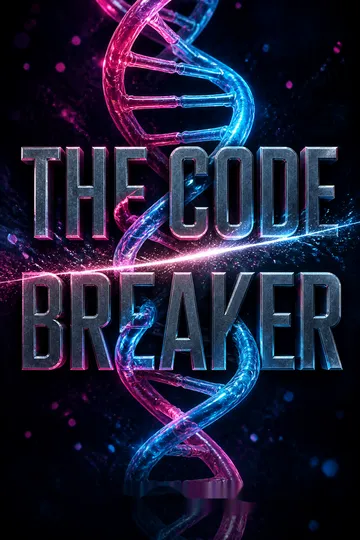
The Code Breaker receives mostly positive reviews for its engaging narrative on Jennifer Doudna's work with CRISPR gene-editing technology. Readers appreciate Isaacson's ability to make complex scientific concepts accessible and his exploration of ethical implications. Some criticize the book's broad scope and repetitive content. Many find the sections on COVID-19 research particularly timely and interesting. While some readers struggled with the scientific details, most found the book informative and thought-provoking, praising Isaacson's storytelling skills and the book's relevance to current issues in science and medicine.
People Also Read

Glossary
CRISPR
Bacterial immune-memory systemAn acronym for clustered regularly interspaced short palindromic repeats. In bacteria and archaea, repeated DNA sequences are separated by spacers that can match genetic material from invading viruses. The system stores these sequences as molecular records and uses associated proteins to recognize and attack matching viral genetic material.
Cas9
Programmable DNA-cutting enzymeA CRISPR-associated enzyme that cuts DNA at a location identified by a matching RNA guide. In its natural bacterial setting, Cas9 helps defend against viruses. Researchers adapted it for gene editing by changing the guide sequence, redirecting the enzyme to a chosen DNA target.
crRNA
Target-identifying RNA guideCRISPR RNA, a short RNA sequence derived from the stored spacer information in a CRISPR array. It guides associated proteins toward genetic material with a matching sequence. In the CRISPR-Cas9 system, the crRNA helps specify the DNA target for Cas9.
tracrRNA
Cas9 guide-supporting RNATrans-activating CRISPR RNA, a small RNA molecule identified in Emmanuelle Charpentier's work on Cas9. It helps produce mature crRNA and also supports the Cas9 targeting complex during DNA cleavage. Doudna and Charpentier's collaboration clarified that it remains part of the working complex.
single-guide RNA (sgRNA)
Combined guide and scaffoldA human-engineered RNA molecule made by joining the crRNA and tracrRNA into one functional guide. Its target sequence directs Cas9 to a chosen DNA location, while its remaining structure helps the components work together. This simplification made the CRISPR-Cas9 system easier to program and use.
RNA world
Hypothesis of early RNA lifeA hypothesis that early life may have relied on RNA before DNA and proteins took on their present roles. RNA is a plausible candidate because it can carry information and, in some forms, catalyze chemical reactions. Doudna and Jack Szostak studied RNA replication as a way to investigate this possibility.
somatic editing
Editing a patient's body cellsGene editing performed in selected cells of an existing patient. The changes may affect the patient's health but are not intended to enter reproductive cells or be inherited by descendants. Examples discussed in the book include editing blood stem cells to treat sickle-cell disease and immune cells to fight cancer.
germline editing
Editing inheritable genetic materialGene editing of eggs, sperm, or early embryos that can affect the resulting person's cells and be passed to descendants. Because these changes may persist across generations, they raise additional questions about safety, consent, medical necessity, inequality, and public oversight.
linear model of innovation
Research-to-product sequenceThe view that curiosity-driven basic research leads in a one-way sequence to applied research, inventions, and products. The CRISPR story partly supports this idea, since basic study of bacterial immunity contributed to gene editing. It also complicates the model: commercial needs, engineering, and practical experiments shaped scientific understanding in return.
anti-CRISPRs
Natural CRISPR-blocking proteinsProteins produced by some viruses that disable bacterial CRISPR defenses. Their discovery revealed another move in the evolutionary contest between bacteria and viruses. Researchers also explored these proteins as possible controls for turning off or limiting CRISPR gene-editing activity.
FAQ
What's The Code Breaker about?
- Focus on Gene Editing: The Code Breaker by Walter Isaacson chronicles the life and work of Jennifer Doudna, a pioneer in gene editing technology, specifically CRISPR. It details her journey from childhood curiosity to becoming a Nobel Prize-winning scientist.
- Impact on Humanity: The book explores the implications of CRISPR technology for curing diseases and enhancing human capabilities, while also addressing ethical dilemmas.
- Historical Context: It provides a historical overview of genetics, tracing the evolution of ideas from early discoveries to modern advancements in biotechnology.
Why should I read The Code Breaker?
- Inspiring Story: The book offers an inspiring account of a woman breaking barriers in science, making it relatable for anyone interested in STEM fields.
- Understanding CRISPR: It demystifies CRISPR technology, explaining its potential and controversies, and provides insights into how it could revolutionize medicine and agriculture.
- Ethical Considerations: The narrative prompts readers to think critically about the ethical implications of gene editing, including societal impacts and the potential for "designer babies."
What are the key takeaways of The Code Breaker?
- Revolutionary Technology: CRISPR is presented as a groundbreaking tool that can change the landscape of genetic engineering, with potential to cure genetic diseases.
- Collaboration in Science: The book highlights the importance of collaboration, showcasing how teamwork among researchers can lead to significant breakthroughs.
- Ethical Dilemmas: It raises important questions about the moral implications of gene editing, urging readers to consider the consequences of altering human DNA.
What are the best quotes from The Code Breaker and what do they mean?
- “Figuring out if and when to edit our genes will be one of the most consequential questions of the twenty-first century.”: This quote underscores the profound impact that gene editing technologies like CRISPR could have on future generations and the ethical dilemmas they present.
- “Nature is beautiful that way.”: Doudna reflects on the elegance of natural processes, emphasizing the interconnectedness of life and the importance of understanding these mechanisms to innovate responsibly.
- “Healthy rivalries have fueled many of humankind’s greatest discoveries.”: This highlights the competitive spirit in science, suggesting that competition can drive innovation and lead to significant advancements.
Who is Jennifer Doudna and why is she significant?
- Pioneer in Gene Editing: Jennifer Doudna is a biochemist known for co-developing CRISPR-Cas9, a revolutionary gene-editing technology that has transformed genetics.
- Nobel Prize Winner: She was awarded the Nobel Prize in Chemistry in 2020 for her contributions to CRISPR technology, marking a significant milestone in the recognition of women in science.
- Advocate for Ethical Science: Doudna emphasizes the need for ethical guidelines as gene editing technology advances, advocating for responsible use.
What is CRISPR and how does it work?
- Gene Editing Tool: CRISPR (Clustered Regularly Interspaced Short Palindromic Repeats) allows scientists to edit genes by cutting DNA at specific locations using a guide RNA and the Cas9 enzyme.
- Adaptive Immune System: Originally discovered in bacteria, CRISPR functions as an adaptive immune system, which has been harnessed for gene editing in various organisms.
- Versatile Applications: CRISPR technology has applications in medicine, agriculture, and biological research, enabling precise modifications to DNA.
What are the ethical implications of CRISPR technology?
- Designer Babies: The ability to edit genes raises questions about creating "designer babies," leading to ethical concerns about eugenics and societal inequality.
- Inequality and Access: There is a risk that gene editing could exacerbate existing inequalities, as access may be limited to wealthier individuals or countries.
- Regulation and Oversight: The book suggests the need for societal discussions and regulations regarding gene editing, involving public input and ethical considerations.
How did Doudna respond to the COVID-19 pandemic?
- Leadership in Science: Doudna quickly organized a team to address the urgent need for COVID-19 testing, leveraging her expertise in CRISPR technology.
- Collaboration and Innovation: Her response involved collaboration with other researchers, showcasing the importance of teamwork in scientific endeavors during a crisis.
- Real-World Impact: Her efforts contributed to the rapid development of testing protocols, demonstrating the practical applications of scientific research.
How does The Code Breaker address the competition among scientists in the field of CRISPR?
- Rivalries and Collaborations: The book details the competitive landscape of CRISPR research, particularly the race between Doudna, Zhang, and others to publish their findings first.
- Impact on Scientific Progress: Competition can accelerate discovery, but it also raises questions about research integrity and the pressure to publish.
- Personal Stories: The narrative includes personal anecdotes, showcasing how relationships influence work and the broader scientific community.
What is the significance of the Nobel Prize awarded to Doudna and Charpentier?
- Recognition of Innovation: The Nobel Prize in Chemistry acknowledges their groundbreaking work in developing CRISPR technology.
- Historical Context: The award is notable for being given to two women, marking a significant moment in the history of science.
- Impact on Society: It highlights the potential of gene editing to transform medicine and agriculture, encouraging ongoing discussions about ethical use.
How does The Code Breaker portray the future of gene editing?
- Promise and Peril: The book presents a balanced view, highlighting CRISPR's potential to cure diseases while cautioning against misuse and ethical dilemmas.
- Call for Regulations: It emphasizes the need for thoughtful regulations and guidelines to ensure responsible and ethical use of gene editing.
- Hope for Humanity: The narrative conveys optimism about CRISPR's potential to improve lives and address health challenges, with careful consideration and responsible use.
How did Doudna's upbringing influence her career?
- Curiosity-Driven Childhood: Growing up in Hawaii, Doudna developed a love for nature and science, fostering a deep curiosity that propelled her into a scientific career.
- Supportive Family: Her family encouraged her academic pursuits, particularly her father, who instilled a love for learning and exploration.
- Resilience and Determination: Early experiences with feeling like an outsider motivated her to persevere, helping her overcome obstacles in a challenging field.
About the Author
Other books by Walter Isaacson



Download PDF
Download EPUB
.epub digital book format is ideal for reading ebooks on phones, tablets, and e-readers.








