

Key Takeaways
Treat invention as a relay race, not a lone-genius lightning strike.
The inventor myth breaks down. The computer’s history includes many plausible claimants: Konrad Zuse built an early programmable machine, British codebreakers built Colossus, and John Mauchly and J. Presper Eckert led the team behind ENIAC, the first working general-purpose electronic computer. Each machine drew on ideas developed elsewhere, and each reflected its builders’ resources and priorities.
Credit travels with ideas. John Atanasoff’s unfinished computer influenced Mauchly, who also learned from researchers, conferences, and demonstrations. At Penn, he and engineer Eckert joined forces with military funders, technicians, and women programmers to make ENIAC work. The point is not that individuals do not matter. It is that creative leaps gain force when other people can test, improve, and build on them.
What's striking is how the book treats collaboration as a process, not a feel-good slogan. Cognitive science uses the term distributed cognition for reasoning spread across people, tools, and records. ENIAC’s programmers, engineers, and designers formed just such a system. Still, collaboration does not automatically produce fairness: the women who programmed ENIAC were initially excluded from its public celebration. A fuller account of teamwork must ask not only who contributed, but who had the authority to define and receive credit for the contribution.
Let artistic imagination reveal what technical tools could become.
Ada saw beyond arithmetic. Ada Lovelace encountered Charles Babbage’s proposed Analytical Engine, a machine that could be reprogrammed through punched cards. In her 1843 notes on the design, she recognized that symbols could represent more than numbers. If music or other information could be expressed symbolically, she reasoned, a machine might manipulate it too.
A program takes shape. Lovelace laid out a sequence of instructions for calculating Bernoulli numbers, including repeated steps that resemble loops and reusable subroutines. Her work is often called the first published computer program, though Babbage had devised other procedures privately. She also argued that a machine follows instructions rather than originating its own ideas. Her unusual blend of mathematical study and poetic imagination helped her see computing as a medium, not just a calculator.
Lovelace’s contribution is not simply that an artist admired a machine. She imagined a new representational possibility: once information can be encoded as symbols, machinery can work on music, text, or numbers by the same general logic. That insight resembles a theme in design theory, where changing how a problem is represented can reveal solutions previously hidden. The caution is to avoid making her a flawless, solitary prophet. Her ideas emerged through exchange with Babbage and the mathematics of her era, and her precise place in computing history remains debated.
Carry inventions through insight, manufacturability, and a reason to buy.
A discovery is only the start. In 1947, John Bardeen and Walter Brattain created a working transistor at Bell Labs, drawing on theory, materials research, and experiments. William Shockley contributed a different, more durable transistor design. The device mattered because it could replace bulky vacuum tubes, but practical production required further engineering.
Markets make technology travel. Texas Instruments developed silicon transistors that could withstand higher temperatures, then executive Pat Haggerty pushed the company to make them cheap enough for consumer use. Its Regency pocket radio gave people a compelling reason to want a transistor. Later, Jack Kilby and Robert Noyce developed microchips through different routes, while demand from missiles and the Apollo program helped lower costs. Haggerty’s pocket calculator helped create another market. Invention, production, and adoption were connected stages, not one event.
The distinction between discovery and adoption is useful because histories often compress both into a single eureka moment. Innovation research likewise distinguishes an idea’s technical feasibility from its production system and the demand that sustains it. Haggerty’s radio strategy shows that markets can be created rather than merely detected. But commercial success is not a neutral measure of intellectual importance: military procurement, regulation, and access to capital shape which inventions get scaled. A technology can be consequential without first winning a consumer market.
Fund foundational research before anyone can name its commercial payoff.
Public investment seeded the revolution. Vannevar Bush argued that basic research creates knowledge from which practical inventions can grow. After World War II, the United States built stronger ties among government, universities, and industry. During the 1950s through the 1980s, public science funders spent amounts comparable to private industry on research.
The payoff was rarely predictable. Military funding supported early computers, research laboratories, and the ARPANET. Those projects served immediate defense or scientific needs, yet the technologies also enabled personal computing and civilian networks. The transistor and microchip likewise benefited from research environments that joined theory, engineering, and manufacturing. This was not government acting alone: private firms and universities supplied expertise and turned research into products. The lesson is to support exploration before a clear market exists, while building routes for discoveries to move beyond the lab.
The case for public research is strongest when it is framed as portfolio investment under uncertainty. Governments can fund long-horizon work whose benefits are too diffuse or distant for a single company to capture. The internet’s foundations illustrate that logic. Yet public funding also carries the priorities of its sponsors: defense research can advance civilian tools while directing talent toward military goals. The important question is not whether public or private funding is inherently superior, but how institutions preserve open inquiry while making useful discoveries transferable.
Design for human use, not merely technical possibility.
Play exposed the interface problem. MIT hackers created Spacewar on a computer with a graphics display, showing that a computer could respond to a person in real time. Nolan Bushnell later simplified the idea into Pong. Its single, clear instruction made it playable by people who had never touched a computer. The game was built with hardware circuits, not software, but it helped make interactive computing appealing.
Friendly design made computers personal. Doug Engelbart demonstrated a mouse, windows, graphics, and remote collaboration in 1968. Alan Kay and colleagues at Xerox PARC developed the Alto, a computer with a graphical display and mouse. Steve Jobs recognized that these ideas could be refined for ordinary users. The broader principle is that technology becomes useful when its controls fit human abilities and expectations, not merely when its underlying machinery is powerful.
This history makes interface design part of invention itself. Human-computer interaction draws on psychology to reduce the mental work required to use a system, so a simple screen can reflect deep technical achievement. Pong’s accessibility and the graphical desktop show that usability can expand who gets to participate. Simplicity, however, can conceal the complexity of the system and the choices built into it. An intuitive design is not automatically inclusive; it still needs to account for different users, abilities, and contexts.
Build networks that can route around bottlenecks and central control.
Packets made networks resilient. Packet switching breaks a message into smaller units that travel across available routes and are reassembled at their destination. Paul Baran and Donald Davies developed versions of the idea independently. Unlike a phone call’s dedicated circuit, packets can share network links, and traffic can be redirected when a route is congested or unavailable.
The design shaped the culture. ARPANET connected research centers through standardized routing computers, while its technical rules were worked out through Requests for Comments, an open process that invited proposals and responses. The network’s military funders and academic builders did not always share the same reasons for supporting it. Researchers emphasized resource sharing; some senior officials valued resilience in a military crisis. Its distributed structure served both purposes, and made centralized control difficult.
A network’s architecture is also a political choice. Decentralization can improve reliability because no single hub becomes a point of failure, while also making it harder for one authority to control the whole system. This is a powerful connection between engineering and governance. Still, distribution does not eliminate power; access, standards, infrastructure ownership, and funding remain uneven. The ARPANET story is most persuasive when read as a negotiated design, with resilience and openness emerging from overlapping motives rather than from a single founding intention.
Match intellectual-property rules to the work, not to ideology.
Different innovations needed different incentives. John von Neumann’s widely circulated report on the EDVAC design helped put stored-program ideas into the public domain. Bill Gates took another route: Microsoft retained the right to license its BASIC software to multiple computer makers, and later kept ownership of the operating system it supplied to IBM. That decision helped make Microsoft’s software a standard across many machines.
Sharing can also scale. Richard Stallman launched GNU to create software users could run, study, modify, and redistribute. Linus Torvalds released the Linux kernel so other programmers could help improve it. Their work showed that peer contribution can produce sophisticated tools without conventional ownership. Proprietary products, open-source projects, and shared standards all contributed to computing. The choice is not simply freedom versus profit; different arrangements reward different forms of risk, investment, and participation.
The contrast between Gates and Torvalds shows that motivation is not reducible to money. Open projects can attract contributors through learning, reputation, and the satisfaction of solving problems together. Commercial ownership can fund sustained development and give builders a reason to invest. The deeper design question is where control sits: with a firm, a community, or both. Neither model guarantees good outcomes. Open projects need governance and maintenance, while proprietary firms can restrict access or become too protective to adapt.
Make connection central, because users repurpose every new tool.
Communication became the network’s surprise use. ARPANET was designed in part to share computing resources, but by 1973 email accounted for 75 percent of its traffic. Ray Tomlinson made it possible to send messages between computers and used the @ sign to identify a user at another site. Later, bulletin boards and Usenet let people exchange messages and form groups beyond their local institutions.
Access turned connection into a consumer product. Modems let home computers use telephone lines to reach online services. The WELL built an early community around conversations among members using their real names. AOL made online interaction easier through chat rooms, instant messages, and buddy lists. These services succeeded not just by delivering information, but by helping people find one another. Users repeatedly turned technical systems into social spaces.
Communication is a strong example of user appropriation: a technology designed for one purpose acquires another when people discover what they want from it. Social connection is not an add-on to computing; it can be the reason people adopt the tool at all. The WELL’s expectation that members stand behind their words also highlights how design shapes conduct. Accountability may support trust, though requiring real identities can discourage vulnerable speakers. Online community depends on both access and the norms that govern participation.
Let users build knowledge, then use their links to find what matters.
Publishing became participation. Justin Hall’s personal web log showed that ordinary people could publish online. Ward Cunningham’s wiki software went further by letting users edit shared pages directly. Jimmy Wales and Larry Sanger applied that approach to Wikipedia. Unlike Nupedia’s expert-heavy review process, Wikipedia let contributors publish edits immediately, then rely on other users to correct errors. Within its first month, it had about a thousand articles.
Human choices can guide algorithms. Larry Page and Sergey Brin built Google around PageRank, a method that estimates a webpage’s importance by looking at links pointing to it and the importance of those linking pages. Those links record countless human decisions about what is worth connecting to. The result joined computer calculation with collective judgment, helping people navigate a Web that was growing too quickly for human directories to maintain.
Wikipedia and Google illustrate two different uses of collective input: people can create shared material, or their choices can become signals that an algorithm organizes. Both turn participation into infrastructure. Their weaknesses differ, too. Open editing requires persistent correction and dispute resolution; link-based ranking can amplify popularity rather than accuracy. The useful lesson is not that crowds are always wise, but that systems can make contributions visible, revisable, and consequential. Good design gives errors a path to correction and avoids confusing attention with truth.
Make machines partners in thinking, not substitutes for human judgment.
Machines excel where people tire. Deep Blue beat chess champion Garry Kasparov by evaluating enormous numbers of possible moves. Watson won at Jeopardy! by searching vast stores of information, yet it still misunderstood some questions. These systems performed impressive tasks without demonstrating humanlike understanding or creativity.
Partnership can outperform either side alone. In a chess tournament, teams of people and computers outperformed the strongest human players and standalone machines. The people supplied strategy; computers handled calculation. IBM also explored using Watson to help doctors examine treatment options, with recommendations presented alongside confidence estimates rather than as commands. This echoes J. C. R. Licklider’s idea of human-computer symbiosis: people and machines contribute different strengths. The aim is not to make humans obsolete, but to improve what they can do together.
The partnership model is more practical than treating every increase in machine performance as evidence of human replacement. It also makes responsibility visible: a doctor or analyst remains accountable for decisions even when software supplies recommendations. But human oversight is not automatically wise. People can defer too readily to automated systems, especially when those systems appear precise. Effective collaboration therefore depends on calibrated trust, clear uncertainty, and the ability to question a machine’s output, not simply on placing a person somewhere in the process.
Analysis
The book’s central achievement is to replace the lone-inventor myth with a history of connected work. Its narrative moves from Ada Lovelace’s conceptual leap to computers, chips, networks, personal devices, software, and online communities. At each transition, ideas are handed forward, altered by new collaborators, and made useful through engineering and institutions. The result is a history of the digital revolution as both technological evolution and social construction.
That account is strongest when it shows how forms of collaboration shape products. Bell Labs joined theory to experimentation. ARPANET combined military funding with academic design. The Homebrew community turned access into participation, while Microsoft, Linux, and the Web reveal different ways to organize ownership and contribution. These are not merely background conditions. They influence what gets built, who can use it, and who receives credit.
The book also resists a simple opposition between individuals and systems. Lovelace, Turing, Noyce, Jobs, and Gates matter, but their achievements depend on colleagues, institutions, and inherited ideas. This is a useful historical model because it preserves agency without pretending that innovation begins from nothing. Its recurring emphasis on execution is equally important: a concept that cannot be built, communicated, or adopted may remain invisible.
There are tensions the story makes worth examining. The digital revolution’s collaborative mythology can obscure unequal recognition, especially for women whose programming work was essential but undervalued. Military sponsorship accelerated research while embedding defense priorities in the infrastructure. Networked openness enabled participation, but it did not guarantee equality, accuracy, or durable community. These complications sharpen rather than overturn the book’s thesis.
The most durable lesson is that innovation depends on productive combinations: imagination with engineering, individual insight with collective correction, and public investment with private or peer-led development. The digital age emerged not from a single genius or a single system, but from repeated acts of connection. Its history suggests that the environments that let people exchange, test, and extend ideas are as consequential as the devices themselves.
Review Summary
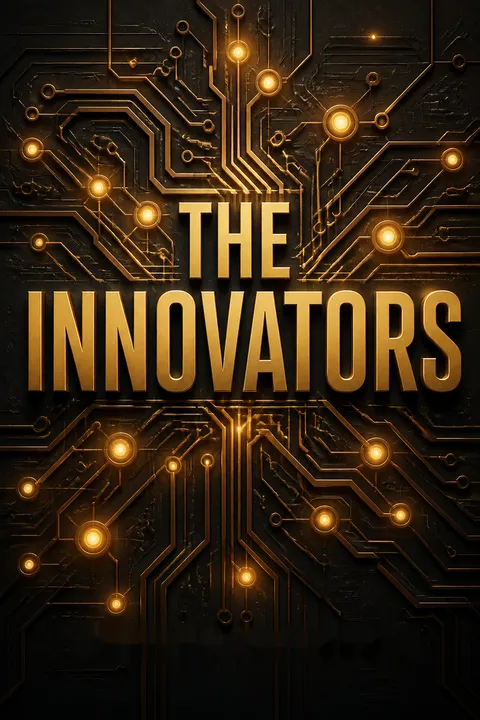
The Innovators is praised as an informative and engaging history of the digital revolution, covering key figures and developments from Ada Lovelace to modern tech giants. Readers appreciate Isaacson's focus on collaboration and the intersection of arts and sciences in driving innovation. Some find the technical details challenging, while others enjoy the depth of research and storytelling. The book is seen as important for understanding technological progress, though a few criticize its American-centric perspective and occasional dry sections.
People Also Read









Glossary
poetical science
Imagination joined to mathematicsAda Lovelace’s term for a way of approaching scientific and mathematical work through imagination as well as analysis. It describes her ability to see aesthetic and expressive possibilities in machinery, including the idea that a programmable engine might manipulate musical or other symbolic information, not only calculate numbers.
Turing machine
Abstract model of computationAlan Turing’s theoretical machine for describing what can be computed by following a finite set of rules. It reads symbols on a tape, changes them according to instructions, and can represent any computable procedure. The model established a foundation for thinking about a general-purpose computer, even though Turing first devised it as a mathematical thought experiment.
stored-program computer
Computer storing instructions internallyA computer design in which program instructions are held in the machine’s memory alongside data. Because the instructions can be changed electronically, the computer can switch tasks without manually rewiring or reconfiguring its hardware. This architecture made general-purpose computing much more practical and became a basis for later computer designs.
Moore's Law
Prediction of chip growthGordon Moore’s observation that the number of components that could be placed on an integrated circuit at reasonable cost was increasing rapidly, initially about twofold each year. He later revised the prediction to roughly every two years. The forecast became both a planning guide and an industry goal, helping companies coordinate expectations about future computing capacity.
packet switching
Messages split across network routesA method of transmitting information by dividing a message into standardized packets. Each packet carries addressing information and can travel through available network links independently of the others. At the destination, the packets are reassembled. Unlike circuit switching, the method does not require a dedicated connection to remain open for an entire exchange.
man-computer symbiosis
Human and computer collaborationJ. C. R. Licklider’s vision of people and computers working as partners. Humans contribute goals, hypotheses, judgment, and creative insight, while computers handle routine calculation and information processing. The concept differs from building machines to replace human intelligence: the aim is to improve the capabilities of each through close interaction.
Requests for Comments
Open proposals for network standardsThe informal documents used by the ARPANET’s Network Working Group to share proposed rules and invite discussion. Stephen Crocker chose the deliberately modest name to avoid implying that any one person or institution had final authority. The process helped researchers coordinate technical decisions through open review rather than a central command structure.
free software
Software users may modify and shareRichard Stallman’s term for software that respects users’ freedom to run, study, change, and redistribute a program. Free refers to liberty rather than necessarily to price. The GNU General Public License protects these freedoms by allowing copies and modified versions while preventing distributors from adding restrictions that remove them.
PageRank
Webpage ranking by incoming linksThe method developed by Larry Page and Sergey Brin to estimate a webpage’s importance from the links pointing to it. It counts not only how many incoming links a page has, but also the importance of the pages providing them. The recursive calculation uses the Web’s own linking patterns as a large-scale record of human judgments.
Lady Lovelace's Objection
Machines follow, but do not originateAlan Turing’s name for Ada Lovelace’s argument that a computer performs only what people instruct it to do and does not originate ideas independently. Turing countered that a machine might learn from experience and produce behavior its designers did not specify in detail. The disagreement remains central to debates about machine intelligence and understanding.
FAQ
What's The Innovators about?
- Focus on Collaboration: The Innovators by Walter Isaacson explores the digital revolution as a collaborative effort, not the work of lone geniuses. It highlights teamwork and shared creativity in technological advancements.
- Historical Context: The book covers key figures from Ada Lovelace to the creators of the Internet, detailing their contributions and the social forces that shaped their innovations.
- Innovative Breakthroughs: Isaacson illustrates pivotal breakthroughs in computing, programming, and the Internet, showing how these developments transformed society.
Why should I read The Innovators?
- Insightful Perspective: The book challenges the myth of the lone inventor, emphasizing collaboration over individualism in the history of technology.
- Engaging Storytelling: Walter Isaacson's narrative style makes complex subjects accessible and interesting, with stories of innovators that are both inspiring and relatable.
- Understanding Modern Technology: By tracing the roots of the digital age, the book helps readers understand the technologies that shape our lives today.
What are the key takeaways of The Innovators?
- Collaboration is Key: Technological advancements are often the result of collaborative efforts rather than individual genius, highlighting the importance of teamwork.
- Interdisciplinary Approach: Combining different fields, such as science and the arts, fosters creativity, as exemplified by innovators like Steve Jobs.
- Historical Lessons: Understanding past collaborations can inspire new approaches to problem-solving in today’s technological landscape.
Who are some key figures discussed in The Innovators?
- Ada Lovelace: Considered the first computer programmer, her work on Babbage's Analytical Engine laid the groundwork for future computing.
- Alan Turing: His concept of the universal machine and code-breaking work during WWII were instrumental in modern computing.
- John von Neumann: His ideas on stored-program computers were crucial for the evolution of computing technology.
How does The Innovators address the role of women in technology?
- Highlighting Contributions: The book emphasizes the significant contributions of women in computing, such as the ENIAC programmers and Grace Hopper.
- Grace Hopper's Influence: Hopper's work in programming languages and compilers exemplifies the vital role women played in shaping the computing landscape.
- Cultural Shifts: Isaacson discusses how societal attitudes toward women in science and technology have evolved over time.
What role did Alan Turing play in the development of computing?
- Concept of the Universal Machine: Turing's theoretical work laid the foundation for modern computing by introducing the idea of a universal machine.
- Turing Test: His proposal of the Turing Test as a measure of machine intelligence remains a significant topic in AI discussions.
- Code-Breaking Contributions: Turing's work at Bletchley Park during WWII was crucial in breaking German codes, impacting the war effort.
How does The Innovators explain the development of the Internet?
- Interconnected Networks: The Internet emerged from military, academic, and corporate efforts, particularly through the ARPANET project.
- Packet Switching Concept: Developed by Paul Baran and Donald Davies, packet switching allowed for efficient data transmission across networks.
- Collaborative Innovation: The development of the Internet was a collaborative effort, with various researchers and engineers contributing to its evolution.
What is the significance of the transistor in The Innovators?
- Foundation of Modern Electronics: The transistor, invented at Bell Labs, replaced vacuum tubes and became the building block of modern electronic devices.
- Enabling the Digital Age: It paved the way for the digital revolution by allowing the creation of integrated circuits.
- Impact on Society: The widespread adoption of transistors transformed industries and everyday life, enabling advancements in communication and information processing.
How does The Innovators address the concept of "open-source"?
- Definition of Open-Source: Open-source refers to software that is available for anyone to use, modify, and distribute, crucial for collaborative projects like Linux.
- Community-Driven Innovation: Open-source projects thrive on community contributions, allowing for rapid innovation and improvement.
- Contrast with Proprietary Software: The book highlights the benefits of open collaboration in fostering creativity and technological advancement.
What is the "Cathedral and the Bazaar" concept mentioned in The Innovators?
- Two Models of Software Development: The "Cathedral" model is a top-down approach, while the "Bazaar" model emphasizes open collaboration.
- Preference for the Bazaar: The Bazaar model often leads to more innovative and robust software solutions, as seen in open-source projects.
- Implications for Innovation: Community involvement in the creative process can lead to better outcomes, highlighting the importance of diverse input.
What are the best quotes from The Innovators and what do they mean?
- “Innovation is not a solo act.”: This quote encapsulates the book's central theme that collaboration is essential for technological advancement.
- “The most imaginative innovators of our time turned disruptive ideas into realities.”: It underscores the role of creativity and imagination in transforming ideas into practical applications.
- “Machines can do whatever we know how to order them to perform.”: This quote from Ada Lovelace emphasizes the limitations of machines in terms of creativity and independent thought.
How does The Innovators illustrate the importance of storytelling in technology?
- Narrative as a Tool: Storytelling is essential for conveying complex technological ideas and making them accessible to a broader audience.
- Humanizing Technology: By sharing personal stories of innovators, the book humanizes technology, allowing readers to connect emotionally with the figures behind the advancements.
- Inspiring Future Generations: The narratives serve to inspire future innovators, showing how passion, creativity, and collaboration can lead to groundbreaking achievements.
About the Author
Other books by Walter Isaacson









Download PDF
Download EPUB
.epub digital book format is ideal for reading ebooks on phones, tablets, and e-readers.








