

Key Takeaways
Treat Rockefeller's piety and ruthlessness as one system, not opposing masks.
Faith shaped the fortune. Rockefeller sincerely believed that earning money could be a religious calling and giving it away a duty. His Baptist upbringing taught thrift, self-discipline, and stewardship, while his business career rewarded concentration and relentless expansion. As a teenager, he already gave part of his small wages to charity; as an adult, he saw prosperity as a resource God had entrusted to him.
Belief also excused power. Rockefeller did not experience a contradiction between Christian duty and monopoly. He argued that cooperation rescued the oil trade from destructive competition, and that cheap kerosene served ordinary people. This conviction could be sincere while still blinding him to coercion, secret rebates, and the damage inflicted on rivals. His faith was neither a mere disguise nor an ethical safeguard.
What's striking is how conviction can function both as a moral compass and as a shield against evidence. Rockefeller's theology gave purpose to disciplined work and large-scale giving, but it also let him define his own conduct as righteous before considering its effects on others. That distinction matters beyond this biography: good intentions and measurable public benefit do not settle questions of fairness, consent, or accountability. His sincerity makes the story more complex, not less morally consequential.
Turn instability into discipline, but notice what childhood discipline suppresses.
A boy became the reliable adult. Rockefeller's father, William Avery, charmed people, sold dubious cures, vanished for long stretches, and eventually led a secret second life. His mother, Eliza, kept the family functioning through frugality, strict rules, and work. The young John helped manage money and care for younger siblings, keeping careful accounts long before he entered business.
Order became protection. Rockefeller later celebrated the steadiness of his childhood, but the record also shows a boy who hid painful memories and carried unusual responsibility. His father's unreliability may help explain his lifelong preference for secrecy, careful planning, and dependable partners, though biography cannot prove a single cause. The contrast between his parents suggests a more useful model than simple inheritance: his business character combined daring and charm with caution and control.
The childhood story is powerful because it resists a tidy origin myth. Rockefeller's discipline was not simply a gift passed down from a virtuous parent; it also looks like an adaptation to a household where stability could not be assumed. Such adaptations can become strengths in one setting and constraints in another. Exact accounting supports sound decisions, but emotional suppression and mistrust can make a person less able to hear criticism or share power.
Master the bottleneck, then make scale both an advantage and a weapon.
Figures came first. At sixteen, Rockefeller spent six weeks seeking work in Cleveland before landing a bookkeeping job at Hewitt and Tuttle. He scrutinized bills, tracked small expenses, and learned how transport costs shaped trade. In 1865, at twenty-five, he bought control of his refining partnership for $72,500, giving him room to expand without older partners restraining him.
Refining offered leverage. Drilling was a gamble: nobody knew where oil would gush or how long a field would last. Refining was more controllable. Rockefeller reduced waste, made barrels, reused by-products, and expanded plants to lower costs per unit. His advantage was not just ambition, but a habit of finding the point in a production chain where better coordination could multiply small efficiencies into a large competitive edge.
The lesson is not merely that scale can lower costs. Rockefeller paired detailed measurement with a strategic choice of where to compete: he entered refining, the more controllable stage between unpredictable wells and distant consumers. Modern operations research would recognize the importance of identifying constraints and coordinating an entire system. Yet the same logic can make a firm powerful enough to shape the system in its own favor, so efficiency must be judged alongside who controls access.
When markets fail to self-correct, consolidation can stabilize them by crushing rivals.
Oil was drowning in excess. By 1870, refining capacity was about three times the crude oil supply, and Rockefeller estimated that 90 percent of refineries were losing money. Prices swung wildly as producers kept drilling and refiners kept operating, even at a loss. Rockefeller concluded that the industry needed coordinated limits, not simply patience for weaker firms to fail.
Coordination became coercion. The South Improvement Company, a secret arrangement involving railroads and selected refiners, proposed higher freight rates for outsiders and rebates for insiders, including payments tied to competitors' shipments. The plan was exposed before it operated, but its threat helped accelerate Rockefeller's Cleveland acquisitions. Within weeks in 1872, Standard Oil bought 22 of 26 local rivals. Some owners were already distressed; others said they sold under pressure. Both accounts matter.
This episode captures a classic collective-action problem: individually rational firms can keep producing in a glut, while collectively driving prices below sustainable levels. Rockefeller's consolidation did reduce waste and overcapacity, but its secret freight scheme and rapid acquisitions show that stability was not neutral. The critical question is who gets to set the rules and who bears the cost. A system may become more efficient while becoming less open, less accountable, and harder for newcomers to enter.
Control transport, and you can govern an industry without owning every well.
Location was a business weapon. Cleveland was not closest to the oil fields, but it connected rail, lake, and canal routes. Rockefeller and partner Henry Flagler used this position to bargain for favorable freight rates by promising railroads regular, large shipments. The 1868 agreements helped Cleveland overtake Pittsburgh as a refining center.
Infrastructure became control. Standard Oil invested in tank cars, terminals, pipelines, storage, and export facilities. When it owned much of the route from well to refinery, it could influence which oil moved, when it moved, and at what cost. By the late 1870s, it controlled nearly 90 percent of American refining and dominated major pipelines. Railroads benefited from the steady traffic, while independent producers feared that access to markets depended on Standard Oil's permission.
Infrastructure is never just background. Whoever controls the route can shape the choices available to everyone using it. Rockefeller's rail and pipeline strategy anticipated a broader principle of platform power: ownership of a bottleneck can matter more than ownership of every product moving through it. The nuance is that railroads also faced high costs and valued predictable volume. Their commercial incentives explain cooperation with Standard Oil, but do not erase the public concern over discrimination by common carriers.
Delegate operations, but centralize standards, information, and the power to decide.
A corporate system replaced a single partnership. The 1882 Standard Oil trust coordinated dozens of companies through shared ownership and committees covering transport, manufacturing, purchasing, and sales. Local units retained some autonomy, while New York headquarters compared results and set standards. Rockefeller's close attention to ledgers made costs visible across a sprawling enterprise; a one-drop reduction in solder per kerosene can reportedly saved thousands of dollars a year.
Delegation had boundaries. Rockefeller cultivated capable executives and encouraged them to train successors, while he concentrated on broad policy and approval. Employees generally received fair wages and some benefits, but unions were not tolerated, and the company judged workers' private conduct by Rockefeller's standards. The result was a sophisticated managerial organization, but one whose internal harmony depended on concentrated authority and limited room for labor dissent.
Standard Oil shows that a large organization can decentralize execution while centralizing measurement and strategy. That structure can spread expertise and prevent local units from reinventing solutions. It can also make power difficult to see: decisions appear dispersed even when the center controls information, capital, and final approval. The company's care for employees was real in some respects, but paternalism is not the same as worker voice. The distinction remains useful when evaluating firms that advertise culture as a substitute for participation.
Silence can protect strategy, then let opponents write the only public story.
Secrecy became a habit. Rockefeller had learned early to guard family matters and say little in public. Standard Oil extended that instinct into business: subsidiaries concealed their connection to headquarters, correspondence could be coded, and Rockefeller often let subordinates carry out disputed policies. His distance from operations made it easier to deny responsibility, even though company records show that he received detailed reports.
The press filled the vacuum. Henry Demarest Lloyd and, more powerfully, Ida Tarbell exposed the trust's practices in widely read accounts. Tarbell documented railroad favoritism, secret ownership, and pressure on rivals, while also acknowledging Standard Oil's efficiency. Rockefeller largely refused to answer. His silence preserved trade secrets but made him seem guilty and arrogant, and the portrait of him as the trust's embodiment became difficult to dislodge.
What's striking is that secrecy worked as an operational advantage and a reputational liability at the same time. It protected negotiations, but also prevented the public from distinguishing among the company's many actors and policies. A leader who delegates controversial work while remaining informed cannot plausibly claim complete distance from its consequences. Tarbell's account had errors, yet Rockefeller's refusal to engage left her version unusually influential. Transparency is not simply public relations; it is a way to make responsibility legible.
Bet on science before markets recognize a resource's value.
New competition forced adaptation. Russian oil from Baku challenged Standard Oil in European markets, and new fields in Ohio brought a different threat: Lima crude smelled so strongly of sulfur that it seemed nearly worthless. Rockefeller wagered heavily anyway, promising $3 million toward development if the company would take the risk with him.
A chemist unlocked the field. Herman Frasch developed a process that removed the sulfur, making the oil commercially useful by 1888. Standard had meanwhile stored more than 40 million barrels and promoted the crude as fuel for railroads, factories, and hotels. The episode shows Rockefeller's willingness to invest in technical knowledge and build markets around a difficult resource. It also shows how a scientific breakthrough can convert a seemingly useless by-product into a strategic asset.
The Lima story is a vivid case of the difference between possessing a resource and knowing how to use it. Rockefeller's bet mattered because it linked patient capital, scientific expertise, storage, transport, and new customers. None alone would have solved the problem. The broader insight is that innovation often depends on an ecosystem, not a lone inventor. The risk, of course, is that deep pockets let one company buy up supply before the science is proven, leaving competitors little chance to participate.
Fund institutions that solve causes, while asking who gets to define the problem.
Giving became a system. Overwhelmed by appeals, Rockefeller relied increasingly on expert intermediaries, especially Frederick T. Gates, and shifted from scattered donations toward long-term institutions. The University of Chicago and the Rockefeller Institute for Medical Research embodied this approach: invest in research, education, and lasting capacity rather than simply distribute relief.
Public health made the model concrete. The Rockefeller Sanitary Commission supported a southern campaign against hookworm, a disease that had been mistaken for laziness or low ability. It funded diagnosis, treatment, public education, and cooperation with state agencies; hundreds of thousands of people were treated. The approach produced measurable benefit, but its work also reflected paternalistic assumptions about race, education, and social order. Institutional giving can expand knowledge and services while still imposing the donor's priorities.
The move from charity to institutional funding changed the scale and time horizon of giving. A research institute or public-health program can create expertise that outlives the donor and benefits people who never apply for aid. But professional administration does not eliminate power; it relocates it to trustees, experts, and funders. The hookworm campaign also illustrates a real tension: diagnosing a disease can correct cruel stereotypes, while designing a remedy without local participation can reproduce paternalism.
An heir inherits not just money, but the founder's unfinished argument.
Junior entered a family system, not a normal job. His father gave him little explicit instruction, and his first duties at 26 Broadway were modest and uncertain. After Junior lost nearly $1 million in a stock-market scheme, Senior paid the loss without reproach. The episode intensified Junior's caution and dependence rather than giving him an easy route to authority.
He did not simply copy his father. Junior remained deeply religious and shared the family instinct for disciplined giving, but Ludlow forced him to confront the consequences of management's refusal to recognize unions. He began to support worker representation and public reform, even as he continued to protect the family fortune. His life shows how inheritance carries both assets and moral disputes, and how a successor may revise a legacy without escaping its influence.
An heir receives money, but also a ready-made identity, public reputation, and set of unresolved obligations. Junior's dependence on his father's approval made his transition into leadership unusually difficult; his own ethical instincts emerged through conflict rather than inheritance. This is a useful corrective to the idea that succession is simply a transfer of ownership. Yet Junior's later reforms did not erase the power imbalance that made his family's influence possible in the first place.
A court can split a trust without erasing its wealth or influence.
The 1911 ruling ended the legal structure. The Supreme Court ordered Standard Oil dissolved under antitrust law, and the company distributed shares in its constituent businesses to the trust's owners. Rockefeller had to surrender the unified organization, but he still held large stakes in the successor companies and kept his wealth.
The market changed faster than the family fortune. The automobile boom increased demand for gasoline, and the newly independent companies gained value. Rockefeller's net worth rose toward $1 billion by 1913, even as Standard Oil's formal monopoly ended. The breakup mattered: it established that concentrated power could be challenged by government. But it did not erase expertise, assets, or the corporate structures already built. The result was both a legal victory for antitrust and a remarkably profitable transition for the man who had created the trust.
The breakup makes the difference between legal form and economic capacity visible. The court could dissolve a central trust, but it could not instantly redistribute knowledge, infrastructure, or ownership. That does not make antitrust meaningless: the ruling imposed a public limit and changed the conditions under which the companies operated. It does caution against treating a judicial order as an automatic cure. Institutional power often survives through successor firms, inherited assets, and market demand.
Analysis
Titan is not simply the story of a ruthless industrialist who later bought respectability with charity, nor of a misunderstood genius whose critics mistook efficiency for evil. Chernow builds a more difficult portrait: Rockefeller's religious conviction, managerial discipline, secrecy, and appetite for control reinforced one another. He could sincerely view the oil trust as a rescue operation while using methods that foreclosed competition and bent public institutions toward private power. The gap between his self-understanding and the documented effects of his decisions is the biography's central tension.
The book is strongest when it connects personal habits to institutional design. The boy who kept exact accounts became the executive who measured costs across a vast company. The child shaped by an unreliable father became a leader who valued control and withheld information. These links are illuminating, though they remain interpretations, not clinical diagnoses. Rockefeller's private papers are unusually guarded, while letters from associates, reformers, and rivals often reveal more about disputed decisions. That imbalance makes the biography's archival reconstruction both impressive and necessarily cautious.
Economically, Standard Oil presents a genuine dilemma. Its scale improved refining, transport, and product consistency, and it lowered costs in ways consumers could feel. Yet the company also used secret rebates, exclusionary arrangements, and political influence to protect its position. Efficiency and fairness were not interchangeable. The central public question became whether private coordination could be trusted to regulate an industry whose infrastructure it controlled.
Rockefeller's philanthropy did more than soften his reputation. It helped create research institutions, modernize medical education, and support public-health campaigns. It also carried the assumptions of its wealthy sponsors, including paternalism and a preference for reform that did not redistribute power. His son inherited both the resources and the dispute, and his responses were more open to public responsibility, though never wholly separate from family influence. The enduring lesson is that private wealth can produce public goods on an extraordinary scale, but the institutions it funds cannot substitute for transparent rules governing the wealth itself.
Review Summary
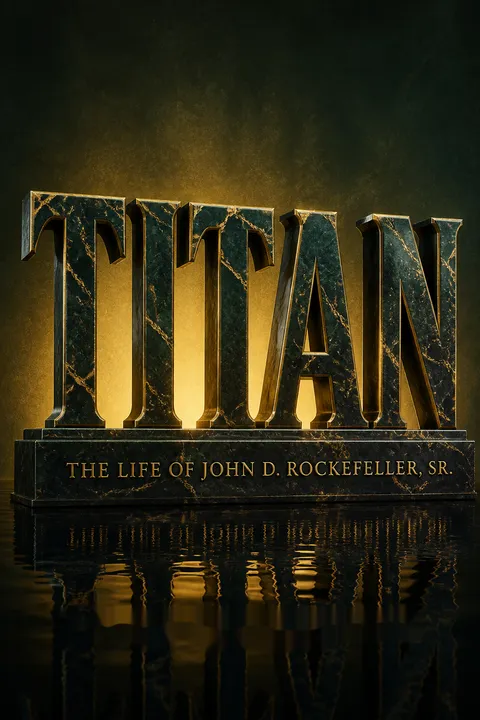
Titan: The Life of John D. Rockefeller, Sr. is highly praised for its comprehensive and balanced portrayal of the controversial oil tycoon. Readers appreciate Chernow's engaging writing style, psychological insights, and thorough research. The biography explores Rockefeller's business acumen, religious convictions, and philanthropic endeavors. While some find the book's length challenging, most consider it a masterful exploration of Rockefeller's complex character and lasting impact on American industry and society. The book is widely regarded as one of Chernow's best works.
People Also Read







Glossary
South Improvement Company
Secret railroad-refiner cartelA proposed 1872 alliance among selected oil refiners and railroads. Freight rates would rise for outsiders, while members received rebates and payments linked to competitors' shipments. Public outrage helped kill the plan before it was used, but its existence intensified fears that Rockefeller's group could control access to oil markets.
Standard Oil trust
Shared control of oil companiesThe 1882 arrangement that placed shares in dozens of Standard Oil companies under a small group of trustees. The companies remained legally distinct, but the trustees coordinated ownership and policy, giving the organization centralized control across state lines. The structure became a model for later industrial trusts and a target of antitrust reform.
rule of capture
Drill before neighbors doA principle governing early oil production: landowners could extract oil from wells on their property even when it had migrated underground from a neighbor's land. Because a producer risked losing oil to nearby wells, the rule encouraged rapid drilling and pumping, contributing to overproduction and price instability.
running arrangements
Output-limited profit agreementsAgreements in which Standard Oil guaranteed independent refiners a certain level of profit in return for limits on their production. The arrangement let Standard influence rivals' output without owning their refineries. It also created familiar cartel problems, including disputes over quotas and incentives to exceed them.
General Education Board
Foundation for education reformA Rockefeller-funded organization established in 1902 to improve education in the United States, initially emphasizing the South. It supported schools, agricultural education, and medical training, often working with public agencies and local institutions. Its approach relied on expert planning and grants intended to strengthen educational systems rather than provide isolated aid.
Rockefeller Sanitary Commission
Southern hookworm campaignA Rockefeller-supported public-health body established to fight hookworm disease in the American South. It funded research, diagnosis, treatment, and public education, while cooperating with state health agencies. The campaign helped show that symptoms widely attributed to laziness could result from a treatable parasitic infection.
Flexner Report
Survey of medical schoolsAbraham Flexner's 1910 evaluation of medical education in the United States and Canada. It exposed weak admissions standards, poor facilities, and inadequate scientific training at many schools, while promoting stronger university-based medical education. Rockefeller philanthropy helped carry its reform agenda into medical schools and research institutions.
Rockefeller Institute for Medical Research
Independent biomedical research instituteFounded in 1901 with Rockefeller support, the institute was created to investigate disease rather than operate as a conventional medical school. Under Simon Flexner, it recruited researchers and supported long-term laboratory work, later adding a hospital for clinical study. It became a major force in modern biomedical research.
FAQ
What's Titan: The Life of John D. Rockefeller, Sr. about?
- Comprehensive Biography: The book is a detailed biography of John D. Rockefeller, Sr., chronicling his journey from modest beginnings to becoming the wealthiest man in the world through the oil industry.
- Historical Context: It situates Rockefeller within the socio-economic landscape of the Gilded Age, exploring the interplay between capitalism, industry, and government.
- Complex Character Study: The narrative delves into Rockefeller's personality, business practices, and philanthropic efforts, presenting a nuanced view of a man seen as both a villain and a benefactor.
Why should I read Titan: The Life of John D. Rockefeller, Sr.?
- In-depth Research: Ron Chernow's meticulous research offers a well-rounded portrayal of Rockefeller, drawing from extensive primary sources like family documents and interviews.
- Understanding Capitalism: The book provides insights into the foundations of modern capitalism and the ethical dilemmas faced by industrialists, relevant for anyone interested in business history.
- Engaging Narrative: Chernow's storytelling makes complex historical events accessible and engaging, keeping readers invested in Rockefeller's journey.
What are the key takeaways of Titan: The Life of John D. Rockefeller, Sr.?
- Dual Nature of Wealth: The book illustrates the paradox of wealth, showing how Rockefeller's fortune was both a product of industriousness and a source of moral scrutiny.
- Philanthropy and Legacy: It emphasizes Rockefeller's philanthropic efforts, particularly in education and public health, suggesting his legacy extends beyond business practices.
- Impact of Industrialization: The narrative highlights the transformative effects of industrialization on American society, including the rise of monopolies and regulatory responses.
What are the best quotes from Titan: The Life of John D. Rockefeller, Sr. and what do they mean?
- “God gave me my money.”: Reflects Rockefeller's belief that his wealth was divinely ordained, intertwining his religious faith with business success.
- “I was trained from the beginning to work and to save.”: Underscores the values of thrift and hard work instilled in him from a young age, essential for success.
- “I have always regarded it as a religious duty to get all I could honorably and to give all I could.”: Highlights his view of wealth accumulation as a moral obligation, linking business acumen with philanthropy.
How did John D. Rockefeller start his career in business?
- Early Job: Rockefeller began as an assistant bookkeeper at Hewitt and Tuttle, honing skills in finance and learning the importance of meticulous record-keeping.
- Transition to Oil: He entered the oil business through a partnership with Maurice Clark, initially as a side venture while continuing work in produce.
- First Major Success: His first refinery, the Excelsior Works, marked the beginning of his rise in the oil industry, establishing him as a leading figure.
How did Rockefeller's business practices shape the oil industry?
- Use of Rebates: Rockefeller utilized rebates from railroads to lower shipping costs, allowing him to undercut competitors and gain market dominance.
- Formation of Standard Oil: He consolidated numerous refineries under Standard Oil, creating a powerful monopoly that controlled a significant share of the oil market.
- Impact on Competition: His practices led to the elimination of many independent refiners, fundamentally altering the competitive landscape of the oil industry.
What role did philanthropy play in Rockefeller's life?
- Personal Beliefs: Philanthropy was deeply rooted in Rockefeller's Baptist faith, emphasizing the moral obligation to help others and improve society.
- Founding Major Institutions: He established key institutions like the Rockefeller Foundation, focusing on education and public health initiatives.
- Legacy of Giving: His philanthropic legacy continues to influence modern charitable practices, demonstrating the potential for wealth to effect positive social change.
How did the Ludlow Massacre affect the Rockefeller family?
- Public Backlash: The Ludlow Massacre, where striking miners and their families were killed, severely tarnished the Rockefeller name and led to widespread public outrage.
- Junior's Transformation: John D. Rockefeller, Jr. faced intense scrutiny, prompting him to advocate for better treatment of workers and reevaluate labor relations.
- Long-term Consequences: The incident marked a turning point in the family's public image, forcing them to confront the darker aspects of their business dealings.
How did Rockefeller's religious beliefs influence his business practices?
- Baptist Principles: His Baptist upbringing emphasized hard work, honesty, and charity, which he integrated into his business philosophy.
- Moral Justification for Wealth: He believed accumulating wealth was a divine blessing and a responsibility to be used for good, guiding his philanthropic efforts.
- Self-Discipline and Restraint: His faith instilled a sense of self-control, helping him navigate the temptations of wealth and power without succumbing to excess.
What impact did John D. Rockefeller have on American society?
- Philanthropic Contributions: His extensive charitable donations transformed education and public health, establishing institutions like the University of Chicago.
- Business Practices: His methods set precedents for corporate practices, influencing competition, pricing, and regulation.
- Public Perception of Wealth: His life sparked debates about the morality of wealth accumulation and the responsibilities of the rich, shaping public attitudes toward capitalism.
How did the antitrust suit against Standard Oil impact Rockefeller's legacy?
- Dismantling of the Trust: The antitrust suit led to the breakup of Standard Oil, which increased Rockefeller's wealth and solidified his status as a philanthropist.
- Public Relations Shift: The suit forced Rockefeller to engage more openly with the public, transforming his image from a ruthless businessman to a benevolent figure.
- Long-term Influence: The legal battles influenced the regulatory landscape of American business, shaping future corporate governance and philanthropy.
How does Titan compare to other biographies of Rockefeller?
- Comprehensive Approach: Ron Chernow's Titan is noted for its depth and thoroughness, providing a nuanced portrayal of Rockefeller.
- Balanced Perspective: Unlike earlier works focusing solely on business practices, Titan presents a balanced view, including philanthropy and personal struggles.
- Historical Context: Chernow situates Rockefeller within the broader historical context of American capitalism, enriching the reader's understanding of his impact.
About the Author



Download PDF
Download EPUB
.epub digital book format is ideal for reading ebooks on phones, tablets, and e-readers.








