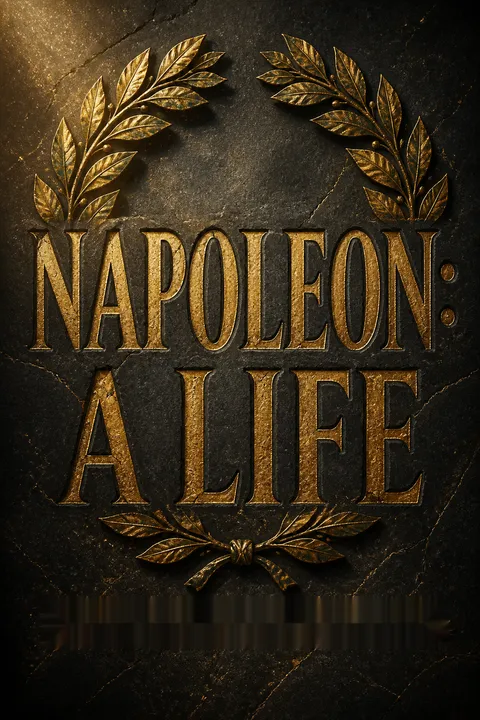


Key Takeaways
Measure Napoleon by the institutions that survived his defeats.
The durable record. Napoleon fought sixty battles and lost seven, but his most lasting victories were institutions. The Civil Code standardized law and strengthened equality before it. Prefects, public accounting, secondary schools, the Conseil d’État, the Légion d’Honneur, roads, canals, and sewers helped make France more coherent and capable. Elements of the Code spread beyond France, and several institutions outlasted the Empire itself.
Victory had limits. The restored Bourbons could not simply restore feudal privilege or return land already sold from Church and aristocratic estates. Yet Napoleon’s achievements were not those of a democratic republic: he centralized authority and restricted political participation. His legacy is therefore double. He secured lasting changes by replacing revolutionary instability with a more durable state, but he did so under increasingly personal rule.
What's striking is the gap between the lifespan of a ruler's conquests and the endurance of the rules he leaves behind. Napoleon's legal and administrative reforms became useful beyond the political system that created them, which is one reason they survived his defeat. That does not make the Empire benign: institutions can protect property and equal legal status while restricting political voice. The enduring achievement is not that centralized power solved every problem, but that it made a fragmented state governable enough for later governments to inherit.
Make outsider status an education, not merely a grievance.
An ambitious outsider. Born into a modest Corsican family, Napoleon arrived in France as a schoolboy who spoke French imperfectly and was mocked for his accent and origins. At Brienne and the École Militaire, he excelled at mathematics, read military history obsessively, and trained in artillery, an arm of war that rewarded technical skill. His years studying campaigns gave him tools he could use when the Revolution opened careers to men without wealth or connections.
Opportunity met preparation. The siege of Toulon in 1793 gave the young artillery officer a chance to demonstrate logistics, persistence, and courage. He rose quickly, but his political identity also shifted: as Paoli’s Corsican nationalism lost him a place in Corsican politics, Napoleon committed himself to France. His outsider experience mattered, but it did not dictate his choices or guarantee his ascent.
The rise here is not a simple story of merit triumphing over birth. The Revolution made advancement possible, but it also created military vacancies, political danger, and rapid turnover in command. Napoleon combined unusual preparation with a willingness to adapt his loyalties to changing circumstances. That combination is more revealing than the familiar image of a solitary genius. It also complicates the idea of meritocracy: access widened, but the new system rewarded obedience, military success, and political usefulness as much as talent.
Concentrate force and morale where one decisive hour can change the campaign.
A moving advantage. In Italy in 1796, Napoleon inherited an underfed, poorly equipped army facing larger Austrian and Piedmontese forces. He reorganized supplies, pressed his officers for information, and moved quickly enough to strike the allied armies separately. At Montenotte, Millesimo, and Dego, speed and concentration created local superiority even when the overall odds were against him. His later victory at Austerlitz used the same principle: invite pressure where it can be contained, then commit force at the moment and place that matter.
Morale was practical. Napoleon praised units publicly, listened to soldiers’ complaints, and paid close attention to shoes, food, and wounded men. Regimental names, standards, speeches, and decorations made units feel part of a shared history. These gestures helped turn endurance into a military resource, though requisitioning food and supplies could transfer hardship to civilians.
The military method combines movement, information, logistics, and morale rather than treating battlefield brilliance as an isolated gift. A commander who keeps forces close enough to reinforce one another can shape the fight before the enemy fully understands it. The attention to soldiers' daily needs also explains why symbolism could matter: praise worked best when basic conditions were not ignored. The qualification is essential. An army that feeds itself by coercion may move faster, but the local population pays for that speed, and resentment can outlast the victory.
Use centralized competence to stabilize revolutions, then guard against silencing them.
Order after upheaval. Napoleon inherited a France weakened by political coups, inflation, rural brigandage, and war. As First Consul, he strengthened public finances, reorganized local government around centrally appointed prefects, created the Banque de France, and supported secondary schools and a unified legal code. The Concordat with the Catholic Church helped reconcile many rural communities with the state, while protecting the land acquired during the Revolution.
Competence narrowed choice. The same government closed most newspapers, restricted political debate, and reduced the legislature’s power. Napoleon argued that France needed a strong executive, and many citizens welcomed the stability he provided. But institutions designed to deliver quickly also made it harder to challenge bad decisions or organize opposition. The regime could hear complaints without giving citizens much leverage to change policy.
Napoleon's Consulate shows why effective administration can win public support after a period of disorder. Reliable currency, safer roads, functioning courts, and predictable local government are not abstractions to people trying to live ordinary lives. But stability and accountability are separate achievements. A government may listen closely to individual complaints while suppressing the press and limiting organized criticism. That tension matters because efficient institutions can make a regime more capable without making its authority more legitimate.
Reform conquered people through collaboration, not a stream of requisitions.
Reform had an imperial price. In northern Italy, Napoleon abolished internal tariffs and guild restrictions, expanded religious toleration, and created Italian republics led by local supporters. Many educated Italians welcomed the reforms, but French officials also collected large contributions and removed artworks for Paris. In Egypt, savants produced lasting scholarly work, yet Napoleon’s rule depended on expeditions, religious performance, and brutal suppression of revolt. In Saint-Domingue, his attempt to restore French control and slavery ended in catastrophic violence and the loss of the colony.
Spain exposed the limit. Napoleon expected the Spanish Bourbons to yield and the population to accept Joseph as king. Instead, the Dos de Mayo uprising helped ignite a long war in which guerrillas, regular armies, and British forces resisted French rule. Administrative modernization could not compensate for foreign occupation, dynastic manipulation, and the burdens of maintaining a huge army.
The contrast between Italy and Spain is a test of imperial political judgment. Reform can attract collaborators when it dismantles visible privileges and offers practical gains, but those gains are weakened when the same power extracts money, art, and obedience. Spain made the mismatch unmistakable: an imposed king and a reforming constitution could not substitute for consent. The argument should not be simplified into benevolent reform versus cruel conquest. Napoleon pursued both, and the coercion often undercut the cooperation his system required.
A blockade meant to isolate Britain instead alienated Napoleon's allies.
A land answer to sea power. After Trafalgar made French naval dominance impossible, Napoleon tried to damage Britain by barring British goods from continental ports. The Berlin Decrees of 1806 created the Continental System, later reinforced by further decrees. The policy aimed to force Britain into negotiation by denying it European markets and to encourage production inside the French Empire.
Control became costly. Smuggling continued, British trade found other routes, and the restrictions hurt merchants and manufacturers across Europe. Napoleon used annexations and pressure to enforce the system, including against states whose cooperation mattered. Russia eventually resisted the restrictions, while Sweden and other powers moved further from France. The blockade did not simply fail to defeat Britain; it made Napoleon’s alliances harder to maintain and helped turn economic pressure into renewed war.
The Continental System reveals the limits of trying to govern a commercial network through commands alone. Britain’s control of the sea gave Napoleon a real strategic problem, but a continental blockade required every partner to accept economic losses for France’s benefit. Enforcement then created incentives for evasion, while annexation turned nominal allies into subjects. This was not merely an economic miscalculation. It was a political design that demanded cooperation and answered resistance with coercion, steadily weakening the coalition it needed.
Do not mistake an occupied capital for a defeated country.
Moscow was not surrender. In 1812, the Russians repeatedly retreated rather than allow Napoleon a decisive victory. After Borodino, he entered Moscow, only to find the city largely abandoned and then burning. Alexander refused to negotiate. The Grande Armée had marched hundreds of miles, but its supply system could not sustain it in the devastated countryside, especially as horses and men died from hunger, exposure, and disease.
The retreat compounded the error. Typhus killed around 100,000 men in Napoleon’s central striking force, while cold, starvation, desertion, and combat added further losses. Napoleon’s choice of route back from Maloyaroslavets also mattered: the introduction argues that another route could have saved enough of the army to preserve his crown. The catastrophe was neither inevitable nor simply a punishment for hubris; it grew from Russian strategy, logistics, disease, and consequential French decisions.
The campaign separates battlefield success from strategic success. Napoleon captured the enemy capital, but that achievement did not force the political decision he needed. The Russian retreat made distance itself an adversary, while the loss of horses crippled the transport system on which French speed depended. Typhus added a devastating factor whose cause and treatment were not understood at the time. Still, the campaign’s avoidable choices matter: explaining catastrophe through weather alone would erase the decisions that made the army so vulnerable.
Separate the historical Napoleon from the legends he and his enemies manufactured.
The evidence changed. Earlier biographies relied on a correspondence published under Napoleon III, which omitted or distorted a large share of Napoleon’s letters. The Fondation Napoléon’s later publication of more than 33,000 signed letters gave historians a fuller record of his daily decisions and private voice. That evidence shows a witty, candid, detail-obsessed administrator, but also a persistent political operator who controlled information and pursued his own image.
Memory was contested. Napoleon dictated the Mémorial de Sainte-Hélène for hours a day, presenting his life to posterity while minimizing failures and brutalities. Many memoirs by people around him were written decades later, ghostwritten, or shaped by the politics of the Bourbon Restoration. The book also challenges the easy comparison between Napoleon and Hitler, arguing that wartime propaganda and later caricature distorted the historical picture without absolving Napoleon of responsibility.
The book treats biography as an argument about evidence, not just a sequence of events. Newly available correspondence can correct a public image built from selective memoirs, but no archive removes the need to judge motive and consequence. Napoleon was both a careful custodian of his own reputation and a subject of other people’s political storytelling. That makes simple labels unreliable. The most credible portrait has to hold together his institutional achievements, his self-serving revisions, his coercion, and the violence of his wars.
A ruler who makes himself indispensable leaves no safe succession.
The throne needed an heir. Napoleon’s empire depended heavily on his personal authority, so he built a dynasty by placing relatives on the thrones of Naples, Holland, Spain, and Westphalia. His brothers often lacked the ability or inclination to serve his system, and his insistence on dynastic marriages damaged family relationships without guaranteeing loyal successors. The 1814 abdication, Elba exile, and return in 1815 showed how much the regime still turned on Napoleon himself.
The ending stayed specific. The Hundred Days ended at Waterloo after the Allies rallied against his return. Napoleon’s empire collapsed, and he died in exile on St Helena, but the Civil Code and administrative reforms survived. His most durable legacy was therefore not the family line or the imperial title. It was the state machinery and legal framework that outlasted the man who had made himself its centre.
Napoleon’s succession problem was structural as well as familial. A regime that centralizes decision-making around one person can perform brilliantly while that person is present, yet struggle to transfer authority when he falls. The repeated promotion of relatives did not solve that problem; it made the empire look hereditary without producing dependable heirs. The contrast with the Civil Code is instructive: institutions built to operate beyond one ruler proved more durable than the dynasty built to preserve his power.
Analysis
Roberts organizes Napoleon’s life around a distinction between conquest and construction. The young Corsican rises through a revolutionary opening, converting technical preparation and personal energy into military command. In Italy, his gifts become visible as a system: concentrated force, rapid movement, careful attention to supply, and an unusual ability to make soldiers feel recognized. As First Consul, he turns that same appetite for order toward law, finance, education, and administration. The Civil Code and prefectural system help explain why his influence outlasts his empire.
The biography’s revisionist case is strongest when it replaces simple psychological inevitability with concrete decisions and circumstances. Napoleon’s downfall is not treated as the automatic result of a defective personality. His war against Russia becomes a chain of contingent choices shaped by Russian withdrawal, French logistical weakness, typhus, and the decision to return by a dangerous route. The argument is persuasive precisely because it does not deny his agency: a leader may face unforeseeable losses while still making consequential errors.
The same balanced reading is needed for Napoleon’s reforms. Equality before the law and a more capable state coexisted with censorship, restricted political participation, slavery in the colonies, and violent suppression of resistance. The Code’s endurance is evidence of institutional usefulness, not proof that the regime was democratic or humane. Likewise, European collaborators could value French administration while resenting occupation and extraction.
The book’s account of historical memory is particularly important. Napoleon shaped his own story at St Helena, while later memoirists and political regimes shaped it again. The newly published correspondence improves the evidentiary base, but it does not make Napoleon an impartial witness to himself. His life resists both the heroic myth of the infallible general and the caricature of a proto-totalitarian monster. The more demanding conclusion is that exceptional state-building and destructive ambition could belong to the same ruler, and that his institutions proved more durable than his dynastic project.
Review Summary
Napoleon: A Life by Andrew Roberts is widely praised as a comprehensive, engaging biography of Napoleon Bonaparte. Readers appreciate Roberts' balanced portrayal, detailed research, and accessible writing style. The book covers Napoleon's military campaigns, political reforms, and personal life, drawing on newly available letters. While some find it overly sympathetic to Napoleon, most reviewers consider it an excellent, definitive biography that brings the complex historical figure to life. The book's length and military focus may deter some readers, but it is generally highly recommended for history enthusiasts.
People Also Read






Glossary
Code Napoléon
Unified civil lawThe civil code developed under Napoleon and enacted in 1804, which replaced a patchwork of regional legal systems with one body of law. It established equality before the law, legal contracts, property rights, and religious toleration, while also reinforcing patriarchal authority and restricting women’s legal independence. The code spread across territories governed by France and influenced legal systems elsewhere.
Continental System
Blockade of British tradeNapoleon’s policy of excluding British goods and trade from continental European ports, launched through the Berlin Decrees of 1806 and extended by later decrees. It was designed to weaken Britain economically after French naval defeat and force it to negotiate. Enforcement required pressure on allies and dependent states, encouraged smuggling, and damaged European trade.
bataillon carré
Flexible army formationA formation that allowed an army to change direction and concentrate against an unexpected threat. Divisions were arranged so the force could turn toward an enemy on either flank, while other divisions became a central reserve able to reinforce the attack. Napoleon used the system to keep his forces flexible and bring them together quickly for battle.
esprit de corps
Shared unit prideThe collective pride, identity, and confidence that bind soldiers to their regiment or corps. Napoleon encouraged it through unit names, standards, public praise, decorations, speeches, and direct attention to soldiers’ needs. He believed morale could help an army endure hardship and fight effectively, though it could not replace food, equipment, or sound strategy.
biens nationaux
Revolutionary nationalized propertyLands and property taken from the monarchy, Church, and émigré aristocracy during the French Revolution and sold to private purchasers. Napoleon guaranteed the buyers’ ownership rights, making it harder for the restored Bourbons to reverse the Revolution’s property transfers. Protecting these acquisitions helped secure support from landowners and other beneficiaries of the revolutionary settlement.
ralliement
Reconciliation across factionsNapoleon’s policy of bringing people with different political pasts into the new regime, provided they would serve France. It allowed former royalists, moderates, republicans, and even some former revolutionaries to hold public office. The policy expanded the government’s talent pool and reduced the need for sweeping purges, while leaving little room for organized opposition.
sénatus-consulte
Senate decree with legal forceA decree issued by the Senate under the Napoleonic constitutions. Although originally intended mainly to amend the constitution, Napoleon increasingly used sénatus-consultes to enact major measures and bypass the legislature. They helped centralize decision-making, including through the deportation of political opponents and the alteration of constitutional arrangements.
Mémorial de Sainte-Hélène
Napoleon’s exile memoirThe account of Napoleon’s life and views dictated to Emmanuel de Las Cases and other companions during his exile on St Helena. Dictated at length and published after Napoleon’s death, it became a major source for his public image. Its narrative was influential but selective, emphasizing achievements and often minimizing mistakes, defeats, and brutal policies.
FAQ
What's Napoleon: A Life about?
- Comprehensive Biography: Napoleon: A Life by Andrew Roberts is a detailed exploration of Napoleon Bonaparte's life, from his humble beginnings to his rise as Emperor of France and eventual downfall.
- Historical Context: The book situates Napoleon within the broader context of the French Revolution and the Napoleonic Wars, illustrating his impact on European history.
- Personal Insights: Roberts delves into Napoleon's personality, leadership style, and relationships, providing a nuanced portrait of his character and legacy.
Why should I read Napoleon: A Life?
- Engaging Narrative: Andrew Roberts writes in a compelling style that brings historical events to life, making the book accessible to both history enthusiasts and general readers.
- Thorough Research: The biography is based on extensive research, including access to previously unpublished letters and documents, offering fresh insights into Napoleon's life.
- Balanced Perspective: Roberts presents a nuanced view of Napoleon, acknowledging both his achievements and failures, encouraging readers to think critically about historical figures.
What are the key takeaways of Napoleon: A Life?
- Leadership and Strategy: Napoleon's ability to inspire loyalty and his innovative military strategies are central themes, highlighting his impact on military practices.
- Ambition and Consequences: The book explores how Napoleon's ambition drove his successes but also led to his downfall, particularly in the Russian campaign.
- Legacy and Influence: Napoleon's reforms and actions reshaped Europe, influencing modern governance, law, and nationalism.
What are the best quotes from Napoleon: A Life and what do they mean?
- “I am of the race that founds empires.”: This quote reflects Napoleon's ambition and self-perception as a historical figure destined for greatness.
- “An army marches on its stomach.”: Although often misattributed, this sentiment underscores the importance of logistics in military campaigns.
- “Fortune is a liberal mistress.”: This quote highlights Napoleon's belief in the role of chance and luck in his successes.
How does Andrew Roberts portray Napoleon's military strategies in Napoleon: A Life?
- Innovative Tactics: Roberts details Napoleon's use of the corps system, which allowed for greater flexibility and adaptability in battle.
- Psychological Warfare: Napoleon's ability to inspire his troops and instill a sense of purpose is highlighted as a key element of his military success.
- Adaptability in Warfare: His capacity to adapt strategies based on battlefield conditions is emphasized as a hallmark of his military genius.
How did Napoleon's personal relationships influence his life and career in Napoleon: A Life?
- Josephine's Influence: Josephine is portrayed as a significant emotional and political influence, affecting Napoleon's decisions and state matters.
- Family Dynamics: Napoleon's interactions with his siblings often involved attempts to control and elevate their status, impacting his political strategies.
- Political Alliances: Marriages and alliances were used strategically to strengthen his position, though they often lacked genuine affection.
What role did the Napoleonic Code play in Napoleon's legacy according to Napoleon: A Life?
- Legal Reforms: The Napoleonic Code established a uniform legal system that emphasized equality before the law and property rights.
- Global Influence: This code influenced legal systems worldwide, laying the foundation for modern legal principles.
- Enduring Legacy: The reforms are presented as one of Napoleon's most significant and lasting contributions to governance.
How does Napoleon: A Life address the theme of ambition and its consequences?
- Driving Force: Napoleon's ambition propelled him to great heights, enabling remarkable military and political successes.
- Consequences of Overreach: His relentless pursuit of power often led to reckless decisions, particularly during the Russian campaign.
- Reflection on Human Nature: The narrative serves as a cautionary tale about the costs of unchecked ambition.
What were the major battles and campaigns covered in Napoleon: A Life?
- Battle of Austerlitz: Known as one of Napoleon's greatest victories, showcasing his strategic brilliance and ability to outmaneuver larger forces.
- Russian Campaign: The disastrous invasion of Russia is examined as a turning point, highlighting logistical challenges and harsh conditions.
- Italian Campaign: Early successes in Italy demonstrated his tactical genius and ability to inspire his troops.
How does Napoleon: A Life explore the impact of the Continental System?
- Economic Warfare: The Continental System aimed to weaken Britain by cutting off trade, but it strained European economies.
- Resistance and Smuggling: Widespread resistance and smuggling undermined the system, highlighting enforcement challenges.
- Diplomatic Fallout: The system contributed to the breakdown of alliances, particularly with Russia, leading to further conflict.
What insights does Napoleon: A Life provide about leadership and power?
- Complexity of Leadership: Effective leadership requires a balance of ambition, strategy, and empathy, as illustrated by Napoleon's successes and failures.
- Consequences of Hubris: The biography serves as a cautionary tale about the dangers of overconfidence in leadership.
- Legacy of Power: Napoleon's legacy is complex, marked by both achievements and failures, offering lessons on the long-term implications of power.
How does Napoleon: A Life compare to other biographies of Napoleon?
- Depth of Research: Roberts' biography is noted for its extensive research and access to previously unpublished documents, providing a fresh perspective.
- Narrative Style: The engaging narrative style makes the biography accessible, blending historical analysis with storytelling.
- Balanced Perspective: Unlike some biographies, Roberts offers a balanced view, acknowledging both Napoleon's brilliance and flaws.
About the Author
Other books by Andrew Roberts

Download PDF
Download EPUB
.epub digital book format is ideal for reading ebooks on phones, tablets, and e-readers.








