

Key Takeaways
Treat Rome's surviving stories as arguments, not transparent records
A crisis, seen through one man. Beard opens in 63 BCE, when consul Cicero exposed Catiline's alleged plot to overthrow the state. Cicero had reason to present himself as Rome's savior, and years later he circulated a polished version of his speech. His account helped define the story, but it does not settle what Catiline intended or how much danger he posed. Cicero's summary execution of captured conspirators, without trial, also made the crisis a debate about emergency powers and citizens' rights.
Read against the grain. Sallust's later account offers another angle, while coin evidence hints that Rome faced economic distress. None gives a complete view. The battle between Catiline's forces and Roman troops confirms real violence, but not every detail in Cicero's narrative.
What's striking is that Beard makes uncertainty part of the historical story rather than a defect to hide. This resembles modern forensic reasoning: a witness can be informative and self-interested at once, and material evidence can test a narrative without replacing it. The approach also warns against treating every ancient account as either true or fabricated. One limit is unavoidable: the poor and the conspirators left far fewer records than Cicero did. Their absence cannot be repaired by clever interpretation alone, but it can prevent the most powerful witness from becoming the only imaginable one.
Read Rome's origin myths as mirrors of its political anxieties
A founding story with sharp edges. Romans traced their city to Romulus and Remus, twins abandoned as babies, rescued by a wolf, and eventually divided by rivalry. Romulus killed Remus; then he populated the city by welcoming outsiders and abducting Sabine women. Another origin story made Rome descend from Trojan refugees led by Aeneas. These accounts were not simple records of a founding event. They gave Romans ways to argue about violence, belonging, marriage, and the city's mixed origins.
Myth beside archaeology. Excavations reveal early burials and simple settlements, with urban life clear by the sixth century BCE. They cannot confirm Romulus or a single foundation day. The familiar date of 753 BCE reflects ancient calculation, not a securely documented beginning.
The myths work like a society's contested family album: they explain who belongs while exposing the violence and exclusions that the official family story might prefer to soften. Romulus's asylum makes openness part of Roman identity, while Remus's murder gives civil conflict an ancestral precedent. Neither tale proves that Romans were naturally inclusive or fated to fight. Their value lies in showing how later Romans made the past useful. This distinction matters well beyond antiquity: national origin stories often tell more about the political questions a society is trying to answer than about its literal beginnings.
Rome built empire by turning defeated neighbors into military partners
A system made from victory. Rome did not begin with a clear plan to conquer the Mediterranean. In Italy, it often required defeated communities to supply troops rather than placing Roman officials everywhere or imposing a uniform government. These arrangements were coercive, but they also gave allies access to booty and a stake in Roman victories. As Rome absorbed more communities, it could call on far more soldiers than a single city could raise alone.
Resilience mattered. By the late fourth century BCE, Roman armies were fighting far from home. At Cannae in 216 BCE, Hannibal inflicted devastating losses, yet Rome kept fighting. The book's explanation is less a uniquely Roman appetite for war than a durable supply of manpower, including allied forces. Military defeat did not automatically end Roman capacity to wage war.
This is a powerful example of how institutions can turn a liability into an advantage. A defeated neighbor could become a source of soldiers, local knowledge, and future political cooperation. In modern terms, Rome built power through a network rather than a single command center. That structure was not benevolent: allies paid in lives and had little control over the system. Still, it helps explain why a battle could destroy an army without destroying Rome's ability to field another. The same arrangement also created a lasting political question: how much voice should people have when their resources sustain a state?
Take Roman popular power seriously, without mistaking it for democracy
The people had real authority. In the Republic, male citizens elected officials, and popular assemblies alone could pass laws. Plebeians, the larger citizen group initially excluded from elite offices, used walkouts and political pressure to win tribunes, access to office, and legislative power. Their struggle, often called the Conflict of the Orders, helped reshape Roman government over centuries.
Power remained unequal. Voting systems weighted the wealthy, and travel to Rome made participation difficult for many citizens. The Gracchi brothers tested the boundaries by proposing land reform and subsidized grain. Their opponents answered with violence: Tiberius Gracchus was beaten to death by a senatorial crowd, and Gaius's supporters were killed under emergency authority. Rome had popular participation, but not equal political influence.
The distinction between participation and democracy is useful because political systems often grant citizens formal powers while arranging access unevenly. Rome's assemblies were not a sham: candidates had to win votes, and popular pressure could change policy. Yet wealth, location, and political organization shaped who could use those rights. The Gracchi's fate shows how quickly elite competition could turn institutional conflict into physical violence. The section also cautions against projecting modern labels backward. Calling Rome democratic or not democratic can obscure the more precise question of who could act, under what rules, and at what risk.
When empire outgrows institutions, generals can become rivals to the state
Military success changed Roman politics. As Rome fought longer campaigns abroad, commanders controlled troops and resources for extended periods. Gaius Marius recruited citizens without property, helping create an army whose soldiers increasingly depended on generals for rewards and retirement land. Loyalty to a commander could compete with loyalty to Rome.
The Republic could not contain the competition. Sulla marched his army on Rome, ruled as dictator, and used proscriptions to eliminate opponents. Pompey later received exceptional powers to direct campaigns across the eastern Mediterranean. Julius Caesar crossed into Italy with his army in 49 BCE, beginning another civil war. These men did not simply destroy a healthy system from outside. Rome's institutions struggled to govern a vast empire while preserving shared, temporary officeholding and civilian control of military force.
The Roman crisis resembles a familiar problem of state capacity: institutions built for a smaller political community can fail when responsibilities expand faster than oversight. Armies need continuity and commanders need authority, but those necessities can create personal power centers. Marius's reforms addressed recruitment pressures while increasing soldiers' dependence on their generals. That does not make any one reform the sole cause of the Republic's collapse. Economic inequality, elite rivalry, and political violence also mattered. Beard's account is strongest when it treats the breakdown as an interaction between institutional strain and deliberate choices, rather than as a simple march toward inevitable dictatorship.
Expand citizenship without confusing legal inclusion with equal power
Rome made belonging unusually portable. Unlike most Greek city-states, Rome extended citizenship beyond the city and sometimes allowed people to remain citizens of their home communities too. Freed slaves of Roman citizens could become citizens themselves. This expanding practice helped bind conquered populations to Rome, though it did not make Roman society equal: women lacked formal political rights, and slavery remained central to the economy.
The project reached its high point in 212 CE. Emperor Caracalla granted citizenship to every free inhabitant of the empire, bringing tens of millions within the legal category. Yet the status did not erase hierarchy. In the following century, law increasingly distinguished the privileged honestiores from the humiliores, who could face harsher punishments. A universal label could coexist with sharply unequal treatment.
Citizenship here functions less as a single identity than as a bundle of rights that the state can extend, administer, and redefine. Rome's approach was strikingly expansive for its world, and its portability helped govern a diverse population without requiring everyone to live in the capital. But legal membership should not be mistaken for social equality. Women, enslaved people, and the poor occupied profoundly different positions, even when the citizenship boundary widened. This is a useful lens for modern debates too: inclusion can be a genuine gain while leaving unequal access to security, influence, and material resources intact.
Augustus made monarchy durable by preserving republican forms and controlling force
A new ruler in old language. After defeating Antony and Cleopatra, Augustus avoided the titles of king and dictator. He presented himself as Rome's leading citizen while accumulating powers that made him dominant. He controlled the army, ended soldiers' dependence on individual generals for retirement benefits, and made public officeholders increasingly reliant on imperial approval. The senate remained, but served a reworked political order.
Power needed public proof. Augustus funded distributions and spectacles, rebuilt Rome in marble, and promoted images of himself across the empire. His account of his achievements emphasized conquest, generosity, and construction. The system stabilized one-man rule, but it never settled succession cleanly. Augustus's efforts to secure an heir repeatedly failed, leaving later rulers to manage a dangerous transfer of power.
Augustus's achievement was not merely personal survival. He made an unfamiliar form of rule legible by attaching it to institutions, titles, benefits, and rituals that Romans already understood. His military pension system is especially revealing: changing who paid soldiers altered whom they needed to obey. At the same time, public generosity and monumental building helped turn authority into something visible and repeatable. The compromise remained fragile. Republican language could soften autocracy, but it could not make the power balance genuinely shared, and the unresolved succession problem exposed the limits of designing a durable regime around one individual.
Look below elite memoirs to recover work, hunger, and ordinary risk
Most Romans leave faint traces. Ancient writers were generally wealthy men, so ordinary workers, women, enslaved people, and the rural poor appear unevenly. Archaeology and inscriptions offer a different view: tombstones identify dyers, bakers, midwives, and other workers; Pompeian bars show customers eating, gambling, and arguing; and a cesspit at Herculaneum reveals a diet that included fish, eggs, and figs.
Daily life could turn precarious quickly. Many urban residents rented crowded apartments, worked until they died, and faced fire, disease, crime, and hunger with little public support. The state grain distribution helped a limited group of male citizens, not everyone in need. Slavery shaped households and labor, while some enslaved people resisted by escaping rather than rebelling openly.
The material evidence changes the scale of Roman history. A fragment of food waste or a tradesman's epitaph cannot supply a full biography, but it can correct the assumption that elite political concerns were everyone's concerns. It also shows how ordinary life was structured by public policy, architecture, labor, and status, even when people left no literary testimony. Archaeological visibility has its own bias: durable buildings and marked graves survive better than temporary shelters or unrecorded labor. The most responsible reconstruction therefore combines small clues with restraint, rather than turning a handful of vivid finds into a universal portrait.
Follow the provinces to see an empire built through collaboration and coercion
Rome ruled with few officials. In the early empire, a small number of Roman administrators relied on local councils and provincial elites to collect revenue and manage towns. Pliny's correspondence with Trajan shows a governor asking the emperor about aqueducts, budgets, and even fire equipment. This was a more connected administration than Cicero encountered in the Republic, but it still depended on local cooperation and uneven oversight.
Roman identity remained mixed. People adopted Roman customs, held local traditions, and moved across vast distances. The freedman Zoilos returned from Rome to his Greek-speaking home town with Roman citizenship and wealth, presenting himself in both Roman and Greek styles. Rebellions, including Boudicca's, often arose when collaboration broke down or Roman officials abused their power. Provincial life was neither simple assimilation nor constant resistance.
The provincial perspective complicates the image of Rome as a center issuing commands to passive subjects. A small governing apparatus depended on local leaders, whose authority could make imperial rule workable and whose interests could also destabilize it. Cultural adoption was similarly active: people could use Roman names, institutions, or goods without abandoning local affiliations. That hybridity should not romanticize empire. Collaboration operated under the shadow of military force, and abuses could trigger rebellion. The most revealing question is not whether a population became Roman, but which parts of Roman power people accepted, adapted, resisted, or made their own.
Analysis
SPQR is not a straight march from village to empire. It is a history of how Romans repeatedly made their past serve present arguments, then built institutions capable of turning military victories into durable power. Beard's method follows that instability in the evidence itself. Cicero's speeches, later histories, inscriptions, coins, ruined buildings, and waste deposits each reveal different Roman worlds, and none can simply stand in for all the others. The result is a narrative that resists both the celebratory story of innate Roman greatness and the equally tidy picture of a uniquely predatory machine.
The book's most consequential thread is the relationship between incorporation and coercion. Rome expanded citizenship and drew provincial elites into government, but this openness was not a substitute for equality. It helped Rome govern a sprawling population while preserving slavery, class hierarchy, military domination, and unequal political access. Caracalla's universal citizenship decree is therefore both a culmination and a limit: a major legal boundary disappears, while new divisions based on wealth and status remain.
The account also reframes republican collapse. The Republic did not fall simply because ambitious men were unusually wicked. It faced a structural mismatch: institutions designed for a city-state were asked to manage far-flung wars, armies, and wealth. Generals acquired resources that made traditional checks less effective, while political violence became an instrument of competition. Augustus solved the problem of command by concentrating power, not by restoring the old balance.
A productive tension remains between the book's emphasis on contingency and the cumulative logic of its narrative. Rome's ascent was not preordained, yet each victory created capacities and expectations that made further expansion easier. Beard's answer is not a universal recipe but a model of historical inquiry: track who benefits, ask whose account survives, and distinguish legal status from lived power. Rome matters less as an instruction manual than as a case study in how political systems justify themselves and how their subjects participate, profit, suffer, and object.
Review Summary
SPQR is a comprehensive history of ancient Rome, covering its first millennium. Reviewers praise Beard's engaging writing style, accessibility, and ability to challenge preconceptions. Many appreciate her focus on ordinary Romans and women, not just elite men. Some criticize the non-linear structure and lack of detail on later emperors. Overall, readers find it informative and thought-provoking, though opinions vary on its suitability for beginners versus those already familiar with Roman history. Most agree it offers a fresh perspective on this influential civilization.
People Also Read




Glossary
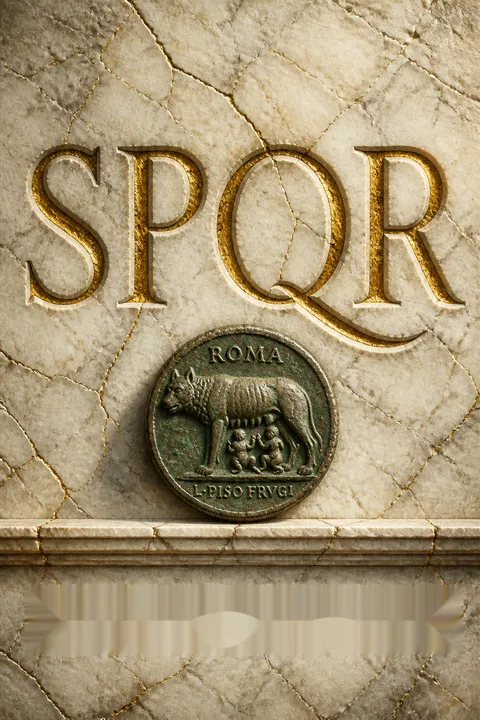
SPQR
Rome's civic sloganAn abbreviation of Senatus PopulusQue Romanus, meaning the Senate and People of Rome. It expressed the paired sources of legitimate authority in the Roman state and appeared on public buildings and official objects. The slogan lasted beyond the Republic, even as political power shifted from the senate and people toward emperors.
Conflict of the Orders
Plebeian struggle for rightsThe long political struggle between patricians, a hereditary elite, and plebeians, the larger group of Roman citizens initially excluded from much public power. According to Roman tradition, plebeian protests and walkouts won them representatives, access to offices, and legislative authority. The process helped create a broader ruling class, though it did not produce equal political influence.
civitas sine suffragio
Citizenship without votingA limited form of Roman citizenship, literally citizenship without the vote, granted to some communities incorporated into Rome's expanding Italian network. It offered a status between full Roman citizenship and foreignness. The category reflects Rome's improvised approach to integrating communities, rather than a single, fully planned system of rights.
imperium
Power to commandIn early Roman usage, imperium referred primarily to the authority to issue orders that were expected to be obeyed, especially by officials and military forces. Over time, the word also came to describe the territory under Roman rule. Beard emphasizes that this later territorial meaning should not be projected uncritically onto earlier Roman expansion.
provincia
Assigned responsibilityOriginally, provincia meant a responsibility or task assigned to a Roman official, not necessarily a defined region. As Roman control grew, it increasingly referred to a governed territory, the later meaning of province. The shift reflects a transformation in how Romans understood and organized their expanding power overseas.
honestiores and humiliores
Upper and lower legal ranksTerms that distinguished more privileged people, the honestiores, from lower-status people, the humiliores, in the later Roman Empire. As citizenship spread more widely, this hierarchy became a more important legal divide. The lower group could face punishments, including flogging and crucifixion, from which the higher group was protected.
Romanisation
Adopting Roman cultural formsA modern term for the varied ways people in the provinces adopted, adapted, or used Roman cultural practices, including names, language, architecture, and material goods. Beard rejects a simple model in which Rome imposed one culture from above. Provincial communities often shaped hybrid identities while living under Roman political and military power.
FAQ
What’s SPQR: A History of Ancient Rome by Mary Beard about?
- Comprehensive Roman history: The book traces Rome’s evolution from a small village to a vast empire, covering political, social, military, and cultural developments over roughly a thousand years.
- Focus on Rome’s rise: Mary Beard emphasizes Rome’s growth and transformation, culminating in the universal grant of citizenship in 212 CE, rather than focusing on its decline.
- Challenging traditional narratives: Beard questions myths and simplistic views, presenting Roman history as a dynamic dialogue between past and present.
- Exploration of identity and power: The narrative examines how Roman ideas of citizenship, liberty, and governance shaped both ancient and modern societies.
Why should I read SPQR: A History of Ancient Rome by Mary Beard?
- Expert, accessible storytelling: Mary Beard is a renowned classicist who combines academic rigor with engaging, readable prose, making complex history approachable.
- Nuanced, revisionist perspective: The book challenges stereotypes and propaganda, offering a balanced view that includes marginalized voices like women, slaves, and the poor.
- Rich use of evidence: Beard incorporates recent archaeological discoveries and ancient sources, providing fresh insights and connecting ancient Rome to contemporary issues.
- Relevance to today: The book draws parallels between Roman and modern debates about citizenship, power, and identity, making it meaningful for current readers.
What are the key takeaways and themes of SPQR: A History of Ancient Rome by Mary Beard?
- Enduring influence of Rome: Roman ideas about law, citizenship, and political rhetoric continue to shape Western culture and politics.
- Complexity of Roman society: The book highlights the diversity, social stratification, and cultural hybridity of Rome, moving beyond simple heroism or villainy.
- History as ongoing dialogue: Beard emphasizes that our understanding of Rome is constantly evolving with new evidence and perspectives.
- Power, conflict, and adaptation: The narrative explores how Rome’s political systems, military expansion, and cultural exchanges drove its transformation and resilience.
How does Mary Beard in SPQR explain Rome’s foundation myths, like Romulus and Remus?
- Myth as cultural reflection: Beard treats stories like Romulus and Remus as expressions of Roman values, anxieties, and identity, not literal history.
- Multiple origin stories: The book discusses how Romans blended myths of Romulus and the Trojan hero Aeneas to create a multicultural heritage.
- Archaeological context: Excavations show early settlements that differ from the legends, highlighting the mix of fact and fiction in Rome’s origins.
- Themes of violence and asylum: The myths reflect Rome’s self-image as a city of outcasts and complex beginnings.
What does SPQR by Mary Beard reveal about the Roman kings and the transition to the Republic?
- Semi-mythical kings: The seven kings, including Romulus and Tarquinius Superbus, are depicted as part-legend, part-history, with stories blending political achievements and mythic elements.
- End of monarchy: The expulsion of Tarquinius Superbus after the rape of Lucretia symbolizes the Romans’ commitment to liberty and the rejection of tyranny.
- Gradual political evolution: The transition to the Republic was messy and slow, involving the development of new institutions like the consulship and senate.
- Symbolic foundation of liberty: The Republic’s birth is portrayed as a foundational moment for Roman ideas of freedom and civic participation.
How does SPQR: A History of Ancient Rome by Mary Beard describe the Roman Republic’s political system?
- Mixed constitution: Rome’s system combined elements of monarchy (consuls), aristocracy (senate), and democracy (popular assemblies), balancing power among different groups.
- Conflict of the Orders: The struggle between patricians and plebeians for rights and offices reshaped Roman politics over centuries.
- Popular influence and elite control: While elites dominated, popular assemblies and public opinion played significant roles in decision-making.
- Political campaigning and rhetoric: The book highlights the importance of persuasion, public debate, and political maneuvering in the Republic.
What role did warfare and military expansion play in Rome’s rise, according to SPQR by Mary Beard?
- Central to Roman identity: Military success was celebrated and essential for social advancement, shaping Roman culture and values.
- Expansion through alliances: Rome’s growth relied on complex relationships with allies and conquered peoples, who contributed troops and resources.
- Major conflicts and resilience: Key wars like the Punic Wars and the recovery after defeats (e.g., Cannae) demonstrate Rome’s adaptability and determination.
- Warfare as a political tool: Military achievements were closely tied to political careers and the legitimacy of leaders.
How does Mary Beard in SPQR address the cultural and social changes during Rome’s expansion?
- Increasing diversity: The influx of slaves, freedmen, and foreigners transformed Roman society and blurred distinctions between Romans and outsiders.
- Cultural tensions: Greek and other foreign influences sparked debates about Roman identity, tradition, and morality.
- Literary and artistic flourishing: Expansion led to the birth of Roman literature and art, often inspired by but distinct from Greek models.
- Social mobility and conflict: The changing social fabric created both opportunities and tensions within Roman society.
What were the causes and consequences of the destruction of Carthage and Corinth in 146 BCE according to SPQR by Mary Beard?
- Military and political motives: Rome destroyed Carthage and Corinth to eliminate rivals and assert dominance in the Mediterranean.
- Brutal sieges and aftermath: Both cities suffered intense violence, looting, and destruction, with archaeological evidence supporting ancient accounts.
- Turning point for Rome: These victories marked the peak of Roman power but also the start of internal decline, as external threats faded and internal conflicts grew.
- Moral and cultural impact: The events symbolized Rome’s link between conquest and cultural appropriation, raising questions about the costs of empire.
Who were the Gracchi brothers, and what reforms did they propose in SPQR by Mary Beard?
- Tiberius Gracchus’ land reform: He sought to redistribute public land to the poor, aiming to restore small farmers and address social inequality.
- Political conflict and violence: Both Tiberius and Gaius Gracchus faced fierce opposition, and their deaths marked a shift toward political violence in Rome.
- Gaius Gracchus’ broader reforms: Gaius expanded reforms to include subsidized grain, judicial changes, and colonization, seeking to empower the people.
- Legacy of division: Their actions divided Roman society into populares and optimates, setting the stage for further conflict.
How did Julius Caesar’s rise and the fall of the Republic unfold in SPQR by Mary Beard?
- Caesar’s civil war: His crossing of the Rubicon in 49 BCE sparked a civil war against Pompey and the senatorial elite, leading to years of conflict.
- Centralization of power: Caesar’s victories and dictatorship ended the Republic’s traditional political order and concentrated authority in one man.
- Assassination and aftermath: Caesar’s murder in 44 BCE led to further civil wars and the eventual rise of the Empire under Augustus.
- Erosion of Republican norms: The period exemplified the breakdown of institutions and the rise of personal power politics.
How did Augustus establish and maintain imperial rule according to SPQR by Mary Beard?
- Transformation from Octavian: Augustus cleverly adapted Republican titles and institutions to create an autocracy without overt monarchy.
- Military and political reforms: He nationalized the army, controlled elections, and secured senatorial cooperation while reducing their real power.
- Cultural and architectural legacy: Augustus promoted a new Roman identity through building projects, patronage of poets, and religious symbolism.
- Foundation of imperial power: His reign set the template for subsequent emperors and the stability of the Roman Empire.
What are the best quotes from SPQR: A History of Ancient Rome by Mary Beard and what do they mean?
- “Rome still helps to define the way we understand our world and think about ourselves, from high theory to low comedy.” This highlights Rome’s lasting impact on Western thought and culture.
- “Roman history is always being rewritten, and always has been; in some ways we know more about ancient Rome than the Romans themselves did.” Beard emphasizes the evolving nature of historical understanding.
- “Quo usque tandem abutere, Catilina, patientia nostra?” Cicero’s famous line remains a powerful political slogan, showing the enduring legacy of Roman rhetoric.
- “Rome was from its very beginning a city made up of slaves and runaways.” This quote reflects the complexity and diversity at the heart of Roman identity and origins.
About the Author
Download PDF
Download EPUB
.epub digital book format is ideal for reading ebooks on phones, tablets, and e-readers.








