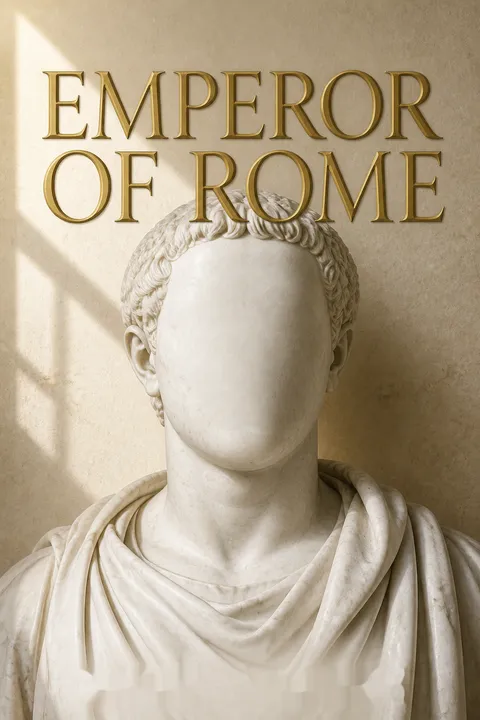


Key Takeaways
Read lurid imperial gossip as evidence about Roman fears, not just emperors
A teenager became a screen. Elagabalus ruled from 218 to 222 CE, arriving on the throne at fourteen and dying at eighteen. Later accounts describe fake food, guests smothered by flower petals, snow brought to summer gardens, religious upheaval, and sexual transgression. The stories are so extravagant that even an ancient biographer acknowledged some were likely inventions shaped by the politics of his downfall.
The fears are real. The tales expose Roman anxieties about power with no limits: luxury financed by others, generosity that could turn lethal, and a court where appearances could not be trusted. They are not reliable transcripts of a teenager’s daily life, but neither are they useless fabrications. They show what Romans imagined a ruler could do when nobody could stop him.
What's striking is that unreliable evidence can still be excellent evidence for a society's fears. Political rumor often works this way: it need not describe an event accurately to reveal what people find plausible, shameful, or threatening. The caution is equally important. Reading every accusation as symbolic can erase real actions and victims. A sound approach separates two questions: did this happen, and why did the story become useful? Beard's method makes the second question central without pretending the first no longer matters.
Explain Rome's emperors as an outcome of empire, not its cause
Conquest strained the constitution. Before emperors, Rome was governed through a power-sharing Republic. Elections were unequal and dominated by the rich, but major offices were temporary and shared. Two consuls held the top posts together, usually for a year, and the senate remained influential. The underlying rule was that nobody should hold authority alone for long.
Distance changed the incentives. Conquests created commands that lasted longer than a year and involved journeys of months. Sulla marched on Rome, Pompey accumulated exceptional powers, and Julius Caesar used military success to seize control. Augustus later centralized the army and controlled appointments while preserving some Republican forms. The empire did not simply result from an emperor's plan. Governing conquered territory helped make one-man rule seem necessary.
This is a useful correction to histories that make political systems look like the product of a single mastermind. Institutions are shaped by the tasks they must perform. When an expanding state needs decisions made far from the capital, temporary shared authority becomes harder to sustain, and exceptional powers can become ordinary. That does not make autocracy inevitable: political actors still choose how to respond. But Rome's transition is easier to understand as a structural problem exploited by ambitious leaders than as a clean constitutional redesign.
Expect every imperial handover to become a contest, then a rewritten past
No rule settled succession. Rome had no automatic equivalent of a firstborn heir inheriting the throne. Emperors could adopt successors, promote relatives, or leave the choice to a struggle among soldiers, senators, and palace factions. Each transition invited uncertainty. New rulers reinforced their claims with money, honours, military support, and stories of omens that supposedly announced their destiny.
The winner shaped the memory. A successor who owed his throne to a predecessor had reason to praise him. A ruler who seized power after a coup had reason to condemn the man he replaced. Pliny's praise of Trajan vilifies Domitian, despite evidence that Pliny advanced under Domitian. His speech shows how an elite official could reposition himself after a change of regime. Imperial reputations often reveal the politics of succession as much as a ruler's character.
Political transitions create incentives to control the past, not merely the present. The same process appears in modern regime changes, when new authorities rename institutions, repudiate former leaders, or recast cooperation as resistance. But the Roman record also cautions against treating every surviving account as centrally scripted propaganda. Authors had personal interests, local audiences had their own agendas, and material evidence sometimes complicates the official story. Historical judgment improves when reputation is treated as an outcome to explain, not a verdict to accept.
Follow the people around the throne to see how autocracy actually worked
The emperor had a court. Ruling depended on senators, secretaries, guards, household staff, wives, doctors, and enslaved workers. Palace inscriptions record jobs as specialized as food taster, window cleaner, and keeper of the emperor's clothes. The father of Claudius Etruscus rose from slavery to become a senior finance official, then lost his position and was exiled. His life shows both the possibilities and fragility of advancement near the ruler.
Proximity could outrank status. Senators resented freedmen who could influence decisions simply because they had access to the emperor. Women in the imperial family also had influence, though male writers often explained political outcomes by blaming their alleged scheming. The palace was neither a modern civil service nor a simple den of plotting. It was a working household whose uneven networks kept the regime running.
The palace is best understood as a brokerage system: people who control access, information, and routine services can shape decisions without holding formal office. This resembles a recurring problem in organizations, where informal networks often matter as much as the chart of authority. The story of freedmen's mobility also needs two truths held together. A person could gain wealth and status while remaining bound to a hierarchy built on enslavement. Advancement within an unjust structure is not the same thing as freedom from it.
Treat the emperor's inbox as both government and a performance of access
Petitions brought local trouble upward. Roman subjects could submit libelli, written requests on papyrus, to seek a ruling or favour. Emperors heard disputes about inheritances, taxes, property, and even a cow killed during an invasion. Pliny's letters from Pontus-Bithynia show Trajan answering questions about baths, Christians, fire brigades, and a proposed canal. The correspondence made the ruler appear present across a vast empire.
Reach did not mean control. A message between Pliny and Rome could take about two months each way, so officials often had to act before receiving a reply. Some imperial responses were brief referrals to a local governor. When villagers at Skaptopara complained that officials and soldiers were taking their food and lodging, the emperor sent them back to the governor. The process could help a complaint gain attention, but it was no guarantee of a remedy.
This system joins two functions that modern governments often separate: service delivery and symbolic recognition. A petition could resolve a case, but simply receiving an imperial answer also affirmed that the complainant belonged to a larger political order. The limits matter. The journey, expense, literacy, and connections required to reach the ruler excluded many people, while successful inscriptions survive more often than rejected appeals. Apparent accessibility should therefore be measured not only by the response rate, but by who could get through the door.
Notice how emperors had to look like citizens while wielding unchecked power
Citizenly manners had political value. Romans used civilitas to describe an emperor's performance of behaving like a fellow citizen, especially toward senators. In his long speech praising Trajan, Pliny urged generosity, public building, military success, and respect for the elite. But he also thanked the ruler for granting freedom, an awkward phrase in a system where the emperor held the power to grant it.
Ordinary rituals exposed the contradiction. Emperors attended senate meetings, greeted visitors, and hosted dinners, while controlling offices, armies, and access to themselves. At a banquet, seating and food could mark hierarchy as clearly as a decree. Stories of an emperor humiliating guests or staging a frightening dinner made the point vivid: sharing a table did not make ruler and subject equals.
The performance of equality can be politically consequential even when equality is absent. Rituals give a ruler a language of mutual obligation, allowing subjects to make claims in the ruler's own terms. That language can restrain behavior, at least reputationally, but it can also conceal the concentration of power. Beard's examples resist both easy readings: courtesy is not proof of benevolence, yet political theater is not necessarily empty. The audience's expectations help determine what the performance can get away with.
See public entertainment as political contact, not merely distraction
The arena organized Roman society. In the Colosseum, seats followed social rank, while enslaved fighters, condemned criminals, and captured outsiders performed below. The emperor funded the shows and occupied a prominent box, linking his authority to a public display of Roman dominance. Commodus broke the expected boundary by appearing as a fighter and hunter, risking ridicule as well as fascination.
The Circus gave crowds a voice. Chariot races drew as many as 150,000 to 250,000 spectators, and the emperor could hear demands from a gathering too large to ignore. Caligula once answered a protest over taxes with force; later, crowds demanding the death of an imperial official helped secure it. These events were entertainment, but also occasions when ruler and ruled faced one another in public.
Mass spectacle can both stabilize a hierarchy and create a rare opportunity for collective action. The same crowd that watches a ruler's carefully ordered display may use its size to make demands. This is a familiar tension in political communication: visibility gives leaders a platform, but it also gives audiences a way to coordinate attention and dissent. Still, access is not representation. The crowd's leverage depended on circumstances, and arena violence defined whose suffering counted as entertainment rather than whose voice counted as political.
Read imperial portraits as machinery for succession, not truthful snapshots
The image mattered more than likeness. Augustus's portraits presented an ageless, idealized ruler rather than a face marked by time. An estimated 25,000 to 50,000 images may have circulated by his death, with local sculptors using models to reproduce an official look. Successors often resembled the rulers who legitimized them. After a coup, a portrait could be altered to represent the new emperor instead.
Imperial images travelled widely. Coins, statues, jewelry, pottery, and household objects carried the ruler's face into daily life. In Egypt, emperors appeared as pharaohs, translated into local visual conventions. These images could make rule feel present without requiring most people to meet the emperor. Their variety also shows that imperial identity was not simply copied from Rome; communities adapted it to their own settings.
Images work politically because they are both standardized and adaptable. A repeated portrait makes authority recognizable across distance, while local forms let communities incorporate that authority into familiar traditions. The process resembles modern branding, though Roman images were also embedded in religious and civic life. Their presence does not prove that viewers felt loyalty or even identified the ruler correctly. Objects reveal what was displayed and circulated more securely than what any particular audience believed.
Travel turned emperors into visible patrons, often at local expense
Hadrian made rule mobile. He travelled through nearly every province, spending years away from Italy on inspections, military visits, cultural sightseeing, and civic projects. In Athens he completed a vast temple, built a library, and sponsored other changes that reshaped the city. His new buildings presented him as benefactor and placed imperial authority among local landmarks.
Hosting the ruler was costly. An emperor travelled with a large entourage and needed food, lodging, transport, and supplies. Records from Egypt list hundreds of animals and large stores prepared for Hadrian's visit. Local officials later struggled to organize provisions for other imperial tours. The visit could bring petitions and investment, but ordinary residents and civic leaders bore much of its practical burden.
A ruler's visit is a form of political communication backed by logistics. It makes central power visible, creates opportunities for local elites to seek favour, and can leave infrastructure behind. Yet the spectacle of benevolence may conceal who paid for the welcome. This is a useful lens for modern political tours and development projects: ask who receives the monument, who controls its story, and who supplies the labour and resources. The book also suggests caution in treating grand gestures as either pure generosity or pure self-promotion.
Roman emperors became gods through civic ritual, not a simple leap of belief
Death became a public process. After an emperor died, the senate could authorize consecratio, the formal elevation of a deceased ruler to divine status. Funerals replayed Roman history and imperial victory; wax images could stand in for the body, and an eagle released from the pyre represented the ruler's ascent. The dead emperor might then receive a temple, priests, sacrifices, and a place in soldiers' calendars.
Religion and government overlapped. The imperial cult, the public worship and honours directed toward emperors and their families, helped connect local communities to Rome. Romans also accepted that some humans could become divine, so these rituals were not necessarily empty cynicism. Christianity later challenged the old religious order, changing the meaning of imperial authority and the spectacles that had reinforced it.
The Roman case unsettles the modern assumption that religion and political loyalty belong to separate spheres. Ritual could be administrative, communal, and sacred at once, without requiring every participant to share the same inner conviction. That ambiguity is not unique to antiquity: public ceremonies often coordinate people who interpret them differently. The limits of the evidence remain important, since official calendars and monuments record prescribed acts better than private belief. The Christian shift shows how a new religious framework can alter what political symbols mean.
Analysis
Beard's central move is to change the unit of analysis. Instead of treating each emperor as a personality study, she examines the imperial office as a system of relationships, images, routines, and expectations. That shift explains why the same motifs recur across rulers: staged generosity, dangerous dinners, contested succession, military posturing, and the tension between public accessibility and private power. The repetitions are not merely recycled anecdotes. They reveal the shared grammar through which Romans evaluated autocracy.
The book's strongest evidence often comes from sources that seem least promising at first: a petition about a cow, a servant's epitaph, a papyrus list of provisions, a caricature in a palace corridor. These fragments restore scale to a political history that otherwise risks becoming a parade of famous men. They also expose the unevenness of the archive. Official replies and successful appeals survive because they were displayed; the voices of people who lacked access or lost their cases are much harder to recover. Beard's attention to uncertainty is therefore not a disclaimer but part of the argument.
A useful extension is to think of Rome as a regime of mediated presence. Most people did not meet the emperor, but encountered him through coins, local officials, statues, legal replies, rituals, and entertainment. The ruler's power depended not only on force but on an infrastructure that made his decisions seem to reach everywhere. Yet the book also shows how thin that infrastructure was: slow communication, few administrators, and reliance on local elites. The emperor appeared omnipresent partly because thousands of people reproduced his image and acted in his name.
This creates a productive tension. The imperial system was durable, but its continuity depended on improvisation, personal loyalty, and repeated performances of legitimacy. It was neither a modern bureaucracy nor simply a chain of tyrants. Beard's account is most persuasive when it holds together the institution's practical competence and its coercive foundations, without letting either explain away the other.
Review Summary
Emperor of Rome receives generally positive reviews, averaging 4.08/5. Readers praise Mary Beard's thematic rather than chronological approach, exploring imperial dining, succession, travel, and daily life. Many appreciate her accessible, engaging prose and ability to humanize historical figures while critically examining source reliability. Highlights include fascinating anecdotes about Elagabalus, Caligula, and others. Some critics find the structure scattered, repetitive, or lacking depth, and a few felt overwhelmed by information. Most recommend it as an entertaining, illuminating introduction to Roman imperial history.
People Also Read




Glossary
civilitas
citizenly imperial conductA Roman ideal for an emperor's behavior as if he were a fellow citizen rather than a king or master. It could involve participating in the senate, showing courtesy, and refusing excessive honours. The ideal helped package one-man rule in familiar civic language, even though the emperor's control of armies and appointments made genuine equality impossible.
libelli
written imperial petitionsShort written requests presented to an emperor, often on papyrus, by individuals or communities seeking a decision, favour, or intervention. An imperial response might be written beneath the request and publicly posted. The practice made the emperor appear accessible, though reaching him could require money, travel, literacy, and useful connections.
otium
time under one's controlA Roman term often translated as leisure, but more accurately referring to time a person could use freely rather than time required by official duties. For emperors, the distinction was unstable: private hobbies, performances, hunting, and attendance at games could all shape public judgments of their character and their rule.
negotium
required public businessThe counterpart to otium, referring to work or obligations that a person had to perform rather than freely chosen activity. In an emperor's life, negotium included correspondence, legal decisions, public appearances, and military responsibilities. The distinction did not create a clean separation between work and leisure, since nearly any imperial activity carried political meaning.
vehiculatio
requisitioned imperial transportThe Roman system by which officials travelling on authorized business could demand transport, animals, supplies, and lodging from communities along their route. It helped move messages and personnel across the empire, but created opportunities for abuse and imposed costs on local residents. Repeated imperial regulations attempted to control the practice without fully ending complaints.
consecratio
formal imperial deificationThe official process by which the Roman senate declared a dead emperor, or another member of the imperial family, divine. It could involve funeral ceremonies, a temple, priests, and public sacrifices. The decision had religious significance as well as political value, since successors could use a predecessor's divine status to strengthen their own legitimacy.
imperial cult
public worship of rulersThe range of civic and religious honours given to living emperors and to deceased rulers formally recognized as divine. Practices varied across the empire and could include temples, festivals, sacrifices, and commemorations in military calendars. The cult linked political loyalty with Roman religious practice, which did not sharply separate public government from worship.
About the Author
Download PDF
Download EPUB
.epub digital book format is ideal for reading ebooks on phones, tablets, and e-readers.








