

Key Takeaways
Read the genome as a record of life's long, shared history
A molecular archive. DNA stores information in a four-letter code passed from cell to cell and generation to generation. Because nearly all life uses the same genetic code, the genome supports a common ancestry for living things. The book explores the RNA world hypothesis: early RNA may have both stored information and catalysed chemical reactions before DNA and proteins divided those jobs. Luca, the Last Universal Common Ancestor, names the ancestral population from which modern life is thought to descend.
A record, not a diary. Chromosomes preserve traces of ancient biology and more recent adaptations, but their numbered order is arbitrary, and the genome does not narrate its past by itself. Its evidence must be interpreted alongside fossils, experiments, and other records.
What's striking is how a molecular mechanism becomes historical evidence. Shared code is not merely a biological convenience; it lets researchers compare organisms as if they inherited an old text with edits. That comparison is powerful precisely because it can be tested against other evidence, such as fossils. The autobiography metaphor is memorable, but it can overpromise: genetic sequences preserve traces, not complete stories, and gaps in the record invite competing interpretations.
Study genes as recipes for working molecules, not disease labels
From inheritance to chemistry. In 1902, physician Archibald Garrod argued that alkaptonuria, which darkens urine and earwax, results from a faulty inherited enzyme. His insight anticipated the idea that genes encode working molecules, especially proteins. Gregor Mendel’s pea experiments supplied the other crucial piece: inherited traits can reappear intact after seeming to vanish. Across roughly 30,000 plants, he found that some contrasting traits returned in later generations in ratios close to three dominant forms for each recessive form.
A recipe needs a kitchen. Genes are sequences that cells read and regulate; they are not miniature body parts or complete plans. The same gene can affect several processes, and its effects depend on when and where it is active. A disease-associated gene is usually doing a useful job when it works.
Garrod’s story shows the value of connecting clinical observation to mechanism. Instead of treating a disease name as an explanation, researchers can ask what chemical step has failed and how inheritance affects it. That kind of reduction is useful, but it is not a license to reduce a person to one sequence. Biological effects emerge from interactions among molecules, cells, and environments, so a gene’s normal function often matters more than its most dramatic failure.
Treat genetic risk as a probability, except when biology makes it stark
A sharp contrast. Huntington’s disease illustrates unusually direct genetic prediction. In the book’s account, an expanded run of CAG units in one gene strongly predicts disease, and longer runs are associated with earlier onset. Nancy Wexler helped locate the gene by studying an extended family around Venezuela’s Lake Maracaibo. The discovery brought precision, but no cure, leaving some people at risk to choose whether they wanted to know.
Most risks are messier. Asthma does not trace to one decisive gene. The book describes many candidate genes, environmental triggers, and inconsistent findings across studies. Pleiotropy means a gene can have multiple effects; complex traits can also involve many genes. Thus, genetic contribution does not mean a single cause, and a risk factor is not a forecast of an individual life.
The contrast between Huntington’s and asthma is a useful antidote to headlines about a gene for some broad human trait. It separates a rare, high-impact variant from a diffuse vulnerability shaped by many influences. Genetic testing also changes the meaning of uncertainty: it can replace a family-level chance with personal information, without providing any power to alter the outcome. That makes counselling, consent, and the right not to know central parts of medical care.
Heritability describes population differences, not a child's destiny
A population statistic. Heritability estimates how much variation among people in a particular population is associated with genetic differences. It does not say how fixed a trait is in one person, or how much a change in education could help. The book reports that identical twins raised apart had IQ scores more alike than fraternal twins, while adopted children raised together showed little similarity in the cited studies. Those results supported genetic influence, but their samples and assumptions deserved scrutiny.
Genes are not a ceiling. A 1997 study linked a variant in IGF2R to a small average IQ difference, about four points, not to genius. The Flynn effect, rising test scores over time, also suggests that environments can shift measured ability. Genetic influence and environmental change can coexist.
Heritability is often mistaken for a personal verdict because a population-level percentage sounds like a measurement of an individual. It is not. The estimate depends on which people are studied and how unequal their environments are. The book is strongest when it distinguishes inherited differences from immutability, and weakest when particular early studies seem to carry more certainty than their methods warrant. The useful question is not whether genes or education matter, but which conditions help different learners develop.
Humans are born ready to learn language, not born knowing its words
A prepared learner. The language instinct is the proposed inborn capacity that helps children acquire grammatical rules. Children commonly apply rules to unfamiliar words, even without being taught the rule explicitly. The book describes pidgin languages that became more structured creoles when children learned them, and a new sign language that developed among children in Nicaragua. These cases suggest that children bring active learning biases to language, rather than merely copying speech.
Capacity is not a specific gene. The book discusses specific language impairment and a genetic marker on chromosome 7, but the claim that this points to a dedicated grammar gene was disputed even at the time. A biological contribution to language does not mean culture is irrelevant: vocabulary, accent, and particular languages are learned socially.
The account avoids a false choice between instinct and culture. A child may arrive prepared to detect patterns, while the surrounding community supplies the material to learn. This resembles other forms of expertise: a built-in capacity can make some learning unusually easy without supplying its content. The evidence for specialized language abilities is suggestive, but a complex skill should not be attributed to one genetic switch simply because one family or one chromosome offers a compelling lead.
The genome is a coalition of competing sequences, not a unified plan
Not every sequence serves us. Selfish DNA is genetic material that spreads by making copies of itself, whether or not it benefits the body. Ridley describes repetitive sequences such as LINE-1 and Alu, which together occupy a large share of the genome. Some can insert themselves into working genes and disrupt them. The book calls this a reminder that genomes, like bodies, can contain parasites as well as useful machinery.
Inheritance can involve conflict. Genomic imprinting is a process in which a gene’s activity depends on whether it came from the mother or father. The opposing patterns associated with Prader-Willi and Angelman syndromes helped reveal this. Ridley presents a theory that some imprinted genes reflect conflict over how much maternal resource a developing embryo receives. This is an evolutionary explanation, not evidence that genes consciously pursue goals.
Thinking in terms of competing sequences explains why a genome need not behave like a perfectly coordinated instruction manual. It also helps distinguish the interests of genes from the interests of whole organisms. Yet evolutionary language can become misleading when it makes DNA sound strategic. The competition is inferred from patterns of copying and survival; it is not intention. Organisms still depend on cooperation among genes, cells, and tissues, even when evolutionary pressures create conflicts within that system.
Social conditions can reach the genome through hormones and gene activity
A two-way system. Stress can trigger hormonal changes that alter gene activity and immune function. Prolonged stress raises cortisol, which can suppress aspects of the immune response. The book uses this chain to challenge the idea that genes are always the first cause and behavior merely their result. A person’s perception of events can affect the body, while the body’s response can influence later behavior.
Status has physical consequences. In the Whitehall study of about 17,000 British civil servants, lower job rank was associated with greater heart-attack risk. Ridley reports that a low-grade worker was nearly four times as likely to suffer an attack as a top official. The proposed link involved limited control over work and life. Psychoneuroimmunology studies interactions among psychological processes, the nervous system, and immunity.
This systems view makes social structure biologically consequential without pretending that one hormone explains health. Workplaces, power, and perceived control can become part of the body’s conditions of operation. The Whitehall finding is compelling as a pattern, but an association alone does not establish every step of the causal chain. Its larger value is to expand medical attention beyond individual habits and lab values toward the social arrangements that repeatedly shape stress.
Genes build a brain capable of learning, then experience rewires it
A body assembles locally. Hox genes are developmental regulators that help assign identities to regions of an embryo. The book describes how related Hox genes occur in flies and mammals, and how human versions could substitute for corresponding fly genes in experiments. This deep similarity suggests that very different bodies reuse ancient developmental machinery. Cells respond to local signals and their position, rather than waiting for a single central controller.
Experience changes connections. Studies of sea slugs and fruit flies linked learning and memory to changes in synapses, the junctions between nerve cells. CREB, a gene-regulating protein, helps make some learned changes last. The Baldwin effect describes how learning can alter the pressures that natural selection acts on, potentially making useful capacities more instinctive over generations. Learning depends on biological equipment; it is not its opposite.
Development and learning reveal two scales of biological flexibility. Genes establish a system that can respond to signals, while experience changes the connections through which that system operates. This offers a more useful picture than either a fixed genetic script or an infinitely pliable mind. The striking similarities across species are strong evidence of shared ancestry, though the same genes can produce different outcomes when their timing, location, and regulation differ.
Ageing reflects evolutionary trade-offs, not one master ageing switch
Cellular clocks have limits. Telomeres are repeated DNA sequences at chromosome ends that shorten as many cells divide. Telomerase can rebuild them, and its activity helps certain cells continue dividing. This links telomeres to cellular ageing, but the book stresses that they do not explain every feature of an ageing body. Cancer, muscle weakness, and changes in skin all involve different processes.
Evolution shapes maintenance. Natural selection is strongest when survival affects reproduction, so harmful effects that appear late in life can persist more easily than those that appear early. Research on Virginia opossums on Sapelo Island found that they lived longer and aged more slowly than mainland animals, where predators and accidents shortened expected lives. The example supports an evolutionary account of ageing, not a claim that nature deliberately designed a fixed lifespan.
The evolutionary perspective shifts the question from finding a single ageing switch to asking why bodies invest differently in repair and survival. It explains why lifespan can vary across species and environments. But an evolutionary explanation is not itself a treatment plan, and the book’s telomere discussion appropriately resists treating one mechanism as the whole story. Ageing is better understood as multiple forms of damage and maintenance interacting over time.
Read migration and culture in genetic variation, but not as simple racial scripts
Movement leaves traces. Genetic patterns can be compared with language and archaeological evidence to study migrations. The book describes research that found European genetic gradients resembling the spread of early agriculture from the southeast. Such patterns can reflect movement and intermarriage, not just the replacement of one population by another. Genes and languages may travel together, but they do not always do so.
Culture can change selection. Lactase, the enzyme that digests milk sugar, usually becomes less active after childhood. In some populations, adults retained the ability to digest milk, and the book connects this trait with histories of herding. The likely sequence is cultural: people adopted pastoralism, then variants that helped digest milk became advantageous. Human practices can therefore create new evolutionary pressures, rather than simply expressing inherited differences.
This account makes population history dynamic: migration, marriage, language, and technology alter one another. The milk example is especially useful because it shows culture changing the environment in which genes matter. Such evidence does not justify treating populations as fixed biological types. Genetic gradients are gradual and overlapping, and any historical claim becomes stronger when checked against independent linguistic and archaeological evidence.
Turn genetic knowledge into treatment, not coercion
Mechanisms can guide care. Cancer often develops through several accumulated changes, including failures in tumour-suppressor genes such as TP53. The protein associated with TP53 can halt damaged cells or trigger apoptosis, a controlled process of cell death. Understanding this mechanism helped researchers rethink how some cancer treatments work. Gene therapy for severe combined immune deficiency also showed that delivering a working gene could improve patients’ immune function, though the early treatment described in the book did not fully replace other care.
History warns against compulsion. Eugenics treated people’s reproduction as a state project. The book recounts forced sterilizations in several countries and highlights British MP Josiah Wedgwood’s opposition to coercive legislation. Genetic screening can inform private decisions, but pressure from governments, doctors, or insurers can undermine genuine choice.
The distinction between knowledge and coercion is essential. A genetic test can help direct treatment, but its existence does not establish who should decide how the result is used. The history of eugenics shows that scientific confidence can be recruited to serve political hierarchies. Voluntary decisions also deserve scrutiny: choices are less free when access to care, insurance, or social approval depends on selecting certain traits.
Freedom can mean acting from your own causes, not escaping causality
Causes are not commands. The book challenges the assumption that behavior influenced by genes is more determined than behavior influenced by upbringing or society. Both can shape a person. Nor does randomness create freedom: an action that happens by chance is not necessarily more truly one’s own. The author instead emphasizes whether behavior flows from a person’s own motives or from coercion by someone else.
A self is a feedback system. Genes help shape brains and dispositions; experience and social conditions affect the body and gene activity; behavior then changes the conditions a person encounters. This circular process makes precise prediction difficult without making actions uncaused. Ridley’s account offers a practical way to think about agency, while leaving the deeper philosophical question of responsibility unresolved.
The distinction between having causes and being coerced is valuable for ordinary judgments about agency. A person can act freely in a meaningful social sense even when their motives have histories. Still, locating causes inside the person does not settle moral responsibility: those motives are also shaped by circumstances, and the boundary between self and environment is porous. The book offers a helpful reframing, not a final solution to the free-will debate.
Analysis
Genome is a guided tour rather than a systematic textbook. Its chromosome-by-chromosome structure gives readers a memorable route through a subject that otherwise resists narrative, while stories of Mendel, Garrod, Nancy Wexler, and genetic fingerprinting make abstract mechanisms legible. The organizing conceit is deliberately loose: chromosome numbers do not correspond to the themes assigned to them. That looseness lets the book range from molecular biology to history, medicine, and philosophy, but it can also make selected genes seem more representative than they are.
The book’s most durable contribution is its resistance to simple genetic determinism. It distinguishes a highly predictive mutation from the many small, interacting influences that shape ordinary traits. It also shows how genetic effects can be modified by development, learning, disease, and social conditions. That argument is strongest when supported by concrete cases, and more tentative when it extrapolates from early findings about intelligence, sexuality, language, or personality. Several studies and gene associations were preliminary in 1999, and the author’s own framing often marks them as disputed. They should be read as evidence of the questions researchers were asking, not as settled conclusions.
The autobiography metaphor is both illuminating and limited. Genomes preserve evidence of ancestry and adaptation, but they do not contain a complete account of an organism’s life or history. Their interpretation depends on comparison, statistical reasoning, and other disciplines. Similarly, describing genes as selfish agents can clarify selection while obscuring the cooperation that makes organisms function. The book is most persuasive when its metaphors open questions rather than close them. Its central lesson remains useful: genetic explanations are real, but their meaning depends on scale, context, and the limits of what the evidence can support.
Review Summary
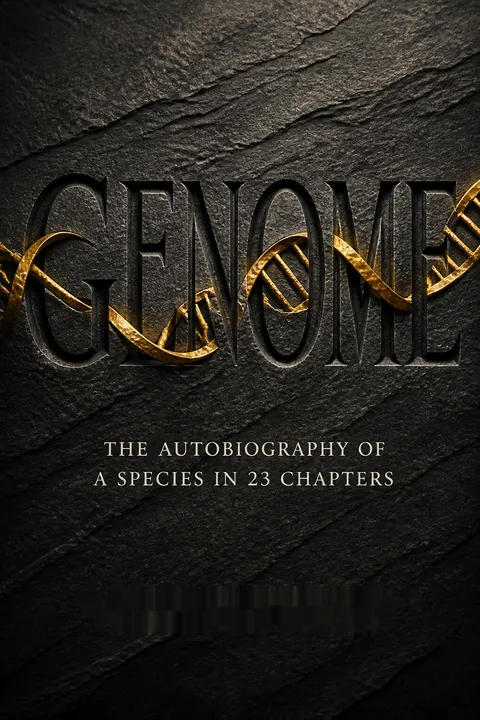
Genome: The Autobiography of a Species in 23 Chapters received mostly positive reviews for its accessible explanation of genetics and engaging writing style. Readers appreciated Ridley's approach of using each chromosome to explore different aspects of human biology and society. Some found parts outdated or criticized Ridley's personal opinions, but many still recommended it as an informative introduction to genetics. The book's exploration of controversial topics like intelligence and eugenics sparked discussion among readers.
People Also Read



Glossary
RNA world
Proposed early life systemThe RNA world is a hypothesis that early life relied on RNA to store genetic information and catalyse chemical reactions. In modern cells, DNA mainly stores hereditary information and proteins perform much of the chemical work. RNA has properties of both, leading researchers to propose that it preceded the division of labour between DNA and proteins.
Luca, the Last Universal Common Ancestor
Ancestor of present-day lifeLuca is the name used in the book for the last universal common ancestor, the ancestral organism or population from which present-day life is thought to descend. The shared genetic code supports common ancestry, but Luca’s precise form, habitat, and relationship to earlier life remain uncertain.
Pleiotropy
One gene, multiple effectsPleiotropy describes a situation in which one gene influences more than one biological trait or process. It helps explain why a genetic variant can have several effects, and why assigning a gene a single purpose or disease label can be misleading. Complex conditions can also involve many genes and environmental factors.
Heritability
Genetic share of variationHeritability estimates the proportion of observed variation in a trait, within a particular population and set of conditions, associated with genetic differences. It does not measure how genetically determined an individual is, and it does not show that a trait cannot change. Estimates can differ when populations or environments differ.
Language instinct
Inborn language-learning capacityThe language instinct is the proposed human capacity to acquire language using built-in learning biases. On this account, children do not simply imitate speech; they infer patterns and grammatical rules while learning words from their community. The term concerns readiness to learn, not an inborn vocabulary or a single proven language gene.
Selfish DNA
DNA that copies itselfSelfish DNA refers to sequences that spread through the genome because they are effective at making copies of themselves, even if they do not benefit the organism. Some repetitive sequences can insert into other regions and disrupt working genes. The term describes evolutionary outcomes, not conscious motives.
Genomic imprinting
Parent-specific gene activityGenomic imprinting is a process in which a gene’s activity depends on whether it was inherited from the mother or the father. Chemical marks can silence one parental copy while the other remains active. Errors in imprinting or in the relevant genes are associated with conditions including Prader-Willi and Angelman syndromes.
Hox genes
Genes that pattern embryosHox genes are developmental regulators that help establish the identities of regions along an embryo’s body. Related Hox genes appear across animals, including flies and mammals, and often occur in clusters whose order corresponds roughly to where they act. Changes in their timing and location help produce different body forms.
Baldwin effect
Learning shapes evolutionary pressuresThe Baldwin effect describes how learned behavior can change the conditions under which natural selection operates. If learning a behavior improves survival or reproduction, inherited traits that make learning easier may become more common. Over generations, a capacity first acquired through experience can become more strongly supported by instinct.
Telomere
Protective chromosome-end sequenceA telomere is a repeated DNA sequence at the end of a chromosome. It helps protect useful genetic material because ordinary DNA copying can leave chromosome ends slightly shorter after cell division. Telomerase can rebuild telomeres in some cells. Telomere shortening is associated with cellular ageing, but it does not explain ageing by itself.
Apoptosis
Controlled cell deathApoptosis is a regulated process by which a cell dismantles itself. It plays roles in development, removal of damaged cells, and defence against some cancers and infections. Genes including TP53 can help trigger the process when a cell is damaged. Disruptions to apoptosis can contribute to disease.
Prion
Self-propagating misfolded proteinA prion is a protein that can adopt an abnormal shape and encourage other copies of the same protein to adopt that shape. These misfolded proteins can accumulate and damage tissue, especially in the brain. Prion diseases challenged the assumption that every infectious agent must carry its own DNA or RNA.
FAQ
What's Genome: The Autobiography of a Species in 23 Chapters about?
- Exploration of the genome: The book delves into the human genome, explaining how genes influence various aspects of human biology and behavior.
- Chromosome-by-chromosome narrative: Matt Ridley examines each chromosome, linking them to themes of human nature and history, providing a comprehensive view of genetics.
- Interdisciplinary insights: It combines genetics, anthropology, psychology, and philosophy to show how our genetic makeup shapes who we are.
Why should I read Genome: The Autobiography of a Species in 23 Chapters?
- Understanding genetics' impact: The book helps readers grasp how genetics influences health, behavior, and identity, essential for understanding ourselves.
- Engaging storytelling: Ridley’s narrative style makes complex scientific concepts accessible and engaging, using anecdotes and historical context.
- Timely relevance: It addresses contemporary issues in genetics, such as genetic engineering and ethical implications, making it a thought-provoking read.
What are the key takeaways of Genome: The Autobiography of a Species in 23 Chapters?
- Genes shape our lives: Genes play a crucial role in determining health, personality, and behavior, illustrated through examples from different chromosomes.
- Complexity of inheritance: Traits are influenced by multiple genes and environmental factors, challenging simplistic notions of genetic determinism.
- Interconnectedness of life: The book underscores that all life is interconnected through shared genetic codes, emphasizing common ancestry.
What are the best quotes from Genome: The Autobiography of a Species in 23 Chapters and what do they mean?
- “We are living through the greatest intellectual moment in history.”: Reflects the transformative power of genetic knowledge, revolutionizing fields like medicine.
- “The genome is a book that wrote itself.”: Illustrates the dynamic nature of the genome, evolving over time through mutations and natural selection.
- “Life consists of the interplay of two kinds of chemicals: proteins and DNA.”: Highlights the fundamental relationship between genes and proteins in biological processes.
How does Genome: The Autobiography of a Species in 23 Chapters explain the relationship between genes and diseases?
- Genes as disease contributors: Certain genes can predispose individuals to specific diseases, crucial for developing effective treatments.
- Complexity of genetic diseases: Many diseases are influenced by multiple genes and environmental factors, requiring a nuanced understanding.
- Role of genetic research: Continued research into the human genome is advocated to uncover the genetic basis of diseases for better prevention and treatment.
What is the significance of chromosome 2 in Genome: The Autobiography of a Species in 23 Chapters?
- Fusion of ape chromosomes: Chromosome 2 is formed from the fusion of two ape chromosomes, highlighting evolutionary relationships.
- Implications for human evolution: This fusion suggests a significant evolutionary event contributing to modern human development.
- Understanding human uniqueness: Examining chromosome 2 explores genetic traits distinguishing humans from other primates.
How does Genome: The Autobiography of a Species in 23 Chapters address the concept of free will?
- Genetic influence on behavior: Genes can shape behaviors and personality traits, raising questions about the extent of free will.
- Interplay of nature and nurture: Both genetic and environmental factors shape behavior, essential for understanding free will.
- Philosophical implications: Genetic knowledge can inform our understanding of human agency, leading to greater self-awareness.
What role do environmental factors play in Genome: The Autobiography of a Species in 23 Chapters?
- Interaction with genetics: Environmental factors interact with genetic predispositions to shape traits and health outcomes.
- Examples of environmental influence: Lifestyle choices can impact gene expression and health, highlighting the importance of both genetics and environment.
- Dynamic nature of the genome: The genome can be influenced by environmental factors throughout life, underscoring genetic inheritance complexity.
How does Genome: The Autobiography of a Species in 23 Chapters explain the concept of eugenics?
- Historical context: The history of eugenics and its association with genetic determinism is discussed, highlighting dangers of misapplying genetic knowledge.
- Modern implications: Warns against potential misuse of genetic information, advocating for ethical considerations in genetic research.
- Call for responsible science: Emphasizes the need for responsible scientific inquiry that respects individual rights and diversity.
What insights does Genome: The Autobiography of a Species in 23 Chapters provide about human history?
- Genetic record of migration: The human genome contains clues about ancestors’ migrations and adaptations, revealing patterns of human history.
- Connection to ancient diseases: Historical diseases have shaped genetic makeup, influencing traits like resistance to infections.
- Interconnectedness of all life: The genome serves as a record of shared ancestry, fostering appreciation for biodiversity and conservation.
What is the significance of Hox genes in Genome: The Autobiography of a Species in 23 Chapters?
- Role in body plan: Hox genes determine the layout of an organism's body during embryonic development.
- Conservation across species: Remarkably similar in different species, indicating a common evolutionary ancestor.
- Implications for understanding evolution: Provides insights into how complex body structures evolved, revealing genetic diversity basis.
How does Genome: The Autobiography of a Species in 23 Chapters relate to the future of genetic research?
- Promise of personalized medicine: Genetic research could lead to personalized medical treatments tailored to individual genetic profiles.
- Ethical considerations: Raises important ethical questions about genetic engineering and implications of manipulating the human genome.
- Ongoing discoveries: The field of genetics is rapidly evolving, with new discoveries continually reshaping our understanding of biology.
About the Author
Other books by Matt Ridley
Download PDF
Download EPUB
.epub digital book format is ideal for reading ebooks on phones, tablets, and e-readers.








