

Key Takeaways
Use family history as a warning light, not a verdict.
A family pattern raises questions. The book opens with Mukherjee’s cousin Moni, institutionalized with schizophrenia, and two uncles whose lives were shaped by different forms of mental illness. Their history made his father fear that the same vulnerability might run through the family. A large Swedish study found a strong genetic link between schizophrenia and bipolar disorder, including families where both conditions appeared across generations.
Inheritance is not an explanation by itself. Moni’s illness resembled his uncle Jagu’s, though Moni had not experienced Partition, which his grandmother believed had damaged her sons. The family story brings genes, trauma, and circumstance into the same frame, while leaving open how they combined.
What's striking is how family history works here as both evidence and emotional pressure. A pattern can motivate research, but it can also make relatives read every mood or eccentricity as a premonition. This resembles a problem in clinical risk communication: information changes what people notice, not just what they know. The careful response is neither to dismiss heredity nor to treat resemblance as proof. A family tree can identify a question worth investigating, but it cannot diagnose an individual or explain why one relative becomes ill while another does not.
Inheritance must preserve variation for evolution to work.
Darwin needed a mechanism. Natural selection explains how useful variations can spread, but Darwin could not explain how a trait survived inheritance. If parents’ features blended like paints, an unusual trait would be diluted over generations. Mathematician Fleeming Jenkin exposed this problem, forcing Darwin to seek a better account of heredity.
Mendel found discrete units. Crossing true-breeding pea plants, he observed that first-generation hybrids showed one trait, while the hidden alternative could reappear in later generations. He counted tens of thousands of plants and found that inherited traits did not simply merge. Mendel’s work, overlooked for decades and rediscovered around 1900, supplied the particulate inheritance Darwin’s theory needed: variation could be passed on without being blended away.
The historical tension is more than a contest between two famous scientists. It shows how a theory can explain change while lacking an account of what persists through change. Mendel’s pea experiments supplied a useful mechanism, but their clarity depended on traits that were easy to distinguish and count. Most human characteristics are not pea-flower colors. The broader lesson is methodological: a simple model can reveal a fundamental rule, yet the rule should not be mistaken for a complete explanation of every complex trait.
Reading genes changed biology; writing them changed the stakes.
A hidden unit became a molecule. In 1944, Oswald Avery and colleagues showed that DNA carried hereditary information in bacteria. Rosalind Franklin’s X-ray photographs, together with work by Maurice Wilkins, James Watson, and Francis Crick, helped establish DNA’s double-helix structure. Its paired strands offered a way to store and copy a code. The central dogma describes the usual flow of information from DNA to RNA to protein.
Then genetics acquired tools. Sequencing made genes readable; recombinant DNA methods made them manipulable and copyable. The Human Genome Project published a draft human sequence in 2001. These methods also enabled engineered proteins such as human insulin, turning genetics from an account of inheritance into a technology that could intervene in it.
The shift from reading to writing is a genuine change in the relationship between science and its subject. A map supports explanation; a toolkit supports intervention. That distinction appears across fields, from astronomy to computer science, but biology makes it unusually intimate because the object being manipulated can reproduce. The collaborative history also matters: Franklin’s data and many researchers’ methods contributed to discoveries later associated with a few celebrated names. Technical power grows through institutions and shared work, so responsibility cannot belong only to the person holding the experimental tool.
Never let genetic probabilities become a license to rank people.
A theory became a tool of control. Francis Galton proposed eugenics, the attempt to improve human populations through selective breeding. In Virginia, Carrie Buck was labeled intellectually disabled despite evidence that she could read, write, and manage ordinary tasks. The Supreme Court upheld her forced sterilization in 1927. The case shows how social prejudice could be dressed up as genetic certainty.
Opposite theories also served power. Nazi authorities used heredity to justify sterilization, confinement, and murder. Soviet scientist Trofim Lysenko denied the importance of genes and claimed that environmental treatment could remake inherited traits. These claims pointed in opposite directions, but both bent biology to political aims. The history warns that genetic language can legitimize coercion when uncertain science is treated as a moral ranking system.
The comparison exposes a durable political temptation: describe a preferred social order as if biology had already authorized it. Genetic determinism and total environmental malleability appear opposed, yet either can erase individual rights when a state claims authority to classify people. The strongest safeguard is not simply better measurement. It is scrutiny of who defines the category, who bears the consequences, and whether people can refuse the intervention. Scientific accuracy matters, but accurate data alone cannot determine what society is entitled to do with it.
Genes shape tendencies, while context helps decide what they mean.
A gene is not a miniature person. A genotype is an organism’s genetic makeup; a phenotype is its observable biology and behavior. Their relationship is shaped by multiple genes, environmental conditions, triggers, and chance. The same genetic change can have different effects in different people. A BRCA1 variant raises breast-cancer risk, for example, but does not guarantee that cancer will develop.
Variation is not a moral label. The book argues that disease often reflects a mismatch between a person’s traits and circumstances, not simply an unusual gene. Human genetic diversity is also mostly found within populations: estimates cited in the book put 85 to 90 percent of variation within racial groups, and about 7 percent between them. Genomes can indicate ancestry; race alone cannot reliably predict an individual’s traits.
This distinction separates two questions that public debate often collapses: how a trait is distributed, and what a particular person can do or become. A statistical difference between groups does not automatically explain its cause, much less justify treating an individual according to a group average. The book’s emphasis on context also sharpens the meaning of disability: changing an environment can change whether a trait limits someone. That view avoids reducing people to genes, while still recognizing that some genetic conditions impose severe constraints in nearly any setting.
Experience can alter gene activity without changing DNA letters.
Cells carry the same sequence, not the same instructions in use. Epigenetics studies changes in gene activity that do not alter DNA’s letter sequence. Conrad Waddington used a developmental landscape to describe how cells acquire durable identities. Mary Lyon’s work showed that one X chromosome in each female cell is typically silenced, even though its DNA remains intact.
History can leave biological marks. People exposed to starvation during the Netherlands’ 1944 to 1945 Hunger Winter had children and grandchildren with elevated rates of some health problems. Researchers proposed that durable changes in gene regulation might help explain the pattern. The mechanism and scope remain uncertain. Epigenetic marks can influence cells, but the book cautions against assuming that every acquired experience is inherited by descendants.
Epigenetics adds a layer between fixed sequence and lived experience. It helps explain how cells with the same DNA become different tissues, and why development can preserve a cell’s identity. The Hunger Winter example invites a larger question about how social conditions become embodied, but its significance depends on careful causal evidence. A biological trace of exposure does not mean an experience is permanently transmitted in a simple, predictable way. The concept is most useful when it expands explanation, not when it becomes a new vocabulary for blaming parents or promising easy inheritance changes.
Treat a genetic result as a risk estimate, not a life sentence.
Knowledge can help and burden at once. A woman with a BRCA1 mutation may face a 70 to 80 percent lifetime risk of breast cancer, yet the test cannot say when cancer will appear or what form it will take. Some choose intensive monitoring; others consider preventive surgery or medication. The label “previvor” describes someone living with a known risk before illness begins.
Complex conditions are harder to forecast. Schizophrenia is associated with many genetic regions, but no simple test can reliably predict who will develop it or how severe it will be. Preimplantation genetic diagnosis can help select embryos without certain known mutations, but choices about testing, implantation, and pregnancy carry ethical and personal weight.
A risk estimate is not merely a fact delivered to a patient. It changes attention, planning, and the perceived range of possible futures. This is why counseling must explain not only what a result predicts, but also what it cannot resolve: timing, severity, and the effect of other genes or circumstances. The term previvor captures the psychological cost of living in advance of an illness. Preventive action can be empowering, but uncertainty should not be translated into pressure to choose a single medically approved life.
Before editing heredity, decide who gets to define improvement.
A precise tool raises broad questions. CRISPR/Cas9, adapted from a bacterial defense system, lets researchers direct DNA cuts to chosen sequences. In principle, a repair template can replace or alter the cut sequence. Changes to ordinary body cells affect only that person; changes to reproductive cells could be passed to descendants. The latter makes genome editing more consequential than treating one patient.
Speed is not safety. After the 1999 death of Jesse Gelsinger in an experimental gene-therapy trial, investigators found serious failures in oversight and risk reporting. In 2015, researchers in China attempted to edit human embryos; only four of 54 tested embryos had the intended correction, and unintended mutations were also reported. The book’s history of Asilomar supports public scrutiny before technical possibility becomes routine practice.
The central governance problem is not only whether an edit works. It is who sets the target, who can afford the intervention, and whether an individual choice can impose biological consequences on future generations. The distinction between treating severe disease and enhancing a preferred trait sounds clear until societies disagree about what counts as illness or improvement. Self-regulation can create time for deliberation, as Asilomar did, but it is not a substitute for wider accountability. Scientific communities cannot decide alone what future people should inherit.
Analysis
The book’s structure follows an expanding circle. It begins with a family’s fear that mental illness is inherited, then travels through pea gardens, laboratories, courts, clinics, and finally the prospect of altering human embryos. Each change of scale revises the meaning of the gene. First it is an abstract unit that preserves a trait. Then it becomes a molecule, a code, a manipulable tool, and a possible instrument for prediction or intervention. The narrative’s strength is that these are not merely scientific milestones: each creates new ways to define normality, illness, identity, and responsibility.
Its most useful conceptual move is to resist a false choice between genetic determinism and environmental freedom. Genes can influence outcomes without scripting them, and environmental effects are not separate from biology simply because they are not encoded in DNA sequence. This model supports a richer account of causation, but it also demands restraint. The history of genetics repeatedly shows how easily probabilistic findings become categorical judgments when translated into law or public policy.
The book also distinguishes explanation from permission. Knowing that a trait has a genetic component does not establish that it should be screened out, corrected, or treated as a defect. That gap is not a weakness in science. It is a reminder that empirical knowledge and ethical authority are different kinds of judgment. The most consequential question is therefore not whether humans can read or edit genetic information, but how institutions, families, and individuals will decide which uses are legitimate, and who bears the risks when those decisions are wrong.
The intimate frame keeps the history from becoming abstract. Family inheritance is real, but its meaning remains uncertain at the level of any one life. That tension is the book’s lasting argument: genes help explain what humans are, while the power to act on that explanation requires humility about what it cannot tell us.
Review Summary
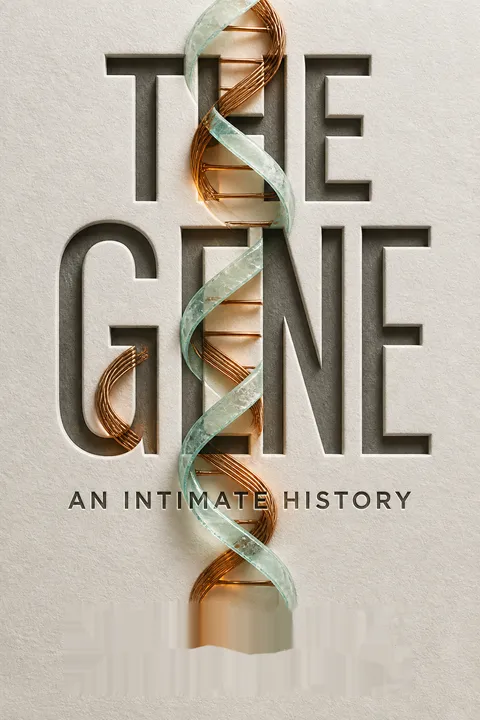
The Gene: An Intimate History is widely praised for its accessible yet comprehensive exploration of genetics. Readers appreciate Mukherjee's engaging writing style, which weaves personal anecdotes with scientific history. The book covers the evolution of genetic research, ethical implications, and future possibilities. Many find it enlightening and thought-provoking, though some struggle with its length and complexity. Critics note occasional inaccuracies but generally commend the book's balanced perspective on genetic advancements. Overall, it's considered a must-read for those interested in genetics and its impact on society.
People Also Read





Glossary
Gene
Hereditary information unitA gene is a stretch of genetic material that carries information used to make a functional RNA molecule or, often, a protein. Genes usually operate with regulatory sequences and other genes. A gene may affect multiple traits, and many traits depend on multiple genes, so it is not always a one-gene, one-feature instruction.
Genotype
Genetic compositionAn organism’s genotype is its genetic makeup, considered at one gene, a set of genes, or across the genome. It contributes to physical and biological traits, but does not determine every outcome by itself. Environmental conditions, other genes, developmental processes, and chance can affect how genetic differences appear.
Phenotype
Observable biological traitsA phenotype is an organism’s observable characteristics, including physical features, biological functions, and some behavioral traits. Phenotypes arise through interactions among genetic makeup, gene activity, environment, developmental history, and chance. A phenotype is therefore not a direct readout of one gene, even when a particular mutation strongly influences it.
Penetrance
Likelihood a trait appearsPenetrance is the proportion of people carrying a particular genetic variant who develop the associated trait or condition. Complete penetrance means the trait appears in nearly everyone with the variant; incomplete penetrance means some carriers do not show it. Penetrance describes probability across a group, not certainty for an individual.
Epigenetics
Gene activity beyond sequenceEpigenetics concerns changes in gene activity that occur without changing the DNA sequence itself. Chemical marks on DNA or its packaging proteins can help turn genes on or off, sometimes preserving a cell’s identity through cell division. Some marks may persist across generations, but the extent and mechanisms of inherited effects vary.
Central dogma
Usual information flowThe central dogma describes the usual flow of biological information from DNA to RNA to protein. DNA serves as a stored template, RNA carries a working copy, and cellular machinery uses that message to build proteins. The model summarizes a central mechanism of gene action, while exceptions such as reverse transcription also occur.
Recombinant DNA
Joined genetic materialRecombinant DNA is a DNA molecule assembled by joining genetic material from different sources. Researchers use enzymes to cut and connect DNA fragments, then may copy the resulting molecule in cells. The technique made genes experimentally manipulable and enabled gene cloning, engineered organisms, and the production of some medicines.
Positional cloning
Finding a gene by locationPositional cloning identifies a disease-associated gene by first mapping it to a region of a chromosome. Researchers track DNA markers inherited alongside the condition, narrow the location, then isolate and sequence candidate genes. The strategy can find a gene without first knowing what its protein does, as in the search for genes linked to Huntington’s disease.
Preimplantation genetic diagnosis
Testing embryos before implantationPreimplantation genetic diagnosis, or PGD, tests cells from an early embryo created through in vitro fertilization. The results can help identify embryos carrying particular genetic or chromosomal conditions before an embryo is implanted. It allows prospective parents to make reproductive choices before pregnancy, while raising ethical questions about selection and which traits should count as undesirable.
CRISPR/Cas9
Programmable DNA cutting systemCRISPR/Cas9 is a gene-editing system adapted from a bacterial defense mechanism. A guide molecule directs the Cas9 enzyme to a matching DNA sequence, where it can cut the DNA. Cellular repair can then disrupt the sequence or, with a supplied template, introduce a planned change. Accuracy and unintended edits remain important concerns.
Previvor
Person living with genetic riskPrevivor refers to someone who has learned of a substantial inherited risk for a disease but has not developed that disease. The term is associated in the book with women carrying mutations such as BRCA1. It captures the unusual experience of living with a possible future illness and making decisions under uncertainty.
FAQ
1. What is The Gene: An Intimate History by Siddhartha Mukherjee about?
- Comprehensive history of genetics: The book traces the discovery and evolution of the gene, from Mendel’s pea experiments to modern genome editing technologies like CRISPR.
- Personal and scientific narrative: Mukherjee weaves his family’s history of mental illness with the broader scientific quest to understand heredity, making the story both intimate and universal.
- Exploration of ethical and societal implications: The narrative delves into the moral dilemmas, societal consequences, and philosophical questions raised by genetic knowledge and manipulation.
2. Why should I read The Gene: An Intimate History by Siddhartha Mukherjee?
- Bridges science and humanity: The book connects complex genetic science with personal stories and historical events, making the subject accessible and emotionally resonant.
- Insight into genetics’ impact: Readers gain an understanding of how genetics has shaped medicine, society, and politics, including the dark history of eugenics and the promise and peril of gene editing.
- Thought-provoking ethical questions: Mukherjee invites readers to consider who controls genetic knowledge and how it might redefine what it means to be human.
3. What are the key takeaways from The Gene: An Intimate History by Siddhartha Mukherjee?
- Genes are not destiny: The book emphasizes the complex interplay between genes, environment, and chance in shaping identity, health, and behavior.
- History informs the present: Understanding the history of genetics, including its misuse in eugenics, is crucial for navigating current and future ethical challenges.
- Revolutionary technologies: Advances like gene therapy and CRISPR/Cas9 have the potential to transform medicine and human evolution, but require careful ethical consideration.
- Human identity and diversity: The narrative challenges simplistic notions of race, gender, and normalcy, highlighting the richness and complexity of human genetic variation.
4. What are the key scientific concepts explained in The Gene: An Intimate History by Siddhartha Mukherjee?
- Gene as hereditary unit: Genes are discrete units of biological information that determine traits and are passed from parents to offspring.
- DNA structure and function: The discovery of the double helix by Watson and Crick, informed by Franklin’s X-ray images, revealed how genetic information is stored and replicated.
- Central dogma and gene regulation: The flow of genetic information from DNA to RNA to protein, and the regulation of gene expression, explain how identical genomes produce diverse cell types.
- Epigenetics and genome complexity: Chemical modifications to DNA and histones regulate gene activity without changing the sequence, adding layers of complexity to heredity and development.
5. How does The Gene: An Intimate History by Siddhartha Mukherjee explain the history and rediscovery of genetics?
- Mendel’s foundational experiments: Mendel’s work on pea plants established the principles of discrete inheritance, dominant and recessive traits, and mathematical ratios in heredity.
- Neglect and rediscovery: Mendel’s findings were ignored for decades until rediscovered around 1900, leading to the birth of genetics as a scientific discipline.
- Integration with evolution: The Modern Synthesis reconciled Mendelian genetics with Darwinian evolution, explaining variation, natural selection, and speciation.
- Expansion of genetic understanding: The book traces the journey from early gene concepts to the molecular era, including the identification of DNA as the genetic material.
6. How does The Gene: An Intimate History by Siddhartha Mukherjee describe the discovery of DNA’s structure and function?
- X-ray crystallography and model building: Rosalind Franklin’s X-ray diffraction images provided critical evidence for the helical structure of DNA, which Watson and Crick used to build their double helix model.
- Base pairing and replication: The model explained how adenine pairs with thymine and guanine with cytosine, revealing the mechanism for accurate DNA replication.
- Biological significance: The double helix structure clarified how genetic information is stored, copied, and transmitted, revolutionizing biology and medicine.
- Scientific rivalry and collaboration: The story includes the competitive and collaborative dynamics among scientists, highlighting the human side of discovery.
7. What is the “central dogma” of molecular biology as explained in The Gene: An Intimate History by Siddhartha Mukherjee?
- Information flow: The central dogma describes the flow of genetic information from DNA to RNA to protein, with DNA transcribed into mRNA and then translated into proteins.
- Triplet genetic code: The genetic code is read in triplets (codons), each specifying an amino acid, explaining how four bases encode twenty amino acids.
- Universality: This process is universal across living organisms, underpinning the unity of life and the function of genes in specifying biological traits.
8. How does The Gene: An Intimate History by Siddhartha Mukherjee address gene regulation and embryonic development?
- Selective gene expression: Genes can be turned on or off depending on environmental cues, developmental stage, or cell type, enabling cellular diversity.
- Lac operon and regulatory models: The book explains how groups of genes are regulated together, as in the lac operon, illustrating coordinated gene control.
- Master regulatory genes: Genes control the identity of body segments and organs, orchestrating the development of complex organisms through gene cascades.
- Epigenetic regulation: Chemical modifications to DNA and histones allow for heritable changes in gene expression, influencing development and cellular memory.
9. What does The Gene: An Intimate History by Siddhartha Mukherjee reveal about the Human Genome Project and genome sequencing?
- Ambitious scale: The Human Genome Project aimed to sequence all 3 billion base pairs of human DNA, providing a comprehensive reference for research and medicine.
- Technological breakthroughs: Innovations like Sanger sequencing and shotgun sequencing enabled rapid progress, with public and private teams racing to complete the genome.
- Impact on biology and medicine: Genome sequencing transformed genetics from studying individual genes to understanding entire genomes, enabling advances in disease diagnosis, personalized medicine, and evolutionary biology.
- Complexity of the genome: The project revealed that gene number does not correlate with organism complexity, highlighting the importance of gene regulation and noncoding DNA.
10. How does The Gene: An Intimate History by Siddhartha Mukherjee discuss the history and impact of eugenics?
- Origins and ideology: Eugenics, coined by Francis Galton, aimed to improve human populations through selective breeding and sterilization, gaining early 20th-century popularity.
- Social and political consequences: Eugenics influenced policies promoting sterilization and segregation, culminating in abuses like the Buck v. Bell case and Nazi racial hygiene programs.
- Moral caution: Mukherjee highlights the dangers of misapplying genetic science to social policy, emphasizing the complexity of heredity and the ethical pitfalls of genetic determinism.
- Legacy and modern parallels: The book contrasts historical eugenics with modern genetic screening and therapy, urging careful consideration of moral boundaries.
11. What are the ethical and societal implications of genetics and genome editing discussed in The Gene: An Intimate History by Siddhartha Mukherjee?
- Genetic determinism vs. complexity: The book warns against simplistic views that genes alone determine identity, behavior, or fate, emphasizing gene-environment interactions.
- Genome editing technologies: Advances like CRISPR/Cas9 enable precise genetic modifications, raising questions about therapy versus enhancement and the potential for permanent changes to the human genome.
- Privacy, identity, and diversity: Genetic knowledge can alter how societies view race, sexuality, and personal identity, with potential for discrimination or empowerment.
- Calls for regulation and debate: Mukherjee stresses the need for public discourse, regulation, and ethical frameworks to guide the use of powerful genetic technologies.
12. What are the best quotes from The Gene: An Intimate History by Siddhartha Mukherjee and what do they mean?
- “Human beings are ultimately nothing but carriers—passageways—for genes.” (Haruki Murakami) This highlights the gene-centered view of biology, where organisms serve as vehicles for gene propagation.
- “The difference between ‘human’ and ‘breakfast cereal’ is not a matter of gene numbers, but of the sophistication of gene networks.” This underscores that biological complexity arises from gene regulation, not just gene count.
- “Three generations of imbeciles is enough.” (Justice Holmes, Buck v. Bell) A chilling example of how genetic science was misused to justify forced sterilizations.
- “We will learn to read and write our selves, ourselves.” This expresses the transformative potential of genomics and gene editing to understand and alter human biology.
About the Author
Download PDF
Download EPUB
.epub digital book format is ideal for reading ebooks on phones, tablets, and e-readers.








