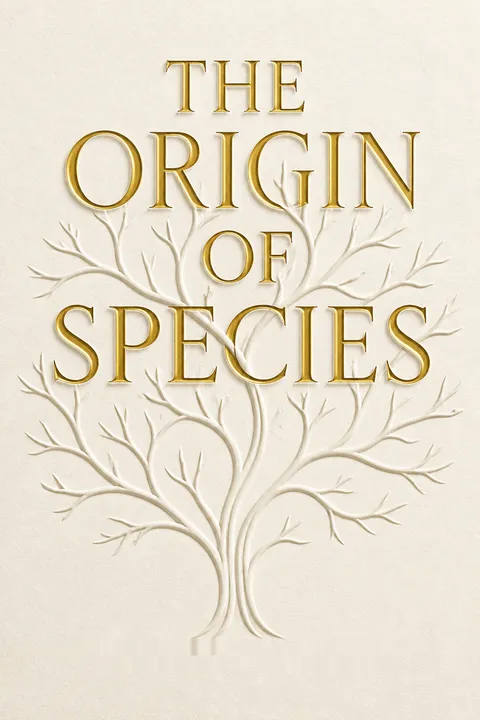


Key Takeaways
Pigeon breeds show how small inherited differences can transform a lineage.
Begin with the pigeons. Darwin kept and studied strikingly different domestic breeds, from birds with unusually short beaks to fantails with greatly expanded tails. Despite their appearance, he argued that all descended from the wild rock pigeon. Breeders had accumulated small differences across generations, selecting birds that best matched their preferences. The result made one ancestral species look like many distinct kinds, showing how gradual change can produce dramatic diversity.
Selection adds up. Breeders did not need to plan the final form. Some noticed a slight variation and bred from it; others simply kept the animals they liked best. Repeated over long periods, either method could shift a population. Darwin used this familiar process as a model for how species might change without anyone directing the outcome.
The pigeon example makes gradual change tangible: familiar breeds can look so unlike one another that common ancestry seems counterintuitive. It also demonstrates a powerful scientific strategy, using a process people can observe to reason about one that unfolds too slowly to watch directly. The analogy has limits. Breeders choose traits for human purposes, while environmental conditions do not have preferences or plans. The comparison works best as a model of cumulative change, not as a claim that nature behaves like a purposeful breeder.
Natural selection preserves useful variation, but does not create it.
Variation comes first. Individuals in a population differ, and some of those differences can be inherited. Natural selection is Darwin's name for the process in which inherited traits that help an organism survive and leave offspring become more common over generations. Traits that hinder reproduction tend to become less common. Variations that make no difference to success are not necessarily shaped by selection.
Numbers make the filter. Organisms produce more offspring than available resources can support. Darwin illustrated the scale of this pressure with a calculation: even an elephant, a slow-breeding animal, could produce millions of descendants over centuries if all survived. They do not. A small inherited advantage can therefore affect which individuals reproduce, and its influence can accumulate over many generations. Selection has no foresight; it works only with variation already present.
This account separates two ideas often blurred together: the appearance of variation and the changing frequency of variants. That distinction remains central to evolutionary reasoning. Selection is not an intentional force, and it does not guarantee improvement in any absolute sense. A trait matters only in relation to particular conditions and competing organisms. The framework is especially useful when asking what evidence would support an adaptive explanation: there must be heritable differences and a credible link between those differences and reproductive outcomes.
Understand survival as reproduction within a tangled ecological web.
Competition is not just combat. Darwin used the phrase struggle for existence broadly, to include an organism's dependence on other organisms and on physical conditions, as well as its success in leaving offspring. A plant may depend on moisture, compete with neighboring plants, and be eaten by insects. These relationships shape its prospects even when no visible fight occurs.
Small changes cascade. Darwin observed that cattle browsing on a barren heath prevented young Scotch firs from growing. After the area was enclosed, fir seedlings that had long been held back grew in great numbers. He also traced a possible chain linking cats, field mice, bumblebees, and flowers: mice damage bee nests, while cats reduce mice. The examples show why a species cannot be understood in isolation.
This ecological view anticipates systems thinking: a seemingly minor change can alter relationships across several levels of a community. It cautions against explaining a species' distribution by climate alone, since competitors, predators, and mutual dependencies may matter just as much. The causal chains are suggestive rather than complete. A vivid sequence does not establish that every link is equally important in every place. Darwin's stronger point is methodological: ecological explanations should look for interacting causes instead of treating organisms as independent occupants of a landscape.
Separate competition for survival from competition for mates.
Mating success selects too. Darwin called selection arising from competition for mates sexual selection. A trait can spread because it helps an animal defeat rivals or attract partners, even if it does not improve survival. Male stags' antlers and cocks' spurs may help in contests; birdsong and showy plumage may influence female choice. The outcome is unequal reproduction, not necessarily the death of the unsuccessful competitor.
Beauty has a cost. Darwin proposed that preferences repeated across generations could shape conspicuous traits. A display might help an individual secure mates while making it easier for predators to spot. The same trait can therefore improve one kind of success and worsen another. Sexual selection helps explain why the sexes of a species may differ in appearance or behavior, while also showing that natural selection does not produce traits solely for physical efficiency.
Separating mate competition from survival competition clarifies why some traits appear extravagant rather than utilitarian. The distinction also invites a useful question: whose preferences shape the trait, and what other costs accompany it? In modern terms, mating advantages can be conditional, varying with population density and the availability of partners. Darwin's proposal of female choice was ambitious for his era, though preferences are difficult to infer from appearance alone. The idea is strongest when supported by observed differences in mating success.
Expect successful lineages to branch, compete, and leave many relatives behind.
Divergence opens options. Darwin's principle of divergence of character describes how descendants of one ancestor can become increasingly different. If some individuals exploit different foods or habitats, they may face less direct competition and occupy more ecological roles. Darwin compared this with breeders selecting horses toward different purposes, such as speed or strength, until the populations diverged.
Branching also removes branches. In a crowded environment, a new form may displace the ancestral form or close competitors. Intermediate populations may be especially vulnerable if they are less numerous or poorly suited to either set of conditions. Extinction is therefore linked to the production of new forms, not a separate interruption of the story. The living diversity of organisms resembles a branching family tree, with many lost limbs and only some branches still growing.
The branching model replaces a ladder of progress with a history of splitting, persistence, and loss. It explains why taxonomic groups can contain nested similarities: related species share ancestry, while accumulated differences separate them. Yet divergence is not inevitable, nor does ecological variety always require new species. Some populations remain similar, and some lineages disappear without leaving descendants. The tree is a powerful map of relatedness, but its visible branches are incomplete because extinction erases much of the history it represents.
Trace common ancestry through shared anatomy, embryos, and leftover structures.
Structure preserves history. The forelimbs of a human, horse, bat, and porpoise serve different purposes, yet share a basic arrangement of bones. Darwin argued that such homologous structures make sense as inherited modifications of an ancestral pattern. A genealogical classification groups organisms by descent, rather than merely by superficial resemblance or similar lifestyles.
Development leaves clues. Embryos of related animals can resemble one another before their adult forms diverge. Rudimentary organs, such as reduced limbs in some snakes or teeth that form in unborn whales and later disappear, are also evidence of inherited history. These structures may have little present function, but their presence can reveal what an ancestor possessed. Together, anatomy, development, and vestiges let naturalists infer relationships even without a complete fossil chain.
These clues work like independent lines of evidence: a proposed relationship gains force when anatomy, development, and distribution point in the same direction. Shared structure is particularly informative when it persists despite very different uses, because adaptation to similar environments can produce resemblance without close ancestry. Embryos and vestigial organs are not simple time capsules, however. Development is itself modified, and reduced structures can retain or acquire functions. Their value comes from comparison across many species, not from assuming that every remnant is useless.
A complex adaptation can evolve if intermediate forms remain useful.
Build by workable steps. Darwin treated the eye as a serious challenge, not an easy example. His argument was that an organ need not appear fully formed: if simpler light-sensitive structures help their owners, then successive improvements can be preserved. He also proposed that organs can shift functions. A fish's swim bladder, useful for flotation, offers a possible route toward an air-breathing organ.
Instinct can change too. Darwin used the honeybee's wax-efficient comb to show how behavior might be modified gradually. He described simpler, rounder cells in related bees and reasoned that small improvements in economy could favor more regular shared walls. These are proposed pathways, not direct observations of every historical step. Their central test is whether each stage could have helped its possessor under the conditions then prevailing.
The key move is to replace the question, how could this structure appear all at once, with a sequence of smaller questions about function and inheritance. In evolutionary biology, a structure can be repurposed, so its current job need not explain its origin. This makes complex adaptation conceivable, but plausibility is not proof of a specific path. Darwin lacked direct access to ancestral populations and could not verify every intermediate stage. His argument establishes a research program: seek functional gradations and evidence of changing use.
Read the fossil record as a scattered archive, while keeping its gaps visible.
Preservation is selective. Darwin argued that fossils form only under particular geological conditions. Organisms must be buried before they decay, and the deposits preserving them must later survive erosion and be exposed for discovery. Many soft-bodied organisms leave little trace, while whole regions and stretches of time may be missing. A sequence of rock layers is therefore not a continuous recording of every generation.
The gap is real. Darwin used this explanation to address the scarcity of transitional forms and the apparently sudden appearance of groups in some strata. He pointed to intervals between formations and limited exploration as reasons for caution. But he did not claim every problem was solved: the apparent absence of fossil-bearing deposits beneath the oldest known strata remained, by his own account, a serious difficulty. Missing evidence can reflect a poor archive, but it still deserves investigation.
The archive metaphor captures an important asymmetry: fossils are not sampled uniformly, so absence from a layer is weaker evidence than presence. Modern field methods and new discoveries can change what appears to be an abrupt appearance. Still, invoking an incomplete record should not become a universal escape hatch. Strong explanations specify how preservation, geography, and sampling could produce the observed gap, and remain open to revision when evidence improves. Darwin's willingness to name an unresolved difficulty strengthens the scientific character of his argument.
Use islands and barriers to reconstruct where lineages traveled.
Place matters. Darwin observed that islands often contain species related to those on the nearest mainland, but not identical to them. The Galapagos organisms, for example, broadly resembled South American forms despite differences in local conditions. He explained this pattern through colonization, isolation, and later modification. Barriers such as oceans can limit migration, while past changes in climate and land connections can open routes that no longer exist.
Arrival is unequal. Remote oceanic islands often lack terrestrial mammals and amphibians, groups poorly equipped to cross wide seas, yet may contain bats capable of flight. Darwin also proposed that glacial climate shifts helped explain similar plants on distant mountain ranges: colder conditions once allowed species to move across lowlands, where they can no longer survive. Distribution records both movement and the limits that shape it.
Biogeography turns geography into historical evidence. Similar climates do not guarantee similar communities, while nearby places can share ancestry despite sharply different environments. This distinction helps separate ecological adaptation from migration history. Dispersal is also probabilistic: an organism must reach a place, establish a population, and compete successfully there. Darwin's account captures those filters, although the routes and timing can be difficult to recover. Modern analysis benefits from combining distribution with fossils and genetic evidence rather than asking geography to carry the whole inference.
Analysis
Darwin's argument is powerful because it is cumulative rather than dependent on one decisive specimen. He begins with an observable process, selective breeding, then asks whether the same logic could operate without a human chooser. From there, he treats variation, inheritance, competition, extinction, distribution, anatomy, development, and fossils as mutually supporting evidence. The method is a form of explanatory triangulation: no single pattern proves common descent, but many otherwise puzzling patterns become intelligible under one historical account.
The conceptual breakthrough is not simply that species change. It is that present-day organisms carry evidence of their histories, and that ordinary processes, acting over immense time, can generate both adaptation and diversity. The book also resists a tidy picture of nature as a collection of perfectly designed outcomes. Its organisms are locally fitted, constrained by inherited structures, and vulnerable to changing ecological relationships.
Darwin's limits matter. He did not know the genetic mechanisms that transmit variation, and his discussion sometimes gave use and disuse a larger role than current biology supports. His appeal to selection also cannot explain every difference: modern evolutionary biology includes genetic drift, mutation, developmental constraint, and other processes alongside selection. Nor does the book's account of fossils make the geological archive complete. These gaps do not erase the central insight. They show how a scientific theory can be both transformative and revisable, with its most durable contribution being a framework that makes new evidence interpretable and new questions precise.
Review Summary
On the Origin of Species is widely praised as a groundbreaking scientific work that revolutionized biology. Readers appreciate Darwin's clear writing, meticulous research, and humble approach. Many find the book surprisingly readable and engaging, despite its age and dense subject matter. Some note it can be repetitive or challenging in parts. While most reviewers accept evolution as fact, a few remain skeptical. Overall, the book is highly regarded for its monumental impact on science and human understanding of the natural world.
People Also Read




Glossary
Natural Selection
Preservation of helpful inherited variationDarwin's term for the differential preservation and reproduction of organisms with inherited variations that benefit them under particular conditions. Across generations, such variations can become more common. Natural selection does not generate variations or act with foresight, and a trait's advantage depends on the surrounding environment and other organisms.
Struggle for Existence
Competition and dependence in lifeDarwin uses this phrase broadly for the conditions that affect survival and reproduction. It includes direct competition, dependence on other organisms, exposure to climate and food supply, and the challenge of producing offspring that themselves reproduce. The phrase is not limited to physical combat between individuals.
Sexual Selection
Unequal success in matingA form of selection Darwin distinguishes from competition over survival. It occurs when some individuals gain more mating opportunities because they defeat rivals or attract partners. Traits such as weapons, displays, or courtship behavior may spread through this process even when they do not improve survival, and may sometimes carry survival costs.
Divergence of Character
Evolutionary branching into differencesDarwin's principle that descendants of a common ancestor may become increasingly different in structure, habits, or constitution. Differences can allow populations to use distinct resources or occupy different ecological roles. Along with extinction, divergence helps explain how one ancestral lineage can produce distinct species and nested groups.
Correlation of Growth
Developmental changes linked togetherDarwin's term for the tendency of changes in one part of an organism to accompany changes in other parts during development. The linked traits need not each be independently useful. Correlation helps explain why selection for one feature can bring additional structural changes, and why some inherited traits appear together.
Unity of Type
Shared structural pattern among relativesThe common underlying organization seen among members of a broad biological group, even when their structures perform different functions. Darwin explains this shared pattern through inheritance from common ancestors. The same basic arrangement of bones, for example, can be modified into a hand, a hoof, a flipper, or a wing.
Rudimentary organs
Reduced inherited structuresOrgans or body parts that are diminished, incomplete, or no longer serving their ancestral function. Darwin interprets them as evidence of descent from ancestors in which the structures were more developed or useful. Examples in the book include reduced limbs in snakes and teeth that appear during whale development but disappear before adulthood.
FAQ
What's The Origin of Species about?
- Theory of Evolution: Charles Darwin presents his groundbreaking theory of evolution through natural selection, explaining how species adapt and change over time.
- Natural Selection Mechanism: The book describes natural selection as the process where advantageous traits become more common in a population, leading to evolution.
- Common Ancestry: Darwin argues that all species share a common ancestor, evolving into distinct forms through gradual modifications.
Why should I read The Origin of Species by Charles Darwin?
- Foundational Scientific Text: It is one of the most important works in biology, laying the groundwork for modern evolutionary theory.
- Influential Ideas: Darwin's concepts have profoundly impacted fields like genetics, ecology, and conservation, making it essential for understanding biological sciences.
- Historical Significance: The book provides insight into 19th-century scientific debates and the development of ideas that challenged traditional views of creation.
What are the key takeaways of The Origin of Species?
- Natural Selection is Key: The principle of natural selection explains how species evolve and adapt to their environments over time.
- Variation and Adaptation: Darwin emphasizes the importance of variation within species, which is crucial for adaptation to changing environments.
- Common Ancestry: The book posits that all species share a common ancestor, leading to the diversity of life we see today.
What are the best quotes from The Origin of Species and what do they mean?
- "Natura non facit saltum": This phrase means "Nature does not make leaps," emphasizing that evolution occurs gradually through small changes.
- "Survival of the fittest": This encapsulates the idea that those best suited to their environment are more likely to survive and reproduce.
- "There is grandeur in this view of life": Reflects Darwin's appreciation for the complexity and interconnectedness of life, suggesting a profound beauty in evolution.
What is natural selection according to The Origin of Species?
- Preservation of Favorable Traits: Natural selection is the process by which individuals with advantageous traits are more likely to survive and reproduce.
- Struggle for Existence: Organisms compete for limited resources, leading to the survival of the fittest.
- Gradual Change Over Time: This process results in gradual changes in species, leading to the development of new varieties and ultimately new species.
How does Darwin explain variation in species in The Origin of Species?
- Causes of Variability: Darwin discusses factors like environmental influences and domestication that contribute to variation.
- Importance of Individual Differences: Individual differences within a species are crucial for natural selection to act upon.
- Role of Heredity: Beneficial variations tend to be inherited by offspring, leading to the gradual evolution of species.
How does The Origin of Species address extinction?
- Inevitable Consequence of Evolution: As new species arise through natural selection, others become rare and eventually extinct.
- Competition Among Species: Closely related species often compete for the same resources, leading to the extinction of less adapted forms.
- Geological Evidence: The fossil record supports the idea that many species have gone extinct over time, highlighting the dynamic nature of life on Earth.
What role does the environment play in The Origin of Species?
- Influence on Variation: The environment affects the traits that are advantageous for survival, shaping the direction of natural selection.
- Adaptation to Conditions: Species must adapt to their specific environments to thrive, leading to diverse forms and behaviors.
- Geographical Distribution: Different environments lead to the development of distinct species in various regions.
How does Darwin use domesticated animals and plants in his arguments in The Origin of Species?
- Examples of Variation: Darwin examines how selective breeding in domesticated species illustrates the principles of natural selection and variation.
- Human Influence on Evolution: He highlights how humans have shaped the traits of domesticated animals and plants, providing a model for understanding natural processes.
- Connection to Wild Species: Changes seen in domesticated species help explain the variations and adaptations observed in wild populations.
What is the significance of geographical distribution in The Origin of Species?
- Patterns of Distribution: Darwin discusses how the geographical distribution of species supports the theory of evolution, as closely related species are often found in similar environments.
- Barriers to Migration: Physical barriers influence the distribution and evolution of species, leading to unique adaptations in isolated populations.
- Evidence of Common Ancestry: Similarities and differences in species across different areas provide evidence for shared ancestry and descent with modification.
How does Darwin explain the similarities between embryos of different species in The Origin of Species?
- Embryonic Development: Darwin notes that embryos of different species within the same class often exhibit striking similarities, suggesting a common ancestry.
- Evolutionary Significance: These similarities indicate that basic structures are inherited from a common ancestor, even if they diverge in adulthood.
- Support for Descent: The resemblance of embryos reinforces the idea of descent with modification, showing shared developmental pathways.
What are the implications of The Origin of Species for modern biology?
- Foundation of Evolutionary Biology: The book laid the groundwork for understanding the diversity of life and the processes that drive evolution.
- Integration with Genetics: Darwin's ideas have been integrated with modern genetics, leading to the modern synthesis of evolutionary theory.
- Impact on Various Fields: Concepts from the book have influenced disciplines like ecology, conservation biology, and anthropology, shaping our understanding of life on Earth.
Download PDF
Download EPUB
.epub digital book format is ideal for reading ebooks on phones, tablets, and e-readers.








