


Key Takeaways
Use absurd questions to practice building testable models of reality
Start with the question. Randall Munroe turns strange submissions from his website into exercises in physics, biology, probability, and engineering. His childhood attempt to count the world’s hard and soft things was wildly inaccurate, but it captured the impulse behind the book: numbers can help answer questions, even silly ones.
Make the assumptions visible. A useful answer identifies what must be true, chooses the relevant physical principles, estimates the scale, and follows the consequences. Munroe studied physics and worked on robotics at NASA, but many answers remain informed estimates rather than definitive predictions. The pleasure comes from seeing a question travel from a simple premise to results its asker probably did not expect.
What's striking is how the book treats curiosity as a method, not merely a personality trait. A ridiculous premise can become a disciplined model once its assumptions are explicit. This resembles scientific idealization: researchers simplify a messy system to isolate a relationship, then ask where the simplification breaks. The approach also makes technical thinking less socially intimidating, because the question need not sound respectable before it earns serious attention. Its main limit is equally instructive: a calculation can be rigorous within a model while the model remains a poor description of reality. The reader should value the reasoning path, not mistake every answer for a forecast.
Estimate the scale first; precision cannot rescue a wrong-sized intuition
Find the order of magnitude. A mole of small mammals sounds like a counting problem until the number, about 602 sextillion, is multiplied by the weight of one eastern mole. The resulting mass is a little over half the Moon’s. Munroe reaches this startling scale first with rough mental comparisons, then checks it with better measurements.
Separate magnitude from consequence. If everyone on Earth jumped together, the planet would move by less than an atom’s width. The jump would barely affect Earth, but gathering billions of people in one region would overwhelm food, water, transport, and communication. A first estimate reveals which effects matter and which are distractions. Precision is useful only after the right scale and the right question have been found.
Order-of-magnitude reasoning is a form of intellectual triage. It prevents elaborate calculation from polishing an answer to the wrong question. The distinction between the jump’s negligible planetary effect and the crowd’s catastrophic logistical effects is especially valuable: one scenario contains multiple systems, and only some are physically consequential. This resembles dimensional analysis in engineering, where units and scale can expose impossible claims before detailed simulation begins. Rough estimates do carry risks. An early approximation can anchor later judgment, so the best practice is the one shown here: use a coarse estimate to orient the problem, then test it against better data.
To reach orbit, gain sideways speed, not merely altitude
Height is not the main hurdle. Space begins roughly 100 kilometers above Earth, and a rocket can briefly carry a person there without much difficulty. Staying there is another matter. The International Space Station remains under about 90 percent of Earth’s surface gravity; it stays aloft because it is moving sideways fast enough to keep missing the ground.
Speed costs fuel. A low Earth orbit requires roughly 8 kilometers per second of sideways motion. Most rocket energy goes toward reaching that speed, not toward climbing to space. The X-15 aircraft reached space on a high-speed flight, then came back down. Reaching a destination and remaining there are different engineering problems, a distinction that also explains why rockets cannot simply brake gently through reentry without carrying enormous extra fuel.
The orbit example exposes a common error in spatial thinking: people picture space as a faraway place rather than a fast-moving path around a planet. The same distinction between position and velocity matters in many engineering problems. A vehicle can occupy the right altitude yet have the wrong motion, just as a system can meet a static target while failing under dynamic conditions. The explanation is powerful because it replaces an invisible orbital condition with a concrete idea, continually falling around Earth. Its simplicity should not conceal real-world complications such as orbital inclination, atmospheric drag, and launch constraints, but those details do not change the central correction.
Every clever shortcut inherits the costs it tries to hide
Fuel has to move too. Moving all seven billion people off Earth requires a theoretical minimum of about 4 gigajoules per person just to escape gravity. Rockets need far more because they must lift their own fuel. Munroe estimates that conventional rockets would require roughly 20 to 50 tons of fuel for each ton of craft, making mass evacuation an extraordinary industrial undertaking.
Other shortcuts shift the burden. A space elevator would depend on a tether far stronger than materials then available. Project Orion proposed using repeated nuclear blasts to propel a shielded spacecraft, trading fuel limits for immense engineering and safety problems. The same accounting appears in the Moon-laser scenario: matching sunlight requires petawatts of power. A shortcut is not free simply because its costs occur somewhere else.
This is systems thinking in practical form: a solution cannot be evaluated by the one stage it makes easier. Rocket fuel creates a mass feedback loop, while nuclear propulsion shifts the problem from energy supply to containment and governance. Similar accounting helps assess proposed technologies in transportation, energy, and computing, where material inputs, infrastructure, and waste can be absent from the headline claim. The book’s hypotheticals make hidden costs vivid, though the estimates depend on assumed technologies and goals. A theoretical minimum is not an engineering plan, and an audacious concept is not evidence of feasibility. The value lies in asking what the proposal must carry along with it.
In extreme scenarios, boundary conditions decide who survives
Water changes the radiation story. Spent nuclear fuel is highly radioactive, but water shields radiation as well as cooling the fuel. In Munroe’s example, each 7 centimeters of water cuts certain radiation levels in half. A swimmer near the surface could receive little exposure, while diving to a fresh fuel canister could be fatal. A reactor diver’s hand received a very high dose after he handled an unexpectedly radioactive object, even though the surrounding water protected much of his body.
The setup changes the physics. In the half-empty-glass question, a vacuum above water quickly fills with air. A vacuum below the water cannot do so, and the collapsing gap can make the glass shatter. The broad label, vacuum, hides two different situations. Before predicting an outcome, specify what surrounds the system and what can enter or escape.
Boundary conditions are not bookkeeping details. They determine which forces, flows, and forms of protection are available. In this account, water is simultaneously a hazard, a radiation shield, and a medium that transmits a damaging pressure wave. That multi-role behavior resembles safety engineering, where a barrier can prevent one failure while introducing another. The lesson also discourages simplistic labels such as safe or dangerous: exposure depends on distance, shielding, and what is being handled. These examples are deliberately idealized, so they should not be treated as practical safety guidance. Their strongest contribution is showing why context belongs inside a scientific explanation.
A global plan can fail at its least visible exception
Transmission needs a host. The common cold is caused by many viruses, including rhinoviruses. In most people, the immune system clears a rhinovirus within about ten days, and the virus cannot keep spreading without new hosts. A worldwide quarantine might seem capable of eliminating it, but the plan founders on people with severely weakened immune systems, in whom infections can persist for weeks, months, or longer.
The exception can restart the system. A small number of persistent infections could preserve viruses until people mix again. The book also notes the immense human and economic cost of shutting down society for weeks. The St. Kilda islands offer a smaller-scale example: incoming boats introduced coughs that spread through the isolated population, then faded when susceptible hosts ran out. Eradication depends on the entire transmission network, not just the average case.
This is a compact lesson in network dynamics. A population-wide intervention can sharply reduce transmission without eliminating every possible route of persistence. The distinction between the typical host and the vulnerable outlier matters in public health, where averages can hide the people most at risk. The St. Kilda account also shows how isolation changes disease patterns by limiting contact with outside reservoirs. Still, the hypothetical quarantine is not a complete policy analysis: timing, compliance, and differences among viruses would complicate the result. Its value is not to settle eradication strategy, but to show that a plan must account for reservoirs and exceptional cases.
Count meaningful possibilities, not merely possible strings
A huge alphabet is not a huge vocabulary. A 140-character tweet can be assembled from an enormous number of character sequences, but most are meaningless. Using Claude Shannon’s estimate that ordinary English carries about 1 to 1.2 bits of information per letter, Munroe estimates roughly 2 × 10⁴⁶ meaningfully different English tweets, far fewer than the raw character count suggests.
Matching is also a probability problem. In a thought experiment where every person has one random, same-age soulmate, an individual might meet around 50,000 new strangers in a lifetime against roughly 500 million potential matches. The chance of finding that match would be about one in 10,000 lifetimes. Both cases show that counting formal options is not enough. Meaning, access, and the rules for recognizing a match determine what is possible in practice.
The connection between language and romance is more than comic juxtaposition. Both reveal that possibility counts become useful only after a model specifies what counts as a distinct outcome and how outcomes can be reached. Information theory measures surprise, not simply the number of symbols available; social matching adds constraints of time, geography, and recognition. This distinction is useful whenever a large number is offered as proof of abundance. The estimates remain dependent on definitions: meaningful English is difficult to delimit, and soulmate odds hinge on deliberately strict assumptions. Those uncertainties sharpen rather than erase the central point: the counting rule is part of the answer.
Life's physical traces outlast the systems that made them
Infrastructure fails at different speeds. If people disappeared, major power grids would likely fail quickly as fuel supplies and human decisions stopped. Some wind turbines and hydroelectric plants could continue for years, while batteries might retain charge for a decade or two. One striking candidate for a much later light is radioactive waste glass: cesium-137 blocks can glow blue through Cherenkov radiation, light produced when charged particles move through a material. After two centuries, the blocks would still have about 1 percent of their original radioactivity.
The geological record keeps a different kind of evidence. Munroe suggests that buried fragments of plastic could remain as a chemical marker of civilization long after buildings and roads disappear. The things humans leave behind need not be the things they intended to preserve.
The contrast between failing infrastructure and persistent material traces gives disappearance a useful temporal scale. Complex systems often depend on maintenance, coordination, and supply chains, while some materials remain after the institutions that produced them are gone. This is a form of material history: future observers may infer a society from residues rather than its own monuments or stories. The book’s plastic prediction is necessarily uncertain because long-term geological processes and microbial adaptation are difficult to forecast. That uncertainty matters, but does not blunt the ethical question. Durable convenience can become an unplanned archive of how a civilization lived.
Read a place through deep time, not just its current map
Times Square has not always been a city. A journey back 1,000 years would reach a landscape of forests, marshes, and waterways, with wildlife now largely absent from the region. Around 10,000 years ago, the retreat of ice sheets was reshaping the terrain, leaving ponds, ridges, and scattered boulders. A hundred thousand years ago, the area belonged to an ecosystem with predators such as dire wolves and sabre-toothed cats.
The deeper past becomes stranger. A billion years ago, the land was part of the supercontinent Rodinia, and life on Earth was microscopic. Photosynthetic cyanobacteria released oxygen that was toxic to many existing organisms, transforming the planet. Looking forward, the book imagines human artifacts eroding away while plastic persists, before the Sun’s evolution makes Earth uninhabitable. A familiar location becomes a meeting point for geology, ecology, and cosmic time.
The time-travel structure makes environmental change legible without turning history into a straight line of human progress. The same coordinates can hold a forest, glacial terrain, a city, and eventually no recognizable Earth at all. That perspective resembles stratigraphic thinking: present landscapes are temporary layers produced by processes operating at different speeds. It also unsettles the assumption that human-built environments are permanent simply because they dominate current experience. Deep-time reconstructions are uneven, especially far back in the geological record, and future projections carry substantial uncertainty. The narrative works best when its vividness invites curiosity while its estimates remain provisional.
Analysis
What If? is a collection rather than a single argument, so its coherence comes from a repeated intellectual procedure. Each question supplies an impossible or unlikely premise; the answer then holds that premise steady, identifies relevant constraints, estimates quantities, and follows the effects until the premise collides with ordinary systems. A relativistic baseball becomes a problem about air and energy. A mass departure from Earth becomes a problem about fuel carrying fuel. A cold-ending quarantine becomes a problem about the least typical host. The entertaining reversal is usually not a trick. It is a change in which constraint matters most. The book’s deepest contribution is therefore epistemic. It teaches readers to distinguish an imaginable outcome from a physically supported one, and a numerical answer from a reliable prediction. Order-of-magnitude reasoning helps identify dominant effects, while explicit assumptions expose where a result depends on the model. Humor performs useful work here: it makes technical explanation approachable and helps surprising conclusions remain memorable. Yet vivid comparisons can create an illusion of certainty. Many scenarios depend on poorly known conditions, and a crisp number may conceal wide uncertainty. The strongest answers acknowledge this by labeling estimates, showing which factors control the result, or admitting when the evidence is thin.
The collection also refuses to treat physics as a sealed domain. Outcomes depend on infrastructure, biology, geography, and human behavior. The global-jump scenario barely nudges Earth but destroys the social systems needed to keep billions alive. The no-humans scenario follows power networks as carefully as spacecraft. This movement from equations to institutions gives the book unusual range, though it also means its most complete answers are not always the most numerically precise. Its lasting lesson is a habit of attention: ask what changes, what stays fixed, what can fail, and which consequences matter at the scale being considered. Absurd questions become valuable when they reveal the hidden structure of ordinary reality.
Review Summary
What If? offers hilarious and mind-bending scientific answers to absurd hypothetical questions. Readers praise Munroe's wit, creativity, and ability to explain complex concepts simply. Many found the book entertaining and educational, appreciating the blend of humor and science. Some critics felt the questions became repetitive or too focused on catastrophic scenarios. Overall, most reviewers enjoyed Munroe's unique approach to exploring scientific principles through outlandish scenarios, though a few found the content overwhelming or not to their taste.
People Also Read




Glossary
Thrust-to-weight ratio
Thrust compared with vehicle weightThe ratio of a vehicle's thrust to the force of gravity on its weight. A value below 1 means the vehicle cannot lift itself vertically. Munroe uses the concept to assess whether machine guns could lift themselves, and how adding a passenger, weapons, or ammunition changes the prospects of a gun-powered flying rig.
Tsiolkovsky Rocket equation
Rocket propellant mass relationshipAn equation relating a rocket's change in speed to its exhaust velocity and the ratio of its starting mass to its mass after fuel is burned. It explains why increasing a rocket's speed requires rapidly increasing amounts of propellant. Because fuel itself must be accelerated, the equation makes large launches far more demanding than a simple energy estimate suggests.
Cherenkov radiation
Light from fast charged particlesLight emitted when charged particles travel through a material faster than light travels through that material. It is visible in the blue glow associated with nuclear reactor cores. Munroe describes how radioactive waste glass can produce this glow, potentially leaving a faint artificial light long after people and power grids are gone.
Inbreeding coefficient
Expected genetic identity measureA measure of the likelihood that the two copies of a gene or chromosome in an individual are identical by descent. A child of unrelated parents is assigned a value of zero in the simplified account, while a value of 1 represents a fully duplicated genetic set. The book uses 0.50 to describe the high genetic similarity expected in a hypothetical child produced by self-fertilization.
Total precipitable water (TPW)
Water available in an air columnThe depth of water that would result if all water vapor in a vertical column of air condensed and collected at the bottom. It provides a way to estimate the total water contained in a storm over a defined area. Munroe uses TPW to calculate the mass and size of a hypothetical storm whose moisture falls as one enormous drop.
Moment magnitude
Earthquake size from released energyA measure of earthquake magnitude based on the physical size of the rupture and the energy released. It replaced the Richter scale for many scientific purposes and is designed to describe very large earthquakes more consistently. The book uses the scale to show that magnitudes far above familiar earthquakes imply energies capable of exceeding the gravitational binding energy of Earth.
FAQ
What's "What If?: Serious Scientific Answers to Absurd Hypothetical Questions" about?
- Absurd questions explored: The book by Randall Munroe explores a series of absurd hypothetical questions submitted by readers, providing scientific answers to each.
- Scientific approach: Munroe uses his background in physics and experience as a NASA roboticist to apply scientific principles to these whimsical scenarios.
- Humor and insight: The book combines humor with insightful scientific explanations, making complex topics accessible and entertaining.
Why should I read "What If?: Serious Scientific Answers to Absurd Hypothetical Questions"?
- Unique perspective: The book offers a unique blend of science and humor, making it an engaging read for those interested in both fields.
- Educational value: Readers can learn about scientific concepts and principles in a fun and approachable way.
- Creative thinking: It encourages creative thinking and curiosity by exploring unconventional questions and scenarios.
What are the key takeaways of "What If?: Serious Scientific Answers to Absurd Hypothetical Questions"?
- Science is fun: The book demonstrates that science can be both fun and informative, sparking curiosity about the world.
- Critical thinking: It emphasizes the importance of critical thinking and applying scientific methods to solve problems, no matter how absurd they may seem.
- Interdisciplinary approach: The book showcases how different scientific disciplines can be applied to answer a wide range of questions.
What are the best quotes from "What If?: Serious Scientific Answers to Absurd Hypothetical Questions" and what do they mean?
- "Nearly everyone would die. Then things would get interesting." - This quote from the "Global Windstorm" chapter highlights the dramatic and often humorous way Munroe presents potential outcomes of hypothetical scenarios.
- "The world is an absurd place; why not embrace it?" - Munroe encourages readers to accept and explore the absurdity of the world, using science as a tool for understanding.
- "It's not that the wind is blowing, it's what the wind is blowing." - This quote emphasizes the importance of context and details in scientific analysis, as seen in the "Global Windstorm" scenario.
How does Randall Munroe approach answering absurd questions in "What If?"?
- Scientific rigor: Munroe applies scientific principles and calculations to each question, ensuring that the answers are grounded in reality.
- Humor and creativity: He uses humor and creative thinking to make the explanations engaging and accessible.
- Interdisciplinary methods: Munroe draws on various scientific disciplines, including physics, chemistry, and biology, to provide comprehensive answers.
What is the "Global Windstorm" scenario in "What If?"?
- Earth stops spinning: The scenario explores what would happen if the Earth suddenly stopped spinning, but the atmosphere retained its velocity.
- Supersonic winds: It predicts that supersonic winds would devastate the planet, causing widespread destruction.
- Survival and aftermath: Munroe discusses potential survival strategies and the long-term effects on the planet's climate and geography.
How does "What If?" explain the concept of "Relativistic Baseball"?
- Baseball at light speed: The scenario examines what would happen if a baseball were pitched at 90% the speed of light.
- Catastrophic consequences: The immense speed would cause nuclear fusion with air molecules, resulting in a massive explosion.
- Scientific principles: Munroe uses this scenario to explain concepts like relativistic speeds, nuclear fusion, and the energy-mass relationship.
What is the "Periodic Wall of the Elements" in "What If?"?
- Elemental wall: The scenario imagines building a wall using cube-shaped bricks made of each element from the periodic table.
- Dangers and reactions: Munroe discusses the potential dangers and chemical reactions that would occur, such as explosions and toxic releases.
- Educational insight: This scenario provides insight into the properties and reactivity of different elements.
How does "What If?" address the question of "Everybody Jump"?
- Simultaneous jump: The scenario explores the effects if everyone on Earth jumped at the same time and landed simultaneously.
- Minimal impact: Munroe concludes that the impact on the Earth's motion would be negligible, but the social and logistical aftermath would be significant.
- Scientific explanation: The scenario illustrates principles of mass, force, and the conservation of momentum.
What is the "A Mole of Moles" scenario in "What If?"?
- Mole of moles: The scenario calculates the consequences of gathering a mole (6.022×10^23) of moles (the animal) in one place.
- Planet-sized mass: The mass would be comparable to a small planet, causing gravitational and environmental effects.
- Humorous exploration: Munroe uses this scenario to humorously explore concepts of mass, volume, and gravitational forces.
How does "What If?" explore the concept of "Laser Pointer"?
- Moon illumination: The scenario investigates whether pointing laser pointers at the Moon could change its color.
- Insufficient power: Munroe concludes that even with powerful lasers, the effect would be negligible compared to sunlight.
- Scientific principles: This scenario highlights the principles of light, energy, and the scale of astronomical distances.
What is the "Spent Fuel Pool" scenario in "What If?"?
- Swimming in a pool: The scenario examines the effects of swimming in a nuclear reactor's spent fuel pool.
- Radiation exposure: Munroe explains the potential radiation exposure and safety measures needed to survive.
- Scientific insight: This scenario provides insight into nuclear physics, radiation, and the safety protocols of nuclear facilities.
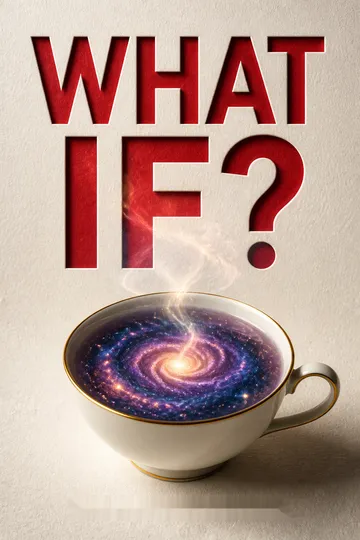
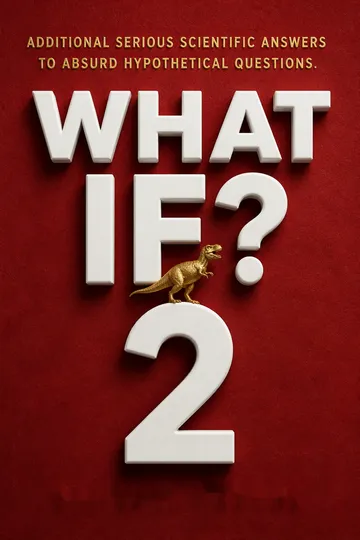
What If? Series
About the Author
Other books by Randall Munroe
Download PDF
Download EPUB
.epub digital book format is ideal for reading ebooks on phones, tablets, and e-readers.








