

Key Takeaways
Use traditional societies as human experiments, not primitive fossils
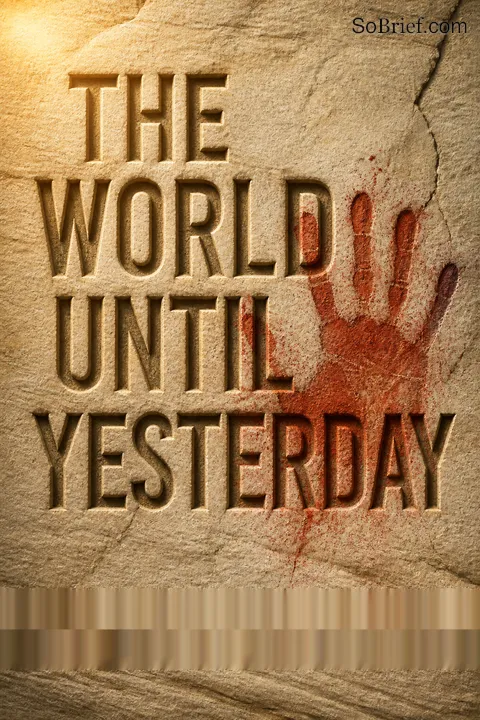
A sudden transition, not a ladder. In 1931, many New Guinea Highlanders still used stone tools and had little contact with outsiders. By 2006, their descendants worked at airports, used computers, and flew in airplanes. The shift makes modern life look less like humanity’s default condition and more like a recent experiment. Farming began about 11,000 years ago; states and writing emerged roughly 5,400 years ago.
Broaden the sample. Diamond calls traditional societies thousands of experiments in organizing human life. That matters because much psychology research has studied WEIRD participants: Western, educated, industrialized, rich, and democratic people. In a survey of leading psychology papers, 96 percent of participants came from Western industrial countries. Traditional societies are neither universally better nor worse, but they expose how narrow a supposedly universal picture of human nature can be.
The strongest move here is methodological: cultural difference becomes evidence, not a ranking. A practice that looks natural in a modern city may be a local solution to mass population, strangers, and formal institutions. That perspective also disciplines claims about human nature by asking which populations supplied the evidence. The caution is that traditional societies are not untouched time capsules, and the book’s examples lean heavily on New Guinea. Comparison is most illuminating when it treats each case as historically situated rather than as a stand-in for all ancestral life.
Treat borders, trade, and strangers as one social system
Land access shapes trust. In one New Guinea forest, a ridge separated the claimed lands of two neighboring groups. Visitors could walk a recognized trail to trade, but could not freely collect water, food, or wood. The relationship included hostility, permitted passage, marriage, and exchange, not a clean division between peace and war. In other societies, such as the !Kung, land rights were more flexible: groups shared access to scarce water or abundant seasonal foods through reciprocal permission.
Trade builds ties. Traditional exchange often involved delayed gifts between known partners, not anonymous cash purchases. Some communities traded goods they could make themselves because the relationship mattered as much as the object. Siassi canoe traders, meanwhile, moved goods across hundreds of miles and could make enormous profits. In both cases, trade could provide supplies, alliances, and help during future hardship.
This account makes borders more than lines on maps: they are rules for who can approach, take resources, and count as safe. Trade can therefore work like social insurance, creating obligations that may matter when harvests fail or conflict threatens. The same logic helps explain why trade does not automatically make neighbors peaceful; repeated contact also creates disputes over prices, access, and broken obligations. Modern passports extend permission across vast populations, but they do not eliminate the underlying need to decide who belongs and who can be trusted.
Add relationship repair to justice, without surrendering public safety
Repair and punishment differ. When a driver accidentally killed a New Guinea boy, the boy’s father approached the driver’s employer the next day. Within five days, emissaries had negotiated money and food for the funeral, and the two sides met, mourned, and ate together. The payment was not treated as the price of a child’s life. Its purpose was to acknowledge grief and restore peaceful relations between people likely to encounter one another again.
The state solves another problem. Police pursued a dangerous-driving charge, but the case took two and a half years to reach a hearing and was dismissed when police witnesses failed to appear. Even so, state justice has a vital advantage: it can suppress cycles of private revenge and protect people who lack powerful allies. Mediation and restorative justice can add emotional repair, but they should supplement, not replace, safeguards against coercion and violence.
The case distinguishes two jobs that legal systems often blur: establishing public rules and helping people live with one another after harm. Mediation may be especially useful in divorce, inheritance disputes, or business relationships where contact continues. Yet informal settlement can reproduce unequal power if one party cannot safely refuse. The practical lesson is not to romanticize community justice, but to make room for voluntary, well-supported processes that hear victims directly while preserving impartial adjudication when agreement is unsafe or impossible.
Count small-scale warfare by the share of lives at risk
Small numbers can hide large losses. In six months of Dani fighting in 1961, about 11 people died along one frontier. That sounds minor beside modern wars, but the two alliances had only about 8,000 people. The deaths represented roughly 0.14 percent of their population. In a 1966 massacre, 125 people died within an hour, about 5 percent of the targeted southern Dani population. The violence included raids, ambushes, attacks on civilians, and revenge cycles, not just formal battles.
Frequency changes the comparison. Traditional fighting could recur year after year, while state wars were more intermittent and often confined combat to soldiers. Diamond’s cross-society estimates suggest average annual war deaths were much higher in traditional societies, though estimates vary. Absolute death counts alone therefore obscure how much danger ordinary people faced in a small population.
A denominator changes the moral and statistical picture. A massacre that kills a few hundred people may devastate a small society more profoundly than a much larger casualty total in a populous state. The comparison also reminds readers that war is not only a contest between armies; it can structure daily movement, farming, and family life. Estimates from small societies are often incomplete, however, and categories such as war, homicide, and revenge can overlap. Relative mortality is a corrective, not a single final measure of violence.
Borrow children’s connection and care, not every traditional practice
Care was widely shared. Among studied hunter-gatherers, infants were often carried close to adults, nursed frequently, and soothed quickly when crying. !Kung infants spent about 90 percent of their first year in physical contact with a caregiver; 88 percent of crying bouts received a response within three seconds. Other adults and older children also helped care for infants. Multi-age playgroups let younger children learn from older ones, while older children practised caring for the young.
Context matters. These practices existed alongside customs modern families would reject, including infanticide in some groups and letting children encounter serious hazards. Parenting differed greatly even between neighboring societies. The book’s useful question is not whether to copy a whole culture, but which practices might support security, social learning, and autonomy in a child’s actual surroundings.
The focus on caregiving networks challenges the assumption that intensive parenting belongs only to parents. Shared care can distribute attention and give children more adult models, while mixed-age play creates opportunities for learning that formal age groups may limit. Still, observations of confident children do not prove that one practice caused the outcome. Ecology, family structure, and community expectations all differ. The best application is selective: increase dependable human contact and child-led exploration where safe, rather than treating a traditional pattern as a universal prescription.
Give elders roles that convert memory and experience into public value
Age can carry practical knowledge. Older people in small societies may forage, care for grandchildren, make tools, advise leaders, and preserve knowledge that has not been written down. On Rennell Island, an elderly woman remembered which wild foods were safe after a devastating cyclone had destroyed gardens. She was the last person in her village with that experience, knowledge that could matter again in a disaster.
Modern life weakens those roles. Literacy stores information outside human memory, formal schooling takes over much teaching, and rapid technological change can make older skills obsolete. Retirement and residential care may also separate elders from friends and family. Yet older adults can still contribute through childcare, mentoring, judgment, and knowledge of past crises. The problem is not simply how to support longer lives, but how to keep older people connected and useful without denying their needs.
This is a useful correction to the idea that older adults are valuable only when they remain economically productive. Their knowledge may be tacit, relational, or relevant only under unusual conditions, making it easy to undervalue until it is needed. Institutions can preserve such knowledge through mentoring and intergenerational contact. At the same time, usefulness should not become a test for care: people deserve support even when they cannot contribute. A humane society needs both recognition of contribution and unconditional respect.
Treat repeated low-probability hazards as serious cumulative risks
Small risks accumulate. New Guinea companions refused to camp beneath a dead tree, even though it looked stable. The author later heard trees fall in the forest almost daily and learned that people were sometimes killed by them. A hazard with a tiny chance of harm on any one night becomes serious when repeated hundreds of times. He calls this attitude constructive paranoia: attention to modest warning signs because repeated exposure can make their total risk substantial.
Caution is not paralysis. A New Guinea friend once noticed a small stick planted upright in the ground and treated it as a possible sign of people nearby. The clue may have been harmless, but the response was to stay alert, not abandon all activity. Traditional people still accepted risks to find food and travel. Their approach was to notice hazards, reduce avoidable exposure, and take necessary risks with care.
The idea resembles safety engineering, where repeated small failures can reveal a system’s weak points before catastrophe occurs. It also counters the tendency to treat familiar hazards as harmless simply because most encounters end well. The challenge is calibration: constant vigilance can consume attention and amplify false alarms. Constructive caution works best when it is tied to exposure, severity, and practical prevention. A dead tree above a sleeping place warrants action; an unexplained clue should trigger investigation, not certainty.
Protect a minimum food supply, not just average output
Avoid the year that ruins everything. Andean farmers studied by Carol Goland planted potatoes in many small fields rather than consolidating their land. Yields varied unpredictably by location and year, so spreading fields reduced the chance that all crops would fail together. For one family, planting at one site carried a modeled 37 percent chance of falling below its food needs in a given year. Seven or more locations reduced that modeled risk to zero, though average yield was lower and walking between fields used extra energy.
Resilience differs from efficiency. Traditional societies also shared food, moved camps, stored surpluses, broadened diets, and made agreements with neighbors. These strategies prioritized survival through bad periods, not maximum output in a typical year. The same distinction matters wherever a shortfall has severe consequences: a higher average return is not necessarily better if one bad year means ruin.
The example exposes a common blind spot in optimization: systems are often judged by average performance when failure below a threshold is what matters most. Diversification can be rational even when it looks inefficient on a spreadsheet. This is relevant to food systems, household finances, and public planning, though the Andean yield model used only two years of field data and should not be treated as a universal formula. The deeper principle is to match the strategy to the cost of failure.
Understand religion as an evolving toolkit, not a single function
One institution, several jobs. Diamond compares religion’s changing roles to electric organs in fish, which evolved from sensing and communication to delivering powerful shocks. Religious beliefs may have grown from human efforts to explain causes and agency, then also helped people manage anxiety and find comfort in suffering or death. In larger societies, religion could support organized institutions, obedience to rulers, moral rules for strangers, and commitment to a group.
Benefits can carry costs. Religious practices can unite people and make cooperation credible, sometimes through costly signals such as time, money, or demanding rituals. The same group boundaries can justify hostility toward outsiders. The book’s account therefore resists both simple praise and dismissal: religion’s social functions changed with the scale and needs of societies, and a function that stabilizes one community may deepen conflict between communities.
The functional approach is strongest when it separates origins from consequences. A belief need not have been deliberately invented to explain why it persists; once present, it can serve comfort, coordination, identity, or political authority. That distinction avoids reducing religion either to truth claims or to manipulation. It also invites scrutiny of who benefits from a religious rule and who bears its costs. The functions are not universal in equal measure, so broad explanations should leave room for traditions that organize belief and community differently.
Teach minority languages alongside a shared public language
Multilingualism was ordinary. At one New Guinea campfire, each of 20 men spoke at least five languages, and one spoke 15. Small language communities made neighboring languages useful for marriage, trade, and daily relationships. Today, about 7,000 languages remain, but Diamond estimates that 95 percent could be extinct or moribund by 2100 if current trends continue. Language loss accelerates when families stop passing a language to children, even if older adults still speak it.
Unity does not require erasure. A common language can help people communicate without replacing a minority language at home or in community life. The book also reports research linking bilingual experience to stronger performance on tasks involving changing rules and distracting information, and to Alzheimer’s symptoms appearing four to five years later in one patient sample. Those findings are promising, not proof that bilingualism guarantees cognitive protection.
The central distinction is between shared communication and enforced sameness. A society can use a common public language while allowing families to retain languages that carry local knowledge, history, and belonging. Language preservation is not cost-free: it requires time, education, and institutional support. Nor should every cognitive benefit claim be treated as settled; observational comparisons can be confounded by education and social conditions. The durable case is broader than brain training: linguistic diversity preserves forms of expression and knowledge that cannot be fully recreated after transmission stops.
Make modern abundance fit bodies shaped by scarcity
The environment changed faster than bodies. Traditional New Guineans were typically lean and physically active, and diabetes and hypertension were rare. As people adopted sedentary work and store-bought foods rich in salt, sugar, and calories, these conditions spread. The Wanigela population, among the first extensively Westernized in New Guinea, was estimated to have diabetes prevalence of 37 percent. In the book’s account, common modern diseases reflect a mismatch between older biological adaptations and continual food abundance.
Change the risks, not the whole society. Salt intake offers one clear example: average modern consumption is about 9 to 12 grams daily, while many traditional groups consumed under 3 grams. Type-2 diabetes is associated with obesity, inactivity, and high-calorie diets. The thrifty-genotype hypothesis proposes that traits favoring energy storage helped people survive famine but can become harmful amid constant surplus. It is a hypothesis, not a complete explanation of diabetes.
The evolutionary mismatch model gives a memorable account of why abundance can become hazardous, but it can oversimplify complex diseases. Genes, food systems, income, work, and access to healthcare interact, and not every traditional diet or lifestyle is practical or safe today. The book’s most defensible advice is therefore specific rather than nostalgic: reduce excess salt and sugar, move regularly, and favor less processed food. It is equally important to recognize that infectious disease, injury, and food insecurity made traditional life dangerous in other ways.
Analysis
The book’s organizing idea is that differences between societies are evidence about human possibilities, not proof of a one-way march from primitive to advanced. Diamond’s most persuasive comparisons connect everyday practices to material conditions: mobile groups face different childcare and eldercare problems from settled communities; small populations need different rules for strangers than states do; uncertain harvests reward resilience over peak yield. The result is an account of institutions as solutions with trade-offs, rather than as moral rankings.
Its narrative strength comes from concrete encounters. A ridge becomes a map of permission and danger. A child’s death reveals two justice systems with different purposes. A suspicious stick makes risk cumulative and visible. These stories make abstractions memorable, while the cross-cultural comparisons keep them from becoming isolated anecdotes.
The method has limits. Traditional societies are diverse, historically changing, and often observed after contact has already altered them. The book’s frequent reliance on New Guinea offers rich firsthand detail but risks making one region feel more representative than it is. The band, tribe, chiefdom, and state categories are useful shorthand, yet real societies do not always fit neatly into them. Likewise, evolutionary explanations such as the thrifty-genotype hypothesis are plausible interpretations, not settled proof of how every population developed disease risk.
The most valuable conclusion is selective learning. State institutions protect strangers, curb private violence, and support public health, while small-scale societies demonstrate alternative ways to repair relationships, share care, manage uncertainty, and preserve local knowledge. Neither institutional form is a universal template. The book is strongest when it asks which problem a practice solves, what it costs, and whether another society can adapt its function without importing its entire way of life.
Review Summary
The World Until Yesterday receives mixed reviews. Many praise Diamond's insights into traditional societies and their relevance to modern life, particularly regarding child-rearing, elder care, and health. Readers appreciate his personal anecdotes from New Guinea and his ability to synthesize complex information. However, some find the book repetitive, overly long, and lacking clear focus. Critics argue that Diamond's perspective can be colonial at times. Despite these criticisms, most agree the book offers valuable comparisons between traditional and modern societies, even if the conclusions drawn are sometimes seen as underwhelming.
People Also Read








Glossary
WEIRD
Western research participantsAn acronym for Western, educated, industrialized, rich, and democratic societies. Diamond uses it to describe populations that dominate much psychological research, especially people in the United States and university students. Because these participants represent a narrow portion of human variation, findings about them should not automatically be treated as universal accounts of human nature.
Band, tribe, chiefdom, and state
Four social-scale categoriesA shorthand classification associated with anthropologist Elman Service. Bands are small, generally egalitarian groups; tribes are larger communities with weak or informal leadership; chiefdoms have recognized leaders, tribute, and hereditary status differences; states have centralized government, specialized bureaucracies, and formal authority. The categories describe broad trends in scale and organization, not rigid stages through which every society must pass.
constructive paranoia
Caution about cumulative risksDiamond’s term for sustained attention to small warning signs when a low-probability hazard is encountered repeatedly. A single night beneath a dead tree may seem safe, but repeated exposure makes the cumulative danger meaningful. Constructive paranoia does not mean avoiding every risk. It means noticing preventable hazards, assessing them carefully, and taking necessary risks with practical safeguards.
restorative justice
Repair through dialogueAn approach to criminal justice that treats an offense as harm to a victim or community, as well as a violation of law. When both parties agree, a trained facilitator helps the offender and victim, or a victim’s relative, discuss the harm, its effects, and possible repair. It can support accountability and emotional closure, but it is not a substitute for public safety or formal adjudication.
crowd diseases
Epidemics sustained by large populationsDiamond’s shorthand for acute infectious diseases that spread efficiently among humans, usually confer lasting immunity on survivors, and cannot persist in animal or environmental reservoirs. They require populations large enough for the disease to keep finding susceptible hosts. The growth of agriculture and permanent settlements created conditions that allowed diseases such as measles to spread and persist across regions.
DASH diet
Dietary approach to hypertensionAn abbreviation for Dietary Approaches to Stop Hypertension. The eating pattern emphasizes fruits, vegetables, fiber, whole grains, poultry, fish, nuts, and lower-fat dairy, while limiting salt, sweets, sugary drinks, red meat, and saturated fat. In controlled experiments discussed by Diamond, this approach lowered blood pressure. It is presented as a healthy pattern, not as a return to a complete traditional lifestyle.
thrifty genotype
Efficient energy-storage traitsA hypothesis that some inherited traits once helped people survive recurring cycles of food abundance and famine by storing energy efficiently. In modern settings with frequent high-calorie food and less physical activity, the same traits may contribute to obesity and Type-2 diabetes. Diamond presents this as one proposed evolutionary explanation, not as a complete or universally established account of diabetes.
FAQ
What's The World Until Yesterday about?
- Exploration of Traditional Societies: Jared Diamond examines the lifestyles, practices, and beliefs of traditional societies, particularly those that have existed for thousands of years.
- Comparative Analysis: The book contrasts traditional societies with modern state societies, highlighting differences in governance, social relationships, and conflict resolution.
- Insights from New Guinea: Much of the book is based on Diamond's experiences in New Guinea, providing a unique lens to understand broader human behaviors and societal norms.
Why should I read The World Until Yesterday?
- Understanding Human Nature: The book offers insights into human behavior by examining how traditional societies function, challenging readers to reflect on their own societal norms.
- Practical Lessons: Readers can gain practical advice on parenting, conflict resolution, and community living from the practices of traditional societies.
- Cultural Appreciation: It fosters a greater appreciation for cultural diversity and the wisdom embedded in traditional practices that have stood the test of time.
What are the key takeaways of The World Until Yesterday?
- Value of Traditional Practices: Many traditional practices, such as communal child-rearing and restorative justice, can offer valuable lessons for modern societies.
- Impact of Environment on Society: Diamond discusses how environmental factors shape societal structures and behaviors, helping modern societies address their own challenges.
- Cycles of Violence and Peace: The book explores how traditional societies manage conflict, emphasizing the importance of maintaining relationships.
What are the best quotes from The World Until Yesterday and what do they mean?
- “Traditional societies represent thousands of millennia-long natural experiments in organizing human lives.”: This underscores the idea that traditional societies provide insights into human organization and social structures.
- “The goal of traditional compensation is not to determine right or wrong, but instead to restore a relationship.”: Highlights the focus on emotional closure and community ties in traditional justice systems.
- “Life was better since the government had come because a man could now eat without looking over his shoulder.”: Reflects the benefits of state intervention in ending cycles of violence.
How does The World Until Yesterday compare traditional and modern societies?
- Social Relationships: Traditional societies emphasize long-lasting relationships and community ties, while modern societies often prioritize individualism.
- Conflict Resolution: Traditional societies often resolve conflicts through compensation and negotiation, whereas modern societies rely on legal systems.
- Cultural Practices: Practices like communal child-rearing and shared responsibilities in traditional societies offer insights into improving modern parenting and community dynamics.
What insights does The World Until Yesterday provide about child-rearing practices in traditional societies?
- Community Involvement: Child-rearing often involves the entire community, with multiple caregivers sharing responsibilities, fostering strong social bonds.
- Different Parenting Styles: Traditional societies may allow for more autonomy and less strict discipline, fostering independence and resilience in children.
- Cultural Context: The book highlights the importance of cultural context in shaping parenting norms, suggesting modern parents can benefit from adopting some traditional practices.
What is the concept of "constructive paranoia" in The World Until Yesterday?
- Awareness of Danger: "Constructive paranoia" refers to a heightened awareness of potential dangers, encouraging vigilance and preparedness.
- Coping Mechanisms: Traditional peoples develop coping mechanisms to deal with dangers, such as sharing information about threats.
- Contrast with Modern Attitudes: Diamond contrasts this mindset with modern attitudes, suggesting adopting aspects of constructive paranoia could benefit modern societies.
How does The World Until Yesterday address the treatment of the elderly in traditional societies?
- Cultural Variability: Treatment of the elderly varies widely, with some societies offering care and respect while others may neglect or abandon them.
- Role of Elders: Elders are often seen as valuable sources of wisdom and experience, contributing to community decision-making.
- Lessons for Modern Societies: Diamond suggests modern societies could learn from traditional practices that honor and integrate the elderly into community life.
What role does religion play in traditional societies according to The World Until Yesterday?
- Cultural Cohesion: Religion often serves to unify communities, providing shared beliefs and practices that strengthen social bonds.
- Explanation of the Unknown: Traditional religions help people make sense of the world, offering explanations for natural phenomena and life events.
- Moral Framework: Many religions provide guidelines for behavior, helping to regulate social interactions and maintain order within the community.
How does The World Until Yesterday address the concept of bilingualism?
- Bilingualism as a Norm: Traditional societies often raise children to be bilingual or multilingual, which has cognitive benefits.
- Cognitive Advantages: Studies show bilingual individuals have better executive function, aiding in problem-solving and adaptability.
- Encouragement for Parents: Diamond advocates for raising children bilingually, enriching their lives and providing lifelong benefits.
What are the health implications discussed in The World Until Yesterday?
- Non-communicable Diseases: Diamond explores the rise of diseases like diabetes and hypertension in modern societies, linking them to lifestyle changes.
- Salt and Sugar Intake: High consumption of salt and sugar contributes to health issues, contrasting with traditional diets.
- Lessons from Traditional Diets: Adopting aspects of traditional diets can help mitigate health risks, encouraging the incorporation of healthy foods.
What can modern societies learn from traditional societies according to The World Until Yesterday?
- Adopting Healthy Practices: Diamond encourages incorporating beneficial practices from traditional lifestyles, such as dietary habits and social structures.
- Valuing Social Connections: The book highlights the importance of maintaining strong social bonds and community support systems.
- Cultural Appreciation: Diamond advocates for a greater appreciation of cultural diversity and the wisdom embedded in traditional practices.
About the Author
Other books by Jared Diamond




Download PDF
Download EPUB
.epub digital book format is ideal for reading ebooks on phones, tablets, and e-readers.








