

Key Takeaways
Place human history in cosmic time: civilization occupies the calendar's final seconds
The scale resets perspective. Sagan compresses the universe's history into a single imagined year. In his 15-billion-year model, Earth forms in September, life appears later that month, and humans arrive at 10:30 p.m. on December 31. All recorded history fits into the final ten seconds. The exact dates depend on the scientific estimates available when he wrote, but the disproportion is the point: human affairs are recent against the deep history of the cosmos.
A brief moment carries weight. Sagan uses the calendar not to dismiss humanity, but to stress that the next stage is unusually consequential. In his account, people have acquired both the tools to alter the planet and the knowledge that might help them respond wisely. What happens in this tiny slice of cosmic time is therefore not trivial.
What's striking is how a change of scale can alter urgency without resorting to alarmism. Deep time makes human exceptionalism harder to defend, while the compressed final seconds make responsibility feel immediate. This resembles the use of geological time in environmental science: slow processes become visible, and short-term choices acquire long consequences. The calendar is a teaching device, not a literal clock or a measure of moral worth. A civilization's youth does not make its lives less valuable, but it does make claims of mastery over nature look premature.
Genes build the platform; learning lets humans adapt faster than evolution
Inheritance changes slowly. Genetic evolution works through inherited variation and natural selection. Mutations arise without foresight; whether they help depends on the environment. Sagan illustrates this with pale moths whose dark-color mutation became advantageous when soot darkened English trees. The mutation did not anticipate pollution. Changed conditions altered which moths survived and reproduced.
Brains store acquired knowledge. Humans rely heavily on learning during an unusually long childhood, when the brain is shaped by experience and culture. Sagan calls information gained outside genes extragenetic information. Writing adds another layer: extrasomatic information, knowledge stored outside the body in books and records. These forms of learning can spread much faster than genetic change, helping people respond to environments that shift within a lifetime rather than across many generations.
The distinction between inherited capacity and acquired knowledge remains powerful because it separates biological change from cultural change without pretending they are independent. Modern gene-culture coevolution research examines how practices can reshape the selection pressures acting on populations, while cultural learning can alter behavior far more quickly than genes change. That flexibility has costs: a long dependent childhood requires care, and accumulated information can spread harmful practices as readily as useful ones. Learning is an adaptive advantage, not an automatic guarantee of wisdom.
Use the triune brain as a metaphor for competing motives, not three separate minds
An evolutionary model. Neuroscientist Paul MacLean's triune brain model, which Sagan adopts as a guide, describes the forebrain as three systems added and modified across evolutionary history. The neural chassis includes basic life-support functions. The older R-complex is associated in the model with ritual, territoriality, and hierarchy. The limbic system is linked to emotion and attachment, while the neocortex supports complex perception, language, and reasoning.
Old functions remain active. Sagan argues that evolution tends to modify existing structures rather than replace them outright. Human behavior can therefore mix automatic routines, strong feelings, and deliberate thought. He does not treat this as destiny: the large neocortex and human capacity to learn can restrain or redirect impulses. The model's value is to remind readers that reason does not operate in isolation from emotion and social instinct.
The model offers a memorable way to picture why deliberation can conflict with impulse, and its emphasis on evolutionary continuity helps counter the idea that humans stand outside animal life. Its literal anatomy, however, is too neat. Contemporary neuroscience does not treat human behavior as three independent brains stacked in layers, each with its own simple job. Brain systems interact, and complex capacities depend on networks spanning multiple regions. The metaphor is most useful as a prompt to ask which processes are shaping a choice, not as a neurological diagnosis.
See human intelligence as a feedback loop between bodies, tools, and culture
Movement changed the problem. Sagan argues that life in trees rewarded balance, depth perception, and precise hand-eye coordination. Later, walking upright freed the hands for carrying and making tools. Fossils suggest that bipedal Australopithecines existed before the larger-brained Homo habilis, whose remains are associated with stone tools. The sequence supports a connection between bodily change and technological behavior, though it does not prove a simple one-way cause.
Culture reshaped anatomy. Better tools and cooperative hunting could reward communication, planning, and learning; those abilities, in turn, could improve tools and cooperation. Sagan describes this as a mutual influence between biological traits and culture. He also links the growth of large-brained babies to changes in the pelvis and the difficulty of childbirth, showing how one evolutionary advantage can carry physical costs.
This account anticipates the idea of niche construction: organisms do not merely adapt to environments, they alter the environments that shape future adaptation. Tools, teaching, and shared practices can become part of the selection landscape. The feedback model is stronger than a story in which a bigger brain simply invents civilization. Still, fossil associations rarely reveal which change came first or how much a particular trait mattered. The book's value lies in treating bodies and culture as interacting histories, while its specific evolutionary sequences remain hypotheses rather than settled proof.
Test animal intelligence in its own language, not ours
A speech test can mislead. Chimpanzees have vocal anatomy poorly suited to human speech, so their failure to talk cannot establish that they lack symbolic thought. Beatrice and Robert Gardner tried a better-matched test by teaching Washoe American Sign Language. She learned many signs, combined them into new descriptions, and used them in requests and social exchanges. Other chimpanzees learned to use computer symbols to request food, music, or attention.
Learning travels through groups. A Japanese macaque named Imo discovered that wheat could be separated from sand by throwing the mixture into water. Younger monkeys copied the technique, and it spread through the group. Such cases led Sagan to ask where human moral concern should begin. If other animals can learn, communicate, and form social attachments, their treatment deserves more scrutiny than a simple human-versus-beast distinction allows.
The methodological lesson is durable: an animal's failure on a human-designed task may reveal the limits of the test rather than the limits of the animal. Comparative cognition now uses species-appropriate tasks to study perception, memory, and social learning. But evidence of symbol use should not be inflated into proof that animal communication matches human language in every respect. The ethical question does not require that equivalence. Sentience, social needs, and capacities for learning can matter morally even when they differ sharply from human abilities.
Pair pattern-sensing intuition with analysis that can test its stories
Two styles cooperate. Sagan uses split-brain studies to discuss functional differences between the cerebral hemispheres. In patients whose corpus callosum was severed to reduce severe seizures, information presented to one hemisphere could be unavailable to the other. The left hemisphere was usually stronger in speech, while the right often excelled at spatial tasks and patterns. In ordinary life, the hemispheres communicate and work together.
Insight needs a check. Sagan connects the right hemisphere with rapid pattern recognition and the left with more sequential analysis. He describes chemist August Kekulé's dream of atoms forming a ring as an intuitive clue to benzene's structure. A promising pattern becomes science only when calculations and experiments can test it. Dreams may mix emotion, memory, and imagery, but their vividness alone cannot establish that an idea is true.
The strongest point is not that one hemisphere is creative and the other logical, but that discovery and verification ask different things of thought. Contemporary cognitive science finds specialization alongside extensive cooperation, while rejecting the popular caricature of people as either left-brained or right-brained. Intuition can rapidly organize experience, yet it is also vulnerable to confirmation bias, the tendency to favor evidence that supports an existing belief. Analysis can expose that bias, but without imaginative hypotheses it has little to test. Reliable inquiry needs both generation and correction.
Extend intelligence through childhood, books, and tools that make learning active
Experience alters the brain. In experiments discussed by Sagan, rats raised in stimulating environments developed changes in the thickness and chemistry of the cerebral cortex compared with rats in impoverished surroundings. The changes appeared in mature as well as young animals. The findings support his case for rich learning environments, especially during childhood, when human brains are highly receptive to experience.
Knowledge can live outside us. Writing lets information outlast an individual memory and travel across generations. Sagan sees computers as a further extension of this capacity. He describes interactive games that teach resource allocation or the physics of motion by letting students experiment. Such tools do not simply deliver facts; they can let learners explore consequences, revise assumptions, and build an intuitive grasp of a system.
The central insight connects education with cognitive scaffolding: a person can think with books, diagrams, tools, and other people, not only with unaided memory. Interactive systems can make abstract relationships tangible, particularly when learners receive feedback and can test alternatives. Yet access and design matter. A stimulating environment is not defined by a screen or a flood of information, and educational technology can reproduce poor instruction at scale. The useful question is whether a tool expands exploration, understanding, and independent judgment, rather than merely speeding up exposure to content.
A signal from another civilization would prove advanced societies can survive
Search with instruments and patience. Sagan argues that detecting a distant civilization would require sophisticated radio telescopes and computers to sift enormous streams of data. He expects any communicating society to share at least some physical facts with us, because the same laws of nature govern radio signals, chemistry, and astronomy across the universe. Their biology or politics might be unfamiliar, but basic science could offer common ground.
Existence itself would matter. A message from an advanced civilization would show that at least one society had developed technology without being destroyed before it could communicate. Sagan calls this an existence proof: knowing that a solution to technological survival exists would make humanity's own problem less abstract. He also argues that basic research deserves support, since discoveries pursued for understanding, such as the physics that enabled radio, can later become broadly useful.
The possibility of shared physical laws makes the search for extraterrestrial intelligence more than a romantic exercise: it turns astronomy into a question about communication, evidence, and the conditions for long-lived societies. A detected signal would establish that a technological civilization reached the point of transmission, not that it remained peaceful or survived indefinitely. That distinction strengthens rather than weakens the argument for curiosity. Fundamental research often has uncertain practical returns, so its case rests partly on preserving options and knowledge that cannot be forecast in advance.
Analysis
The book's enduring achievement is its synthesis. It moves from cosmic chronology to molecular inheritance, comparative anatomy, animal behavior, myth, education, and the possibility of extraterrestrial life, treating each as a clue to intelligence rather than as an isolated specialty. Its central argument is that human cognition is an evolutionary product with both inherited constraints and unusual capacity for learning. Because knowledge can be stored in brains, cultures, books, and machines, intelligence is not confined to the individual organism.
That synthesis is also the book's chief vulnerability. Its memorable models sometimes make conjecture look more settled than evidence permits. The triune brain is a useful metaphor for conflict among habits, emotion, and deliberation, but not an accurate map of three discrete mentalities. The neat division of reason and intuition between hemispheres likewise exaggerates specialization. Sagan generally signals uncertainty, yet the vividness of his stories can make readers forget the distinction between an observation, an interpretation, and a speculation. His account of ancient mammals and reptilian predators, for example, is imaginative evolutionary reasoning, not a demonstrated history.
The animal-language chapters and the account of cultural learning broaden the meaning of intelligence beyond human speech and technology. That broadening supports an ethical challenge: difference in cognitive style should not be confused with absence of experience or social needs. The book's strongest contemporary lesson is methodological as well as moral. Intelligence is difficult to measure because tests reflect the assumptions of their designers, and because cognition can be distributed across organisms, groups, and tools.
Finally, the book links scientific literacy to survival without claiming that science alone supplies wisdom. Its appeal for skepticism and sustained research remains valuable, especially when public claims outrun evidence. Read today, it is best treated as an ambitious map of questions, not a final atlas of brain evolution. Its speculations invite revision, while its larger insistence on curiosity, humility, and evidence remains compelling.
Review Summary
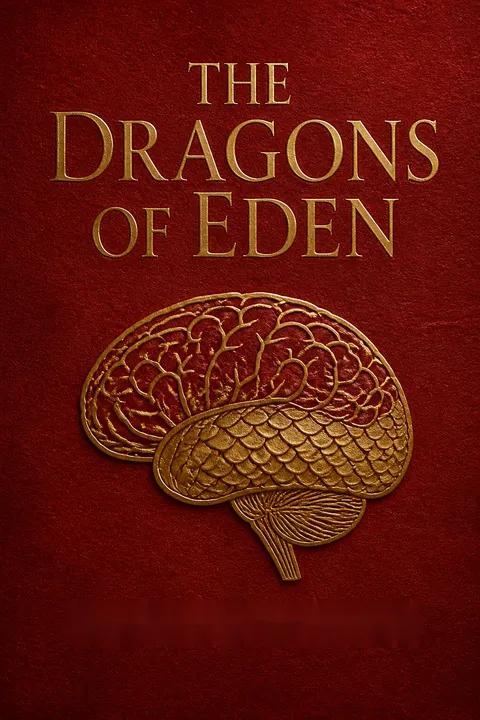
The Dragons of Eden is a thought-provoking exploration of human intelligence evolution. Readers praise Sagan's engaging writing style and ability to connect science with other disciplines. While some information is outdated, many find the book's speculative nature stimulating. Highlights include discussions on brain anatomy, animal intelligence, and evolutionary memory. Critics note the book's age and potential inaccuracies but appreciate Sagan's unique perspective. Overall, it remains an intriguing read for those interested in human cognition and evolution, despite its limitations.
People Also Read


Glossary
Cosmic Calendar
Universe compressed into a yearA scale model that maps the history of the universe onto one calendar year. In Sagan's version, the Big Bang begins on January 1, Earth forms in September, and humans appear near midnight on December 31. The device makes the vast difference between cosmic time and recorded human history easier to grasp.
Extragenetic information
Knowledge learned outside genesInformation acquired during an organism's lifetime rather than passed down in its genes. In humans, much of it is learned through experience, teaching, and culture, and is carried in the brain. It can change across generations far faster than genetic inheritance, allowing behavior to adjust to changing conditions.
Extrasomatic information
Knowledge stored outside bodiesInformation preserved beyond an individual organism, in forms such as writing, books, and other cultural records. Sagan treats this as a further extension of learning beyond genes and brains. Because it can be copied and shared, extrasomatic information lets knowledge persist and accumulate across generations.
Triune brain
Three-part evolutionary brain modelPaul MacLean's model, presented by Sagan, describes the forebrain as comprising three evolutionary systems: the R-complex, limbic system, and neocortex. Each is associated with different patterns of behavior and brain function. The model is best understood as a historical framework for thinking about interacting influences, not as a literal account of three independent brains.
R-complex
Ancient brain system in MacLean's modelIn MacLean's triune brain model, the R-complex, also called the reptilian complex, is an evolutionarily ancient part of the forebrain. Sagan associates it especially with ritualized behavior, territoriality, aggression, and social hierarchy. The term is a component of a historical model and should not be taken to mean that such behaviors come from a separate reptile-like brain.
Neural chassis
Basic life-support brain structuresSagan's term for the spinal cord, hindbrain, and midbrain considered together. In his discussion of MacLean's model, these structures provide basic neural functions involved in breathing, circulation, and other processes necessary for survival. The phrase distinguishes this foundational machinery from the forebrain systems emphasized in the triune brain framework.
Lateralization
Specialization across brain hemispheresThe division or specialization of some functions between the left and right cerebral hemispheres. Sagan describes language as usually more strongly associated with the left hemisphere and spatial or pattern tasks with the right, drawing on brain-injury and split-brain research. These are tendencies within a highly connected brain, not a strict division into separate kinds of people or thought.
FAQ
What's The Dragons of Eden about?
- Exploration of Intelligence: The Dragons of Eden by Carl Sagan explores the evolution of human intelligence, tracing its development over millions of years. Sagan connects biological evolution with the emergence of cognitive abilities.
- Cosmic Perspective: Sagan uses the "Cosmic Calendar" to place human history within the vast timeline of the universe, highlighting how recent human development is in cosmic terms.
- Interdisciplinary Approach: The book integrates insights from biology, anthropology, psychology, and philosophy, making complex scientific concepts accessible to general readers.
Why should I read The Dragons of Eden?
- Engaging and Thought-Provoking: Sagan's storytelling combined with scientific inquiry makes the book both entertaining and enlightening, encouraging readers to ponder humanity's place in the universe.
- Understanding Evolution: It provides a clear explanation of evolutionary principles, particularly how they relate to human cognition, essential for anyone interested in sciences or humanities.
- Cultural and Ethical Implications: Sagan discusses the implications of human intelligence on our future, including ethical considerations regarding our treatment of other species, relevant in today's environmental and social context.
What are the key takeaways of The Dragons of Eden?
- Evolutionary Connection: Human intelligence is a product of millions of years of evolution, shaped by environmental pressures and biological adaptations.
- Brain Complexity: The book highlights the complexity of the human brain, especially the neocortex, which is responsible for higher-order thinking, creativity, and problem-solving.
- Interstellar Communication: Sagan speculates on extraterrestrial intelligence and suggests that understanding our own intelligence may help us communicate with other intelligent beings.
How does Carl Sagan explain the evolution of the brain in The Dragons of Eden?
- Brain Development Timeline: Sagan outlines the evolutionary timeline of the brain, noting significant milestones from simple structures in early vertebrates to the complex human brain.
- Neocortex Importance: The neocortex is crucial for advanced cognitive functions, including reasoning and abstract thought, and its expansion was vital for human intelligence.
- Adaptation to Environment: Brain evolution was driven by environmental challenges, with problem-solving and social interaction leading to more sophisticated brain structures.
What role does the Cosmic Calendar play in The Dragons of Eden?
- Visualizing Time: The Cosmic Calendar compresses the universe's 15 billion-year history into a single year, helping readers grasp the vastness of cosmic time.
- Highlighting Human Recentness: It illustrates how recent human development is, with all recorded history occurring in the last seconds of December 31st.
- Encouraging Reflection: The calendar serves as a tool for reflection on humanity's place in the universe, encouraging consideration of our actions in a larger cosmic narrative.
How does Carl Sagan address the concept of intelligence in The Dragons of Eden?
- Definition of Intelligence: Sagan defines intelligence as the ability to adapt to changing environments and solve problems, a key factor in species survival.
- Comparative Intelligence: The book compares human intelligence with other species, emphasizing the need to appreciate non-human intelligence.
- Future of Intelligence: Sagan speculates on the future evolution of human intelligence, considering technological advancements and their ethical implications.
What is the significance of the title The Dragons of Eden?
- Symbolic Meaning: The title suggests humanity's intelligence and passions have roots in a primordial state, reflecting the tension between advanced cognitive abilities and primal instincts.
- Connection to Myths: Sagan draws on myths, including the biblical Eden, to explore themes of knowledge and the consequences of intelligence.
- Exploration of Origins: The title encapsulates the exploration of human intelligence origins, linking it to evolutionary past and cultural narratives.
How does Carl Sagan connect human intelligence to extraterrestrial life in The Dragons of Eden?
- Search for Extraterrestrial Intelligence: Sagan discusses the potential for extraterrestrial civilizations and the importance of understanding our intelligence in that context.
- Universal Principles: He posits that evolution and intelligence principles may be universal, applicable to other life forms in the universe.
- Communication Challenges: Sagan emphasizes the need for understanding intelligence to facilitate communication with extraterrestrial beings.
How does Carl Sagan explain the evolution of sleep in The Dragons of Eden?
- Survival Mechanism: Sleep evolved as a survival mechanism for early mammals, allowing them to avoid predation during the day.
- Nocturnal Adaptations: Early mammals adapted to nocturnal lifestyles, influencing sleep evolution and allowing them to exploit less competitive ecological niches.
- Dreaming and Memory: Sagan explores dreaming's role in processing experiences and memories, crucial for cognitive development.
What is the "immobilization hypothesis" mentioned in The Dragons of Eden?
- Definition of the Hypothesis: It suggests early mammals evolved behaviors of hiding and inactivity during the day to avoid predation, leading to sleep pattern development.
- Evolutionary Context: Sagan places this hypothesis in the Mesozoic era, arguing that safety needs drove mammals to develop nocturnal habits.
- Implications for Intelligence: The hypothesis implies evolutionary pressures contributed to complex brain structures and cognitive abilities.
How does Carl Sagan connect human intelligence to the extinction of dinosaurs?
- Predation on Eggs: Sagan suggests early mammals may have contributed to dinosaur extinction by preying on their eggs, adding stress to populations.
- Evolutionary Advantage: Dinosaur extinction allowed mammals to occupy new ecological niches, providing opportunities for greater intelligence and adaptability.
- Speculative Scenarios: Sagan speculates on potential intelligent dinosaur species and their impact on life development if dinosaurs hadn't gone extinct.
What are the implications of Carl Sagan's views on intelligence for society today?
- Ethical Considerations: Sagan raises ethical questions about our responsibilities as intelligent beings, emphasizing compassion towards other species and the environment.
- Cultural Evolution: He suggests intelligence evolution is tied to cultural development, arguing for ethical frameworks to address challenges.
- Future of Humanity: Sagan warns of technology and intelligence advancements' risks and opportunities, advocating for wisdom in guiding actions.
About the Author




Download PDF
Download EPUB
.epub digital book format is ideal for reading ebooks on phones, tablets, and e-readers.








