

Key Takeaways
Treat Earth's smallness as a reason for care, not despair.
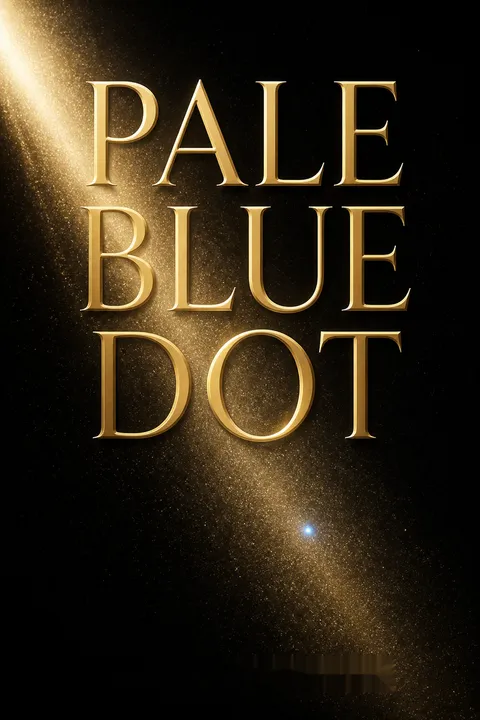
A distant portrait. In 1990, Voyager 1 turned its camera toward Earth from billions of miles away. The planet appeared as a single, faint point, too small to show cities, borders, or individual lives. Seen from there, the human dramas that fill history books take place on a tiny world with no visible backup home.
A moral consequence. Sagan uses this perspective not to say that human lives are worthless, but to challenge vanity and tribal conflict. Earth is the only world known to support life, and humanity cannot simply move elsewhere if it damages this one. Cosmic humility, in this argument, makes care for one another and for the planet more urgent.
What's powerful is the shift from scale to responsibility. A small world is not a trivial world to its inhabitants; it is the entire setting in which suffering, love, and moral choice occur. The image can also correct a political illusion: borders look absolute from the ground, but pollution, climate, and biological risks cross them readily. Still, perspective alone does not produce cooperation. Institutions, incentives, and accountability must translate the feeling of shared fragility into durable action.
Use evidence to unsettle the flattering story that humans occupy center stage.
A repeated correction. People have often mistaken familiar appearances for cosmic truth. The Sun seems to circle Earth, but careful observation established that Earth orbits the Sun. Galileo's moons of Jupiter showed that not everything revolves around Earth; later measurements confirmed Earth's motion. Astronomy then displaced the Sun from the center of the Milky Way, and the Milky Way from any special position among galaxies. Evolution likewise connected humans to other animals rather than placing us outside nature.
A useful discipline. Sagan calls the human-centered assumption anthropocentrism. The broader lesson is that evidence must be allowed to correct intuitions that flatter a group or species. A better telescope, measurement, or experiment can overturn a confident worldview, even when that worldview has powerful defenders.
This is a case for institutional humility, not merely individual modesty. Scientific knowledge advances when claims are exposed to observations that could prove them wrong, a principle with close parallels in constitutional checks and independent audits. The historical examples also show that evidence does not automatically win: institutions can punish dissent or delay revision. Sagan's account is strongest when it treats correction as a social achievement, rather than implying that science proceeds through facts alone.
Read Earth as a living rarity, not a disposable platform.
A planetary checkup. During a 1990 flyby, the Galileo spacecraft examined Earth using instruments designed for planetary exploration. It detected oceans, clouds, oxygen, and the spectral signature of vegetation. It also found atmospheric methane coexisting with oxygen, a chemical imbalance that requires continual replenishment. Radio transmissions revealed technology. Together, these clues showed that life and intelligence could be detected without first assuming what Earth life looked like.
A cautious conclusion. Sagan reported no confirmed life beyond Earth in the Solar System. That did not prove Earth was unique throughout the Universe; it meant Earth was the only known living world. The distinction matters. Life may be widespread, but a possibility is not an observation, and a living planet should not be treated as replaceable while no alternative home is known.
The flyby is a powerful calibration test: before trusting a method to find life elsewhere, see whether it can recognize life here without being told where to look. Modern exoplanet research uses a similar logic when interpreting atmospheric gases as possible biosignatures. But individual gases are not verdicts. Oxygen, methane, or other compounds can have nonbiological sources, and several independent clues are more persuasive than one striking signal. The book's central restraint remains valuable: distinguish an intriguing hint from a confirmed discovery.
Study other planets to learn how Earth's climate can fail.
Planets as comparisons. Comparative planetology is the study of worlds side by side to understand how their different conditions shape them. Venus, close in size to Earth, has a crushing carbon dioxide atmosphere and surface temperatures near 470 degrees Celsius. Mars, with a thin atmosphere and little ozone, exposes surface material to destructive ultraviolet radiation. Their contrasting histories help reveal that a planet's climate is not guaranteed to remain hospitable.
Knowledge with consequences. Sagan traces practical environmental insights to planetary research. Studies of Venus helped scientists understand greenhouse warming; research on Martian dust and volcanic aerosols contributed to work on nuclear winter. Atmospheric chemistry developed for Venus also helped identify the threat that chlorofluorocarbons posed to Earth's ozone layer. Looking outward can uncover risks that are difficult to recognize from one planet alone.
The comparison functions like a natural experiment: the same physical laws operate under different atmospheric and geological conditions. That can test whether climate models explain more than the one case they were tuned to describe. The method is especially useful when direct experiments on a whole planet are impossible. Its limits matter too. Venus and Mars differ from Earth in many interacting ways, so neither is a simple forecast of Earth's future. Their value lies in identifying mechanisms and boundaries, not supplying one-to-one predictions.
Send robots first: they turn distant worlds into shared human knowledge.
Machines as explorers. The Voyager spacecraft revealed worlds that had been little more than points of light. They found active volcanoes on Jupiter's moon Io, complex rings around the giant planets, and landscapes on icy moons that had been reshaped by impacts and internal heat. At Titan, Saturn's large moon, instruments detected a nitrogen-rich atmosphere and organic molecules, the chemical ingredients that make it a useful natural laboratory for studying life's possible beginnings.
Ingenuity at distance. Voyager 2's journey through the Uranus system was so precise that it passed within about 200 kilometers of its planned trajectory after traveling billions of kilometers. When equipment failed, engineers found ways around the damage. The missions showed how robots can explore dangerous places, return vast amounts of data, and extend human senses without putting crews at risk.
Voyager's achievement is not simply that machines are cheaper than people. It shows the power of a human-robot partnership: autonomous systems handle routine tasks, while teams on Earth solve problems that require broader judgment. That pattern has applications in disaster response and hazardous research, not only spaceflight. The tradeoff is distance and delay. Robots cannot improvise as flexibly as a person on site, and their instruments reflect choices made before launch. Good mission design therefore depends on pairing durable hardware with scientific questions that justify the journey.
Judge exploration by its lasting dividend, not its original political sales pitch.
Apollo's double story. The Moon landings were presented as national achievements, but Sagan argues that their central purpose was Cold War competition and a public demonstration of rocket capability. The same technology could carry astronauts or weapons. Apollo was therefore not primarily a scientific program, even though it returned valuable lunar samples and helped make later robotic exploration politically possible.
An unexpected return. The astronauts' photographs of the whole Earth gave people a new view of a shared, vulnerable planet. That public image helped make environmental interdependence easier to grasp. Apollo's legacy was mixed: national rivalry helped finance an extraordinary scientific program, while the view from space offered a perspective that reached beyond national rivalry. The origin of a project does not determine all the uses its achievements can serve.
This is a useful way to assess public projects: separate the motive that secured funding from the benefits that materialized. It avoids both propaganda, which sanitizes political origins, and cynicism, which assumes compromised motives make every outcome worthless. The same distinction appears in public health and infrastructure, where a project can have several constituencies and effects. Yet downstream benefits should not excuse weak oversight or inflated promises. A fair accounting asks who bore the costs, who gained, and which benefits were genuinely additional.
Demand a public purpose before risking lives and vast sums on Mars.
Robots change the case. Mars offers ancient river valleys, polar ice, dramatic volcanoes, and questions about whether life ever arose there. But Sagan argues that robots can answer many scientific questions at a fraction of the cost and without risking astronauts. Claims that human missions will pay for themselves through inventions or economic growth also need scrutiny; ordinary research funding may produce those benefits more directly.
A staged commitment. Human travel could still offer exploration, inspiration, and international cooperation. Sagan's test is whether those benefits justify the expense and danger alongside urgent needs on Earth. Rather than treating a Mars landing as inevitable, he favors building relevant capabilities through robotic missions, long-duration spaceflight research, international partnerships, and technologies for using Martian resources. A major expedition should have a clear public rationale, a credible budget, and an honest account of risk.
This argument replaces the false choice between boundless enthusiasm and abandoning exploration. Staged investment creates information before a society commits to its most expensive, dangerous step. It also makes opportunity cost visible: money has alternative uses, and not every inspiring project is automatically the best one. On the other hand, benefits such as shared purpose and technical learning are hard to price in advance. The sensible standard is not that every benefit be precisely monetized, but that assumptions be explicit and compared with realistic alternatives.
Detect cosmic hazards, but govern orbit-changing tools as potential weapons.
Impacts are real. The fragments of Comet Shoemaker-Levy 9 struck Jupiter in 1994, providing a vivid reminder that worlds collide. Sagan describes estimates in which objects tens to hundreds of meters across can cause serious damage, while bodies kilometers wide can threaten life on a global scale. Finding and tracking near-Earth asteroids can give humanity time to assess a genuine danger.
A dangerous remedy. The deflection dilemma is that technology capable of steering a threatening asteroid away from Earth could also redirect a harmless one toward Earth. Breaking an object apart might even create multiple dangerous fragments. Detection and orbit calculation are prudent, but deploying powerful deflection systems raises questions of verification, secrecy, and misuse. Sagan argues that any response needs international oversight, realistic threat assessment, and public understanding, not just engineering confidence.
The problem resembles other dual-use technologies: a capability built for protection can also enable coercion or catastrophe. Governance must therefore be designed alongside engineering, with transparency, independent verification, and clear limits on authority. Risk communication is delicate as well. Dramatic images can prompt action, but exaggerating rare events can erode trust or create pressure for premature intervention. The book's distinction between tracking and altering is valuable: gathering better information can reduce uncertainty without immediately creating a new tool that requires its own safeguards.
Stay curious about extraterrestrial intelligence without lowering the evidence bar.
Listening in the dark. The Search for Extraterrestrial Intelligence, or SETI, looks for signs of technology, especially radio signals that natural processes are unlikely to produce. Project META, a radio search described by Sagan, monitored millions of narrow frequency bands. After years of observations, eleven unusual events remained promising enough to examine, but none repeated when researchers looked again. Without repeatable evidence, they could not be called messages from another civilization.
A disciplined unknown. Sagan treats a confirmed signal as potentially transformative, but does not claim one has been found. A negative search constrains only the kinds of signals, frequencies, places, and times actually observed. It cannot establish that no other intelligence exists. The correct response to uncertainty is neither credulity nor dismissal, but better observation and independent confirmation.
SETI makes the logic of scientific restraint unusually visible. A candidate signal can feel momentous, yet the requirement that another team reproduce it protects the field from mistaking interference or equipment failure for discovery. The same standard underpins medicine and particle physics, where a surprising result must survive independent checks. Null results also have value, but only within the search's limits. They reduce some possibilities while leaving many others untouched. The discipline is not a refusal to wonder; it is a way to keep wonder answerable to evidence.
Expand humanity carefully, and prove stewardship on Earth before remaking worlds.
A possible hedge. Sagan imagines that settlements beyond Earth could reduce the risk that a single catastrophe ends humanity. He also warns that a base dependent on Earth is not yet a genuine refuge. Long-term survival would require communities able to sustain themselves, cooperate, and manage new hazards. The case for spreading outward is therefore an argument about resilience, not merely adventure.
Do not confuse capability with permission. Terraforming means deliberately changing a world so its environment becomes more suitable for human life. Mars might be easier to alter than Venus, but large-scale changes could destroy scientific records or endanger unknown organisms. Sagan's test is stark: a species that cannot protect its own planet should hesitate before redesigning others. Careful exploration and local habitats are more responsible first steps than planetary-scale engineering.
The resilience argument resembles portfolio diversification: spreading a species across distinct environments could reduce dependence on one planetary system. But diversification works only if the alternatives are viable rather than fragile outposts tied to one supply chain. Settlement also creates ethical questions about contamination, ownership, and the value of untouched environments. Sagan's stewardship test gives the argument a needed brake. Off-world expansion is not proof of maturity; the ability to preserve Earth and respect unfamiliar worlds is a better measure of whether greater power is being matched by greater judgment.
Analysis
Pale Blue Dot is not simply a celebration of space travel. Its argument moves through three linked stages: astronomy strips away inherited claims of human centrality, planetary exploration shows how precarious a living world can be, and spaceflight becomes a question of collective responsibility rather than technical bravado. The book's narrative method matters. A family migration, Galileo's confrontation with authority, Voyager's engineering near-failures, and the image of Earth from far away make abstract claims about scale and evidence concrete.
The most durable contribution is the pairing of humility with agency. Humanity is not cosmically privileged, yet it is unusual in possessing tools that can alter planetary conditions and perhaps threaten its own future. That tension prevents the book's humility from collapsing into resignation. Its defense of science is also civic: reliable knowledge depends on doubt, open criticism, and institutions able to correct error. The debate over asteroid deflection sharpens this point, showing that information and intervention do not carry the same risks.
Some arguments are more speculative than others. Robotic planetary science and the value of comparative observation rest on demonstrated achievements; interstellar migration and terraforming depend on long chains of uncertain technology, politics, and social change. The book sometimes treats expansion as a plausible species-level insurance policy without fully resolving how unequal access, conflict, or fragile off-world supply systems would shape it. Those limits do not erase the vision, but they make its strongest practical implication more modest: learn more before intervening, and build institutions capable of governing powerful tools.
The book's enduring challenge is to make planetary perspective operational. Seeing borders disappear from orbit is not enough; societies must cooperate on problems that cross them. Seeing Earth as a rare habitat is not enough; protection requires tradeoffs on the ground. The cosmic view is most useful when it changes priorities here, not when it becomes an excuse to romanticize escape.
Review Summary
Pale Blue Dot received high praise for its poetic and inspiring exploration of humanity's place in the universe. Readers appreciated Sagan's ability to balance scientific knowledge with philosophical insights, making complex concepts accessible. The book's discussion of space exploration, planetary science, and potential future scenarios captivated many. Some found later chapters repetitive, and a few criticized the atheistic tone. Overall, reviewers felt the book encouraged a broader perspective on Earth's significance and humanity's role in the cosmos, leaving a lasting impact on their worldview.
People Also Read





Glossary
Pale Blue Dot
Earth seen from afarThe distant image of Earth taken by Voyager 1 in 1990, when the planet appeared as a tiny point of light. Sagan uses the image to unsettle human claims of centrality and to emphasize that Earth is the only known home of life, making care for the planet and its inhabitants a practical responsibility.
Great Demotions
Corrections to human centralitySagan's name for successive discoveries that displaced humanity from supposedly privileged positions. Earth proved not to be the center of the Solar System, the Sun was not central to the Milky Way, and the Milky Way was one galaxy among many. Evolution and modern physics further challenged claims that humans occupy a separate or privileged place in nature.
Principle of Mediocrity
Assume no special positionA perspective that treats Earth's location, era, and physical circumstances as not automatically exceptional. Sagan uses it to counter the assumption that humans must be central to the Cosmos. It is not a claim that every feature of Earth is ordinary; rather, it places the burden on evidence before declaring humanity uniquely privileged.
comparative planetology
Compare worlds to understand planetsThe study of planets and moons by comparing their environments, histories, and physical processes. Differences among Earth, Venus, and Mars help researchers understand climate, geology, and atmospheric chemistry. Sagan presents the approach as both a scientific method and a practical resource: other worlds can reveal mechanisms and risks that are harder to recognize by studying Earth alone.
tholin
Complex organic laboratory materialA reddish-brown organic material produced in laboratory experiments that expose methane-rich mixtures to ultraviolet light or energetic particles. Sagan and colleagues used the term for material resembling the haze particles observed in Titan's atmosphere. Tholin is not evidence of life, but it contains molecular building blocks relevant to prebiotic chemistry.
Search for Extraterrestrial Intelligence (SETI)
Search for technological signalsA scientific effort to detect evidence of technology beyond Earth, especially signals that cannot readily be explained by natural processes. Sagan describes radio searches that monitor narrow frequency bands for possible transmissions. A candidate signal requires careful analysis and independent confirmation; unusual or nonrepeating data do not establish that an extraterrestrial civilization has been detected.
Project META
Wide-sky radio signal searchA radio search for extraterrestrial intelligence described by Sagan and physicist Paul Horowitz. META examined millions of narrow frequency channels across much of the sky, looking for signals that might indicate technology. It produced several unusual, unrepeatable candidate events, but no confirmed detection. Its results illustrated both the reach of radio astronomy and the importance of verification.
deflection dilemma
Protection technology can threatenThe problem that technology able to alter the orbit of a dangerous asteroid could also be used to redirect a harmless object toward Earth. Breaking an asteroid apart may create additional hazards rather than remove them. Sagan argues that detecting and studying near-Earth objects is prudent, while deploying deflection capability requires serious safeguards and international oversight.
terraforming
Changing a world for habitationThe deliberate large-scale alteration of a planet's environment to make it more suitable for human life. In Sagan's discussion, possible methods include changing atmospheric composition or temperature. Such interventions could be costly, difficult to control, and destructive to scientific records or possible native life, so he argues that thorough exploration and environmental knowledge must come first.
FAQ
What’s Pale Blue Dot: A Vision of the Human Future in Space by Carl Sagan about?
- Humanity’s Place in the Cosmos: The book explores humanity’s position in the universe, emphasizing the fragility and uniqueness of Earth as seen from space.
- Vision for Space Exploration: Sagan presents a vision for the future of human and robotic space exploration, discussing missions to Mars, the Moon, asteroids, and beyond.
- Scientific and Philosophical Reflections: The narrative blends scientific discoveries with philosophical insights, challenging anthropocentric views and encouraging a cosmic perspective.
- Environmental and Existential Themes: Sagan connects planetary science to urgent environmental issues on Earth, advocating for stewardship and international cooperation.
Why should I read Pale Blue Dot by Carl Sagan?
- Profound Cosmic Perspective: The book offers a humbling and awe-inspiring view of Earth’s place in the universe, fostering appreciation for our planet’s fragility.
- Insight into Space Science: Readers gain a comprehensive understanding of the history, achievements, and future possibilities of space exploration.
- Environmental Awareness: Sagan links planetary science to pressing environmental threats like ozone depletion and global warming, showing their interconnectedness.
- Inspirational and Thought-Provoking: The eloquent writing inspires reflection on humanity’s destiny, the importance of science, and our responsibilities as cosmic citizens.
What are the key takeaways from Pale Blue Dot by Carl Sagan?
- Earth’s Unity and Vulnerability: Viewing Earth from space dissolves divisions and highlights the need for global cooperation to address environmental challenges.
- Comparative Planetology: Studying other planets provides crucial insights into Earth’s climate and environmental risks, such as greenhouse effects and nuclear winter.
- Space Exploration’s Value: Beyond scientific discovery, spaceflight inspires humanity, fosters international collaboration, and may be essential for long-term survival.
- Humility in the Cosmos: Sagan urges readers to embrace humility, recognizing that humans are not the center of the universe but part of a vast, interconnected cosmos.
What are the best quotes from Pale Blue Dot by Carl Sagan and what do they mean?
- “A mote of dust suspended in a sunbeam”: This iconic phrase describes Earth’s appearance from the Voyager 1 photograph, underscoring our planet’s smallness and vulnerability.
- “Our responsibility to deal more kindly with one another, and to preserve and cherish the pale blue dot, the only home we’ve ever known.” Sagan calls for compassion and stewardship, emphasizing the unity of all life on Earth.
- “The universe is not required to be in perfect harmony with human ambition.” This quote challenges anthropocentrism, reminding us that the cosmos is indifferent to human desires.
- “We are, each of us, a multitude.” Sagan reflects on the complexity and interconnectedness of life, both within ourselves and across the planet.
How does Carl Sagan’s Pale Blue Dot explain the significance of the Voyager 1 “Pale Blue Dot” photograph?
- Perspective on Earth’s Size: The photograph, taken from 3.7 billion miles away, shows Earth as a tiny, pale blue dot, highlighting our planet’s insignificance in the vast cosmos.
- Unity and Fragility: Sagan uses the image to emphasize that everyone who has ever lived exists on this “lonely pixel,” reinforcing the interconnectedness of humanity.
- Call for Responsibility: The photograph serves as a powerful reminder of our duty to care for and protect our only home.
- Humbling Effect: The image challenges human pride and encourages a more modest, global perspective.
What achievements in space exploration are highlighted in Pale Blue Dot by Carl Sagan?
- United States Milestones: The book covers key achievements such as the discovery of the Van Allen radiation belt, the Apollo Moon landings, and robotic missions to the outer planets.
- Soviet Union/Russia Contributions: Sagan details milestones like Sputnik 1, the first human in space, and pioneering robotic landings on the Moon, Venus, and Mars.
- Voyager Missions: The Voyager 1 and 2 spacecraft are celebrated for their groundbreaking exploration of the Solar System and for capturing the “Pale Blue Dot” image.
- Robotic Exploration’s Role: The narrative emphasizes the cost-effectiveness and scientific value of robotic missions in expanding humanity’s reach.
How does Pale Blue Dot by Carl Sagan address the search for life on Earth and beyond?
- Detecting Life from Afar: Sagan imagines how an alien spacecraft could detect life on Earth by observing atmospheric gases and radio signals.
- Galileo Spacecraft Experiment: The book describes how the Galileo flyby confirmed that signs of life and intelligence are detectable remotely, validating methods for searching for life elsewhere.
- Current Knowledge: Despite extensive exploration, no life has been found beyond Earth, but the search continues with advancing technology.
- SETI and Extraterrestrial Intelligence: Sagan discusses the scientific efforts to detect signals from alien civilizations and the philosophical implications of such a search.
What is the “Anthropic Principle” and how does Pale Blue Dot by Carl Sagan critique it?
- Weak Anthropic Principle: The book explains that the laws of nature must allow for our existence, but this is a tautology rather than a profound insight.
- Strong Anthropic Principle Critique: Sagan criticizes the idea that the universe was designed for humans, calling it untestable and anthropocentric.
- Principle of Mediocrity: He advocates for humility, suggesting that humans are not privileged but are part of a vast, indifferent cosmos.
- Scientific Demotions: The narrative highlights how science has repeatedly displaced humanity from the center of the universe.
How does Pale Blue Dot by Carl Sagan connect planetary science to environmental issues like ozone depletion and global warming?
- Ozone Depletion and CFCs: Sagan explains how research on Venus’s atmosphere helped scientists understand the threat of CFCs to Earth’s ozone layer.
- Global Warming Models: Climate models developed for Mars and Venus have been used to predict and understand Earth’s greenhouse effect.
- Nuclear Winter: The book discusses how planetary science methods were applied to model the catastrophic effects of nuclear war on Earth’s climate.
- Interconnected Science: Sagan demonstrates that studying other planets can yield vital insights into protecting our own environment.
What does Pale Blue Dot by Carl Sagan say about Mars and its significance for human exploration?
- Mars as Earth’s Neighbor: Mars is portrayed as the most Earthlike planet, with evidence of ancient rivers and lakes, making it a prime candidate for exploration and possible settlement.
- Robotic Discoveries: Missions like Mariner 9 and Viking have revealed Mars’ geology, climate history, and surface conditions, paving the way for future exploration.
- Challenges and Resources: The thin atmosphere, cold temperatures, and radiation present obstacles, but resources like water ice offer opportunities for in-situ utilization.
- International Cooperation: Sagan advocates for collaborative human missions to Mars, emphasizing their symbolic and practical importance.
What are the arguments for and against human missions to Mars in Pale Blue Dot by Carl Sagan?
- Arguments For: Human missions could greatly expand knowledge, inspire future generations, and serve as a backup for humanity’s survival.
- Arguments Against: High costs, technological risks, and the effectiveness of robotic missions challenge the necessity of sending humans.
- Economic and Political Realities: Sagan discusses the need for compelling justifications and international partnerships to make such missions feasible.
- Balanced Approach: He recommends incremental research and technology development, supporting eventual human missions without premature commitment.
What is terraforming according to Pale Blue Dot by Carl Sagan, and is it feasible?
- Definition of Terraforming: Terraforming involves altering a planet’s environment to make it more Earthlike and habitable for humans.
- Feasibility and Challenges: Mars is considered the most feasible candidate, but the process would be enormously expensive and complex, requiring advances in technology.
- Ethical Considerations: Sagan raises questions about the right to alter other worlds and the need for thorough scientific understanding before proceeding.
- Long-Term Prospects: While current technology is insufficient, future advances may make terraforming possible over centuries or millennia.
About the Author




Download PDF
Download EPUB
.epub digital book format is ideal for reading ebooks on phones, tablets, and e-readers.








