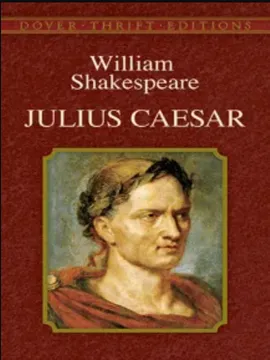


Plot Summary
Rome Forgets Pompey
On a Roman workday, crowds leave their trades to celebrate Caesar's triumph. The tribunes Flavius and Marullus rebuke them for cheering a conqueror whose victory came at Pompey's expense, then remove decorations from Caesar's statues to curb his popularity.
At the Lupercal festival, Caesar has Antony touch Calpurnia in hopes of curing her barrenness. A soothsayer warns Caesar about the coming ides of March, but Caesar dismisses him. Cassius notices that Brutus is troubled and draws him into a private conversation.
Brutus admits he fears the people may make Caesar king, though he still loves him. Cassius reminds Brutus that Caesar is a mortal man, not a god, and urges him to measure his own worth against Caesar's. Brutus agrees to think on the danger.
The opening makes political legitimacy a public performance: Caesar's status rises not only through conquest but through the crowd's shifting attention. The tribunes understand that spectacle can train people to accept power, yet their rebuke also exposes how little control the elite have over popular feeling. Cassius exploits this instability by recasting Brutus's private uncertainty as a duty to Rome. His appeal depends less on evidence of Caesar's tyranny than on Brutus's fear of what might happen if power becomes hereditary or absolute. The soothsayer's warning introduces another kind of knowledge, one that Caesar's confidence makes easy to disregard.
Letters in the Night
After a violent storm fills Rome with reported wonders, Cassius tells Casca that the strange signs reflect the political disorder surrounding Caesar. Casca accepts his argument and joins the plot. Cassius then arranges for forged messages, written to look like appeals from Roman citizens, to reach Brutus by his window and public statue.
Brutus reads one and takes it as evidence that Rome expects him to act. Alone, he reasons that Caesar might become dangerous if crowned, although he can name no present injury Caesar has done him. Before dawn, Cassius brings the conspirators to Brutus's house.
Brutus refuses to bind them with an oath, arguing that their cause should be enough, and rejects proposals to kill Antony as well as Caesar. Portia notices Brutus's distress and the secret visitors; to prove her resolve, she wounds her thigh and presses him to trust her. Brutus also draws the ailing Ligarius into the enterprise.
The conspiracy gains its most important recruit through a manufactured reflection of public opinion. Brutus believes he is responding to Rome, but Cassius has carefully staged the evidence that makes this belief possible. Brutus's private reasoning reveals the moral hazard: he treats a feared future as if it were already a political fact, turning prevention into permission for murder. His refusal of an oath expresses genuine confidence in civic virtue, yet that idealism also leaves the conspirators without safeguards against self-deception. Portia's wound makes visible the cost of Brutus's secrecy at home. Her courage challenges the assumption that political judgment belongs only to men, even as Brutus delays sharing the full burden with her.
The Capitol's Blood
Calpurnia wakes from a nightmare of Caesar's statue running with blood, and reports other ominous signs in Rome. Caesar initially agrees to stay home after priests find no heart in a sacrificial animal.
Decius Brutus, one of the conspirators, reinterprets Calpurnia's dream as a promise that Rome will draw strength from Caesar and warns that the Senate may reconsider its planned crown if Caesar stays away. Caesar changes his mind and leaves for the Capitol. On the way, Artemidorus tries to hand him a written warning naming the conspirators, but Caesar postpones reading personal petitions.
Once the Senate gathers, Metellus Cimber kneels to ask that his banished brother be recalled. The conspirators crowd around Caesar under cover of the appeal. Casca strikes first; the others follow, and Brutus joins them. Caesar falls beneath their blades as the conspirators proclaim that they have ended tyranny.
The murder is prepared by competing interpretations of signs. Calpurnia reads the dream as a warning, while Decius converts the same image into flattery that serves the conspirators' timetable. Caesar's decision is not simply courage against fear: he is vulnerable to praise, concerned with public appearance, and unwilling to elevate private warnings above his own authority. Artemidorus offers precise information, but Caesar's hierarchy of importance prevents him from hearing it in time. The conspirators disguise violence as a petition for clemency, making the Senate's ordinary rituals part of the trap. Brutus's participation gives the killing a public image of principle, but cannot make its physical reality less intimate or brutal.
Antony Takes the Forum
With Caesar's body still before them, Brutus assures the Romans that the conspirators acted to protect their freedom. Antony arrives and asks permission to bury Caesar and speak at his funeral. Brutus grants it despite Cassius's warning that Antony could sway the crowd.
Brutus addresses the people first, presenting Caesar's death as a necessary answer to ambition; the crowd accepts his reasoning and praises Brutus. Antony then recalls Caesar's generosity, points to his wounds, and reveals the dead man's bequests to Roman citizens, including money and access to his gardens.
The crowd's grief turns to fury, and people rush off to attack the conspirators' homes. In the confusion, a mob kills Cinna the poet after mistaking him for Cinna the conspirator. Antony learns that Octavius has reached Rome, while Brutus and Cassius flee the city.
Brutus trusts that a sound argument can contain the consequences of violence. Antony understands that the crowd responds not only to reasons but to bodies, memory, and material benefit. By displaying Caesar's wounds and naming his gifts, he makes the abstract accusation of ambition compete with visible evidence of affection and generosity. His careful performance of restraint lets the crowd supply its own anger, which makes the reversal feel spontaneous rather than directed. The mob's killing of Cinna the poet exposes the danger of a public awakened without judgment: a name becomes enough to condemn a man. The conspirators have removed Caesar, but they have not controlled what his death means.
Rome's New Rulers
After the crowd turns against the conspirators, Antony meets Octavius, Caesar's heir, and Lepidus to organize their response. The three men draw up a list of people to execute, including relatives, and accept the deaths of allies in exchange for political advantage.
Antony treats Lepidus as a useful subordinate, sending him to fetch Caesar's will and doubting his fitness to share power. Octavius resists this dismissal, insisting that Lepidus has proved himself in war. The new leaders then prepare to meet Brutus and Cassius, who are raising forces outside Rome.
Their alliance is practical rather than affectionate: each needs the others' armies and authority to defeat the conspirators. Rome's political crisis has widened from a Senate killing into a struggle between rival military coalitions.
The triumvirs answer an assassination justified as defense of liberty with a systematic list of killings. Their method exposes how quickly emergency politics can reproduce the coercion it claims to oppose. Antony's treatment of Lepidus reveals a governing style built on instrumental relationships: a colleague matters for what he can carry or command, not for equal participation. Octavius's disagreement suggests a different calculation, one that recognizes military usefulness even when personal respect is absent. Neither approach restores the old republic. By turning political disagreement into a contest of armies, the surviving leaders make public authority depend increasingly on force rather than persuasion.
The Camp Divides
At Sardis, Brutus confronts Cassius for trying to protect an officer accused of taking bribes. Their argument widens into resentment over money for the army and each man's sense of being wronged. Cassius offers his dagger in a burst of despair; Brutus refuses it, and the friends reconcile. Brutus then reveals that Portia has died by suicide while he was away, news that arrived alongside reports of the triumvirs' executions, including Cicero's.
Cassius favors waiting for the enemy, but Brutus argues that their army should march to Philippi before its support weakens. That night, Caesar's ghost appears to Brutus and foretells another meeting at Philippi. Brutus treats the vision as a warning, wakes his officers, and orders the army to move.
The quarrel turns the conspirators' political ideals inward. Brutus condemns bribery because it contradicts the moral story told to justify Caesar's death, while Cassius sees the same standards as inflexible in wartime. Their reconciliation restores cooperation, but not the conditions that first made their alliance seem righteous. Portia's death reveals the cost of Brutus's absence and secrecy without allowing him time to grieve openly; he redirects himself toward military decisions. The ghost gives personal guilt a supernatural form, yet Brutus responds as a commander, not a penitent. His choice to march reflects the play's recurring pressure to act under uncertainty, when delay may seem as dangerous as error.
Cassius Misreads the Field
At Philippi, Brutus pushes for battle and sends his troops against Octavius's side. His men gain ground, but stop to loot; meanwhile, Antony's forces overwhelm Cassius's camp. From a hill, Cassius sees smoke and sends Titinius to discover whether nearby riders are friends or enemies.
Pindarus watches from above and mistakes the riders' welcome of Titinius for his capture. Believing his closest ally has been taken, Cassius asks Pindarus to kill him with the sword that killed Caesar.
Titinius returns with news of Brutus's success and a victory wreath for Cassius, then finds him dead. Grief-stricken, Titinius kills himself. Brutus arrives, recognizes that both deaths sprang from a mistaken reading of events, and orders Cassius's body removed from the camp before the battle resumes.
The battlefield makes uncertainty lethal. Cassius has long relied on reading other people, but now a distant view and a hurried report defeat that habit. Pindarus's error is not malicious; the tragedy comes from the gap between what can be seen and what is true. Cassius turns that gap into an irreversible judgment, while Titinius's return proves how little time separated despair from relief. Their deaths also fracture the army's leadership at the moment Brutus's victory elsewhere might have mattered. The same political violence that began with Caesar's body now consumes the conspirators themselves, though no victor or defeated soldier can control its timing.
Brutus Chooses His End
Brutus rallies the remaining soldiers, but the renewed fighting defeats his side. Young Cato dies in battle, and Lucilius lets enemy soldiers believe he is Brutus to delay their search. Brutus withdraws with a few companions and asks several of them to help him die rather than be captured; each refuses.
He recalls the ghost of Caesar and concludes that the end foretold at Philippi has arrived. Strato finally agrees to hold the sword while Brutus runs onto it.
When Antony and Octavius reach the body, Antony distinguishes Brutus from the other conspirators, believing he acted for Rome rather than personal envy. Octavius offers service to Brutus's remaining men and orders an honorable military burial. The republic Brutus tried to defend is gone, but his enemies preserve his name with respect.
Brutus's final decision completes the conflict between private survival and public identity. He refuses capture not because he has escaped the consequences of his actions, but because he will not let an enemy determine how his life ends. His companions' repeated refusals make the act a solitary choice, while Strato's assistance gives it the final form of a relationship rather than an execution. Antony and Octavius separate Brutus from the other conspirators by judging his motive, even though his political judgment helped produce the war. The burial cannot restore the republic, but it shows that a defeated enemy can still be granted moral recognition.
Analysis
The tragedy turns on the gap between a political act and the story told to justify it. Brutus and Cassius kill Caesar to prevent a future tyranny, but they have no proof that the feared future is inevitable. Their claim to act for Rome therefore depends on interpretation, persuasion, and public trust. Cassius manufactures the appearance of popular demand; Brutus accepts it because it fits his sense of civic duty. Their conspiracy begins by manipulating judgment even as it presents itself as a defense of freedom.
After the assassination, Antony understands that control of the story is a form of power. Brutus offers a reasoned defense, but Antony gives the crowd a body to mourn, a will to claim, and a memory of Caesar's care. The resulting violence is not simply a triumph of emotion over reason. It shows that political reasoning is never neutral when people are grieving, frightened, or promised a share of what has been lost. The crowd can recognize Caesar's generosity and still become dangerous in its anger.
The play also refuses to let noble motives absolve their consequences. Brutus's integrity distinguishes him from conspirators driven more openly by resentment, but his confidence in his own judgment helps turn speculation into murder. Cassius's practical intelligence can see the ambitions around him, yet his sensitivity to insult makes him vulnerable to despair. Their friendship survives a bitter quarrel, but neither their affection nor their ideals can prevent the collapse of their cause.
At Philippi, the same failures of interpretation return in smaller, deadlier form. A mistaken report leads Cassius to believe Titinius has been captured; Brutus's tactical choice gives Antony an advantage. Rome's fate is shaped both by grand claims about liberty and by ordinary limits of vision. The ending grants Brutus respect without restoring what he hoped to protect. Honor survives as a judgment about character, not as a political victory.
Review Summary
Julius Caesar receives mostly positive reviews, with readers praising Shakespeare's masterful language and complex characters. Many find the political themes still relevant today. Some note that despite the title, Caesar is not the main focus, with Brutus emerging as the tragic hero. The play's exploration of loyalty, ambition, and power dynamics captivates audiences. While some find it less engaging than other Shakespeare works, most appreciate its historical significance and quotable lines.
People Also Read






Characters
Brutus
Rome's divided idealistA respected Roman senator whose public identity rests on integrity, restraint, and devotion to the republic. Brutus is deeply attached to Caesar, yet worries that concentrated power could endanger Rome. He prefers decisions that can be defended as honorable, and he resists cruelty even when others argue it would be politically useful. That confidence in his own moral reasoning makes him both admirable and vulnerable: he can mistake a feared possibility for a proven fact. His closest relationships, especially with Cassius and Portia, test whether private loyalty can survive the demands he places on himself as a citizen.
Julius Caesar
Rome's commanding victorA celebrated general whose victories have made him the central figure in Roman public life. Caesar expects deference and trusts his own judgment, but he is also conscious of how authority looks to the crowd and Senate. His confidence allows him to dismiss warnings that might disrupt his plans, while his public generosity and personal ties complicate the claim that he seeks power only for himself. Caesar functions less as a private villain than as a political question: whether one immensely popular leader can remain subordinate to a republic.
Cassius
The plot's restless engineerA senator and soldier who resents Caesar's elevation and fears that Rome is becoming dependent on one man's favor. Cassius is observant, strategic, and unusually alert to the motives people conceal. He understands that political action requires more than conviction, so he recruits allies and shapes what Brutus sees. His intelligence is paired with insecurity: he measures himself against Caesar and bristles when Brutus judges his conduct. Their friendship is both an alliance and a contest over whose interpretation of Rome will prevail.
Mark Antony
Caesar's persuasive allyCaesar's trusted associate, a public figure known for sociability and political instinct. Antony initially appears less severe than Cassius or Brutus, but he understands how emotion, memory, and spectacle move a crowd. He can conceal his intentions behind courtesy and adapt his performance to the audience before him. His loyalty to Caesar gives him a personal stake in the crisis, while his command of public rhetoric makes him a formidable political actor in his own right.
Portia
Brutus's clear-eyed wifeBrutus's wife and the daughter of the Roman statesman Cato. Portia notices the strain that political secrecy places on her husband and refuses to be treated as a companion only in domestic matters. Her self-command and courage challenge the gendered limits surrounding Roman political life. She wants trust not as a privilege but as part of marriage, and she understands that Brutus's public choices will reach into their private life.
Octavius Caesar
Caesar's young heirCaesar's heir, newly arrived in Rome as the city enters a struggle for control. Octavius is young but not passive, and he asserts his judgment even when Antony tries to direct him. His position gives him both a personal connection to Caesar and a claim to political authority. He is careful about military power and alert to the risks of relying on allies whose ambitions may conflict with his own.
Calpurnia
Caesar's warning voiceCaesar's wife, whose fear for his safety sharpens when she dreams of his death and hears reports of strange events in Rome. Calpurnia is not usually ruled by superstition, which makes her alarm significant to Caesar. She tries to persuade him to remain at home, placing intimate knowledge of her husband against his public confidence and desire to appear fearless.
Casca
The blunt senatorA senator whose dry, blunt manner makes him a revealing observer of Roman spectacle. Casca reports the crown ceremony and later takes part in the political plot against Caesar. His skepticism can make him seem detached, but he is capable of decisive action once Cassius gives him a way to interpret the unrest around them.
Decius Brutus
The skilled flattererA conspirator with a talent for reading Caesar's vanity and turning it to practical use. Decius understands that persuasion works best when it makes a desired decision feel like Caesar's own idea. His polished manner contrasts with the more austere political language of Brutus, making him an effective intermediary in the plot.
Trebonius
The quiet conspiratorA senator who joins the conspiracy and helps keep Antony away from Caesar at a crucial moment. Trebonius's role depends on timing and discretion rather than speeches or open confrontation. He demonstrates how the plot relies on many coordinated actions, not only the men who strike.
Cinna the conspirator
Cassius's trusted agentOne of the conspirators and a trusted associate of Cassius. Cinna helps carry out the plan to influence Brutus, connecting private persuasion with the larger political scheme. His name later becomes dangerously easy to confuse with that of a poet.
Lepidus
The junior triumvirA Roman leader who joins Antony and Octavius in the coalition formed after Caesar's death. Lepidus contributes political and military standing, even as Antony questions his ability and treats him as subordinate. His place among the three reveals how power can include people who are valued for usefulness more than authority.
Cicero
The cautious elderAn elder senator whose reputation could lend respectability to a political cause. The conspirators consider involving him, but Brutus doubts he would join an enterprise begun by others. Cicero represents the authority of experience, which the plotters want to borrow but cannot command.
The Soothsayer
The ignored prophetA public figure who warns Caesar about a dangerous date. The soothsayer has little power to compel attention, but his warning gives the audience a clear measure of Caesar's confidence and the danger he refuses to take seriously.
Artemidorus
The urgent informerA citizen who learns the conspirators' identities and tries to put his information directly into Caesar's hands. Artemidorus represents the possibility of timely intervention, though his access depends on whether Caesar chooses to listen.
Cinna the poet
The mistaken citizenA poet on his way to Caesar's funeral who shares a name with one of the conspirators. He has no political role in the plot, but his encounter with the angry crowd exposes how quickly suspicion can replace careful judgment.
Lucilius
Brutus's loyal officerA trusted officer who serves Brutus and remains close to him during the military campaign. Lucilius is courageous and resourceful, and his loyalty reflects the personal attachments that persist even as the larger political cause collapses.
Titinius
Cassius's steadfast friendA soldier and close companion of Cassius, relied upon for his loyalty and judgment. Titinius's bond with Cassius gives him a personal stake in the confusing events of battle, where information can be as consequential as force.
Pindarus
Cassius's attendantA servant who accompanies Cassius and carries out his commands. Pindarus's limited view of the battlefield makes him an important reminder that decisions made from partial information can have consequences beyond anyone's intention.
Caius Ligarius
Brutus's persuaded recruitA sick senator who respects Brutus and is willing to follow him into an enterprise presented as honorable. Ligarius's readiness to act on Brutus's authority shows the strength of Brutus's reputation among fellow Romans.
Lucius
Brutus's young attendantA young attendant who serves Brutus in private and at the military camp. Lucius offers practical help without sharing the political responsibilities that weigh on his master, making his presence a quiet contrast to Brutus's sleeplessness and strain.
Strato
Brutus's final companionOne of the soldiers who remains with Brutus when the army is breaking apart. Strato is respectful and steady, and his bond with Brutus gives him a difficult role in the final moments of the conflict.
Plot Devices
Public omens
Warnings against certaintyThe soothsayer's warning, Calpurnia's dream, the storm, and reports of unnatural sights surround Caesar's rise with signs of danger. Characters interpret them according to their needs: Calpurnia urges caution, while Decius turns her dream into encouragement. These omens do not force events; they reveal how pride, fear, and political ambition shape what people choose to believe.
Forged letters
Manufactured public consentCassius plants messages that appear to come from Roman citizens and urge Brutus to act. The letters give Brutus a false impression that Rome already expects him to oppose Caesar. They convert Cassius's personal persuasion into what looks like a public mandate, helping Brutus mistake a staged appeal for independent evidence.
Caesar's will
A legacy that moves crowdsAntony refers to Caesar's testament during the funeral gathering and reveals its gifts to ordinary Romans, including money and shared access to gardens. The bequests turn Caesar's affection for the people into something concrete at the moment his opponents are trying to define him as a threat. Antony uses the will not merely as information but as emotional proof.
Funeral oratory
Rhetoric redirects powerBrutus and Antony speak to the same crowd but use different forms of persuasion. Brutus offers a clean political explanation, asking Romans to judge Caesar's death through the idea of liberty. Antony builds emotion through Caesar's body, remembered deeds, and the testament. The contrast shows how public opinion can change when an argument is made to feel rather than simply understood.
Caesar's ghost
Guilt made visibleBrutus sees Caesar's ghost first at Sardis and later on the road to Philippi. The apparition connects the assassination to the approaching battle, giving Brutus's private burden a supernatural form. Whether understood as a spirit or a projection of conscience, it binds the conspirators' political act to consequences they cannot escape.
About the Author
Other books by William Shakespeare









Download PDF
Download EPUB
.epub digital book format is ideal for reading ebooks on phones, tablets, and e-readers.








